Action Inhibition: When the Body Cannot React
A rat in a cage. A floor that sends electric shocks every few seconds. A sound signal 4 seconds before each discharge. If the rat can flee, it remains in perfect health. If it can neither flee nor fight, it becomes sick. In one week.
This experiment, conducted by Henri Laborit in the 1980s, contains more truth about civilization diseases than most medical textbooks. It explains why certain people develop ulcers, hypertension, or cancers without apparent cause. And above all, it reveals a mechanism that every naturopath should know by heart: action inhibition.
Who was Henri Laborit?
Henri Laborit (1914-1995) was not an armchair theorist. A surgeon in the French Navy during World War II, it was while operating on wounded patients in shock that he began to take an interest in the biological mechanisms of stress. In 1952, he participated in the discovery of chlorpromazine, the first neuroleptic in the history of psychiatry. The Nobel Prize should have been his. It went to others.
Laborit then devoted his life to understanding how the brain reacts to threats and what happens in the organism when a living being can no longer act. In 1986, he published L’inhibition de l’action (Masson), a work that remains forty years later strikingly relevant. Alain Resnais staged it in Mon oncle d’Amérique (1980), a film built around his theories on human behavior.
His central thesis is disarmingly simple: it is not stress that makes you sick, it is the impossibility of acting in the face of stress.
The foundational experiment: the three situations of the rat
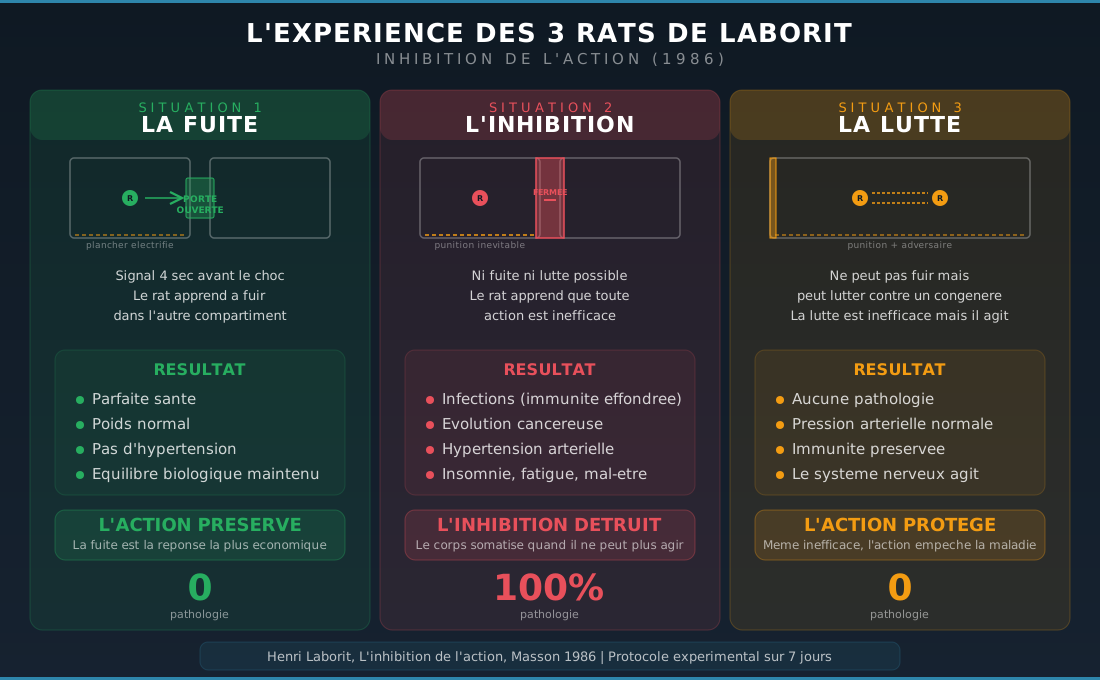
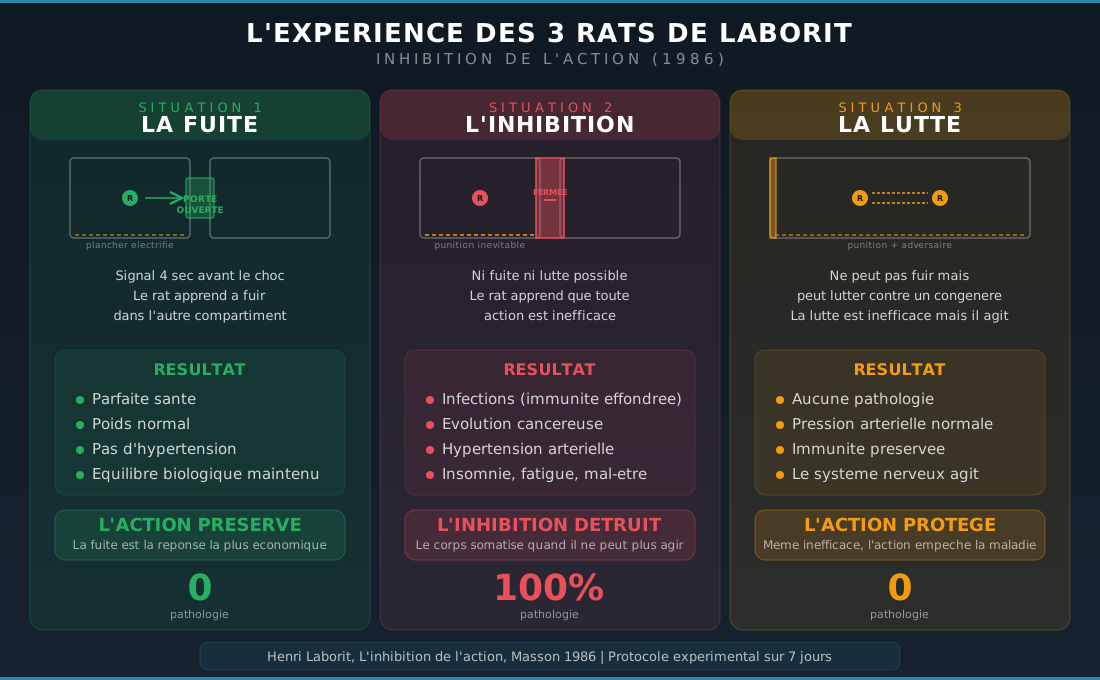
Laborit places a rat in a cage with two compartments, separated by a partition with a door. The floor is electrified intermittently. A signal warns the animal that four seconds later, current will pass through.
Situation 1: the rat can flee
The animal learns quickly. The signal sounds, it runs to the other compartment. The shock pursues it a few seconds later, but it has already learned to return to the first compartment to avoid it again. After seven days, 10 minutes per day, this rat is in perfect health. Its weight is normal. It has no high blood pressure. It avoided punishment by fleeing, and as Laborit says: “it enjoyed itself.” Its biological balance is maintained.
Situation 2: neither flight nor fight
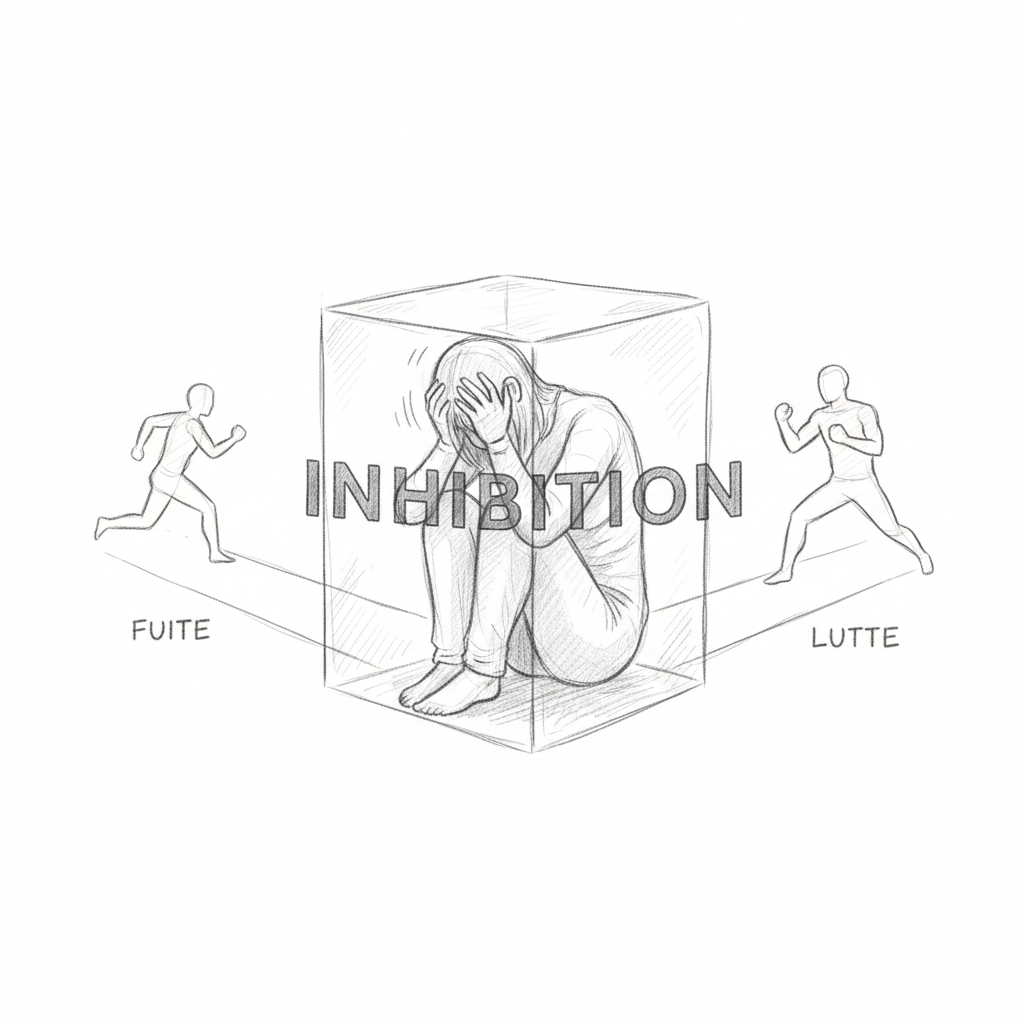
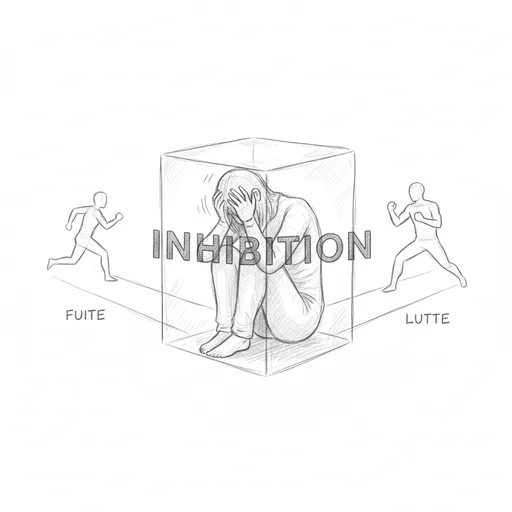
The door between the two compartments is closed. The rat receives shocks without being able to escape them. It cannot flee. It cannot fight. Very quickly, it learns that any action is ineffective. It inhibits.
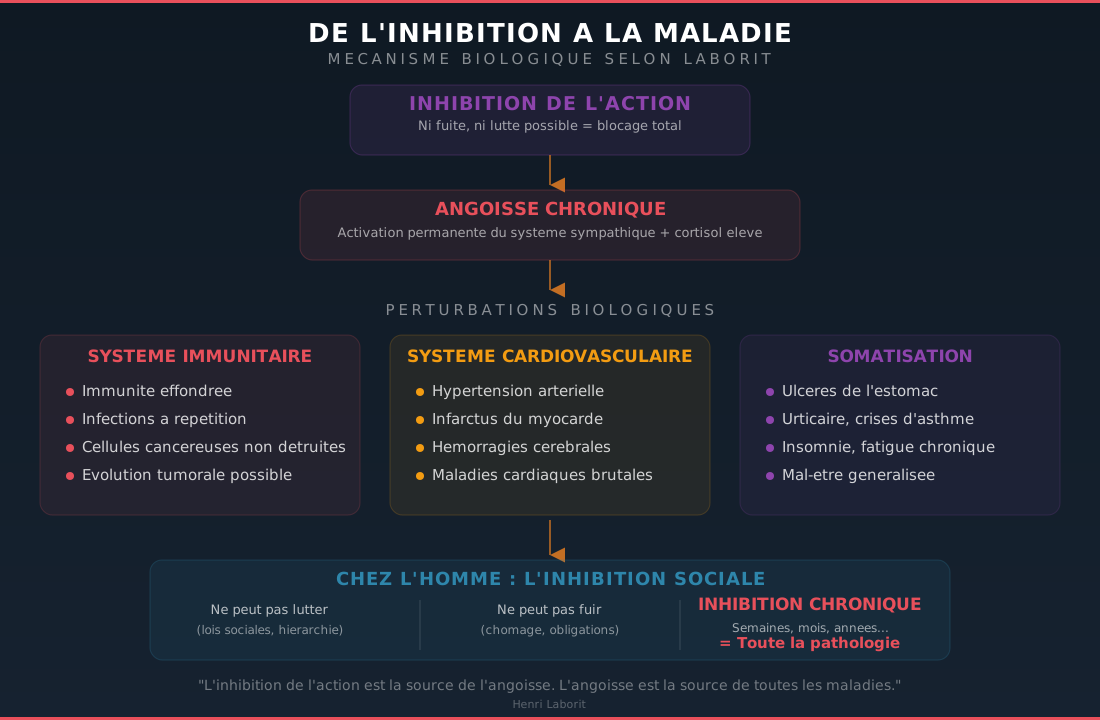
It is this inhibition that triggers catastrophe. Anxiety sets in. Biological disturbances become profound. Its immune system collapses: if a microbe comes around, instead of destroying it as it would normally do, it develops an infection. If a cancer cell appears, instead of eliminating it, it allows tumor evolution to occur. Disorders multiply: stomach ulcers, high blood pressure, insomnia, fatigue, generalized malaise. Everything we call “civilization diseases” or “psychosomatic diseases.”
Situation 3: the fight
The rat still cannot flee. It receives the same shocks. But this time, it is placed in front of another rat, a fellow rat that serves as its opponent. It will fight. This fight is absolutely ineffective. It does not allow it to avoid punishment. But it acts.
And it is the most spectacular result of the experiment: this rat develops none of the pathologies observed in the previous situation. No high blood pressure. No ulcers. No immune deficiency. As Laborit sums it up: “A nervous system only serves to act.”
The extrapolation to humans: when society forbids action
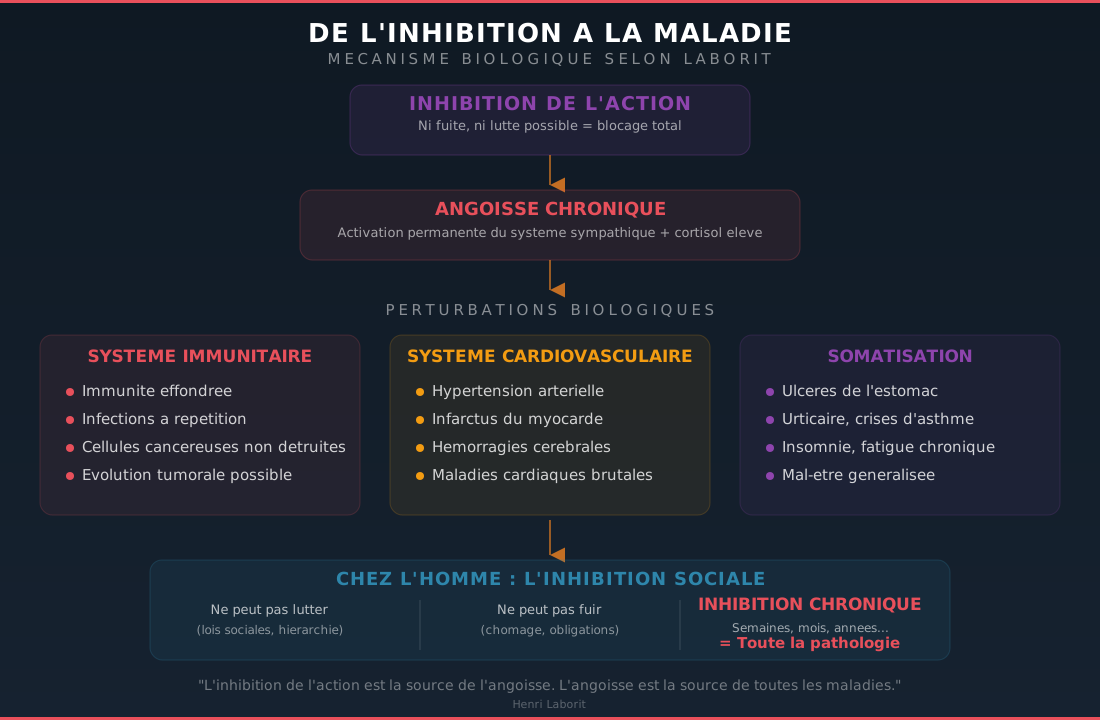
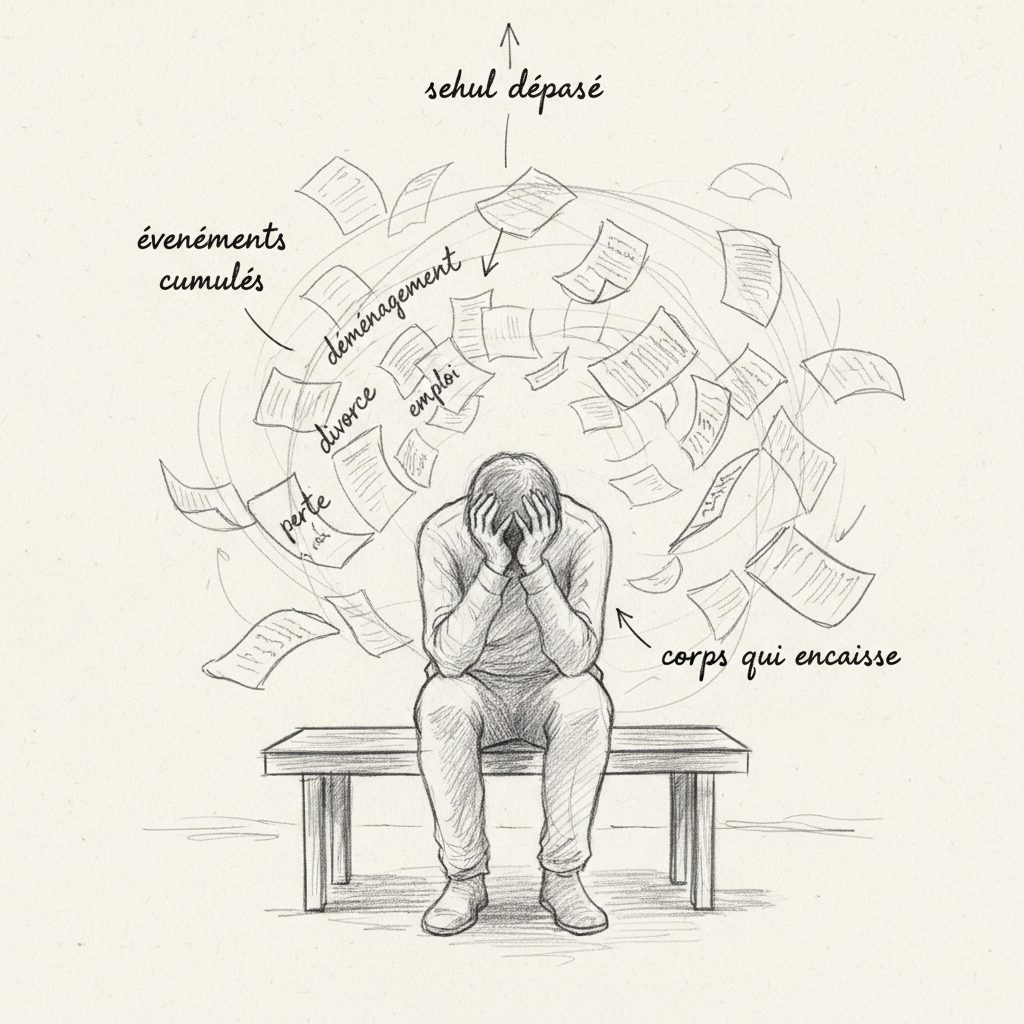
Laborit then draws the parallel with the human condition, and it is here that his argument becomes pressing. The worker who goes to work every day under a foreman whose face he cannot stand cannot break his face: they would send the police. He cannot flee either: he would be unemployed. And every day of the week, every week of the month, every month of the year, sometimes for years, he is in action inhibition.
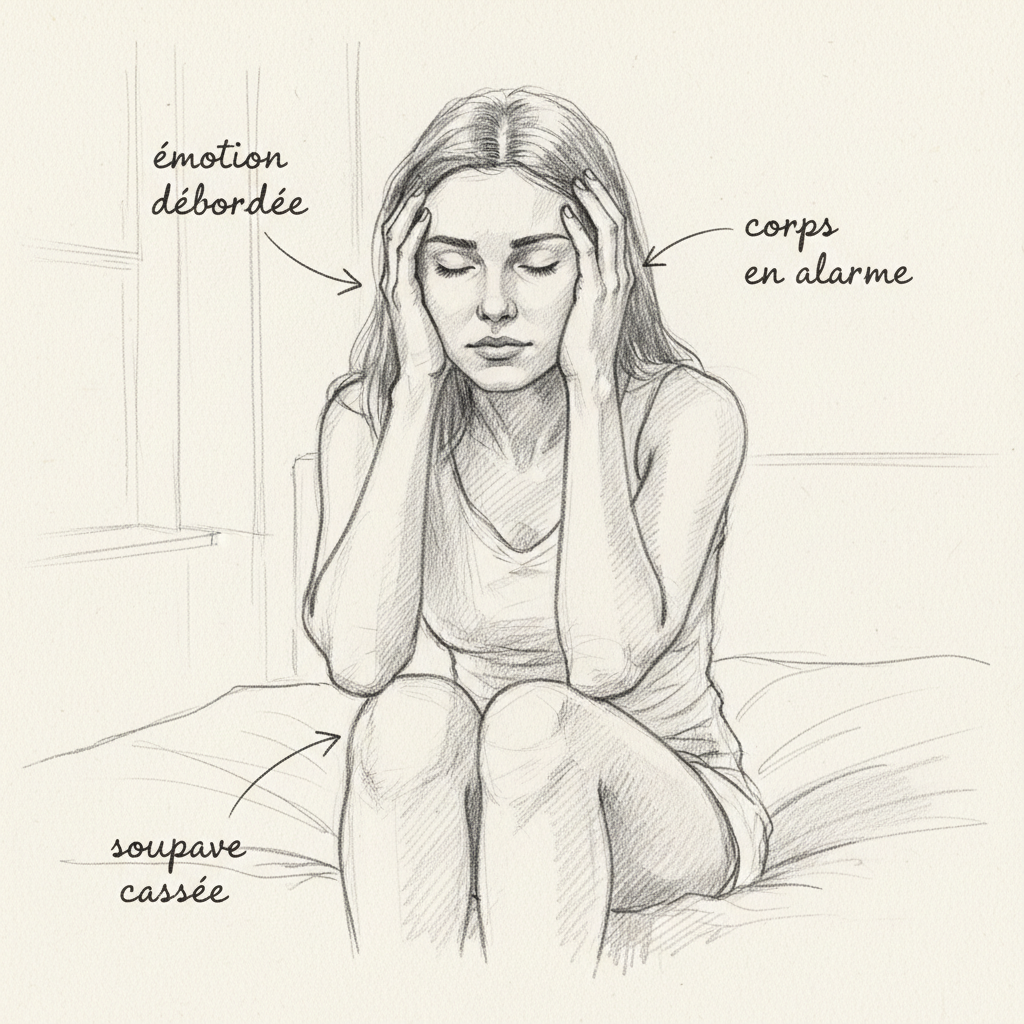
Social laws forbid defensive violence. This is a good thing on the civilizational level. But on the biological level, the consequences are identical to those of the rat locked in the cage. Cortisol remains elevated permanently. The sympathetic nervous system never turns off. The organism somatizes.
Aggression, says Laborit, is never gratuitous. It is always the response to an inhibition of action. And when this aggression can no longer be expressed outward, it turns against oneself. In two ways.
The first: somatization. Aggression is directed against one’s own stomach (ulcer), against one’s heart and blood vessels (high blood pressure, heart attack, stroke), against one’s skin (urticaria), against one’s lungs (asthma). The second, more radical: suicide. “Action inhibition is the source of anxiety,” Laborit writes. “Anxiety is the source of all diseases.”
What the adrenal glands endure in silence
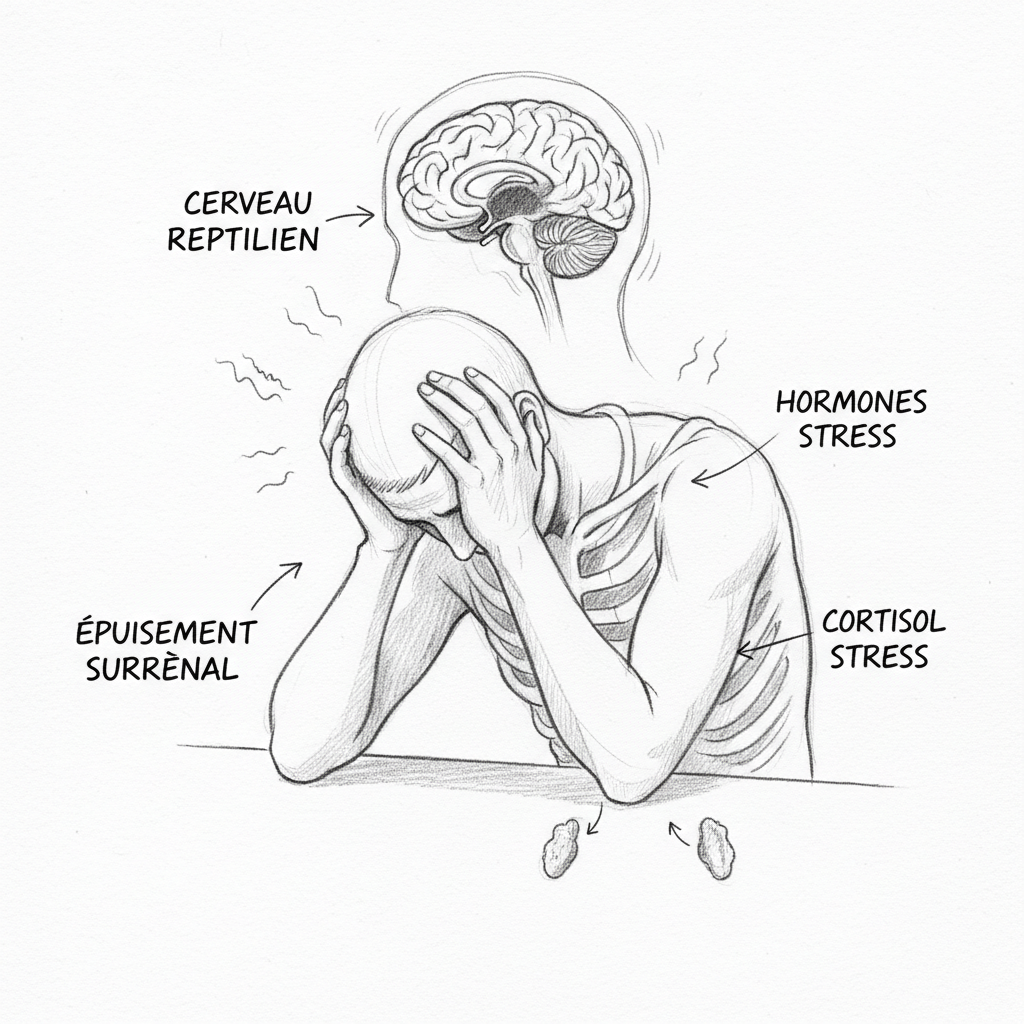
If you know a bit about how adrenal glands work, you know that what Laborit describes corresponds exactly to the transition from stage 1 (alarm) to stage 3 (exhaustion) in Selye’s general adaptation syndrome. Chronic inhibition keeps the adrenals on permanent alert. Cortisol is produced in excess, then reserves become depleted. DHEA drops. The immune system collapses.
Magnesium, a cofactor of more than 300 enzymatic reactions, is the first to deplete under the effects of chronic stress. Then come B vitamins, vitamin C (the adrenals are the organ most concentrated with it), zinc, and omega-3s. It is exactly the deficiency profile I find in consultations with people in burnout.
How to escape inhibition: the naturopathic way
Laborit proved it: it is not stress that kills, it is the impossibility of acting. The naturopathic strategy in the face of action inhibition is built on two axes: restore the capacity to act, and repair the biological damage of chronic cortisol.
Restore physical action. Intense movement mimics flight or fight. Running 30 minutes, hitting a punching bag, swimming intensely: this is not sport, it is neurobiological unlocking. The nervous system needs to feel that action is possible. Robert Masson, one of the founders of French naturopathy, emphasized daily walking as the “first remedy for the nervous system.”
Support the adrenals. Magnesium bisglycinate (300 to 400 mg/day), vitamin C (500 mg to 1 g/day in multiple doses), vitamins B5 and B6 in active form. Adaptogenic plants: ashwagandha (Withania somnifera, 300 to 600 mg of standardized extract) reduces cortisol by 30% in eight weeks according to several clinical studies1. Rhodiola (Rhodiola rosea, 200 to 400 mg) improves stress resistance and mental fatigue2.
Reactivate the prefrontal cortex. Conscious breathing, heart rate coherence (5 minutes, 3 times per day), mindfulness meditation are not personal development gadgets. These are tools that reactivate the prefrontal cortex, the only structure capable of regaining control over the reptilian brain that governs the stress response. Jacques Fradin, in his neurocognitive and behavioral approach, shows that the switch from automatic mode (reptilian) to adaptive mode (prefrontal) is the key to escaping inhibition3.
Take back control. Laborit does not propose to “manage your stress.” He proposes to regain the capacity to act. Sometimes, true therapy consists of changing jobs, leaving a toxic relationship, saying no. Naturopathy cannot do everything: it restores the terrain, but it is up to the person to reopen the door of the cage.
When to seek help beyond naturopathy
If action inhibition has been established for months or years, biological damage may require medical follow-up. Established high blood pressure, chest pain, severe depression with suicidal thoughts, an infection that won’t heal: all of this also requires a doctor. Hormonal assessment (salivary cortisol over 4 points, DHEA-S, TSH and T3/T4) makes it possible to objectify adrenal exhaustion. The naturopath accompanies, he does not replace.
The rat that can neither flee nor fight, maybe that’s you
What Laborit has been teaching us for forty years is that disease is not a biological fatality. It is often the result of an organism that no longer has the means to act. The rat in the cage is the pressured employee who does not dare to resign. It is the exhausted mother who does not have the right to break down. It is the caregiver who takes it all without flinching. It might be you right now.
The good news of Laborit’s experiment is that even ineffective action is enough to protect the organism. Move. Speak. Write. Create. Scream into a pillow if necessary. Anything is better than imposed immobility.
Pierre Valentin Marchesseau, founder of French naturopathy, repeated that “disease is nature’s effort to restore balance.” Laborit adds a decisive clarification: nature still needs the permission to act.
“Action inhibition is the source of anxiety. Anxiety is the source of all diseases.” Henri Laborit
- Laborit, Henri. L’inhibition de l’action. Masson, 1986.
- Selye, Hans. The Stress of Life. McGraw-Hill, 1956.
- Marchesseau, Pierre Valentin. L’hygiène vitale pour votre santé. 1985.
- Hertoghe, Thierry. The Hormone Handbook. 2nd ed. International Medical Books, 2012.
Scientific References
Footnotes
-
Chandrasekhar K, Kapoor J, Anishetty S. A prospective, randomized double-blind, placebo-controlled study of safety and efficacy of a high-concentration full-spectrum extract of ashwagandha root in reducing stress and anxiety in adults. Indian J Psychol Med. 2012;34(3):255-262. PMID: 23439798. ↩
-
Darbinyan V, Kteyan A, Panossian A, et al. Rhodiola rosea in stress induced fatigue: a double blind cross-over study of a standardized extract SHR-5 with a repeated low-dose regimen. Phytomedicine. 2000;7(5):365-371. PMID: 11081987. ↩
-
Fradin J, Le Moullec F. L’intelligence du stress. Eyrolles, 2008. The ANC model (Neurocognitive and Behavioral Approach) distinguishes four brain territories and shows how to reactivate the adaptive mode of the prefrontal cortex. ↩



Laisser un commentaire
Sois le premier à commenter cet article.