Zinc Deficiency
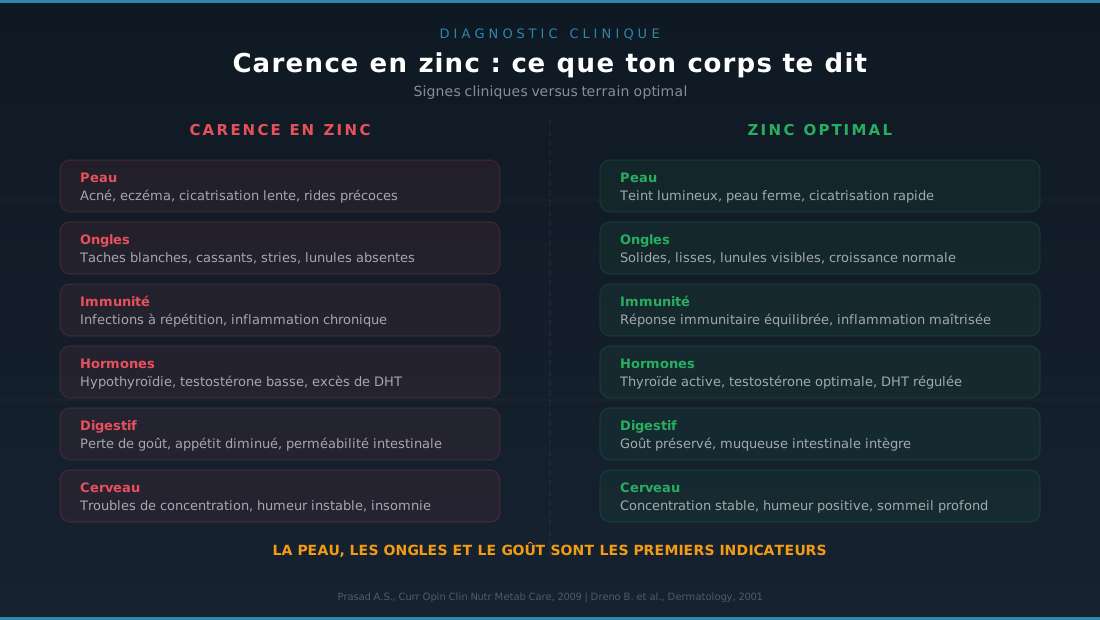
Assess whether you present clinical signs of zinc deficiency: smell, taste, skin, acne, white spots on the nails.
Keyboard: the number of the answer, left arrow to go back.
Keeping your balance
Maintain your dietary intake
Continue to regularly consume highly bioavailable zinc sources: oysters (the champion with 39 mg per 100 g), veal liver, pumpkin seeds, beef, crab. Zinc from animal sources (heme zinc) is absorbed at 40-50%, compared to only 15-20% for plant zinc. To optimize the absorption of plant zinc, consider soaking and sprouting legumes and whole grains, which reduce phytates by 30 to 50%.
Monitor zinc depleting factors
Even with good current status, certain factors can deplete your reserves: chronic stress (cortisol increases urinary zinc excretion), oral contraceptives, proton pump inhibitors (PPIs), excess coffee, tobacco, and alcohol. If you are exposed to any of these factors, increase your vigilance regarding your intake.
Good daily practices
Pair your zinc sources with vitamin C (lemon, bell pepper, parsley) which improves absorption. Avoid consuming tea or coffee during zinc-rich meals as tannins chelate the mineral. Pumpkin seeds, as a snack or sprinkled on salad, are an excellent daily habit. And if you are athletic, know that perspiration eliminates 1 to 3 mg of zinc per hour of exercise: adjust your intake accordingly.
To go further

Zinc: why you’re probably deficient (and what to do)
Zinc: 30% of French people are deficient. Discover the clinical signs, the 6 hidden culprits and natural solutions to correct your status.

Serotonin: how to produce it without antidepressants
Serotonin: understand the synthesis chain, the 7 signs of deficiency and how to act naturally with griffonia and intestinal health.

Thyroid: the 7 nutrients your endocrinologist never tests
Thyroid: discover the 7 essential nutrients for T4→T3 conversion, the 4-axis strategy and the complete workup to demand. Over 300 consultations.

Hashimoto: forgotten causes that your doctor isn’t looking for
Hashimoto is not just hypothyroidism. Discover the Seignalet autoimmune mechanism, the role of the intestine and the naturopathic protocol in 3 phases.
Products I recommend
Sélénium
Sélénium organique hautement biodisponible. Cofacteur clé de la thyroïde, antioxydant majeur, soutien immunitaire.
B-Active Complex (Vitamines B)
Complexe de vitamines B sous formes actives (méthylées). Essentiel pour l’énergie, le système nerveux et la méthylation.
Code 0430360-15%
Citrate de Magnésium
Magnésium citrate hautement biodisponible. Anti-stress, anti-crampes, soutien du sommeil et de l’énergie.
Plasma marin hypertonique (750 ml)
Eau de mer microfiltrée, récoltée au large. Reminéralisation profonde, équilibre acido-basique et soutien du terrain.
Ortie feuille (vrac)
Grande plante reminéralisante riche en fer, silice et minéraux. Anti-inflammatoire, diurétique, anti-anémique.
What you can do
Immediately increase your dietary intake
Your diet should become your first lever. Include at least 2 to 3 zinc sources daily: a breakfast with oat flakes and pumpkin seeds (7.8 mg/100 g), a lunch with beef or liver (8.4 mg/100 g), a dinner with seafood or soaked lentils. Soaking legumes for 12 to 24 hours reduces phytic acid by 30 to 50%, releasing zinc for intestinal absorption. Fermentation (sourdough bread, miso, tempeh) and sprouting are even more effective.
Consider moderate supplementation
Alongside diet, zinc bisglycinate supplementation for 2 to 3 months may help restore your status. Bisglycinate is the most bioavailable form because it does not depend on gastric acidity and does not cause nausea. Take it in the evening, at least 2 hours after dinner, for optimal absorption. After 3 months, add of copper to maintain zinc/copper balance. Doses are set with your doctor or your naturopath, all the more so if you already take a medication.
Identify and correct the causes of deficiency
Zinc deficiency almost always has an identifiable cause. The most common: chronic stress that increases urinary excretion, diet too poor in animal protein, PPI use (omeprazole, pantoprazole) which reduces absorption by 50%, oral contraceptives which shift zinc to the liver, or leaky gut which compromises absorption. As long as the cause is not treated, supplementation will only be a temporary band-aid.
Support your overall health foundation
Zinc never works alone. It needs cofactors to function: vitamin B6 (essential for intestinal zinc absorption), magnesium (often co-deficient), and vitamin A (whose hepatic transport depends on zinc). Consider a global assessment rather than correcting a single nutrient.
Supporting phytotherapy and gemmotherapy
In naturopathy, certain plants support zinc status. Fig bud (Ficus carica) in gemmotherapy soothes stress and protects the digestive lining, promoting mineral absorption. Nettle leaf (Urtica dioica) is remineralizing and rich in trace elements. Desmodium supports liver function and improves zinc metabolism. As an herbal tea or mother tincture, these plants effectively complement the dietary protocol.
The articles to read first
Zinc: why you’re probably deficient (and what to do)
Zinc: 30% of French people are deficient. Discover the clinical signs, the 6 hidden culprits and natural solutions to correct your status.
Serotonin: how to produce it without antidepressants
Serotonin: understand the synthesis chain, the 7 signs of deficiency and how to act naturally with griffonia and intestinal health.
Thyroid: the 7 nutrients your endocrinologist never tests
Thyroid: discover the 7 essential nutrients for T4→T3 conversion, the 4-axis strategy and the complete workup to demand. Over 300 consultations.
Hashimoto: forgotten causes that your doctor isn’t looking for
Hashimoto is not just hypothyroidism. Discover the Seignalet autoimmune mechanism, the role of the intestine and the naturopathic protocol in 3 phases.
Products I recommend
Sélénium
Sélénium organique hautement biodisponible. Cofacteur clé de la thyroïde, antioxydant majeur, soutien immunitaire.
B-Active Complex (Vitamines B)
Complexe de vitamines B sous formes actives (méthylées). Essentiel pour l’énergie, le système nerveux et la méthylation.
Code 0430360-15%
Citrate de Magnésium
Magnésium citrate hautement biodisponible. Anti-stress, anti-crampes, soutien du sommeil et de l’énergie.
Plasma marin hypertonique (750 ml)
Eau de mer microfiltrée, récoltée au large. Reminéralisation profonde, équilibre acido-basique et soutien du terrain.
Ortie feuille (vrac)
Grande plante reminéralisante riche en fer, silice et minéraux. Anti-inflammatoire, diurétique, anti-anémique.
What you can do
What goes on your plate
With deficiency at this level, diet alone will not suffice in the short term, but it remains the essential foundation. Structure your meals around 3 to 4 major zinc sources daily: oysters (2 to 3 per week provide 20 to 30 mg of zinc), veal liver (once per week), beef or lamb (3 to 4 times per week), seafood (shrimp, crab, mussels). Each meal should contain an animal protein source for heme zinc. Supplement with pumpkin seeds (2 tablespoons daily), sesame tahini, and soaked nuts. Temporarily eliminate non-fermented grains and coffee during meals.
What you can add
Zinc is taken in the evening on an empty stomach, as bisglycinate, always with a little copper (gluconate or bisglycinate) to prevent zinc/copper competition. Vitamin B6 in its P5P form (pyridoxal-5-phosphate) and magnesium bisglycinate usefully complete it. If you experience digestive upset with zinc, switch to zinc picolinate, better tolerated but slightly less potent. Doses are set with your doctor or your naturopath, all the more so if you already take a medication.
Essential assessment and monitoring
Erythrocyte zinc measurement (not plasma) is strongly recommended. Serum zinc is a poor marker since only 0.1% of total zinc circulates in blood. Also request a comprehensive assessment: ferritin, vitamin D, erythrocyte magnesium, serum copper and ceruloplasmin (for zinc/copper ratio), CRP (inflammation lowers zinc), and homocysteine (marker of B6, B9, B12 deficiency). This assessment will give you a comprehensive view of your health foundation.
Repair the intestinal lining
In frank deficiency, the intestine is often the culprit: either as a cause (malabsorption, leaky gut) or as a consequence (zinc is essential for enterocyte renewal). The naturopathic intestinal support protocol includes: L-glutamine (5 g daily, the fuel for intestinal cells), multi-strain probiotics (Lactobacillus rhamnosus GG and Saccharomyces boulardii), drinkable aloe vera gel (50 ml daily), and bone broth (rich in glycine, proline, and collagen). This restores absorption capacity and creates a positive cycle.
Targeted plants and gemmotherapy
In phytotherapy, nettle root (Urtica dioica radix) is a concentrate of bioavailable minerals and inhibits 5-alpha-reductase (same action as zinc on DHT). Black currant bud (Ribes nigrum) in gemmotherapy is a powerful natural anti-inflammatory that supports the adrenals, often exhausted with chronic zinc deficiency. Walnut bud (Juglans regia) supports the intestinal lining and microbiota. Standard gemmotherapy dosage: in concentrated glycerin macerate, in 3-week courses. Doses are set with your doctor or your naturopath, all the more so if you already take a medication.
The articles to read first
Zinc: why you’re probably deficient (and what to do)
Zinc: 30% of French people are deficient. Discover the clinical signs, the 6 hidden culprits and natural solutions to correct your status.
Serotonin: how to produce it without antidepressants
Serotonin: understand the synthesis chain, the 7 signs of deficiency and how to act naturally with griffonia and intestinal health.
Thyroid: the 7 nutrients your endocrinologist never tests
Thyroid: discover the 7 essential nutrients for T4→T3 conversion, the 4-axis strategy and the complete workup to demand. Over 300 consultations.
Hashimoto: forgotten causes that your doctor isn’t looking for
Hashimoto is not just hypothyroidism. Discover the Seignalet autoimmune mechanism, the role of the intestine and the naturopathic protocol in 3 phases.
Products I recommend
Sélénium
Sélénium organique hautement biodisponible. Cofacteur clé de la thyroïde, antioxydant majeur, soutien immunitaire.
B-Active Complex (Vitamines B)
Complexe de vitamines B sous formes actives (méthylées). Essentiel pour l’énergie, le système nerveux et la méthylation.
Code 0430360-15%
Citrate de Magnésium
Magnésium citrate hautement biodisponible. Anti-stress, anti-crampes, soutien du sommeil et de l’énergie.
Plasma marin hypertonique (750 ml)
Eau de mer microfiltrée, récoltée au large. Reminéralisation profonde, équilibre acido-basique et soutien du terrain.
Ortie feuille (vrac)
Grande plante reminéralisante riche en fer, silice et minéraux. Anti-inflammatoire, diurétique, anti-anémique.
Le Cabinet
The Friday morning letter. One topic on the body’s terrain, sourced, no shortcuts.
Unsubscribe in one click. Your data is handled according to our privacy policy.
Related tests
This result is an educational naturopathic self-assessment. It is neither a diagnosis nor medical advice, and it does not replace a consultation. Only a health professional can confirm or rule out a disorder. If symptoms persist, or if you are pregnant, breastfeeding or on any treatment, talk to your doctor before taking any supplement or herbal preparation, and never stop a treatment without medical advice.
How to read this test
Assess whether you present clinical signs of zinc deficiency: smell, taste, skin, acne, white spots on the nails. Free, 5 questions.
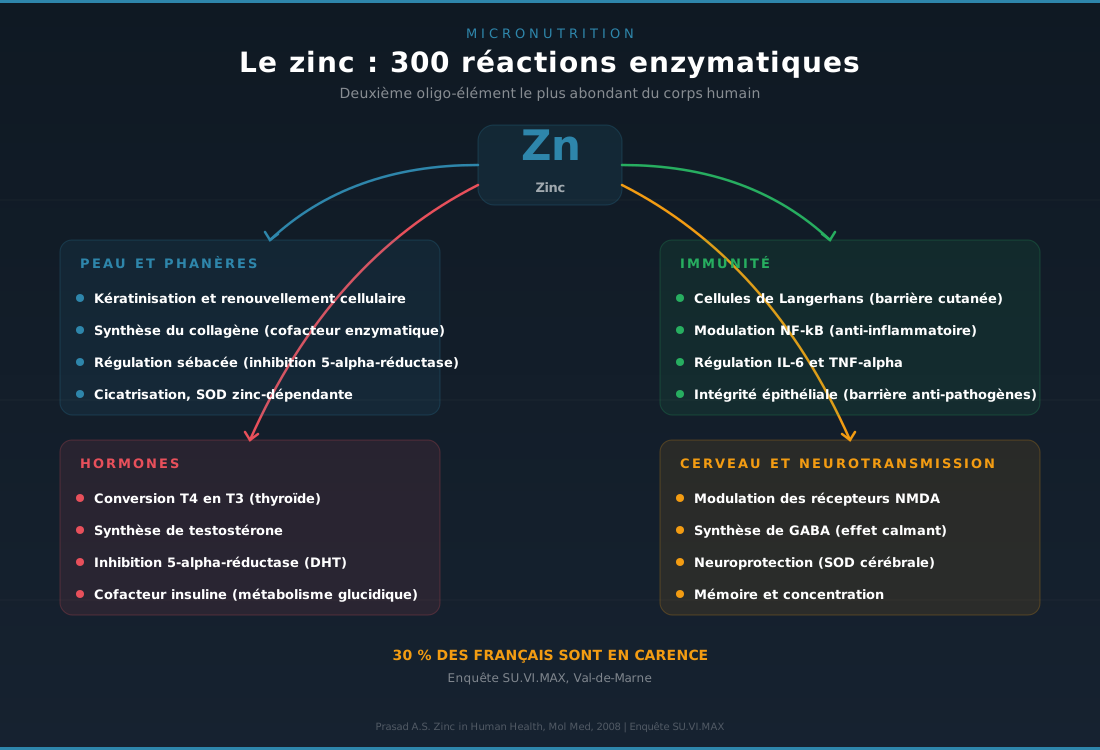
Zinc is an essential trace element, a cofactor for more than 300 enzymes involved in immunity, skin health, taste, smell, and fertility. It is one of the least recognised deficiencies, because its signs (blunted taste and smell, spotted nails, slow healing) tend to be blamed on something else. This test targets the most specific clinical signs of zinc deficiency.
Strengths
- Rapid identification of clinical signs
- Simple self-assessment test
- Detection of sensory (taste, smell) and skin manifestations typical of zinc deficiency
Limitations
- Does not replace blood testing
- Some signs may have other causes
- Limited sensitivity for subclinical deficiencies