You eat organic. You shop at the market. You’ve even replaced your Teflon pans. Yet, when I run an assessment in my practice, I find markers of toxemia that have no business being there. Organophosphate pesticides in urine, lead in blood, glyphosate residues at levels exceeding European standards. In people who are careful. In people who thought they were protected.
It’s a finding I make increasingly often in my office. And it forced me to find a concrete solution. Not theoretical, not another dietary supplement, but something that acts upstream, before the contaminant even enters your body.
Food toxemia, this silent poison
Marchesseau spoke of toxemia as the mother of all diseases. For him, terrain congestion always precedes the symptom. Salmanoff held the same view by demonstrating that the 100,000 kilometers of capillaries irrigating the human body eventually become clogged when the toxic load exceeds the elimination capacity of the emunctories. The problem is that we often talk about endogenous toxemia, the kind the body produces itself through its own metabolism. But exogenous toxemia, the kind that comes directly from what you put on your plate, has become a major public health problem.
The figures speak for themselves. The latest EFSA (European Food Safety Authority) report reveals that 44% of food analyzed in Europe contains measurable pesticide residues. And this figure concerns both conventional and organic products. Yes, organic too. Not at the same level, of course, but cross-contamination from soil, runoff water, transport, and storage means that the organic label doesn’t guarantee food free of all unwanted substances.
Add to this heavy metals (lead, cadmium, mercury, arsenic), nitrates, antibiotic residues in meat, mycotoxins on dried fruits, endocrine disruptors in packaging. The human body simply isn’t designed to handle this daily chemical load. As Catherine Kousmine reminded us in her work on denatured food: it’s not the quantity of a single pollutant that’s the problem, it’s the cocktail effect, the accumulation of dozens of molecules at low doses that together exceed the detoxification capacity of the liver and kidneys. The hepatic enzymes of phase I and phase II, glutathione, glycine, taurine, all these purification systems have limited capacity. And when you saturate them, toxins circulate, accumulate in fats and tissues, and the terrain degrades insidiously. It’s this progressive toxemia that Marchesseau identified as the underlying cause of all disease.
The mirage of water rinsing
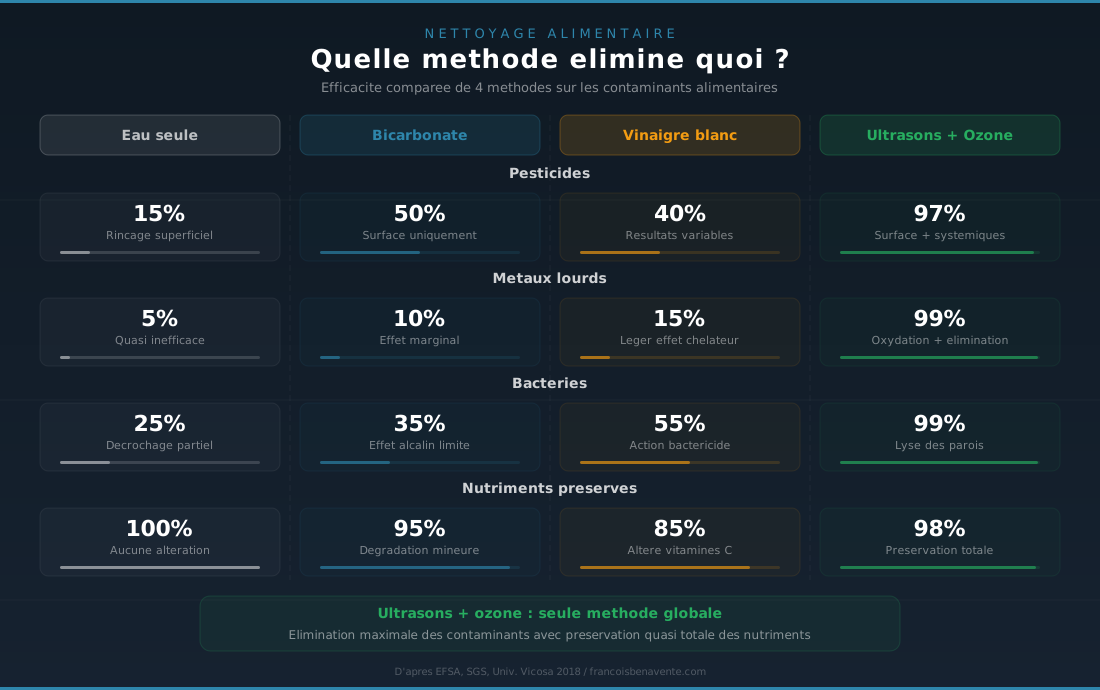
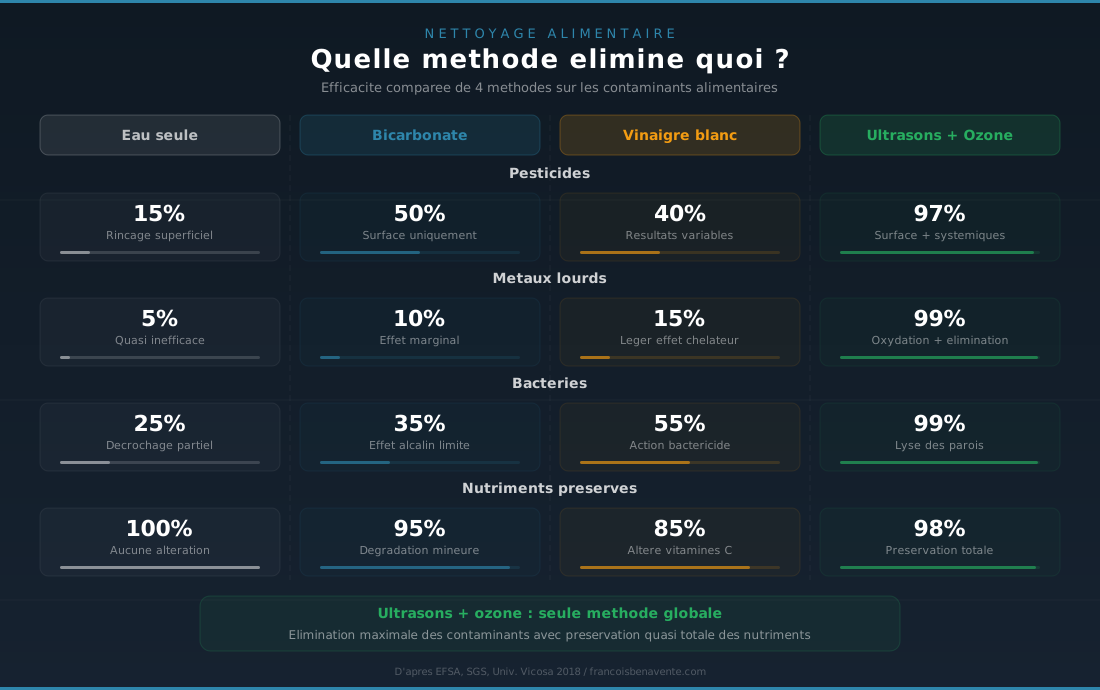
If you’re like most of my patients, you rinse your fruits and vegetables under tap water before eating them. It’s better than nothing. But studies are clear: a simple water rinse removes only 10 to 20% of surface pesticides. That’s all. For systemic pesticides, those that penetrate directly into plant tissue through roots or leaves, water does absolutely nothing. Glyphosate, for example, is absorbed by the entire plant. You can scrub it under a powerful jet for ten minutes, and it’s still there.
Baking soda does somewhat better. A University of Massachusetts study published in 2017 in the Journal of Agricultural and Food Chemistry showed that a 15-minute soak in a 1% baking soda solution eliminated up to 80% of thiabendazole on the surface. That’s encouraging, but it remains limited to superficial residues and doesn’t address heavy metals or pathogenic bacteria in any meaningful way. And let’s be honest: who has time to soak each fruit and vegetable for a quarter hour in baking soda before cooking?
White vinegar? Results are even more mixed. Some studies show a 50 to 70% reduction for certain surface pesticides, while others find no significant difference compared to water alone. Acetic acid does have partial bactericidal action, that’s true, but its effectiveness on pesticides depends enormously on the specific molecule, the soaking time, and the concentration. It’s random.
In summary: water rinses away dust, baking soda scrubs the surface a bit, vinegar does roughly the same. But for systemic pesticides, heavy metals, and deep bacterial load, none of these domestic methods does the job. It’s a bit like trying to clean a sponge by running it under water: you remove what flows off the surface, but everything soaked inside stays in place.
What science says about ultrasound and ozone
The technology that caught my attention combines two complementary mechanisms: ultrasonic cavitation and active oxygen (ozone).
Ultrasound is high-frequency vibration that creates millions of microbubbles in water. When these bubbles implode (a phenomenon called cavitation), they generate microscopic shock waves that mechanically dislodge contaminants from the food surface. Including in the crevices of lettuce leaves, the pores of apple skin, the interstices of broccoli. It’s mechanical cleaning of a precision your hands simply cannot achieve. And unlike rubbing or brushing, it doesn’t damage the food surface.
Ozone acts chemically. It’s an unstable form of oxygen (O3) that naturally decomposes into regular oxygen (O2) while releasing a free oxygen atom, a powerful oxidant capable of degrading the chemical bonds of pesticides, oxidizing heavy metals to make them soluble and removable, and destroying bacterial cell walls. Ozone has been used for decades in drinking water treatment and in the food industry. It’s not experimental technology; it’s proven technology brought simply to the domestic scale.
Studies on the effectiveness of this combination are convincing. Researchers at the Federal University of Viçosa in Brazil published 2018 results showing a 96% reduction in pesticide residues on strawberries treated with ozone. An Iranian study demonstrated 89% elimination of DDVP (dichlorvos, a common organophosphate) on tomatoes. Tests conducted by SGS laboratory for Milerd are even more telling: 97.6% reduction in pesticides and 99.9% of heavy metals, with nearly complete nutrient preservation.
This last point is fundamental. When chlorine or chemical products are used to decontaminate food (as some industrial producers do), vitamins and antioxidants are destroyed at the same time. Ozone naturally decomposes into oxygen in a few minutes, leaving no residue, without altering the nutritional structure of the food. This is precisely what convinced me.
Why I adopted the Milerd Detoxer
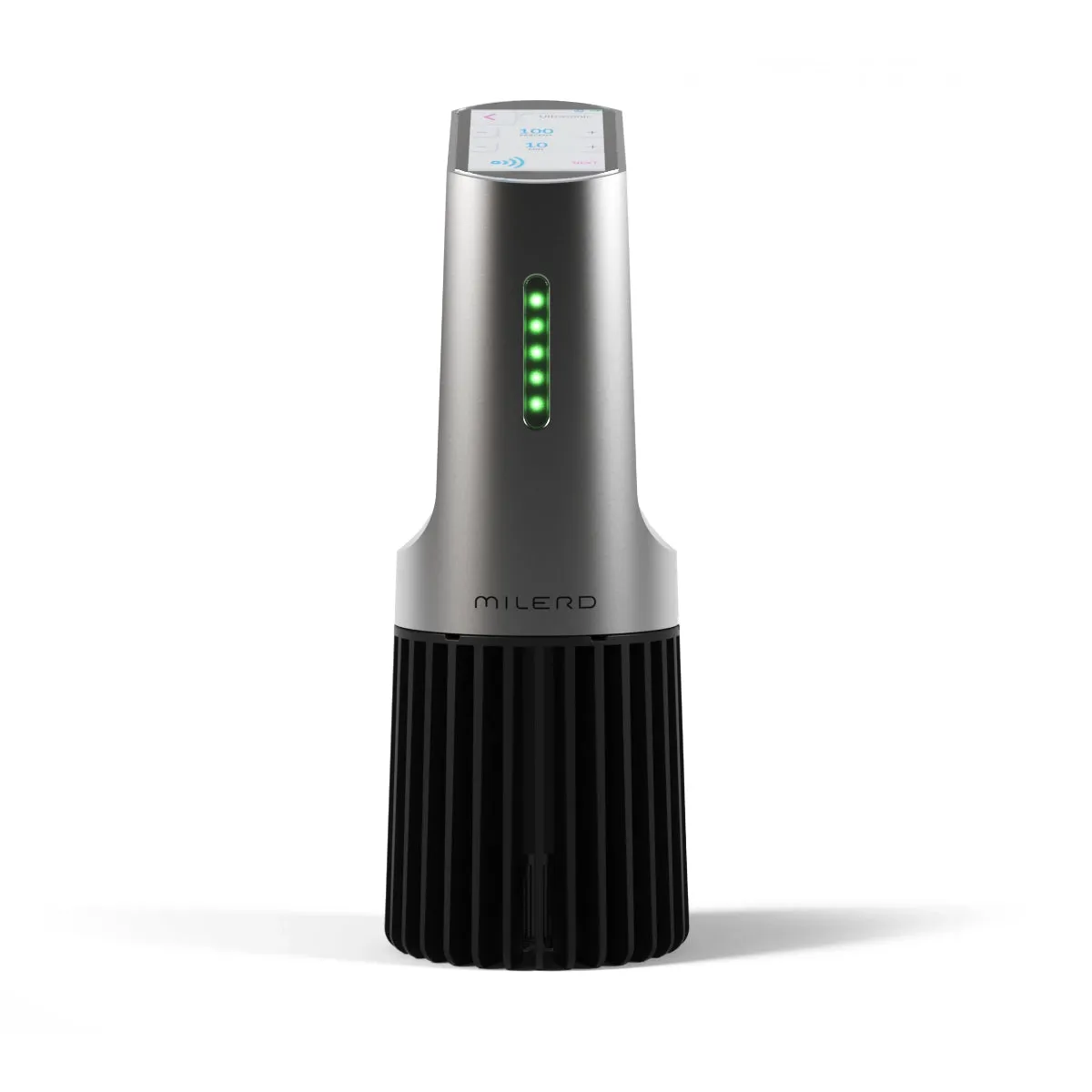
I never recommend a product I don’t use myself. It’s a principle I don’t deviate from. I tested the Milerd Detoxer for three months in my own kitchen before mentioning it to anyone, neither in consultation nor on social media.
The first thing that struck me was the color of the water after a cleaning cycle. You put strawberries or grapes in the tank, start a 20-minute program, and the water becomes cloudy, yellowish, sometimes with a fine oily film on the surface. It’s visually impressive. And frankly disturbing. Because what you see floating in that water is what you were eating before without knowing it.
Beyond the visual aspect (which remains a crude indicator, I’ll admit), what matters are the analytical results. I had conventional apples from the market tested before and after treatment. The difference is overwhelming. And the taste changes too: treated fruits have a more distinct, intense taste, as if removing a chemical veil that masked the natural flavors. My partner, who was skeptical at first, told me after two weeks: “Tomatoes taste like tomato.” It seems like a silly comment. But it sums up the problem well.
“Everything is poison, nothing is poison, the dose makes the poison.” Paracelsus
Paracelsus reminded us of this five centuries ago. The question isn’t about living in a sterile bubble. It’s about reducing the overall toxic load to a level your body can manage. In naturopathy, we always work on two axes: limiting inputs and strengthening outputs. The Milerd Detoxer acts on the first axis, prevention, while a good seasonal detox cure works on the second, elimination.
Which model for which use
Milerd offers four models and the choice really depends on your daily usage and household size.
The Detoxer Light at $249 is the entry-level option, with a 4-liter tank and a single 30-minute program. It does the job for a couple without children or for someone who wants to test the technology without investing much. It’s a good starting point, but if you regularly cook for multiple people, you’ll quickly feel limited by the tank size.
The Detoxer Prime at $299 is what I recommend most often in consultation. Its 6-liter tank lets you treat a larger quantity of food at once, it offers multiple programs adapted by food type (fruits, leafy vegetables, meat, fish) and its ozone generator is more powerful than the Light. The value for money is excellent. It’s the model I use daily.
The Detoxer PRO at $369 adds a touchscreen, customizable programs, and a 10-liter tank. It’s better suited for large families or small restaurateurs processing significant volumes. The Detoxer 2 at $531 is the top of the line with reinforced dual ultrasound technology, real-time water quality sensors, and a 12-liter tank. Honestly, for household use, the Prime easily covers your needs.
Integrating Milerd into your routine
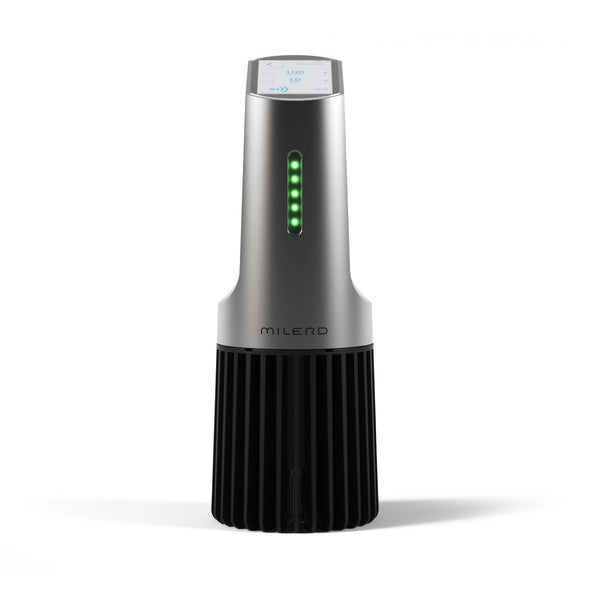
Use is disarmingly simple. You fill the tank with tap water, place your food, select the appropriate program, press a button and wait. For fruits and vegetables, a 15 to 20-minute cycle is enough. For meat and fish, allow 25 to 30 minutes. You can treat pretty much everything that goes through your kitchen: salads, herbs, berries, apples, root vegetables, chickens, shrimp, whole fish.
My personal habit is to run a cycle as soon as I get home from the market. While the Milerd does its work, I put away the rest of the shopping, prepare tea, answer a few messages. In 20 minutes, it’s done. I remove the food, dry it, put it in the refrigerator. It’s become as automatic a gesture as checking the expiration date on yogurt.
Practical tip: don’t overload the tank. Food should be submerged and have minimum space between items so ultrasound and ozone can circulate effectively. If you have a lot of groceries, do two cycles rather than one overloaded tank. The temptation to put everything at once is strong, but you lose efficiency.
For more delicate foods like raspberries, blackberries, or tender herbs (basil, cilantro), the 10-minute short cycle is more than enough. I’ve never noticed any texture or taste alteration. On the contrary, raspberries come out firmer and last longer in the refrigerator, probably because the reduced bacterial load slows the degradation process. It’s a welcome side effect: less food waste.
Clean eating, a forgotten pillar
Marchesseau classified the causes of disease into three major categories: denatured food, nervous stress, and sedentary lifestyle. By working on the quality of what you eat, you act directly on the first pillar. And you simultaneously relieve the emunctories from having to filter such a heavy toxic load.
The anti-inflammatory diet I recommend in consultation takes on full meaning when the foods that compose it are themselves cleared of contaminants. There’s no point eating broccoli rich in sulforaphane if that same broccoli also brings you chlorpyrifos residues. Terrain quality, as Salmanoff constantly reminded us, depends on the quality of what enters it. And this quality isn’t limited to food choice. It includes how you prepare it, how you clean it, how you preserve it before it reaches your stomach.
Want to assess your level of toxic overload? Take the vitality-toxemia questionnaire in 2 minutes.
It’s a point I often develop with patients who come to me for chronic fatigue, digestive issues, or skin problems. We look for complex causes (and sometimes they are), but we often forget the simplest one: the raw quality of what you ingest, day after day, meal after meal. A clean terrain is one that can repair itself, regenerate, function.
“Let your food be your only medicine.” Hippocrates
Hippocrates was right. As long as that food is truly food, not a vector for chemical pollution. The Milerd Detoxer doesn’t replace organic, local markets, or seasonality. But it adds a layer of protection that water rinsing, baking soda, or vinegar cannot offer. In consultation, it’s become one of my first practical recommendations: before even talking about supplements or protocols, clean what you eat.
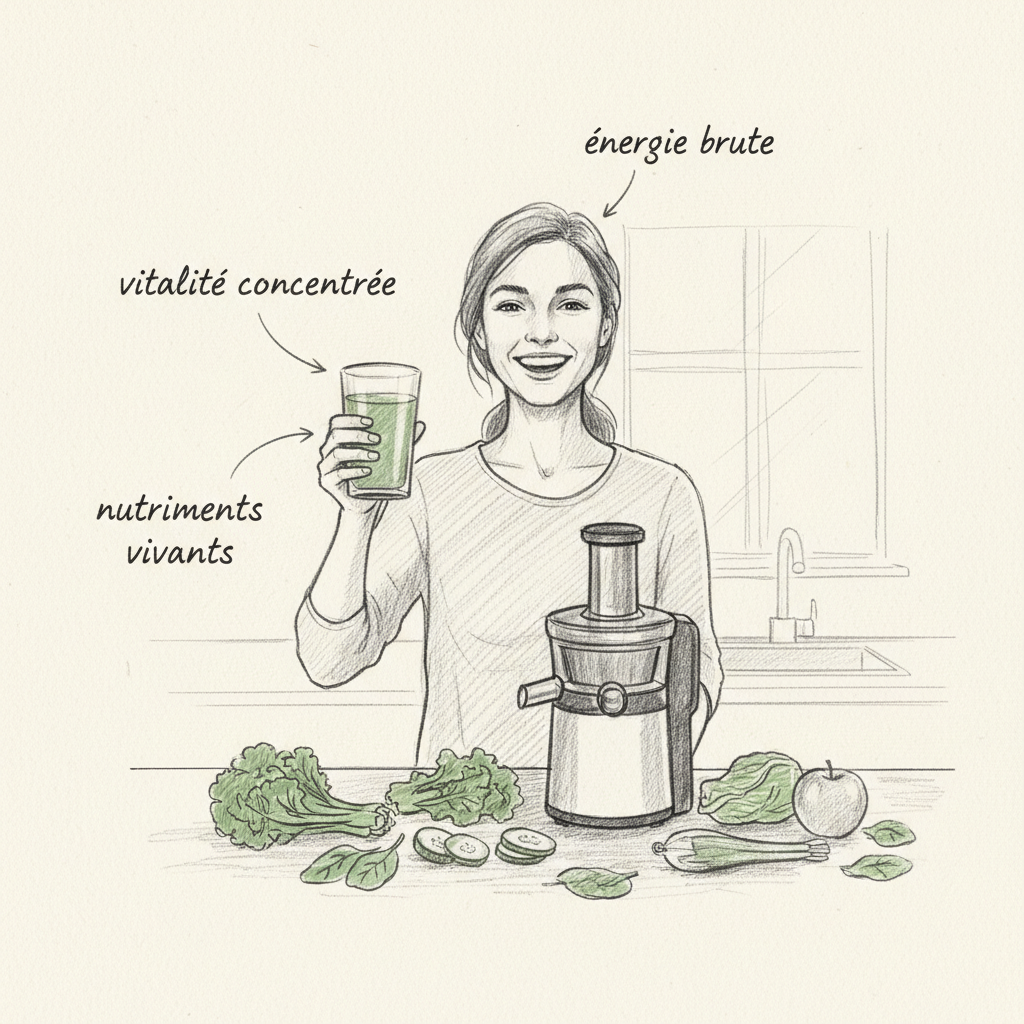
To complete the healthy kitchen chain, PranaCook 18/10 stainless steel utensils allow cooking without endocrine disruptors. And a Hurom extractor transforms your purified food into living juices rich in enzymes (-20% with code francoisbenavente20). Find all my partnerships with exclusive promo codes.



Laisser un commentaire
Sois le premier à commenter cet article.