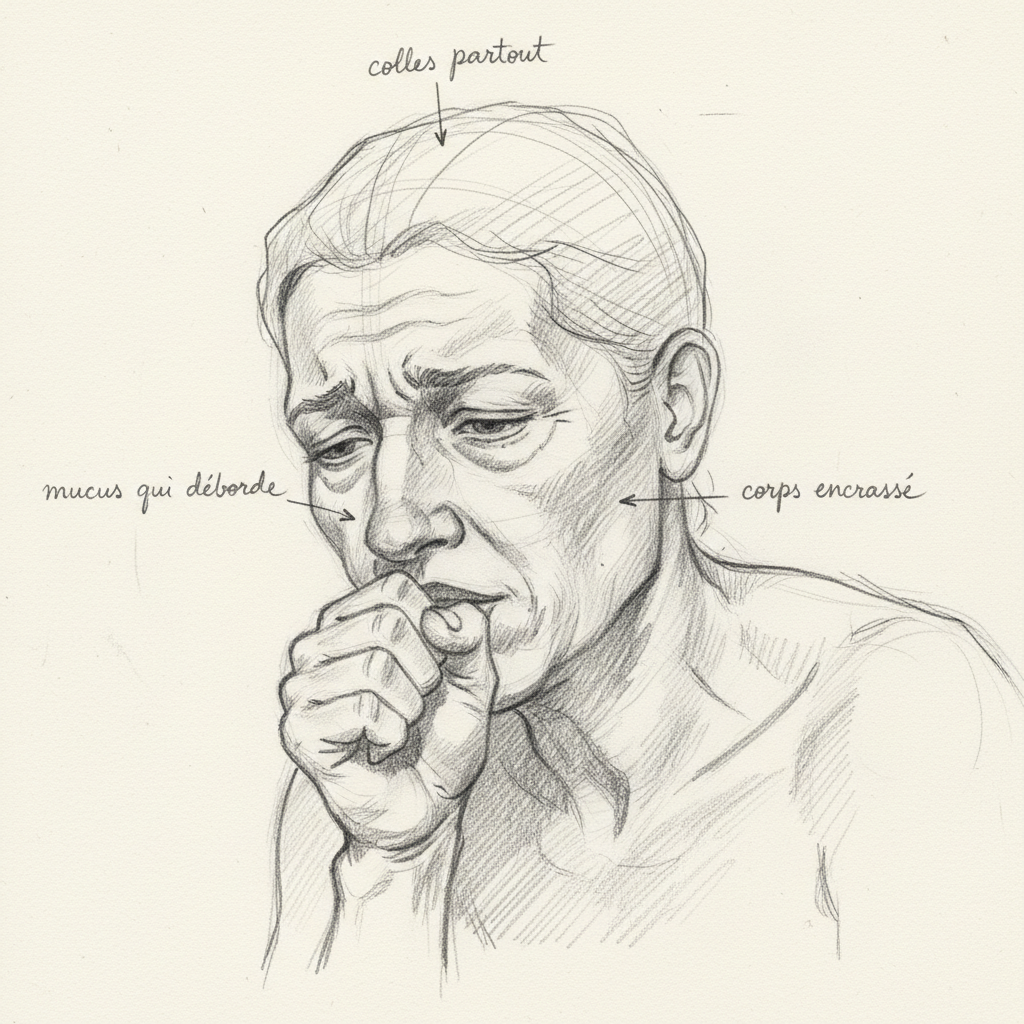
Thomas has a stuffy nose nine months out of twelve. His ENT doctor prescribes nasal corticosteroids. It works for three weeks, then comes back. He also has oily skin, dandruff, a whitish tongue in the morning, and sluggish digestion. He eats pasta or bread at every meal, yogurt for dessert, cheese in the evening. His ENT doctor doesn’t see the connection. Pierre-Valentin Marchesseau, however, would see a textbook case of colloidal overload: the liver is congested, the bile is thick, and the ENT mucous membranes are taking over to evacuate the excess mucus that the liver can no longer manage.
The two types of waste according to Marchesseau
Marchesseau, founder of French naturopathy, classified metabolic waste into two broad categories. Colloids are soft, viscous, non-irritating waste: mucus, phlegm, excess lipids, poorly metabolized glycogen. They come mainly from excess refined carbohydrates and saturated fats. Crystals are hard, angular, irritating waste: uric acid, oxalates, phosphates. They come mainly from excess animal protein and tissue acidosis.
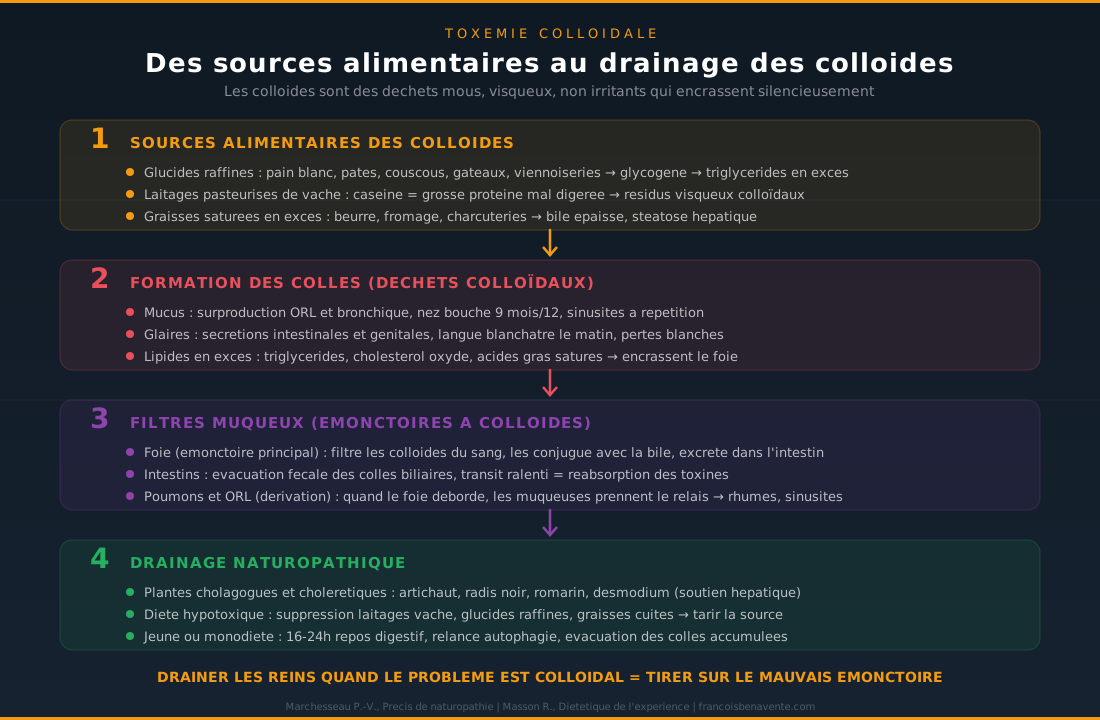
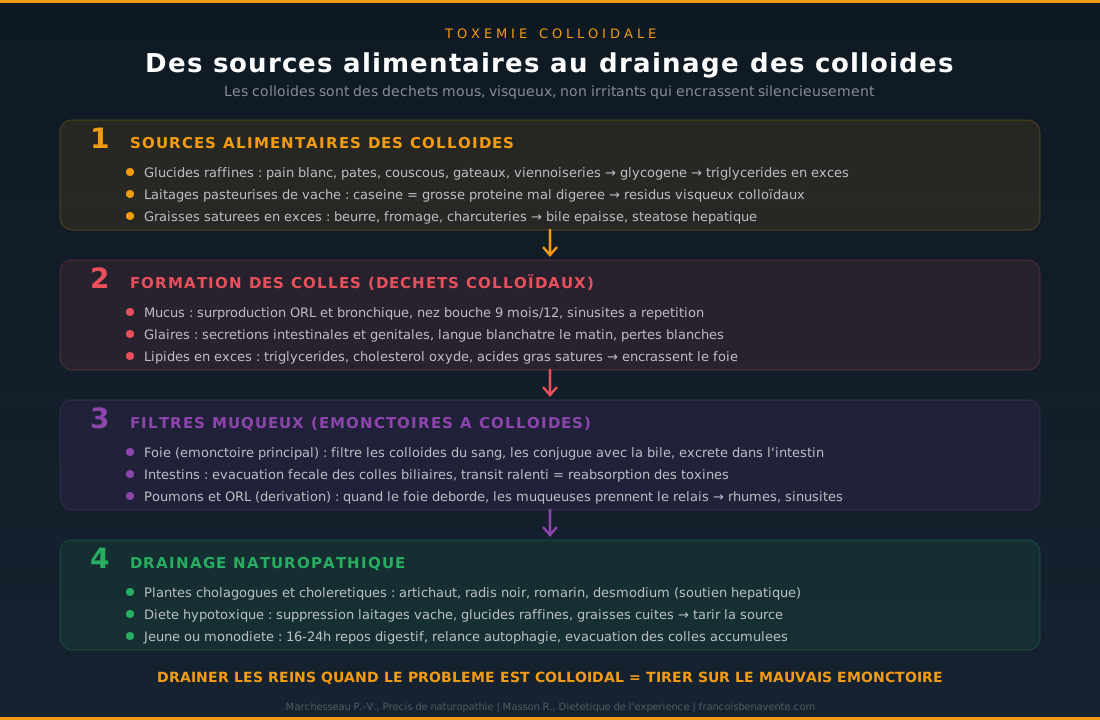
This distinction is fundamental because it determines which emunctories to drain. Colloids are eliminated by the “mucous” emunctories: the liver (via bile), intestines, lungs, and sebaceous skin. Crystals are eliminated by the “serous” emunctories: the kidneys and sudoriferous skin. Draining the kidneys when the problem is colloidal means pulling on the wrong emunctory.
Sources of colloids
Modern diet is a machine for producing colloids. Refined carbohydrates: white bread, white pasta, couscous, cakes, pastries, cookies: are metabolized into glycogen and then triglycerides when storage capacity is exceeded. These excess triglycerides clog the liver (non-alcoholic fatty liver disease) and thicken the bile.
Pasteurized cow dairy products are a major generator of colloidal mucus. The casein in cow’s milk is a very high molecular weight protein (four times more concentrated than in human milk) that, when poorly digested, generates sticky residues that adhere to mucous membranes. Goat and sheep milk contain structurally different casein (A2 instead of A1) and are better tolerated.
Excess saturated fats (butter, cream, cured meats, fatty meats, fried foods) directly overload hepatic metabolic pathways. Alcohol, refined sugar, and ultra-processed foods add their toxic burden to the liver, the body’s primary detoxification organ.
Elimination emunctories
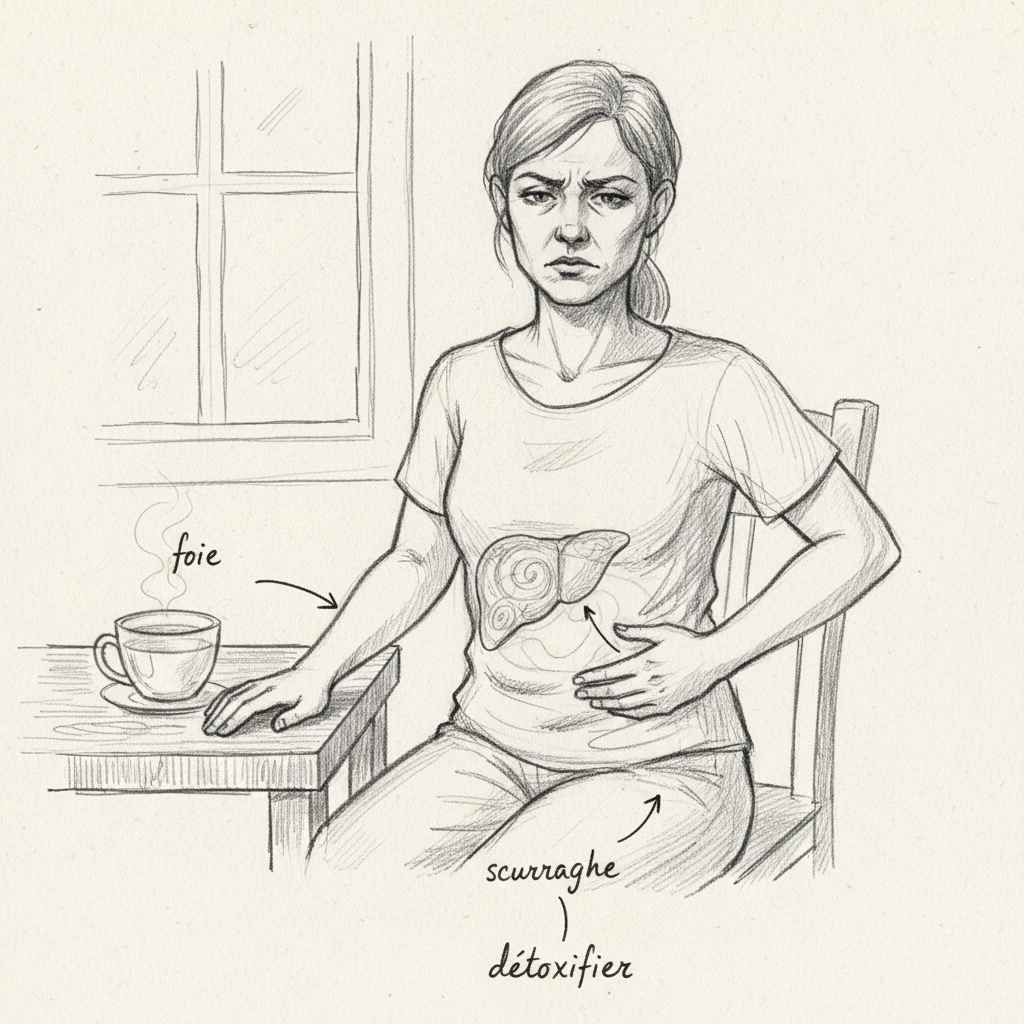
The liver is the conductor of colloidal elimination. It filters the blood, conjugates waste with bile (bile acids, bilirubin, oxidized cholesterol) and excretes it into the intestine via the common bile duct. When the liver functions well, bile is fluid, transit is regular, and colloids are evacuated through stools: one to two formed stools per day, dark brown in color (the color of bile).
When the liver is congested, bile thickens. Transit slows. The tongue becomes coated in the morning (toxins recirculating in the blood deposit on the tongue mucosa during the night). And the bypass emunctories take over.
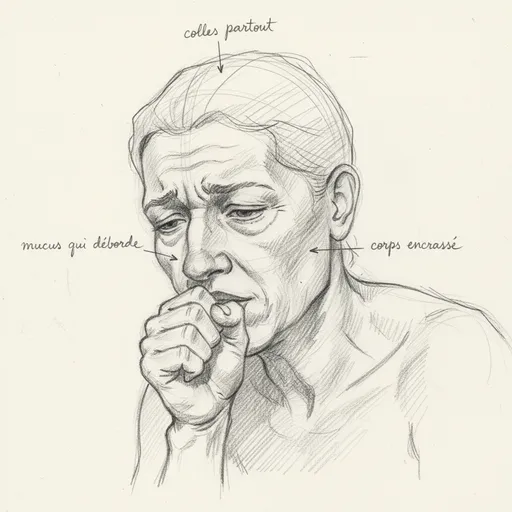
The lungs and ENT mucous membranes become the secondary elimination pathway: recurrent colds, chronic sinusitis, productive cough, bronchial congestion. These are not “infections” to be combated with antibiotics: they are centrifugal elimination crises, a sign that vitality is still sufficient to expel colloids through the mucous membranes.
Sebaceous skin takes over when the mucous membranes are overwhelmed: acne (especially on the cheeks and chin: digestive zone in semiology), oily skin, oily hair, dandruff. The sebaceous glands eliminate excess fats that the liver could not process.
Genital mucous membranes also participate: vaginal discharge (leucorrhea) in women, testicular cysts in men. These manifestations are not infections in the majority of cases: they are emunctories discharging.
The colloidal questionnaire
The colloidal toxemia questionnaire contains ten targeted questions that assess both colloidal production (diet) and signs of congestion in the mucous emunctories.
A score of 0 to 3: normal. Your mucous emunctories function efficiently. The liver ensures detoxification and biliary excretion. Transit is regular. Mucous membranes are not solicited as bypass pathways.
A score of 4 to 6: probable overload. The liver is beginning to saturate. Bile thickens. Transit slows. The first signs of bypass appear: colds, acne, oily hair, coated tongue. This is the time to act on your diet and drain the liver.
A score of 7 to 10: very probable overload. All mucous emunctories are solicited simultaneously. The complete picture (constipation + colds + acne + dandruff + coated tongue + vaginal discharge) indicates deep congestion that requires serious hepatobiliary drainage and structural dietary reform.
Take the colloidal toxemia test.
Hepatobiliary drainage
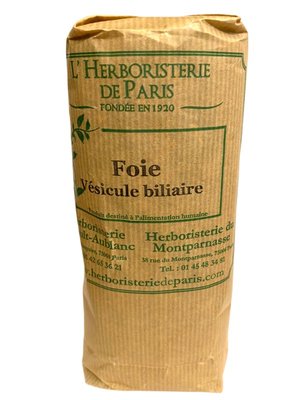
Artichoke (Cynara scolymus) is the reference cholagogue: it stimulates gallbladder contraction and bile excretion into the intestine. Black radish (Raphanus niger) is a powerful choleretic: it increases bile production by the liver and makes it more fluid. Rosemary (Rosmarinus officinalis) is a hepatoprotector that supports both phases of hepatic detoxification. Desmodium (Desmodium adscendens) regenerates damaged hepatocytes.
The hepatobiliary drainage protocol in naturopathy: artichoke in the morning (1 ampule or 1 capsule), black radish at noon, rosemary tea in the evening. Three-week course, one-week break, then resume. If the overload is longstanding (score of 7 to 10), plan gradual drainage over three months.
Blonde psyllium (Plantago ovata) is the essential supplement: its mucilages swell in the intestine, accelerate transit, and capture colloids excreted by bile to evacuate them in stools. Without regular transit, colloids excreted by the liver are reabsorbed by the intestine (enterohepatic cycle) and drainage goes in circles.
Anti-colloidal dietary reform
Reducing refined carbohydrates is the first measure. Replace white bread with whole sourdough bread (sourdough pre-digests gluten and phytates). Replace white pasta with buckwheat, quinoa, or semi-brown rice. Eliminate pastries, cakes, and industrial cookies. Marchesseau’s rule is simple: no more than one starch source per meal.
Drastically reduce pasteurized cow dairy products: milk, industrial yogurt, soft cheese. Replace with plant-based milks (almond, oat), sheep or goat cheese from raw milk in moderate quantities. Observe for one month the effect on ENT symptoms: the difference is often spectacular.
Increase vegetables at every meal (fifty percent of the plate), good fats (extra-virgin olive oil, avocado, nuts) and fermented foods (raw sauerkraut, kefir, miso) that support the intestinal microbiome. Fresh vegetable juices from a cold press concentrate micronutrients without digestive effort.
Thomas eliminated daily bread, replaced yogurts with kefir, and did an artichoke-black radish course for six weeks. In three weeks, his tongue was clean in the morning. In six weeks, he was breathing through his nose. In three months, his dandruff was gone and his skin was no longer oily. His ENT doctor said he was “in remission”. In naturopathy, we say the liver is decongested: and the bypass emunctories no longer need to compensate.
To go further
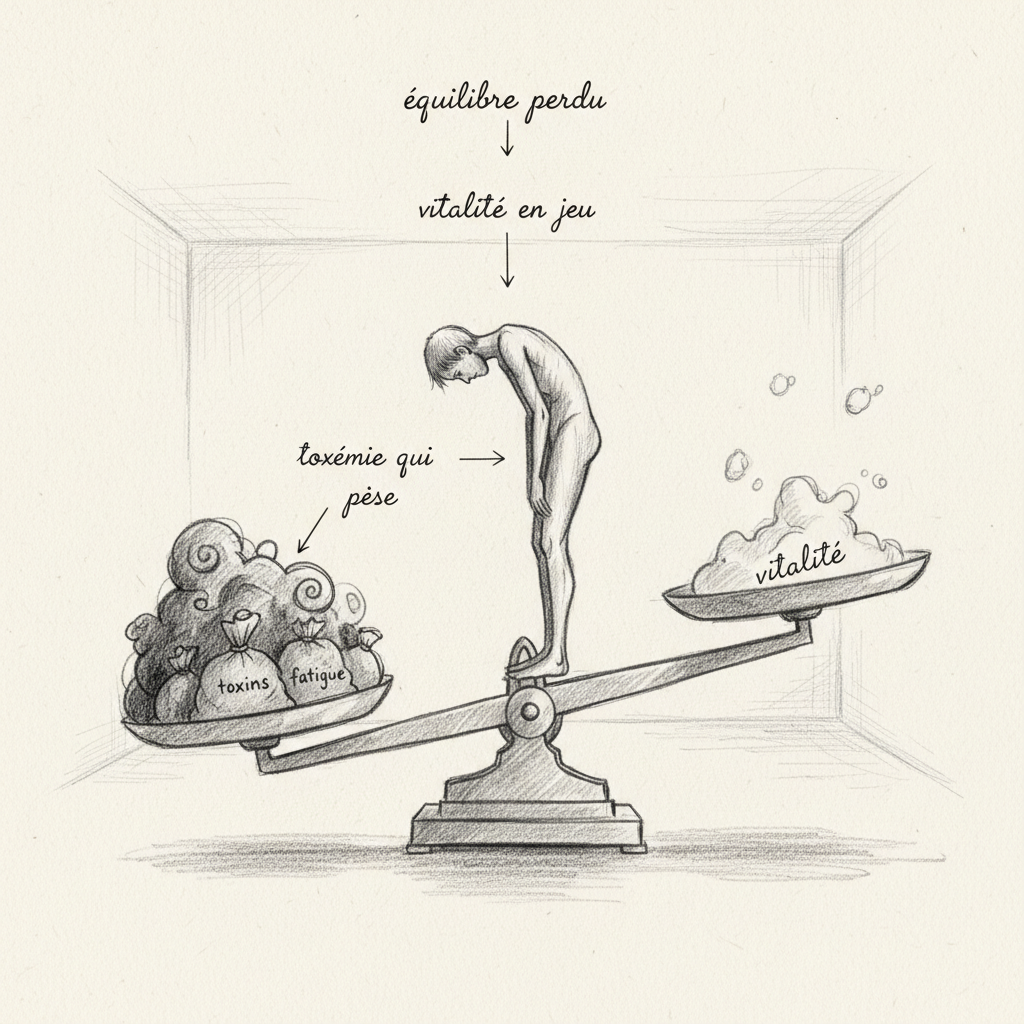
- Vitality and toxemia: the terrain questionnaire that tells all about your health
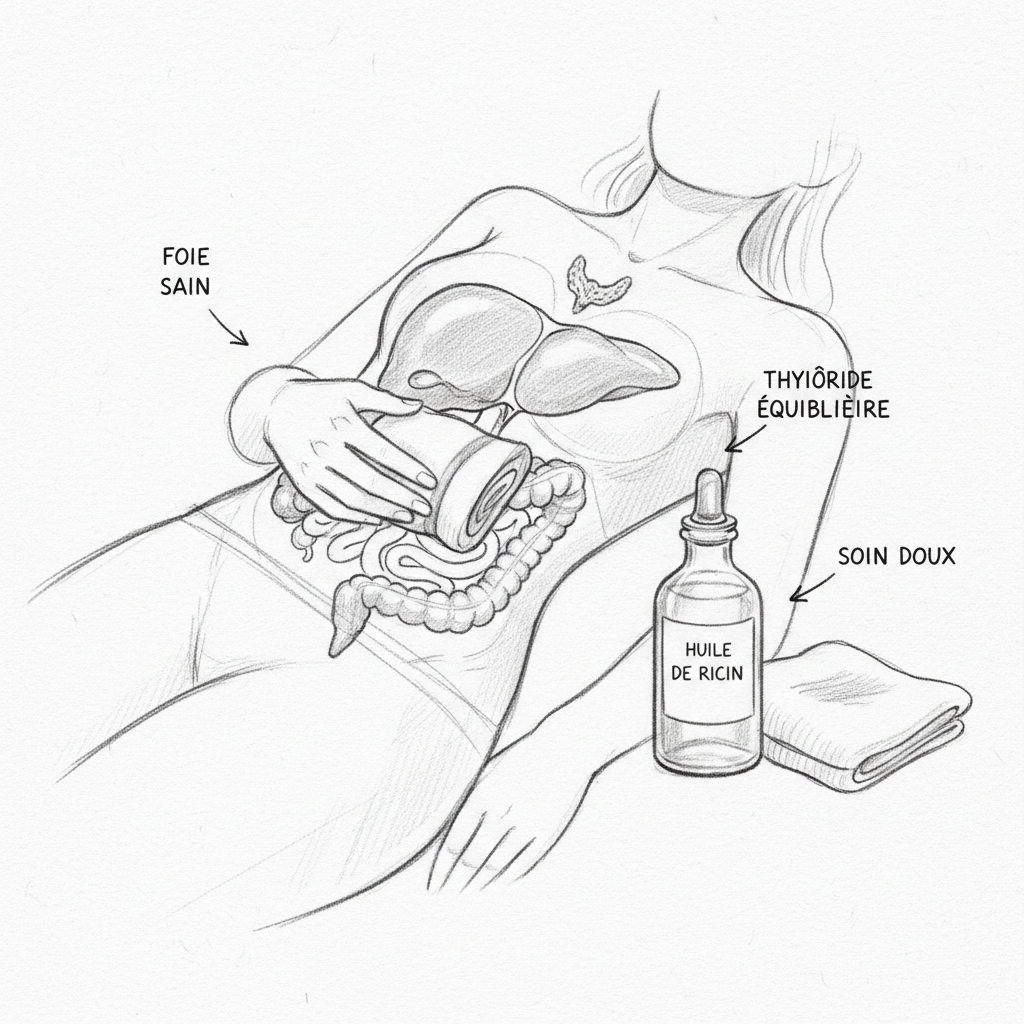
- Castor oil poultice: liver, thyroid and intestine in one gesture
- Hepatic detoxification: the 3 phases and methylation
- Tissue acidosis: the acidic terrain that eats away at your bones and joints
Sources
- Marchesseau, Pierre-Valentin. La Toxémie. Éditions de la Vie Claire, 1985.
- Brun, Christian. Le Grand Livre de la naturopathie. Eyrolles, 2011.
- Curtay, Jean-Paul. Nutrithérapie: bases scientifiques et pratique médicale. Testez Éditions, 2016.
If you want personalized support, you can book a consultation.
Healthy recipe: Hepatic detox juice: This juice drains colloidal waste from the liver.
Laisser un commentaire
Sois le premier à commenter cet article.