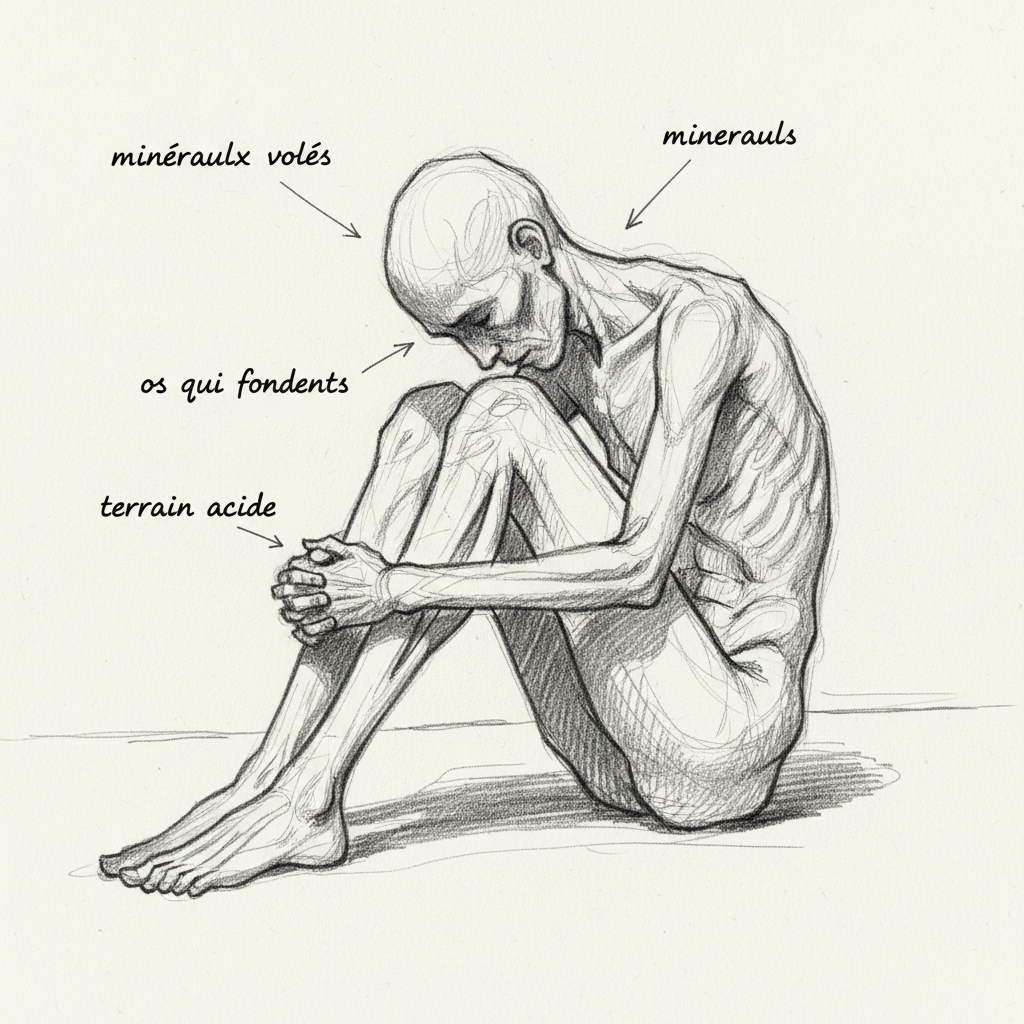
Martine is fifty-eight years old and she hurts everywhere. Stiff fingers in the morning. Creaky knees. Blocked shoulders. Her rheumatologist said “early osteoarthritis.” But Martine also has nails that break, teeth sensitive to cold, nighttime cramps, chronic fatigue, and an unusual sensitivity to citrus that burns her stomach. Christopher Vasey knows this picture by heart. It’s not “normal” osteoarthritis. It’s an acidic terrain that has been eroding the body’s mineral capital for years.

Christopher Vasey, Swiss naturopath and author of Acid-Base Balance, has devoted his career to documenting chronic tissue acidosis: this condition in which the body accumulates metabolic acids faster than it can eliminate them. This concept, central to naturopathy since Marchesseau and before him Kousmine, is now supported by growing scientific literature on low-grade metabolic acidosis.
The mechanism of tissue acidosis
Blood pH is regulated within a narrow range (7.35 to 7.45) by three buffer systems: bicarbonates, phosphates, and proteins (hemoglobin, albumin). This regulation is vital: blood pH below 7.0 or above 7.8 is incompatible with life.
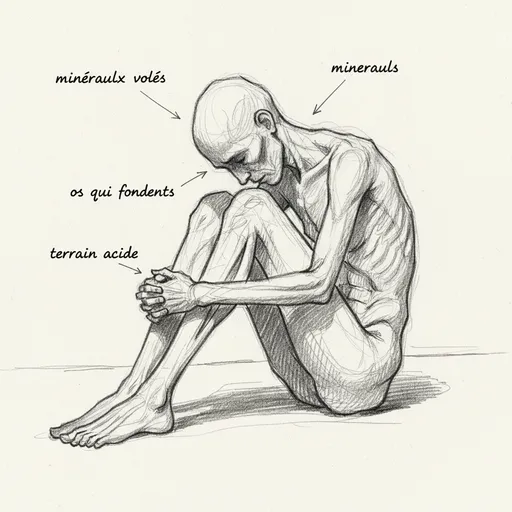
The problem is that these buffer systems have a cost. To neutralize excess acids, the body draws on its alkaline mineral reserves: calcium from bones and teeth, magnesium from muscles, potassium from cells. This is demineralization: the body sacrifices itself to maintain blood pH. The blood remains normal, but the tissues suffer.
Acids come from two sources. Exogenous acids come from food: excess animal proteins (uric acid, sulfuric acid, phosphoric acid), refined sugar (pyruvic acid, lactic acid), coffee, alcohol, sodas. Endogenous acids come from metabolism: stress (lactic acid from muscle tension, carbonic acid from hyperventilation), sedentary lifestyle (poor oxidation of organic acids), liver and kidney insufficiency (poor elimination).
Signs of chronic acidosis
Vasey distinguishes between signs of demineralization and signs of irritation. Signs of demineralization appear when mineral reserves are depleted: brittle and striated nails, sensitive teeth and frequent cavities, dull and brittle hair, muscle cramps (magnesium loss), early osteoporosis (calcium loss), chronic fatigue (magnesium and potassium loss).
Signs of irritation appear when acids accumulate in tissues: joint pain and morning stiffness (uric acid and oxalate crystals in joints), heartburn and reflux (irritated stomach lining), dry eczema and itching (skin as an acid detoxification pathway), sensitivity to citrus and vinegar (the body no longer metabolizes organic acids correctly).
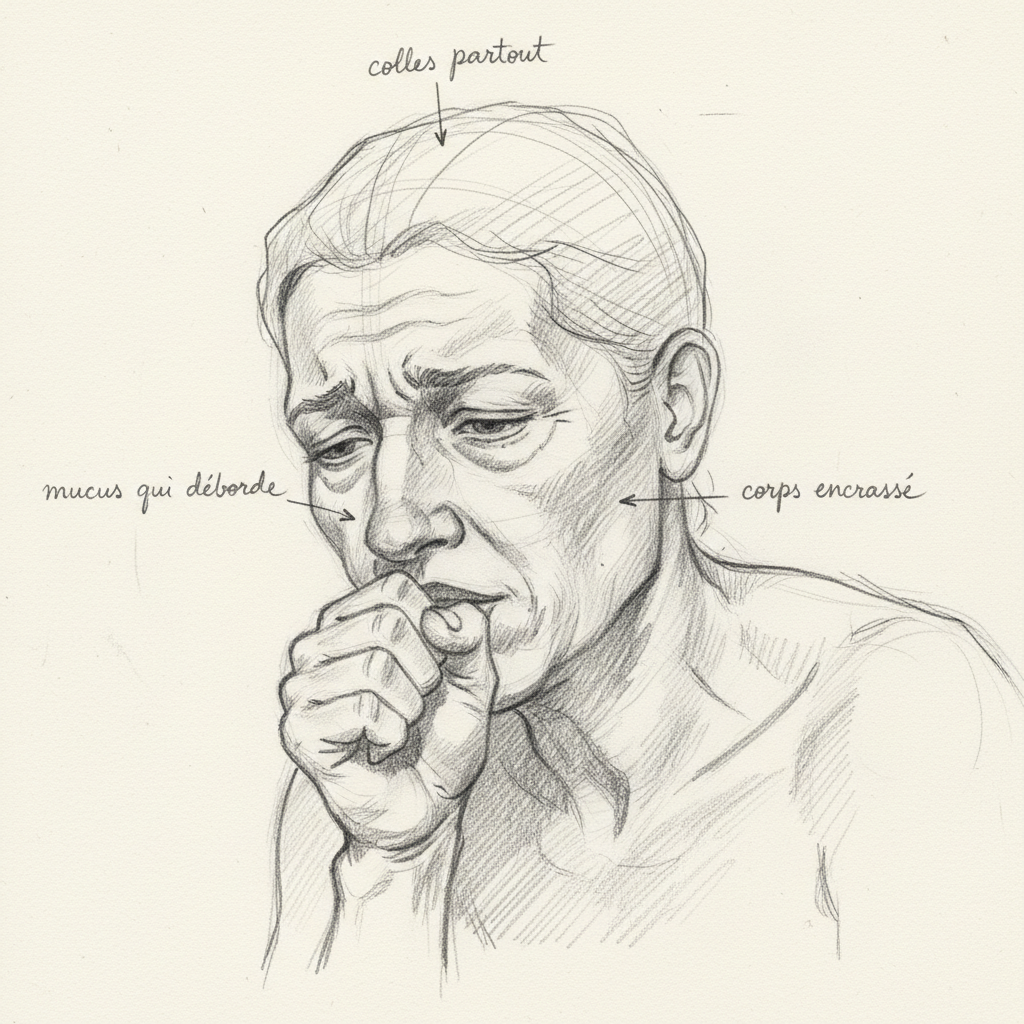
Vasey makes a fundamental distinction between “acid metabolizers” and “non-metabolizers.” The former properly oxidize organic acids from fruits and ferments: for them, lemon is alkalinizing. The latter (cold-sensitive people, those who are fatigued, with slow metabolism, often hypothyroid) cannot oxidize these acids, which accumulate as is. For them, lemon is acidifying.
Take the Vasey acidosis test.
Causes of acidosis in modern life
Modern Western diet is massively acidifying. The ideal acid/base ratio is 80 percent alkalinizing foods to 20 percent acidifying. In practice, it’s the reverse. Excess animal proteins (meat, fish, eggs, cheese), refined grains (white bread, pasta, white rice), sugar, coffee, alcohol, and sodas dominate the plate. Vegetables and fruits (alkalinizing) are in the minority.
Chronic stress is a major acidifier. Permanent muscle tension produces lactic acid. Hyperventilation increases expired CO2 but reduces blood bicarbonates. Cortisol promotes protein catabolism (production of sulfur-containing amino acids). Sedentary lifestyle prevents complete oxidation of metabolic acids. Lack of sleep reduces nighttime liver and kidney detoxification capacity.
Medications acidify the terrain. Aspirin is an acid (acetylsalicylic acid). Non-steroidal anti-inflammatory drugs (NSAIDs) produce acidic metabolites. Antibiotics disturb the microbiota which participates in acid-base balance.
Alkalinizing the terrain
Diet is the first lever. Greatly increase vegetables (cooked and raw), especially green vegetables rich in magnesium and potassium. Potatoes, chestnuts, almonds, and bananas are highly alkalinizing. Bicarbonated mineral waters (Vichy, Badoit) provide bicarbonates directly. Fresh vegetable juice (cucumber, celery, fennel) from a juicer is a powerful alkalinizer.
Mineral citrates in supplementation are the fastest route. Potassium citrate (2 to 4 grams per day), magnesium citrate (300 mg elemental magnesium), calcium citrate (500 mg). Citrates are metabolized into bicarbonates by the Krebs cycle. Warm lemon water in the morning (half a squeezed lemon) is alkalinizing for good acid metabolizers.
Deep breathing eliminates CO2 (volatile acid) through the lungs. Moderate exercise outdoors (walking, cycling, swimming) oxidizes organic acids. Sauna and hyperthermic bath eliminate acids through sweat (skin = third kidney). Rest, sleep, and stress management reduce endogenous acid production.
Martine adopted green vegetables at each meal, cucumber-celery juice in the morning, magnesium citrate at dinner, and thirty minutes of daily walking. Within six weeks, her morning stiffness had decreased by half. Within three months, her nails had stopped breaking. Her urinary pH had risen from 5.5 to 6.8. The terrain had changed, and with it the symptoms.
To go further
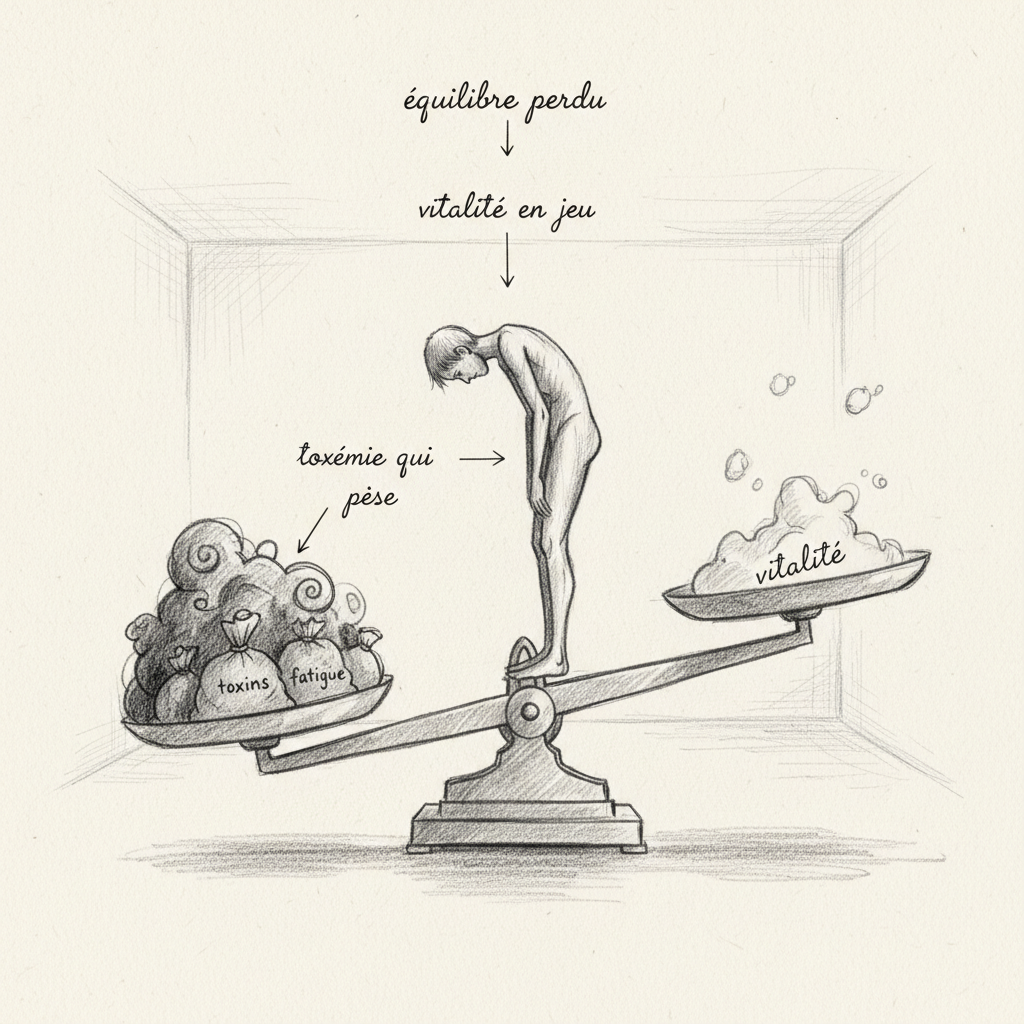
- Vitality and toxemia: the terrain questionnaire that reveals everything about your health
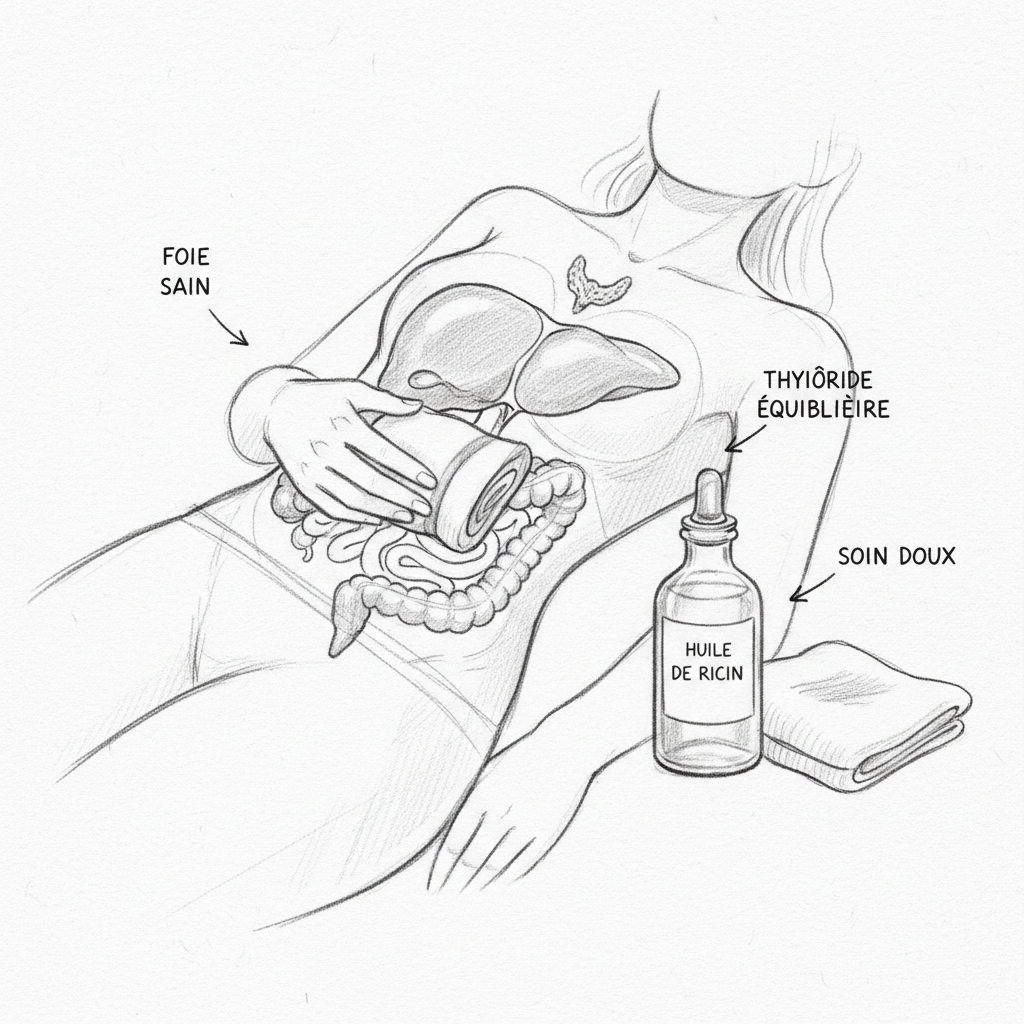
- Castor oil poultice: liver, thyroid and intestines in one gesture
- Liver detoxification: the 3 phases and methylation
- Fluoride and thyroid toxins: the audit of your home in 9 points
Want to evaluate your status? Take the free vitality toxemia questionnaire in 2 minutes.
Sources
- Vasey, Christopher. Acid-Base Balance. Jouvence Éditions, 2012.
- Marchesseau, Pierre-Valentin. Toxemia. Éditions de la Vie Claire, 1985.
- Curtay, Jean-Paul. Nutritherapy: scientific bases and medical practice. Testez Éditions, 2016.
If you want personalized support, you can book a consultation.



Laisser un commentaire
Sois le premier à commenter cet article.