Chantal is sixty-two years old and has an impressive collection of vitamin D bottles in her bathroom. She has been taking it for four years. Her doctor started with 1000 IU, then 2000, then 4000, then 100,000 IU ampoules every month. Her vitamin D remains desperately low, around 18 ng/mL. Her doctor is puzzled. The endocrinologist suspects a kidney problem. The rheumatologist suspects malabsorption. No one thought about bile.
When I examined Chantal, I asked a question that no one had asked her before: “What are your stools like after a fatty meal?” She blushed a bit and then described pale, pasty stools that stick to the toilet and float. For years. She thought it was normal. It’s not normal. It’s a sign that fats are not being digested. And if fats are not digested, the fat-soluble vitamins (A, D, E, K) that are dissolved in those fats are not absorbed either.
An ultrasound showed thick bile sludge in her gallbladder. Her thyroid was running slowly (TSH at 4.2 with positive anti-TPO). I implemented a bile support protocol. In three months, her vitamin D went from 18 to 42 ng/mL without changing the supplementation dose. The only change was that her body was finally absorbing what she was swallowing.
Bile, this unknown
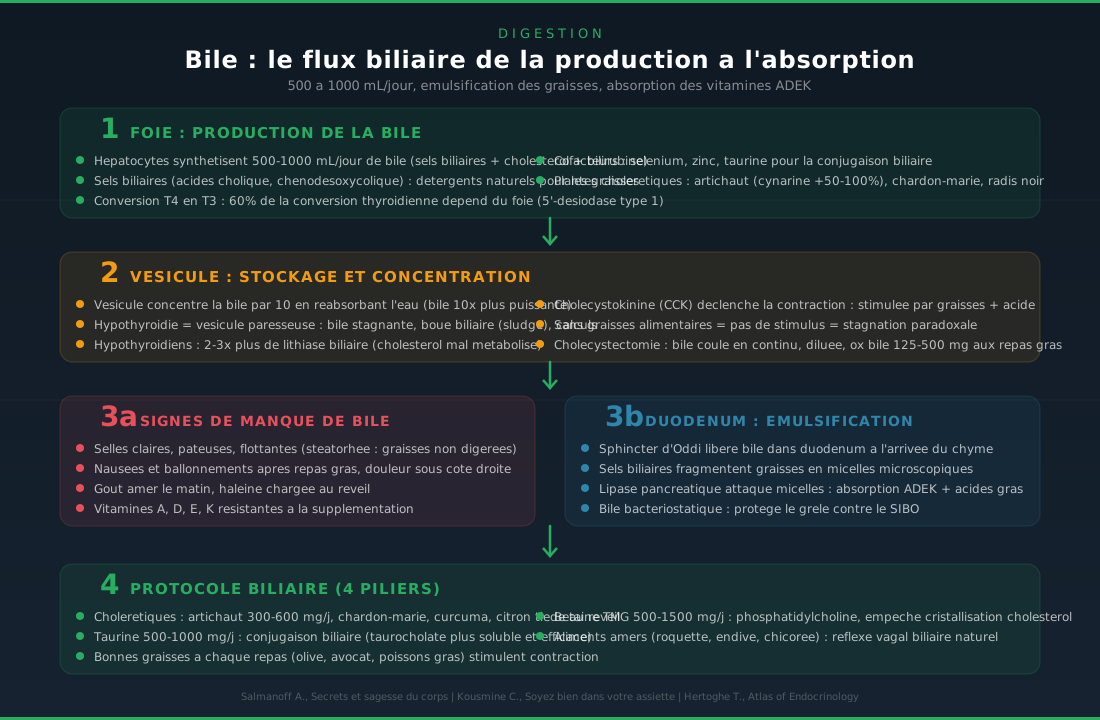
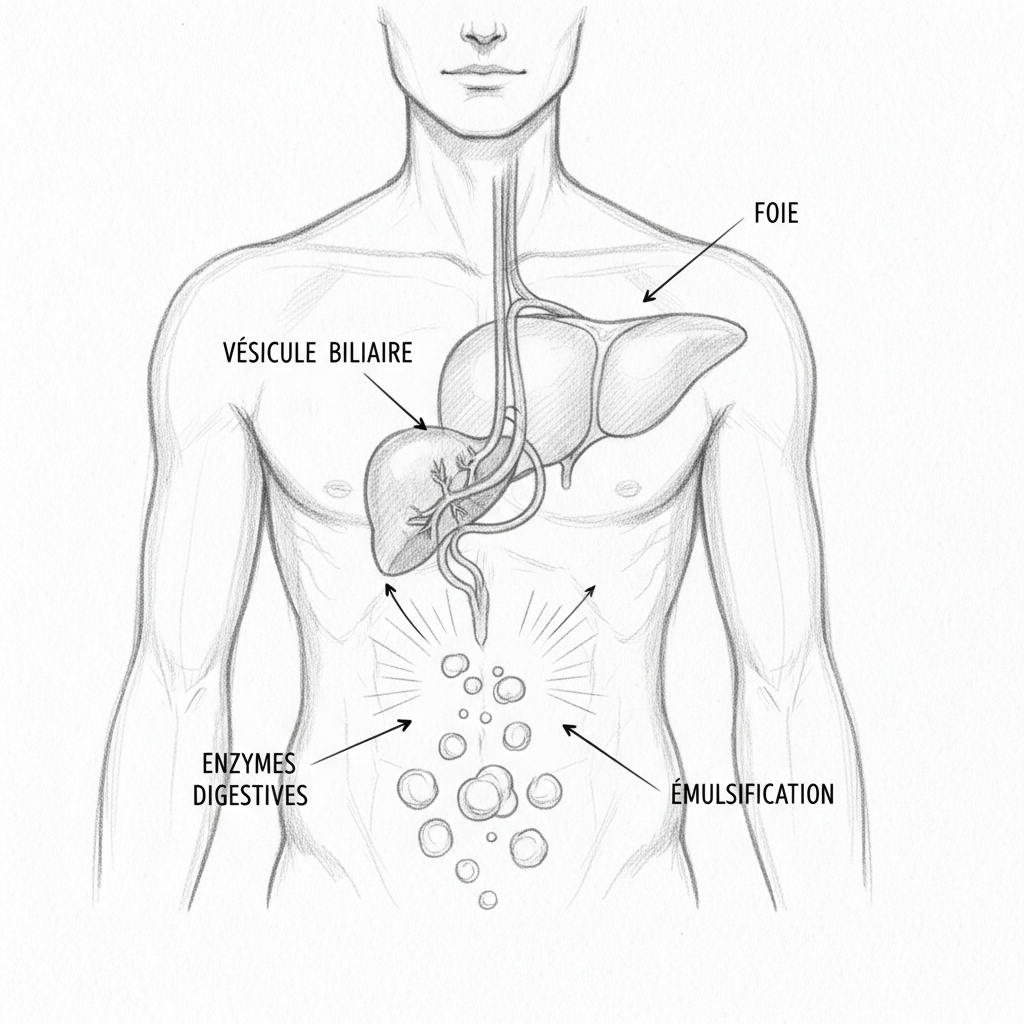
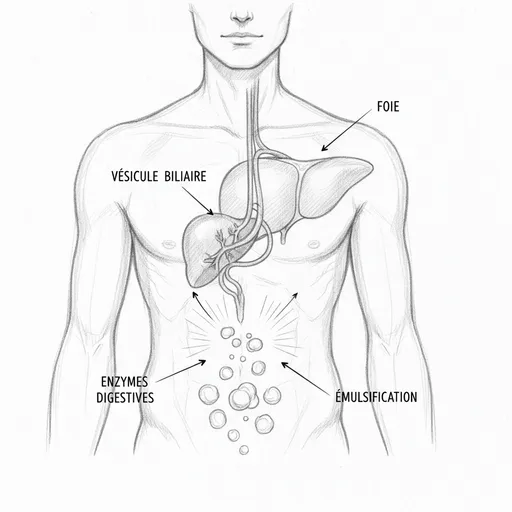
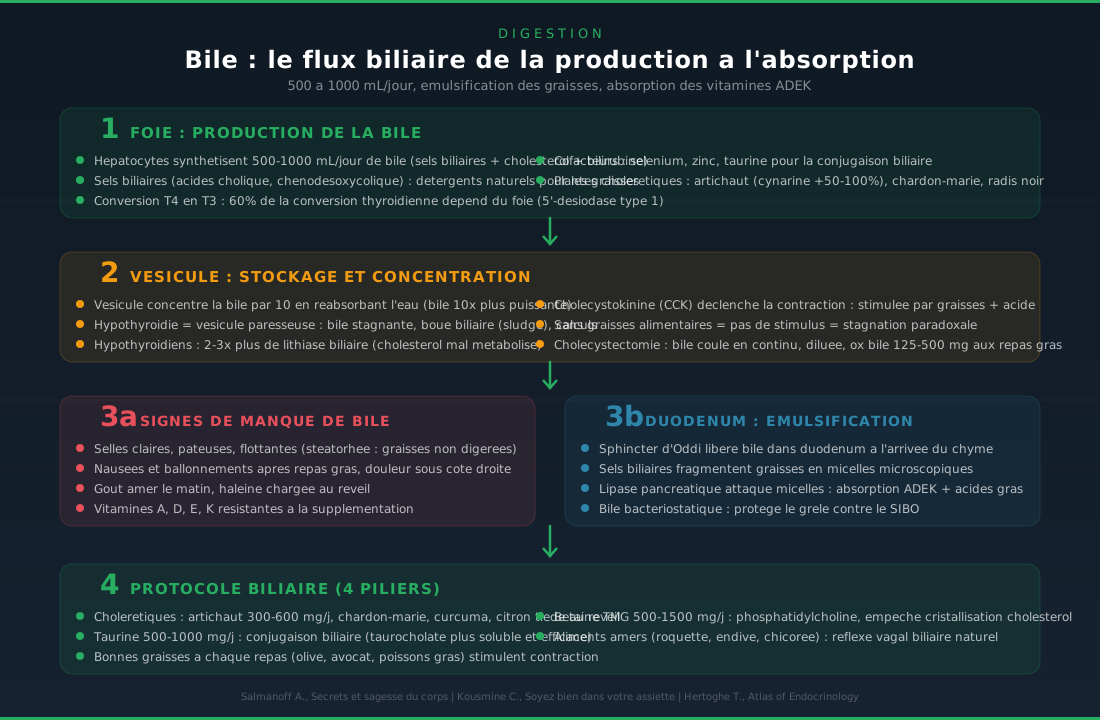
Bile is a yellowish-green liquid produced by the liver at a rate of 500 to 1000 mL per day. It is stored and concentrated in the gallbladder (which concentrates it tenfold by reabsorbing water), then released into the duodenum when a fatty meal arrives. Bile contains bile salts (cholic and chenodeoxycholic acids), cholesterol, bilirubin (which gives color to stools), lecithin, and metabolic waste that the liver eliminates through this route.
Bile salts are natural detergents. Their function is to emulsify dietary fats, that is, to break them into microscopic droplets (micelles) small enough to be attacked by pancreatic lipase. Without this emulsification, fats pass through the digestive tract as large droplets that enzymes cannot penetrate. Result: fats exit intact in the stools (steatorrhea) and fat-soluble vitamins with them.
Salmanoff, in Secrets and Wisdom of the Body, attached great importance to bile circulation: “The liver is the central laboratory of the organism. Its capacity to produce and eliminate bile determines the purity of the blood, the quality of digestion, and the elimination of toxins. A congested liver is one that slowly poisons the entire organism.” This view, judged too simplistic by some academics, is today largely confirmed by research on bile acids as metabolic messengers.
Thyroid and gallbladder: the overlooked link
The link between hypothyroidism and gallbladder pathology has been documented since the 1970s but is rarely taught. Hypothyroidism affects the gallbladder in three ways.
First, thyroid hormones stimulate gallbladder contraction via cholecystokinin (CCK) receptors. When thyroid hormones are low, the gallbladder contracts weakly, bile stagnates, thickens, and forms sludge then stones. Studies show that hypothyroid patients have two to three times more gallstones than the general population.
Second, hypothyroidism slows cholesterol metabolism. Cholesterol is the main component of gallstones (80% of stones are cholesterol-based). When the liver does not metabolize cholesterol into bile salts quickly enough (this conversion requires thyroid hormones), cholesterol accumulates in bile and crystallizes.
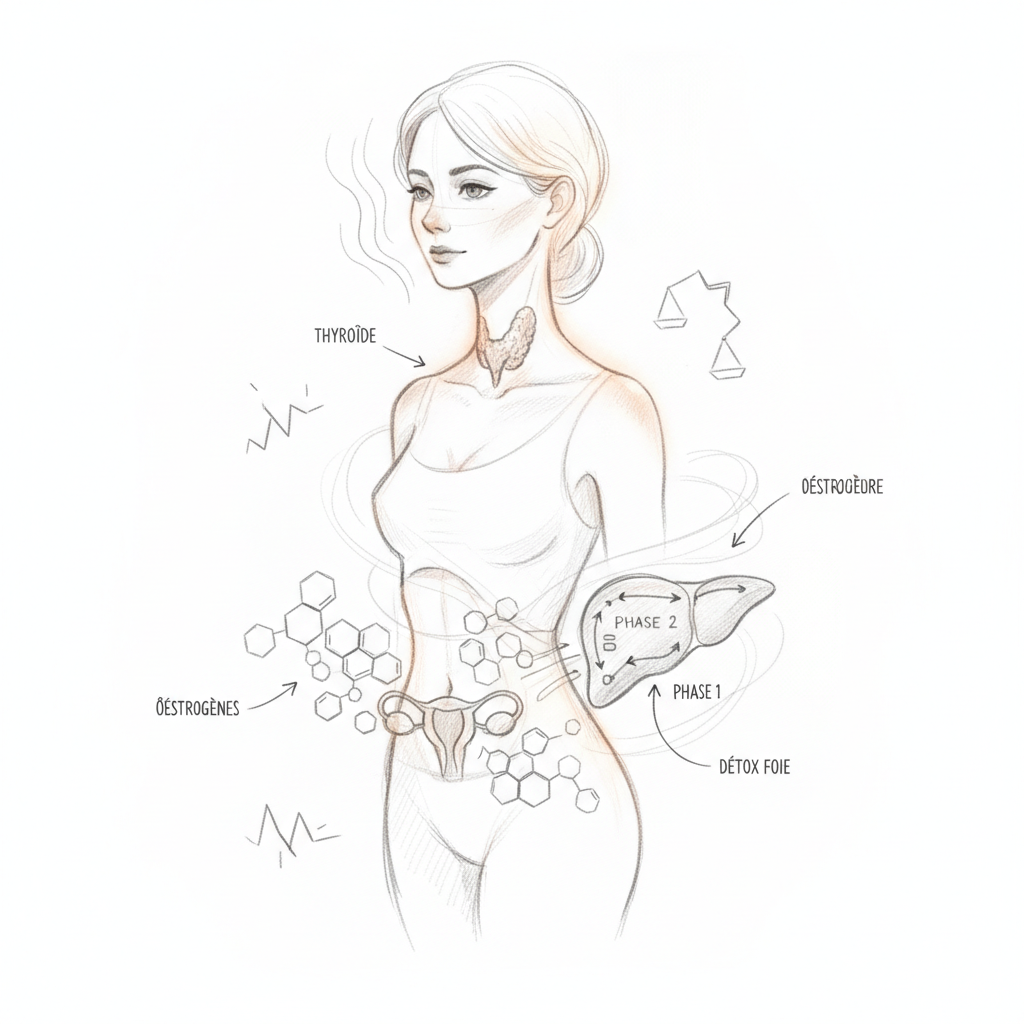
Third, and this is the most important point for naturopathy: the liver is responsible for 60% of the conversion of T4 (inactive prohormone) to T3 (active hormone). This hepatic conversion requires the enzyme 5’-deiodinase type 1, whose activity depends on selenium, zinc, and a functional liver with good bile circulation. A congested liver (stagnant bile, toxic overload) poorly converts T4 to T3. You can have perfect free T4 and be hypothyroid at the tissue level because your liver is not doing its conversion job. I detailed this mechanism in my article on thyroid and micronutrition.
The bile support protocol in practice
My approach to bile support is based on four complementary pillars.
The first pillar is choleretic herbs (which stimulate bile production by the liver). Artichoke (Cynara scolymus) is the king of choleretics in French phytotherapy. The cynarin it contains increases bile production by 50 to 100% in studies. The effective dose is 300 to 600 mg of dry extract per day, or two artichoke leaves in infusion after meals. Milk thistle (Silybum marianum) protects hepatocytes and supports liver regeneration via silymarin. Black radish is a powerful choleretic but should be used with caution in cases of stones (it can mobilize a stone and cause gallbladder colic). Turmeric, in addition to its anti-inflammatory properties, stimulates gallbladder contraction.
The second pillar is taurine. This sulfur-containing amino acid is essential for the conjugation of bile acids. Bile salts are conjugated with either taurine (taurocholate) or glycine (glycocholate) before being secreted. Conjugation with taurine produces bile salts that are more soluble and more effective at emulsifying fats. The dose is 500 to 1000 mg per day, preferably with meals.
The third pillar is betaine (trimethylglycine, not betaine HCl). Betaine is a methyl donor that supports the methionine cycle and phosphatidylcholine production, a major component of bile that prevents cholesterol crystallization. The dose is 500 to 1500 mg per day.
The fourth pillar, for people who are cholecystectomized (without a gallbladder) or with severe bile insufficiency, is supplementation with bile salts (ox bile). The dose of 125 to 500 mg with fat-containing meals replaces the concentration and release function that the gallbladder can no longer provide. It is a remarkably effective supplement that transforms digestion in cholecystectomized patients.
Foods that support bile
Bitter foods naturally stimulate bile production and flow through the vagal reflex: arugula, endive, chicory, radicchio, grapefruit, lemon zest. Starting each meal with a small bitter salad is a simple and ancestral gesture that prepares digestion. It is the principle of “appetizer” appetizers in traditional Mediterranean cuisine.
Fresh lemon juice in warm water upon waking is a naturopathy classic for stimulating the liver and bile. Citric acid activates hepatic receptors and increases morning bile secretion. It is also an excellent complement to the spring detox protocol that I recommend every year.
Good fats (extra virgin olive oil, avocado, nuts, small fatty fish) are not enemies of the gallbladder. On the contrary, they stimulate gallbladder contraction and prevent bile stagnation. It is the low-fat diet (long recommended to gallbladder patients) that is paradoxically the worst enemy of the gallbladder: without dietary fats, no stimulus for contraction, and bile stagnates even more. Quality fats, in moderate quantity at each meal, keep the gallbladder active and functional.
Warning
Symptomatic gallstones (recurrent gallbladder colic, acute cholecystitis) require medical follow-up and sometimes surgery. Laparoscopic cholecystectomy is a safe procedure and often necessary when stones are obstructive or infected. Naturopathy does not replace surgery in these cases. It intervenes upstream (prevention) and downstream (post-cholecystectomy support).
If you have known gallstones, DO NOT use aggressive choleretic herbs (black radish, boldo) without medical advice. Bile stimulation can mobilize a stone and block it in the common bile duct, causing gallbladder colic or even acute pancreatitis. Artichoke and milk thistle are gentler and generally better tolerated, but caution remains necessary.
Kousmine, in her clinical practice, always started with the liver. “The liver is the conductor of nutrition. If the conductor is tired, the whole orchestra plays out of tune.” Bile support is the first step in getting the conductor back in shape. Simple, physiological, and often spectacularly effective, as Chantal can testify with her vitamin D finally in the right range.
Want to evaluate your status? Take the free Claeys thyroid questionnaire in 2 minutes.
If you want personalized support, you can book a consultation.
To go further
- Intestinal dysbiosis: the 5 profiles that sabotage your thyroid
- SIBO: when the small intestine triggers autoimmunity
- Bloating and gas: your belly is trying to talk to you
- Chronic constipation: the 7 causes your doctor isn’t looking for
Healthy recipe: Carrot-radish juice: Black radish stimulates bile.
Laisser un commentaire
Sois le premier à commenter cet article.