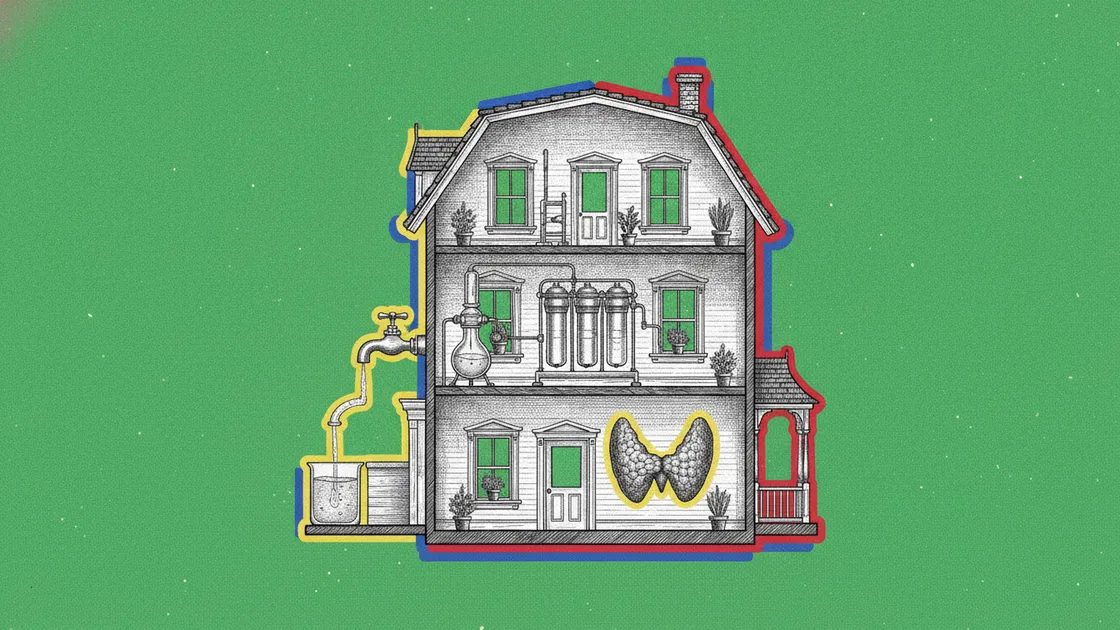
Karim is an engineer, a rationalist through and through, and he didn’t believe a word of what I told him about environmental toxins. “You know, everything is toxic at high doses, even water,” he said to me with a condescending smile at our first consultation. He came for his thyroid (Hashimoto diagnosed two years earlier, fluctuating TSH, antibodies all over the place despite Levothyrox and a gluten-free diet). I proposed an audit of his home environment. He accepted out of curiosity rather than conviction.
When he came back with the results two weeks later, he wasn’t smiling anymore. His tap water contained traces of lead (old pipes in his Haussmann building), residual chlorine, and pesticide residues. His nonstick pan was scratched and releasing PFAS with each use. His toothpaste contained fluorine. His shower gel contained parabens. His deodorant contained aluminum. His scented candles were releasing benzene and formaldehyde. And his home office, freshly furnished at a Swedish furniture giant, was continuously off-gassing formaldehyde.
Six months after correcting all of that (water filter, stainless steel utensils, organic cosmetics, ventilation, air-purifying plants), his anti-TPO antibodies had dropped from 280 to 145 without any other change to his protocol. Karim became my most vocal patient about environmental toxins. He even convinced his building to replace the pipes.
Fluorine : a halogen that displaces iodine
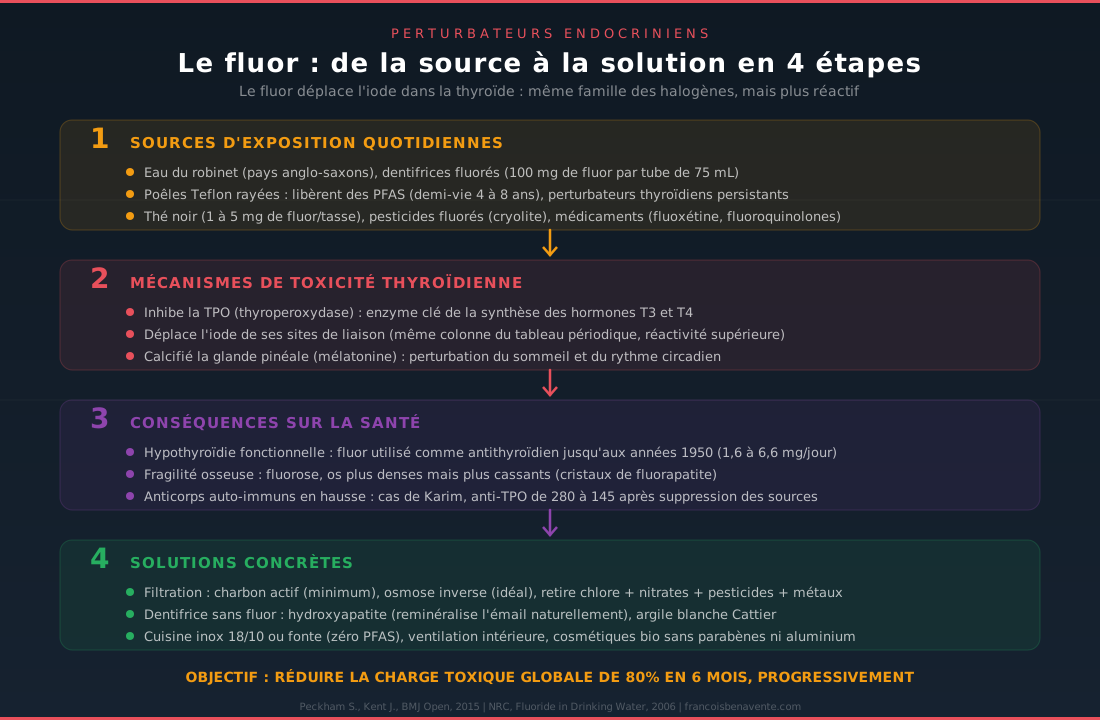
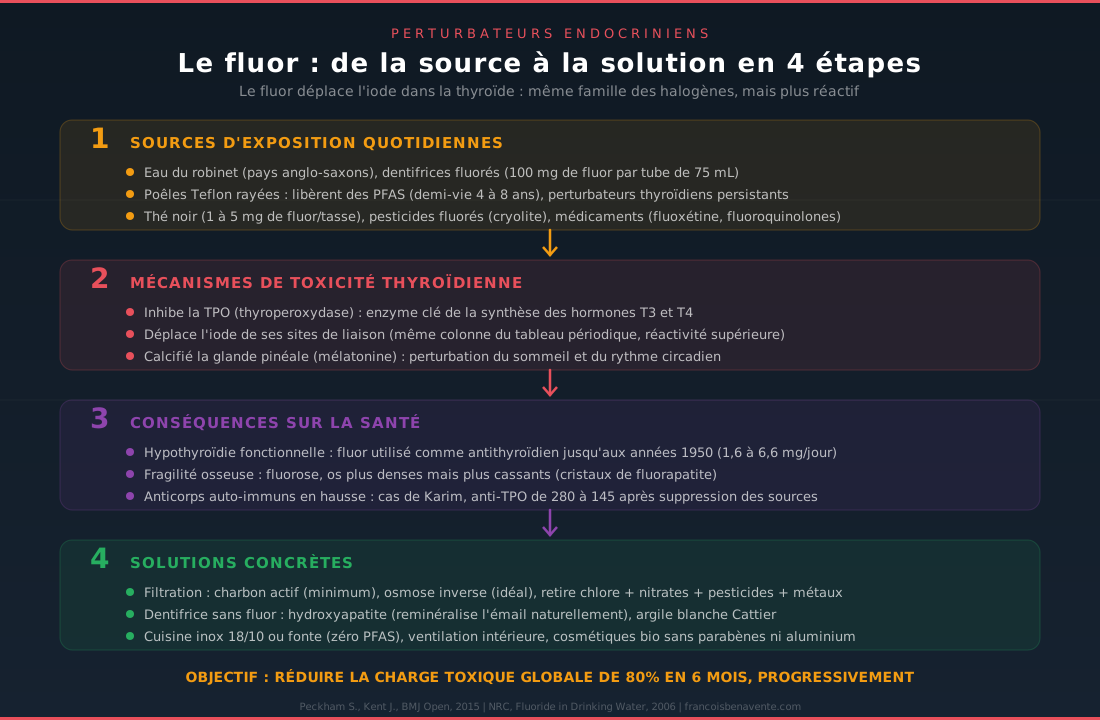
Fluorine, chlorine, bromine, and iodine all belong to the same chemical family : the halogens. They share the same column of the periodic table and can substitute for one another in biochemical reactions. The problem is that fluorine, chlorine, and bromine are more reactive than iodine and can displace it from its binding sites in the thyroid.
Fluorine binds to the same receptors as iodine in thyroid cells. When fluorine occupies these sites, iodine can no longer be captured and the synthesis of T3 and T4 hormones is compromised. Studies show that chronic exposure to fluorine (1.6 to 6.6 mg per day) is enough to suppress thyroid function. This is why fluorine was used until the 1950s as an antithyroid medication to treat hyperthyroidism, at doses corresponding to what some people ingest daily via water and toothpaste.
In France, tap water is generally not fluoridated (unlike the United States, United Kingdom, and Australia). But fluorine enters through other routes : fluoridated toothpastes (a 75 mL tube contains approximately 100 mg of fluorine, and some is swallowed), black tea (tea plants accumulate fluorine from the soil ; a cup of black tea contains 1 to 5 mg of fluorine), fluorinated pesticides (cryolite, sulfuryl fluoride) used on grapes, and certain medications (fluoxetine/Prozac contains fluorine, as do some fluoroquinolone antibiotics).
The 9 toxins in your home
Marchesseau taught that humoral toxemia is the primary cause of all disease. Salmanoff, for his part, insisted on the role of exogenous toxins in clogging capillaries and emunctories. They were right ahead of their time. Here are the nine most common sources of toxins in a modern household, with concrete alternatives.
The first point is tap water. Even without added fluorine, French water contains chlorine (a disinfectant that displaces iodine), nitrates (goitrogens at high doses), pharmaceutical residues (including synthetic estrogens from contraceptive pills that pass through treatment plants), pesticides, and sometimes heavy metals. An activated charcoal filter eliminates chlorine, pesticides, and some medications. A reverse osmosis filter additionally eliminates nitrates, heavy metals, and residual fluorine.
The second point is nonstick cooking utensils. PTFE (Teflon) coatings release PFAS when heated or scratched. PFAS are nicknamed “forever chemicals” because they persist for decades in the environment and years in the human body. They interfere with thyroid receptors and increase the risk of thyroiditis. Stainless steel 18/10 with triple bottom, enameled cast iron, and unglazed ceramic are safe alternatives.
The third point is food plastics. BPA (bisphenol A) and phthalates from plastic containers migrate into food, especially when heated or acidic. BPA is a potent xenoestrogen. Studies show it increases TSH and reduces free T4. Replace with glass, stainless steel, or food-grade silicone. NEVER heat food in plastic in the microwave.
The fourth point is cosmetics and hygiene products. Parabens (estrogenic-mimicking preservatives), triclosan (antibacterial thyroid disruptor), aluminum (in deodorants, neurotoxic), phthalates (in fragrances, endocrine disruptors). The Yuka app or INCI Beauty allows you to scan products and identify problematic substances. Prioritize cosmetics certified Cosmos Organic or Nature & Progrès.
The fifth point is household products. Conventional cleaners contain petrochemical surfactants, synthetic fragrances (phthalates), and formaldehyde (classified as carcinogenic). White vinegar, baking soda, black soap, and essential oils (lemon, tea tree) cover 90% of household cleaning needs.
The sixth point is scented candles and air fresheners. Paraffin candles (petroleum-derived) release benzene and toluene (neurotoxic). Indoor air fresheners emit phthalates and formaldehyde. Prefer beeswax or soy candles, and ventilate naturally rather than masking odors.
The seventh point is new furniture. Furniture made from particle board panels (MDF, chipboard) emit formaldehyde for months or even years after purchase. Sofas and mattresses contain brominated flame retardants (PBDE) which are major thyroid disruptors. Intensively air out rooms with new furniture for at least three months. Prefer solid wood when possible.
The eighth point is dry cleaning and new clothes. Perchloroethylene used in dry cleaning is a chlorinated solvent that is neurotoxic and hepatotoxic. New clothes are treated with formaldehyde (anti-wrinkle) and synthetic dyes. Wash all new clothes twice before wearing. Prefer ecological dry cleaning (CO2 or aqua cleaning).
The ninth point is indoor air. Indoor air is on average five to eight times more polluted than outdoor air (OQAI study). Sources include furniture, paints, household products, candles, gas cooking, and radon. Ventilate for ten minutes morning and evening, even in winter. An air purifier with HEPA filter is a worthwhile investment for sensitive individuals.
The toxic reduction protocol
I don’t recommend changing everything overnight (it would be anxiety-inducing and costly). The approach is progressive, in three-month waves.
The first three months (low cost, high impact) : replace toothpaste with a fluorine-free version, install a charcoal filter on the kitchen tap, discard scratched nonstick pans and replace them with stainless steel, stop heating in plastic, ventilate for ten minutes morning and evening.
Months three to six (moderate cost) : switch to certified organic cosmetics, replace plastic containers with glass, replace household products with natural alternatives, eliminate scented candles and air fresheners.
Months six to twelve (investments) : reverse osmosis filter if water is particularly contaminated, air purifier if housing is polluted, gradual replacement of bedding (organic mattresses and pillows without flame retardants).
In parallel, support natural detoxification pathways: the liver (milk thistle, artichoke, NAC), the kidneys (adequate hydration, lemon), the skin (sauna, exercise, dry brushing), and the intestines (daily transit, fiber, magnesium).
Warning
The toxic audit must not become a source of paralyzing anxiety. The goal is to reduce overall toxic burden pragmatically, not to achieve a “zero toxin” environment that doesn’t exist. Chronic stress generated by eco-anxiety is itself an endocrine disruptor (the cortisol inhibits T4→T3 conversion). Balance lies in reasonable reduction, not paranoia.
If you suspect specific contamination (lead in pipes, asbestos in walls, radon in soil), consult a certified professional for diagnosis. Some toxins (mercury from dental amalgams, asbestos) require specialized removal procedures and should not be handled without precautions.
Kousmine wrote more than forty years ago : “We live in an increasingly chemical world, and our bodies have not had time to adapt. Each generation accumulates more toxins than the previous one.” This prophetic observation is today an epidemiological fact. Thyroid diseases have exploded in forty years, in parallel with environmental chemical burden. Correlation is not proof of causality, but when nine thousand studies point in the same direction, perhaps it’s time to listen.
Want to evaluate your status ? Take the free Claeys thyroid questionnaire in 2 minutes.
If you want personalized support, you can book a consultation.
To cook healthily, discover PranaCook stainless steel utensils, without endocrine disruptors.



Laisser un commentaire
Sois le premier à commenter cet article.
Les commentaires ne se chargent pas pour le moment. Réessaie dans quelques minutes.