I have never agreed to put 120 euros into a pan. That’s a sentence I said dozens of times, to my patients, to my friends, to my family. When people talked to me about “high-end pans” at three-figure prices, I would respond that cooking didn’t deserve to drain your wallet. And then I visited factories. I saw how non-stick pans were manufactured. I saw the coatings, the glues, the chemical processes. And that day, I understood that the price of a pan wasn’t what you paid at checkout. It was what you paid with your health.
What drove me to create PranaCook
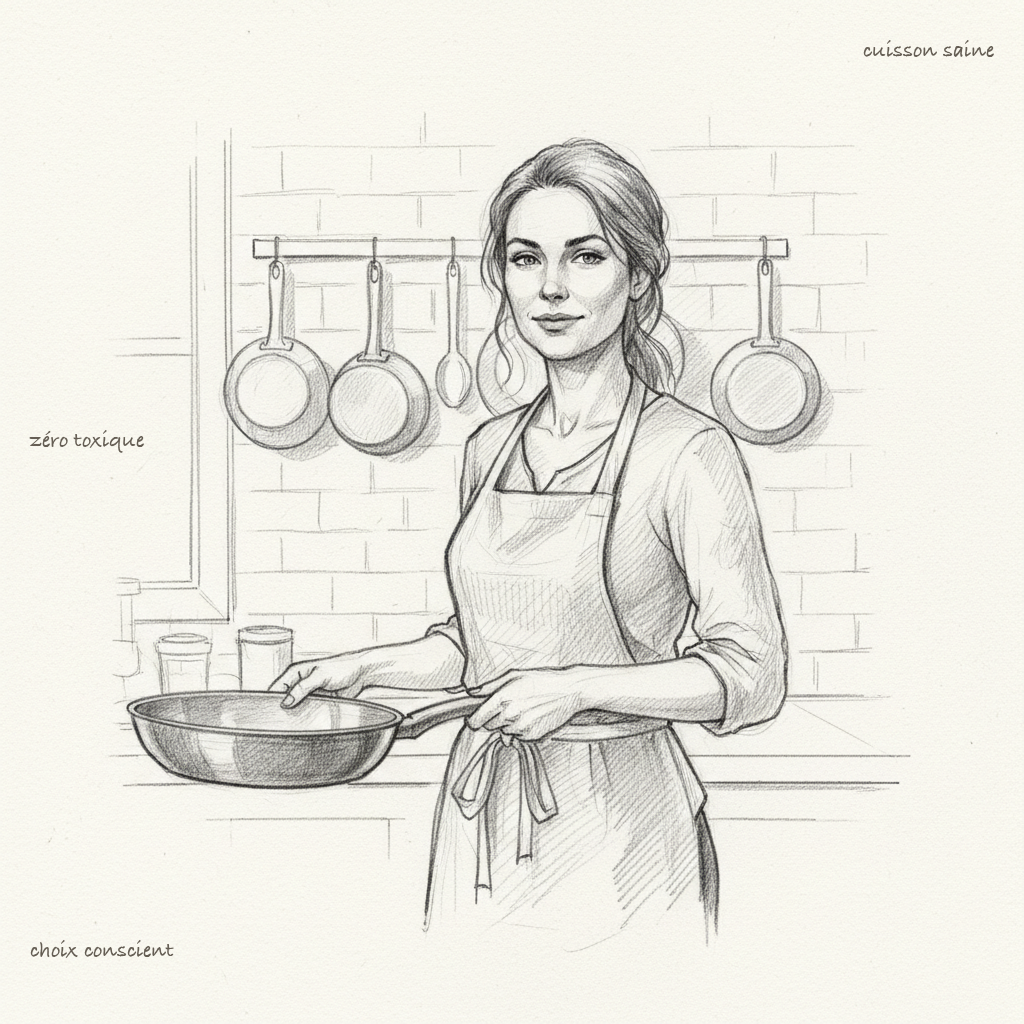
My journey in naturopathy taught me to look at what no one else looks at. In consultations, I ask questions that doctors don’t ask: how you sleep, what you eat for breakfast, if you drink enough water, how long you chew. And one day, I started asking one more question: what do you cook in?
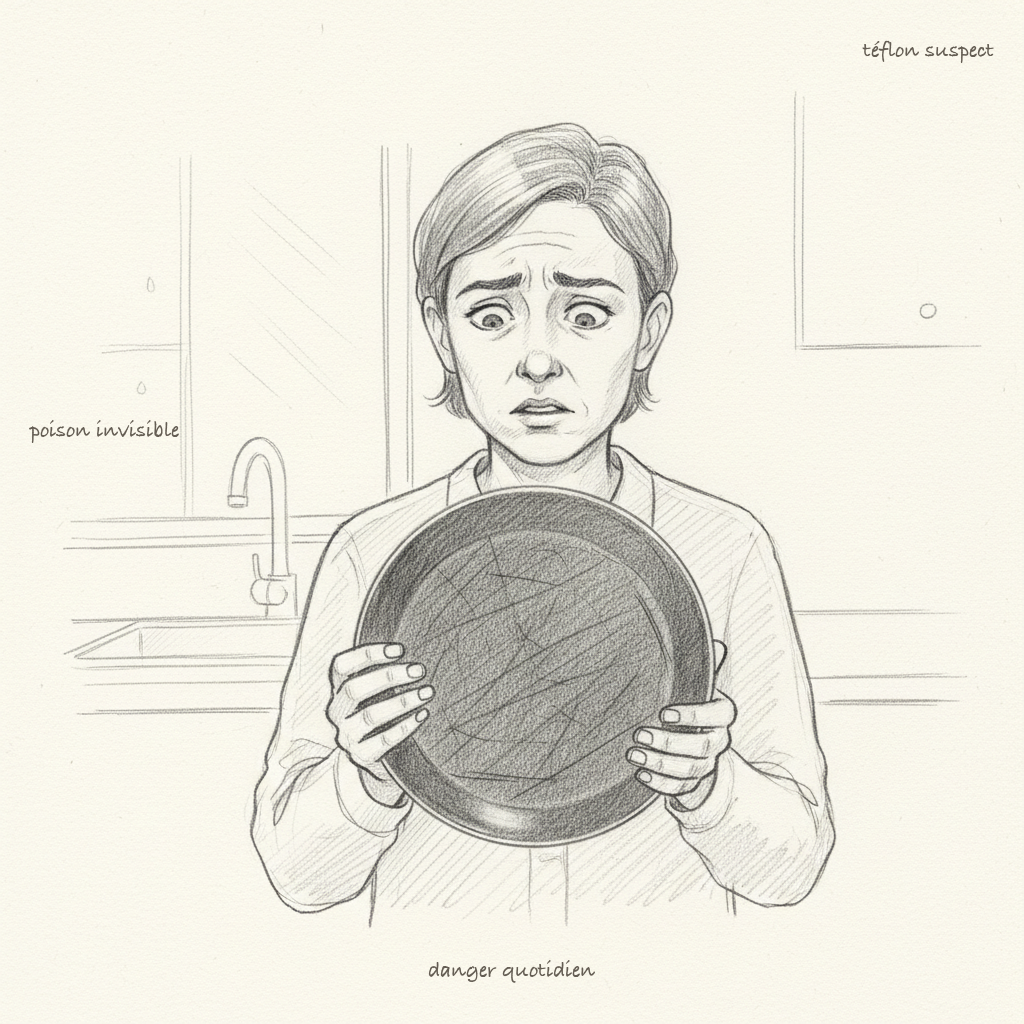
The answers were always the same. Scratched non-stick pans, softened plastic spatulas, dented aluminum pots. Patients who spent 200 euros a month on dietary supplements and organic foods, but who cooked in utensils that contaminated every meal. It was like pouring clean water into a dirty glass.
“You do not nourish an organism by poisoning the vessel that carries the food.” Robert Masson
This inconsistency pushed me to take an interest in cooking materials. Not out of passion for metallurgy, but out of naturopathic consistency. If terrain is the foundation of health, then everything that touches the terrain deserves attention. Including the pot.
Stainless steel 18/10: what exactly is it?
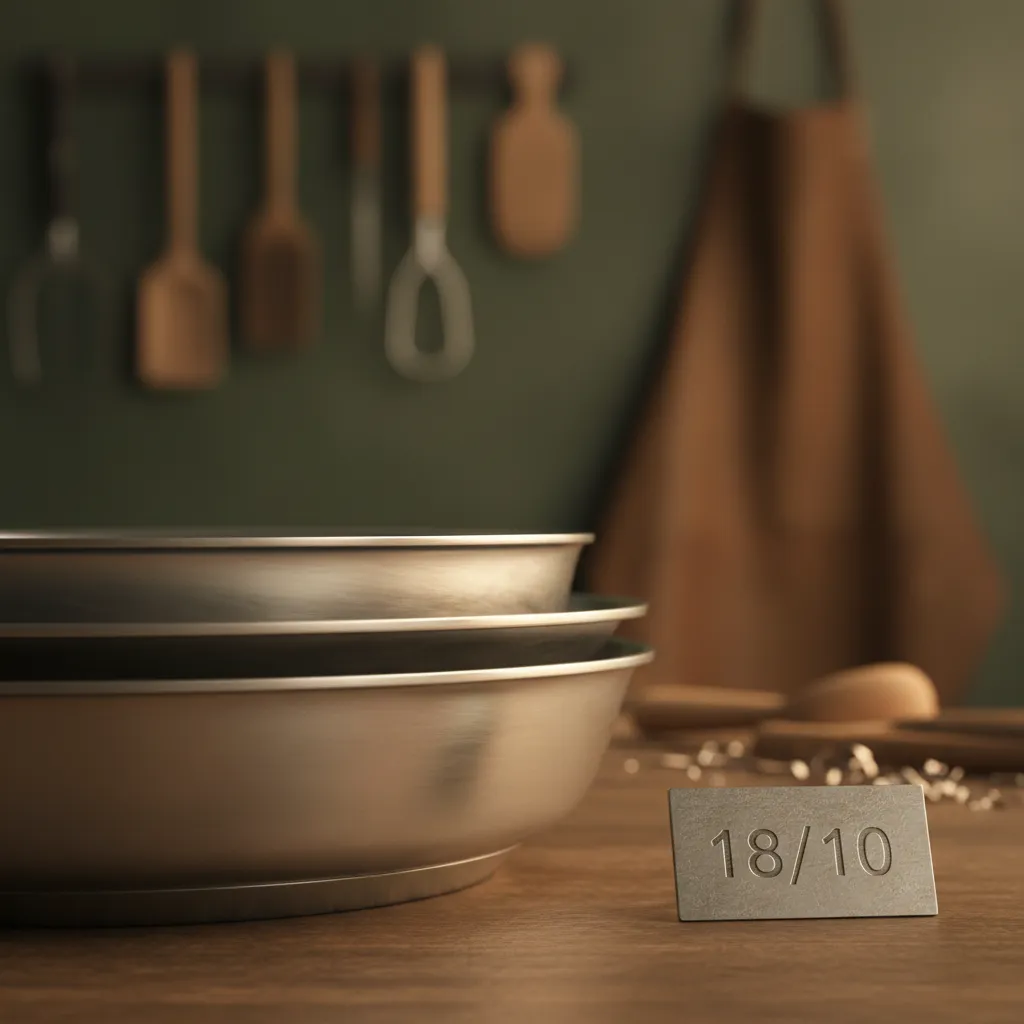
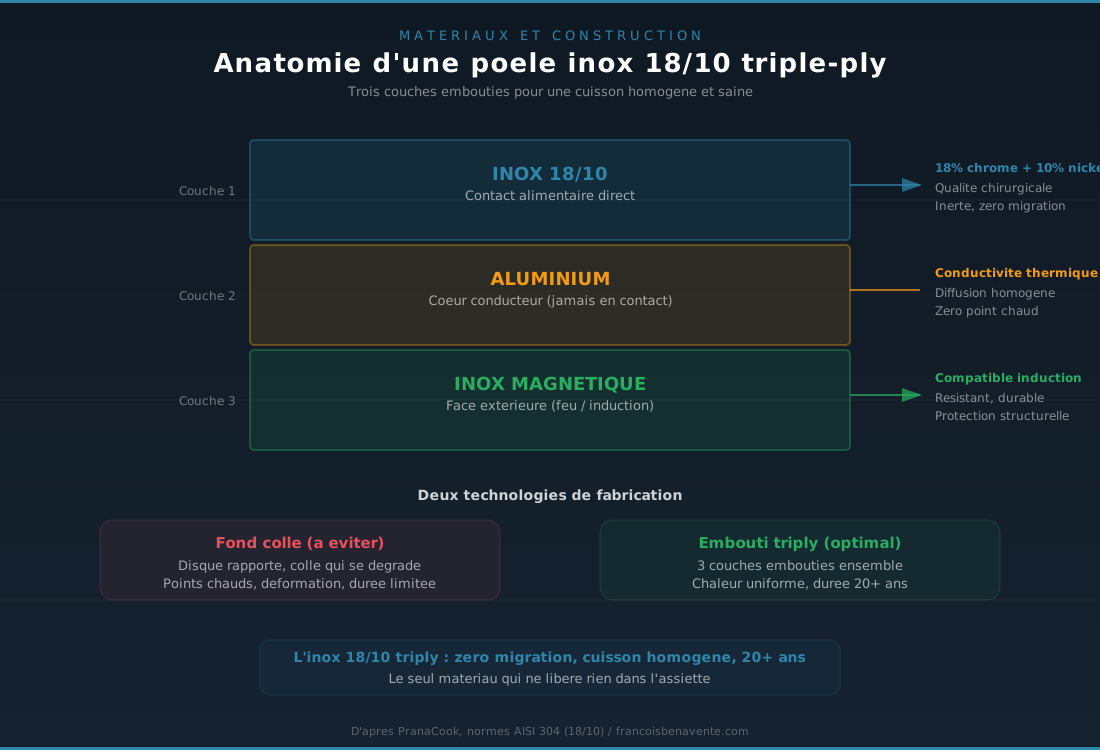
The designation “18/10” is not a marketing argument. It’s a precise chemical composition: 18% chromium and 10% nickel, in a steel alloy. This composition corresponds to the internationally recognized AISI 304 industrial standard, known for its chemical inertness properties. It’s the same steel used to manufacture surgical instruments, medical implants, and vats in the pharmaceutical industry. Environments where even the slightest contamination would be unacceptable.
Chromium forms a passive layer of chromium oxide on the steel surface, invisible to the naked eye, which prevents any chemical reaction with foods. Even acidic substances like vinegar, lemon, or tomato cannot penetrate it. Nickel, for its part, provides shine and corrosion resistance. Together, these two elements make 18/10 stainless steel chemically inert: it releases nothing onto your plate. Zero microparticles, zero endocrine disruptors, zero detectable metal migration in normal use.
Triple-ply: the embossing revolution
Stainless steel alone has a flaw: it conducts heat poorly. If you heat a sheet of pure stainless steel, you get hot spots in the center and cold areas on the edges. That’s why the first stainless steel pans had a bad reputation: food burned in the middle and stayed raw on the sides.
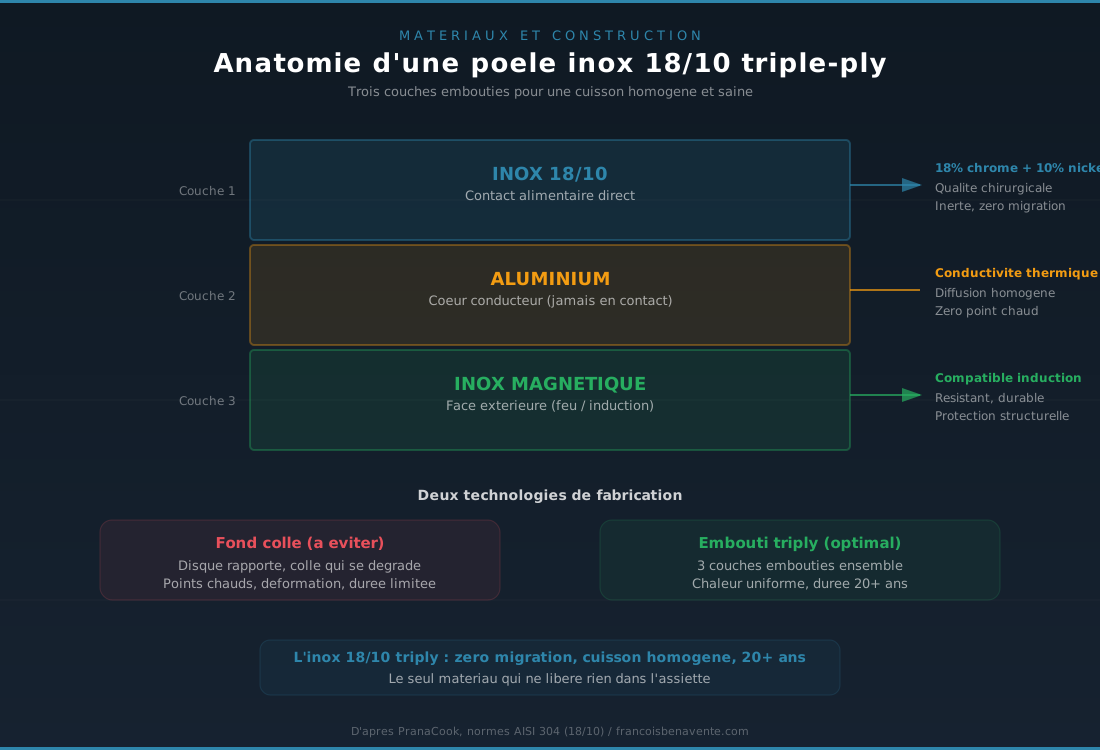
The solution is called triple-ply, or triply. Three layers embossed together in a single piece, without glue, without welding, without mechanical assembly. The inner layer, the one that touches food, is made of surgical-grade 18/10 stainless steel. The core is made of aluminum, an excellent heat conductor that distributes heat uniformly across the entire surface. And the outer layer is made of magnetic stainless steel, compatible with induction cooktops.
There is an older technology, the glued bottom or applied bottom, where an aluminum disc is glued under the pan with industrial adhesive. This glue degrades over time, heating and cooling cycles weaken it, and after a few years, the bottom warps, hot spots appear, and the utensil becomes unusable. Triply eliminates this problem: the three layers are embossed together in a single press, which guarantees permanent mechanical adhesion. That’s why a triply utensil lasts 20 years or more.
What changes when you switch to stainless steel
The first change is taste. It may seem strange to talk about taste when talking about utensils, but patients I accompany in this transition all tell me the same thing: “food has more flavor.” It’s not an illusion. When you stop cooking your vegetables on a surface that releases microparticles of fluoropolymer, when you stop sautéing your onions in a pan whose coating is degrading, foods recover their natural taste.
The second change is freedom. A stainless steel pan fears nothing. You can use metal spatulas, clean it with a steel brush, put it in the dishwasher, move it from oven to stovetop without any risk. Try doing that with a non-stick pan. Stainless steel is the only cooking material that can handle everything: all utensils, all cleaning methods, all temperatures, all heat sources.
The third change, and perhaps the most important for a naturopath, is consistency. You can’t claim to care for your terrain and cook in Teflon. You can’t recommend to your patients that they limit their exposure to endocrine disruptors and heat your tomato sauce in aluminum. 18/10 stainless steel is not a gadget. It’s the practical, daily, concrete translation of a global health philosophy.
The story no one tells about Teflon
When I visited manufacturing plants in India, I discovered something I will never forget. The workers who work on non-stick pan production lines, those who handle PTFE coatings daily, don’t cook with Teflon at home. They use stainless steel. All of them. Without exception.
In India, 18/10 stainless steel is the traditional cooking material. Families have cooked in stainless steel utensils for generations, long before Western industry discovered the “benefits” of non-stick coatings. It’s a country where cooking is a sacred act, where food quality begins with container quality. There is wisdom in this approach that modernity has lost.
This visit crystallized my project. I told myself: if the people who manufacture these pans don’t use them, if a country of 1.4 billion people has cooked in stainless steel forever, then why do we continue to poison ourselves with synthetic coatings? Why is 18/10 stainless steel triply sold at prohibitive prices in France, when it’s a basic material in India?
PranaCook: making stainless steel accessible
Naturopathy should not be reserved for the privileged. A Hurom juice extractor, quality supplements, organic foods, these have a cost that not everyone can afford. And if on top of that you have to put 200 euros into a pan, you exclude part of the population from a health-conscious approach.
PranaCook was born from this conviction. Offering 18/10 stainless steel triply embossed utensils, of identical quality to those sold by major European brands, but at an accessible price. Not cheap Chinese junk, not glued bottom disguised as triply, but real surgical-grade stainless steel embossed in three layers, manufactured in the same factories as major brands, with the same standards, the same materials, but without the margin of a traditional distribution network.
I don’t claim that PranaCook is the only viable option. Cast iron is an excellent, safe, and durable cooking material, which even provides dietary iron, an advantage for people with iron deficiency. Borosilicate glass is perfect for the oven and storage. But for everyday cooking on the stovetop, 18/10 triply stainless steel remains, in my view and in light of science, the best compromise between safety, performance, and durability.
The art of seasoning a stainless steel pan in 2 minutes
Many people hesitate to switch to stainless steel because they’ve heard that “it sticks.” This is a myth based on a misunderstanding of the technique. Stainless steel doesn’t stick if you heat it correctly. The secret is called seasoning, and it takes two minutes.
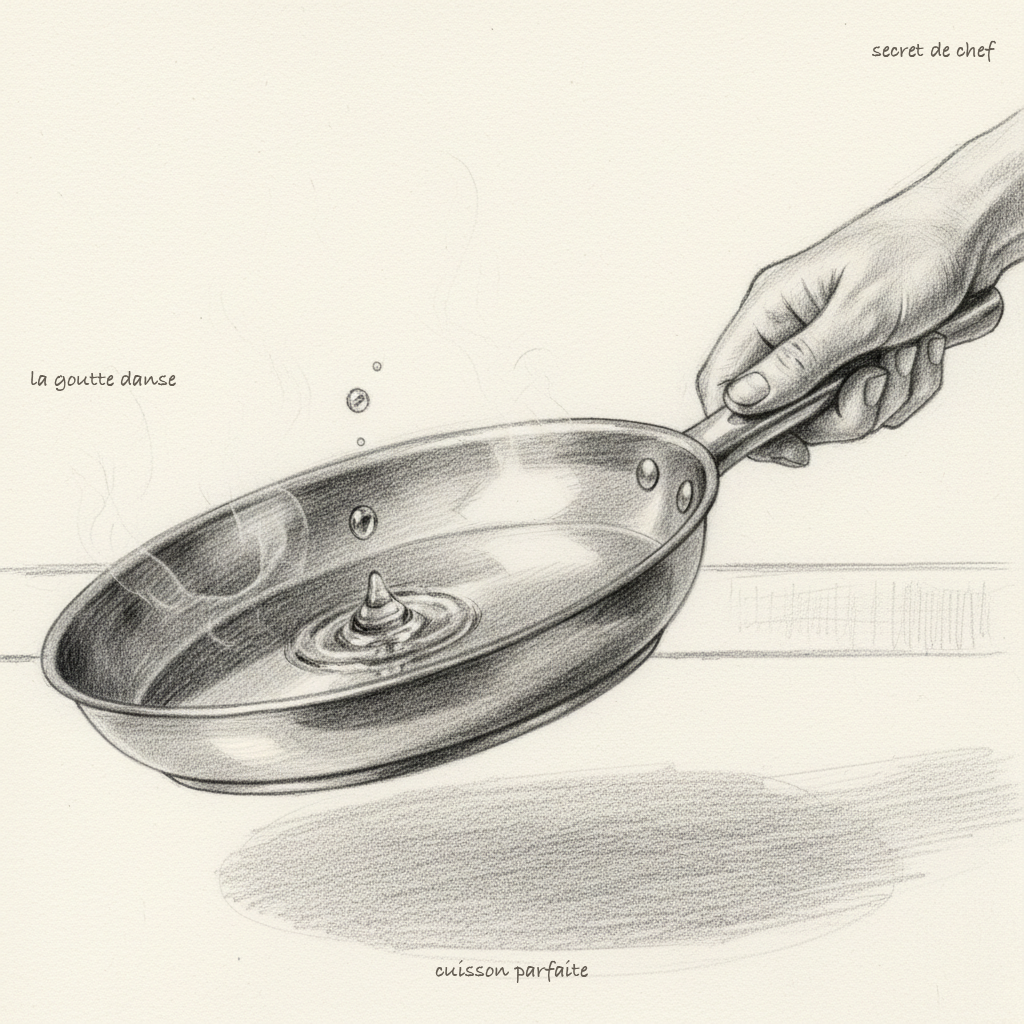
Heat your pan over medium heat for two to three minutes. Add a tablespoon of oil (olive, coconut, sunflower, doesn’t matter). Let the oil reach the smoke point, you’ll see a slight white smoke appear. Turn off the heat, let it cool for 30 seconds, wipe the excess oil with a paper towel. Done. The pores of the steel have expanded with the heat and the oil has filled the micro-irregularities on the surface, creating a natural non-stick layer.
To go deeper into the technique, I wrote a complete guide to cooking with stainless steel with the Leidenfrost effect, the water droplet test, and five mistakes to avoid. If stainless steel intimidates you, start there. You’ll see, it’s much simpler than people say.
What Marchesseau would say about our kitchens
Marchesseau spoke of bromatology, the art of choosing your foods. He classified foods into categories according to their vitality, their digestibility, their impact on the terrain. But he couldn’t imagine that 70 years after his work, the container would become as problematic as the content. That millions of people would buy organic vegetables only to cook them in fluoropolymer.
If Marchesseau came back today, I think he would add a chapter to his bromatology: that of cooking materials. Because anti-inflammatory nutrition begins well before the plate. It begins in the pan.
This is why I created PranaCook: 18/10 stainless steel utensils designed for healthy cooking.
“Health is a state of complete physical, mental and social well-being, and not merely the absence of disease.” World Health Organization. And this well-being begins with what you don’t put in the pot.
To go further
- Endocrine disruptors in the kitchen: what your utensils are hiding from you
- Cooking with stainless steel without it sticking: the water droplet test
- Gentle cooking: preserving nutrients that heat destroys
- Pan, pot, wok: which utensil for healthy cooking
Healthy recipe: Roasted chicken in stainless steel: The perfect recipe for cooking with stainless steel.
Laisser un commentaire
Sois le premier à commenter cet article.