Nine Myths About Food and Hashimoto: Separating Fact from Fiction
The internet is a wonderful place to learn about Hashimoto. It’s also a dangerous place. Because in the continuous flow of articles, Instagram posts, YouTube videos, and Facebook testimonials, false ideas circulate just as quickly as true ones. And when you’re a newly diagnosed patient, frightened, searching for answers, you don’t always have the tools to distinguish myth from fact.
I’ve seen patients in consultation who had eliminated broccoli from their diet because a blog told them that cruciferous vegetables “attack the thyroid.” I’ve seen others taking 12 milligrams of iodine per day because a self-proclaimed naturopath told them the thyroid “always needs more iodine.” Still others following a strict ketogenic diet for a year whose antibodies had doubled. Each time, the same pattern: partial information, taken out of context, transformed into an absolute rule, and applied without discernment.
“Half of what you learned in medical school is wrong. The problem is, nobody knows which half.” Attributed to Dr. Charles H. Mayo
Let’s review the nine most widespread beliefs about food and Hashimoto. For each one, reality is more nuanced than the myth suggests.
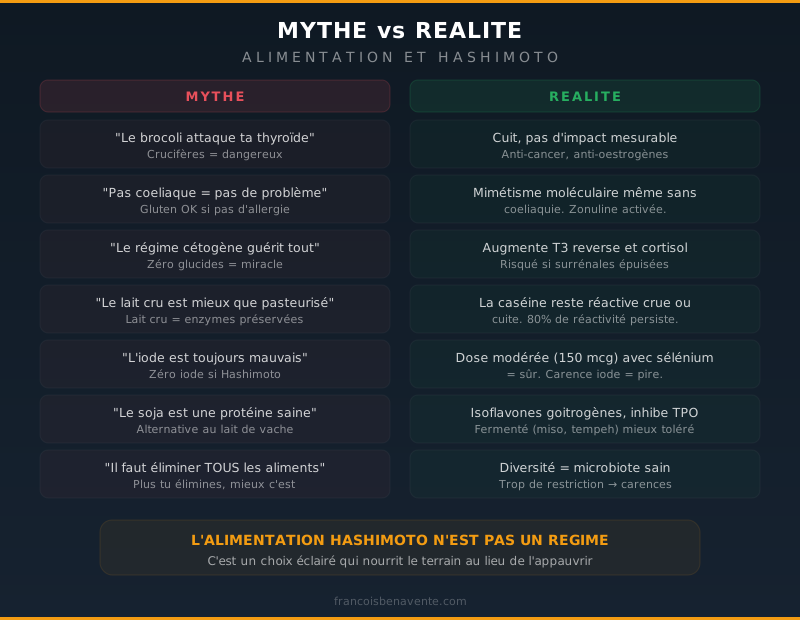
Broccoli Attacks Your Thyroid
This is probably the most stubborn myth. Cruciferous vegetables (broccoli, cabbage, cauliflower, Brussels sprouts, kale) contain glucosinolates that, once metabolized, release thiocyanates and isothiocyanates. These compounds can theoretically inhibit iodine uptake by the thyroid and interfere with thyroid hormone synthesis. That’s true. On the biochemical paper, it’s true.
But the dose makes the poison. For a human to reach the dose of glucosinolates capable of significantly disrupting the thyroid, they would need to eat more than a kilogram of raw cruciferous vegetables per day, for several weeks, in a context of severe iodine deficiency. If you don’t live in a region of endemic goiter and aren’t exclusively fed raw cabbage, the risk is zero.
Moreover, cooking inactivates most glucosinolates. Broccoli steamed for five minutes loses most of its goitrogenic potential while retaining its beneficial sulfur compounds, particularly sulforaphane. Sulforaphane is one of the most powerful activators of phase II liver detoxification. It supports the metabolism of estrogens (via the DIM/I3C enzyme), is anti-inflammatory, and has documented anti-cancer properties. Eliminating cruciferous vegetables from your diet out of fear for your thyroid is depriving yourself of a protective food to avoid a non-existent danger.
Without Celiac Disease, There’s No Problem With Gluten
This one is more subtle, and it even divides practitioners. The logic is simple: if you’re not celiac (an autoimmune disease of the small intestine triggered by gluten), then gluten poses no problem. That’s what most gastroenterologists say. And it’s partially wrong.
Gliadin, the wheat protein responsible for gluten’s toxic effect, activates zonulin in all human beings, not just celiacs. Zonulin is a protein that opens the tight junctions of the intestine. In a person with a healthy gut, this opening is transient and without consequence. But in a person whose intestinal barrier is already compromised, as is the case in Hashimoto, this opening allows the passage of food proteins and bacterial toxins into the blood, which stimulates autoimmunity.
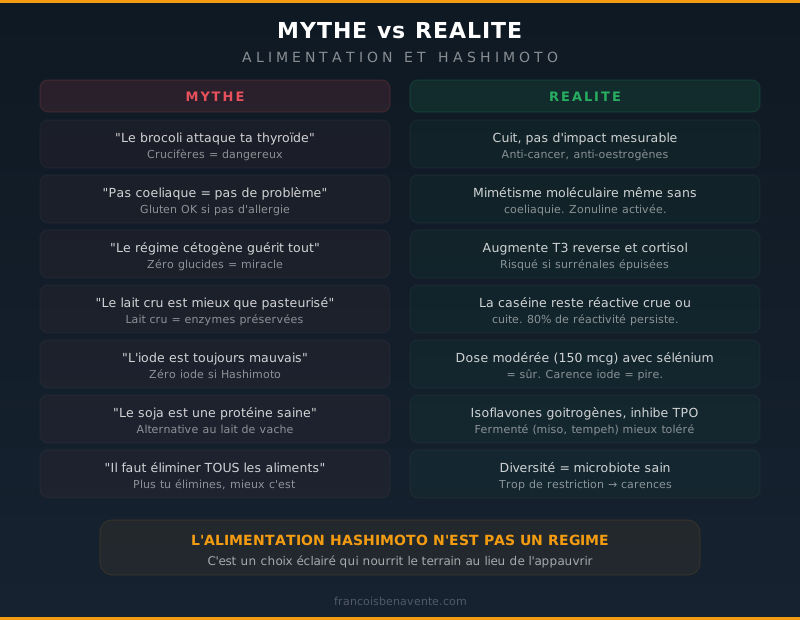
There’s also molecular mimicry. Gliadin and thyroid transglutaminase share amino acid sequences similar enough that the immune system confuses one with the other. This mimicry is documented independently of celiac disease. Seignalet classified modern wheat among “mutated proteins” long before this mechanism was identified. He recommended its exclusion in all autoimmune diseases, not just celiac disease.
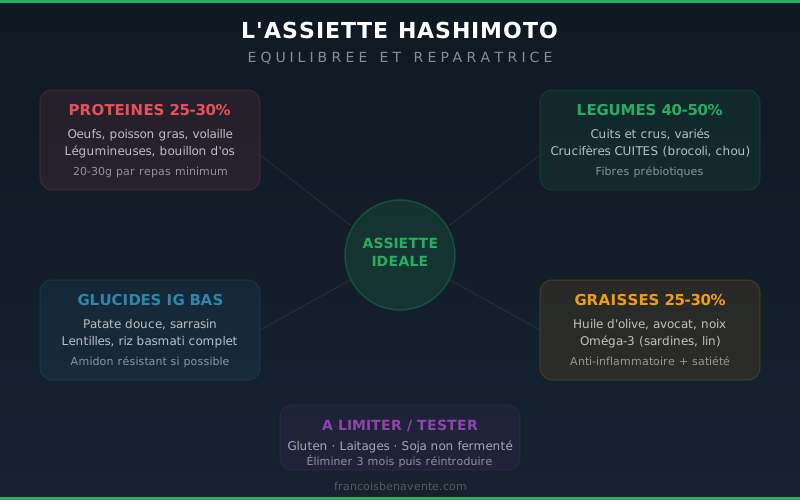
I’m not saying all Hashimoto patients must be gluten-free for life. I’m saying a three-month elimination trial is the minimum to know if you’re sensitive to it. In my experience, about half of Hashimoto patients see significant improvement in their symptoms and antibodies after eliminating gluten.
The Ketogenic Diet Cures Everything
The ketogenic diet is in fashion. Zero carbohydrates (or almost), lots of fat, moderate protein. And for some conditions (refractory epilepsy, severe insulin resistance, certain cancers), it can be therapeutic. But for Hashimoto, it’s another story.
Drastic carbohydrate restriction sends a signal of metabolic stress to the body. Cortisol increases to maintain blood sugar (gluconeogenesis). Reverse T3 increases to slow metabolism. The adrenals, already weakened in Hashimoto, are constantly solicited to compensate for the absence of dietary glucose. In the short term, some patients feel better (probably thanks to the simultaneous elimination of gluten and sugar). In the long term, the hormonal profile deteriorates in those whose adrenals aren’t in a state to support the metabolic stress of ketogenic eating.
Marchesseau didn’t know about the ketogenic diet, but he would likely have warned against any diet of extreme exclusion. His food philosophy was based on balance and diversity: “The ideal diet is one that provides each cell with exactly what it needs, neither more nor less.” A moderately low-carb diet (80 to 120 grams per day of low-GI carbohydrates), with sufficient protein and quality fats, is more suitable for Hashimoto than a strict ketogenic approach.
Raw Milk Is Better Than Pasteurized
Some raw milk advocates argue that pasteurization destroys enzymes (lactase, lipase) that make milk digestible, and that raw milk would therefore be better tolerated. This is partially true for lactose digestion. But the problem with milk in Hashimoto isn’t lactose. It’s casein.
Casein is the main protein in cow’s milk. It represents approximately 80 percent of dairy proteins. And casein retains exactly the same molecular structure, whether raw or pasteurized. The molecular mimicry between casein and thyroglobulin persists. The IgG reactivity of Hashimoto patients to casein persists. Raw, pasteurized, UHT, organic, farm: casein remains casein. The only form of milk whose casein is partially denatured is long-fermented milk (kefir, 24-hour yogurt), but even then, caution is warranted for highly reactive patients.
The best-tolerated proteins in Hashimoto remain eggs, fish, poultry, and legumes. Milk, in whatever form, deserves at minimum a three-month elimination trial.
Iodine Is Always Bad for Hashimoto
This myth is dangerous. It circulates massively in Hashimoto patient groups on social media: “Definitely no iodine! Iodine worsens Hashimoto!” This is a gross oversimplification that can lead to iodine deficiency, which aggravates hypothyroidism far more reliably than modest supplementation.
The problem isn’t iodine per se. The problem is high-dose iodine without selenium. When the thyroid receives iodine, it produces hydrogen peroxide (H2O2) to incorporate iodine into tyrosine. This H2O2 is a powerful oxidant that must be neutralized by glutathione peroxidase, an enzyme that depends on selenium. If selenium is low (which is frequent in Hashimoto), H2O2 damages thyroid cells and stimulates autoimmunity. It’s excess iodine without selenium that’s problematic, not iodine itself.
At physiological dose (150 micrograms per day, the recommended daily intake), with correct selenium status (200 micrograms of selenium per day), iodine is safe and necessary. The thyroid needs iodine to make its hormones. Depriving it of iodine out of fear is like refusing to put gas in an engine that has a faulty oil filter. Fix the filter (selenium) AND put in the gas (iodine).
Soy Is a Healthy Alternative
Soy milk is often presented as the first alternative to cow’s milk. For many Hashimoto patients who eliminate dairy, it’s the number-one reflex. It’s unfortunately a bad reflex. Soy isoflavones (genistein, daidzein) inhibit thyroperoxidase (TPO), the very enzyme that anti-TPO antibodies attack in Hashimoto. It’s a double blow: you eliminate milk that attacks your thyroid through mimicry and replace it with soy that attacks your thyroid through enzymatic inhibition.
Fermented soy (miso, tempeh, natto, tamari sauce) is better tolerated because fermentation degrades some of the isoflavones and anti-nutrients. But it should be consumed in moderation: one to two servings per week maximum, not daily. The best plant-based milk alternatives are almond milk, coconut milk, and oat milk (if gluten isn’t a problem, though oats are often contaminated with wheat).
The More You Eliminate, the Better
This is the most pernicious myth of all, because it starts with good intentions. You discover that gluten aggravates your antibodies. You eliminate it. You feel better. So you eliminate dairy. Even better. Then soy. Eggs. Nuts. Rice. Tomatoes. With each elimination, temporary relief. And each time, your list of “allowed” foods shrinks.
The problem is that excessive restriction creates three collateral damages. Nutritional deficiencies that worsen the disease (the less you eat, the fewer nutrients you receive). An impoverishment of the intestinal microbiota (bacterial diversity depends on dietary diversity). And psychological stress that elevates cortisol and feeds the autoimmune vicious cycle.
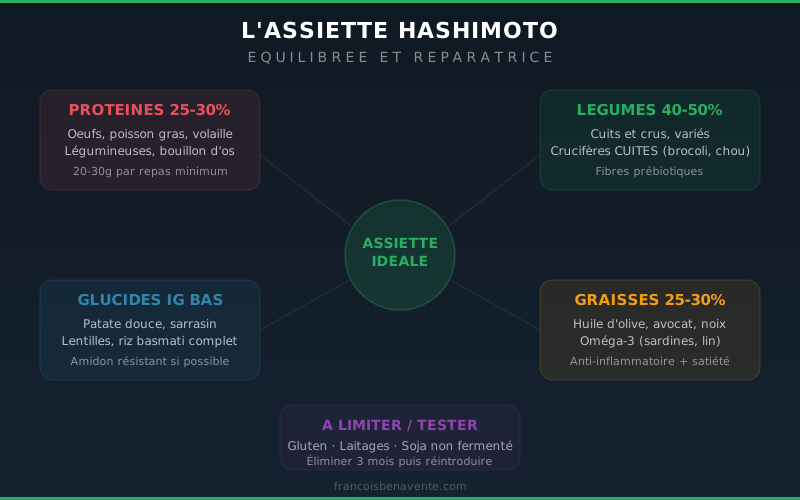
I detailed in my article on food sensitivities why the answer isn’t to eliminate more and more, but to repair the gut to be able to reintroduce. The goal isn’t a survival diet of ten foods. The goal is a rich, diverse, nourishing diet from which you’ve temporarily removed two or three major triggers (gluten and dairy at the top), long enough to rebuild the intestinal barrier and calm autoimmunity.
The Diet That Makes Sense
After dismantling these myths, what remains? Simple, logical eating founded on what naturopathy has said for a century and what science gradually confirms. Complete proteins at each meal. Vegetables in abundance, including cooked cruciferous vegetables. Quality fats (omega-3, olive oil, avocado). Low-GI carbohydrates in moderate quantity. And foundational work on the gut that allows, over time, a return to diverse and peaceful eating.
Carton said it better than anyone: “Vital force isn’t nourished by deprivation. It’s nourished by what is right, at the right time, in the right quantity.” Hashimoto eating isn’t a restrictive diet. It’s an informed choice that nourishes your terrain rather than impoverishing it. And the nuance between the two makes all the difference.
Want to assess your potential food sensitivities? The dysbiosis questionnaire is a first step toward understanding your intestinal terrain.
To Go Further
To learn more about food and Hashimoto, I recommend The Seignalet Method, The Wentz Protocol, Food Sensitivities and Intestinal Permeability, and Protein and Hashimoto.
Laisser un commentaire
Sois le premier à commenter cet article.