Sandrine tried sixteen diets in seven years. Weight Watchers, Dukan, ketogenic, intermittent fasting 16/8, then 20/4, then every other day. She knows calories by heart. She can tell you how many grams of protein are in a slice of turkey breast, how many carbs in a banana, how many lipids in a tablespoon of olive oil. She weighed her food for years. She ran three times a week, did HIIT on Saturdays, walked ten thousand steps a day. She did everything the magazines and fitness apps told her to do. And she gained fourteen kilos.
When Sandrine came in for a consultation, she was exhausted. Not just physically. Morally. She felt like her body was betraying her. That her metabolism was broken. That something fundamental no longer worked. And she was right. Something fundamental no longer worked. But it wasn’t her lack of discipline. It was her thyroid, her adrenals, her liver, and a metabolic vicious cycle that each new diet had made worse.
“Chronic disease is not a problem of willpower. It is a terrain problem that has stopped functioning under the conditions imposed on it.” Free adaptation of Marchesseau
The trap of restrictive dieting
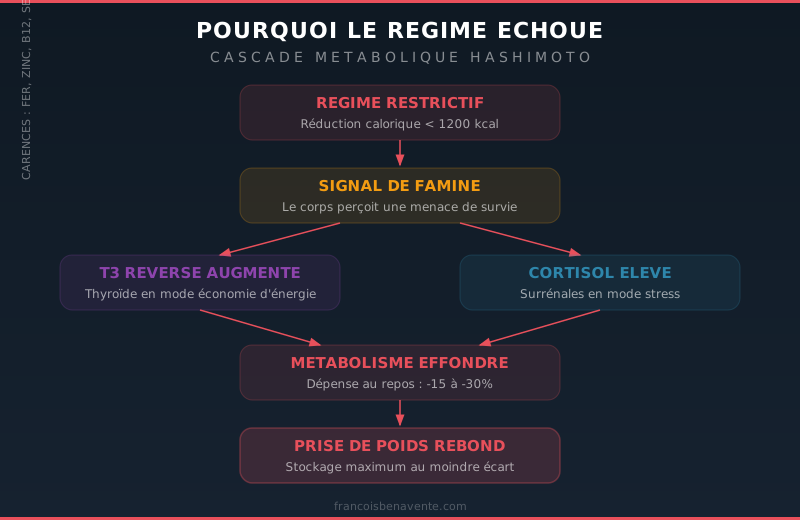
The first reflex when you gain weight with Hashimoto is to eat less. It’s logical, it’s what everyone recommends, and it’s exactly what you shouldn’t do. At least not first. Because caloric restriction sends to a body already hypothyroid the worst possible message: that of famine.
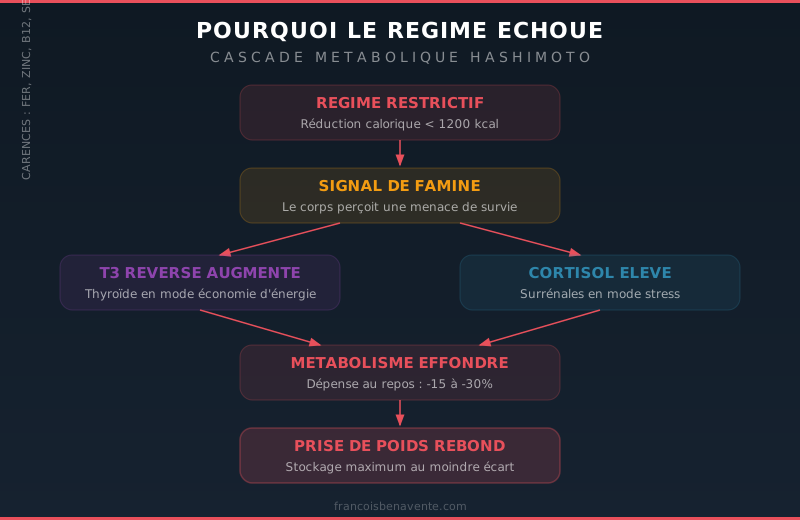
When your cells receive less fuel than needed, the body doesn’t say “great, we’ll tap into fat reserves”. The body says “danger, imminent famine, we must economize”. And to economize, it has a formidable tool: reverse T3. Under caloric restriction, the deiodinase enzymes that normally convert T4 to active T3 are redirected toward reverse T3 production. Basal metabolism drops by 15 to 30 percent. Your body burns fewer calories at rest, not because it’s lazy, but because it’s intelligent. It does exactly what evolution taught it to do in the face of famine: slow down, store, survive.
Dr Hertoghe describes this phenomenon with precision in his training. He observes that his hypothyroid patients who follow diets of less than 1200 calories per day for more than a few weeks systematically show an increase in reverse T3 and worsening of their symptoms. Cold sensitivity intensifies (the body turns down the heat to save energy). Fatigue deepens. Constipation sets in (the digestive tract also slows down). Hair falls out more. And the weight, after a promising initial loss, plateaus then rises. It’s the famous “plateau” that all diet enthusiasts know. It’s not a plateau. It’s a metabolic lockdown.
Reverse T3 and famine mode
Reverse T3 deserves attention because it’s the central mechanism of weight loss resistance in Hashimoto. I detailed its functioning in my article on stress and the thyroid. In summary: reverse T3 is a mirror image of active T3. It binds to the same receptors but doesn’t activate them, like a key that enters the lock without turning. Result: even if you take correctly dosed Levothyrox, even if your TSH looks good, your cells remain hypothyroid because the receptors are clogged with reverse T3.
Three main factors increase reverse T3: caloric restriction, chronic stress, and inflammation. In Hashimoto, all three are often present simultaneously. The diet creates the restriction. The stress of not losing weight despite efforts creates cortisol. And autoimmunity creates inflammation. It’s a triple lockdown. And as long as these three factors are not corrected, weight doesn’t move, no matter how strict the diet.
The adrenals play an aggravating role. When they are in stage II or III of exhaustion, cortisol is dysregulated: too high in the evening (which prevents sleep and triggers snacking), too low in the morning (which triggers coffee and sugar to get started). This chronically imbalanced cortisol promotes abdominal storage, insulin resistance, and muscle mass degradation. You lose muscle (which burns calories at rest) and store fat (which burns very little). The lean mass/fat mass ratio deteriorates, and with it the basal metabolism.
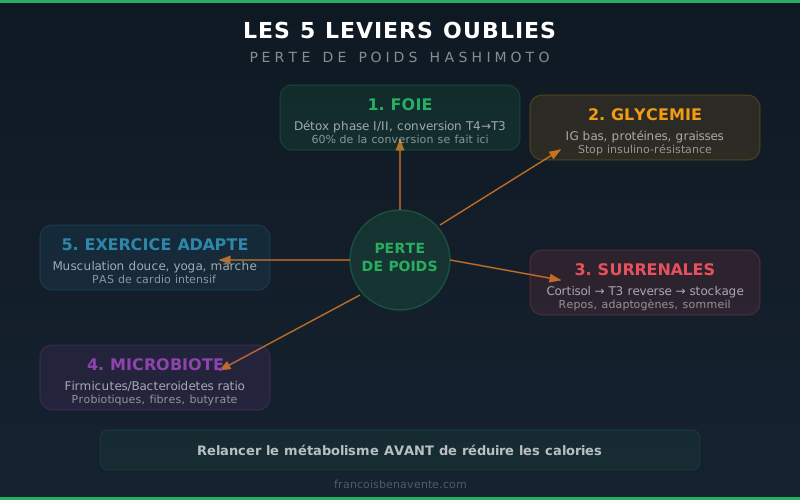
The 5 forgotten levers
The real question isn’t “how to eat less”. The real question is “how to restart a locked metabolism”. And the answer involves five levers that classical dietetics completely ignores.
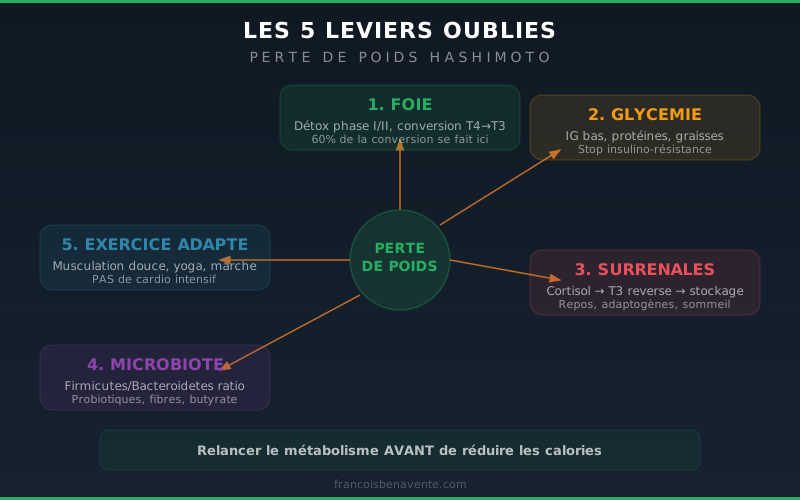
The first lever is the liver. Sixty percent of T4 conversion to active T3 happens in the liver. A clogged liver, overloaded with toxins, estrogen metabolites, medications, converts poorly. Active T3 is low, metabolism is slowed, and weight stagnates. Targeted liver work, with detoxification cofactors (B vitamins, NAC, selenium, methionine), is often the first breakthrough that allows weight to start moving.
The second lever is blood sugar. Repeated insulin spikes lock fat storage. Insulin is the storage hormone: when it’s high, you don’t burn fat, period. Stabilizing blood sugar with low GI foods, proteins at each meal and good fats is non-negotiable. It’s the foundation everything else rests on.
The third lever concerns the adrenals. If your cortisol is dysregulated, no diet will work. Chronic cortisol increases reverse T3, stimulates abdominal lipogenesis (belly fat production) and degrades muscle mass. Before reducing calories, you must rebuild the adrenals: sufficient sleep (at least seven hours), reduced coffee, stress management (heart rate coherence, nature walks), adaptogens (ashwagandha, rhodiola) if the adrenal stage allows.
The fourth lever is the microbiota. The ratio between Firmicutes and Bacteroidetes, the two large families of intestinal bacteria, directly influences caloric extraction from food. An excess of Firmicutes, frequent in hypothyroidism which slows transit and promotes fermentation, can extract up to 15 percent more calories from the same foods. In other words, two people eating exactly the same thing can absorb very different amounts of calories depending on their intestinal flora composition. Butyrate, a short-chain fatty acid produced by good bacteria from fiber, supports glucose metabolism and insulin sensitivity. Foods rich in prebiotic fibers (Jerusalem artichoke, garlic, onion, leek, green banana) feed these butyrate-producing bacteria.
The fifth lever is exercise, but not just any exercise. Intense exercise, prolonged cardio, HIIT, CrossFit, can worsen the situation when the adrenals are exhausted. Intense exercise produces cortisol. In a healthy person, this cortisol is temporary and beneficial. In a person in stage II or III of adrenal fatigue, it adds to already dysregulated cortisol and worsens reverse T3. Marchesseau spoke of “energy dispatch”: the body allocates its energy by priority order, and when energy is limited (hypothyroidism), each exhausting exercise session comes at the expense of regeneration and elimination.
Exercise: less is more
What I recommend to my Hashimoto patients regarding exercise often surprises them. Gentle strength training, two to three sessions of thirty minutes per week, with moderate loads and functional movements. Daily walking, fifteen to thirty minutes after meals, which reduces postprandial blood sugar spikes without stressing the adrenals. Yoga or Pilates, which strengthen the pelvic floor, improve posture and activate the parasympathetic system. And above all, listening to your body: if you feel more tired after exercise than before, the intensity is too high for your current adrenal stage.
Strength training is the king exercise for metabolism. Muscle is a metabolically active tissue: each kilo of muscle burns about 13 calories per day at rest, versus 4 calories for a kilo of fat. By developing your muscle mass, even modestly, you increase your basal metabolism permanently. It’s the opposite of restrictive dieting which makes you lose muscle and lower your metabolism. Strength training is the only exercise that builds muscle while improving insulin sensitivity, the two key factors for weight loss with Hashimoto.
Salmanoff, in his writings on capillary therapy, emphasized the importance of capillary circulation for cellular metabolism. For him, gentle and regular movement was superior to violent and occasional effort because it opened capillaries without creating excessive oxidative stress. Heat baths (sauna, hot baths) that he prescribed had the same objective: open capillaries, improve cellular exchanges, restart a sluggish metabolism.
The diet that works
The diet that works for weight loss with Hashimoto is not a diet. It’s a way of eating that nourishes metabolism instead of starving it. Proteins at each meal (minimum twenty grams per serving). Quality fats (avocado, olive oil, nuts, sardines). Vegetables in abundance for fiber and micronutrients. Legumes for blood sugar and microbiota. And sufficient calories so the body doesn’t slip into famine mode.
In practice, this represents between 1600 and 2000 calories per day for a woman of average build with Hashimoto. It’s often more than what she ate during her diets. And it’s precisely by eating more (but better) that metabolism unlocks, reverse T3 drops, the adrenals rest, and weight finally starts to move. Patients who follow this approach frequently report improved energy and mental clarity in the first two to three weeks, progressive weight loss of one to two kilos per month (not more, and that’s normal), and lasting stabilization without yo-yo effect.
Sandrine stopped counting calories. She stopped HIIT and jogging. She started gentle strength training twice a week and daily walking after lunch. She ate eggs and avocado for breakfast instead of her counted crackers. She took magnesium, selenium, vitamin D and NAC to support her liver. In six months, she lost eight kilos. Not sixteen as she hoped, but eight stable kilos, without regaining, without fatigue, without cravings. Her free T3 went back up. Her salivary cortisol normalized. And for the first time in seven years, she doesn’t think about weight anymore. She thinks about terrain. And terrain, when cared for properly, knows how to find its balance.
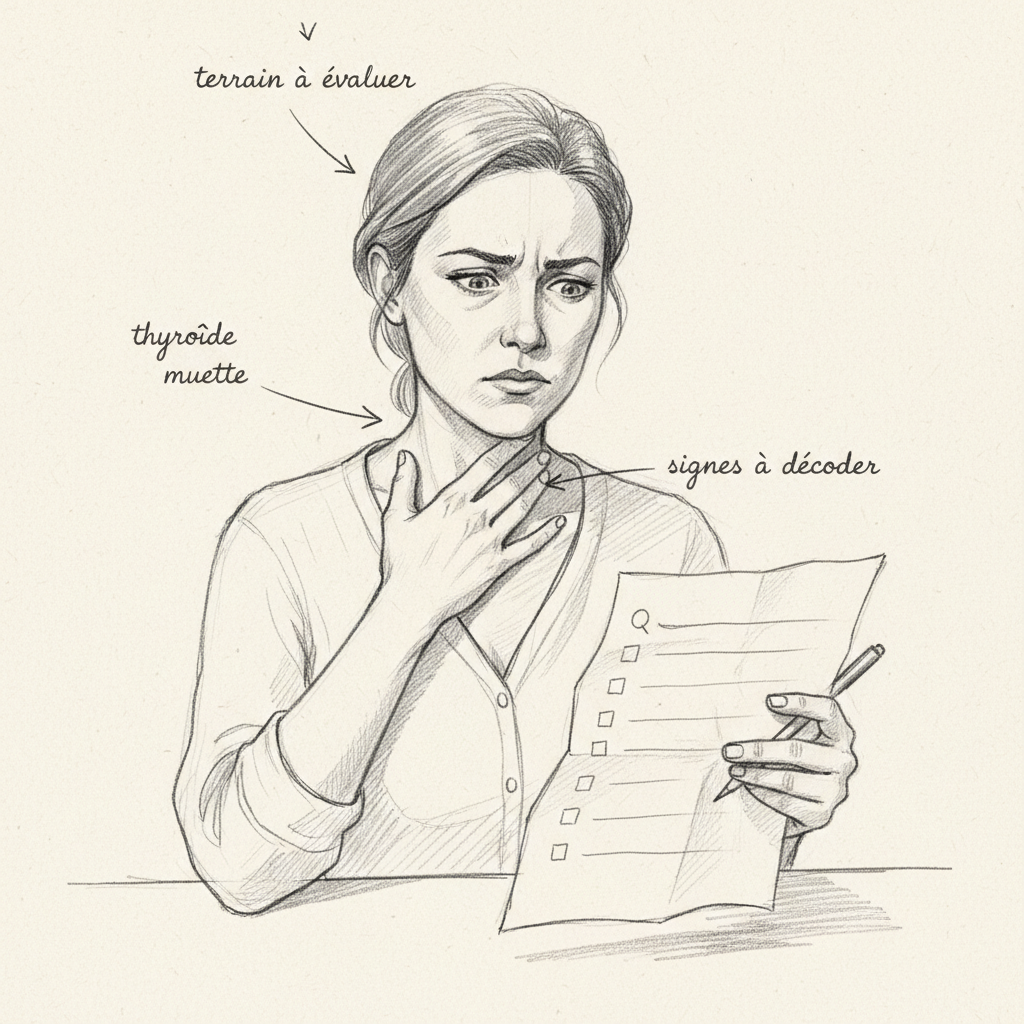
Want to know where your adrenals are at? Take the adrenals questionnaire. For the thyroid, the Claeys questionnaire will give you an initial overview.
To go further
I recommend Stress, cortisol and thyroid to understand the reverse T3 mechanism, The three stages of adrenal exhaustion to determine your stage, Hypothyroidism and digestion for the role of the intestine in metabolism, and Blood sugar and thyroid for blood sugar stabilization.



Laisser un commentaire
Sois le premier à commenter cet article.