The first time I opened volume one of Bernard Jensen’s Iridology, I was breathless. Not because of the complexity of the iris charts, nor the density of clinical cases. But because of a single sentence, slipped into a chapter devoted to skin. Jensen wrote that dry brushing is “the best of all baths.” Coming from a man who had spent seventy years observing thousands of patients, who had written more than fifty works on natural health, who had founded one of the most renowned wellness centers in the United States, this statement marked me. The best of all baths. Not a hot water bath. Not a sauna. Not a hammam. A brushing. Dry. Without water. Five to ten minutes a day. I thought: if Jensen considers this such a simple gesture to be the most effective of all hygiene practices, I must understand why. And to understand why, I must first understand what skin is.
“Dry brushing is the best of all baths. It opens the pores, stimulates circulation and helps the body eliminate what it can no longer carry.” Bernard Jensen
The man with fifty books
Bernard Jensen was born in 1908 on a California farm. His health was fragile from childhood. Tuberculosis, malnutrition, repeated infections. It was while seeking solutions to his own ailments that he discovered the principles of naturopathy and living food. He trained under the great names of American naturopathy, heirs to Benedict Lust and Henry Lindlahr. Within a few years, he became the most respected practitioner on the West Coast, then throughout the country.
His contribution to naturopathy is colossal. More than fifty works, most of which are still in print today, seventy years after their first publication. His two volumes on iridology are considered the world reference on the subject. But Jensen is not merely an iridologist. He is a holistic practitioner who developed an approach integrating living food, hydrotherapy, stress management, detoxification and especially the management of the emunctories: those elimination organs that conventional medicine superbly ignores.
Jensen founded the Hidden Valley Health Ranch in California, a center where he received patients from around the world, often as a last resort, after years of medical wandering. He treated cases of chronic colitis, generalized psoriasis, profound chronic fatigue, complex immune disorders. His approach was always the same: cleanse the terrain, open the emunctories, nourish the body with living foods, and let the vital force do the rest. This is exactly what Marchesseau taught in France at the same time, with the same logic but different terminology. The two men probably never met, but their conclusions converge point by point.
Iridology: reading health in the iris
Before talking about skin, we must address iridology, for it is through iridology that Jensen gained international renown. Iridology is the study of the iris, that colored part of the eye, to assess the health status of the organism. The founding idea is that the iris is connected by nerve fibers to the autonomic nervous system, which innervates all organs. Each zone of the iris would correspond to a specific organ or system. Changes in color, texture, and density of iris fibers would reflect the strengths, weaknesses, overloads, and predispositions of each individual.
Jensen mapped the iris with remarkable precision. His iris chart, circular in form, divides the iris into zones corresponding to the digestive tract (pupillary zone), internal organs (ciliary zone), and skin, lymph and circulation (peripheral zone). He described hundreds of signs: lacunae (open areas indicating hereditary weakness), crypts (deeper holes marking tissue lesion), pigmentary spots (signs of toxic overload), nerve tension rings (concentric circles indicating chronic stress), lymphatic rosary (string of white pearls in the periphery indicating lymphatic congestion).
Iridology does not make a medical diagnosis. It does not identify a disease. It reads the terrain. It shows predispositions, constitutional strengths, areas of toxic accumulation, signs of nervous or endocrine fatigue. It is a tool for vital assessment, not a diagnostic tool. And that is exactly how I use it in consultation: to complete the medical history, confirm hypotheses, guide the priorities of the naturopathic program.
Skin: a misunderstood organ
Jensen understood early on that skin is not simply a wrapper. It is the largest organ of the human body, with a surface area of approximately two square meters and a weight of three to five kilograms. It is a major elimination organ, an immune shield, a thermal regulator, a sensory organ and a synthesis organ (vitamin D). Ignoring skin in a health program means ignoring a quarter of the body’s elimination capacity.
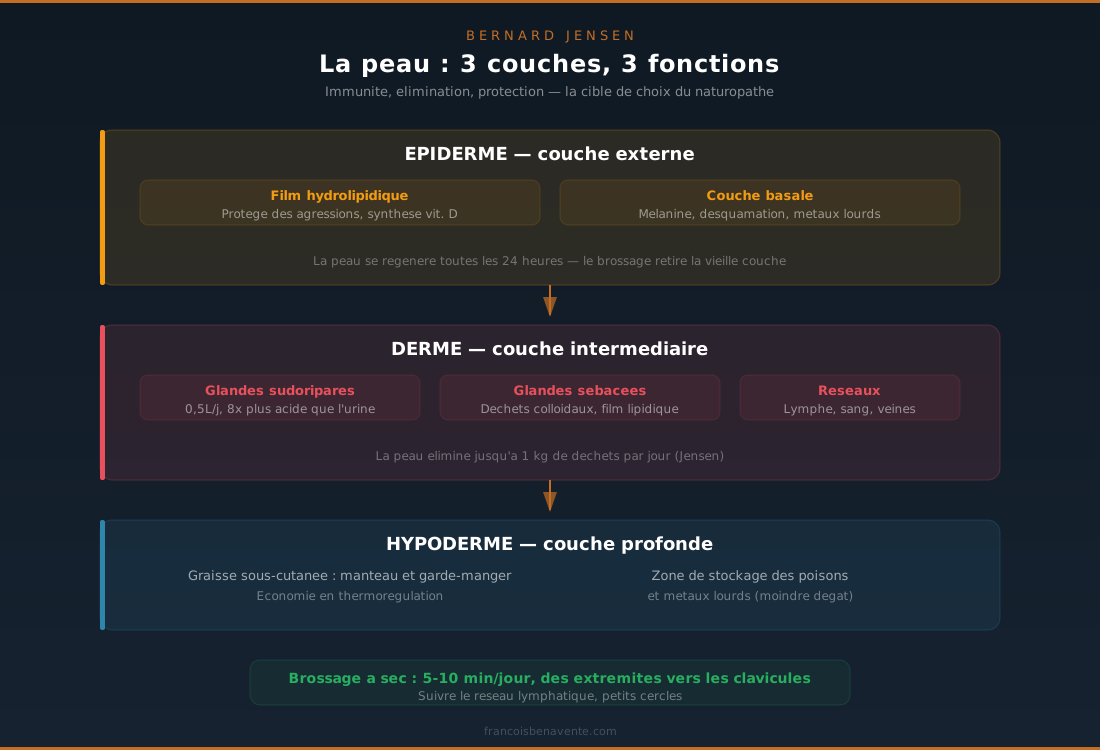
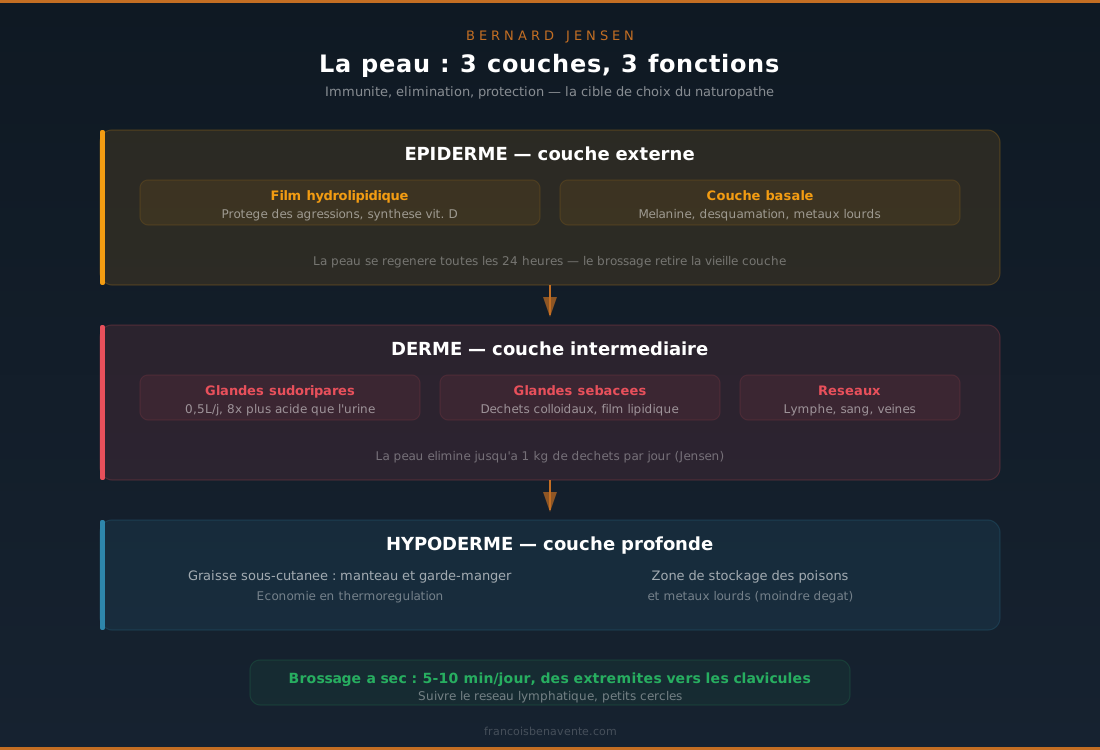
Jensen describes skin as a layered structure organized into three main layers, each with a specific role in elimination and protection.
The epidermis: the living shield
The epidermis is the outermost layer, the one you see and touch. It itself consists of several sub-layers. At its surface is the hydrolipidic film, a mixture of sweat, sebum and cell residue that forms a natural varnish of remarkable effectiveness. This film protects against ultraviolet rays, bacteria, viruses, fungi and dehydration. It maintains a slightly acidic pH (around 5.5) which constitutes a hostile environment for most pathogenic microorganisms. This is the skin’s “acid mantle,” the first line of innate immunity.
Just below, the basal layer (or germinative layer) is where new skin cells are born. These keratinocytes take approximately twenty-eight days to migrate from the basal layer to the surface, where they die and shed in the form of squames. This desquamation process is an elimination mechanism in its own right. As they shed, dead cells carry away heavy metals, lipophilic pollutants, toxic residues that accumulated during their migration. Jensen emphasizes this point: natural desquamation is insufficient in most people. Dead cells accumulate at the surface, form a grayish layer that clogs the pores, blocks gaseous exchange and prevents cutaneous elimination. This is the fundamental reason why dry brushing is so effective: it accelerates desquamation and frees the skin surface.
The basal layer is also the place where melanin is synthesized, the pigment that protects against ultraviolet rays. And it is at the epidermal level that vitamin D synthesis occurs through the action of UVB rays, a fundamental process that modern indoor life has dramatically reduced.
The dermis: the elimination machinery
The dermis is the intermediate layer, thick, vascularized, innervated, and especially populated with glands whose eliminatory role is considerable.
The sudoriparious glands number two to five million, distributed over the entire surface of the body. They produce an average of half a liter of sweat per day under normal conditions, and can reach several liters in cases of intense effort or heat. Sweat is composed of water, mineral salts, urea, uric acid, lactic acid, ammonia and traces of heavy metals. Jensen emphasizes a little-known fact: sweat is eight times more acidic than urine. This means that the sudoriparious glands are emunctories with crystalline substances of extreme power, capable of evacuating acidic wastes that the kidneys might struggle to eliminate alone. This is why sweating (through physical effort, sauna, hot bath) is a first-order therapeutic tool in naturopathy, as Marchesseau described in his classification of emunctories.
The sebaceous glands, annexed to hair follicles, produce sebum, a lipidic mixture that participates in the hydrolipidic film. But their role is not limited to lubrication. They constitute an emunctory of glues, capable of eliminating colloidal, viscous wastes arising from the metabolism of fats, sugars and proteins. When the sebaceous glands are overloaded, skin becomes oily, pores dilate, acne appears. This is not a skin problem. It is a sign that the body is using skin as an exit door because the liver and intestines are overwhelmed. Treating acne with antiseptic creams without cleansing the liver and intestine is like closing the valve without reducing the pressure.
The dermis also houses a dense network of blood vessels (arterioles, venules, capillaries) and lymphatic vessels. Cutaneous lymph drains cellular waste and toxins toward the lymph nodes, then to the thoracic duct and venous circulation. This cutaneous lymphatic network is the direct extension of the general lymphatic system. When lymph stagnates, tissues become congested, cellulite appears, limbs swell, skin becomes dull and pasty. Stimulating cutaneous lymphatic circulation through dry brushing reinvigorates the entire body’s lymphatic drainage.
The hypodermis: the pantry and storage zone
The hypodermis is the deepest layer of skin. It consists mainly of adipose tissue, organized into fat lobules separated by partitions of connective tissue. Jensen describes it with a triple function.
First, it is a mantle, a thermal insulator that protects the body from cold. Populations in cold regions naturally develop a thicker hypodermis, while tropical populations have a thinner hypodermis. This is an ancestral adaptation mechanism.
Next, it is a pantry, an energy reserve mobilizable as needed. Fatty acids stored in adipocytes can be released through lipolysis to provide energy to muscles and organs during periods of fasting, effort or stress.
But Jensen insists on a third role, less well-known and more worrisome: the hypodermis is a storage zone for poisons. Liposoluble toxins (pesticides, organic solvents, dioxins, heavy metals, pharmaceutical residues) that cannot be immediately eliminated by the liver and kidneys are stored in adipose tissue, away from blood circulation. This is a protection mechanism: by sequestering these toxins in fat, the body protects vital organs. But this protection has a price. The toxins remain there, sometimes for decades. And when the person loses weight suddenly (drastic diet, prolonged fasting, illness), adipocytes empty and massively release these toxins into circulation. This is why poorly conducted spring detox can cause unpleasant symptoms: headaches, nausea, skin eruptions, fatigue. The body is overwhelmed by the poisons it had carefully stored. Jensen always recommended gradual weight loss, accompanied by liver support and abundant hydration, to allow the liver to process the toxins released progressively.
Dry brushing: Jensen’s technique
Based on this anatomical understanding, Jensen developed and popularized dry brushing as the most effective, simplest and most accessible technique for cutaneous elimination.
The equipment is minimal: a brush with natural bristles (plant fibers such as sisal, tampico or horsehair), medium-sized, with a handle long enough to reach the back. Jensen insists: the bristles must be natural, not synthetic. Synthetic fibers are too aggressive, create static electricity and do not have the same effect on the skin.
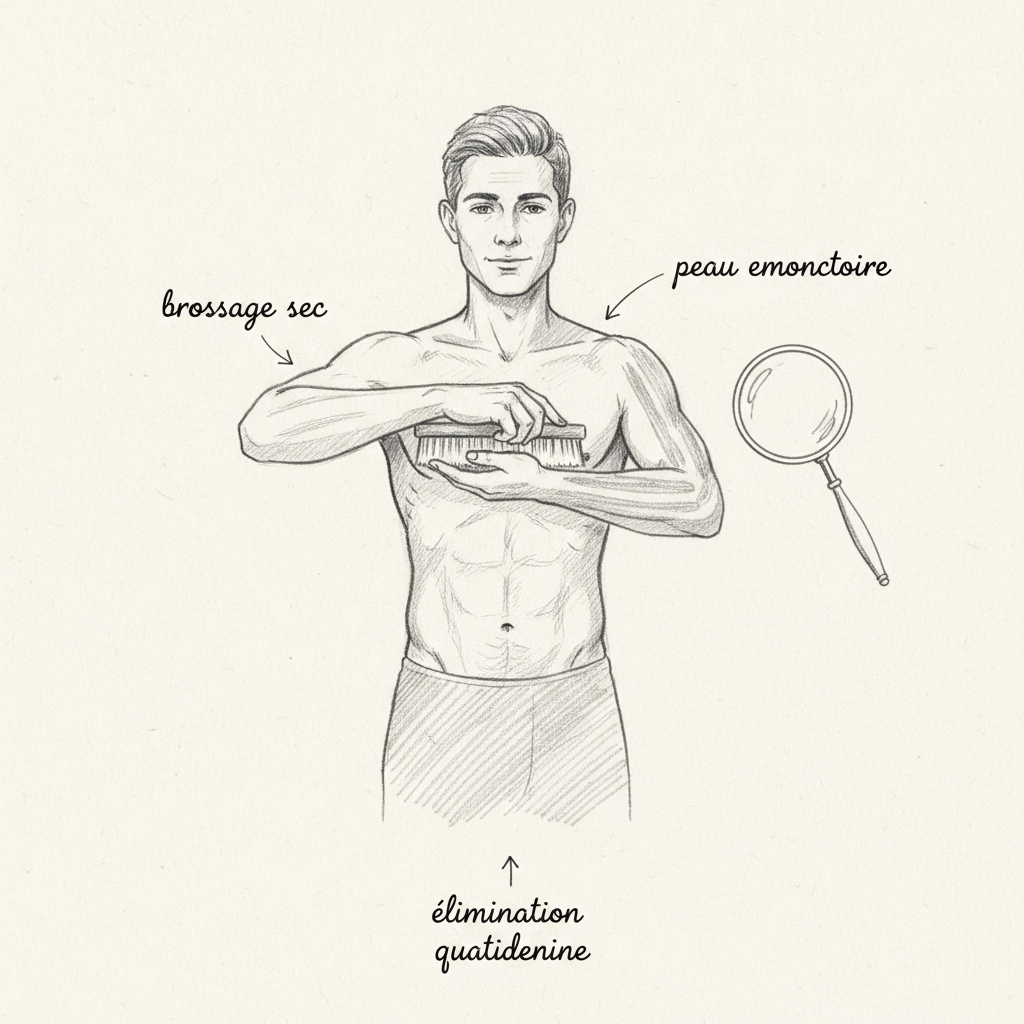
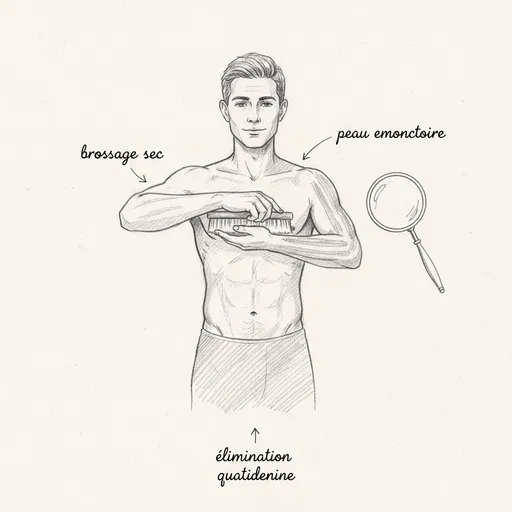
The technique is practiced in the morning, before showering, on perfectly dry skin. Not after showering. Not under water. Dry. The session lasts five to ten minutes.
You start with the extremities: the sole of the feet, the top of the feet, the ankles. You then move up the legs in small circles, first the calf, then the knee, then the thigh, always moving upward toward the heart. You then move to the hands, forearms, arms, always moving upward toward the shoulders and clavicles. The belly is brushed clockwise, following the course of the colon (ascending on the right, transverse at the top, descending on the left). The back is brushed from bottom to top, from the sacrum toward the shoulders. The chest and décolletage are brushed gently, from the sides toward the sternum.
Jensen emphasizes a guiding principle: all movements converge toward the clavicles. Why? Because it is in the sub-clavicular region that lymph joins the venous circulation, at the level of the jugu-subclavian venous angle. By directing all movements toward this point, you follow exactly the path of the lymphatic network and facilitate drainage.
Zones to avoid: the face (skin is too thin and sensitive), irritated areas, wounds, raised beauty marks, varicose veins (brush around, never on), breasts in women (glandular area).
The effects are immediate and cumulative. From the first session, the skin reddens slightly (vasodilation), tingling sensations and warmth testify to circulatory activation. Within a few days, skin becomes softer, smoother, complexion brightens. Within a few weeks, cutaneous elimination improves noticeably, cellulite reduces, morning energy increases, need for coffee decreases. Jensen reports that some patients resolved chronic skin problems (dry eczema, localized psoriasis, dull skin) through daily dry brushing alone, without any other intervention.
Beyond brushing: complementary practices
Jensen did not limit skin care to dry brushing. He insisted on a set of complementary practices that together maximize cutaneous eliminatory function.
Walking is the first activator of the lymphatic pump. The lymphatic system, unlike the circulatory system, does not possess a central pump. Lymph circulates through muscle contractions, respiratory movements and gravity. Walking thirty minutes a day activates thousands of muscle contractions that compress lymphatic vessels and move lymph along. Jensen considered walking non-negotiable. A patient who does not walk is a patient who stagnates, literally and figuratively.
Physical exercise extends the effects of walking. Muscle effort increases heart rate, accelerates blood and lymphatic circulation, provokes sweating and elimination of acids through the sudoriparious glands. Jensen recommended moderate but regular exercise, adapted to each person’s fitness level. Not violent or exhausting sport, but daily, varied, joyful movement.
Sweating is an emunctory in its own right. Whether through effort, sauna, hot bath or warm poultices, inducing perspiration opens the dermis’s exit doors. Jensen reminded that sweat contains not only water and salts, but also urea, uric acid, ammonia and traces of heavy metals (lead, mercury, arsenic, cadmium). Modern studies confirm that perspiration is a vector for eliminating environmental toxins that the kidneys alone cannot sufficiently treat.
Air baths consist of exposing the naked body to open air for a few minutes each day. Jensen saw a double benefit: pore aeration (which needs to “breathe”) and exposure to negative ions in the air, which have a regulatory effect on the nervous system.
Moderate sun baths (fifteen to twenty minutes daily on a large skin surface) allow vitamin D synthesis, an essential nutrient whose deficiency is endemic in industrialized countries. Jensen insisted on moderation: no sunburn, no prolonged exposure during the hottest hours, but regular, gentle exposure that allows the body to produce its own vitamin D.
Jensen’s legacy in naturopathy
Bernard Jensen died in 2001, at the age of ninety-three, after practicing naturopathy for more than seventy years. His legacy is immense. His works continue to train generations of practitioners. His iris charts are used throughout the world. His approach to cutaneous elimination has influenced all modern naturopathy.
What strikes me about Jensen is the consistency of his thinking with that of great European naturopaths. Marchesseau spoke of emunctorial permeability as the denominator of his equation. Kousmine spoke of the intestine as the motor of diseases. Salmanoff spoke of capillary therapy and microcirculation. Jensen speaks of skin as a major elimination organ. Each illuminates one facet of the same diamond: the body has an innate capacity to clean itself, to repair itself, to heal itself, provided we open the exit doors for it and stop encumbering it.
In consultation, I systematically recommend dry brushing to my patients. It is the simplest gesture, the least costly, the most immediately gratifying in my entire naturopathic arsenal. A brush, five minutes, each morning. No dietary supplement to buy. No complicated recipe to prepare. Just an ancestral gesture, popularized by a man who dedicated his life to understanding how the body eliminates its waste.
And when my patients come back telling me their skin has changed, their energy has increased, their cellulite has diminished, their complexion has brightened, I think of Jensen and his statement: the best of all baths. He was right.
“Care for your skin like a garden. Brush it, nourish it, expose it to sun and air. It will return the favor a hundredfold.” Bernard Jensen
The next chapter in this history of naturopathy will take us toward Ann Wigmore, another American pioneer who discovered in sprouted seeds the most powerful source of enzymes in the plant kingdom. From Jensen to Wigmore, from skin to the plate, naturopathy weaves its threads into a coherent network that always returns to the same truth: the body knows how to heal when given the means.
To go further
- Ann Wigmore: sprouting and living food in naturopathy
- Kneipp: the abbot of cold and the roots of naturopathic hydrotherapy
- Kousmine: the 6 pillars and the intestine motor of diseases
- Lindlahr: catharsis and Nature Cure, pillars of American naturopathy
Healthy recipe: Carrot-beet-cucumber juice: Jensen recommended daily vegetable juices.


Laisser un commentaire
Sois le premier à commenter cet article.