Vincent’s Bioelectronics: Measuring the Terrain
There are concepts that change how you see the world. Ideas that, once understood, make any going back impossible. Vincent’s bioelectronics is one of them. It transformed me as a practitioner. Not because it’s spectacular or fashionable, but because it gives scientific grounding to this notion of terrain that naturopaths have defended since Hippocrates and that conventional medicine has dismissed with a wave of the hand since Pasteur.
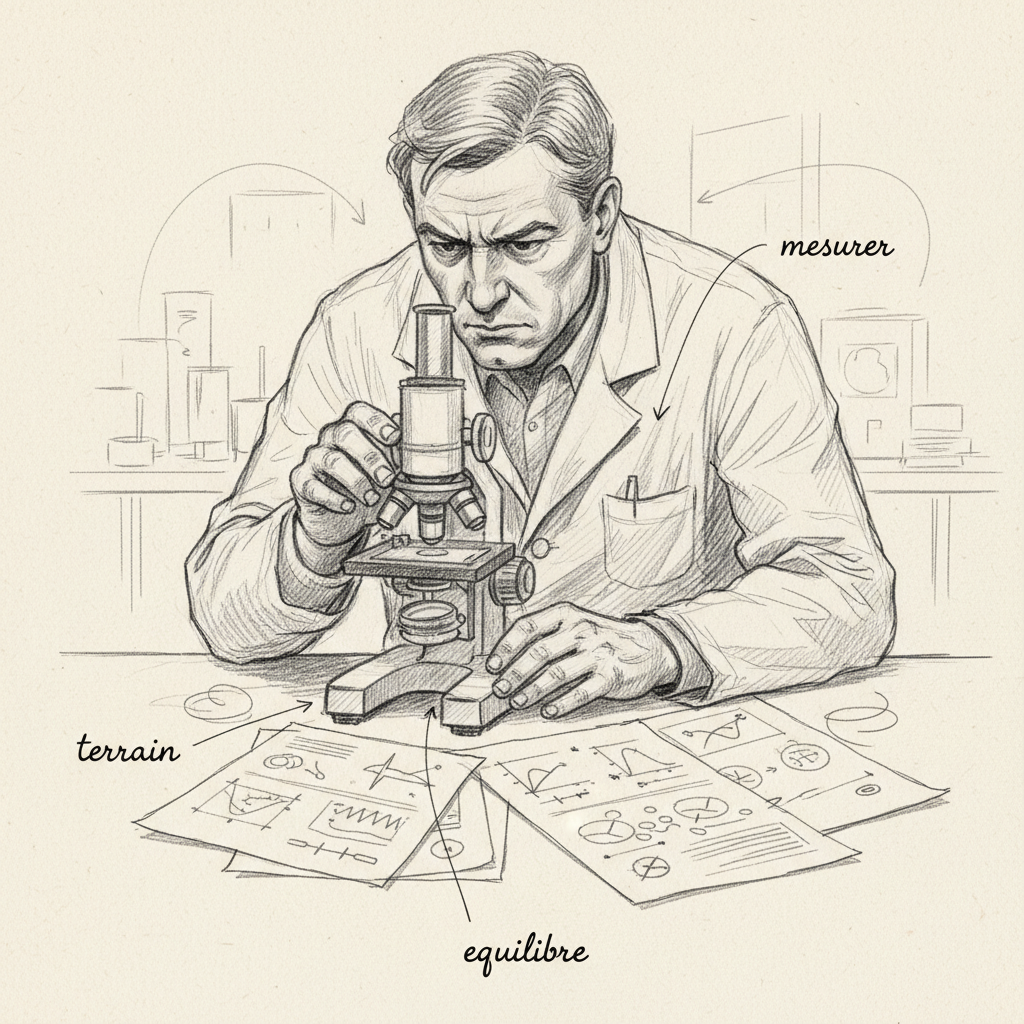
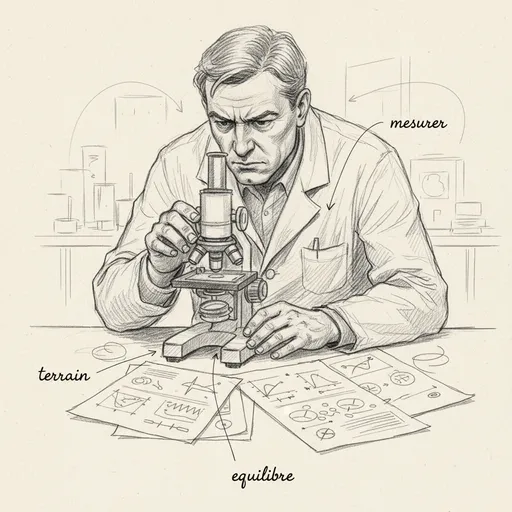
I remember my first encounter with BEV. It was during my training at ISUPNAT, a dense and technical course where the professor had filled the board with formulas, graphs, and coordinates in a nine-box diagram. Half the class had tuned out. I was fascinated. Because for the first time, someone was telling me that terrain could be measured. Not guessed, not interpreted through an iris or a pulse, but quantified. With numbers, devices, reproducible values. BEV brought naturopathy into the realm of the measurable.
The engineer who traveled the roads of France
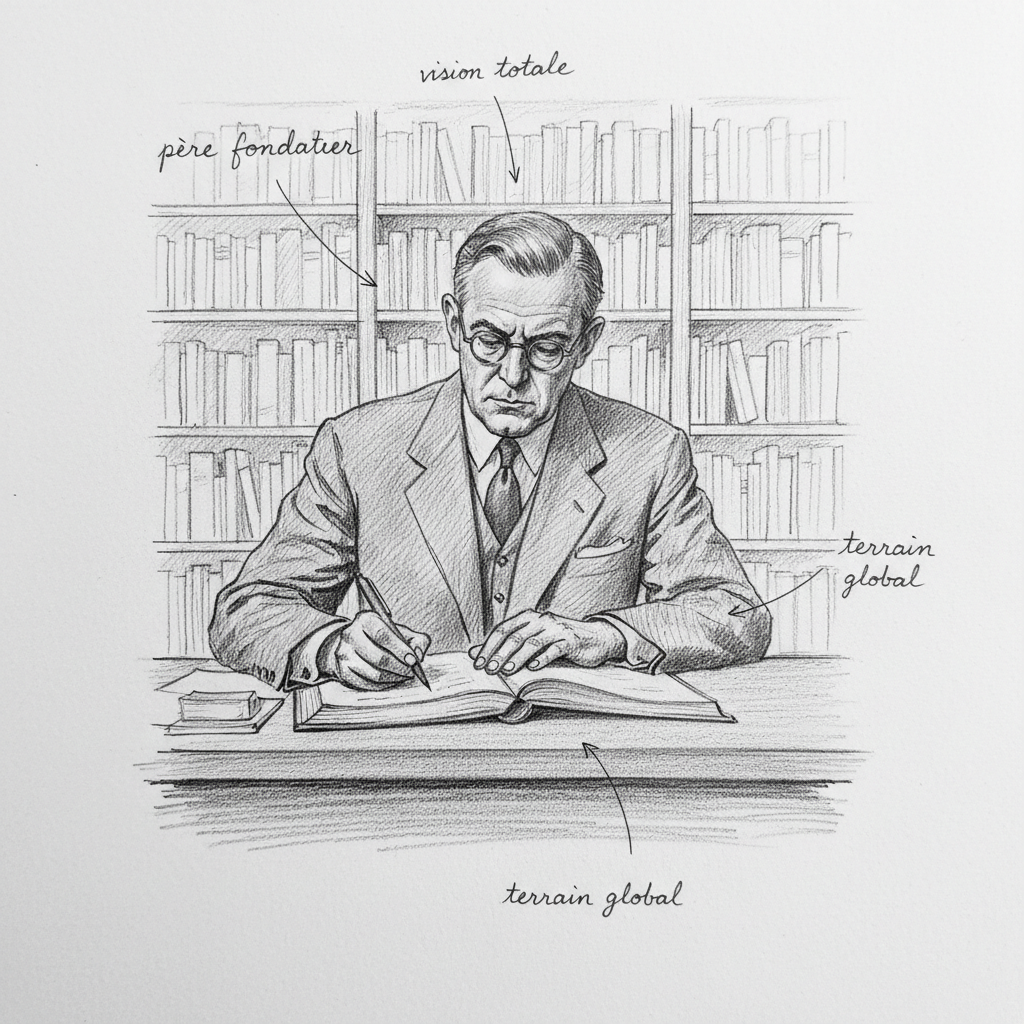
Louis-Claude Vincent was born in 1906. He was neither a doctor, nor a biologist, nor a therapist. He was a hydrological engineer, a graduate of the École supérieure des travaux publics. A man of the field in the most literal sense of the term. For twelve years, he crisscrossed France as what was then called an “engineer of road maintenance.” He traveled through hundreds of cities, villages, and hamlets. He analyzed the water from wells, springs, and distribution networks. He recorded mortality rates, causes of death, and dominant pathologies in each municipality. He cross-referenced this data with the physicochemical properties of the water that residents drank.
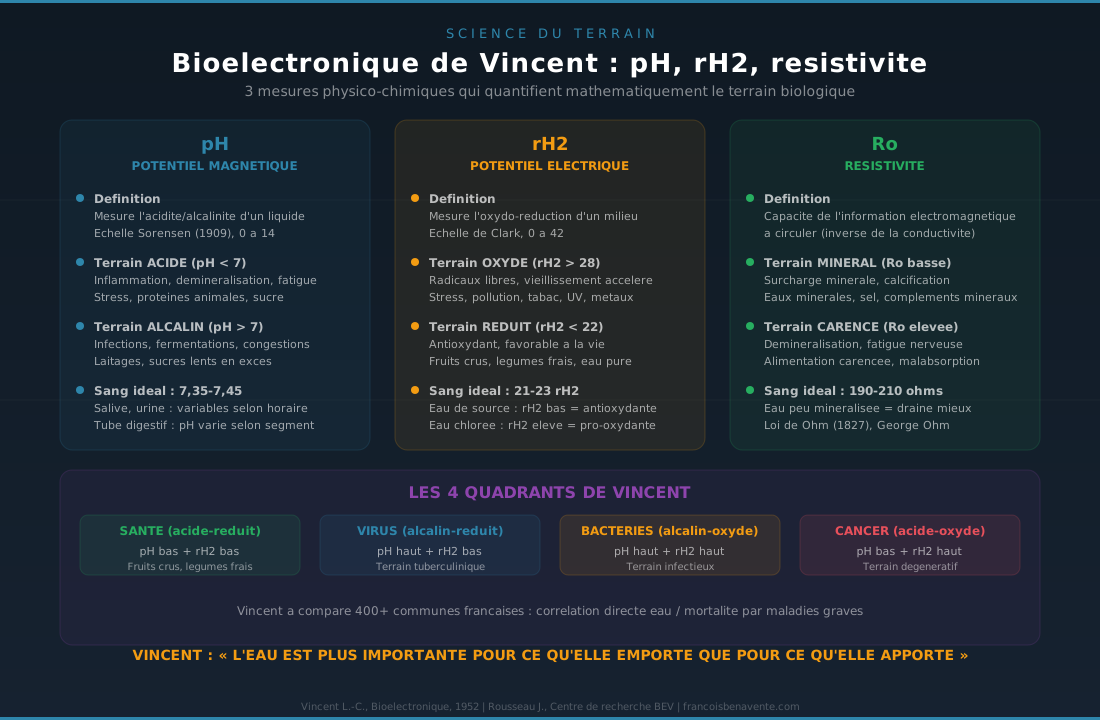
This patient, meticulous, obsessive work led to a discovery that should have shaken twentieth-century medicine. By comparing over 400 French municipalities, Vincent demonstrated a direct statistical correlation between the quality of distributed water and mortality from serious diseases. Cities whose water had certain physicochemical characteristics had significantly higher rates of cancer, cardiovascular disease, and degenerative diseases than others. This wasn’t speculation. It was field epidemiology, backed by numbers.
Vincent wasn’t alone in this adventure. In 1961, he founded the Center for Research in Bioelectronics in Avrillé, in collaboration with Dr. Jeanne Rousseau, a physician and researcher who shared his vision. Together, they refined the measurement protocols, standardized the analysis methods, and laid the foundations for a new discipline that didn’t yet have a name. It was Vincent who named it: bioelectronics.
The precursors: from Ohm to Claude Bernard
Vincent didn’t invent the three parameters he measured. He had the genius to unite them into a coherent system and apply them to living things. Each of these parameters had been discovered and formalized by others before him.
George Ohm, the German physicist, had defined electrical resistance in 1827 and the laws that bear his name. Sorensen, the Danish chemist, had created the pH scale in 1909, that measure of acidity and alkalinity that everyone knows without necessarily understanding. Clark had developed the principles of measuring oxidation-reduction, that electrical potential which determines whether a medium is oxidized or reduced. Nernst had formulated the thermodynamic equation that links these parameters to each other. And Charles Laville, a French physician and biophysicist, then Fred Vlès, professor of biophysics at Strasbourg, had begun applying these measurements to biological liquids.
But it was Claude Bernard, the great French physiologist of the nineteenth century, who laid the cornerstone. Bernard was the first to demonstrate the capital importance of the cellular environment. His notion of the “internal medium,” that sea in which our cells bathe, is the foundation on which Vincent built his entire edifice. Bernard understood that the cell can function correctly only if the liquid surrounding it has precise characteristics of temperature, pH, osmotic pressure, and ionic composition. Change the medium, and the cell suffers. Degrade the medium, and the cell dies.
“The microbe is nothing, the terrain is everything.” Antoine Béchamp
This phrase, championed by Antoine Béchamp in his opposition to Pasteur, sums up in itself the intellectual battle that Vincent fought throughout his life. A battle against the dominant Pasteurian vision that makes the microbe the sole enemy and terrain a negligible detail. Vincent, for his part, sided with Béchamp. And he gave himself the means to prove it.
The three factors: pH, rH2, resistivity
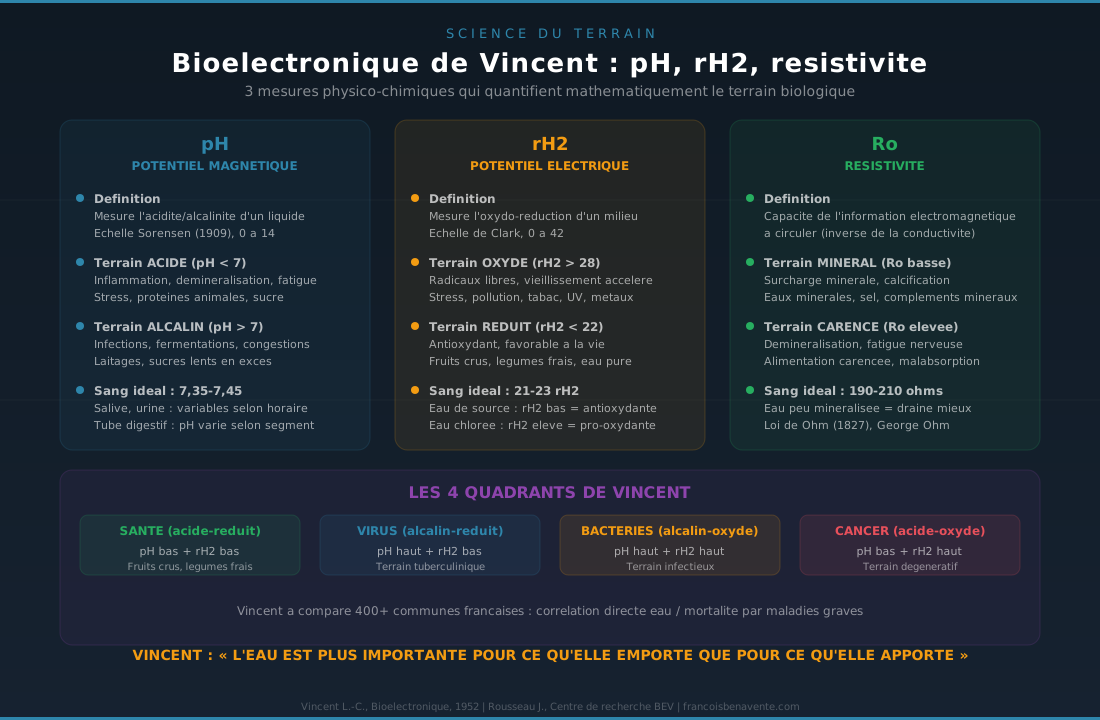
Vincent’s bioelectronics rests on measuring three parameters in biological liquids. No more, no less. Vincent believed that these three factors sufficed to give a complete picture of the state of the terrain.
The first factor is pH, which Vincent called the “magnetic potential.” pH measures the degree of acidity or alkalinity of a medium on a scale of 0 to 14. Below 7, the medium is acidic. Above 7, it is alkaline. At 7, it is neutral. Everyone knows this scale, but few people realize how determining it is for the functioning of living things. Human blood oscillates between 7.35 and 7.45, a remarkably narrow interval. Blood at 7.2 or 7.6 requires intensive care. The pH of the digestive tract varies considerably from one compartment to another. The stomach drops to 1.5 or 2 to degrade proteins. The duodenum rises to 8 to activate pancreatic enzymes. The small intestine works between 6 and 7. Each environment has its optimal pH, and each enzyme is active only within a very specific pH range. This is why I emphasize so much in consultation the respect for the adaptive digestive capacities of each individual.
The second factor is rH2, which Vincent called the “electrical potential.” rH2 measures the degree of oxidation or reduction of a medium. To understand this parameter, you must remember that every chemical reaction in the body involves transfers of electrons. When a molecule loses electrons, it oxidizes. When it gains them, it reduces. An oxidized medium is a medium where free radicals dominate, where cells age, where tissues degrade. A reduced medium is a medium where antioxidants prevail, where cellular repair functions, where vitality is maintained. rH2 is measured on a scale of 0 to 42. Below 21, the medium is reducing (antioxidant). Above 21, it is oxidizing. A healthy terrain is in the slightly reducing zone, around 20 to 22.
The third factor is resistivity (Ro), which Vincent called the capacity of electromagnetic information to circulate in a medium. Resistivity measures the capacity of a liquid to resist the passage of an electrical current. The more minerals dissolved (ions) a liquid contains, the more it conducts electricity, and the lower its resistivity. Conversely, pure water, devoid of minerals, has very high resistivity. Vincent demonstrated that the resistivity of blood and saliva was a key indicator of the mineral load of the organism and its capacity to eliminate metabolic waste. A terrain overloaded with poorly assimilated minerals (what Marchesseau called the “gums” and “crystals”) has low resistivity. A clean, well-drained terrain has high resistivity.
These three parameters, cross-referenced with each other, draw a nine-box space that Vincent called the “bioelectronigram.” Each box corresponds to a type of terrain, a type of pathology, a type of predisposition. It’s a map of living things. A mathematization of the notion of terrain that vitalists had defended for centuries without being able to quantify it.
Water: the universal solvent you underestimate
If Vincent was a hydrologist by training, it’s not by chance. Water is at the heart of his thinking, and for good reason. The body of an adult is composed of approximately 66% water. A newborn contains 75%. An elderly person drops to 60%. The brain, that organ we consider the pinnacle of biological complexity, is 85% water. Only adipose tissue resists this hegemony with only 25% water.
These figures are not anecdotal. They mean that the quality of water you drink directly determines the quality of the medium in which your cells bathe. It’s Claude Bernard’s internal medium. And Vincent proved it with the rigor of an engineer, municipality after municipality, department after department.
“Water is more important for what it carries away than for what it brings.” Louis-Claude Vincent
This phrase is probably the most important Vincent ever uttered. It completely overturns the way we think about water. Advertising sells us waters “rich in calcium,” “source of magnesium,” “laden with bicarbonates.” Vincent asserts exactly the opposite. For him, the value of water lies not in what it brings (the minerals it contains) but in what it carries away (the toxins it is able to drain from the body).
Highly mineralized water, with low resistivity, is already “full.” It has no more room to load the metabolic waste your body is trying to eliminate. It’s like a garbage truck that arrives at your door already full. It couldn’t pick anything up. Conversely, lightly mineralized water, with high resistivity, is “empty.” It has the capacity to absorb toxins, acids, metabolic residues, and carry them to the kidneys for elimination. This is the drainage logic I find in spring cleanse: you open the drainage pathways, you provide the body with elimination vectors (water first and foremost), and you let vital force do the cleaning.
Vincent classified waters according to their three bioelectronic parameters. Lightly mineralized spring waters, with slightly acidic pH, reducing rH2, and high resistivity, corresponded for him to the ideal profile. Urban network waters, chlorinated, chemically treated, highly mineralized, systematically presented an unfavorable profile. And the epidemiological data he had accumulated on 400 municipalities confirmed this hierarchy in a disturbing way.
It’s interesting to note that this vision aligns with that of many modern hydrologists and biophysicists interested in the structural properties of water. The capacity of water to form molecular clusters, to store vibrational information, to behave differently depending on its thermal and mechanical history, is the subject of fascinating though controversial research. Vincent, with the tools of his time, had sensed that water was not a simple inert vehicle but an active biological player.
Food through the bioelectronic lens
BEV doesn’t apply only to water. It allows measuring the bioelectronic properties of each food and understanding its impact on the terrain. Vincent and his team analyzed hundreds of foods by measuring their pH, rH2, and resistivity. And the results confirmed what naturopaths had been saying for decades: industrial food degrades the terrain, organic food preserves it.
One of Vincent’s most revealing experiments concerns strawberries. He compared the bioelectronic properties of strawberries from organic agriculture and strawberries from industrial agriculture. The results were unambiguous. Organic strawberries had significantly higher levels of potassium and magnesium than their industrial counterparts. These two minerals are essential cofactors for hundreds of enzymatic reactions in the body. Potassium participates in intracellular acid-base balance, magnesium is indispensable for mitochondrial energy production, protein synthesis, and nerve transmission. When industrial agriculture depletes soils of potassium and magnesium, it depletes the plants growing there, and by extension, it depletes the terrain of those who eat them.
Vincent also looked at cooking. He considered it “external digestion,” a process that begins transforming food before it even enters the mouth. But not all cooking is equal from a bioelectronic perspective. High-temperature cooking radically modifies the pH, rH2, and resistivity of foods. It oxidizes them, acidifies them, destroys their enzymes and heat-sensitive vitamins. Gentle cooking, on the other hand, preserves much of the bioelectronic profile of raw food. Steaming, which Vincent considered the least destructive of cooking methods, maintains the reducing potential of food and limits the formation of oxidized compounds.
This finding aligns with the work of Catherine Kousmine, who championed raw foods and low-temperature cooking long before modern science proved her right. And it also aligns with what I observe in consultation: patients who switch from grilled to steamed, from high-temperature oven to steam-cooked, often see their biological markers improve within weeks. Not because steaming is magical, but because it stops destroying what the food contains that is precious.
The digestive tract: a bioelectronic journey
The digestive tract is a world unto itself, and Vincent explored it with the same methodical spirit he applied to analyzing municipal waters. Each segment of the digestive tract has its own pH, its own rH2, its own resistivity. And these parameters vary depending on what you eat, how you eat it, and your individual digestive capacity.
The mouth is slightly alkaline, around 7 or 7.5. Salivary amylase works correctly only in this pH range. This is why chewing is so important: it doesn’t just mechanically grind food, it soaks it with an enzyme that begins starch digestion in a favorable alkaline medium. Swallow your meal in three bites, and you skip this first step.
The stomach plunges into acidity. A pH of 1.5 to 2, sometimes 3 in people with low gastric acidity (a phenomenon much more common than hyperacidity, contrary to what massive sales of proton pump inhibitors would suggest). This acidity is essential for activating pepsin, the enzyme that cuts proteins into assimilable fragments. Without sufficient acidity, proteins pass poorly degraded into the small intestine, where they ferment, produce gases, toxins, and overload the terrain.
The duodenum rises sharply toward alkalinity, around 8, due to pancreatic bicarbonates. This is the zone where pancreatic enzymes (lipase, trypsin, chymotrypsin) take over. The small intestine then works between 6 and 7, a medium where brush border enzymes finish the assimilation work.
This bioelectronic journey is not insignificant. Each pH break is a functional transition. Each enzyme works only in a very narrow pH window. And each disruption of this sequence (antacids, chronic stress that inhibits gastric secretion, dysbiosis that modifies colonic pH) has cascading consequences for nutrient assimilation and terrain quality. This is why Vincent insisted on what he called “adaptive digestive capacities.” Each individual has a unique digestive tract, with its strengths and weaknesses, and diet should adapt to this reality rather than follow universal norms.
Pasteur’s deception according to Vincent
This is perhaps the most controversial part of Vincent’s work, and also the most fascinating. Vincent attacked an untouchable monument of French science: Louis Pasteur. Not to deny the existence of microbes or the reality of infectious diseases, but to question the interpretation Pasteur gave to his own experiments.
The affair dates back to 1881, to Pouilly-le-Fort, in Seine-et-Marne. Pasteur conducted a public demonstration of vaccination against anthrax (sheep plague), before an assembly of veterinarians, breeders, and journalists. Two lots of sheep. The first vaccinated, the second not. Injection of anthrax bacillus into both lots. Result: vaccinated sheep survive, unvaccinated sheep die. Pasteur’s triumph. Birth of modern vaccination.
Vincent reread this experiment through his bioelectronic glasses. And what he saw deeply troubled him. Pasteur’s vaccine contained potassium bichromate, a powerful chemical compound Vincent knew perfectly well from his hydrological training. Now potassium bichromate is a very powerful oxidizing and antiseptic agent. In bioelectronic terms, it radically modifies the rH2 of the terrain, shifting it toward the oxidized zone. And this oxidized zone, in Vincent’s bioelectronigram, corresponds precisely to a terrain unfavorable to anthrax bacillus development.
In other words, according to Vincent’s analysis, it wasn’t the vaccine that saved the sheep. It was the potassium bichromate that modified their terrain to the point of making it inhospitable for the microbe. The nuance is considerable. In the Pasteurian interpretation, it’s the specific immune response (antibodies) that protects the animal. In the Vincentian interpretation, it’s the terrain modification (the rH2 change) that renders the microbe powerless.
“The microbe is everything,” Pasteur affirmed. “The microbe is nothing, the terrain is everything,” responded Béchamp.
This debate between Pasteur and Antoine Béchamp, his contemporary and rival, is one of the deepest and most repressed in the history of medicine. Béchamp maintained that microbes were the consequences of disease, not its cause. That it’s the degradation of terrain that allowed microbes to develop, not the reverse. Pasteur, with the support of the Academy of Sciences and industrialists who saw vaccination as a colossal market, won the media battle. Béchamp was forgotten.
Vincent took up Béchamp’s torch with the tools of modern physicochemistry. His demonstration doesn’t rest on opinions or beliefs but on measurements. Every biological liquid can be measured. Every terrain can be mapped. And when you map the terrain of a healthy individual and that of a sick individual, the differences jump out: the sick person presents an oxidized, alkaline terrain with low resistivity. The healthy person presents a slightly reduced, slightly acidic terrain with high resistivity. Disease isn’t the invasion of an external enemy. It’s the collapse of an internal medium.
It must be said here that this reading doesn’t have consensus, even within the naturopathy world. Some see it as excessive simplification. Others believe the truth lies between the two positions: the microbe exists, terrain too, and it’s their meeting that determines the outcome. What is certain is that modern medicine chose Pasteur and abandoned terrain. And what is equally certain is that this medicine that knows how to kill microbes still can’t explain why two people exposed to the same virus don’t react the same way. BEV proposes an answer.
The body is an aquarium
I often use this image in consultation because it speaks to everyone. Imagine an aquarium. Fish swim in water whose temperature, pH, oxygen content, and cleanliness are controlled with precision. If the water gets cloudy, if the pH drifts, if nitrates accumulate, the fish get sick. No sensible aquarist would treat sick fish by injecting antibiotics without first checking water quality. He would change the water. He would clean the filters. He would restore the parameters. And the fish would feel better on their own.
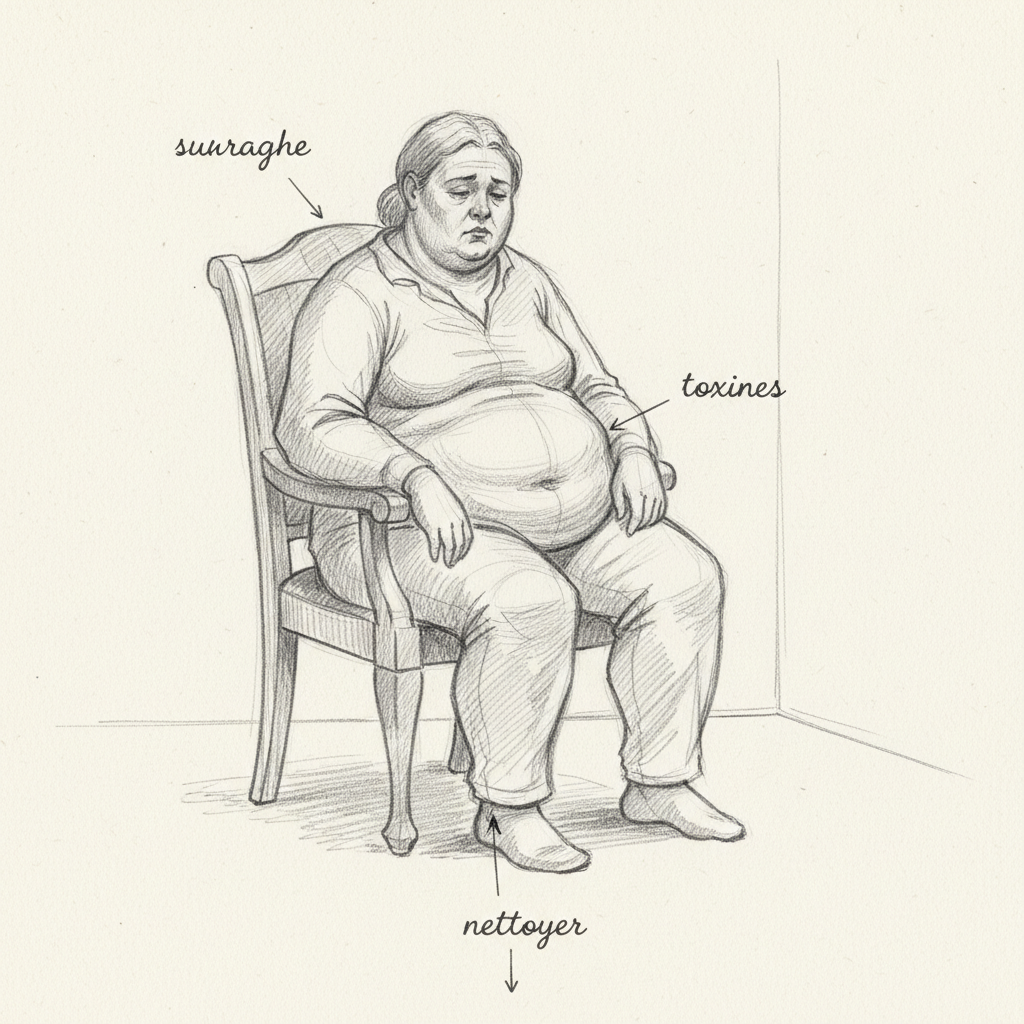
Your body works exactly the same way. Your cells are the fish. Claude Bernard’s internal medium is the aquarium water. And Vincent’s three parameters (pH, rH2, resistivity) are the indicators the aquarist monitors. When you eat badly, when you don’t drink enough quality water, when you accumulate toxins without eliminating them, when chronic stress acidifies your tissues and oxidizes your cells, you pollute your internal aquarium. And your “fish,” that is, your cells, get sick.
Conventional medicine treats the fish. Naturopathy cleans the water. And BEV measures this water’s quality. This is why it’s so valuable to us. It doesn’t diagnose a disease. It measures a terrain. And that’s exactly what we need to work upstream of the symptom.
The limits of BEV
I wouldn’t be honest if I didn’t mention the limits of this approach. Vincent’s bioelectronics isn’t recognized by conventional medicine as a diagnostic tool. The three parameters it measures (pH, redox potential, resistivity) are perfectly reproducible physicochemical measurements used daily in other fields (analytical chemistry, water treatment, food industry, winemaking). No one contests their validity as measurements. What is contested is the extrapolation Vincent makes from them toward health diagnosis.
The scientific community reproaches BEV for lack of randomized clinical studies, lack of publications in peer-reviewed journals, and methodology that doesn’t match current medical research standards. These criticisms are partly founded. Vincent was an engineer, not a hospital-university researcher. He didn’t publish in The Lancet. He published in journals specialized in naturopathy and biophysics, he gave lectures, he trained practitioners, but he didn’t submit his work to peer validation as understood today.
Yet rejecting BEV outright would throw out the baby with the bathwater (if I may say so, when speaking of a hydrologist). The three parameters are measurable, objective, reproducible. Their interpretation within the framework of human health deserves refinement, validation, confrontation with modern data. But the fundamental principle, namely that the quality of the internal medium determines organism health, is contested by no one. Claude Bernard proved it. Modern physiology confirms it every day. Vincent simply proposed a tool to measure it.
In naturopathy, I use BEV as a complementary terrain assessment tool, never as a substitute for conventional medical analyses. A bioelectronic assessment doesn’t replace complete blood count, complete thyroid panel, or ferritin measurement. It complements them by giving a global reading of the terrain that piecemeal analyses don’t provide. It’s a tool for big-picture vision, not a diagnostic tool.
What Vincent leaves us
Louis-Claude Vincent died in 1988, at the age of eighty-two. He leaves behind work that has still not been fully recognized or fully exploited. His research on water, if taken seriously by public health decision-makers, would transform policy on drinking water treatment and distribution. His research on food confirms what organic agriculture has defended for decades. His reinterpretation of Pasteur’s experiment, whether one shares it or not, forces questions that dominant medicine prefers not to hear.
But what Vincent leaves us most precious is the mathematization of terrain. Before him, terrain was a philosophical concept, a clinical intuition, a naturopath’s belief. With him, terrain becomes a measurable, quantifiable, mappable object. Three numbers, three factors, a bioelectronigram. It’s not perfect. It’s not complete. But it’s infinitely more solid than the alternative of saying “terrain matters” without ever being able to prove it.
When I see a client in office, I don’t systematically do a bioelectronic assessment. I don’t always have the equipment on hand, and most people don’t come for that. But Vincent’s thinking runs through each of my analyses. When I look at a blood test, I think pH. When I ask what water you drink, I think resistivity. When I assess your oxidative stress level, I think rH2. Vincent taught me to think in terrain terms, not symptom terms. And that’s exactly what naturopathy has always defended.
If this article has given you the desire to understand the concrete mechanisms by which diet and lifestyle influence your terrain, I invite you to read the basics of naturopathy. You’ll find the four pillars, Marchesseau’s ten techniques, and the big-picture vision of which Vincent is just one facet, fascinating and controversial, of this science of life that we practice.
Based in Paris, I consult via video throughout France. You can book an appointment for personalized support. Want to assess your status? Take the free vitality-toxemia questionnaire in 2 minutes.
To go further
- Fasting and monodiets: naturopath’s ancestral tools
- Marchesseau’s bromatology: eating according to your terrain
- Toxemia according to Marchesseau: the real cause of your diseases
- The 3 naturopathic cures according to Marchesseau explained
Healthy recipe: Alkalizing green juice: This juice modifies your terrain’s pH.


Laisser un commentaire
Sois le premier à commenter cet article.