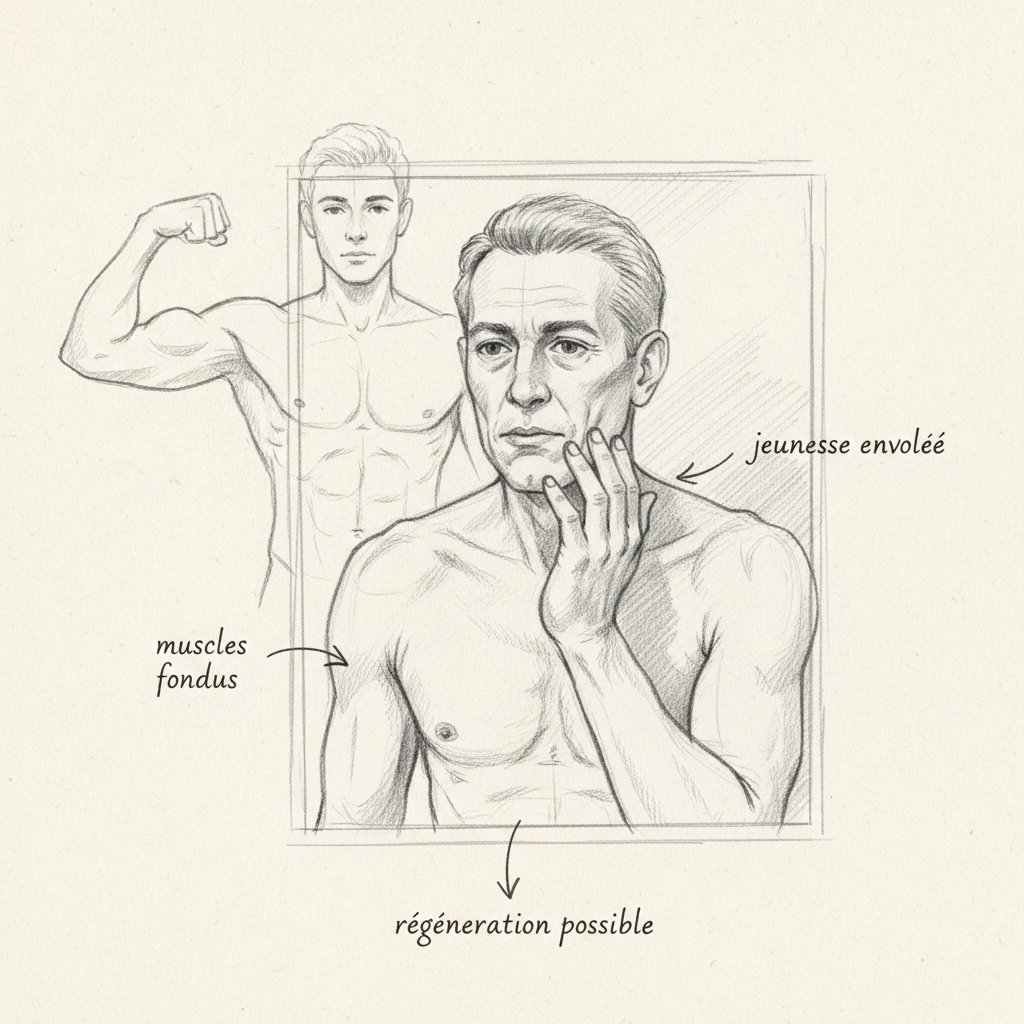
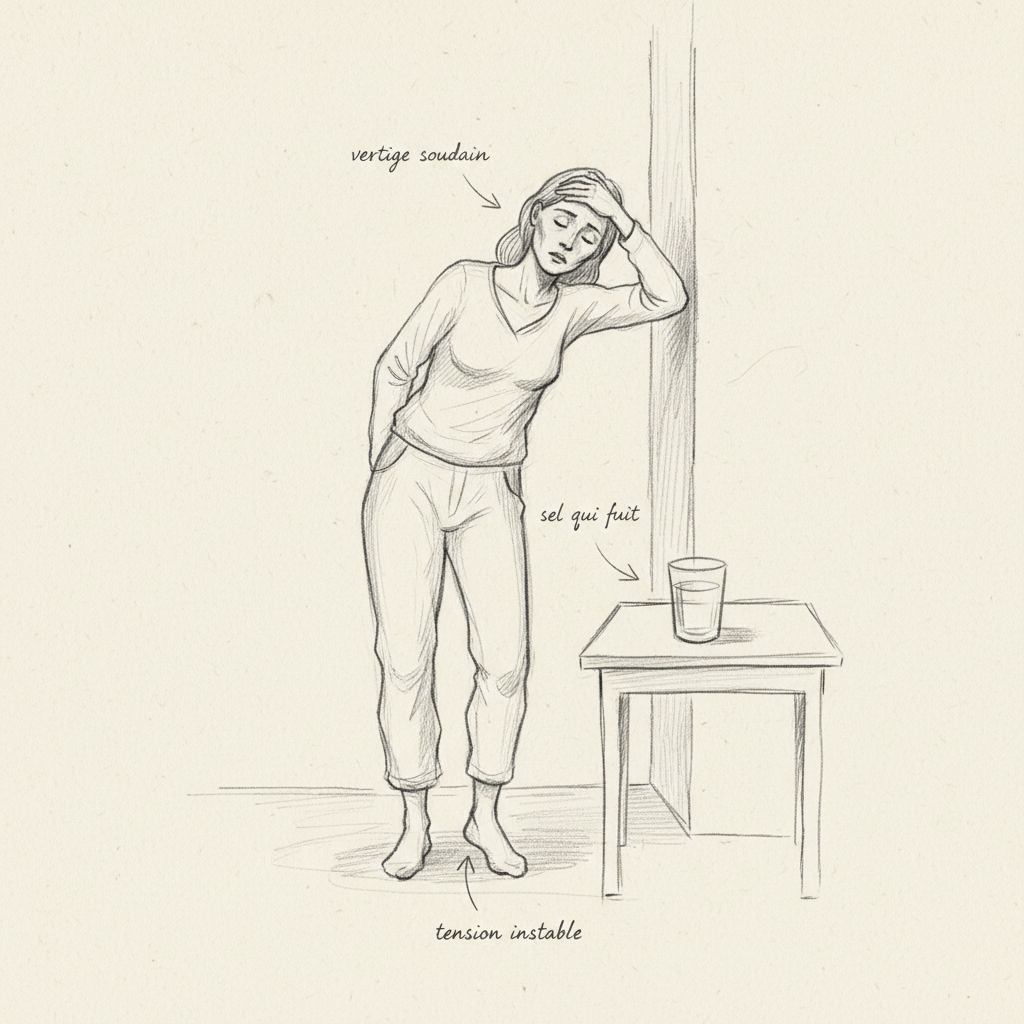
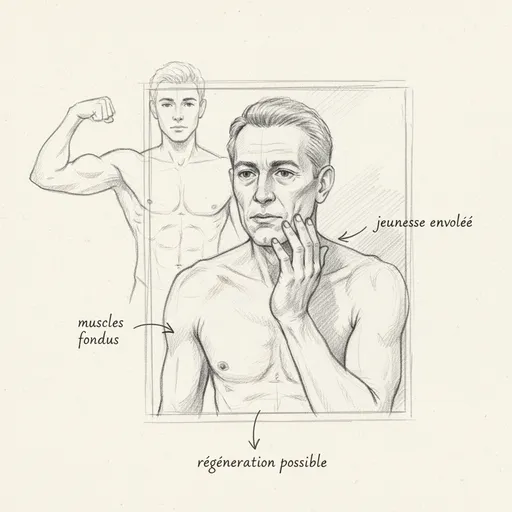
Philip is fifty-five years old and he has aged rapidly. Not gradually: brutally. In two years, his cheeks have hollowed out, his eyelids have drooped, his skin has thinned and wrinkled, his muscle mass has melted away, and his abdominal fat has exploded. He eats the same, sleeps the same, moves the same. But his reflection has changed. His doctor tells him it’s normal at his age. Dr Hertoghe would say it’s a somatopause: a decline in growth hormone, and that it’s not inevitable.
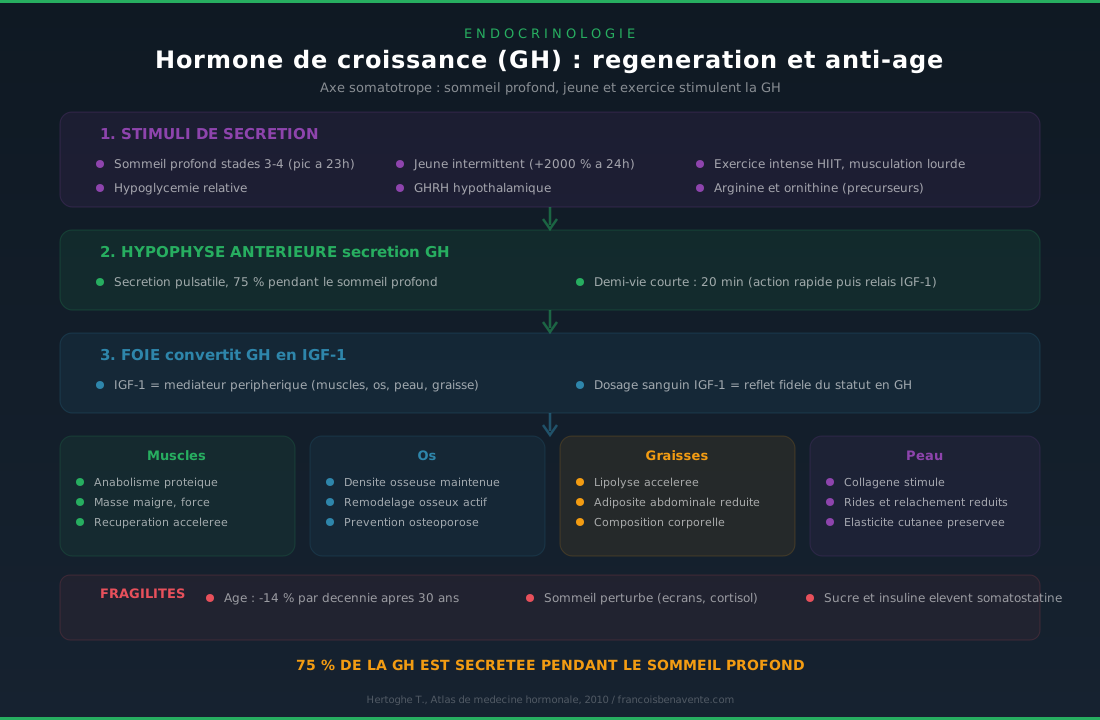
Growth hormone (GH, somatotropin) is the hormone of regeneration. In children, it makes them grow. In adults, it repairs. Every night, during deep sleep, the pituitary gland releases pulses of GH that orchestrate tissue reconstruction: muscle repair, skin renewal, bone consolidation, fat burning, collagen synthesis. When this secretion declines, the body ages faster than expected.
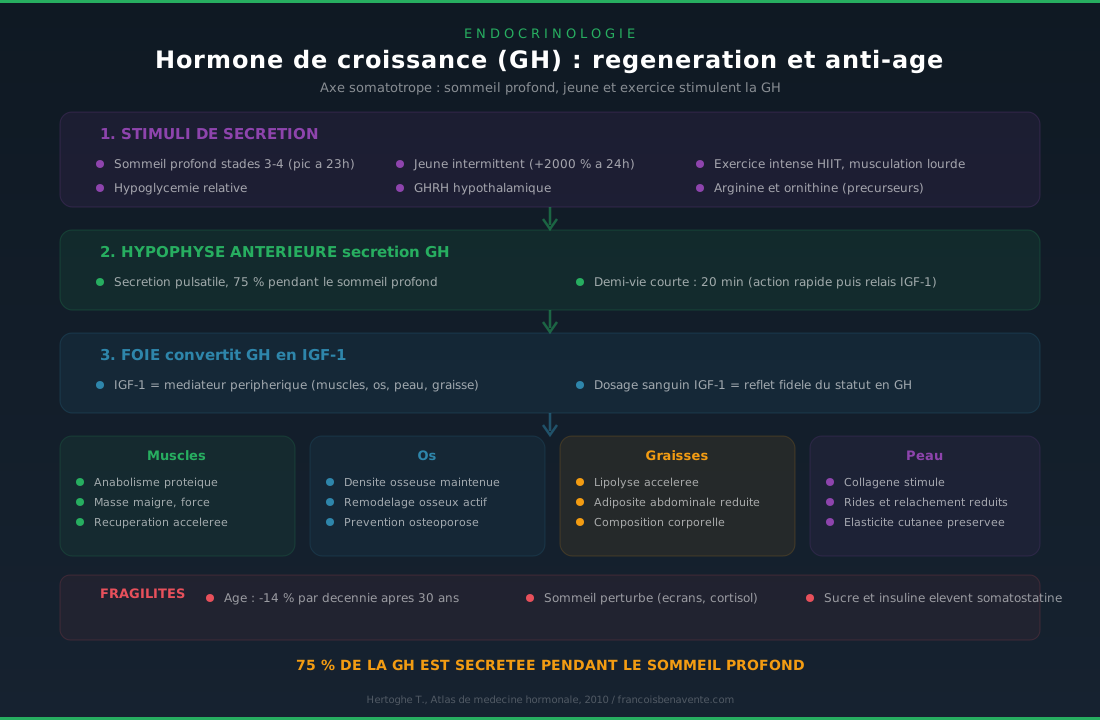
The role of growth hormone in adults
GH acts directly and indirectly via IGF-1 (Insulin-like Growth Factor 1), synthesized by the liver in response to GH. IGF-1 is the main mediator of the anabolic effects of GH in peripheral tissues.
Muscle mass depends directly on GH. It stimulates protein synthesis in muscle fibers and recruits satellite cells (muscle stem cells) for repair. The decline in GH explains sarcopenia (age-related muscle loss) which begins in the thirties and accelerates after fifty.
Skin and connective tissue are regenerated by GH via collagen and elastin synthesis. Thin, dehydrated, wrinkled skin that loses its elasticity: this is a signature of GH deficiency. Dr Hertoghe notes in his Atlas that patients with GH deficiency “look ten years older than their age”.
Fat metabolism is profoundly influenced. GH is lipolytic: it mobilizes fatty acids from adipose tissue to burn them. Its deficiency promotes fat accumulation, particularly abdominal (visceral fat), the most metabolically dangerous. This is why somatopause patients gain belly while losing muscle: the worst body composition scenario.
Bones, cartilage and tendons depend on GH for their renewal. Deficiency contributes to osteoporosis and chronic tendinopathies. Immunity is supported by GH, which stimulates thymopoiesis (production of T lymphocytes by the thymus). Its decline weakens immune defenses.
Signs of deficiency according to Hertoghe
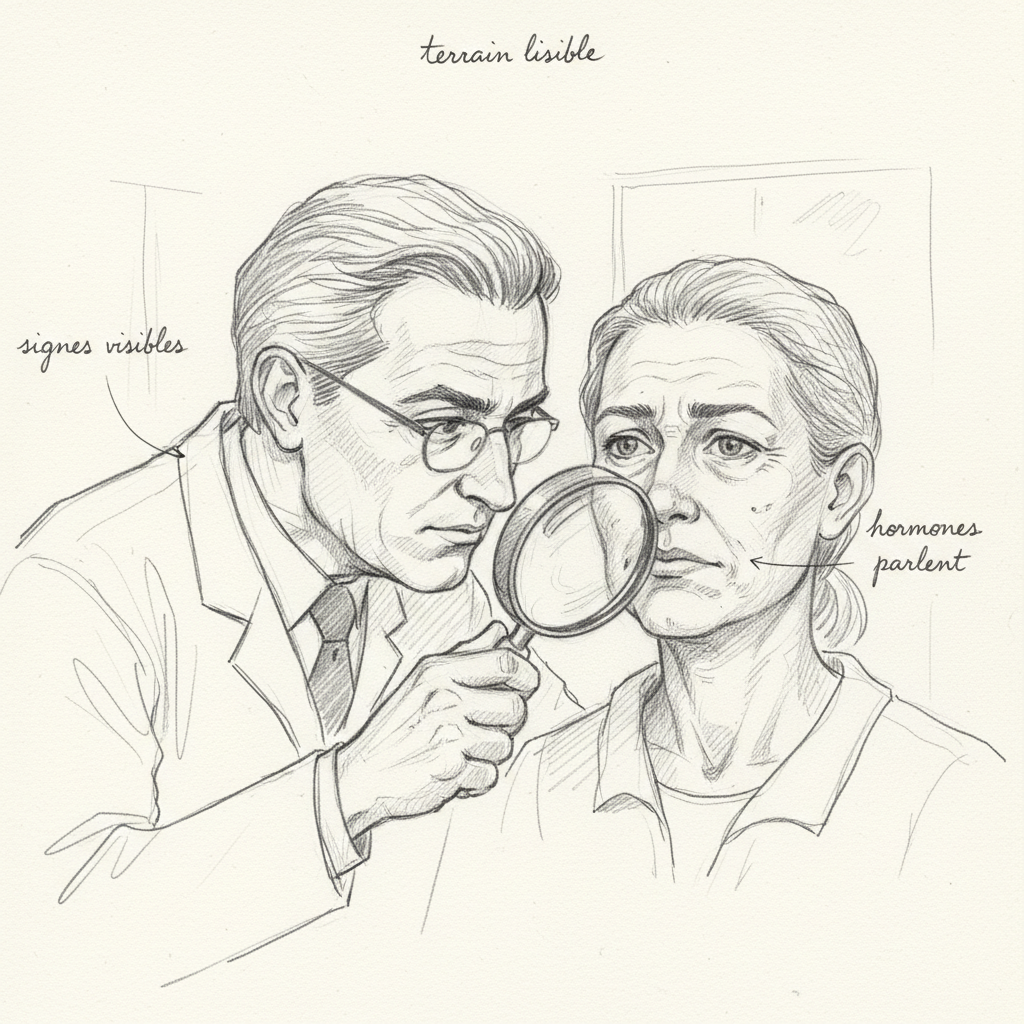
Dr Hertoghe has established a detailed clinical picture of GH deficiency in adults. Physical signs are telling: hair that thins and becomes sparse, drooping eyelids, slack or hollow cheeks, receding gums, thin and dehydrated skin (especially on the back of the hands), early deep wrinkles, visible loss of muscle tone (slack arms, sagging chest), resistant abdominal fat, brittle nails.
Fatigue is a constant but non-specific symptom. It’s a fatigue that doesn’t improve with rest: the body no longer recovers because nighttime repair is no longer happening properly. Ability to exert effort decreases. Endurance collapses. Sport that was easy becomes difficult.
Mood is affected. GH deficiency is associated with a drop in vitality, unusual pessimism, a feeling of aging too quickly, loss of self-confidence linked to physical changes. It’s not a serotonergic depression: it’s a state of “biological discouragement”.
Take the Hertoghe growth hormone test to assess your profile.
What accelerates the decline
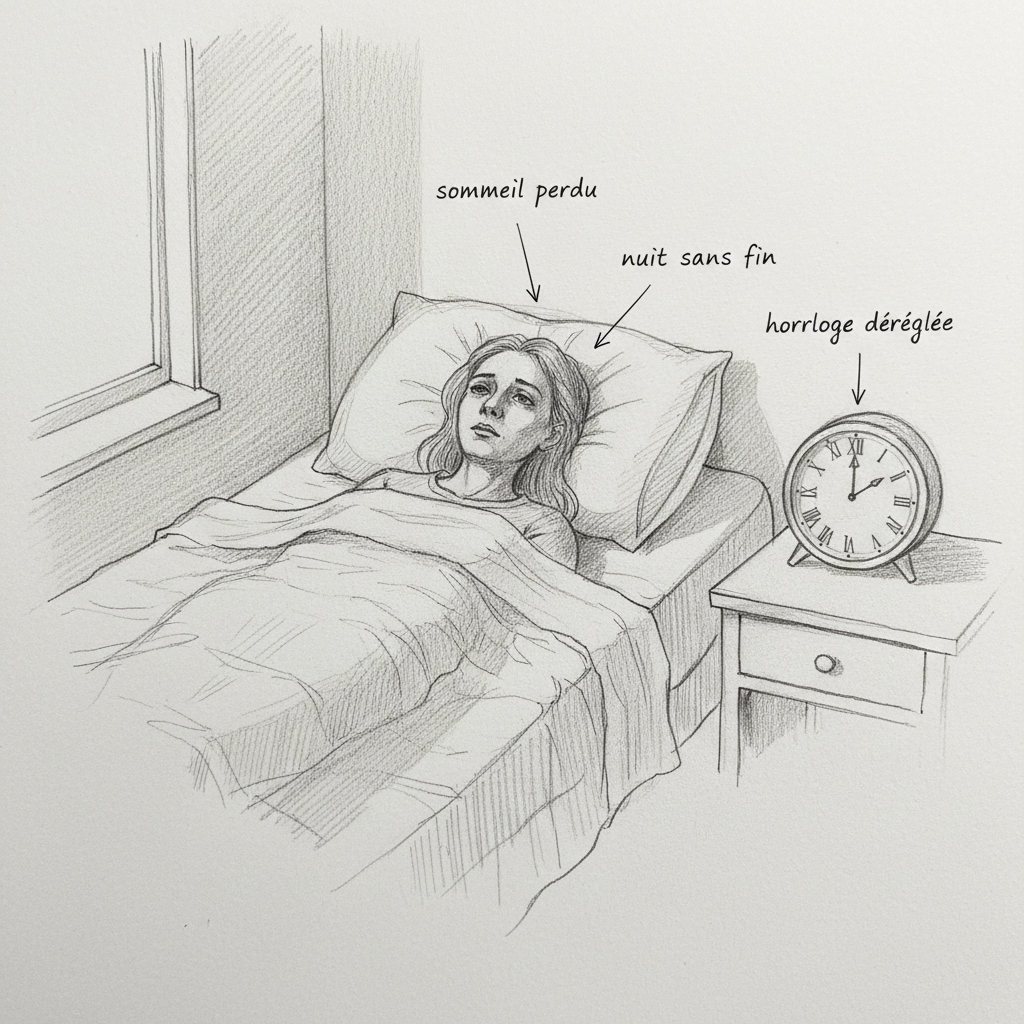
Lack of deep sleep is the first saboteur. GH is secreted mainly during deep slow-wave sleep phases (stages 3 and 4) in the first half of the night. Fragmented, short or light sleep dramatically reduces GH secretion. Night shift workers, insomniacs and people who go to bed too late are particularly affected.
Excess sugar and hyperinsulinism block GH. Insulin and GH are antagonists: when insulin is high, GH is low. A diet rich in refined carbohydrates, constant snacking and insulin resistance keep insulin permanently elevated, which suppresses GH secretion.
Sedentary lifestyle is catastrophic. Intense exercise is the most powerful GH stimulant. Without exercise, baseline secretion declines much faster. Abdominal obesity is both cause and consequence: visceral fat secretes inflammatory cytokines that inhibit GH, and GH deficiency promotes visceral fat accumulation. Vicious circle.
Chronic stress and elevated cortisol directly inhibit GH secretion by the pituitary.
Boost your GH naturally
Resistance exercise (strength training) is the number one stimulant. A thirty-minute workout with heavy loads (70 to 85 percent of maximum) and short rest times (sixty to ninety seconds) can multiply GH by five to ten. HIIT (high-intensity interval training) has a similar effect. Easy walking has virtually no effect on GH. Intensity is key.
Intermittent fasting is the second lever. A sixteen-hour fast (eight-hour eating window) increases GH by two hundred to five hundred percent. Low insulin during fasting removes the brake on pituitary secretion. Not eating after dinner and skipping breakfast (or delaying it) is the simplest strategy.
Deep sleep is non-negotiable. Go to bed before 11 PM, in complete darkness, at cool temperature (18-19°C), without screens for an hour before. Melatonin (0.5 to 1 mg sublingual) improves deep sleep quality and enhances nocturnal GH secretion.
Stimulating amino acids are arginine (3 to 5 grams at bedtime), glutamine (5 grams at bedtime), ornithine (2 grams) and glycine (3 grams). The combination of arginine + ornithine at bedtime, on an empty stomach, is the classic protocol for natural GH stimulation.
Reducing insulin is fundamental. Eliminate refined carbohydrates, snacking, sodas. Prioritize proteins, healthy fats and vegetables. Eat two to three meals a day without snacking. Each gram of sugar less is another chance for GH.
Philip adopted 16/8 intermittent fasting, strength training three times a week, and arginine at bedtime. In four months, he lost five centimeters from his waist, regained muscle tone and his colleagues say he has “gotten younger”. It’s not magic: it’s biochemistry.
To go further
- Melatonin: much more than the sleep hormone
- Aldosterone: the forgotten hormone of your blood pressure and salt
- Sleeping well naturally: what naturopathy can bring you
- DHEA: the forgotten hormone of your vitality and immunity
Sources
- Hertoghe, Thierry. Atlas de médecine hormonale et nutritionnelle. International Medical Books, 2006.
- Veldhuis, Johannes D., et al. “Somatotropic and gonadotropic axes linkages in infancy, childhood, and the puberty-adult transition.” Endocrine Reviews 27.2 (2006): 101-140.
- Curtay, Jean-Paul. Nutrithérapie : bases scientifiques et pratique médicale. Testez Éditions, 2016.
If you want personalized support, you can book a consultation.
Healthy recipe: Carrot-spinach juice: Spinach supports GH synthesis.


Laisser un commentaire
Sois le premier à commenter cet article.