Hair Loss and Hashimoto’s Thyroiditis: The Real Causes and Natural Solutions
Nathalie discovered her Hashimoto’s thyroiditis two years ago. Since then, she takes Levothyrox 75 micrograms every morning. Her TSH is at 2.1. Her endocrinologist is satisfied. But Nathalie, she collects a handful of hair from her pillow every morning. When she runs her hand through her hair in the shower, entire strands slip through her fingers. She has lost a third of her hair mass in eighteen months. She sees her scalp through her hair when she looks in the mirror under harsh light. And no one has given her a satisfactory explanation. “It’s your thyroid,” her doctor said. “It’s stress,” said her dermatologist. “It’s genetic,” her hairstylist concluded.
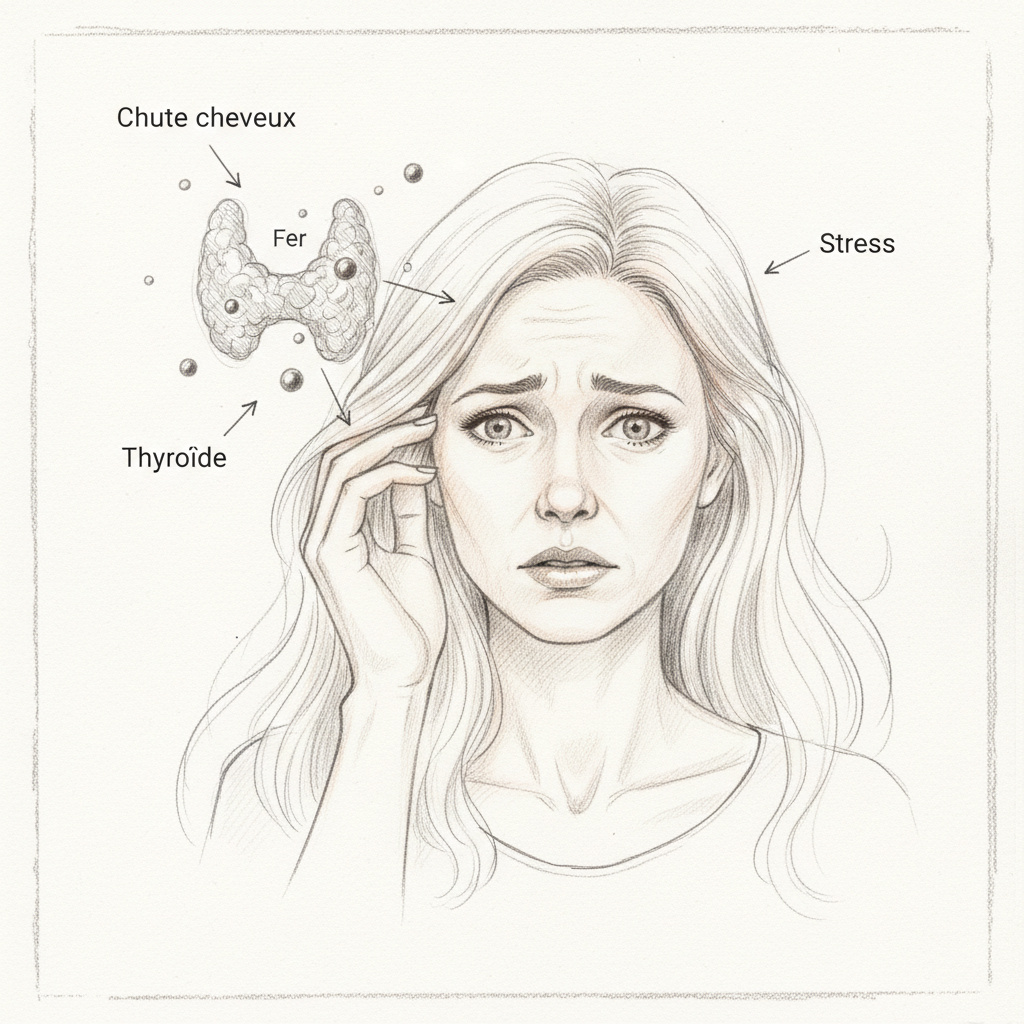
When Nathalie came to see me, she had red eyes and a bag full of dietary supplements bought at the pharmacy. Biotin at 10,000 micrograms, marine collagen, brewer’s yeast, horsetail capsules, anti-hair loss serum at twenty euros a bottle. Nothing had worked. Because no one had looked in the right place. No one had measured her ferritin. No one had checked her zinc. No one had evaluated her adrenals. And most importantly, no one had explained to her that hair loss in Hashimoto is almost never caused by the thyroid alone.
“Hair and nails are the mirror of the inner terrain. When hair falls, it is not the hair that is sick, it is the soil that bore it.” Adaptation from Marchesseau
It’s Not “Just” Your Thyroid
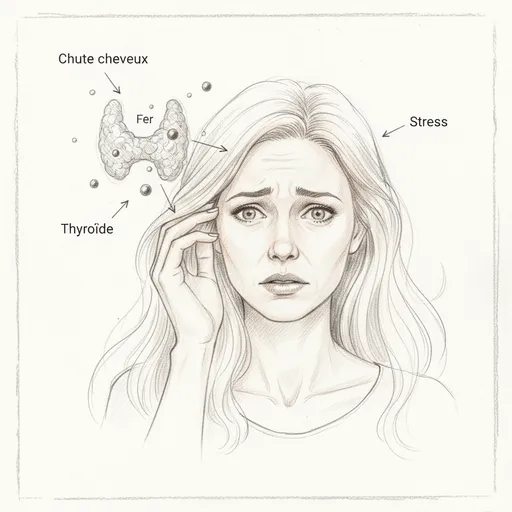
The first thing I tell my patients who are losing hair with Hashimoto is this: yes, hypothyroidism slows down the hair cycle. T3, the active thyroid hormone, stimulates the anagen phase of the hair, that is, its growth phase. When T3 is low, this phase shortens. The hair prematurely enters the telogen phase (rest), then falls out. This is an indisputable physiological fact. But it’s rarely the only explanation.
In the vast majority of cases I see in consultation, thyroid-related hair loss is multifactorial. The slowed thyroid creates the conditions, but nutritional deficiencies, hormonal imbalances, and chronic inflammation do most of the destructive work. And this is excellent news, because it means that even if your Hashimoto is not perfectly controlled, you can recover a large portion of your hair by correcting the aggravating factors.
Dr Hertoghe, in his work on hormonal semiology, describes with remarkable precision the signs of hypothyroid hair: dry, rough, brittle hair that thins at the temples and vertex, with characteristic loss of the outer third of the eyebrows. But he also emphasizes that these signs are not specific to the thyroid. Iron deficiency produces the same hair. Zinc deficiency too. Excess cortisol too. And that’s why a thyroid panel alone, even a perfect one, is not enough to solve the problem.
Ferritin: The Marker We Forget
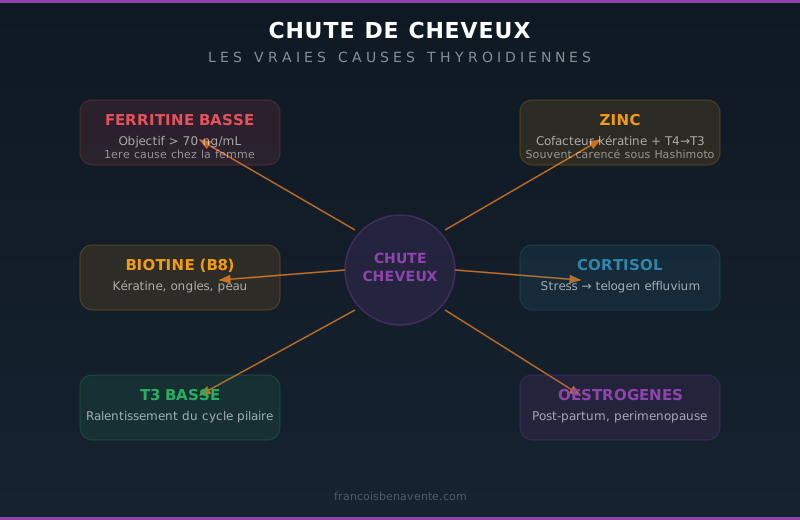
If I had to choose a single biological marker to measure in a woman losing her hair, it would be ferritin. Not TSH. Not T4. Ferritin. Because ferritin deficiency is the leading cause of hair loss in women of childbearing age, and it is systematically underdiagnosed.
Ferritin is the storage form of iron in the body. It’s your reserve. The laboratory standard generally starts at 15 or 20 nanograms per milliliter. But this standard is the standard for not being in frank anemia. It’s not the standard for having hair. For the hair bulb, which is one of the most active tissues in the body with a very high cellular renewal rate, you need ferritin above 70, ideally between 80 and 100. With ferritin at 30, you don’t have anemia. Your hemoglobin is normal. Your doctor tells you everything is fine. But your hair is falling out because iron reserves are insufficient to nourish both your red blood cells and your hair follicles. And faced with this choice, the body always prioritizes red blood cells. Hair comes last.
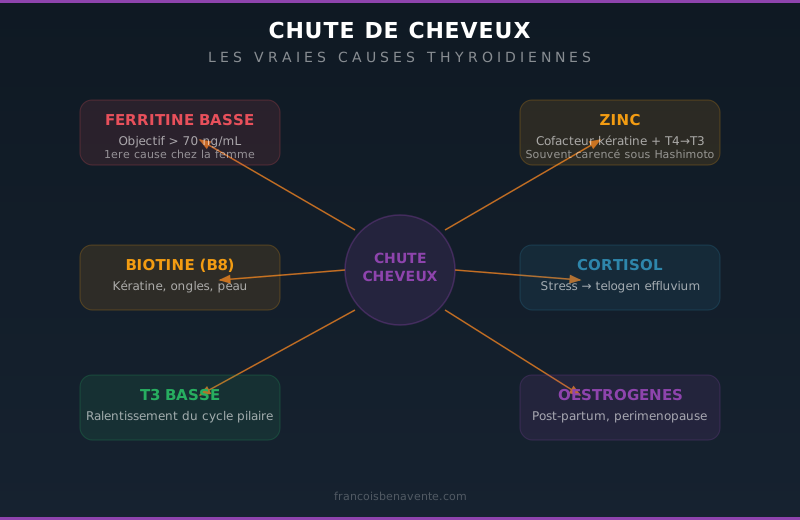
In women with Hashimoto, ferritin deficiency is even more common than in the general population. Several mechanisms combine. Hypothyroidism slows the production of hydrochloric acid in the stomach, which decreases the absorption of dietary iron (iron needs an acidic pH to be absorbed). Chronic inflammation linked to autoimmunity increases hepcidin, a liver hormone that locks iron into storage cells and prevents it from circulating. Heavy menstrual bleeding, common in hypothyroidism (thyroid and estrogen are intimately linked), causes additional iron losses each month. And digestive disorders associated with Hashimoto, which I detailed in my article on hypothyroidism and digestion, compromise nutrient absorption overall.
Iron supplementation, when necessary, must be well conducted. Iron as bisglycinate is the best tolerated form (fewer digestive issues than sulfate or fumarate). It must be taken away from meals rich in phytates (whole grains, legumes) and from tea or coffee, which inhibit absorption. And most importantly, it must be taken at least four hours away from Levothyrox, because iron forms a complex with levothyroxine that renders both ineffective. When I see patients taking their iron at breakfast with their Levothyrox, I understand why neither their thyroid nor their hair improves.
There are also causes of iron deficiency that need to be actively investigated. SIBO (bacterial overgrowth in the small intestine) can cause chronic iron malabsorption despite correct supplementation. If you’ve been taking iron for three months and your ferritin isn’t rising, you need to investigate your gut before increasing the dose. SIBO is common in Hashimoto and alone can explain resistance to iron supplementation.
Zinc, Biotin, and Cofactors
Zinc is the second nutrient I systematically check in thyroid-related hair loss. Zinc is a cofactor in keratin synthesis, the structural protein of hair. Without zinc, hair grows thin, fragile, dull, and breaks easily. But zinc also plays a direct role in converting T4 to active T3. Zinc deficiency worsens functional hypothyroidism even when replacement therapy is properly dosed. Here again we find the concept of terrain: it’s not because you take Levothyrox that your thyroid functions. The cofactors for conversion must be present in sufficient quantity.
The usual zinc dose is 30 milligrams per day of zinc bisglycinate, for at least three months. Zinc is measured in the blood (serum zinc) but the standards are broad and a “low normal” level is already insufficient for hair. In consultation, I rely as much on clinical signs as on measurement: white spots on nails, altered taste, slow wound healing, repeated infections, stretch marks.
Biotin, or vitamin B8, is the most sold hair supplement in the world. And it works, when there is a deficiency. But biotin poses a specific problem in thyroid patients that no advertisement mentions: it falsifies thyroid blood tests. Biotin interferes with immunological tests used to measure TSH, T3, and T4. The result is a falsely low TSH and falsely elevated T3 and T4, which can make it seem like the patient is hyperthyroid when they are not. Before any thyroid blood test, biotin must be stopped at least 72 hours before. This precaution is rarely mentioned and I’ve seen patients whose thyroid treatment was decreased incorrectly due to results falsified by biotin.
Vitamin D also deserves its place in this picture. Low vitamin D (below 30 nanograms per milliliter) is associated with increased anti-TPO antibodies and acceleration of the telogen phase. The goal for Hashimoto is to aim for between 60 and 80 nanograms, which often requires supplementation of 3,000 to 5,000 IU per day.
The Role of Hormones
The thyroid is not the only hormone that governs your hair. Estrogen, progesterone, testosterone, and cortisol all have a direct impact on the hair cycle. And in Hashimoto, all these hormones are often disrupted simultaneously.
Estrogens prolong the hair growth phase. This is why pregnant women, bathed in record estrogen levels, have beautiful hair during pregnancy. It’s also why massive postpartum shedding, when estrogen levels crash, is so sudden and anxiety-inducing. Women in perimenopause, whose estrogen fluctuates wildly before declining, often lose their hair at the same time their cycle falls apart. When this perimenopause combines with an undiagnosed or poorly treated Hashimoto, the result on hair can be devastating.
Cortisol, the stress hormone, causes what’s called telogen effluvium. Under chronic stress, the body redirects its resources toward immediate survival. Hair, non-essential for survival, are sacrificed first. The hair follicle enters premature rest phase and the hair falls out two to three months after the stressful event. This is why hair loss often comes with a delay: you lose your hair in March because of stress from December. This three-month delay corresponds exactly to the duration of the telogen phase. Patients who understand this delay stop looking for a cause in their immediate daily life and start looking at what happened three months earlier.
Pregnenolone theft, the mechanism I described in detail in the article on stress and thyroid, further aggravates the situation. Under chronic stress, pregnenolone is redirected toward cortisol production at the expense of progesterone, DHEA, and testosterone. Low progesterone creates relative estrogen dominance. Low DHEA deprives the follicle of an important hormone precursor. And testosterone, when excessively converted to DHT (dihydrotestosterone) by an overactive 5-alpha reductase, directly attacks follicles at the vertex and temporal regions. This is androgenetic alopecia, which also affects women, though less often discussed than in men.
Three-Axis Naturopathic Protocol
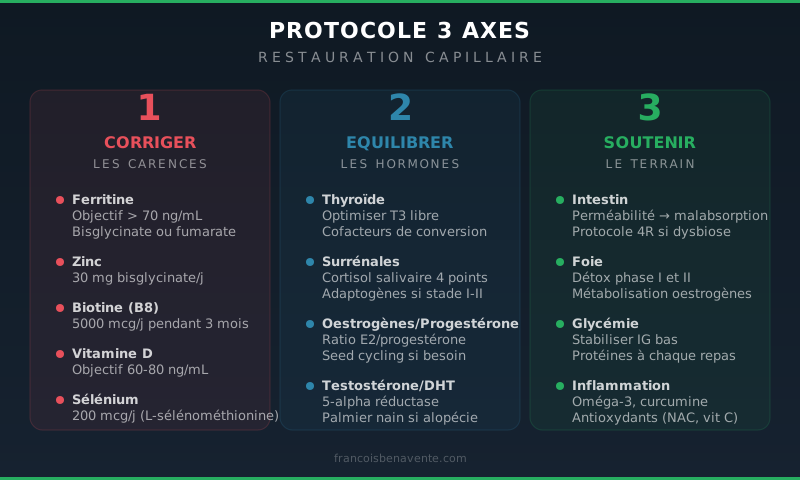
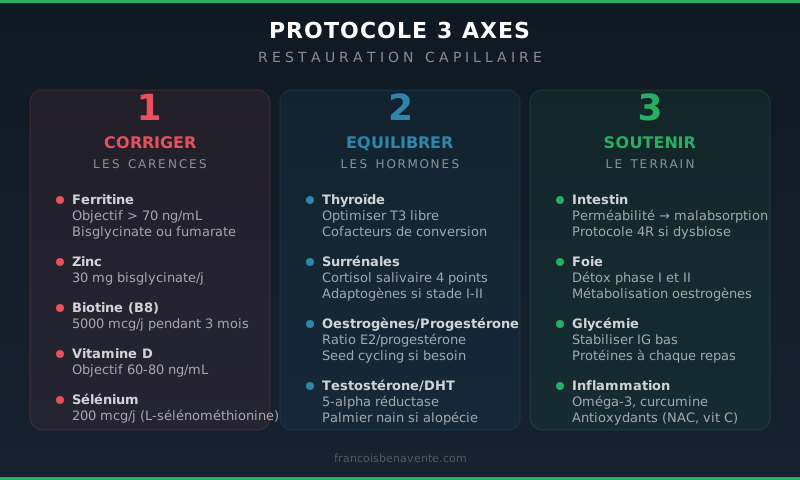
My approach in consultation follows three simultaneous axes. The first axis consists of correcting deficiencies. You don’t grow hair on demineralized terrain. Ferritin above 70, optimized zinc, biotin if needed (with precautions on tests), vitamin D between 60 and 80, selenium 200 micrograms per day. Selenium is particularly important because it reduces anti-TPO antibodies and protects the thyroid gland from oxidative stress. Two to three Brazil nuts per day cover the selenium requirement if they come from rich soil (which is not guaranteed, hence the value of targeted supplementation).
The second axis is hormonal balance. Free T3 must be optimized, not just TSH. A patient with TSH at 2 but free T3 in the lower third of normal is still in functional hypothyroidism for their hair. I systematically request a complete thyroid panel including TSH, free T4, free T3, reverse T3, and both antibody types (anti-TPO and anti-thyroglobulin). For the adrenals, salivary cortisol measured at four points throughout the day reveals whether the stress axis is involved. And for women, measurement of estrogen, progesterone, and DHEA-S in the luteal phase completes the hormonal picture.
The third axis is work on overall terrain. The gut first: if you have intestinal permeability, you malabsorb your nutrients and feed the inflammation that attacks your thyroid and follicles. The liver next: it metabolizes estrogen, converts T4 to T3, and detoxifies endocrine disruptors that disrupt the hair cycle. Blood sugar finally: insulin spikes stimulate the conversion of testosterone to DHT, which aggravates shedding at the vertex.
Kousmine wrote that “hair health is built first on the plate and in the gut.” This is a sentence I repeat often in consultation. Dietary supplements are temporary crutches. The real work, the work that produces lasting results, comes through restoring overall terrain. A gut that absorbs properly, a liver that detoxifies, adrenals that are no longer in survival mode, and eating rich in protein, good fats, and micronutrients.
What You Can Observe and When
The hair cycle has its own timeline. It must be respected, lest you become discouraged prematurely. The telogen phase lasts about three months. This means the hair falling out today entered rest phase three months ago. And the hair regrowing thanks to your new protocol won’t be visible for another three months. This is an exercise in patience.
The first encouraging signs usually appear between the second and fourth month. Small short hairs, the famous “baby hair,” start appearing on the hairline and on top of the scalp. Nails, which share the same cofactors as hair (zinc, biotin, iron, silicon), often strengthen before hair, which is a good precursor sign. Skin also improves: less dry, more supple, less dull.
Nathalie followed this three-axis protocol for six months. Her ferritin went from 22 to 85. Her serum zinc normalized. Her free T3 rose to the upper third of normal thanks to optimizing conversion cofactors. At four months, she sent me a photo of her “baby hair” with a message: “They’re growing back.” At six months, her hairstylist told her she had regrowth everywhere. Nathalie no longer collects handfuls of hair in the morning. Her scalp no longer shows through. And the bag of pharmacy supplements has been replaced by four targeted products, chosen based on her biological panel and individual needs.
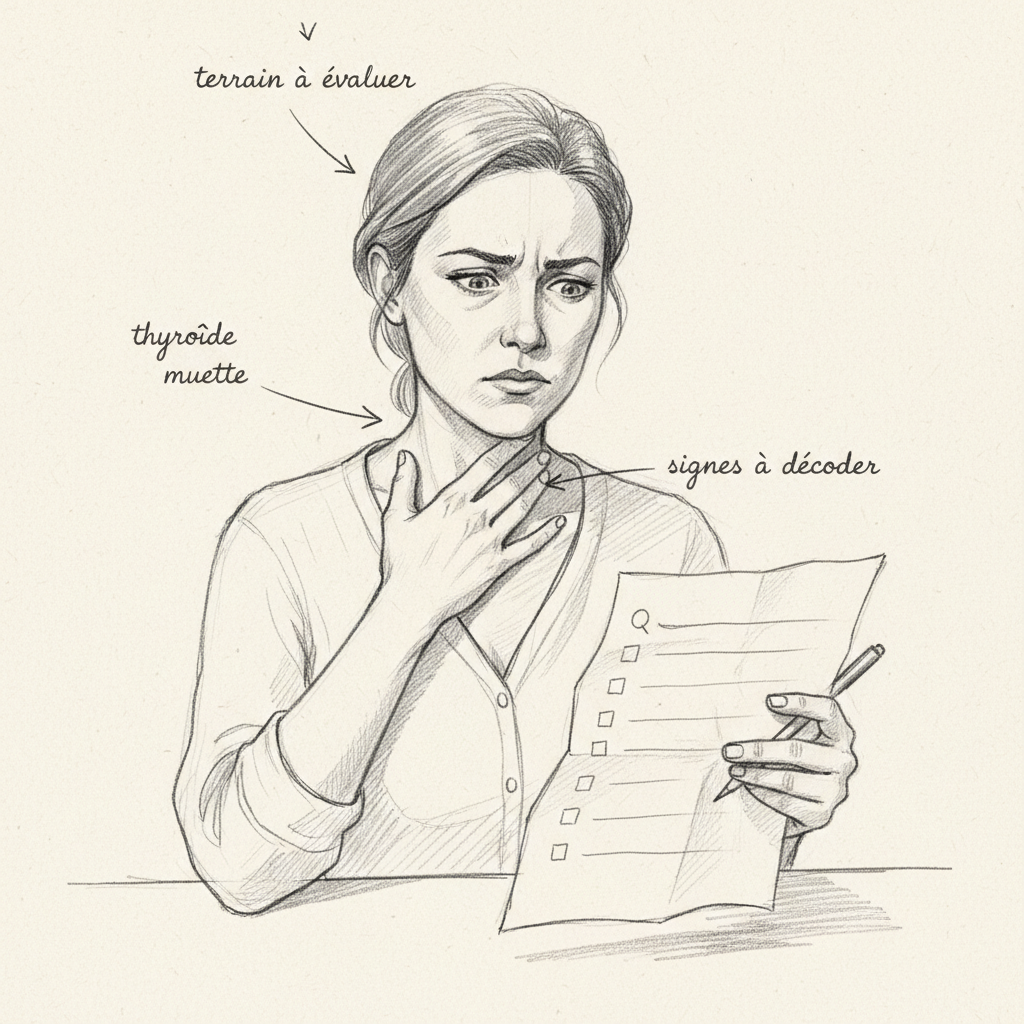
Want to assess your deficiencies? The iron deficiency questionnaire and the Claeys thyroid questionnaire will give you a first overview in just a few minutes.
To Go Further
If you’re losing hair and suspect your thyroid, first read Complete Thyroid Panel to know what to ask your doctor. Also explore Thyroid and Estrogen to understand the hormonal connection, Iron Deficiency for the supplementation protocol, and Zinc: The Forgotten Mineral to deepen understanding of this essential cofactor.
Laisser un commentaire
Sois le premier à commenter cet article.