Sophie came to her appointment with blood test results in hand. Low magnesium, borderline zinc, insufficient vitamin D, ferritin at 18. “I don’t understand,” she told me, “I eat well, I’m careful, I buy organic.” I asked her how she cooked. “Everything in a pan, on high heat, to make it quick.” In five words, she had just explained to me why her blood work was poor despite a decent diet. Sophie wasn’t lacking nutrients on her plate. She was destroying them before eating them.
It’s a blind spot I find in about one in two consultations: patients who invest in the quality of their food but cancel out some of these benefits through inadequate cooking methods. Buying organic broccoli and roasting it at 200 degrees for 20 minutes is like buying a magnesium supplement and throwing half of it in the trash before swallowing it.
“Cooking is an art that can nourish or destroy.” Catherine Kousmine
Kousmine understood before anyone else that the way food was prepared was just as important as the choice of food itself. She advocated for raw food and gentle cooking with an almost militant conviction, at a time when nobody cared about it. Sixty years later, science proved her right.
What heat really does to your food
Heat is kinetic energy. When it enters food, it agitates molecules, breaks chemical bonds, modifies protein structures. At low temperature, these modifications are controlled and often beneficial: cooking makes certain nutrients more bioavailable, destroys anti-nutrients like phytic acid, and eliminates pathogens. But beyond certain thresholds, destruction far outweighs the benefits.
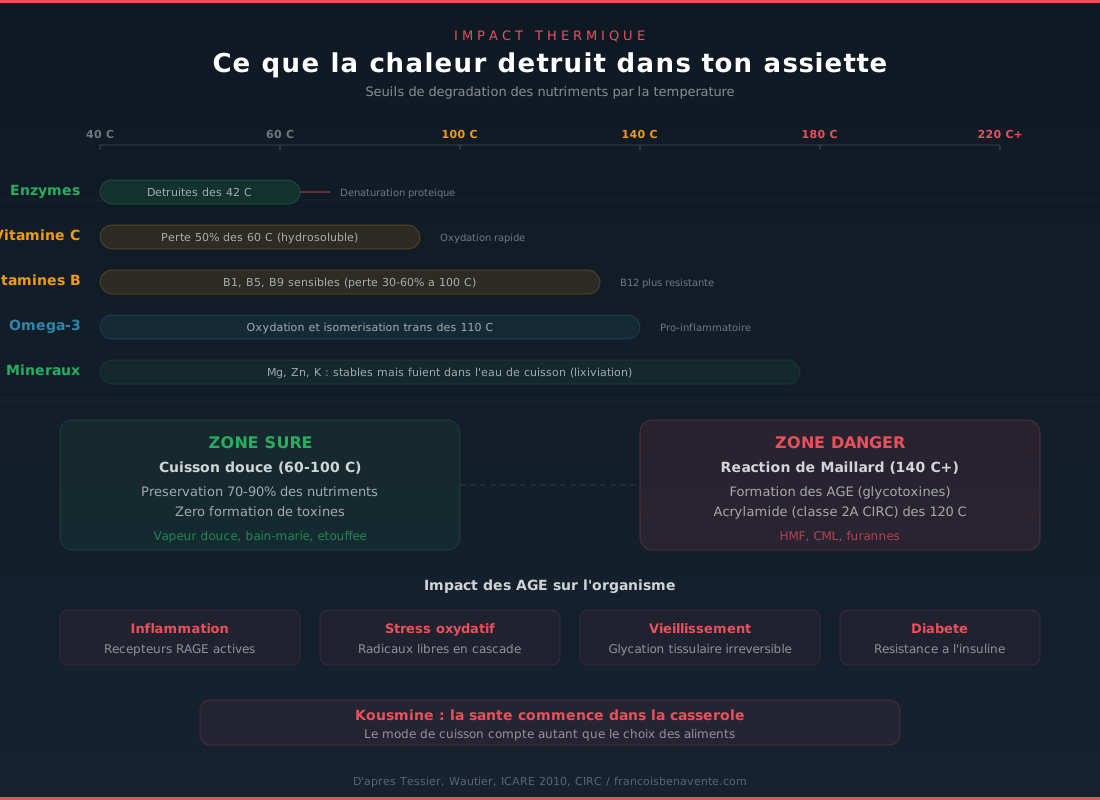
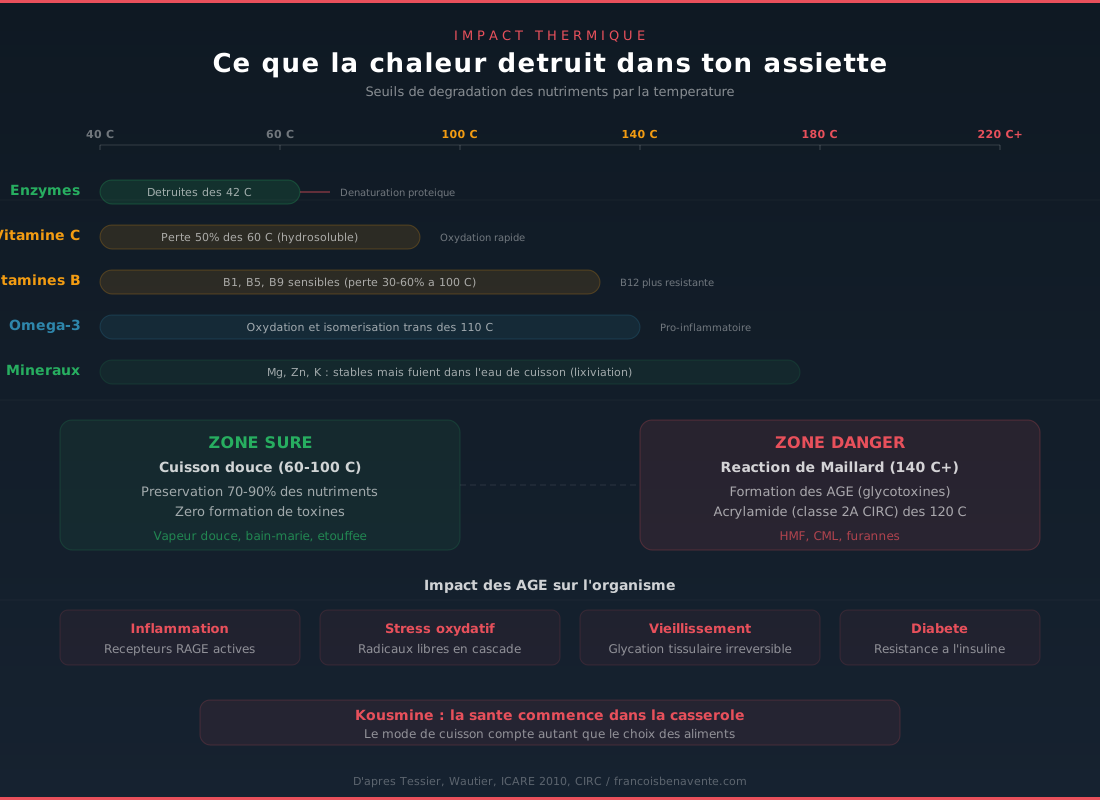
Enzymes, these catalytic proteins that facilitate all of the body’s biochemical reactions, are the first victims. They denature at 42 degrees, meaning they lose their three-dimensional structure and stop functioning. Vitamin C, the most fragile nutrient, loses 50% of its value starting at 60 degrees. It is water-soluble and heat-sensitive, a double vulnerability that makes it nearly absent in any food cooked at high temperature. Vitamins B1 (thiamine), B5 (pantothenic acid) and B9 (folates) lose between 30 and 60% of their activity at 100 degrees.
Omega-3 fatty acids, these essential anti-inflammatory fatty acids I discuss in almost every consultation, are particularly sensitive to heat. Above 110 degrees, they oxidize and undergo trans isomerization. In other words, a beneficial omega-3 transforms into a pro-inflammatory trans fatty acid. Cooking salmon rich in omega-3 over high heat in a smoking pan converts an anti-inflammatory food into an inflammatory one.
Minerals like zinc, magnesium, potassium and iodine are heat-stable: heat doesn’t destroy them. But they fall victim to another phenomenon called leaching: they migrate from the food into the cooking water. If you boil broccoli in a large volume of water and throw out the water, you’re also throwing away much of the magnesium, potassium and zinc. That’s why boiling is the least effective cooking method for preserving minerals, even though it doesn’t “destroy” them in the strict sense.
The Maillard reaction: when taste kills nutrients
The Maillard reaction is named after French chemist Louis-Camille Maillard who described it in 1912. It’s a reaction between sugars and proteins that occurs above 140 degrees and gives food that golden color, that crispy crust, that grilled smell everyone loves. Toast, seared steak, caramelized onions, golden cookies: that’s the Maillard reaction.
The problem is that this reaction simultaneously produces AGEs, advanced glycation end products, also called glycotoxins. AGEs are complex molecules that cannot be completely broken down by the body. They accumulate in tissues, in blood vessels, in joints, in the brain. And they activate specific receptors called RAGE (receptors for advanced glycation end products) which trigger an inflammatory cascade.
According to the work of Tessier and Wautier, this RAGE activation generates major oxidative stress with chain production of free radicals. This is a mechanism identified in type 2 diabetes, cardiovascular disease, accelerated aging and neurodegenerative diseases. The 2010 ICARE study measured CML concentrations (carboxymethyllysine, a marker of AGEs) in common foods: grilled meats, bread and cookies are the main dietary sources.
Acrylamide: the hidden carcinogen in your toast
Above 120 degrees, in starch-rich foods, the Maillard reaction produces a specific compound particularly concerning: acrylamide. This molecule is classified 2A by IARC (International Agency for Research on Cancer), which means “probably carcinogenic to humans”. Not “maybe”, not “hypothetically”. Probably.
The foods most affected are fries (especially when well-browned), chips, toast, dry biscuits, breakfast cereals and roasted coffee. A serving of well-cooked fries can contain 500 micrograms of acrylamide, or 10 times the dose that some countries consider acceptable.
And there’s HMF, hydroxymethylfurfural, another product of the Maillard reaction, toxic to the liver and potentially carcinogenic. It’s found in high concentrations in heated honey, gingerbread, long-cooked jams and syrups. Every time you heat honey to put in your herbal tea, you’re increasing its HMF content.
For autoimmune diseases: a low-AGE diet is mandatory
AGEs aren’t just a problem for diabetics. Research shows that dietary AGE load plays a direct role in low-grade systemic inflammation, the very same inflammation that sustains autoimmune diseases like Hashimoto’s. The work of Guilbaud and colleagues demonstrated that a low-AGE diet significantly reduces inflammatory markers in patients with autoimmune diseases.
Concretely, for someone suffering from autoimmune hypothyroidism, polyarthritis, multiple sclerosis or any other disease involving a chronic inflammatory component, cooking temperature is not a detail. It’s a therapeutic lever. Switching from grilling to gentle steam can reduce AGE load by 50 to 70% in a week, with measurable effects on blood markers within a few months.
The 4 cooking methods, from best to worst
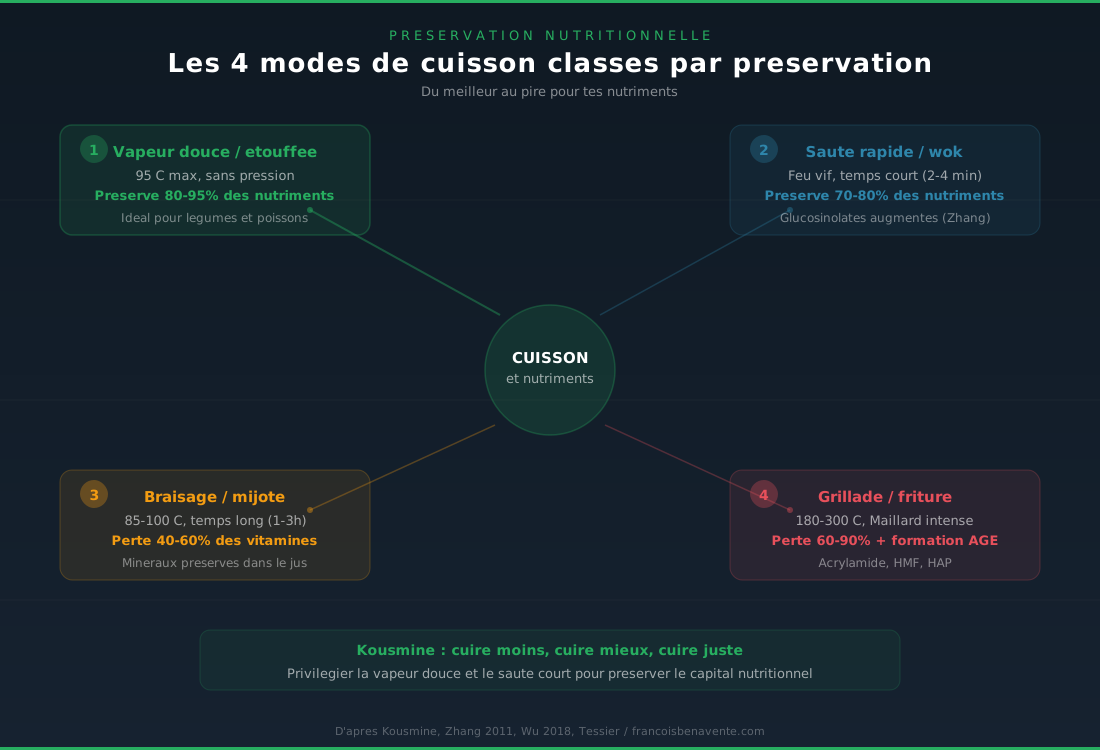
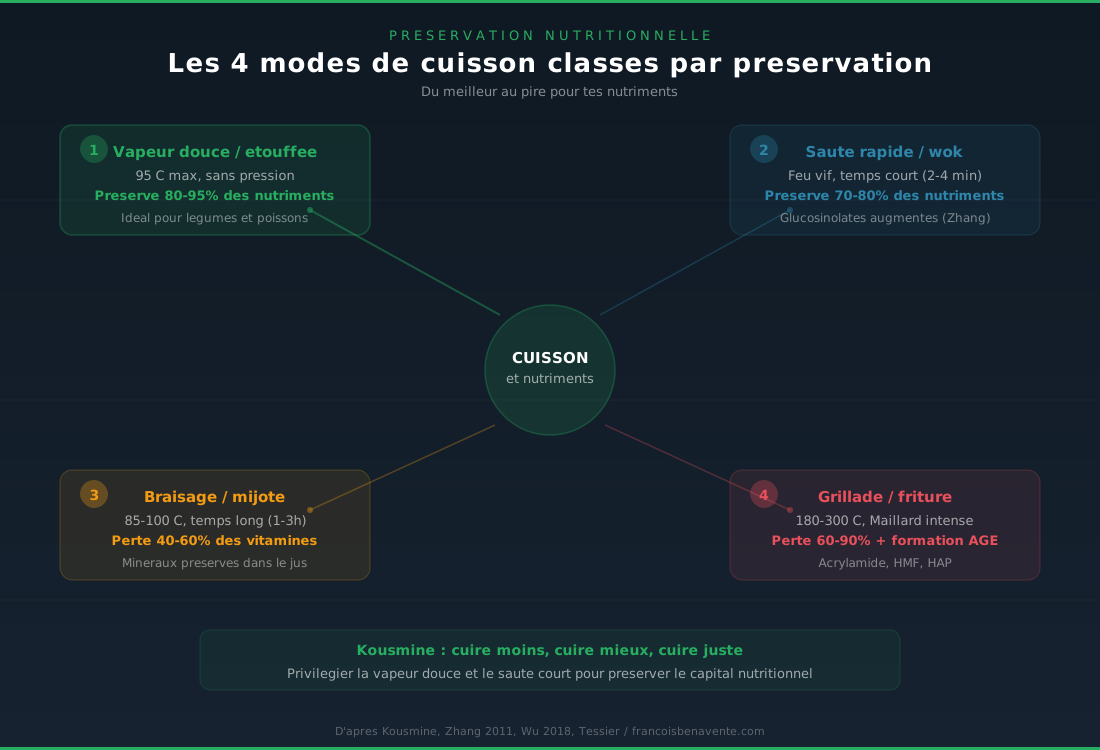
Gentle steaming is clearly the winner. Without pressure, at around 95 degrees, it preserves 80 to 95% of vitamins and minerals. No contact with water (so zero leaching), no excessive temperature (so zero AGEs), and a tender texture that respects the cellular structure of foods. It’s the cooking method Kousmine recommended and that research confirms as the most respectful of nutritional value.
Quick stir-frying in a wok comes in second place, and it’s a surprise for many. The wok operates over high heat, but for a very short time: 2 to 4 minutes maximum. The Zhang study (2011) showed that wok stir-frying preserved 78.9% of vitamin C in bamboo shoots, compared to a loss of 24 to 66% by boiling. Even more surprising, Nugrahedi’s work (2017) demonstrated that wok stir-frying increased glucosinolates in Chinese cabbage by 36 to 107% and those in Pak Choi by 15 to 73% compared to raw. The brevity of cooking compensates for the high temperature.
Braising and stewing fall into an intermediate zone. At 85-100 degrees for 1 to 3 hours, water-soluble vitamins (C, B) are largely destroyed. But minerals are preserved in the cooking liquid, provided you consume it. A bone broth simmered for 12 hours will have lost all its vitamins but concentrated its minerals. Collagen itself is even made more bioavailable by long simmering.
Grilling and frying come in last place. At 180-300 degrees, it’s the reign of intensive Maillard reaction. Nutrient losses reach 60 to 90%, formation of AGEs, acrylamide, HMF and polycyclic aromatic hydrocarbons (PAHs) is maximal. A barbecue-grilled steak can contain the AGE equivalent of 30 portions of steam-cooked chicken.
Cortisol loves AGEs (and that’s a problem)
When the body receives a high load of dietary AGEs, it triggers an inflammatory response via RAGE receptors. This inflammation activates the hypothalamic-pituitary-adrenal axis, the stress axis, which responds by releasing cortisol. Excess chronic cortisol is a metabolic disaster: it promotes insulin resistance, it disrupts thyroid function, it diverts pregnenolone (the universal hormonal precursor) toward cortisol production at the expense of sex hormones, it disrupts serotonin synthesis and it impairs sleep quality.
In other words, a high-temperature cooking method doesn’t just destroy the nutrients on the plate. It actively generates substances that disrupt the hormonal, neurochemical and immune balance of the body. It’s a dual deficiency mechanism: fewer nutrients absorbed and more metabolic stress to manage. The terrain becomes depleted from both ends.
How to switch to gentle cooking in daily life
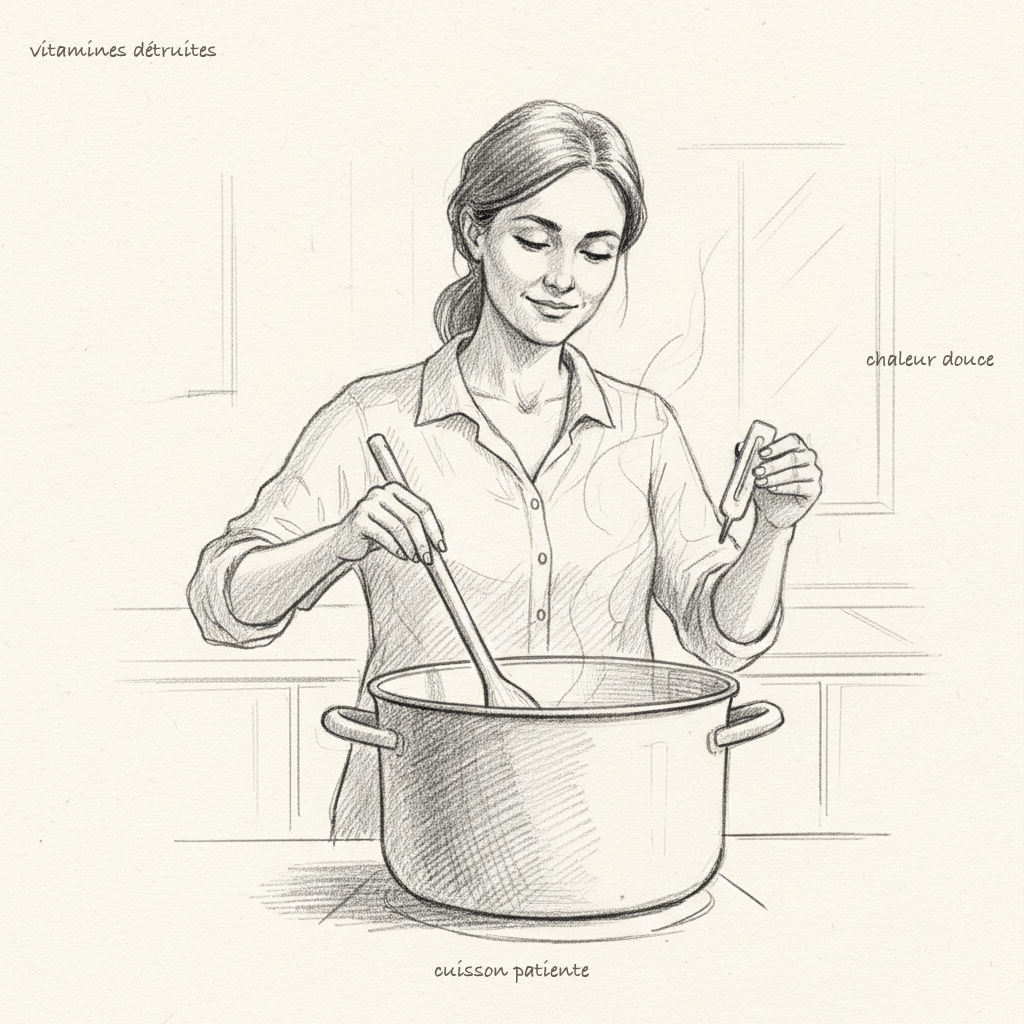
You don’t need sophisticated equipment. A stainless steel steamer basket placed on a pot of simmering water is enough for most vegetables. The water must not touch the bottom of the basket, and it must not boil vigorously: a simmer is sufficient. Vegetables are ready in 8 to 15 minutes depending on their density. They keep their bright color, their crunch and, most importantly, their nutrients.
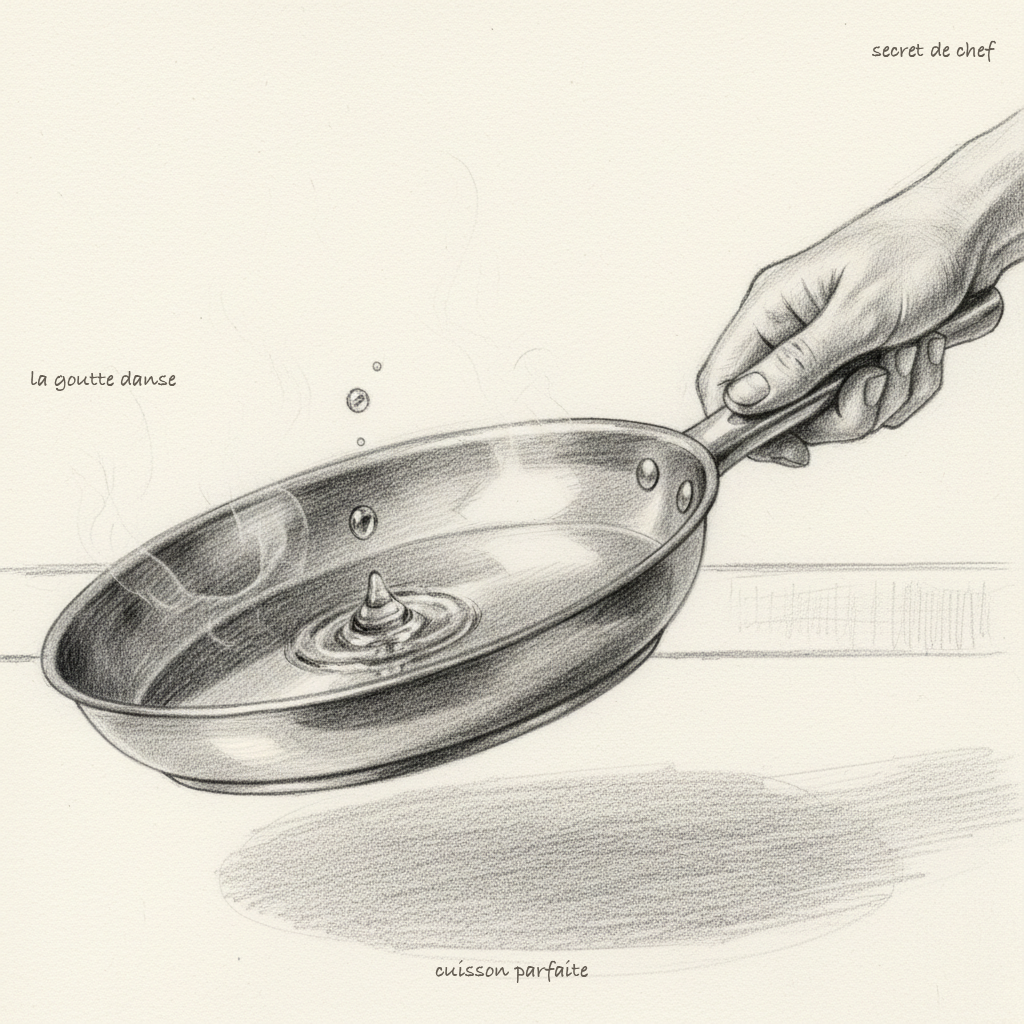
For searing, use a triply stainless steel pan with the water droplet test to find the right temperature. Quick searing (2-3 minutes per side) at controlled temperature allows you to get the Maillard reaction on the surface while preserving the inside of the food. It’s a compromise between taste and health that allows you to enjoy grilled flavors without the massive AGE load of long cooking at high temperature.
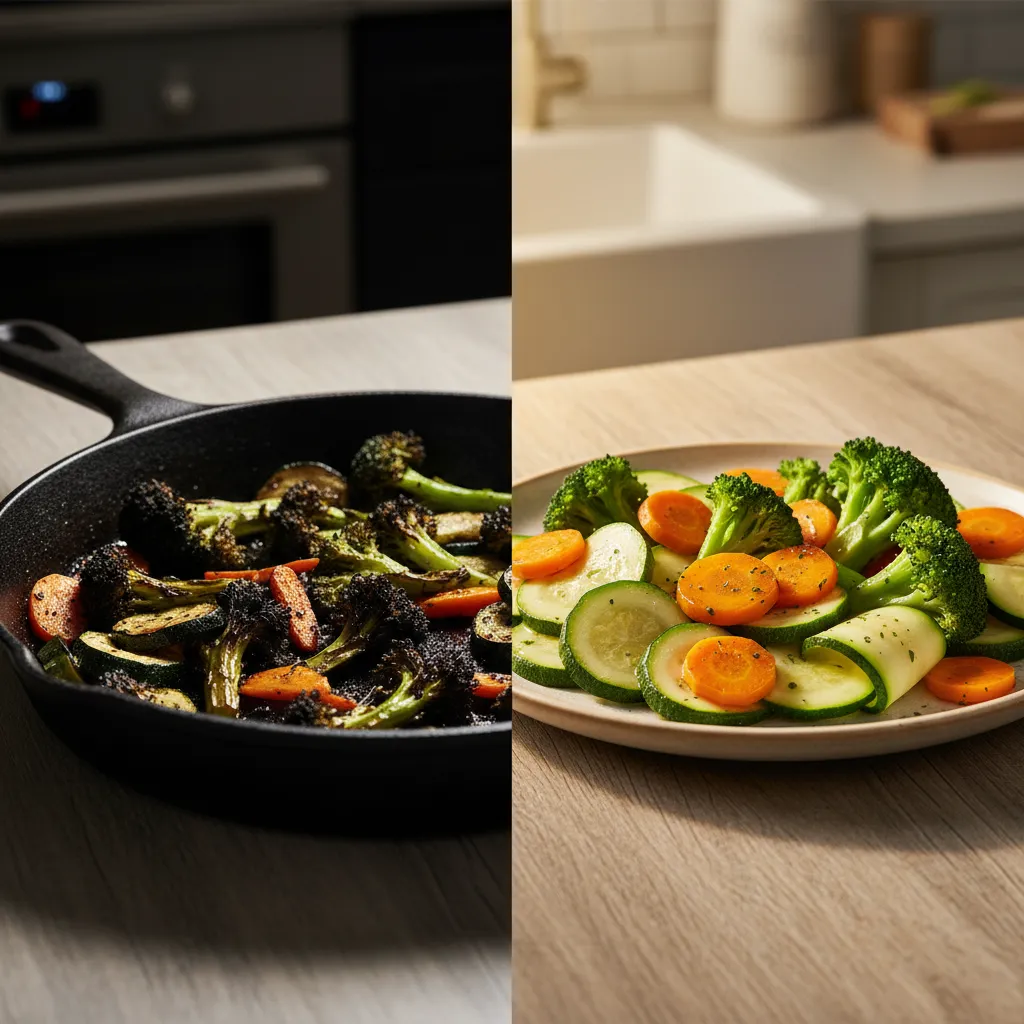
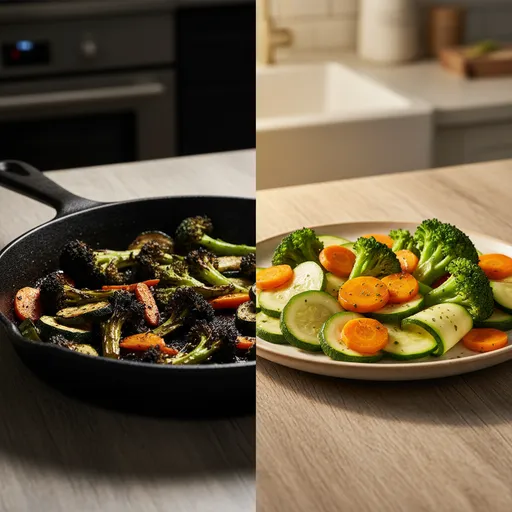
Before cooking, cleaning your food with a food purifier reduces the surface toxin load. The simple rule I give my patients: if your food is black, you’ve killed it. If your food is golden, you’ve damaged it a bit. If your food has kept its natural color, you’ve respected it. Color is the best visual indicator of nutrient preservation.
Limits and balance
I’m not saying you should never grill a steak or eat toast again. The dose makes the poison, and an occasional barbecue in summer won’t destroy your terrain. What I’m saying is that the daily cooking method, the one you use three times a day, every day, deserves to be conscious and intentional.
If you suffer from inflammatory, autoimmune, metabolic or hormonal disorders, switching to gentle cooking as your main method is an accessible and free therapeutic lever. Talk to your doctor or naturopath about adapting the approach to your specific situation.
Sophie came back to see me three months later with her new blood work. Magnesium up, zinc normalized, ferritin rising. She hadn’t changed her diet. She had changed the way she cooked.
For optimal gentle cooking, PranaCook 18/10 stainless steel cookware and pots with triple bottoms allow homogeneous and controlled temperature increase.
“Health begins in the pot, not in the pharmacy.” Catherine Kousmine. And the temperature of that pot decides what enters your bloodstream.



Laisser un commentaire
Sois le premier à commenter cet article.