Virginie is thirty-eight years old and has symptoms that no one can connect to each other. Heavy periods lasting seven days with clots (she changes tampons every two hours on the first day). Tender and swollen breasts ten days before menstruation. Uterine fibroids discovered by chance on ultrasound. Irritability in the second half of the cycle that endangers her relationship. And a thyroid that “functions well” according to her endocrinologist (TSH at 3.2 mIU/L, Free T4 at 12.5 pmol/L).
When I looked at her complete hormonal panel (not TSH alone, the complete panel), I found progesterone in the luteal phase at 4.2 ng/mL (the optimal range is between 10 and 25), an estradiol/progesterone ratio unbalanced in favor of estrogens, and low free T3 at 3.1 pmol/L (functionally insufficient). In short: her estrogens, without being in absolute excess, dominated a collapsed progesterone. And this estrogenic dominance was trapping her thyroid by increasing TBG, the protein that captures thyroid hormones and renders them inactive.
Estrogenic dominance is not an excess of estrogens
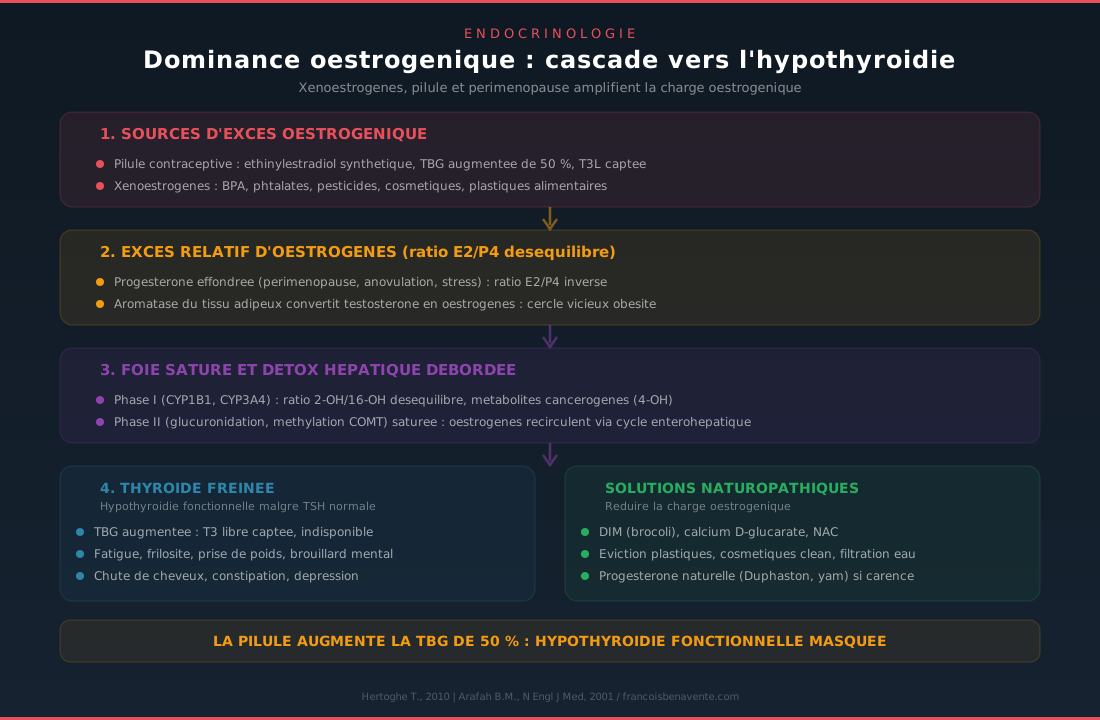
This is the first misconception to clear up. Estrogenic dominance is a relative imbalance, not an absolute excess. Your estrogens can be perfectly “within normal range” on a blood test, and you can be in estrogenic dominance if your progesterone is too low to counterbalance it. It’s the ratio that matters, not the individual numbers.
Dr. Thierry Hertoghe, in his approach to hormonal medicine, insists on this notion of ratio: “Hormones function as antagonistic couples. Estrogen stimulates, progesterone calms. Estrogen makes tissues proliferate, progesterone differentiates them. When the balance is disrupted in favor of estrogen, tissues proliferate without control: fibroids, endometriosis, fibrocystic breasts, and potentially hormone-dependent cancers.”
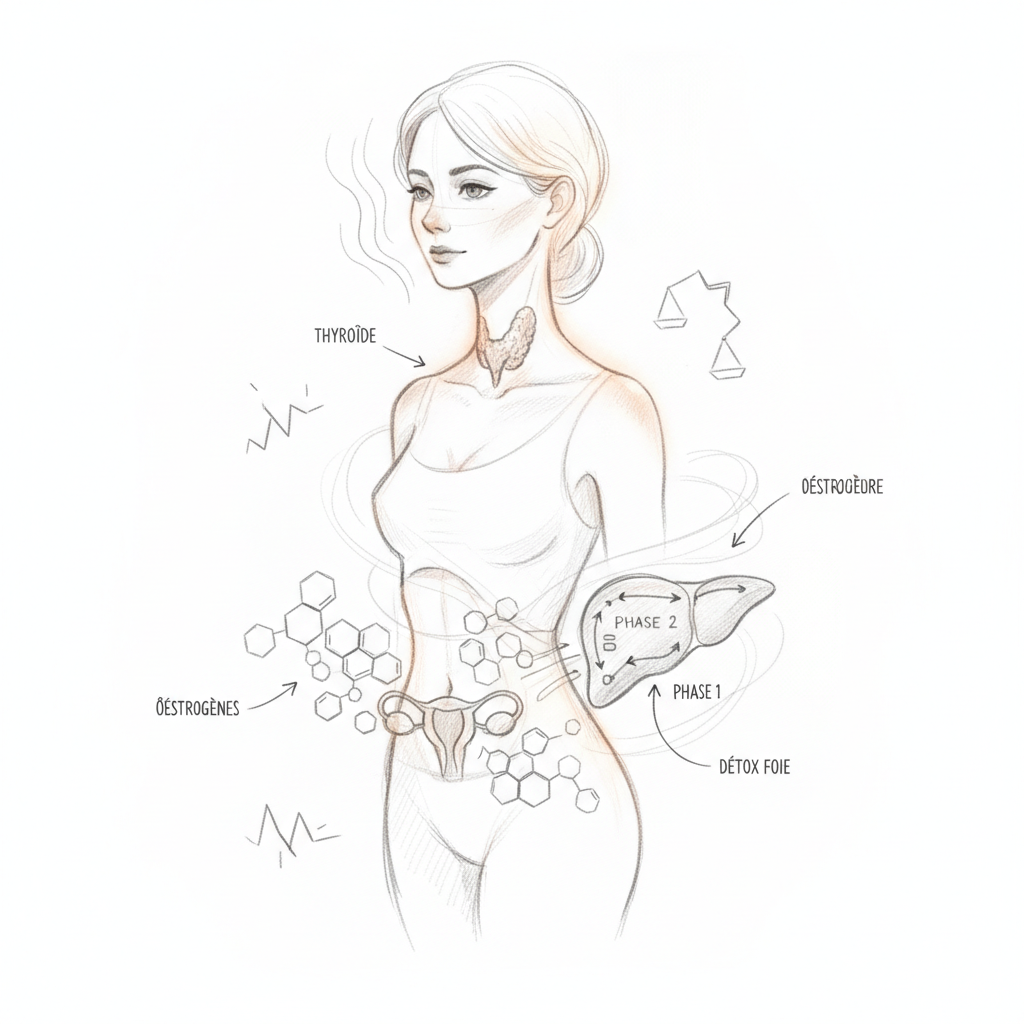
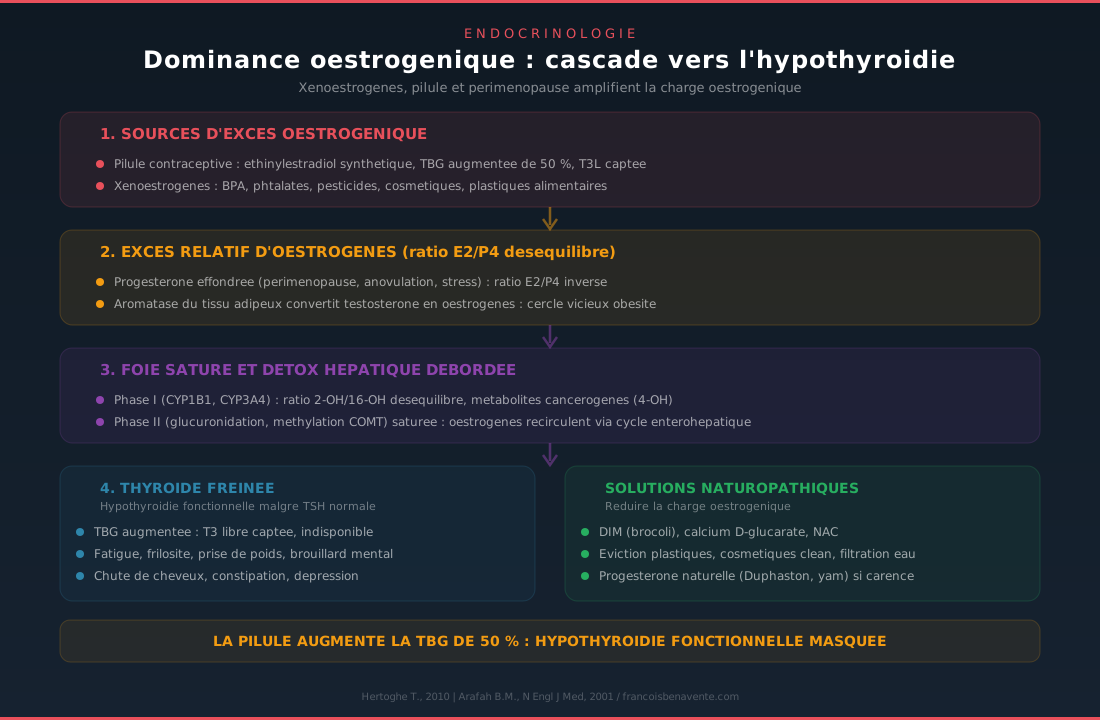
Three situations create estrogenic dominance. The first is excess production: obesity (adipose tissue converts androgens to estrogens via aromatase), chronic stress (the cortisol steals pregnenolone from progesterone to produce more cortisol, this is the “pregnenolone steal”), and environmental xenoestrogens (BPA, phthalates, pesticides, parabens). The second is progesterone insufficiency: anovulation (cycles without ovulation = no corpus luteum = no progesterone), perimenopause (progesterone drops 100% when ovulation stops, whereas estrogens only drop 60%), and oral contraceptives (which suppress natural ovulation and therefore progesterone production). The third is poor elimination: the liver is responsible for detoxifying used estrogens through phase 1 and phase 2 pathways. An overloaded liver (alcohol, medications, toxins, non-alcoholic fatty liver disease) recirculates estrogens instead of eliminating them.
The thyroid amplifier
The mechanism by which estrogenic dominance sabotages the thyroid is elegant in its simplicity and devastating in its consequences. Estrogens stimulate hepatic production of TBG (Thyroxine-Binding Globulin), the transport protein for thyroid hormones in the blood. The more TBG there is, the more thyroid hormones are “captured” and bound to this protein. And only free hormones (unbound) are active at the cellular level.
Concretely, a woman in estrogenic dominance can have normal TSH and normal total T4 (because the body compensates by producing more T4 to fill all the extra TBG), while having insufficient free T3 and free T4. This is a masked hypothyroidism hidden by apparently normal test results. This is why I systematically request the FREE fractions (Free T3 and Free T4) and never the total fractions.
This mechanism also explains why so many women develop thyroid problems at certain key moments of their hormonal life: pregnancy (estrogens multiplied by one hundred), oral contraceptives (ethinylestradiol), perimenopause (progesterone drop, relative estrogenic dominance), and postpartum (abrupt hormonal collapse). Each of these moments is a window of thyroid vulnerability.
Xenoestrogens: the invisible enemy
Xenoestrogens are synthetic chemical molecules that mimic the action of estrogens by binding to estrogen receptors in the body. More than seven hundred are counted in our daily environment. The most concerning are BPA (bisphenol A) present in plastics, coating of cans and thermal receipts, phthalates present in cosmetics, fragrances and flexible food packaging, parabens present in creams, shampoos and deodorants, organochlorine pesticides (DDT, lindane, atrazine) persistent in the food chain, and PFAS (perfluorinated compounds) present in non-stick coatings and food packaging.
On average, a woman uses twelve cosmetic products per day, meaning exposure to approximately one hundred sixty-eight chemicals, a significant proportion of which are endocrine disruptors. A man uses six (eighty-five substances). I developed this topic in depth in my article on endocrine disruptors in the kitchen, but the kitchen is only the tip of the iceberg.
A clinical case marked me. A patient saw her anti-TPO antibodies (Hashimoto) skyrocket from 120 to 380 in less than three months. By searching for the trigger, we identified a change of lipstick. The new one contained lead and arsenic (analyzed by a third-party laboratory). By eliminating this single product and supporting hepatic detoxification, the antibodies came back down to 180 in four months.
The DUTCH test: the gold standard
Standard blood hormonal testing (estradiol, progesterone, FSH, LH) is limited because it measures hormones at a single point in time in the blood, without distinguishing metabolites. The DUTCH test (Dried Urine Test for Comprehensive Hormones) is a 24-hour dried urine test that measures not only hormones but also their metabolites, that is, how the body eliminates them.
This is crucial because it’s not only the quantity of estrogens that matters, but the pathway through which they are metabolized. The liver eliminates estrogens through three main pathways: the 2-hydroxy pathway (protective), the 4-hydroxy pathway (genotoxic, associated with breast cancer) and the 16-hydroxy pathway (proliferative). The DUTCH test shows the ratio between these pathways. If the 4-OH pathway dominates, the risk is high and targeted intervention (DIM, sulforaphane, N-acetylcysteine) can redirect metabolism toward the protective pathway.
The rebalancing protocol
My approach to estrogenic dominance targets the three causes simultaneously.
To support hepatic elimination of estrogens, I prescribe DIM (diindolylmethane) at 100-200 mg per day, derived from cruciferous vegetables, which directs metabolism toward the 2-hydroxy pathway. Calcium D-glucarate at 500 mg twice daily inhibits intestinal beta-glucuronidase (a bacterial enzyme that deconjugates estrogens in the intestine, allowing their reabsorption instead of their elimination). Broccoli sprouts (30 g per day) provide sulforaphane which activates the Nrf2 pathway and supports phase 2 detoxification. And milk thistle, artichoke and taurine for general hepatic support.
To stimulate natural progesterone, vitex (Vitex agnus-castus) at 20-40 mg of standardized extract in early perimenopause is the first choice. It acts on the pituitary gland by increasing LH and thus progesterone production by the corpus luteum. If vitex is not sufficient (after three to six months of trial), topical bioidentical progesterone (25 mg per application, in the second half of the cycle) is the next step, to be discussed with a doctor trained in bioidentical hormone therapy.
To reduce exposure to xenoestrogens, I recommend a complete home audit: replace plastic containers with glass or stainless steel, certified organic cosmetics (check on the Yuka or INCI Beauty app), organic food for the most contaminated fruits and vegetables (the EWG’s “Dirty Dozen”), tap water filtration (activated charcoal minimum, reverse osmosis ideal), and elimination of scented candles and indoor air fresheners.
Seed cycling is a simple and economical tool that I integrate into this protocol. In the follicular phase (days 1 to 14), one tablespoon of freshly ground flax seeds (lignans that modulate estrogen receptors) and one tablespoon of pumpkin seeds (zinc that supports ovulation). In the luteal phase (days 15 to 28), one tablespoon of sunflower seeds (selenium that supports progesterone) and one tablespoon of sesame seeds (lignans that facilitate the elimination of excess estrogens). A clinical trial on forty women practicing seed cycling for three months showed 80% reduction in breast pain, 77% reduction in cramps, and 75% reduction in PMS symptoms.
Warning
Estrogenic dominance is a functional concept that is not recognized as a diagnosis in conventional medicine. Endocrinologists work with laboratory standards, not functional ratios. If you suspect estrogenic dominance, seek out a practitioner trained in functional medicine or bioidentical hormone therapy who can interpret a DUTCH test and adapt the protocol.
Fibroids, endometriosis, fibrocystic breasts and hormone-dependent cancers require medical monitoring. Naturopathy intervenes as a complement, not a replacement. Bioidentical progesterone, even natural, should not be used without prior hormonal testing and without medical monitoring, especially in cases of history of hormone-dependent cancer.
Kousmine had this prophetic phrase, written decades before the endocrine disruptor crisis: “We poison our food, our water and our air, and we are surprised when we become ill afterward. Health begins with the purity of what enters our body.” Xenoestrogens are perhaps the most insidious of these poisons, because they act at tiny doses, silently, over decades. Identifying and eliminating them is an act of public health as much as individual health.
Want to evaluate your status? Take the free Claeys thyroid questionnaire in 2 minutes.
If you want personalized support, you can book a consultation.
To go further
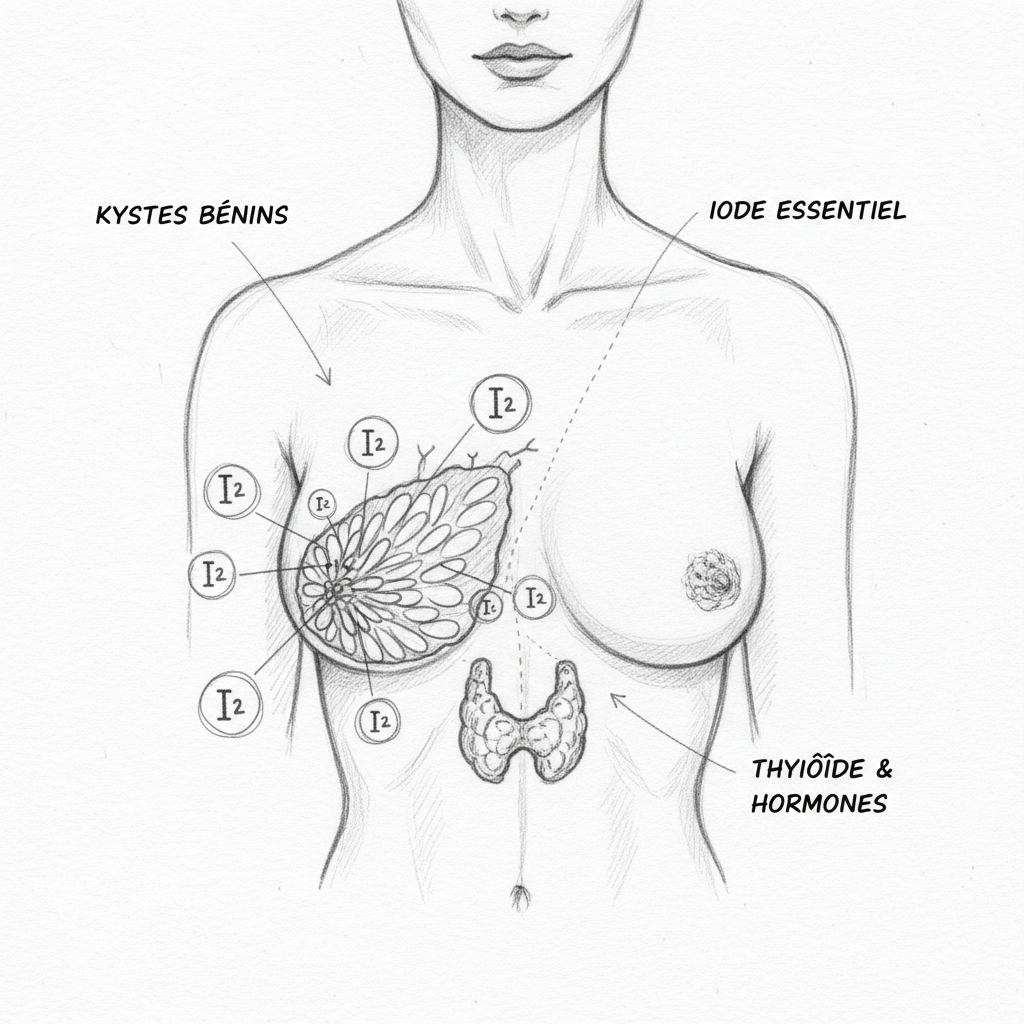
- Fibrocystic breasts: the thyroid, iodine and estrogens triangle
- Perimenopause and thyroid: the natural hormonal protocol
- Thyroid and female hormones: the knot no one unties
- Graves’ and heart: calming the cardiac storm
Want to evaluate your status? Take the free Hertoghe estrogens questionnaire in 2 minutes.


Laisser un commentaire
Sois le premier à commenter cet article.