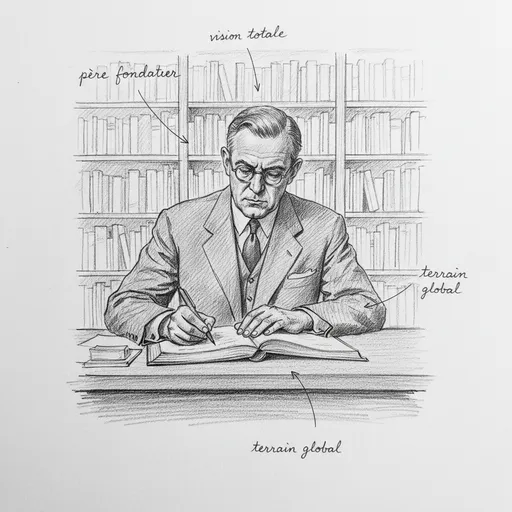
In 1935, in a small Parisian apartment cluttered with books, a twenty-four-year-old man finishes reading the latest work by Paul Carton. He has already devoured Hippocrates in the original text, studied the work of Kneipp on hydrotherapy, dissected the Kuhne method, reviewed American publications by Lindlahr and Benedict Lust. He scribbles equations, diagrams, and arrows in a notebook. He is searching for something no one before him has attempted: to unify all these traditions into a single coherent system. This man’s name is Pierre-Valentin Marchesseau. He doesn’t know it yet, but he is founding what he will call orthodox naturopathy, and laying the foundations for naturopathic teaching in France for the next seventy years.
“Disease is not an enemy to fight; it is nature’s effort to restore order.” Pierre-Valentin Marchesseau
The man who read everything
To understand Marchesseau, you must understand the breadth of his knowledge. He was not a practitioner who read three books and opened an office. He was a scholar who devoted his entire life to the systematic study of all natural health traditions, from antiquity to contemporary discoveries. Pythagoras and his vegetarian diet. Hippocrates and his theory of humors. Paracelsus and vital force. Kneipp and cold water cures. Kuhne and derivative hip baths. Paul Carton and French hygienism. Henry Lindlahr and the natural philosophy of healing. Benedict Lust, founder of American naturopathy. Marchesseau had read everything, compared everything, cross-referenced everything.
What distinguished him from his predecessors was his capacity for synthesis. Where Carton spoke of terrain and temperance, where Kneipp swore only by water, where Lindlahr structured healing in three orders, Marchesseau fused these approaches into a global system. He did not merely adopt what came before. He created. Over eighty works bear witness to this, covering anatomy, physiology, psychology, philosophy, dietetics, iridology, reflexology, morphotypology, and bromatology. A gigantic corpus, written with quasi-scientific rigor, in a language sometimes arid but always precise.
Marchesseau considered the human being as an indivisible whole. This is not a slogan. It is the cornerstone of his entire work. The physical, mental, emotional, energetic, and spiritual are not five separate compartments. They are five expressions of the same living reality. To heal the body without considering the spirit is as absurd as repainting the facade of a house whose foundations are crumbling. This holistic vision, which many claim today, was formalized in French naturopathy by Marchesseau. Every consultation I conduct as a naturopath, every vital assessment I make, rests on this foundation.
The vitality equation: health expressed as a formula
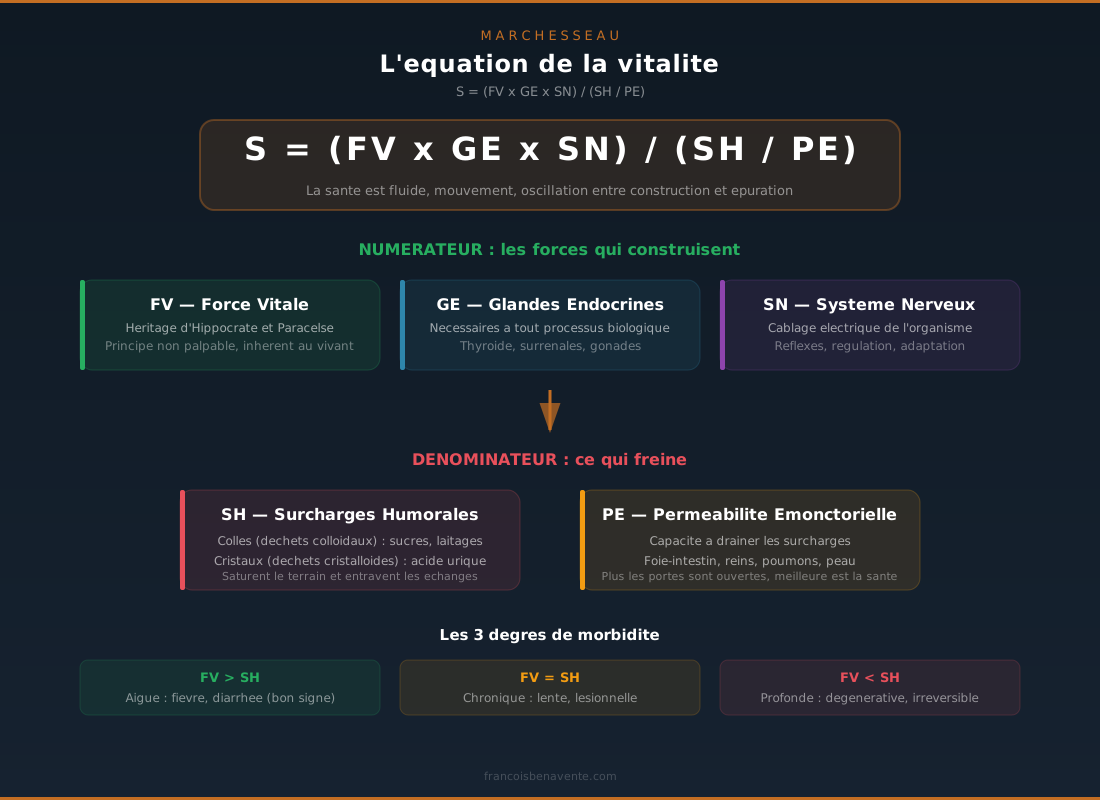
Marchesseau was a Cartesian mind as much as a humanist. He wanted to explain health with the clarity of a mathematical equation. And he succeeded. His most famous formula is the vitality equation:
S = (FV x GE x SN) / (SH / PE)
Each letter has a precise meaning, and when you understand this equation, you understand all of naturopathic logic. Let’s detail each term.
S is Health. Not the absence of disease, but the state of dynamic equilibrium of the organism. Health in Marchesseau’s sense is an active process, not a passive state. It is built, maintained, and restored. It depends on the balance of forces between what builds you up and what encumbers you.
In the numerator, three constructive forces.
FV, Vital Force. This is the oldest concept in the history of medicine. Hippocrates called it vis medicatrix naturae, the healing power of nature. Paracelsus spoke of the Archeus. Marchesseau takes this concept and places it at the heart of his system. Vital force is that innate intelligence which orchestrates wound healing, digestion, fever, and restorative sleep. You don’t manufacture it. You receive it at birth, like a capital fund. Some people receive a lot, others less. The naturopath’s role is not to create it, but to preserve it, restore it when exhausted, and above all never contradict it. Every suppressive medication, every dietary excess, every sleepless night, every chronic stress draws from this reserve. When it’s depleted, the body can no longer defend itself.
GE, Endocrine Glands. Marchesseau emphasizes the central role of the hormonal system in health. The endocrine glands, thyroid, adrenals, pancreas, gonads, pituitary, and pineal, are the chemical messengers of the organism. They regulate metabolism, reproduction, stress adaptation, sleep, and growth. Even subtle hormonal imbalance disrupts the entire structure. This is why in naturopathy, we always assess hormonal status through clinical signs, morphology, and history. If you want to understand how the thyroid influences your entire metabolism, it is Marchesseau who laid the groundwork for this thinking in French naturopathy.
SN, the Nervous System. The second major regulator. The autonomic nervous system, with its sympathetic and parasympathetic branches, governs all vegetative functions: digestion, circulation, respiration, and elimination. Marchesseau understood that chronic stress, by maintaining the sympathetic in permanent hyperactivity, progressively throws all systems out of balance. The vagus nerve, that tenth cranial nerve that innervates the heart, lungs, stomach, liver, and intestines, is the keystone of recovery. When the parasympathetic dominates, the body repairs itself. When the sympathetic dominates, the body wears out. This alternation is fundamental to naturopathic understanding of stress and chronic fatigue.
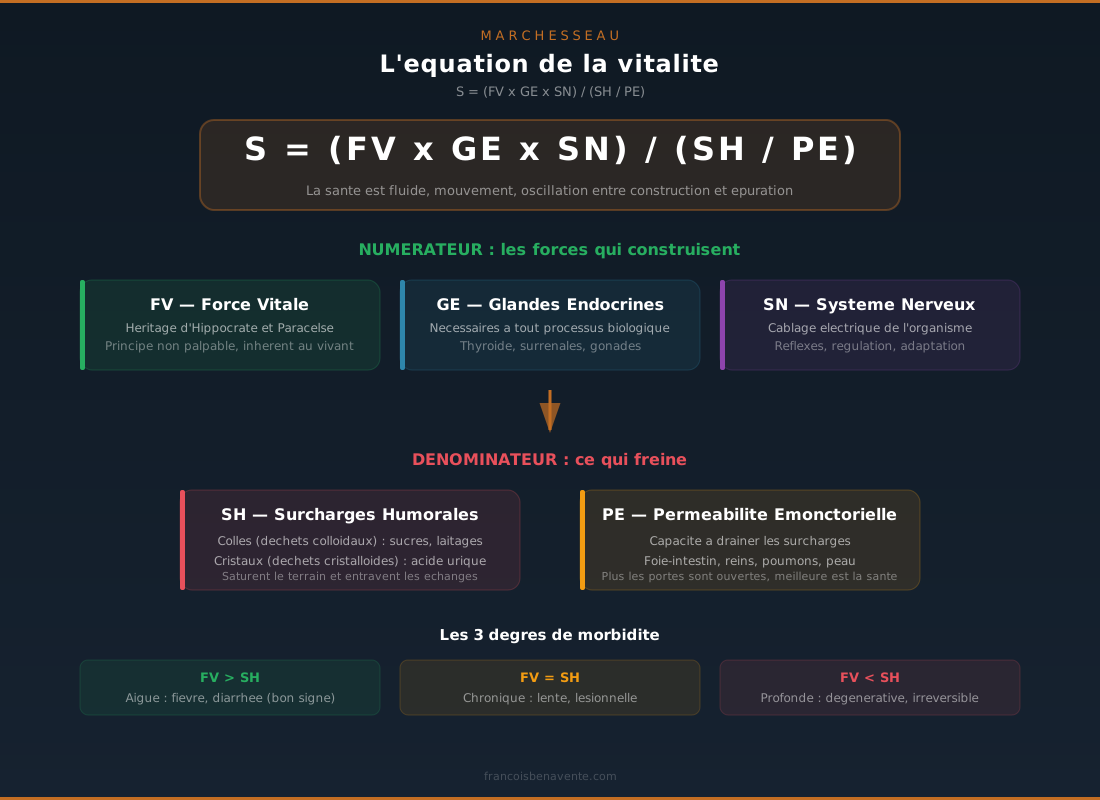
In the denominator, two forces that hinder health.
SH, Humoral Overloads. This is the central concept of toxemia in naturopathy. Marchesseau takes and refines the classification of Carton and Lindlahr. The humors, that is, all the body’s fluids (blood, lymph, interstitial fluids, cerebrospinal fluid), can progressively become loaded with metabolic waste that slows down cellular exchanges. These overloads divide into two main categories.
Colloids are viscous colloidal waste that thicken the humors. They come mainly from incomplete breakdown of refined sugars, cooked starches, dairy products, and excessive saturated fats. Colloids are responsible for recurrent ENT conditions, sinusitis, bronchitis, otitis, and vaginal discharge. They are eliminated through mucus-producing emunctories: the liver (via bile), intestines, lungs, and uterine mucous membranes. When the body produces excess mucus, it’s not a malfunction. It’s an attempt at elimination. Suppressing the symptom without treating the cause is like closing the valve on a pressure cooker.
Crystals are hard, angular crystalloid waste that irritates tissues. They come from breakdown of excess animal protein, uric acid, urea, oxalic acid, and phosphoric acid. Crystals are responsible for joint pain, tendinitis, dry eczema, stones, and calculi. They are eliminated through filtration emunctories: the kidneys (urine), sweat glands (sweat), and sebaceous glands. Gout is the perfect example of uneliminatedcrytalloidal overload: uric acid crystallizes in the joints and causes sharp pain. The body tries to rid itself of these crystals by all means, including through the skin (dry eczema, psoriasis).
PE, Emunctory Permeability. This is the capacity of elimination organs (emunctories) to evacuate waste. The more permeable the emunctories are, meaning open and functional, the more efficiently the body eliminates. The more congested they are, the more waste accumulates. The primary emunctories are the liver, kidneys, intestines, lungs, and skin. Marchesseau adds the uterus in women. When primary emunctories become overwhelmed, the body opens emergency exits: these are secondary emunctories, which manifest as symptoms (otitis, sinusitis, skin eruptions, vaginal discharge). Understanding this emunctory logic is fundamental. If you want to explore further the topic of emunctories and spring detox, this is the interpretive framework we use in the office.
The equation’s logic is clear. In the numerator, everything that builds health (vital force, hormones, nervous system). In the denominator, what hinders it (overloads), moderated by what eliminates them (emunctory permeability). If your emunctories are open (high PE), the denominator decreases and health increases. If your vital force is high and your hormones balanced, the numerator is strong and health is solid. If overloads accumulate and emunctories close, health drops. All of naturopathy is contained in this equation.
The three degrees of morbidity: reading disease as a process
Marchesseau does not see disease as an accident. He views it as an evolutionary process in three stages, directly linked to the relationship between vital force and humoral overloads.
First degree: FV greater than SH. Vital force is still powerful, far greater than accumulated overloads. The body has the means to react violently. This is the stage of acute diseases: sudden fever, sudden diarrhea, vomiting, intense skin eruption, sore throat, otitis, and acute liver crisis. These crises are functional, reversible, and above all beneficial. The body cleanses. It expels. It defends itself. Marchesseau hammers home this point: acute illness is a good sign. It proves that vital force is still strong enough to trigger a cleansing. Suppressing these symptoms with anti-symptom medications (antipyretics, antidiarrheals, anti-inflammatories) prevents the body from doing its work. It pushes waste inward instead of letting it out.
Second degree: FV equals SH. Vital force has weakened over years of uneliminatedoverloads and repeated medication suppressions. The body no longer has enough energy to trigger acute crises. It settles into chronicity. Diseases become slow, insidious, and lesional. Tissues begin to change. This is the stage of functional pathologies becoming structural: chronic colitis, recurrent sinusitis, persistent eczema, beginning hypothyroidism, established joint pain. The patient no longer has fevers. No more crises. He deteriorates. And often he’s told that “it’s normal, it’s your age.” It’s not age. It’s the progressive exhaustion of vital force in the face of increasingly encumbered terrain.
Third degree: FV less than SH. Vital force is collapsed. Overloads have invaded deep tissues. Lesions have become irreversible. This is the stage of degenerative diseases: cancers, sclerosis, advanced autoimmune diseases, and organ failure. At this stage, naturopathy cannot cure, but it can accompany, support quality of life, and above all prevent worsening. Marchesseau insists: the naturopath must always evaluate the degree of vitality before beginning a cure. Prescribing a powerful detox cure to a third-degree patient would be a grave error. The body doesn’t have the energy to eliminate. You must first revitalize, slowly and patiently, before draining.
This three-degree reading is an irreplaceable discernment tool. It helps me every day in consultation to adapt my recommendations to the real level of vitality of the person sitting across from me.
Morphotypes: reading the body to understand the terrain
Marchesseau is also one of the great architects of morphotypology in French naturopathy. He takes the work of Hippocrates, Sigaud, and Sheldon and adapts it to the naturopathic framework. Morphotypology is the art of reading in body form the predispositions, strengths, and weaknesses of each individual. It rests on three levels of analysis.
Constitution is the basic structure, genetic, inherited, that doesn’t change throughout life. Marchesseau distinguishes two main poles: dilation and contraction. The dilated individual is broad, open, expansive, who assimilates easily but eliminates poorly. His organs are ample, his tissues engorged, his reactions slow but powerful. The contracted individual is lean, closed, tense, who assimilates poorly but eliminates quickly. His organs are tight, his tissues tense, his reactions lively but brief. Most people fall somewhere between these two poles, with one being dominant. Knowing your constitution means knowing your basic mechanics.
Temperament is the functional coloration of this constitution. Marchesseau takes up the Hippocratic classification in four temperaments, each linked to a dominant physiological system. The lymphatic is dominated by the lymphatic and digestive system: slow, placid, prone to colloidal overloads, mucosity, water retention. The sanguine is dominated by the circulatory system: dynamic, jovial, prone to congestion, inflammation, plethora. The bilious is dominated by the hepatobiliary system: willful, organized, prone to excess bile, muscle tension, irritability. The nervous is dominated by the nervous system: lively, intellectual, prone to anxiety, spasms, and nervous exhaustion. Each temperament has its strengths and vulnerabilities. The naturopath doesn’t give the same advice to a lymphatic as to a nervous type. The lymphatic needs movement, drainage, and stimulating foods. The nervous type needs calm, magnesium, sleep, and grounding.
Diathesis is the current state of terrain, the snapshot of humoral balance at a given moment. It can evolve throughout life, depending on diet, stress, treatments, and environment. Marchesseau identifies the main diatheses such as arthriticism (acidic terrain, crystals dominant), scrofula (colloidal terrain, colloids dominant), and mixed forms. Evaluating diathesis allows us to guide cures: drain colloids if the terrain is scrofulous, alkalize and eliminate crystals if the terrain is arthritic.
This triple reading (constitution, temperament, diathesis) forms a diagnostic tool of considerable richness. In consultation, this is the first thing I evaluate. Before even discussing food or plants, I look at the body, read its forms, proportions, skin, eyes, and hands. The body never lies.
Bromatology: classifying foods by their nature
Marchesseau developed an approach to food that he calls bromatology, from the Greek broma meaning food. This classification is disarmingly simple, yet it summarizes decades of research.
“Man is a tropical animal. His specific diet is that of the tropics: fruits, vegetables, sprouted seeds.” Pierre-Valentin Marchesseau
This sentence concentrates all of Marchesseau’s thinking about food. If you observe great apes, our closest biological relatives, you observe that their natural diet consists essentially of fruits, leaves, roots, and occasionally insects. Their digestive tract is very similar to ours. Marchesseau draws a logical conclusion: the specific diet of human beings, the one for which his digestive system is biologically designed, is the living diet of temperate and tropical climates.
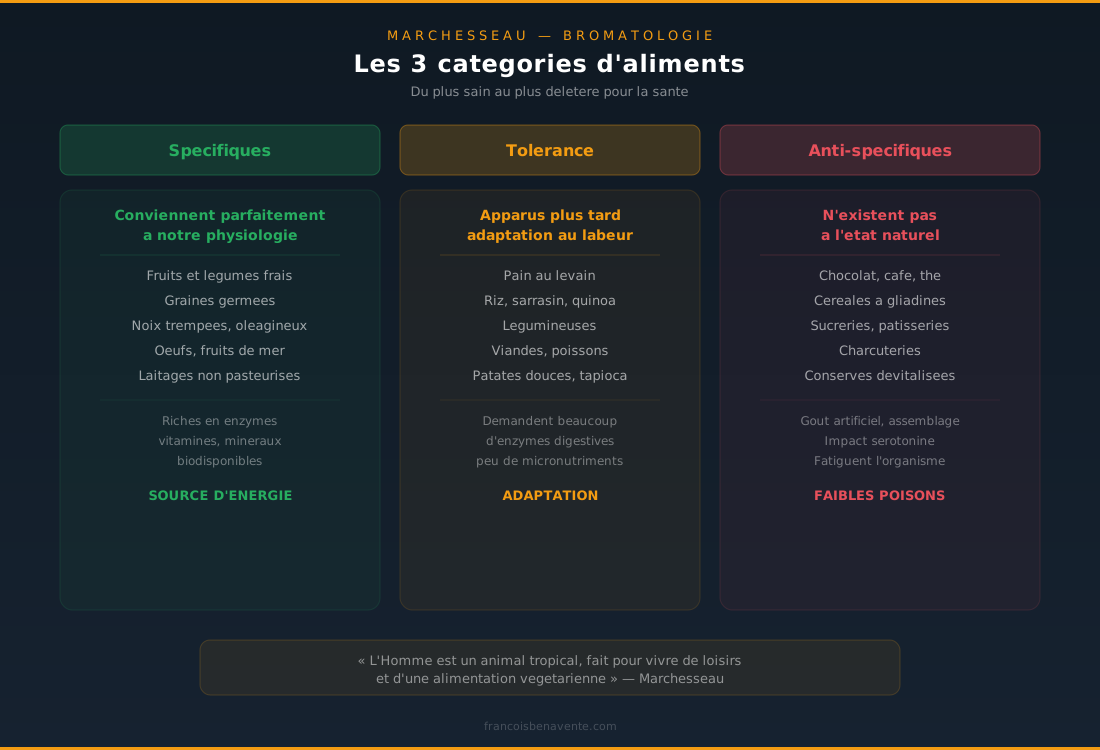
He classifies foods into three categories.
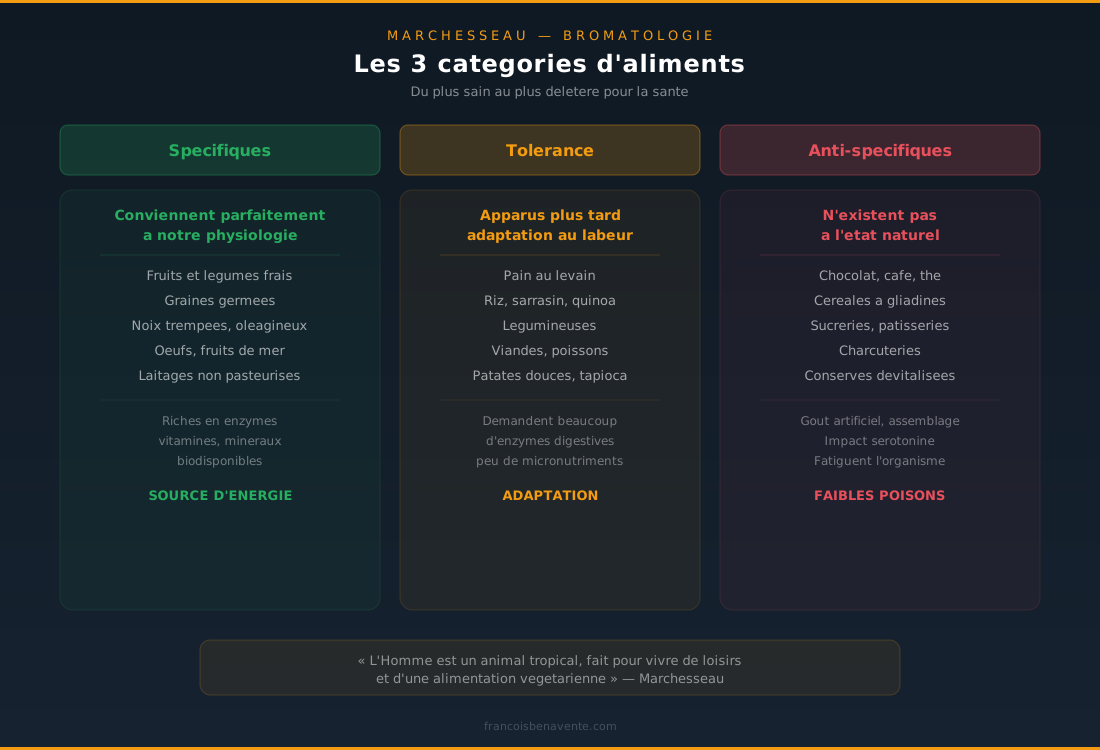
Specific foods are those that the human organism recognizes and assimilates without effort. These are fresh, ripe fruits, raw and low-temperature cooked vegetables, sprouted seeds, soaked nuts, and eggs from free-range hens (in moderate quantity). These foods provide living enzymes, intact vitamins, assimilable minerals, and a vibrant energy that Marchesseau considers essential. They produce only very little metabolic waste. They are the basis of physiological eating. If you want to understand the importance of zinc and micronutrients in this specific diet, this is exactly where you’ll find them in abundance.
Tolerance foods are those that the body can use without major harm, provided they remain minority on the plate. These are whole grains (sourdough bread, brown rice), well-cooked legumes, quality meat, and fresh fish. Marchesseau specifies that these foods become necessary under certain conditions: cold, intense physical work, convalescence, pregnancy. They produce more waste than specific foods, but the healthy body manages them without difficulty. Problems arise when they become the sole basis of the diet, which is the case for most Westerners.
Anti-specific foods are those that don’t exist in nature and which the organism cannot properly process. Marchesseau calls them “weak poisons.” These are refined chocolate, coffee, industrial pastries, sweets, carbonated drinks, processed meats, and ultra-processed foods. These substances provide temporary nerve stimulation (the boost from coffee, the pleasure of sugar) but overload the emunctories, acidify the terrain, and exhaust vital force. They don’t nourish. They clog. They are the main suppliers of colloids and crystals.
This classification is not meant to induce guilt. Marchesseau was not a rigid ascetic. He knew that social life implies compromise. But he insisted on one simple rule: let specific foods constitute at least sixty to seventy percent of daily food, tolerance foods twenty to thirty percent, and anti-specific foods as little as possible.
Deconditioning: the protocol for change
Marchesseau didn’t stop at diagnosing. He proposed a method of transformation he called deconditioning. It’s a three-step process with implacable logic.
The first step consists of identifying bad habits. The key word is “habit.” Marchesseau observed that most behaviors that degrade health are not conscious choices. They are automatisms, conditioning acquired since childhood, reinforced by culture, advertising, and social circles. Morning coffee. White bread at every meal. Systematic dessert. Snacking in front of screens. Late bedtime. Sedentary lifestyle. These habits are not perceived as problems because they’ve become normalized. Everyone does it, so it’s normal. The first step of deconditioning is making visible what has become invisible. Becoming aware.
The second step consists of replacing each bad habit with a revitalizing practice. Marchesseau insists: simply suppressing isn’t enough. You must substitute. Removing coffee without offering anything in its place creates a void that the patient will fill with another compensatory habit. On the other hand, replacing coffee with rosemary tea, then fresh vegetable juice, then morning dry brushing progressively fills the day with gestures that build health instead of destroying it. Replace white bread with whole grain sourdough bread. Replace sugary dessert with fresh fruit. Replace evening TV with a walk in fresh air. Each substitution is a step toward revitalization.
The third step is planning the process. Marchesseau knew that abrupt change doesn’t stick. The patient who radically transforms his diet overnight cracks within two weeks and returns to old habits with a feeling of failure. Deconditioning must be gradual, realistic, adapted to the pace and temperament of each individual. A lymphatic type needs time. A nervous type needs structure. A bilious type needs to understand why. The naturopath plans changes over several weeks or even months, adjusting at each consultation. It’s an accompaniment, not a prescription. This is what I do in consultation: I don’t give a list of rules to follow. I build with you a plan of gradual deconditioning, adapted to your terrain, your life, your constraints.
Marchesseau’s legacy: a living framework
Pierre-Valentin Marchesseau died in 1994, but his influence is everywhere. Nearly all French naturopathy schools teach his method, from ISUPNAT to CENATHO and Aesculape. His vitality equation structures the naturopathic consultation. His morphotypology guides vital assessment. His bromatology directs dietary reforms. His concept of deconditioning inspires the support for change.
But what moves me most about Marchesseau is his vision of the human being. He never reduced a person to her symptoms. He looked at her in her entirety: her body, emotions, thoughts, energy, and spiritual dimension. This five-dimensional approach, as he called it, is not a philosophical abstraction. It’s a clinical reality. When a patient suffers from chronic migraines, I don’t just look at her liver and diet. I also look at her stress, emotional conflicts, posture, sleep, breathing quality, and sometimes even the meaning she gives to her life. Because health, in Marchesseau’s sense, is the harmony of all these dimensions.
Marchesseau situated himself within a lineage. He called himself the heir of Pythagoras, Hippocrates, Paracelsus, Kneipp, Kuhne, Carton, Lindlahr, and Lust. He took the best of each and melded it into an original, rigorous, and teachable system. When you study the foundations of naturopathy, it’s Marchesseau’s matrix you discover, even if you don’t always realize it.
His approach has also been extended and enriched by others. Dr. Kousmine brought scientific rigor to diet and the intestines. Bernard Jensen developed iridology and management of cutaneous emunctories. Robert Masson, a direct student of Marchesseau, refined bromatology and clinical practice. Each added his stone, but the foundation remains Marchesseau’s.
What Marchesseau teaches us today
At a time when functional medicine is rediscovering the role of the microbiota, when psychoneuroimmunology confirms links between stress and disease, when nutrient therapy validates the importance of enzyme cofactors, one cannot help but be struck by Marchesseau’s foresight. Everything contemporary science confirms piece by piece, he had laid out in broad strokes more than sixty years ago.
The vitality equation is not a dusty old formula. It’s a living thinking tool. When I receive a tired patient, my first question is: where is his vital force? Are his emunctories open? Are his overloads colloidal or crystalloid? Is his nervous system in permanent sympathetic activation? Are his endocrine glands under-stimulated or exhausted? This interpretive framework gives me an overall vision in minutes. It allows me to prioritize and build a coherent program.
“The naturopath doesn’t treat disease. He restores the conditions for health.” Pierre-Valentin Marchesseau
If one message had to sum up Marchesseau’s teaching, it would be this: The naturopath doesn’t fight disease. He doesn’t suppress it. He seeks why it appeared, what conditions made it possible, and works to change those conditions. He opens the emunctories, reduces overloads, supports vital force, rebalances the nervous system, nourishes the endocrine glands. And the body does the rest. Because the body knows how to heal. You just need to give it the means.
This is the most powerful lesson naturopathy has taught me. And it’s the one I pass on in turn, every day, in my office, on my site, and on social media. The torch passes from hand to hand. From Pythagoras to Hippocrates, from Hippocrates to Paracelsus, from Paracelsus to Kneipp, from Kneipp to Carton, from Carton to Marchesseau, and from Marchesseau to each of us who practice this discipline with respect and rigor.
For further reading
- Ann Wigmore: sprouting and living food diet in naturopathy
- Bernard Jensen: iridology and dry brushing, the skin as an emunctory
- Kneipp: the abbot of cold and the roots of naturopathic hydrotherapy
- Kousmine: the 6 pillars and the intestines as the motor of disease
Healthy recipe: Walker’s Potassium Formula: Marchesseau recommended fresh juices for vitality.
Laisser un commentaire
Sois le premier à commenter cet article.