Isabelle is fifty-six years old and she is lost. Her gynecologist advised her against soy “because of hormones.” Her neighbor swears by hop capsules. Her daughter, who is vegan, sends her articles about the benefits of tofu in Japan. Her pharmacist sold her red clover isoflavone capsules. And her previous naturopath told her to eat flaxseeds every morning. Five sources, five different pieces of advice, zero coherence. When she arrived at my office, her first question was: “Are phytoestrogens dangerous or protective?”
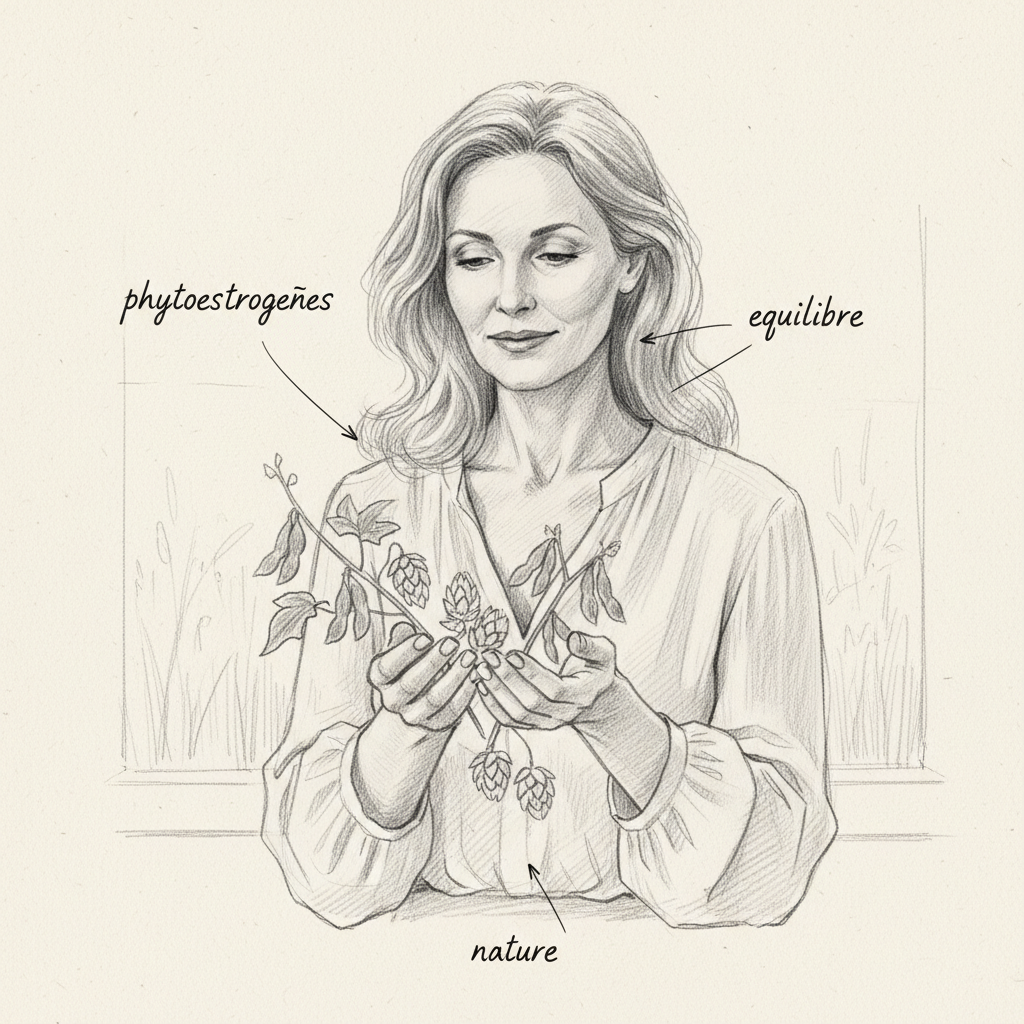
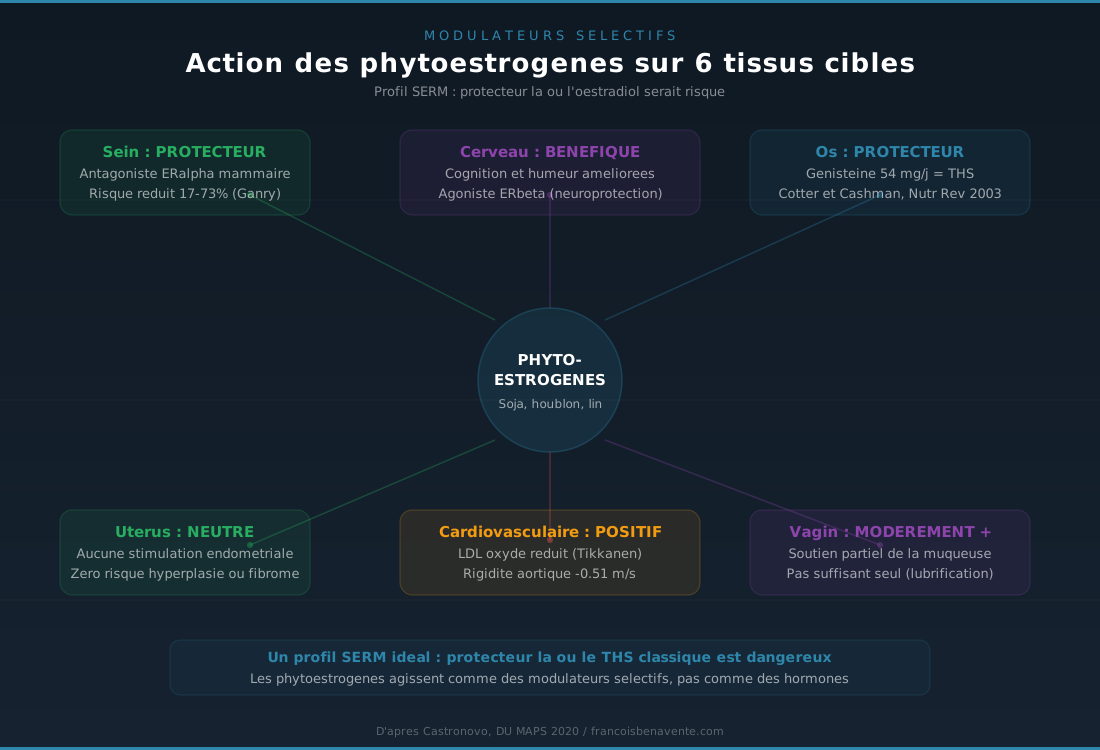
The answer is neither one nor the other in itself. Phytoestrogens are not hormones. They are selective modulators of estrogen receptors, what pharmacologists call SERMs (Selective Estrogen Receptor Modulators). They behave differently depending on the tissue: protective at the breast level, neutral at the uterus level, positive on bone and brain, moderately beneficial for mucous membranes. And this nuance changes absolutely everything.
“Phytoestrogens are antagonists of the alpha receptor and agonists of the beta receptor. This is an ideal SERM profile.” Vincent Castronovo, DU MAPS
Three families, three mechanisms, three plants
Phytoestrogens are not a homogeneous category. There are three major families, each with its active molecules, mechanisms of action, and clinical evidence. Professor Castronovo teaches them in this order in his MAPS course, and this is the order I present them to you.
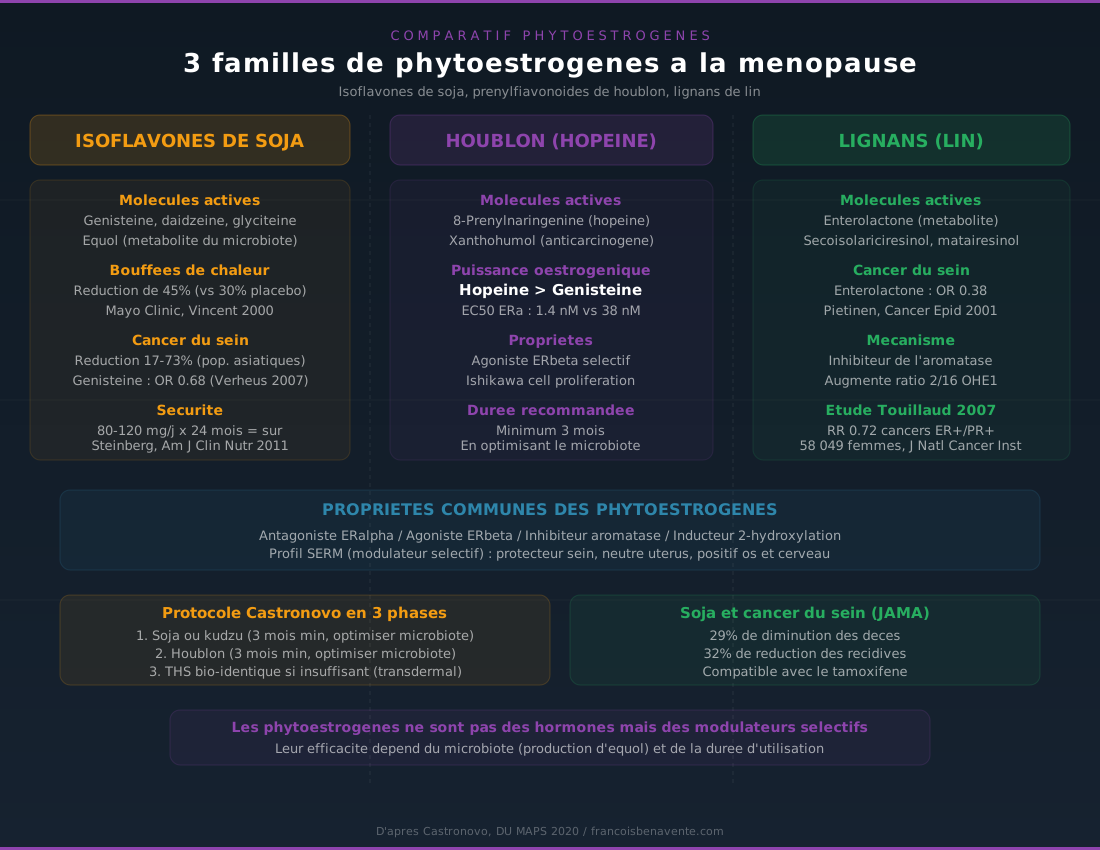
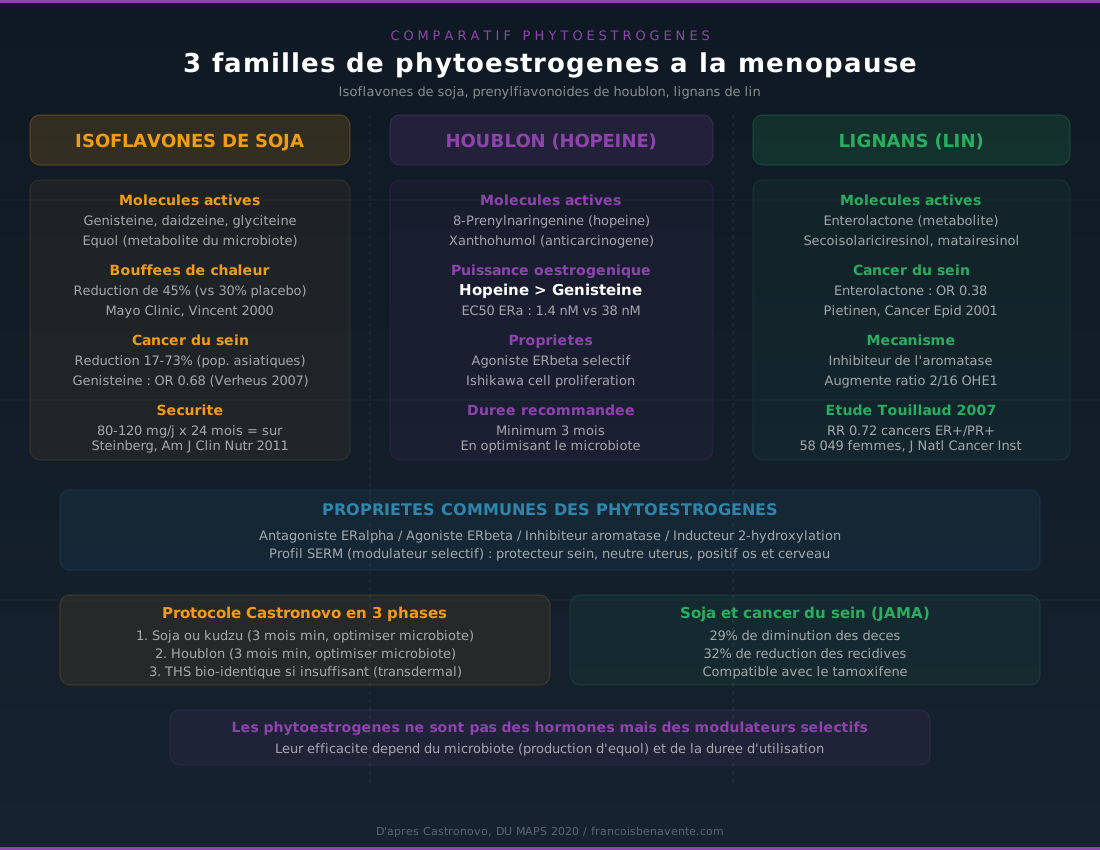
The first family is isoflavones, found mainly in soy and kudzu (Pueraria lobata). The active molecules are genistein, daidzein, and glycitein. These are the most studied phytoestrogens in the world, with hundreds of published clinical trials. Genistein has a preferential affinity for the beta estrogen receptor (ERbeta), which explains its neuroprotective and bone effects without excessive breast stimulation.
The second family is hops prenylfiavonoids (Humulus lupulus). The star molecule is hupeine (8-prenylnaringenine), considered the most powerful phytoestrogen identified to date. Castronovo’s in vitro data show an EC50 of 1.4 nanomolar on the ERalpha receptor, compared to 38 nanomolars for genistein. In other words, hupeine is approximately twenty-seven times more powerful than genistein on this receptor. Hops also contain xanthohumol, a compound with documented anticarcinogenic properties.
The third family is lignans, found in flaxseeds, sesame seeds, rye, wheat bran, and many fruits and vegetables. Dietary lignans (secoisolariciresinol, matairesinol, pinoresinol, lariciresinol) are converted by the gut microbiota into enterolignans: enterodiol and especially enterolactone, which is quantitatively the most important circulating lignan. Lignans have a remarkable peculiarity: they inhibit aromatase, the enzyme that converts androgens into estrogens in adipose tissue.
Soy: what the studies really say
Soy is perhaps the most misunderstood topic in all of nutrition. In France, it is the victim of an irrational fear largely fueled by confusion between animal studies (sheep and quail rendered infertile by grazing on legume-rich phytoestrogens) and human reality. Clinical data in humans tell a very different story.
The systematic review by Vincent and Fitzpatrick published in the Mayo Clinic Proceedings in 2000 synthesized available data1. Soy reduces hot flashes by 45 percent, compared to 30 percent for placebo. This is not the spectacular effect of HRT (70 percent reduction), but it is significant and without the associated risks. The study notes that to date, no adverse effects from short- or long-term use of soy proteins are known in humans.
On the cardiovascular level, Tikkanen and his team demonstrated in the PNAS in 1998 that soy genistein and daidzein protect LDL against oxidation2, a key mechanism of atherosclerosis. Van der Schouw, in Arteriosclerosis, Thrombosis, and Vascular Biology in 2002, showed that postmenopausal women consuming the most phytoestrogens had aortic stiffness reduced by 0.51 m/s compared to the lowest consumers3, an effect particularly pronounced in older women. And Dobrydneva discovered that phytoestrogens act as platelet calcium channel blockers, inhibiting platelet activation by 51 percent for genistein and 56 percent for daidzein.
But it is in breast cancer that the data are most striking. Ganry, in the European Journal of Cancer Prevention in 2002, reports a reduction in breast cancer risk of 17 to 73 percent in Asian populations consuming soy. The Verheus study in the Journal of Clinical Oncology in 2007 shows an OR of 0.68 for the highest tertile of plasma genistein in a Dutch population4. And the study published in the JAMA, cited by Castronovo, reports in women already with breast cancer: 29 percent reduction in deaths and 32 percent reduction in recurrences in those who consumed the most soy, including those on tamoxifen.
Long-term safety was evaluated by Steinberg in the American Journal of Clinical Nutrition in 2011: 403 postmenopausal women supplemented with 80 or 120 mg of aglycone isoflavones per day for 24 months, with no significant changes in the endometrium, fibroids, free thyroid, or blood lymphocytes5. Two serious adverse events were detected (one breast cancer and one endometrial cancer), fewer than the expected rate in the general population for these cancers.
Equol: why some women respond to soy and others don’t
There is one piece of data that most popular articles omit, yet it is fundamental for understanding why soy works in some women and not others. It’s equol.
Equol is a metabolite of daidzein produced exclusively by certain intestinal bacteria. Only 30 to 50 percent of Westerners have a microbiota capable of producing equol, compared to 50 to 70 percent of Asians. Equol has an affinity for estrogen receptors superior to that of daidzein itself. It is considered the most active metabolite of isoflavones.
Castronovo mentions in his course the urinary assay of the phytoestrogen profile, with reference values: genistein greater than 0.08 mg/g creatinine, daidzein greater than 0.05 mg/g, glycitein greater than 0.1 mg/g, and equol greater than 0.25 mg/g. This assay allows verification of whether a woman correctly metabolizes isoflavones.
The good news is that the ability to produce equol can improve by working on the microbiota. This is why Castronovo insists: soy or kudzu phytoestrogens must be taken for at least three months while optimizing the microbiotic environment. This optimization involves probiotics, prebiotics, reduction of refined sugar and alcohol, and possibly correction of documented dysbiosis.
Hops: the underestimated power
Hops are mainly known for beer, but their prenylfiavonoids are of considerable interest in phytotherapy for menopause. Hupeine (8-prenylnaringenine) is the most powerful phytoestrogen identified in the plant kingdom. The in vitro data presented by Castronovo on Ishikawa Var-I cells show greater cell proliferation with hupeine than with genistein, reflecting superior estrogenic activity.
To put the numbers in perspective: estradiol (the natural hormone) has an EC50 of 0.07 nM on ERalpha and 0.5 nM on ERbeta. Hupeine has an EC50 of 1.4 nM on ERalpha and 10 nM on ERbeta. Genistein has an EC50 of 38 nM on ERalpha and 9 nM on ERbeta. Hupeine is therefore much closer to estradiol than genistein in terms of potency, which can be an advantage for women whose symptoms do not respond sufficiently to soy.
Xanthohumol, the other active molecule in hops, has documented anticarcinogenic properties. It inhibits proliferation of several tumor cell lines in vitro and modulates expression of genes involved in apoptosis (programmed cell death). It is a phytoestrogen with an interesting safety profile: powerful on estrogen receptors on one hand, anticarcinogenic on the other.
Hops in phytotherapy are generally taken as standardized extract, at a dose of 100 to 200 mg per day of extract standardized in 8-prenylnaringenine, for a minimum of three months. As with soy, microbiota optimization is essential since prenylfiavonoids undergo intestinal metabolism that conditions their bioavailability.
Flax lignans: silent protection
Lignans deserve particular attention because they act by a complementary mechanism to isoflavones and prenylfiavonoids. They inhibit aromatase, the enzyme that converts androgens into estrogens in adipose tissue. This is a crucial property at menopause, when adipose tissue becomes the main source of estrogens (in the form of estrone) after the ovaries stop. As I explain in the article on weight gain at menopause, this compensatory aromatase is a survival mechanism that lignans help to modulate.
The Pietinen study published in Cancer Epidemiology Biomarkers and Prevention in 2001 is one of the most convincing6. Conducted in Finland on 194 breast cancer cases and 208 controls, it shows an OR of 0.38 in the highest quintile of serum enterolactone. In other words: women with the highest levels of enterolactone in the blood had a 62 percent reduced risk of breast cancer. The inverse association was present in both premenopausal and postmenopausal women.
The Touillaud study, published in the Journal of the National Cancer Institute in 2007, confirms these results on a larger scale: 58,049 French women followed for 7.7 years7. Women in the highest quartile of total lignan intake had a 28 percent reduced breast cancer risk (RR 0.72 for ER+/PR+ cancers). This is a French study, conducted in a Western population that does not consume soy, which strengthens the relevance of lignans as an alternative or complement to isoflavones.
And Haggans demonstrated that flaxseed supplementation significantly increases the urinary 2/16a-OHE1 ratio, thus directing estrogen metabolism toward the protective pathway. This is the direct link with hepatic estrogen detoxification: lignans not only inhibit aromatase, they also improve the hepatic metabolic profile.
In practice, freshly ground flaxseeds (two tablespoons per day, in yogurt, a smoothie, or a salad) are the simplest way to increase lignan intake. Whole seeds pass through the digestive tract undigested, so it is essential to grind them just before consumption (a coffee grinder is sufficient). Ground flax oxidizes quickly, so it should not be stored for more than a few hours.
Common properties: a remarkable SERM profile
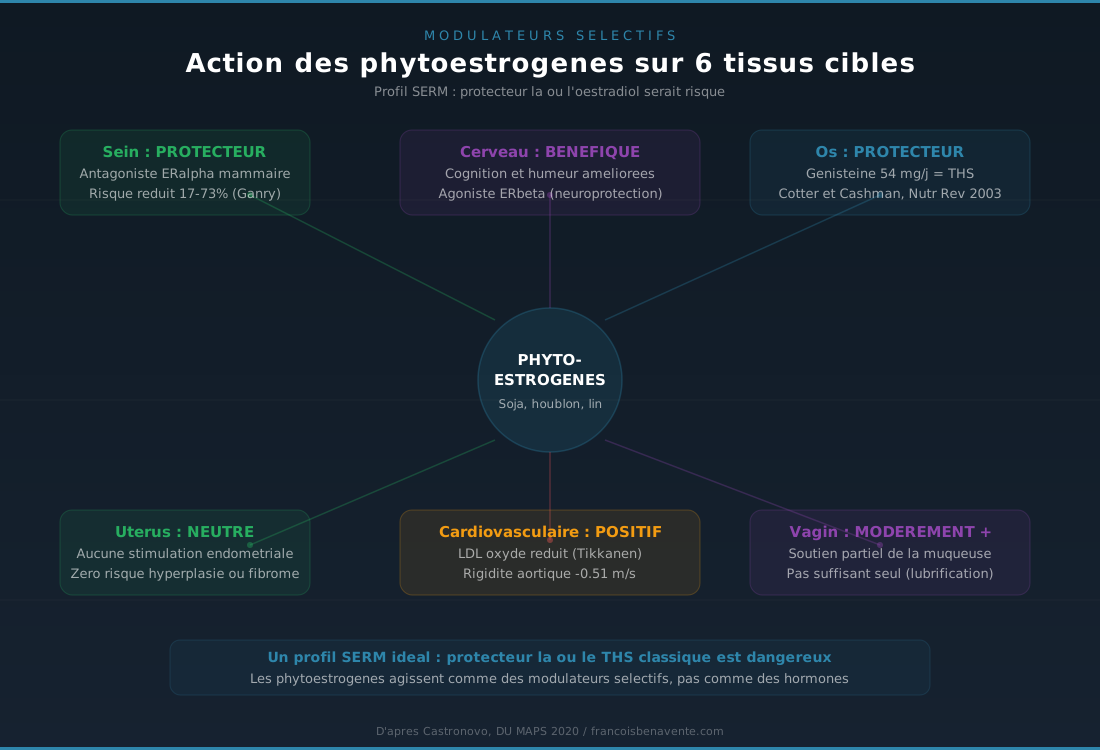
Castronovo details the properties common to all three families of phytoestrogens in a slide that deserves careful study. Phytoestrogens are antagonists of the alpha estrogen receptor (which explains their protective effect on the breast), agonists of the beta receptor (which explains their effects on the brain and bone), aromatase inhibitors, inducers of hepatic 2-hydroxylation (protective pathway), inhibitors of sulfotransferases, inhibitors of tyrosine kinase, and possess anti-angiogenic activities.
Compared to estradiol, tamoxifen, and raloxifene (pharmaceutical SERMs), isoflavones have a remarkably balanced profile. On the uterus: no stimulation (whereas estradiol stimulates and tamoxifen does too). On the breast: protective effect (whereas estradiol is a risk factor). On the brain: positive cognitive effects (whereas raloxifene is neutral). On the cardiovascular system: protection (like estradiol). On bone: protection similar to HRT according to the Cotter and Cashman study published in Nutrition Reviews in 2003, where 54 mg per day of genistein proved as effective as HRT for preventing postmenopausal bone loss8. On the vagina: partial support but insufficient alone.
This SERM profile explains why phytoestrogens should not be equated with hormones. They are modulators, and their action depends on tissue context, the ERalpha/ERbeta ratio of the target tissue, and the woman’s hormonal status.
The three-phase Castronovo protocol
The protocol Castronovo proposes in his course conclusions is pragmatic and progressive. This is the one I use in consultation, adapted to each woman based on her symptoms, biological assessment, and tolerance.
The first phase consists of trying soy or kudzu phytoestrogens for at least three months, while optimizing the microbiota in parallel. Commonly used doses are 40 to 80 mg of aglycone isoflavones per day, divided into two doses. Kudzu is an interesting alternative for women who do not tolerate soy (bloating, digestive discomfort). Fermented products (miso, tempeh, tamari) are to be preferred because fermentation improves bioavailability and digestive tolerance.
The second phase, if soy is insufficient after three months, consists of switching to hops phytoestrogens, again for at least three months while continuing microbiota optimization. Hop extract standardized in hupeine offers superior estrogenic potency and may suit women whose hot flashes and dryness have not sufficiently responded to soy.
The third phase, as a last resort, is adapted HRT: natural bioidentical hormones, at low doses, by transdermal route, while simultaneously optimizing the microbiota, hepatic detoxification, and antioxidant defenses. This is the functional medicine approach, the opposite of conventional HRT which was the subject of the WHI study in 2002.
At each phase, foundational work continues: anti-inflammatory nutrition, hepatic drainage, micronutrition (omega-3, magnesium, vitamin D3+K2, zinc, selenium), and stress management. Phytoestrogens are not a magic wand. They are one tool among others in a holistic approach to terrain.
What naturopathy does not do
Soy phytoestrogens are contraindicated in case of active breast cancer treatment without the oncologist’s opinion, even though epidemiological data are reassuring. In case of treatment with tamoxifen or aromatase inhibitors, the decision must be made in consultation with the medical team. Sage and powerful phytoestrogens (hops) require the same caution in case of personal history of hormone-dependent cancer.
Naturopathy proposes, the doctor disposes. My role is to accompany you in optimizing your terrain, not to replace medical follow-up.
Based in Paris, I consult via video throughout France. You can book an appointment for personalized menopause support.
For phytoestrogens, Sunday Natural offers soy isoflavones, hops extract, and organic flaxseeds of pharmaceutical quality (-10% with code FRANCOIS10). Find all my partnerships with exclusive promo codes.
Scientific references
Want to assess your status? Take the free Hertoghe estrogen questionnaire in 2 minutes.
If you want personalized support, you can book a consultation.
To go further
- Menopause and estrogens: the hepatic detoxification that no one explains to you
- Menopause: what your body is trying to tell you (and what gets hidden)
- Menopause and brain: why you’re losing your words (and how to find them again)
- Menopause, skin and hair: what hormonal decline does to your tissues
Sources
- Castronovo, V. “Phytoestrogens: soy, kudzu, hops, lignans.” DU MAPS, 2020.
- Ganry, O. “Phytoestrogen and breast cancer prevention.” Eur J Cancer Prev 11.6 (2002): 519-522.
- Nissim, Rina. Mamamelis: handbook of naturopathic gynecology. Mamamelis, 1994.
- Mouton, Georges. “Natural alternatives to HRT.” Functional medicine conference.
“Phytoestrogens are not hormones. They are selective modulators, and that is precisely what makes them safe.” Vincent Castronovo
Healthy recipe: Miso soup with tofu: The soy in miso provides phytoestrogens.
Footnotes
-
Vincent, A. and Fitzpatrick, L.A., “Soy isoflavones: are they useful in menopause?” Mayo Clin Proc 75, no. 11 (2000): 1174-1184. PMID: 9501223. ↩
-
Tikkanen, M.J. et al., “Effect of soybean phytoestrogen intake on low density lipoprotein oxidation resistance,” Proc Natl Acad Sci USA 95, no. 6 (1998): 3106-3110. PMID: 9501223. ↩
-
van der Schouw, Y.T. et al., “Higher usual dietary intake of phytoestrogens is associated with lower aortic stiffness in postmenopausal women,” Arterioscler Thromb Vasc Biol 22, no. 8 (2002): 1316-1322. PMID: 12171794. ↩
-
Verheus, M. et al., “Plasma phytoestrogens and subsequent breast cancer risk,” J Clin Oncol 25, no. 6 (2007): 648-655. PMID: 17308271. ↩
-
Steinberg, F.M. et al., “Clinical outcomes of a 2-y soy isoflavone supplementation in menopausal women,” Am J Clin Nutr 93, no. 2 (2011): 356-367. PMID: 21159786. ↩
-
Pietinen, P. et al., “Serum enterolactone and risk of breast cancer,” Cancer Epidemiol Biomarkers Prev 10, no. 4 (2001): 339-344. PMID: 11319173. ↩
-
Touillaud, M.S. et al., “Dietary lignan intake and postmenopausal breast cancer risk,” J Natl Cancer Inst 99, no. 6 (2007): 475-486. PMID: 17374837. ↩
-
Cotter, A. and Cashman, K.D., “Genistein appears to prevent early postmenopausal bone loss as effectively as hormone replacement therapy,” Nutr Rev 61, no. 10 (2003): 346-351. PMID: 14604266. ↩


Laisser un commentaire
Sois le premier à commenter cet article.