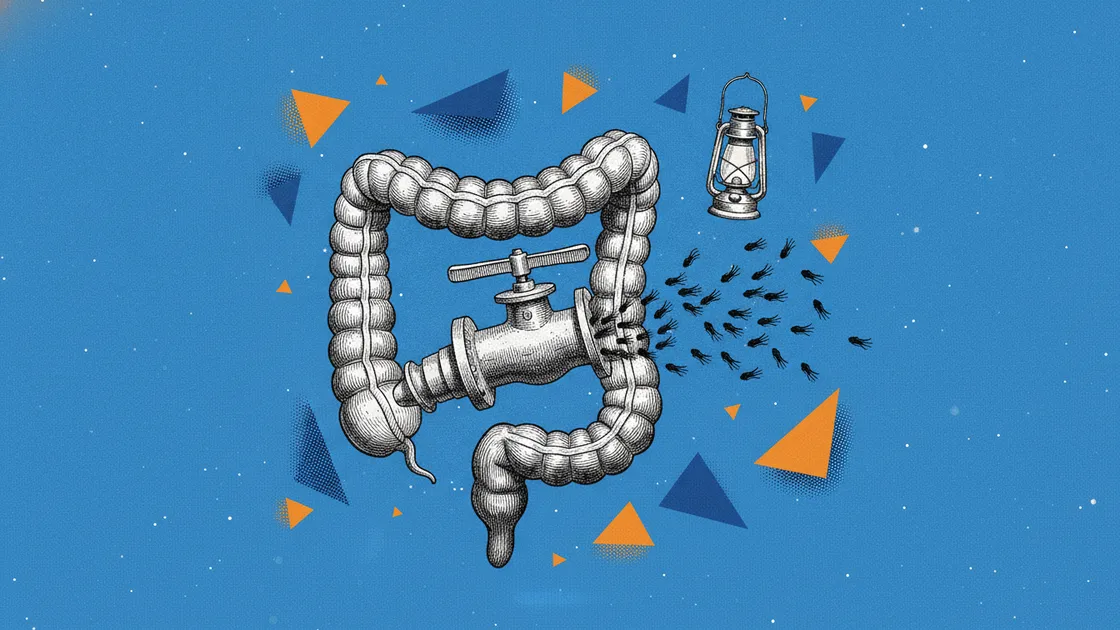
Elodie has the belly of a woman five months pregnant. She is not pregnant. Each meal, even a light one, triggers spectacular abdominal bloating that forces her to unbutton her jeans before dessert. She has foul-smelling gas that makes car rides with her colleagues humiliating. She alternates between constipation and diarrhea with no apparent logic. She has acid reflux in the evening. And for the past year, she has developed food intolerances that didn’t exist before : bread bloats her, onions make her suffer, garlic has become unthinkable, apples give her cramps.
Elodie consulted three gastroenterologists. She had an endoscopy (normal), a colonoscopy (normal), comprehensive blood work (normal), a celiac test (negative), and an abdominal ultrasound (normal). Final diagnosis : irritable bowel syndrome. Advice : “manage stress.” Treatment : Spasfon.
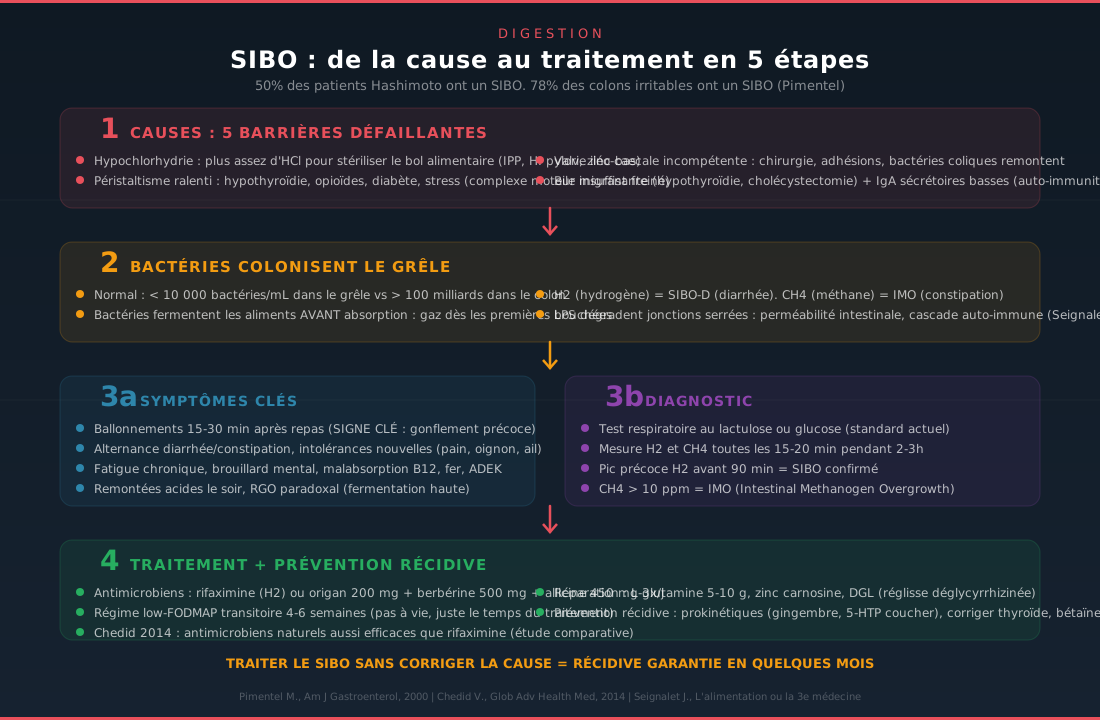
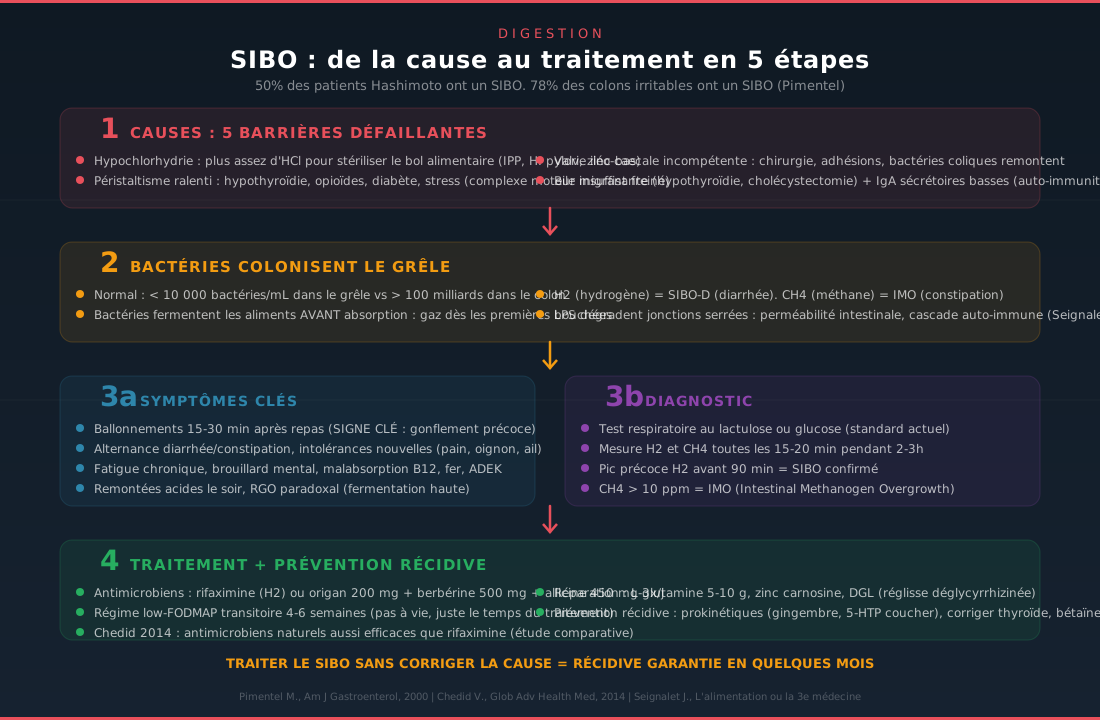
When Elodie came to see me, I had the same intuition as in hundreds of similar cases. I requested a lactulose breath test. The result came back with a hydrogen peak at 45 minutes (normal : after 90 minutes) and an elevated methane level of 25 ppm (normal : below 10). Mixed SIBO, hydrogen and methane. Elodie’s small intestine was colonized by bacteria that had no business being there, and these bacteria were fermenting every bite of food, producing gases that distended her intestines like a balloon.
Oh, and one detail the gastroenterologists hadn’t looked for : her TSH was at 5.2 mIU/L with anti-TPO antibodies at 340 IU/mL. Early Hashimoto’s. Undiagnosed. Untreated.
The small intestine is not the colon
To understand SIBO, you need to understand the geography of the digestive tract. The small intestine (duodenum, jejunum, ileum) measures about six meters long. Its main function is nutrient absorption. To fulfill this function, it must remain relatively sterile. Fewer than ten thousand bacteria per milliliter, compared to one hundred billion in the colon. This concentration difference (a factor of ten million) is maintained by five defense mechanisms.
Gastric acid (pH 1.5 to 2) kills most bacteria ingested with food. Bile, secreted by the liver and stored in the gallbladder, has antibacterial properties. Peristalsis (muscle waves of the intestine) sweeps bacteria toward the colon continuously. The ileocecal valve (between the ileum and colon) prevents bacteria from the colon from moving backward. And secretory immunoglobulins IgA line the mucosal membrane and neutralize bacteria that pass through the net.
When one or more of these mechanisms fail, bacteria colonize the small intestine. This is SIBO. And in thyroid patients, at least three of these five mechanisms are often compromised simultaneously : gastric acid (hypochlorhydria related to hypothyroidism), peristalsis (slowed by lack of thyroid hormones), and IgA (often low in autoimmunity).
SIBO and autoimmunity : Seignalet’s theory in practice
Seignalet described the mechanism of autoimmune disease in five stages, beginning in the intestine and ending in destruction of target organs. SIBO fits perfectly into this model because it triggers exactly the first two stages of the cascade.
First, SIBO bacteria damage the tight junctions between intestinal cells. Bacterial lipopolysaccharides (LPS), proteases, and toxins they produce degrade junction proteins (occludin, claudin, zonulin) and create intestinal permeability. Seignalet wrote : “The first stage is alteration of the small intestine lining. Without this alteration, autoimmune disease cannot develop.” SIBO is one of the most frequent causes of this alteration.
Second, intestinal permeability allows antigenic peptides (fragments of food and bacterial proteins) to pass into the bloodstream. These peptides deposit in thyrocytes and trigger the immune response described in my article on the forgotten causes of Hashimoto’s.
It is not a coincidence that studies show 50% of hypothyroid patients have SIBO, and that digestive symptoms precede autoimmune diagnosis by five to fifteen years. SIBO is not a consequence of hypothyroidism (although hypothyroidism worsens it). It is often a cause of it, or at least a major triggering factor.
The three types of SIBO
SIBO is not a single entity. There are three distinct profiles depending on the type of gas produced by the bacteria, and each has its specific symptoms and treatment.
Hydrogen-dominant SIBO is dominated by bacteria that ferment carbohydrates into hydrogen (H2). Typical symptoms are rapid bloating after meals (within 30 to 60 minutes), diarrhea or loose stools, crampy abdominal pain, and flatulence. This is the most frequent form and the easiest to treat.
Methane-dominant SIBO (now called IMO, Intestinal Methanogen Overgrowth) is dominated by methanogenic archaea (primarily Methanobrevibacter smithii) that convert hydrogen into methane (CH4). Methane slows intestinal transit (it directly inhibits motility via intestinal serotonin receptors). The cardinal symptom is therefore chronic constipation, often accompanied by delayed bloating (two to four hours after meals) and early satiety. IMO is more resistant to treatment and recurs more easily.
Hydrogen sulfide SIBO is the most recently described form. Sulfate-reducing bacteria (Desulfovibrio, Bilophila) produce H2S, a gas with a rotten egg smell. Symptoms are diarrhea (often urgent), extremely foul-smelling gas, intolerance to dietary sulfur (eggs, garlic, onion, cruciferous), and paradoxically sulfurous breath. This type is rarer but often the most disabling.
The four-phase protocol
My approach to SIBO follows a four-phase protocol that I have refined over the years and hundreds of patients.
Phase 1 is preparation (two to four weeks). Before killing bacteria, you must ensure elimination pathways are open. Magnesium citrate for transit. Betaine HCl to restore gastric acidity. Bile support (artichoke, milk thistle) if fat digestion is compromised. And a low-FODMAP diet (these fermentable carbohydrates that feed SIBO bacteria) to reduce acute symptoms and partially “starve” bacteria before antimicrobial assault.
Phase 2 is eradication (four to six weeks). Natural antimicrobials have demonstrated efficacy comparable to rifaxomicin (the reference antibiotic for SIBO) in a comparative trial published in Global Advances in Health and Medicine in 2014. My standard protocol combines emulsified oregano essential oil (200 mg twice daily), berberine (500 mg three times daily), and stabilized garlic allicin (450 mg three times daily). For methane-dominant SIBO, I add atranthil (quebracho, conker tree, peppermint), a complex specifically active against methanogenic archaea.
Phase 3 is repair (four to eight weeks). Once bacteria are eliminated, the damaged intestinal lining must be repaired. Zinc carnosine at 75 mg twice daily accelerates healing (Japanese study over 15 days). Zinc is also a cofactor for mucosal regeneration. L-glutamine at 5 g per day directly nourishes enterocytes (but be careful : glutamine is contraindicated in phase 2 as it can also feed excess bacteria). Bovine colostrum provides immunoglobulins that strengthen the mucosal barrier.
Phase 4 is recurrence prevention (long-term). This is the most important and most neglected phase. SIBO recurs in 40 to 50% of cases if underlying causes are not corrected. Natural prokinetics maintain peristalsis : fresh ginger or extract (1 g per day), artichoke (400 mg before meals), and 5-HTP at bedtime (100 mg) which stimulates intestinal serotonin and thus nocturnal motility (the migrating motor complex, the “broom” that cleans the small intestine, works mainly at night between meals).
S. boulardii : the probiotic ally
Saccharomyces boulardii is a probiotic yeast (not a bacterium) with a unique advantage in SIBO : it is not killed by antimicrobials or antibiotics. It can therefore be prescribed DURING treatment, not just after. It restores secretory IgA (deficient in nearly half of autoimmune patients), combats H. pylori in synergy with mastic gum, and reduces diarrhea associated with antimicrobial treatment.
S. boulardii is also one of the few probiotics considered safe in SIBO. Classical bacterial probiotics (Lactobacillus, Bifidobacterium) can theoretically worsen SIBO by adding bacteria to an already overpopulated small intestine. S. boulardii, being a yeast, does not compete with bacteria in the same way and can help restore balance without worsening overgrowth.
Intestinal serotonin
A remarkable and often forgotten fact : 95% of the body’s serotonin is produced in the intestine, not the brain. Intestinal serotonin regulates motility, secretions, and visceral sensitivity. When SIBO damages enterochromaffin cells (which produce intestinal serotonin), motility slows, which worsens SIBO. And brain serotonin also decreases, which explains the frequency of anxiety and depression in SIBO patients.
This is why treating SIBO often improves mood spectacularly, even without antidepressants. Elodie told me six weeks after starting treatment : “My belly is flat for the first time in three years, and on top of that I feel in a good mood.” It was not a placebo effect. It was the restoration of serotonin production by an intestine that was beginning to function normally again.
Caution
SIBO is not a diagnosis to make yourself based on vague symptoms. A breath test is necessary to confirm the diagnosis and identify the type (hydrogen, methane, or sulfide). Natural antimicrobials, although gentler than antibiotics, can trigger a Herxheimer reaction (temporary symptom worsening from bacterial toxin release) if transit is not open and detoxification pathways are not functional.
If you have alarm symptoms (blood in stool, unexplained weight loss, severe anemia, acute abdominal pain), consult a gastroenterologist before starting a naturopathic protocol. SIBO can coexist with more serious conditions (Crohn’s disease, celiac disease, colorectal cancer) that require medical diagnosis.
Mouton writes in his work on intestinal ecosystem : “The small intestine is the sentinel of the immune system. When the sentinel is overwhelmed, the entire defense system collapses.” SIBO is the sentinel’s traffic jam. Treating it means restoring order to the first line of defense of your body. And for Elodie, it also meant restoring her ability to eat a meal with friends without unbuttoning her pants.
Want to evaluate your status ? Take the free Claeys thyroid questionnaire in 2 minutes.
If you want personalized support, you can book a consultation.




Laisser un commentaire
Sois le premier à commenter cet article.
Les commentaires ne se chargent pas pour le moment. Réessaie dans quelques minutes.