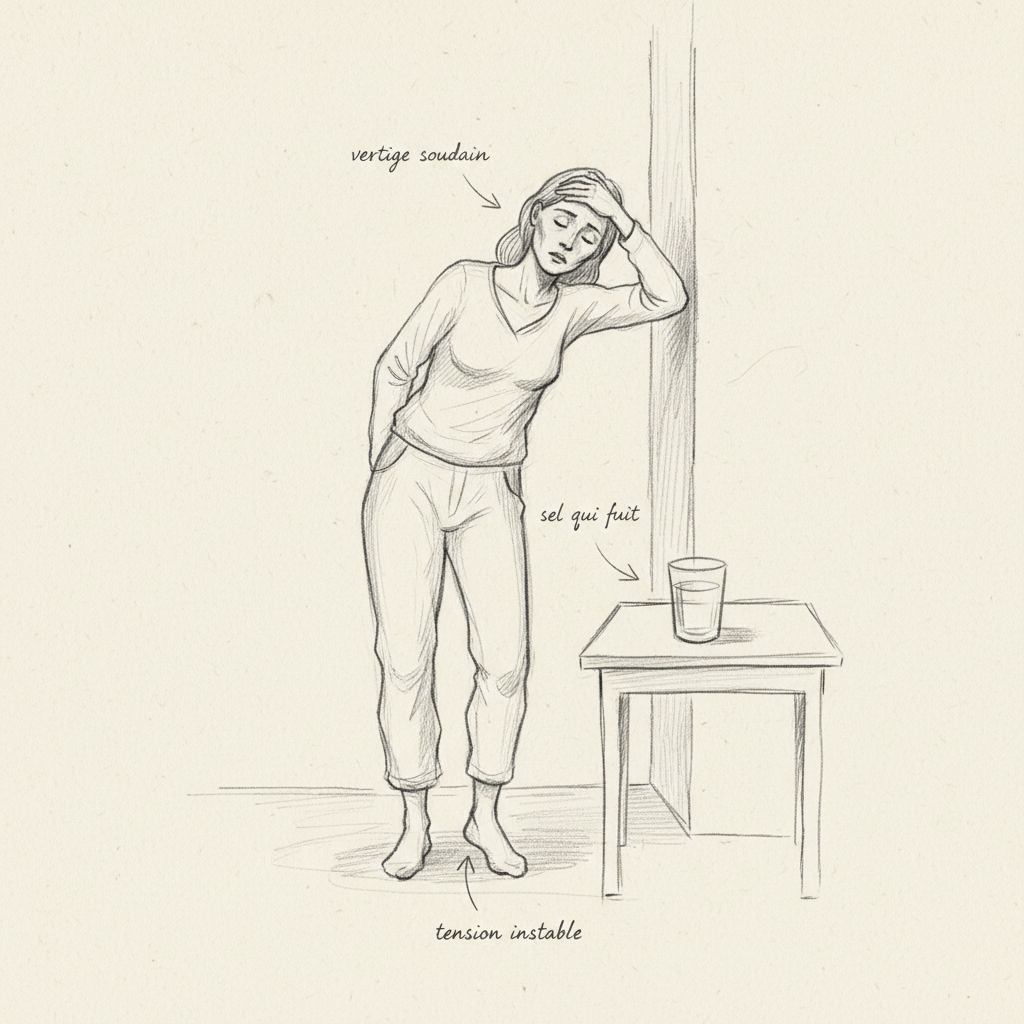
Marc wakes up in the morning, takes three steps toward the bathroom, and the world spins. Not a trivial dizzy spell: a real moment where his vision blurs, his ears ring and he has to hold onto the wall to keep from falling. It lasts five seconds. Then it passes. His doctor said “orthostatic hypotension, drink more water.” But Marc drinks two liters of water a day and nothing changes. He has another symptom that no one takes seriously: he salts everything. His dishes are already seasoned but he adds more salt. He crunches pickles. He drinks salted bone broth. His circle jokes about his “salt addiction.” It’s not an addiction. It’s his body screaming that he’s deficient in aldosterone.
Aldosterone is the forgotten hormone of the adrenal glands. Everyone talks about cortisol (stress), about DHEA (aging), but aldosterone remains in the shadows even though it’s vital: literally. Without aldosterone, you can’t maintain your blood volume, your blood pressure or your electrolyte balance. And when it’s lacking, the symptoms are just as disabling as those of cortisol deficiency.
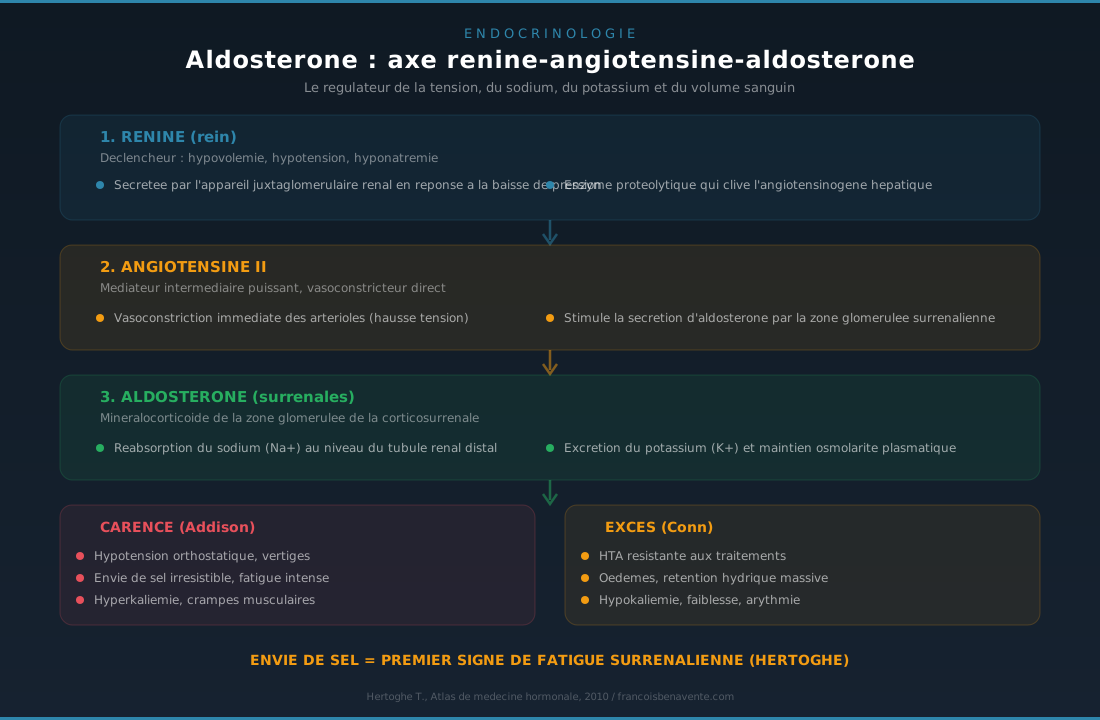
The role of aldosterone
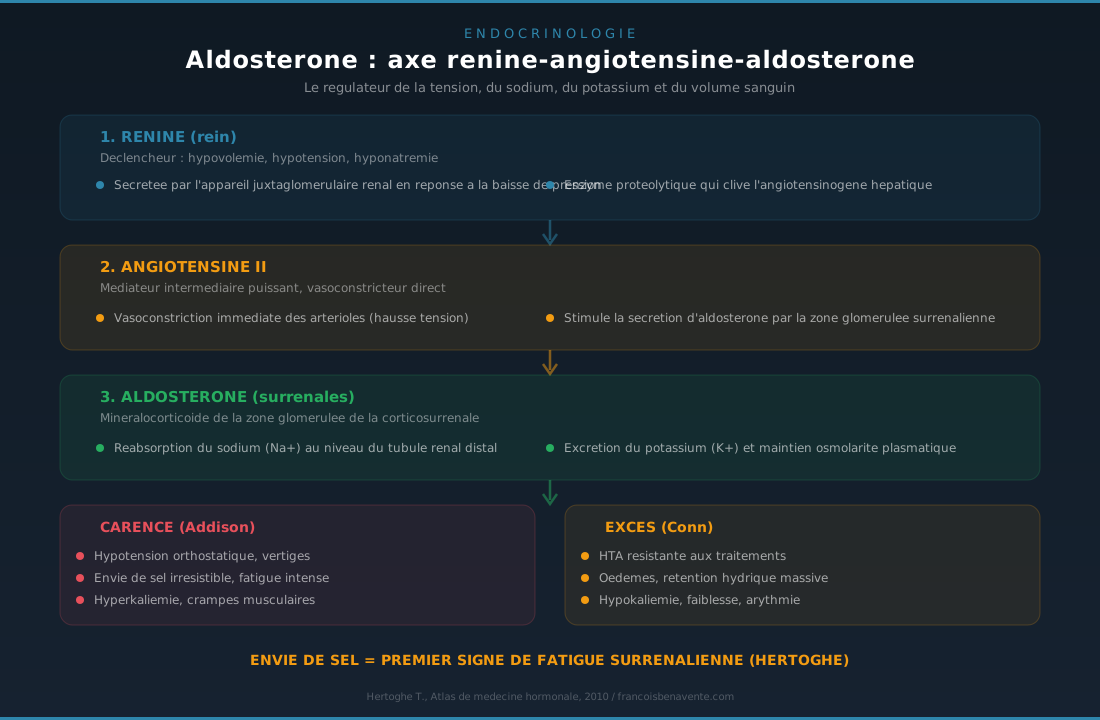
Aldosterone is a mineralocorticoid produced by the glomerulosa zone of the adrenal cortex, under the control of the renin-angiotensin-aldosterone system (RAAS). Its role is precise: it acts on the renal tubules to reabsorb sodium and excrete potassium. Sodium retains water by osmosis: so retaining sodium means retaining water, which means maintaining blood volume and blood pressure.
When aldosterone is sufficient, sodium is conserved, water follows, blood volume is stable, blood pressure is normal, tissues are hydrated. When it drops, sodium escapes through the urine, water follows, blood volume decreases, blood pressure drops, tissues become dehydrated. It’s a direct, mechanical, predictable mechanism.
Aldosterone also plays a role in acid-base balance (it promotes the excretion of H+ ions at the renal level) and in maintaining intracellular potassium. An aldosterone deficiency creates hyperkalemia (elevated blood potassium) which can cause heart rhythm disturbances in severe cases.
Signs of deficiency
Orthostatic hypotension is the most suggestive sign. You get up too quickly and your blood pressure doesn’t follow. Blood remains in the lower limbs by gravity, the brain becomes temporarily under-perfused, and you get a dizzy spell, sometimes a blackout, sometimes a syncope. The test is simple: measure blood pressure lying down then standing up. A drop of more than twenty millimeters of mercury in systolic pressure is significant.
The compulsive urge for salt is pathognomonic. Your body knows it’s losing sodium and it tries to replace it. You salt your dishes excessively, you eat olives, chips, pickles, cheese. It’s not gluttony: it’s an attempt at renal compensation.
Fatigue aggravated by prolonged standing is characteristic. When standing, gravity pulls blood downward. Without sufficient aldosterone to maintain blood volume, you get tired faster standing than lying down. Long queues, standing receptions, days of walking are exhausting. You feel better lying down: not from laziness but from hemodynamics.
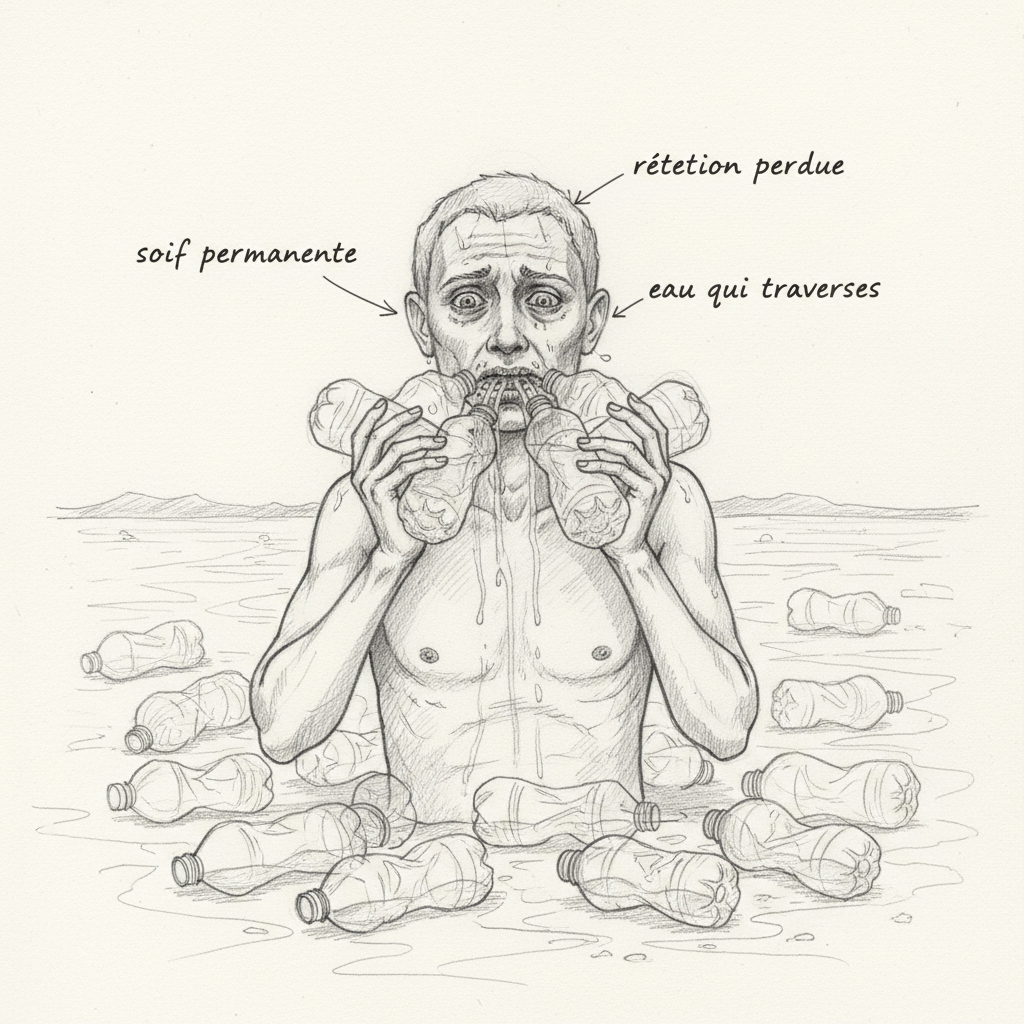
Chronic dehydration despite adequate fluid intake. The skin is dry, lips are chapped, urine is clear and abundant (you “piss out” all the water you drink instead of retaining it). End-of-day headaches are often a sign of cerebral dehydration from aldosterone deficiency.
Muscle cramps, especially at night, come from sodium-potassium imbalance. Heart palpitations (extrasystoles, tachycardia) can result from mild hyperkalemia.
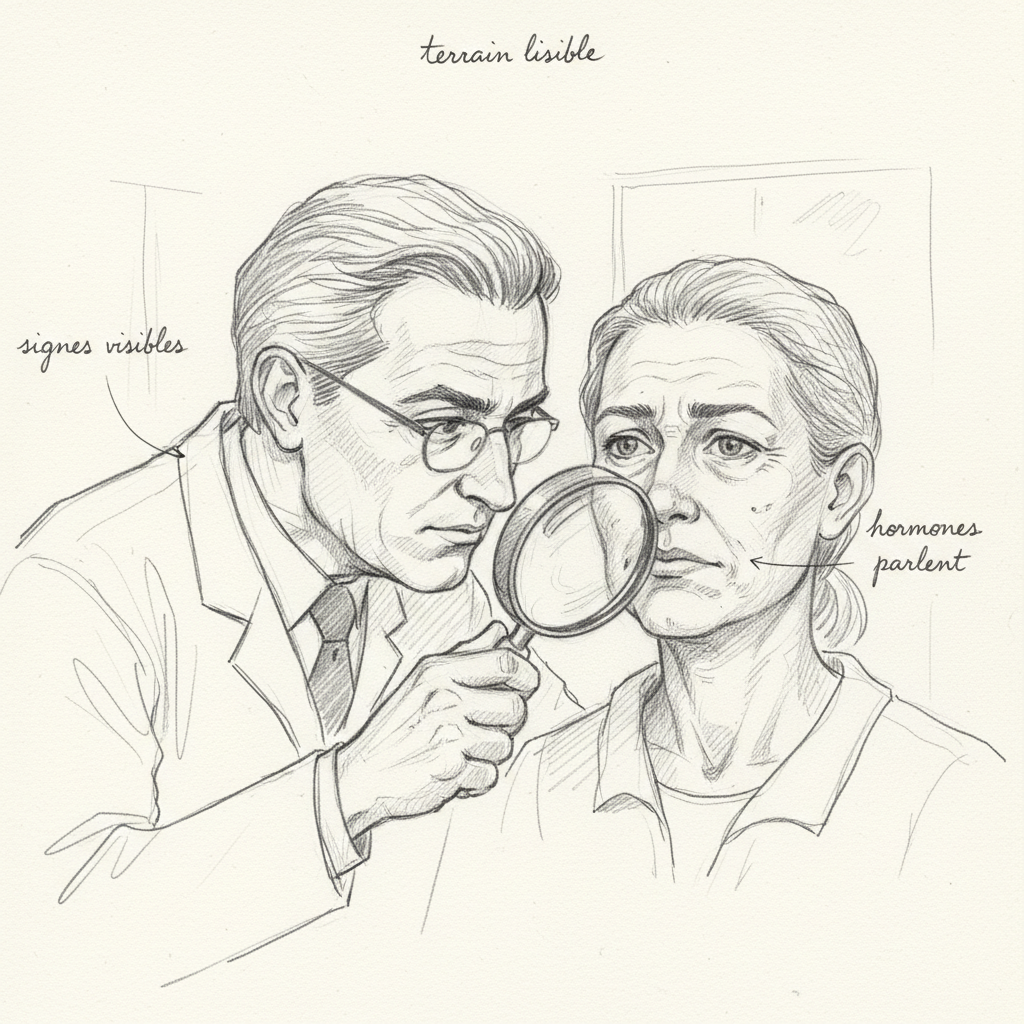
Take the Hertoghe aldosterone test to assess your profile.
Causes of deficiency
Adrenal exhaustion is the most common cause in naturopathic practice. Tired adrenals produce less of all adrenal hormones, including aldosterone. Stage 3 of adrenal fatigue is almost systematically accompanied by functional hypoaldosteronism.
Chronic stress progressively exhausts the adrenals. Addison’s disease (autoimmune destruction of the adrenals) is the classic but rare medical cause. Chronic kidney disease disrupts the RAAS. Diabetes can lead to hyporeninaemic hypoaldosteronism. Some medications (NSAIDs, ACE inhibitors, sartans, heparin, spironolactone) reduce aldosterone or block its action.
Paradoxically, dietary sodium deficiency worsens the problem. Strict low-sodium diets, excessively prescribed to normotensive patients, can decompensate latent aldosterone deficiency. Salt is not the enemy: refined industrial salt in excess is the problem. Gray Guérande salt or Himalayan pink salt, rich in trace elements, have their place in the diet.
Restoring aldosterone naturally
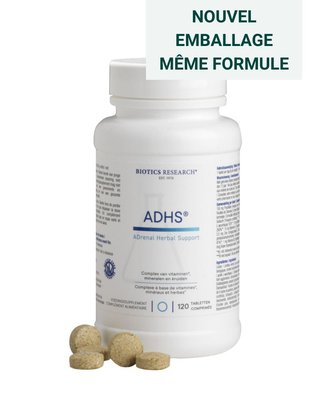
Global adrenal support is the first step. Vitamin C (1 to 2 grams per day) is the most concentrated nutrient in the adrenals and the most consumed during steroidogenesis. Vitamin B5 (pantothenic acid, 500 mg per day) is the precursor to coenzyme A essential for steroid hormone synthesis. Magnesium, zinc and omega-3s complete basic support.
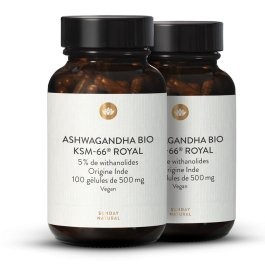
Adaptogenic plants support overall adrenal function. Licorice (Glycyrrhiza glabra) is particularly interesting for aldosterone: glycyrrhizinic acid inhibits the enzyme 11-beta-hydroxysteroid dehydrogenase, which extends the half-life of cortisol and aldosterone. Dose: 200 to 400 mg of standardized extract per day. Contraindication: high blood pressure. Eleuthero and ashwagandha support adrenal function without specific effects on aldosterone.
Quality salt should not be avoided in patients with aldosterone deficiency. On the contrary, a moderate intake of unrefined sea salt (half a teaspoon of Guérande salt in a glass of water in the morning) helps maintain blood volume. Vichy water (rich in bicarbonates and sodium) can be helpful.
Electrolytes are essential: sodium, potassium and magnesium must be balanced. A blood ionogram guides supplementation.
Horizontal rest in the middle of the day (twenty minutes lying down after lunch) allows the cardiovascular system to recharge without fighting gravity. Light elastic compression (class 1 compression socks) helps the most symptomatic patients maintain venous return.
Marc started with vitamin C, B5, licorice and half a glass of salted water in the morning. Within three weeks, the dizzy spells had disappeared. Within six weeks, he was no longer salting his dishes like a Breton sailor. His body had regained enough aldosterone to retain the sodium it needed.
If you want personalized support, you can book a consultation.
To go further
- DHEA: the forgotten hormone of your vitality and immunity
- The Hertoghe method: hormones, micronutrition and terrain medicine
- Estrogens: when your femininity fades too soon
- Vasopressin (ADH): hydration, memory and coagulation
Want to assess your status? Take the free Hertoghe cortisol questionnaire in 2 minutes.
Sources
- Hertoghe, Thierry. Atlas of Hormonal and Nutritional Medicine. International Medical Books, 2006.
- Wilson, James L. Adrenal Fatigue: The 21st Century Stress Syndrome. Smart Publications, 2001.
- Curtay, Jean-Paul. Nutritherapy: Scientific Foundations and Medical Practice. Testez Éditions, 2016.
If you want personalized support, you can book a consultation.
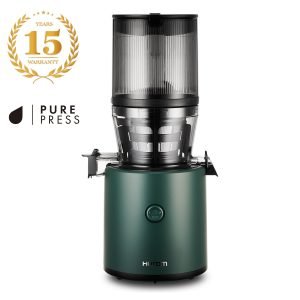
Healthy recipe: Pure celery juice: Celery balances electrolytes.

Laisser un commentaire
Sois le premier à commenter cet article.