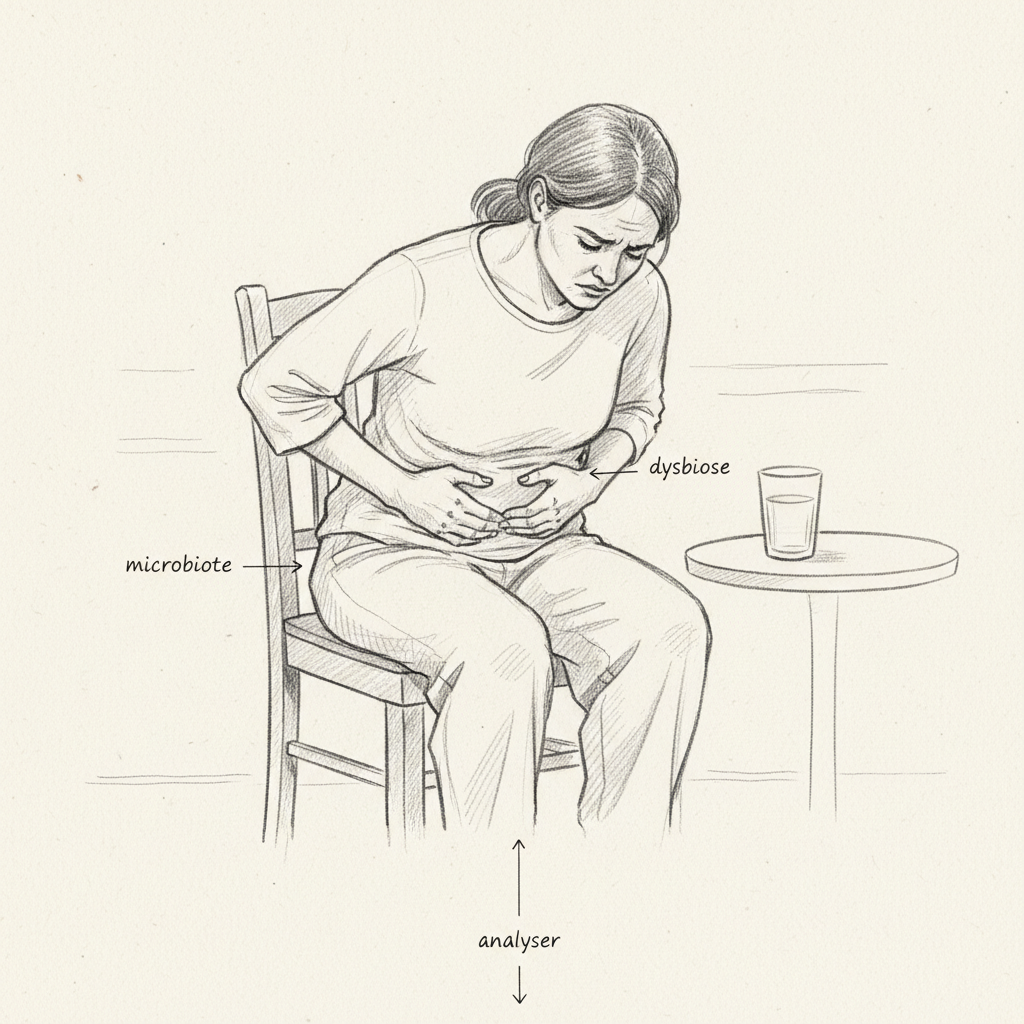
Her name is Isabelle, she is 62 years old, and she doesn’t understand what is happening. Since she quit smoking three years ago, she has gained ten kilos that she cannot lose. Her doctor diagnosed her with prediabetes six months ago and prescribed Glucophage 500 mg, without results. She eliminated bread, pasta, and sugar. Nothing changed. On the digestive level, she suffers from pain in her left side, permanent bloating, she can no longer tolerate leeks or onions, her transit alternates between diarrhea and constipation. And for the past three months, fatigue has set in, she has become sensitive to cold, her nails are breaking, her legs are swelling1. Her doctor tells her that everything is functional. That it’s stress.
When Dr. Serge Balon-Perin, a gastroenterologist specializing in functional medicine, presents this case to the Advanced Diploma in Micronutrition, he asks a simple question: “What if we had done a thorough assessment?” Not a standard assessment. A functional assessment. Metagenomic analysis of the microbiome. Urinary metabolites (DMI). Food IgG. And suddenly, the “functional” picture reveals deficiencies in iron and zinc, a disorganized microbiome, and a direct link between her digestive issues, her weight, her fatigue, and her sensitivity to cold.
“To treat these different problems, it is essential to understand their physiology.” Dr. Serge Balon-Perin, Advanced Diploma in Micronutrition
Digestion begins in your mouth
The first cause of digestive troubles is the most trivial: you don’t chew. Mastication is the first stage of digestion2. Salivary amylase begins the breakdown of cooked starches at pH 6.6-6.8. Without prolonged chewing, starch arrives intact in the stomach and then in the small intestine, where it becomes a fermentation substrate for bacteria. This is the leading cause of bloating that nobody looks for.
The second stage is gastric acidity. The stomach secretes hydrochloric acid that lowers the pH to 1-2, activating pepsin which cuts proteins into peptides. This acidity ensures protein digestion, iron and vitamin B12 absorption, and sterilization of the food bolus3.
PPIs (omeprazole, lansoprazole), prescribed massively for reflux, suppress this acidity. Their prolonged use leads to: maldigestion of proteins, risk of infection and dysbiosis (SIBO), decreased iron absorption (anemia), vitamin B12 deficiency, casein maldigestion4. Balon-Perin recalls that reflux is not always an excess of acid. Its frequent causes are increased abdominal pressure (SIBO, candidiasis, overweight) and rarely an anatomical anomaly5. Suppressing acid in a stomach that produces it normally is treating the symptom while worsening the cause.
Metagenomic analysis: the microbiome revolution
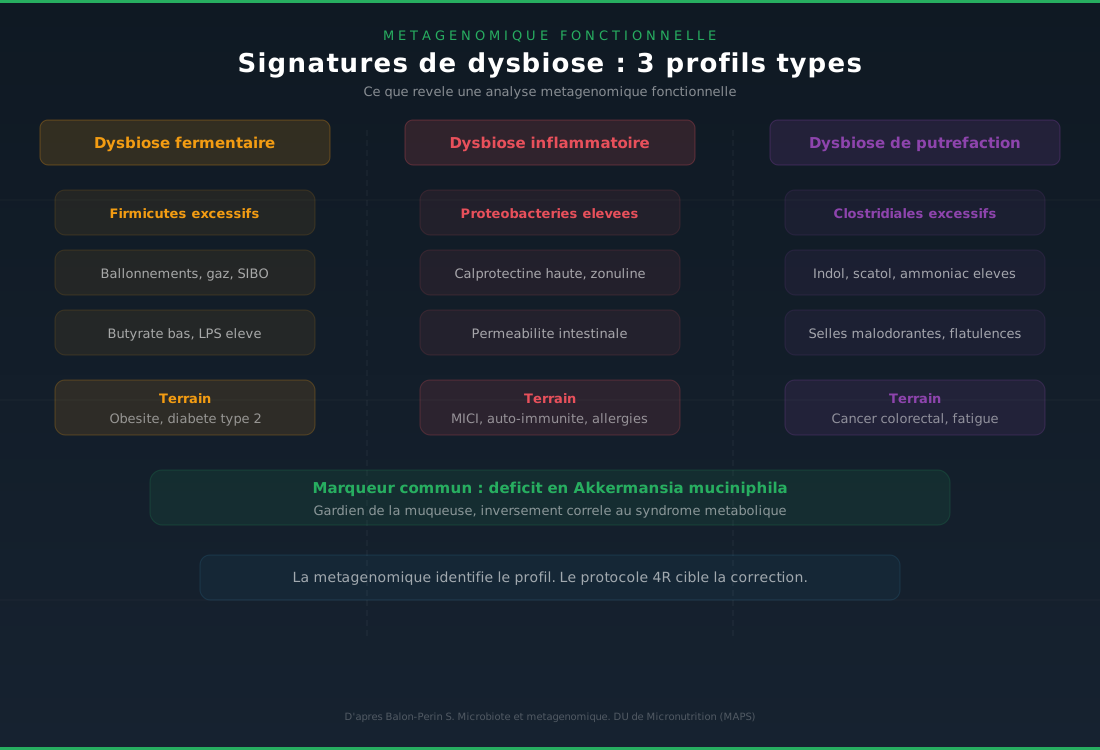
Standard stool culture detects only 20% of intestinal bacteria. Metagenomic analysis identifies all species present by sequencing total bacterial DNA6. It provides a quantitative profile of the Firmicutes/Bacteroidetes ratio (obesity marker when elevated), the abundance of protective species (Akkermansia muciniphila, Faecalibacterium prausnitzii, Roseburia) and pathobionts (Proteobacteria, E. coli)7.
As I detail in the article on intestinal microbiome, the ecosystem contains 500 to 1000 species. What makes the strength of Balon-Perin’s approach is the interpretation by pathology. He crosses the metagenomic profile with ten pathologies: weight gain, diabetes, NASH, cardiovascular prevention, colon cancer, IBS, IBD, allergies, autoimmune diseases, and depression8. For each pathology, a specific microbiological signature is identified with targeted recommendations.
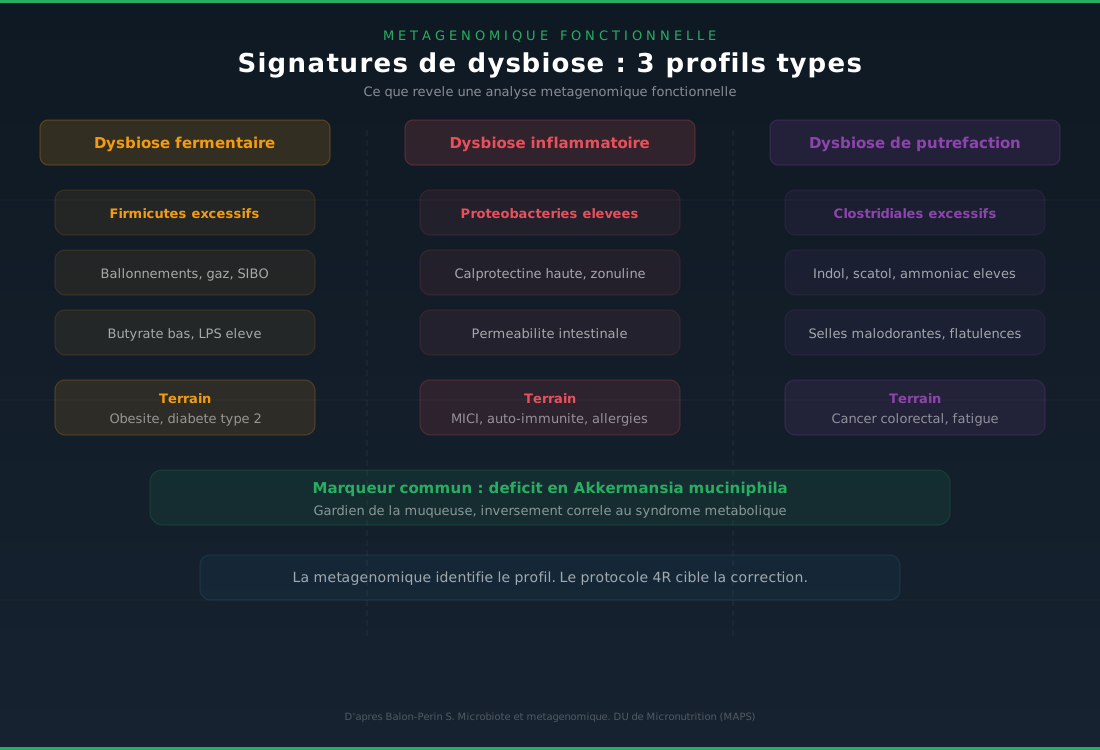
The analysis of urinary metabolites (DMI) completes the picture by measuring what bacteria do: tartaric acid (Candida or polyphenols), D-arabinitol (fungal proliferation), p-cresol and indole (protein putrefaction), D-lactic acid (SIBO)9. Composition tells who is there. Metabolites tell what they are producing.
Candidiasis and SIBO: the two ghosts of the digestive tract
Digestive candidiasis is documented in functional medicine. Candida albicans normally lives as a saprophytic yeast. Under certain conditions (excess sugars, antibiotic therapy, PPIs, immunosuppression, adrenal exhaustion), it transforms into invasive mycelial form10. The hyphae penetrate the mucosa, increase intestinal permeability, and produce acetaldehyde (hepatic toxin) and gliotoxins (immunosuppression).
SIBO is a bacterial proliferation in the small intestine, normally nearly sterile. When gastric acidity, peristalsis, or bile are failing, colon bacteria move up and ferment carbohydrates before their absorption11. Symptoms include early bloating (30-60 minutes after meals), transit disturbances, and multiple deficiencies (iron, B12, fat-soluble vitamins).
Irritable bowel syndrome: three components, three treatments
Irritable bowel syndrome affects 15 to 20% of the population. Balon-Perin’s approach identifies three overlapping components: the nervous aspect (stress, gut-brain axis), the micro-inflammation of the wall (detectable by calprotectin and food IgG), and excessive fermentation (SIBO, candidiasis, FODMAP)12. Food IgGs are not an allergy: they mark increased intestinal permeability and incomplete protein digestion13. This is a marker of hyperpermeability, the gateway to systemic inflammation described in the 4R protocol.

The microbiome-guided approach
Treatment is guided by the metagenomic profile. For weight gain: diet low in refined carbohydrates, rich in prebiotics and omega-3, more vegetarian. Avoid polysorbate 80 (E433), CMC, and artificial sweeteners that destroy the mucus layer14. Intermittent fasting.
To stimulate Akkermansia muciniphila: cobiotics: EGCG from green tea, resveratrol, omega-315. For Faecalibacterium prausnitzii: grapes, red wine (one glass/day), prebiotics (guar gum, inulin), citrus bioflavonoids16.
Balon-Perin emphasizes cysteine, a fundamental component of intestinal mucus (MUC2). Mice producing more MUC2 better resist colitis and infections17. N-acetyl-cysteine (600 mg/day) supports mucus production and glutathione.
What Isabelle recovered
Her assessment revealed a microbiome depleted in Akkermansia and Faecalibacterium (obesity/prediabetes signature), putrefaction dysbiosis (elevated p-cresol), deficiencies in iron and zinc. The protocol: protein-vegetarian diet in attack phase, then low glycemic index Mediterranean diet, reduced FODMAP. Gradual PPI cessation. Cobiotics, prebiotics, NAC, iron and zinc bisglycinate18. Balon-Perin’s protein-rich breakfast: two slices of protein bread with egg.
At five months, six kilos lost, HbA1c decreased by 0.4 point, bloating gone, fatigue diminished. Her belly was not “functional.” It was sick with a disease that conventional medicine was not looking for.
Naturopathy has always said that everything starts in the belly. Functional medicine says the same thing with metagenomic analysis and urinary metabolites. These are not contradictory approaches. These are complementary tools. And when you combine them, the belly speaks. You just need to know how to listen.
If you want personalized support, you can book a consultation.
To go further
- Intestinal dysbiosis: when your flora makes you sick
- Bloating and gas: your belly is trying to talk to you
- Intestinal dysbiosis: the 5 profiles that sabotage your thyroid
- SIBO: when the small intestine triggers autoimmunity
Healthy recipe: Lacto-fermented sauerkraut: A natural probiotic for your microbiome.
Footnotes
-
Balon-Perin S. Digestive pathologies, part 2. Advanced Diploma in Micronutrition (MAPS). Slide 31: Isabelle’s case, 62 years old. ↩
-
Balon-Perin S. Advanced Diploma in Micronutrition. Part 1, slide 6: “1st stage: mastication.” ↩
-
Balon-Perin S. Advanced Diploma in Micronutrition. Part 1, slide 17: digestive enzymes table. ↩
-
Balon-Perin S. Advanced Diploma in Micronutrition. Part 1, slide 11: “PPIs: maldigestion, SIBO, iron/B12 deficiencies.” ↩
-
Balon-Perin S. Advanced Diploma in Micronutrition. Part 1, slide 12: “Causes of GE reflux.” ↩
-
Balon-Perin S. Advanced Diploma in Micronutrition. Part 1, slide 27: “Metagenomic analysis, DMI, SCFA.” ↩
-
Balon-Perin S. Advanced Diploma in Micronutrition. Part 1, slides 36-37: “Dysbiosis.” ↩
-
Balon-Perin S. Advanced Diploma in Micronutrition. Part 1, slide 62: “10 pathologies.” ↩
-
Balon-Perin S. Advanced Diploma in Micronutrition. Part 2, slides 16 and 26: DMI and tartaric acid. ↩
-
Balon-Perin S. Advanced Diploma in Micronutrition. Part 2, slide 11: “Candida: yeast vs mycelial.” ↩
-
Balon-Perin S. Advanced Diploma in Micronutrition. Part 2, slides 1-3. ↩
-
Balon-Perin S. Advanced Diploma in Micronutrition. Part 2, slide 3: “IBS: nervous, micro-inflammation, fermentation.” ↩
-
Balon-Perin S. Advanced Diploma in Micronutrition. Part 2, slide 86: “IgG = increased intestinal permeability.” ↩
-
Balon-Perin S. Advanced Diploma in Micronutrition. Part 1, slides 76-77. ↩
-
Balon-Perin S. Advanced Diploma in Micronutrition. Part 2, slide 86: “Akkermansia cobiotics.” ↩
-
Balon-Perin S. Advanced Diploma in Micronutrition. Part 2, slide 46: Faecalibacterium. ↩
-
Balon-Perin S. Advanced Diploma in Micronutrition. Part 1, slide 46: cysteine and MUC2. ↩
-
Balon-Perin S. Advanced Diploma in Micronutrition. Part 2, slides 51-56: Isabelle’s therapeutic protocol. ↩


Laisser un commentaire
Sois le premier à commenter cet article.