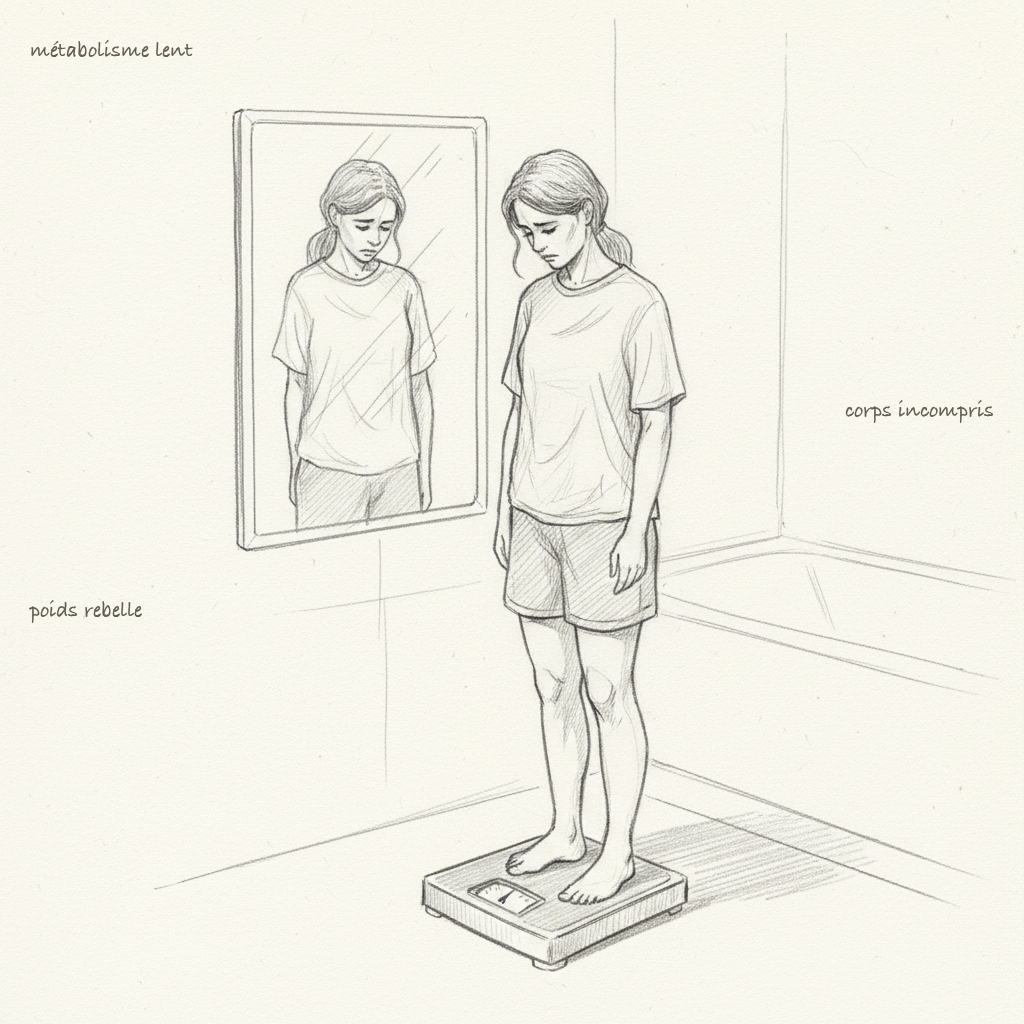
Nathalie has been dieting for twenty years. She has tried Weight Watchers, Dukan, fasting, low-carb, calorie counting. She loses three kilos, she gains five back. Her doctor tells her to “eat less and move more”. She already eats 1,400 calories and walks an hour a day. And she gains weight anyway. Especially around the belly. The waistline that thickens year after year, despite all her efforts. Her problem is not willpower or calories. Her problem is insulin.
Insulin resistance is the silent epidemic of the century. It affects one in three people in industrialized countries. It precedes type 2 diabetes by ten to fifteen years. It is responsible for abdominal obesity, metabolic syndrome, non-alcoholic fatty liver disease, PCOS and a large portion of cardiovascular diseases. And it is almost always underdiagnosed because doctors measure blood glucose (which remains normal for a long time) but not insulin levels (which rise well before).
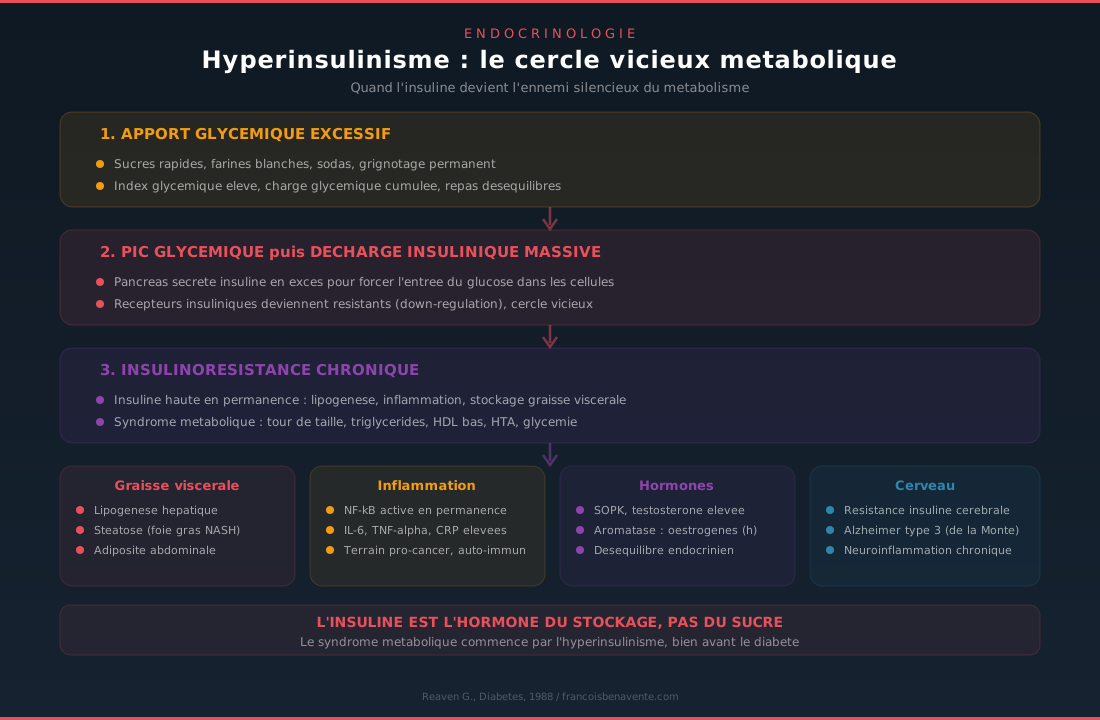
The mechanism of hyperinsulinism
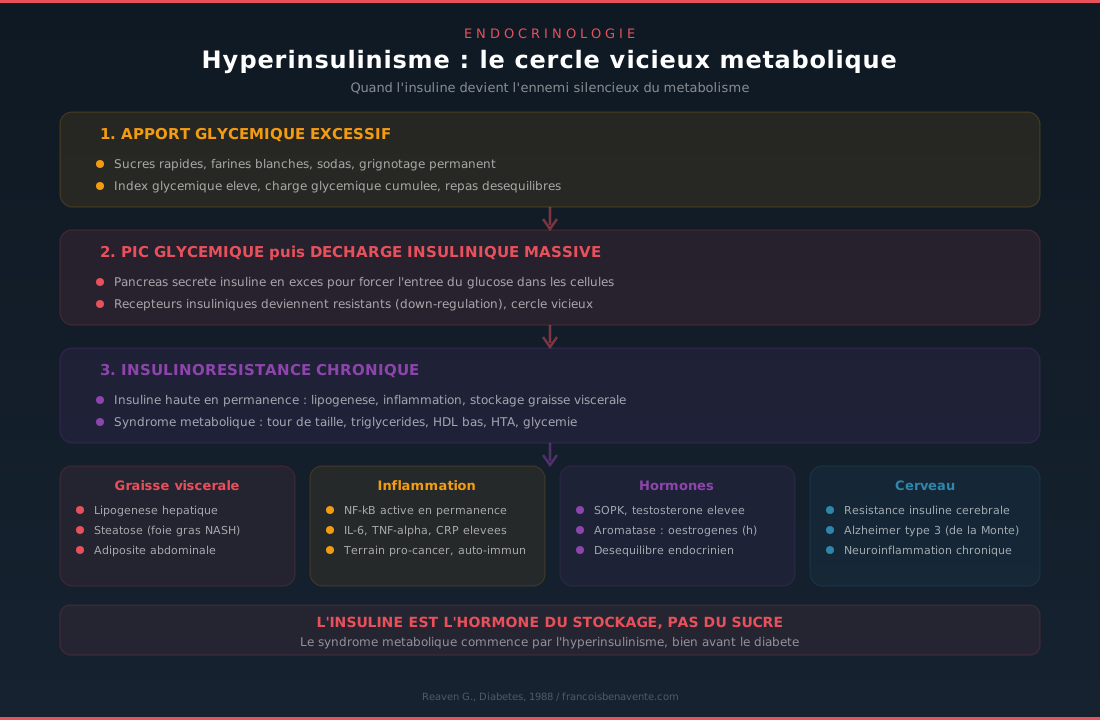
Blood glucose must remain within a narrow range (0.7 to 1.1 g/L). When you eat carbohydrates, glucose rises and the pancreas secretes insulin to lower it. Insulin is the key that opens the door of cells so glucose can enter. Simple and effective.
The problem begins when cells become insensitive to insulin: the lock is “rusty”. Glucose remains in the blood. The pancreas responds by producing even more insulin: it makes more and more keys to force the lock. Glucose eventually enters, but at the cost of chronically elevated insulin.
High insulin is a signal of permanent storage. It activates lipogenesis (synthesis of fats), inhibits lipolysis (burning of fats), stimulates appetite (via the hypothalamus) and causes reactive hypoglycemia that triggers cravings. The vicious cycle is perfect: you eat carbohydrates, insulin rises, you store, blood glucose drops, you feel hungry, you eat carbohydrates, insulin rises…
The signs of excess insulin
Resistant abdominal fat is marker number one. High insulin directs fat storage toward the visceral zone (around organs) and abdominal subcutaneous area. A waist circumference greater than 88 centimeters in women and 102 centimeters in men is a criterion of metabolic syndrome directly linked to hyperinsulinism.
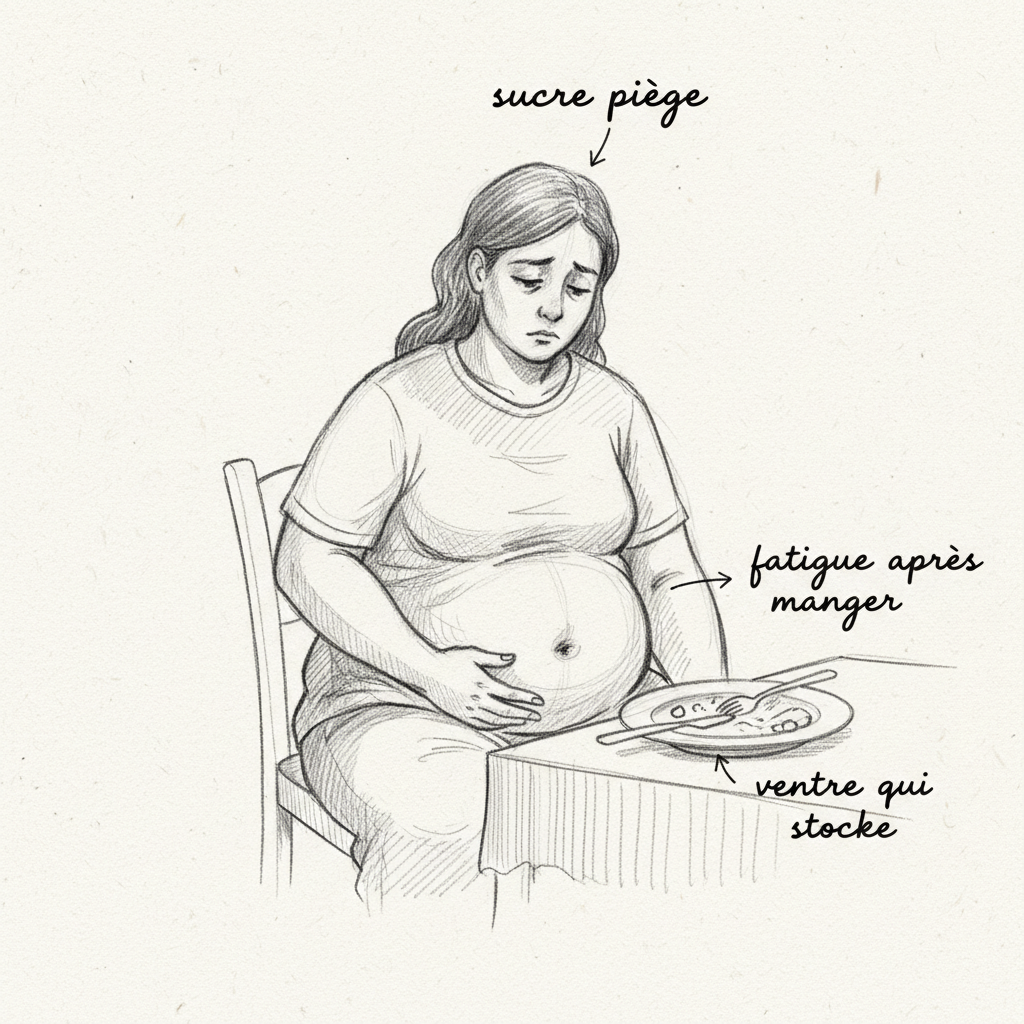
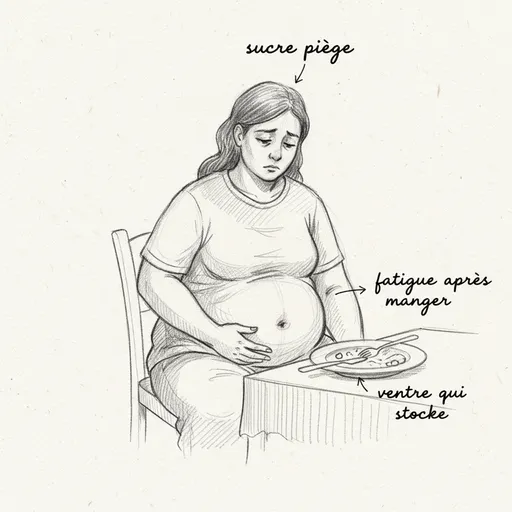
Sugar cravings are the most bothersome functional sign. High insulin causes reactive hypoglycemia (glucose drops too low after the initial peak), and the hypoglycemic brain demands sugar immediately. This is not a lack of willpower: it is a signal of brain survival. Sugar cravings at 10am, 4pm and after dinner are typical.
Postprandial fatigue (the “energy crash” after meals) reflects reactive hypoglycemia. The brain, deprived of glucose by the insulin spike, temporarily shuts down. You need a nap, coffee, sugar to “get going again”. Waking up at night between 2am and 4am are often nocturnal hypoglycemias compensated by an adrenaline surge.
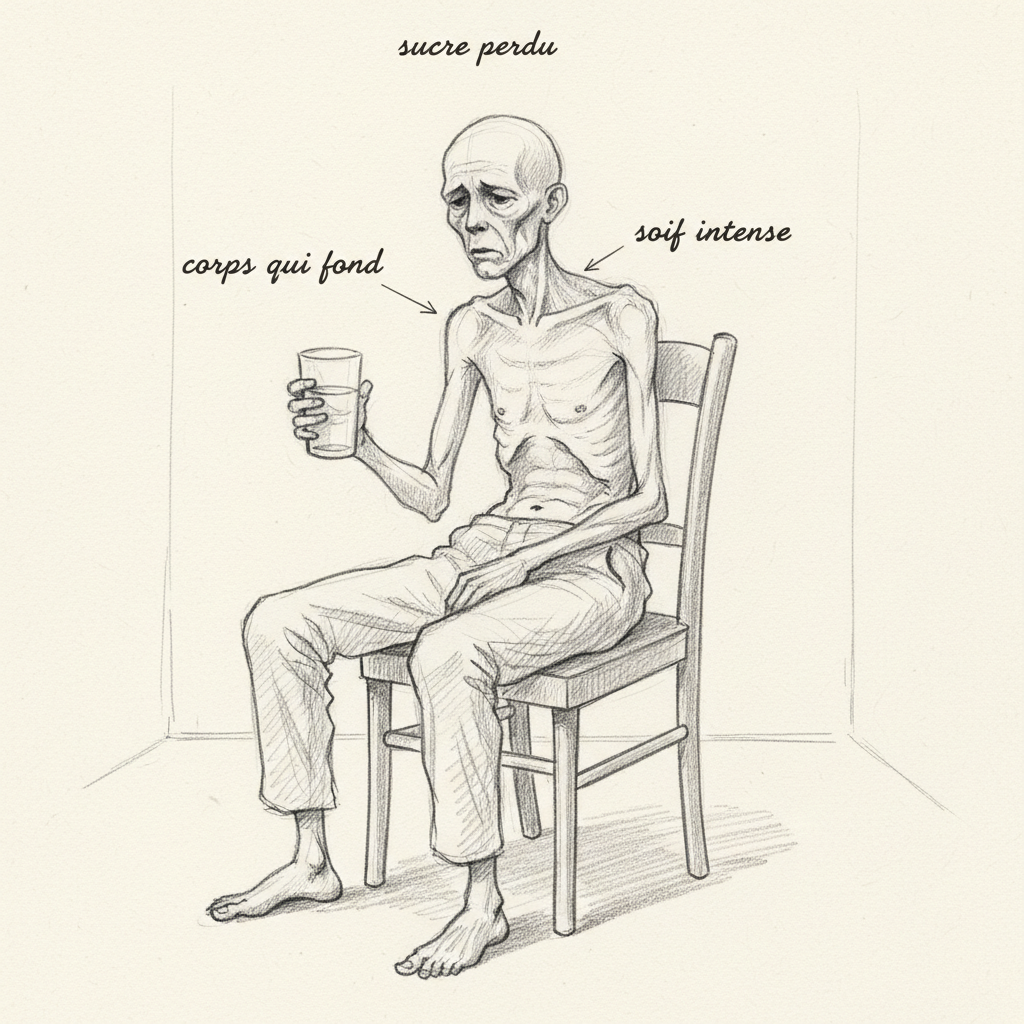
Excessive thirst and frequent urination appear when blood glucose starts to rise. Acne, skin tags (small skin growths), acanthosis nigricans (brown patches in neck and armpit folds) are cutaneous signs of chronic hyperinsulinism.
Take the Hertoghe excess insulin test.
The root causes
Refined carbohydrate-rich diet is the main cause. White bread, white pasta, white rice, breakfast cereals, fruit juices, sodas, pastries: each blood glucose spike triggers an insulin spike. The daily repetition of these spikes eventually “wears out” insulin receptors, like a horn you hear for too long eventually gets ignored.
Sedentary lifestyle reduces the expression of GLUT4 transporters in skeletal muscles. Muscle is the main consumer of glucose: when it is not working, glucose accumulates and insulin rises. Constant snacking keeps insulin high continuously, never allowing the body to return to a low basal insulin level.
Chronic stress raises cortisol which antagonizes insulin by increasing blood glucose (hepatic gluconeogenesis). The pancreas compensates by producing more insulin. Lack of sleep reduces insulin sensitivity by twenty-five percent after a single short night. Endocrine disruptors (bisphenol A, phthalates, pesticides) impair insulin signaling.
The naturopathic protocol
Reducing refined carbohydrates is the most powerful measure. Replace white bread with whole grain sourdough bread, white pasta with lentils, white rice with brown rice or quinoa, fruit juices with whole fruits. Glycemic index and especially glycemic load guide choices. The goal is not zero carbohydrates but reducing postprandial insulin.
Intermittent fasting is the fastest lever. Sixteen hours without eating allow insulin to drop to a basal level that permits lipolysis. In two weeks of 16/8, insulin sensitivity improves measurably. Fasting also stimulates growth hormone which promotes fat burning.
Physical exercise is essential. Strength training increases muscle mass (the largest consumer of glucose) and expresses GLUT4 transporters independently of insulin. Thirty minutes of walking after meals reduces the blood glucose spike by forty percent.
Chromium (200 micrograms of chromium picolinate per day) improves the sensitivity of insulin receptors. Berberine (500 mg two to three times daily before meals) has efficacy comparable to metformin on blood glucose and HbA1c in clinical studies. Magnesium (300 mg per day) improves insulin signaling. Ceylon cinnamon (1 gram per day) reduces postprandial blood glucose. Alpha-lipoic acid (300 to 600 mg per day) improves insulin sensitivity and protects against oxidative stress from glycation-dependent processes.
Apple cider vinegar (one tablespoon in a glass of water before meals) slows gastric emptying and reduces the blood glucose spike by twenty to thirty percent. Soluble fiber (psyllium, chia seeds, flax seeds) slow glucose absorption.
Nathalie eliminated white bread and breakfast cereals, adopted 16/8 fasting, and took berberine and chromium. In three months, she lost six centimeters of waist circumference without counting a single calorie. Her fasting insulin level went from 18 to 7 mU/L. She is no longer dieting. She is managing her insulin.
To go further
- Hypoinsulinism: when the pancreas can no longer keep up
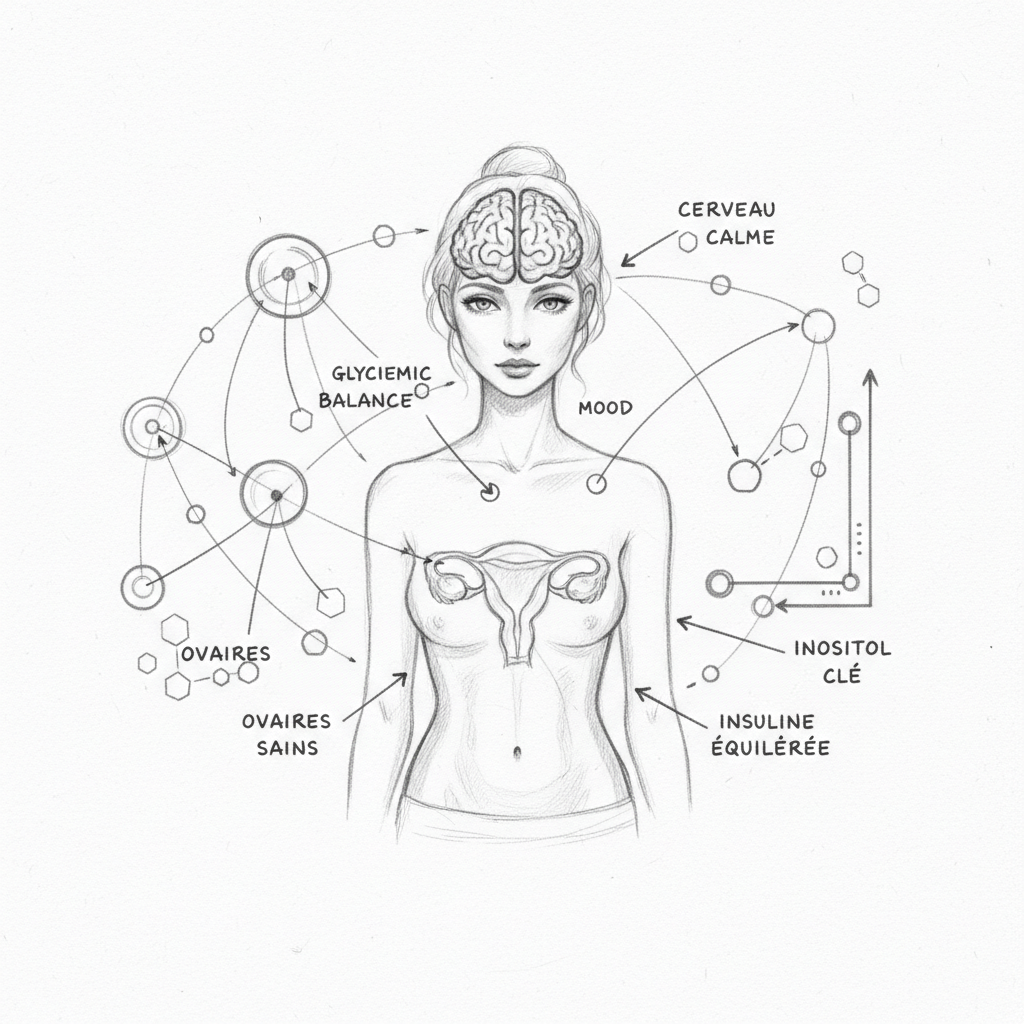
- Myo-inositol: mood, blood glucose and ovaries in one molecule
- Thyroid and weight: why you cannot lose weight despite everything
- Vitamin B8 (biotin): hair, skin and blood glucose in one molecule
Sources
- Hertoghe, Thierry. Atlas of Hormonal and Nutritional Medicine. International Medical Books, 2006.
- Dong, Hui, et al. “Berberine in the treatment of type 2 diabetes mellitus: a systemic review and meta-analysis.” Evidence-Based Complementary and Alternative Medicine (2012).
- Curtay, Jean-Paul. Nutritherapy: scientific foundations and medical practice. Testez Éditions, 2016.
If you want personalized support, you can book a consultation.
Healthy recipe: Red lentil dahl: Lentils have a low glycemic index.


Laisser un commentaire
Sois le premier à commenter cet article.