In 1904, a forty-two-year-old man, obese, diabetic, exhausted by years of poor nutrition and relentless work, pushes open the door of a hydrotherapy establishment in Woerishofen, Bavaria. This man’s name is Henry Lindlahr. He was born in Germany, emigrated to the United States in his youth, and has just crossed the Atlantic in the opposite direction for a very simple reason: American medicine cannot help him. The doctors prescribed him medications, protein diets, rest. Nothing worked. He is at the end of his rope. The man who receives him at Woerishofen is named Sebastian Kneipp. The aging Bavarian priest, then at twilight of his life, looks Lindlahr in the eye and tells him something no one had ever told him before: “Your illness is not a fatality. You built it. You can dismantle it.”
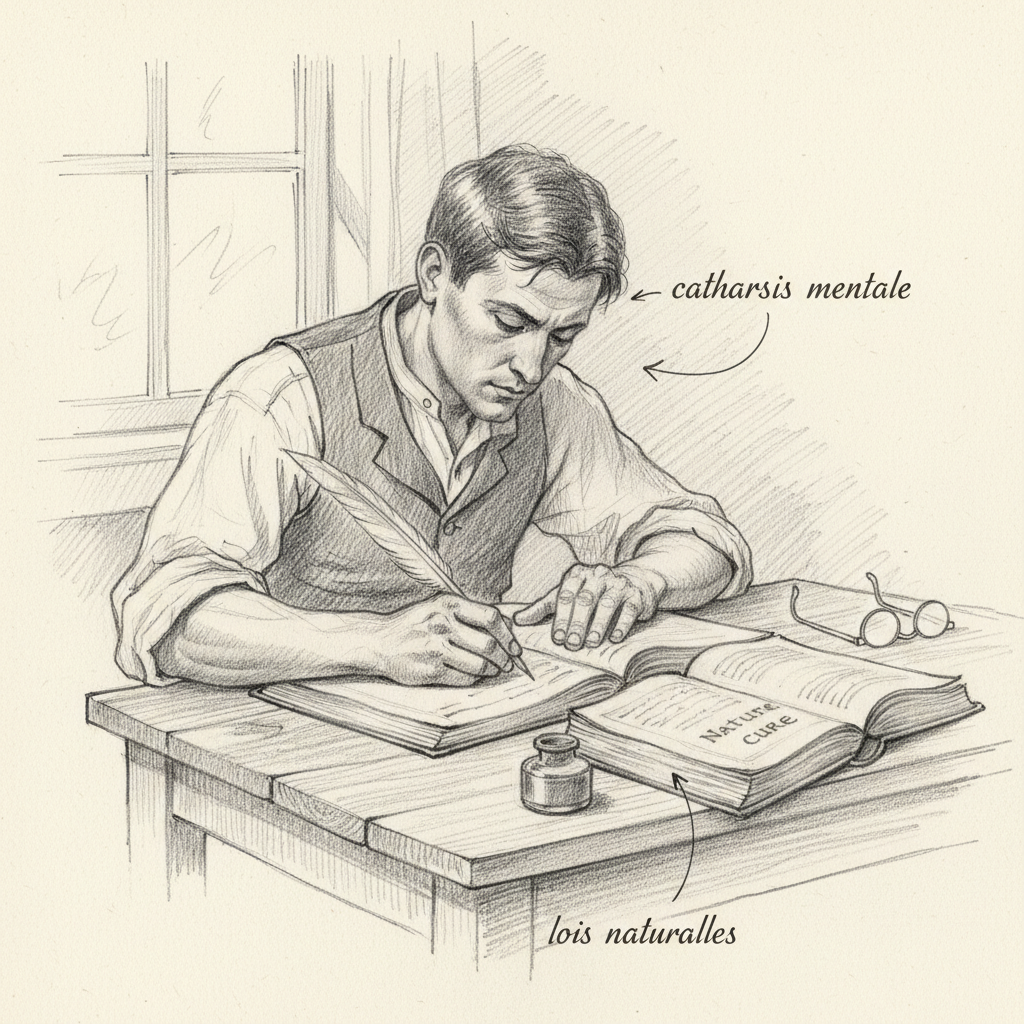
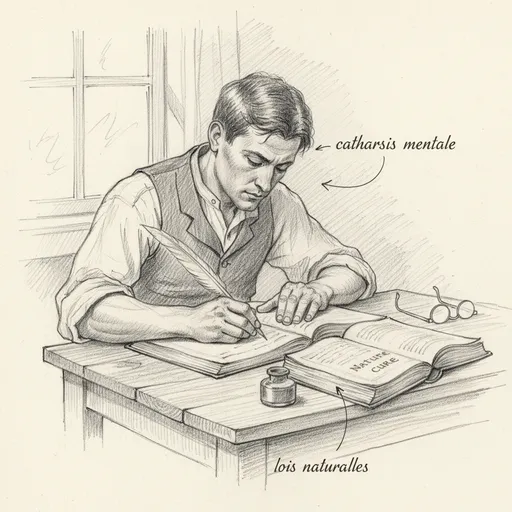
This sentence will change Lindlahr’s life, and by extension, world naturopathy. Because the former patient will not simply recover. He will return to the United States, earn his medical degree from the University of Illinois, open a sanitarium in Chicago, and write a work that will become the bible of American naturopathy: Nature Cure. And above all, he will formalize a tool that every naturopath still uses today in consultation: catharsis in four columns.
“The vital force is the sum total of the constructive and curative forces inherent in the organism.”
This quote from Lindlahr summarizes his philosophy. Healing does not come from outside. It does not come from a medication, a surgeon, or even a therapist. It comes from within, from that biological intelligence that animates every cell and that simply asks to restore balance when given the means to do so. If you know the foundations of naturopathy, you know that this notion of vitalism is the foundation upon which our entire discipline rests. Lindlahr is one of its most rigorous architects.
From Kneipp to medicine: the journey of a convert
To understand Lindlahr, you must understand the era in which he lived. At the end of the nineteenth century, American medicine was in full transformation. On one hand, universities began standardizing medical education according to the European scientific model. On the other, a multitude of alternative practitioners offered radically different approaches: hygienists, hydrotherapists, herbalists, magnetizers. It is in this ferment that Lindlahr will construct his synthesis.
His time with Kneipp is a revelation. The Bavarian priest does not simply prescribe cold baths and clay poultices. He teaches a complete philosophy of life: simple and natural food, daily exercise, contact with nature, spiritual life. Kneipp believes that illness is always the consequence of moving away from natural laws, and that returning to these laws is sufficient to restore health in the vast majority of cases. Lindlahr drinks in every word. He applies Kneipp’s prescriptions with military rigor. Within a few months, his diabetes recedes, his weight decreases, his energy returns. Conventional medicine had condemned him. The laws of nature healed him.
But Lindlahr is not a man content with personal experience. He wants to understand why it works. He wants to put scientific words to Kneipp’s intuition. That is why he enrolls at the University of Illinois and obtains his medical degree. This dual path, that of the patient healed by nature and that of the doctor trained by science, makes Lindlahr a unique bridge between two worlds that then regard each other with suspicion.
In Chicago, he opens the Lindlahr Sanitarium, an establishment where he welcomes chronic patients whom medicine has abandoned. Diabetics, arthritic patients, tuberculosis sufferers, the depressed: all come to Lindlahr seeking what they have not found elsewhere. And Lindlahr heals them, often, through means of striking simplicity: living food, hydrotherapy, sweating, physical exercise, sun exposure, sufficient sleep, and above all fundamental work on personal responsibility in illness.
Nature Cure: disease as violation of natural laws
Lindlahr’s major work, Nature Cure, published for the first time in 1913, is a text of remarkable clarity and modernity. His central thesis fits in one sentence: disease is the consequence of the violation of natural laws. This idea, which may seem banal today given how often it is repeated in naturopathic circles, was revolutionary at a time when medicine attributed disease to microbes, heredity, or fate.
Lindlahr follows in the line of Herbert Spencer and his concept of “survival of the fittest.” But where Spencer applied this idea to human societies in often brutal fashion, Lindlahr transposes it to the individual level with an essential nuance: it is not the strongest who survives, but the one who lives most in accordance with the laws of nature. A robust man who eats poorly, does not sleep enough, smokes and does not move will eventually become ill. A man of fragile constitution who respects natural laws will traverse the decades with surprising vitality.
“Every disease is a healing crisis. The disease itself is the attempt of the organism to eliminate waste, toxins, and poisons, and to repair the damage done by wrong living.”
This vision of disease as a healing crisis, as the organism’s attempt to purify itself, is foundational to vitalist naturopathy. When your body runs a fever, it is not malfunctioning: it is burning waste. When your skin develops eczema, it is not mistaken: it is eliminating through the skin what your kidneys and liver can no longer manage. When your intestines manifest through diarrhea, they are not sick: they are expelling what should never have entered.
Lindlahr identifies six fundamental pillars of health, which he calls the six columns of Nature Cure. Physical activity first, because movement is the first condition of cellular life. Without movement, no circulation, no cellular nutrition, no waste elimination. Sun exposure next, because natural light regulates biological rhythms, stimulates the production of vitamin D and nourishes the nervous system. Living food, because food is the first medicine and raw, fresh, unprocessed foods provide enzymes, vitamins and vital energy that cooking destroys. Sweating, because the skin is a major elimination pathway and transpiring is one of the most effective ways to get rid of acidic waste. Deep breathing, because oxygen is the fuel of every cell and most people breathe at twenty percent of their lung capacity. And sleep, because it is during nighttime rest that the organism repairs, rebuilds and regenerates itself.
These six pillars certainly speak to you if you know the naturopathic approach. They are the concrete translation of the vitalist philosophy: give your body what it needs (movement, light, living food, oxygen, rest) and take away from it what poisons it (sedentary life, darkness, dead food, pollution, overwork), and the vital force will do the rest. This is exactly what I explain in the foundations of naturopathy when I speak of the humoral terrain of Marchesseau. Lindlahr is one of the direct ancestors of this thinking.
The influence of Bernarr Macfadden: the body as temple
One cannot understand Lindlahr without mentioning the considerable influence of Bernarr Macfadden, considered the father of American bodybuilding. Macfadden, a flamboyant and controversial figure, advocated intense physical exercise, therapeutic fasting, nudity in the sun and vegetarian diet. He published the magazine Physical Culture, read by millions of Americans, and had created a veritable media empire around the idea that the human body is a temple that must be maintained with the same devotion as a sacred place.
Lindlahr shared this conviction. For him, the body is not a machine that you repair when it breaks down, as mechanistic medicine of his era believed. It is a living organism, endowed with its own intelligence, capable of self-healing when its fundamental needs are respected. The difference between Lindlahr and Macfadden is that Lindlahr brought the scientific rigor that sometimes lacked in Macfadden’s enthusiasm. Where Macfadden created spectacle, Lindlahr practiced medicine. Where Macfadden preached by example, Lindlahr published case studies. The two approaches complemented each other remarkably.
It was also under Macfadden’s influence that Lindlahr integrated fasting into his therapeutic arsenal. Fasting, which all ancient medical traditions used as a purification tool, had been abandoned by modern medicine in favor of medications. Lindlahr rehabilitated it by relying on his own experience and that of hundreds of patients at his sanitarium. He observed that short fasting, from one to three days, allowed the organism to mobilize its energy reserves for internal cleaning work, instead of wasting them in permanent digestion. This idea aligns perfectly with the naturopathic vision of spring detox that I propose each year to my clients.
Iridology and vitality assessments
Lindlahr was also one of the first American doctors to integrate iridology into his clinical practice. Iridology, this technique of observing the iris that allows one to read the terrain constitutional state of an individual, was formalized by Hungarian Ignatz von Peczely in the nineteenth century. Lindlahr considered it a complementary diagnostic tool, not sufficient in itself but valuable for guiding the vitality assessment.
The vitality assessment, which every naturopath conducts at the first consultation, is a direct inheritance from Lindlahr. It is not about diagnosing a disease (that is the doctor’s role), but about evaluating the level of vital force of the client, identifying their points of constitutional weakness, and understanding how they arrived there. It is a global assessment, which takes into account nutrition, sleep, physical activity, stress, emotional state, family history, living and working environment. Lindlahr insisted that two people presenting the same symptoms can have radically different causes, and that treatment must always be individualized.
This personalized approach is one of the fundamental differences between naturopathy and conventional medicine. In medicine, you treat the disease. In naturopathy, you accompany the person. Lindlahr understood this at the beginning of the twentieth century, well before functional and integrative medicine rediscovered this obvious truth a century later.
Catharsis in four columns: the tool for transformation
We now arrive at what I consider Lindlahr’s most brilliant contribution to naturopathy: catharsis. The word comes from Greek katharsis, which means purification. Aristotle used it to describe the emotional effect of tragedy on the spectator. Lindlahr reclaims it in a very concrete sense: catharsis is a structured exercise that allows the client to become aware of their situation, to prioritize their problems and to plan their actions for change.
Lindlahr’s catharsis takes the form of a notebook with four columns. Each column has a specific function, and the work is done in order, from the first to the fourth, never skipping a step.
The first column is titled RESOLVABLE. It contains everything the client can change immediately, without external help, through willpower alone. For example: I can stop eating industrial cookies in the evening in front of the television. I can go to bed thirty minutes earlier. I can walk twenty minutes a day instead of taking the subway. I can drink one liter of water a day instead of zero. These changes seem simple, and they are. But Lindlahr knew that most people do not make them, not from ignorance but from inertia. The first column serves to identify the most accessible levers, those that require the least effort for maximum result.
The second column is titled ATTENUABLE. It contains what seems impossible to resolve, what the client feels powerless against. For example: my job stresses me but I cannot resign. My spouse does not understand my dietary needs. I have chronic pain that no one can relieve. Lindlahr teaches that behind every apparent impossibility lies a deeper cause. The work of this column consists of seeking the cause behind the cause. You cannot resign? Fine. But can you change your relationship to stress? Can you implement emotional management techniques? Can you rearrange your schedule to give yourself recovery time? The objective is not to resolve the impossible but to attenuate its impact on your health.
The third column is titled ACTIONS UNDERTAKEN. It builds on what Lindlahr calls the theory of contraries, a concept inherited from Hippocrates. The principle is luminous in its simplicity: when something is in excess, reduce it. When something is in deficit, increase it. When something is cold, warm it. When something is hot, cool it. In practice, this produces prescriptions of undeniable logic. You are sad? Surround yourself with positive people. You are sedentary? Sign up for a walking class. You eat too much? Reduce your portions by a quarter. You do not breathe? Do five minutes of abdominal breathing each morning. You do not sleep? Cut off screens at nine p.m. The theory of contraries is not a sophisticated technique. It is naturist common sense elevated to the rank of method. And it works, because the human body is a homeostatic system that constantly seeks balance. Give it the opposite of what throws it off balance, and it will rebalance itself.
The fourth column is titled PLANNING. It is the most important column according to Lindlahr, and the one most people neglect. Lindlahr said it with disarming frankness:
“Without planning, you will not do it.”
This sentence resonates with particular power when you work with neuro-arthritic profiles, these cerebral temperaments who understand everything intellectually but struggle to pass to concrete action. How many times have I seen clients leave my consultation with a perfectly understood, perfectly accepted program, and change nothing in their lives three months later? Lindlahr’s planning addresses this problem. It consists of transforming each intention into concrete, dated, measurable commitment. I no longer say “I am going to eat better.” I say: “Next Monday, I will go to the Belleville market at nine a.m., I will buy three kilos of seasonal vegetables, and I will make soup for the week.” I no longer say “I am going to move more.” I say: “Tuesday and Thursday evenings, from six thirty to seven p.m., I will walk in Belleville Park.” Planning transforms the pious wish into a contract with yourself. And Lindlahr was right: without this contract, the half-measure sets in, and the half-measure does not work in naturopathy.
Catharsis in consultation: my experience
I use Lindlahr’s catharsis at every first consultation. It is the first exercise I propose, even before talking about nutrition, supplements or plants. Because as long as the client has not become aware of what they can change, what they cannot change, and how they will go about it, all the prescriptions in the world will remain dead letters.
The exercise takes about forty-five minutes. I ask the client to take a blank sheet, divide it into four columns, and fill in each column aloud, in my presence. What is fascinating is that simply formulating one’s problems aloud, classifying them into categories, prioritizing them, already produces a therapeutic effect. Many clients arrive with a sense of confusion, overwhelm, of “everything is going wrong and I do not know where to start.” Catharsis brings order to this chaos. It transforms a cloud of anxieties into a list of concrete actions. It is the purification Aristotle spoke of: you do not change reality, but you change the relationship you maintain with it.
I have observed that clients who do the catharsis rigorously, who fill in the four columns, who plan their actions, who date them in their calendar, achieve significantly better results than those who simply “see how it goes.” This is not by chance. Lindlahr understood it more than a century ago: naturopathy is not a passive medicine where the therapist prescribes and the patient obeys. It is an active approach to responsibility where the client becomes the main actor in their own healing.
Lindlahr’s vitalism: neither mystical nor materialist
It would be tempting to reduce Lindlahr to a hygienist, a man of common sense who recommended eating vegetables, sleeping eight hours and exercising. But Lindlahr was much more than that. His vision of vital force transcends simple biological mechanism to reach a truly philosophical dimension.
For Lindlahr, vital force is neither a mysterious energy nor a simple biochemical process. It is the sum total of the constructive and curative forces inherent in the organism. In other words, it is the organizing intelligence that makes your cells renew themselves, that makes your wounds heal, that makes your immune system fight infections, that makes your bones knit after a fracture. This intelligence does not come from outside. It is in you, inscribed in each of your cells, in every fiber of your being. The naturopath’s role is not to heal. It is to create optimal conditions for this intelligence to express itself fully.
This vision distinguishes itself from both medical materialism, which reduces the human to a biochemical machine, and mysticism which attributes healing to supernatural forces. Lindlahr sits exactly between the two: he acknowledges the material reality of the body (he was a qualified doctor, let us not forget), but he affirms that this material reality is animated by an organizing force that transcends simple chemistry. It is this position of balance that gives strength to vitalist naturopathy and explains why it remains so relevant a century after Lindlahr.
The roots of illness: when man violates natural laws
Lindlahr taught that illness is never an accident. It is always the consequence of the violation of natural laws, whether this violation is conscious or unconscious, voluntary or suffered. The man who eats processed food violates the law of natural nutrition. The man who does not sleep enough violates the law of rest. The man who sits for twelve hours a day violates the law of movement. The man who lives in permanent anxiety violates the law of serenity. Each violation accumulates waste, toxins, tensions in the organism. And when the accumulation exceeds the body’s capacity for elimination, disease appears.
This vision of illness as progressive clogging is exactly the one that Pierre-Valentin Marchesseau will develop later with his theory of toxemia. It is also that of Paul Carton, the French naturopathic doctor who was a contemporary of Lindlahr and who shared many of his convictions. The red thread that runs from Kneipp to Lindlahr, from Lindlahr to Carton, and from Carton to Marchesseau, draws the spine of naturopathy as we practice it today.
Lindlahr did not simply observe violations of natural laws. He proposed a methodical and progressive return to these laws. That is where his medical training made a difference. He knew you cannot ask an obese and sedentary patient to run a marathon overnight. He knew you cannot impose a thirty-day fast on someone who eats three hearty meals and two snacks since forty years. The return to nature must be progressive, guided, personalized. This is exactly the philosophy of naturopathic support as I practice it: you do not change a life in one consultation, you lay the first stones of a transformation that will take months, sometimes years.
Lindlahr’s legacy: from Chicago to Marchesseau
Lindlahr’s influence on American naturopathy is considerable. His Chicago sanitarium trained dozens of practitioners who spread his methods throughout the United States. His Nature Cure work was translated into many languages and remained a reference for decades. But it is in Europe that his legacy will take its most complete form.
Pierre-Valentin Marchesseau, considered the father of orthodox naturopathy in France, knew Lindlahr’s work and was largely inspired by it. Catharsis, vitality assessments, the vision of illness as clogging, the theory of contraries: all these concepts are found in Marchesseau’s teachings, enriched by contributions from Carton, Salmanoff and the European tradition. When you read Marchesseau, you read Lindlahr filtered through a century of clinical practice and theoretical enrichment.
Today, French naturopathy schools (ISUPNAT, CENATHO, EURONATURE, CNR) all teach catharsis in four columns as a fundamental tool of naturopathic anamnesis. Every student learns to fill in this notebook with their clients. Every practitioner uses it, often without knowing that it was Lindlahr who formalized it more than a century ago in his Chicago sanitarium.
It is also from this tradition that the approaches I develop on this site originate when I speak of anti-inflammatory nutrition or spring detox techniques. Every piece of advice you will find here is rooted in this lineage of thinkers and practitioners who, from Hippocrates to Lindlahr, from Kneipp to Marchesseau, have defended the idea that nature heals, provided we give it space.
What Lindlahr still teaches us today
If Lindlahr came back among us, what would he say about our era? He would probably be astounded by the extent of violation of natural laws in our modern societies. Ultra-processed food, generalized sedentary lifestyle, screen exposure twenty-four hours a day, air and water pollution, chronic stress, lack of sleep, total disconnection from nature: each of these contemporary realities is a blatant violation of the principles he defended. And he would probably not be surprised by the explosion of chronic diseases that results.
But Lindlahr would also teach us hope. Because if illness is the consequence of the violation of natural laws, then the return to these laws is the path to healing. And this return is always possible, at any age, in any situation. Catharsis is proof of this: by becoming aware of what you can change, by seeking the deep cause of what seems impossible, by applying the theory of contraries and planning your actions, you regain control of your health. You cease to be a passive patient to become an actor in your own healing. This is the finest legacy Lindlahr left us.
Kneipp had laid the foundations of hydrotherapy and vital hygiene. Lindlahr built the walls of American naturopathy with his Nature Cure and catharsis. Paul Carton, whom we will discover in the next article, will add the dimension of terrain and digestion as daily struggle. Together, these three fathers form the trinity upon which all contemporary naturopathy rests.
To go further
- Pythagoras: the 4 bodies and harmony, foundation of naturopathy
- Ann Wigmore: sprouting and living food in naturopathy
- Bernard Jensen: iridology and dry brushing, the skin as elimination pathway
- Hippocrates: the 5 pillars and 4 temperaments of naturopathy
Healthy recipe: Dandelion-lettuce juice: Lindlahr recommended detox juice cures.


Laisser un commentaire
Sois le premier à commenter cet article.