If I had to keep only one supplement in my naturopath pharmacy, it would be NAC. Not magnesium (yet indispensable). Not zinc (yet fundamental). Not vitamin D (yet almost universally deficient). NAC. N-acetylcysteine. A sulfur-containing amino acid that nobody talks about, that doctors almost never prescribe, and yet is the silent guardian of your entire defense system.
Laurent is a computer scientist, forty-four years old, diagnosed with Hashimoto’s six years ago. His Levothyroxine is well-dosed, his TSH at 1.8, his free T3 and T4 correct. But he drags along a residual fatigue that won’t go away, persistent brain fog, and repeated ENT infections (three bronchitis and two sinusitis in one year). When I looked at his comprehensive assessment, two things struck me: his erythrocyte glutathione was in the basement, and his gamma-GT was slightly elevated (a sign that the liver is working hard to detoxify something). I prescribed NAC at 600 mg twice daily for three months. At the three-month check, not a single infection. The fatigue had receded by half. The fog had lifted.
Glutathione: the antioxidant you don’t know about
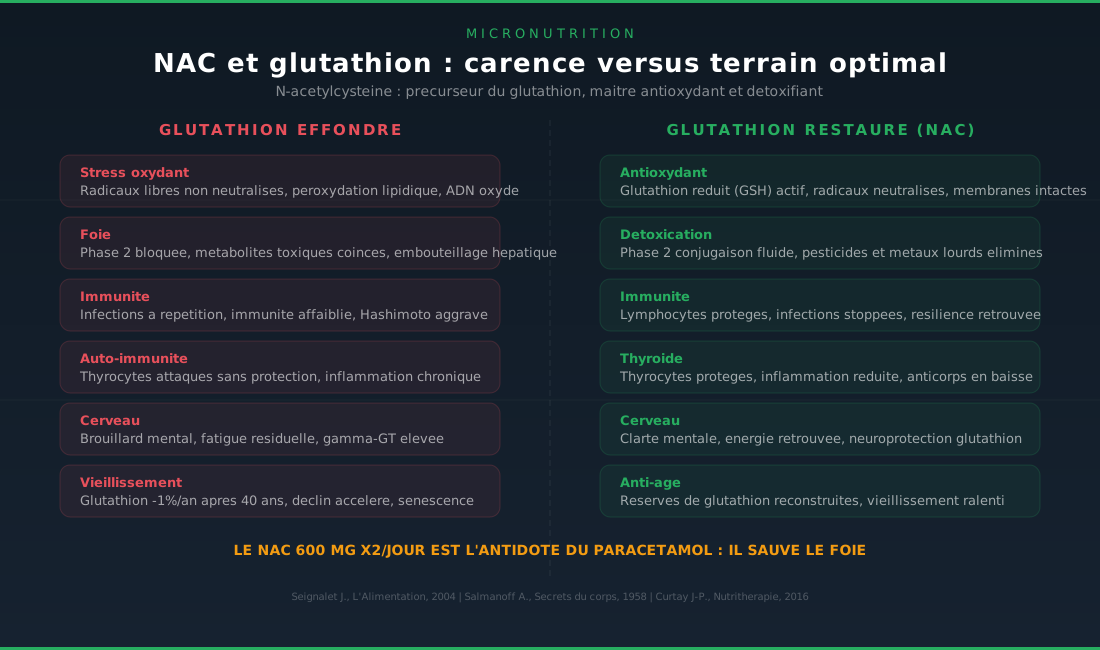
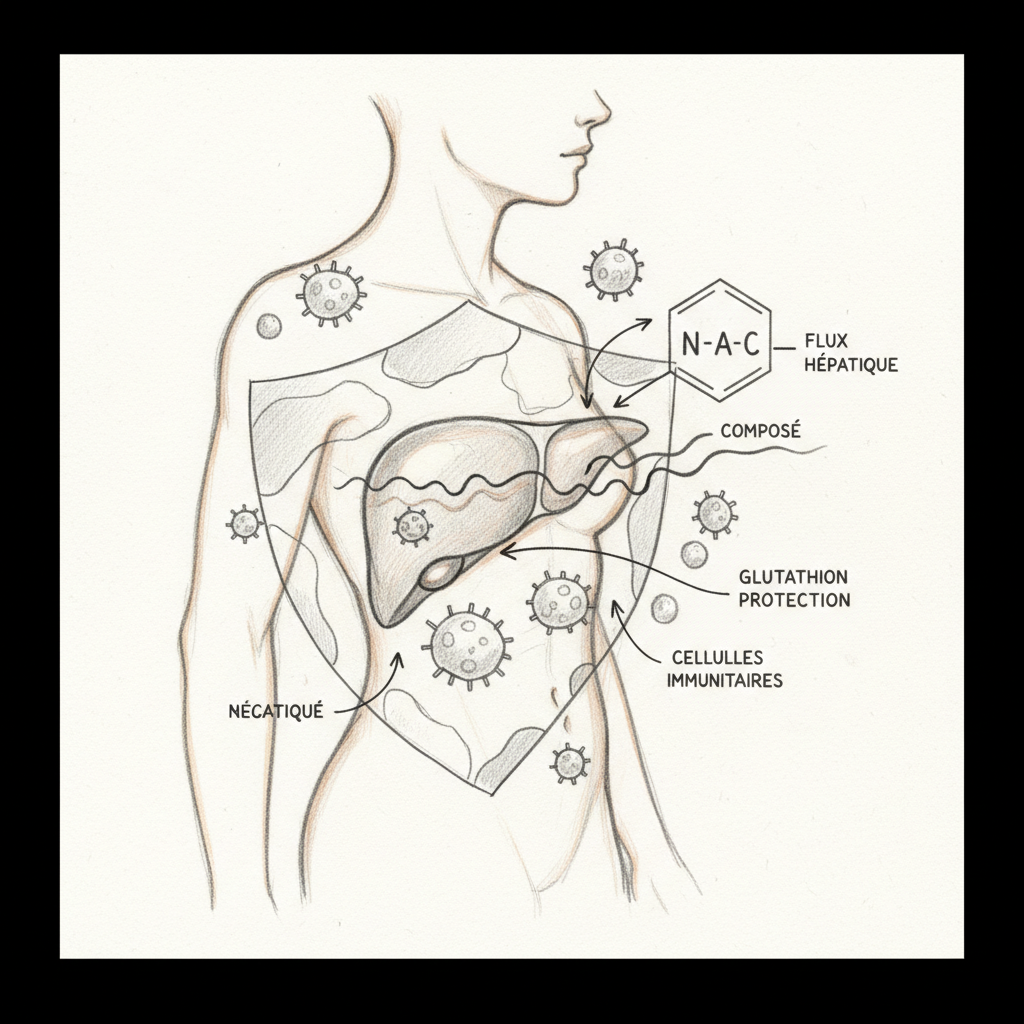
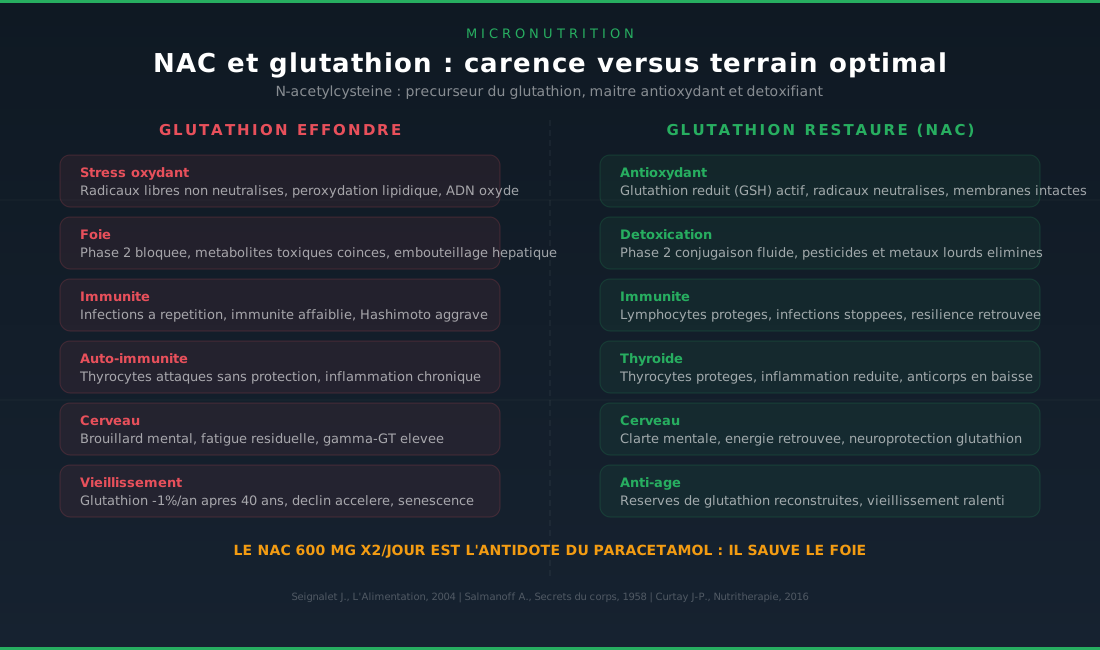
Glutathione is a tripeptide composed of three amino acids: cysteine, glycine, and glutamic acid. It is present in every cell of the human body. Every cell. It is the most powerful endogenous antioxidant, the one your body manufactures itself when it has the means. Its role is triple: neutralizing free radicals (oxidative stress), detoxifying xenobiotics (pesticides, medications, heavy metals) via hepatic phase 2 conjugation, and modulating the immune system.
Seignalet, in Food or Third Medicine, accorded considerable importance to oxidative stress in the genesis of autoimmune diseases. He wrote: “Excess free radicals are both cause and consequence of chronic inflammation. It is a vicious circle that only strengthening antioxidant defenses can break.” Glutathione is at the heart of these defenses.
The problem is that glutathione levels collapse in many situations: chronic stress, viral infections (EBV, cytomegalovirus), exposure to toxins (pesticides, heavy metals, pollution), alcohol consumption, acetaminophen use (which directly depletes hepatic glutathione reserves), protein-poor diet lacking sulfur compounds, and aging. After forty years, glutathione production decreases by approximately 1% per year. In patients with autoimmune diseases like Hashimoto’s, levels are often dramatically low.
Why NAC and not glutathione directly
The question is legitimate. If glutathione is the weapon, why take its precursor rather than the weapon itself? The answer is pharmacokinetic. Glutathione taken orally is very poorly absorbed. Digestive enzymes break it down into its three constituent amino acids before it reaches the bloodstream. It’s like sending an already-assembled IKEA piece of furniture through the mail: it arrives in pieces.
Liposomal glutathione (encapsulated in phospholipids) partially circumvents this problem, but it’s expensive and studies on its bioavailability are still limited. NAC, on the other hand, is well absorbed orally (bioavailability of 6 to 10%, which is correct for an amino acid), and once inside the cell, it provides the cysteine that is the limiting factor in glutathione synthesis. In other words, NAC gives your cells the brick they’re missing to build their own glutathione. It’s more elegant, more physiological, and much cheaper.
NAC and autoimmunity: the mechanisms
In autoimmune patients, NAC acts on at least four fronts.
The first is reducing oxidative stress. The autoimmune attack against the thyroid (in the case of Hashimoto’s) generates a massive amount of free radicals that damage surrounding cells and sustain inflammation. Glutathione (restored thanks to NAC) neutralizes these radicals and protects still-functional thyroid cells. Every thyroid cell saved today is a cell that will produce hormones tomorrow.
The second is supporting hepatic detoxification. The liver is the central organ of detoxification. It functions in two phases: phase 1 (oxidation, via cytochrome P450) transforms lipid-soluble toxins into intermediate metabolites, and phase 2 (conjugation) makes them water-soluble for elimination via bile or kidneys. The phase 2 conjugation via glutathione is one of six conjugation pathways, and it’s the one that handles pesticides, solvents, heavy metals, and many medications. Without sufficient glutathione, these toxins remain blocked between the two phases as intermediate metabolites that are paradoxically more toxic than the original molecules. This is the famous “hepatic traffic jam” that naturopathy has described for decades.
Salmanoff, in Secrets and Wisdom of the Body, already described this phenomenon without knowing about glutathione: “A liver that no longer filters is a liver that poisons. The organ of purification becomes a source of toxemia when its capacities are exceeded.” NAC restores the liver’s filtering capacities.
The third front is immune modulation. Glutathione regulates the balance between Th1 lymphocytes (cellular immunity) and Th2 (humoral immunity). In Hashimoto’s, this balance is often disrupted with Th1 overactivation that attacks the thyroid. NAC helps rebalance this equilibrium without immunosuppression (unlike corticosteroids which shut down the entire immune system indiscriminately).
The fourth front is intestinal support. Glutathione protects the intestinal mucosa against oxidative stress and inflammation. An inflamed intestine (which is the rule in autoimmunity, as Seignalet demonstrated) is a permeable intestine. NAC, by protecting the mucosa, helps restore the intestinal barrier. It’s a natural complement to the intestinal repair protocols I detail in my approach to naturopathy basics.
What NAC is NOT
There is much misinformation circulating around NAC, especially since the pandemic. Let’s clarify three important points.
NAC is NOT a heavy metal chelator. It won’t pull mercury from your dental amalgams or lead from your bones. Chelation is a specific chemical process that requires molecules like EDTA, DMSA, or DMPS, prescribed by trained physicians. NAC supports the liver’s natural detoxification pathways, which helps the body indirectly eliminate metals, but it doesn’t “pull” them from tissues. This distinction is important because improperly conducted true chelation can redistribute metals in the brain and worsen symptoms.
NAC is also NOT a direct antibiotic or antiviral. It doesn’t kill bacteria or viruses. It strengthens the immune system so it does its job better. It’s the difference between giving a gun to a soldier and giving him food and rest. NAC feeds and rests your immune system.
Finally, NAC is NOT a harmless supplement for everyone. People sensitive to sulfur (and they are numerous among autoimmune patients) may react poorly. Sulfur is metabolized by the CBS pathway (cystathionine beta-synthase). Certain CBS genetic variants accelerate this metabolism and produce excess sulfite and sulfate that cause headaches, nausea, bloating and skin reactions. If you don’t tolerate eggs, garlic, onions, or cruciferous vegetables well, start with a very low NAC dose (300 mg) and increase gradually.
NAC protocol in practice
The standard dose is 600 mg once to twice daily, totaling 600 to 1200 mg. For deep detoxification protocols or active autoimmunity, some practitioners increase to 1800 mg daily (600 mg three times) for limited periods of three to six months. I always start at 600 mg daily for two weeks to assess tolerance before increasing.
NAC is ideally taken with a meal (to avoid nausea, which is the most frequent side effect on an empty stomach). It can be taken at any time of day. If you’re taking thyroid medication, allow 30 to 60 minutes between the two as a precaution. The minimum duration to observe effects on biological markers (erythrocyte glutathione, CRP, gamma-GT) is three months.
To maximize glutathione production, I often combine NAC with its two other precursors: glycine (2 to 5 g daily, a very affordable and very safe amino acid) and selenium (200 micrograms as selenomethionine). Selenium is a cofactor of glutathione peroxidase, the enzyme that “recycles” oxidized glutathione into reduced (active) glutathione. Without sufficient selenium, glutathione doesn’t regenerate properly. This is a point I also address in the article on zinc and deficiencies, as these micronutrients form an interconnected network.
Sulfur-containing foods: natural cofactors
Even before considering the supplement, diet can provide some glutathione precursors. Foods rich in cysteine (the limiting factor) are animal proteins (meat, fish, eggs, whey protein), garlic, onion, leeks, cruciferous vegetables (broccoli, cauliflower, Brussels sprouts, arugula), legumes, and nuts.
Broccoli deserves special mention. It contains sulforaphane, a sulfur-containing compound that activates the Nrf2 pathway, the “orchestra conductor” of cellular antioxidant defenses. Nrf2 activation increases the production of glutathione, superoxide dismutase, catalase, and a dozen other protective enzymes. Three to five servings of cruciferous vegetables per week constitute considerable natural antioxidant support. Broccoli sprouts are even more concentrated in sulforaphane than mature broccoli (up to one hundred times more).
The spring detox I recommend every year naturally integrates these sulfur-containing foods into a progressive cleansing program that supports hepatic phase 1 and phase 2 pathways.
Cautions
NAC is contraindicated in case of active gastric ulcer (it can irritate the mucosa). It should be used with caution in asthmatics (rare cases of bronchospasm have been reported with the nebulized form, not with the oral form). People on anticoagulants should inform their doctor as NAC has a slight anticoagulant effect.
If you take acetaminophen regularly (more than twice per week), NAC is particularly indicated because acetaminophen is one of the greatest consumers of hepatic glutathione. It’s actually NAC that’s used in hospital emergency care to treat acetaminophen poisoning, precisely because it urgently reconstitutes glutathione reserves.
Finally, NAC is not a substitute for the fundamentals: anti-inflammatory diet, restorative sleep, stress management, moderate exercise. It is a complement (in the literal sense) that amplifies the effects of a healthy lifestyle. Taking NAC while continuing to eat ultra-processed foods, sleeping five hours a night, and living under chronic cortisol, it’s like adding oil to an engine running without coolant. NAC helps, but it doesn’t do everything.
Mouton sums up this philosophy well in his guide to intestinal ecosystem: “The body possesses remarkable self-healing capacities. Our role is not to heal it but to provide it with the tools it needs to heal itself.” NAC is one of these tools. Perhaps the most underestimated of all.
Want to evaluate your status? Take the free toxemia acids questionnaire in 2 minutes.
If you want personalized support, you can book a consultation.
To cook healthily, discover PranaCook stainless steel utensils, without endocrine disruptors.
To go further
- Hertoghe Diet: the dietary protocol that optimizes your thyroid
- Thyroid: the 7 nutrients your endocrinologist never tests
- Oxidative balance: Dr. Brack’s test to measure your oxidative stress
- Carnitine and thyroid: the molecule nobody tests
Want to evaluate your status? Take the free Claeys thyroid questionnaire in 2 minutes.
Healthy Recipe: Alkalizing green juice: Celery supports glutathione detoxification.

Laisser un commentaire
Sois le premier à commenter cet article.