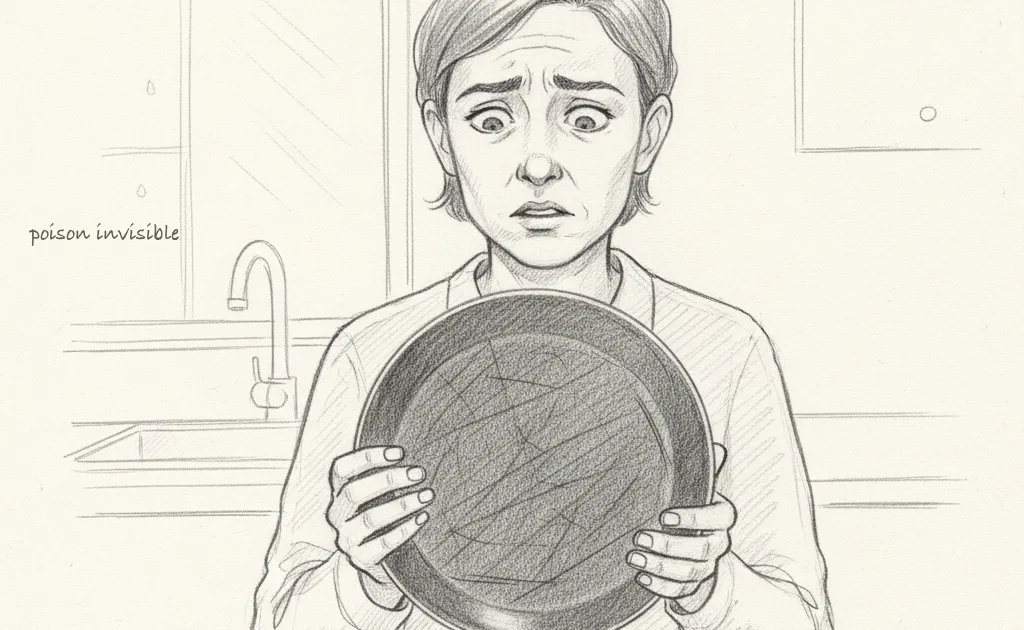
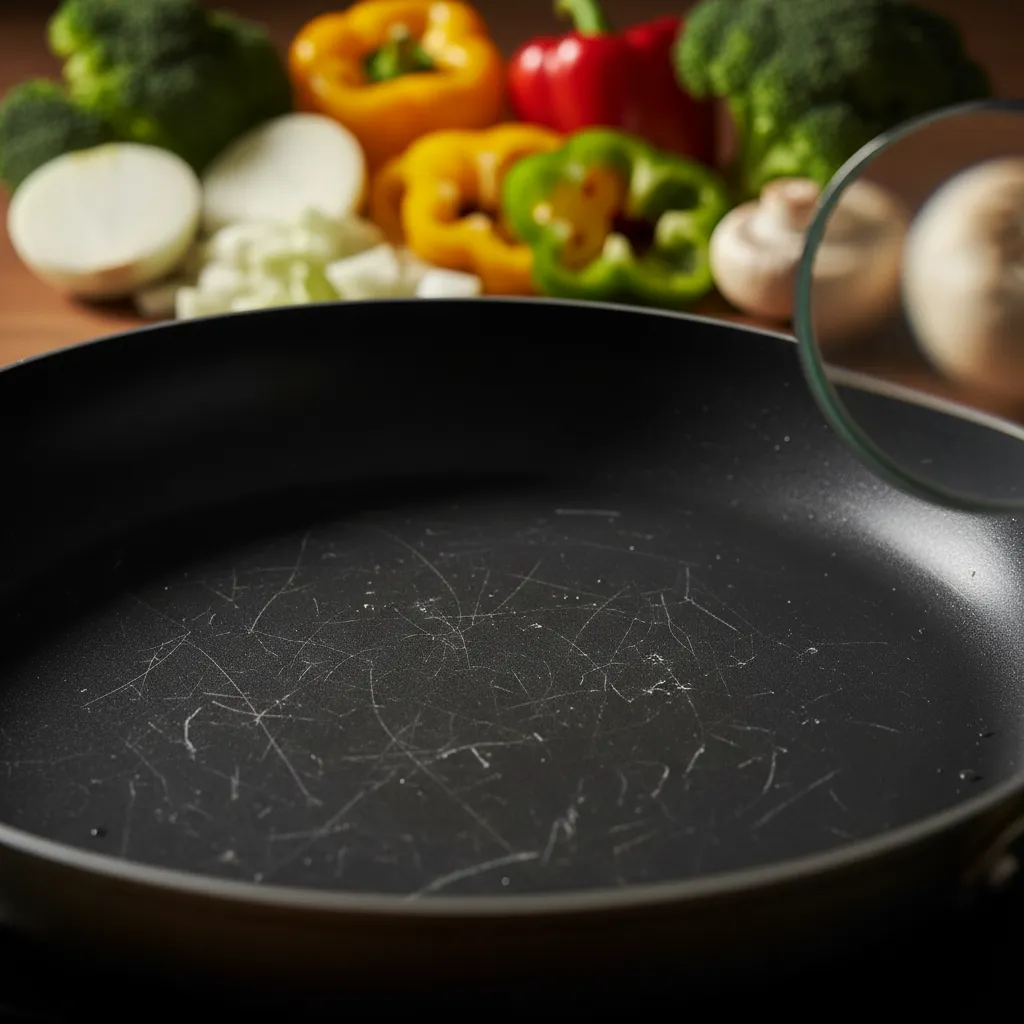
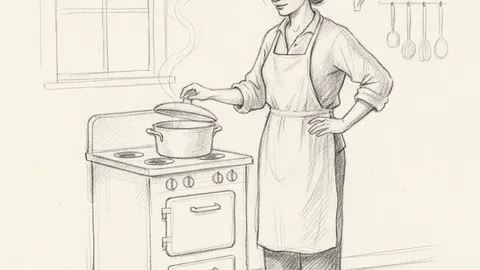
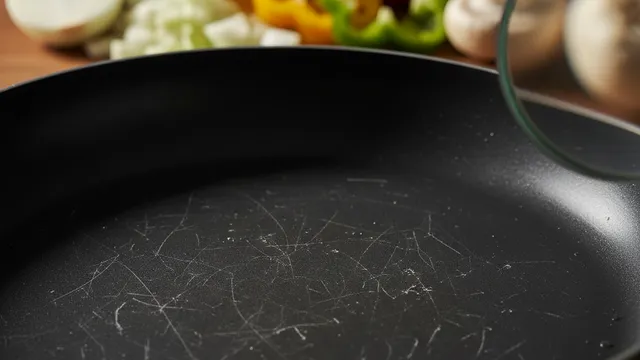
Carole showed me her pan during a consultation the other day. A non-stick pan bought eight months ago, already scratched all over, the coating starting to peel off in places. “I’m careful, I only use wooden spatulas,” she told me. I asked her how many times a week she cooked with it. Every day. Seven days a week, her family ate food cooked on a decomposing coating. And no one had ever explained to her what was really happening in her pan.
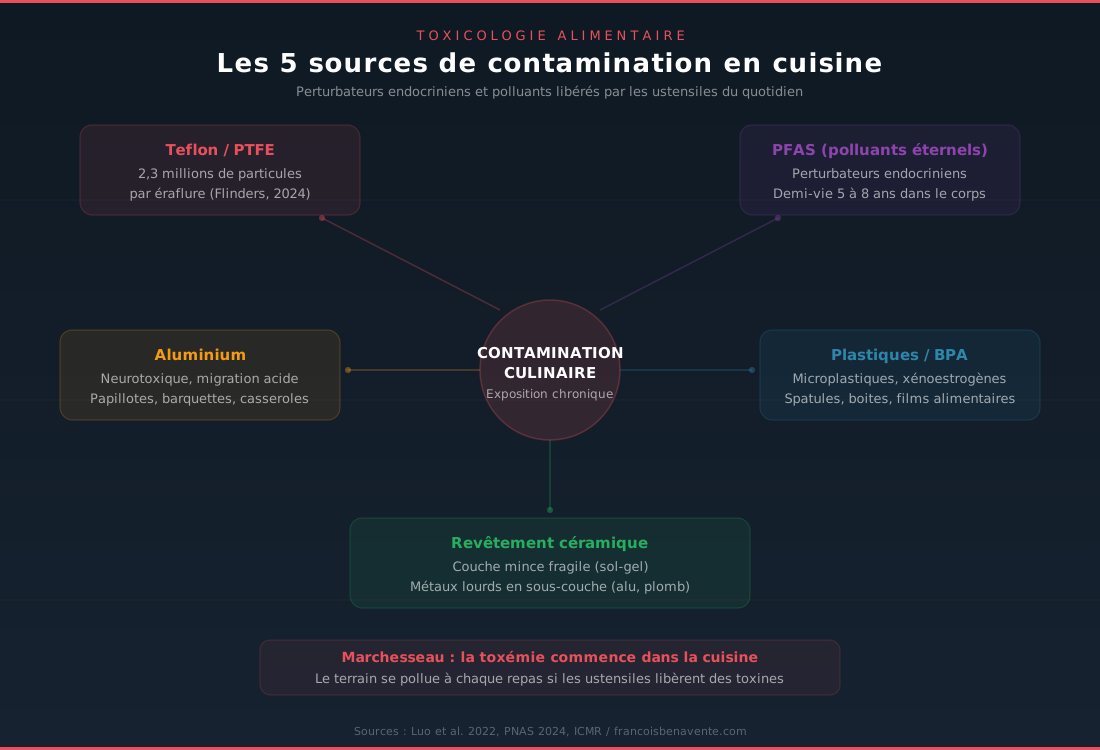
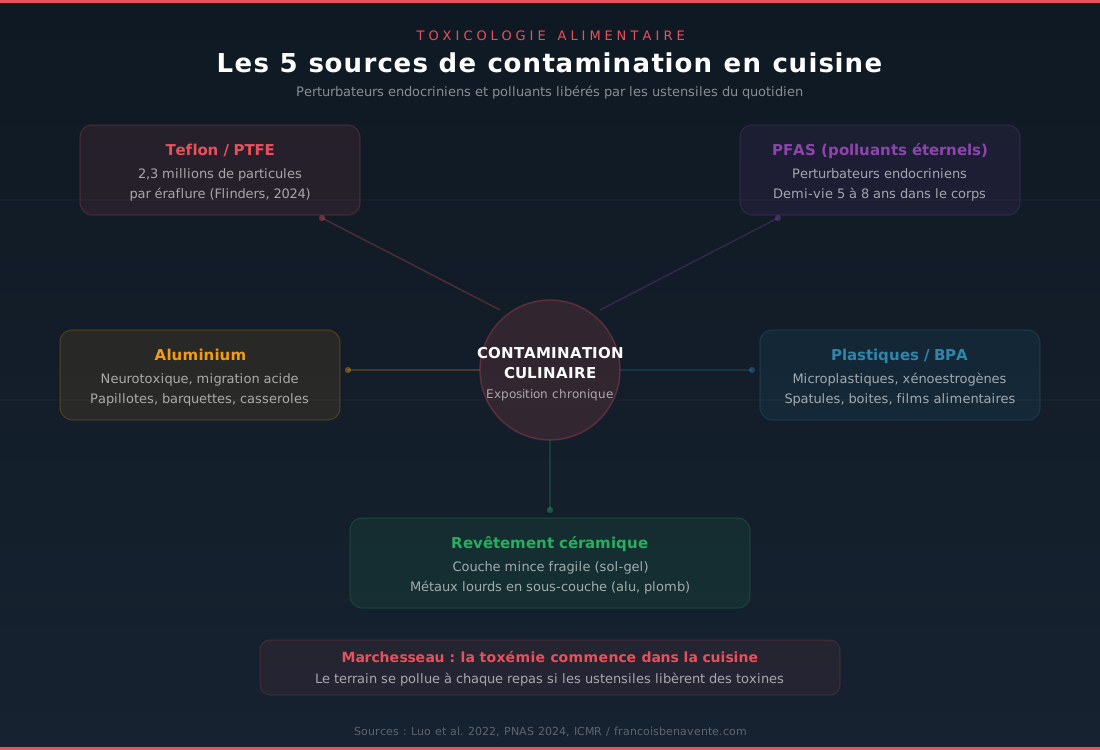
What Carole didn’t know is that each scratch on a non-stick pan releases up to 2.3 million microparticles into food. This figure doesn’t come from an alarmist blog. It comes from a research team at Flinders University in Australia, published in 2024 in PNAS. Two point three million. Per scratch. Per cooking session.
“Disease is nothing, the terrain is everything.” Antoine Béchamp
This phrase, which Marchesseau took up to build the entire naturopathic philosophy, takes on new meaning when you look at what happens in our kitchens. Because the terrain, the one naturopaths have been talking about for a century, is also polluted by the cookware. Not just by what we eat, but by what we prepare it in.
The kitchen as an invisible source of toxemia
In naturopathy, we talk about toxemia to describe this overload of the body with substances it can no longer eliminate. Marchesseau distinguished endogenous toxemia, which comes from cellular metabolism, from exogenous toxemia, which comes from the outside. And in this exogenous toxemia, food occupies first place. But when Marchesseau wrote his treatises in the 1950s, no one cooked with Teflon. No one wrapped leftovers in plastic film. No one reheated food in aluminum containers.
Today, the kitchen has become the primary site of chronic exposure to endocrine disruptors. Not massive and one-time exposure like an industrial accident, but low, repeated, daily exposure over years. This is exactly the type of exposure Salmanoff described in his works on “diseases of civilization” : not a violent poison, but slow, invisible poisoning that eventually overwhelms the body’s elimination capacity.
Teflon and PTFE : the biggest scam in the culinary industry
Polytetrafluoroethylene, better known by the trademark Teflon, is a fluorinated polymer invented by DuPont in the 1930s. Its success rests on an attractive property : nothing sticks. But this property has a price that the industry took decades to acknowledge.
The Indian Council for Medical Research, the ICMR, was among the first organizations to officially alert : above 170 degrees, a non-stick pan releases toxic fumes. 170 degrees is the temperature your pan reaches in less than three minutes on medium heat. In other words, almost all cooking exceeds the coating’s safety threshold.
But the problem doesn’t stop at fumes. A study published in 2022 by Luo and colleagues demonstrated that PTFE, even at infinitesimal doses on the order of 10 to the minus 12 molar, stimulates cancer cell proliferation. The team worked on two cell lines : DU145 (prostate cancer) and MCF7. At concentrations the industry qualifies as “negligible,” tumor growth accelerated. We’re very far from the “perfectly safe” displayed on packaging.
When I visited utensil manufacturing plants in India with PranaCook, I observed something revealing : workers who worked daily with these materials refused to cook with Teflon at home. They only used stainless steel. The people who make these pans don’t use them.
PFAS : the eternal pollutants that come to your table
PFAS, or per- and polyfluoroalkyl substances, are a family of over 4,700 chemical compounds used in non-stick coatings, but also in food packaging, stretch films, and some baking molds. They’re called “eternal pollutants” because their chemical structure is so stable that neither the human body nor the environment can break them down. Their half-life in the body is 5 to 8 years. This means that if you absorb PFAS today, in five years, half of it will still be in your blood.
PFAS are proven endocrine disruptors. They interfere with thyroid function, disrupt sex hormone metabolism, and are associated with increased risk of hormone-dependent cancers. For women suffering from painful periods or thyroid disorders, this daily culinary contamination adds another layer to an already established imbalance.
The most perverse part of the story is that these substances accumulate. Every meal cooked in a non-stick pan, every leftover stored in a plastic container, every container reheated in the microwave adds its dose. The body has no enzymatic mechanism to break down PFAS. The liver doesn’t know how to transform them, the kidneys can’t filter them effectively. It’s like filling a bathtub whose drain is plugged.
Aluminum : the neurotoxin hiding in your foil packets
Aluminum is the third most abundant element in the Earth’s crust, but it has no known biological function in humans. Zero. Our body doesn’t need it and doesn’t know what to do with it when it receives it. Yet millions of households cook daily with aluminum utensils, aluminum foil packets, aluminum containers.
The main problem with aluminum is its reactivity in contact with acids. A tomato sauce simmered in an aluminum pot, fish cooked in foil with lemon, vinegar heated in a large pot : each time, aluminum ions migrate into the food. A 1992 study measured this migration and the results were significant, especially during long cooking at elevated temperature.
Aluminum is a recognized neurotoxin. Its accumulation in brain tissue is associated with cognitive disorders and is the subject of active research in neurology. In naturopathy, we know well the link between toxic overload and tissue degeneration : this is exactly the mechanism Marchesseau described when talking about progressive humoral congestion.
Plastics : the xenoestrogens of daily life
BPA, bisphenol A, was banned in baby bottles in France in 2013. But its replacements, BPS and BPF, present similar toxicological profiles. Food plastics, whether spatulas, storage boxes, stretch films, or cutting boards, release microplastics and endocrine disruptors, especially when exposed to heat.
Microplastics are now found in human blood, in the placenta, in breast milk. A recent study estimates that we ingest the equivalent of a credit card in plastic each week. And the kitchen is one of the main vectors of this contamination : plastic spatulas that melt when touching hot pans, plastic containers reheated in the microwave, food films that touch hot food.
For anyone working on their naturopathic terrain, eliminating plastics from the kitchen should be a priority just as much as choosing organic food. What’s the point of eating organic vegetables if you cook them in a pan that releases microparticles and store them in a container that leaches xenoestrogens ?
Ceramic : the false ecological friend
Ceramic pans are everywhere in organic stores and “zero waste” shops. They’re presented as the clean, natural, ecological alternative. The reality is more nuanced. The ceramic coating is a thin layer deposited by a sol-gel process. This layer is fragile : a few months of use is enough to wear it, scratch it, crack it.
And under this ceramic coating, what do we find ? Generally aluminum. Sometimes heavy metals used in the manufacturing process. When the coating wears out, and it wears out quickly, these materials come into direct contact with food. A ceramic pan’s lifespan rarely exceeds 1 to 3 years, after which it becomes potentially more dangerous than bare aluminum.
It’s a pattern I find often in consultation : patients very concerned about their diet, who buy organic, who avoid gluten and lactose, but who cook in utensils that contaminate each meal. Marchesseau’s exogenous toxemia doesn’t come just from what we eat, it also comes from what we prepare it in.
The solution exists : surgical-grade 18/10 stainless steel
There is one material that releases nothing. Zero particles, zero PFAS, zero aluminum, zero plastic. 18/10 stainless steel, also called surgical-grade stainless steel, is composed of 18% chromium and 10% nickel. This composition makes it chemically inert : it doesn’t react with food, even acidic, even at high temperature.
18/10 triply stainless steel, the high-end version where three layers are stamped together (stainless steel interior, conductive aluminum in the center, magnetic stainless steel exterior), also offers homogeneous heat distribution and compatibility with all cooktops, including induction. A well-made utensil lasts more than 20 years. Not 8 months like Carole’s pan. Twenty years.
When I created PranaCook, this was exactly the philosophy that guided me : to offer 18/10 triply stainless steel utensils at an accessible price, because health shouldn’t be a luxury. Surgical-grade stainless steel isn’t professional equipment reserved for chefs. It’s good naturopathic sense applied to everyday kitchen cooking.
How to detoxify your kitchen in 3 steps
You don’t need to replace everything at once. The transition can be gradual. Start with what’s most contaminating : the non-stick pan you use every day. Replace it with a triply stainless steel pan. Next, eliminate plastic spatulas and utensils, replace them with wood or stainless steel. Finally, abandon plastic containers for glass or stainless steel.
To neutralize toxins already accumulated, work on the emunctories is essential. The liver, the main detoxification organ, needs its cofactors to function : zinc, selenium, B vitamins, glutathione. A food purifier can also help reduce the toxic load from food itself.
PFAS doesn’t break down spontaneously in the body. But a strong terrain, a functional liver, open emunctories, and a diet rich in antioxidants allow us to limit the damage from this chronic contamination. This is the whole philosophy of naturopathy : we can’t always avoid poison, but we can strengthen the terrain so it resists better.
Limits and common sense
I’m not alarmist and I’m not claiming that cooking with a non-stick pan will make you sick overnight. The human body is remarkably resilient. But modern toxicology teaches us that it’s the accumulated dose that makes the poison, and when this dose accumulates three times a day, seven days a week, over years, the terrain eventually becomes clogged.
If you’re taking medication, if you’re on hormone therapy, if you’re pregnant or breastfeeding, the question of endocrine disruptors in your utensils deserves to be discussed with your doctor. Naturopathy doesn’t replace medical supervision. It complements it by offering a global vision of the terrain that includes what conventional medicine doesn’t always look at : daily environment, including what happens in the kitchen.
Want to assess your overall toxic overload ? Take the vitality-toxemia questionnaire in 2 minutes.
Carole came back to see me two months later. She had replaced her pan, her spatulas, her storage boxes. “It’s funny,” she told me, “I only changed my utensils, and yet I have the impression my dishes taste better.” It wasn’t an impression. When food is no longer contaminated by microparticles of fluorinated polymer, it regains its natural flavor. The terrain also regains its freedom.
My tools for a kitchen without disruptors

Find all my partnerships.
“Let your food be your first medicine.” Hippocrates. As long as the container holding it isn’t your first poison.
To go further
- 18/10 Stainless steel : why a naturopath only cooks with this
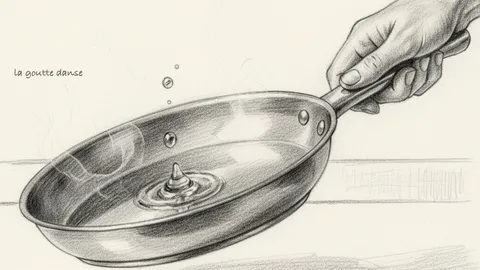
- Cooking with stainless steel without sticking : the water droplet test
- Gentle cooking : preserving nutrients that heat destroys
- Fluorine and thyroid toxins : the audit of your home in 9 points
Healthy recipe: Ratatouille with gentle cooking: Cooking with stainless steel to avoid disruptors.


Laisser un commentaire
Sois le premier à commenter cet article.
Les commentaires ne se chargent pas pour le moment. Réessaie dans quelques minutes.