Her name is Martine, she is 57 years old, and she no longer has the strength. Diagnosed with type 2 diabetes ten years ago, she weighs 85 kilos for 1.62 meters, her BMI is 30. Her doctor prescribed her metformin, an antihypertensive, an antidepressant, and an anticonvulsant for neuropathic pain. Four medications. She is tired in the morning, she has energy crashes after meals, her legs feel heavy, she gets out of breath climbing stairs. When asked if she exercises, she says she no longer has the “energy” for it. Her doctor has never prescribed physical activity for her1.
When Prof. Damien Vitiello, Senior Lecturer in exercise physiology, presents the data at the Micronutrition DU, he begins with a brutal finding: chronic diseases: diabetes, cardiovascular diseases, cancers: are the leading causes of mortality in the world. And for each of them, physical activity produces results comparable to or greater than medications. Yet it is rarely prescribed.
“Everything remains to be done now for the supervised practice of adapted physical activities in the treatment of chronic pathologies.” Prof. Damien Vitiello, DU in Micronutrition
Type 2 diabetes: a disease of muscle
Type 2 diabetes is a cause of premature mortality in France: 32,000 deaths per year, with life expectancy reduced to 74 years for men and 80 years for women. Its prevalence has increased by 5.4% per year since 2000. It mainly affects adults after age 40, with an average diagnosis at age 57. Risk factors are sedentary lifestyle, abdominal obesity, and history of large babies over 4 kilos2.
What Vitiello shows from the outset is that type 2 diabetes is not only a disease of the pancreas. It is a disease of muscle. Resistance to insulin leads to decreased muscle strength, especially of the fast type II fibers. This reduction in strength is linked to three mechanisms: muscle atrophy, a decrease in specific strength, and alterations of the motor neuron or neuromuscular junction3. The diabetic muscle loses its ability to capture glucose. And the less it captures, the higher blood sugar climbs. A vicious cycle.
AMPK: the sensor that changes everything
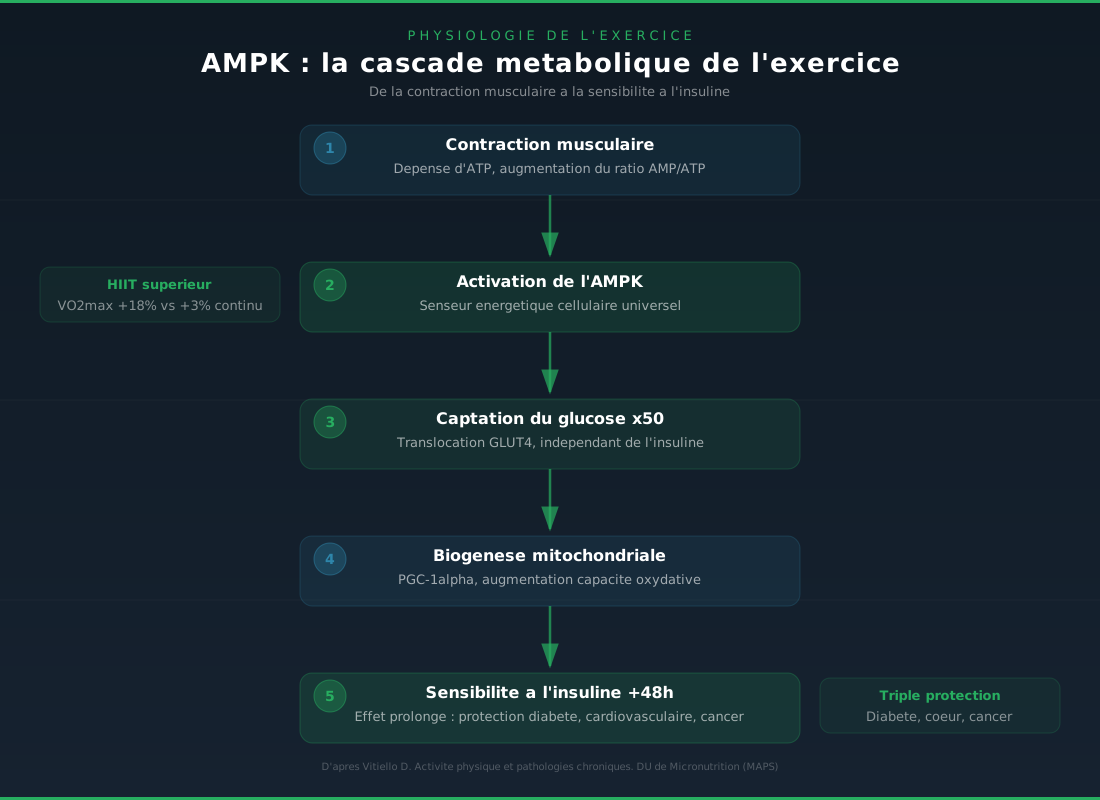
The central mechanism by which exercise combats diabetes is AMPK (AMP-activated protein kinase), the energy sensor of the cell4. When muscle contracts, ATP expenditure increases and the AMP/ATP ratio rises. AMPK activates and triggers a cascade of metabolic events.
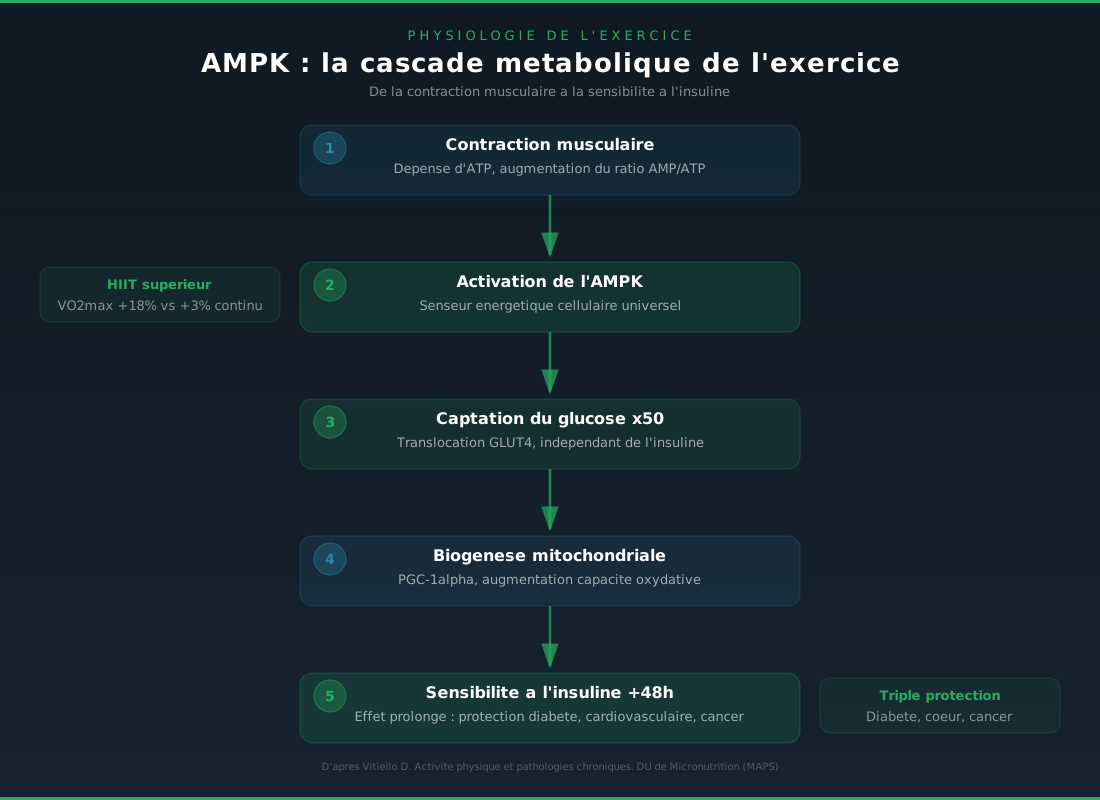
Glucose uptake by the skeletal myocyte is multiplied by 50 compared to rest during exercise. More than 1,000 phosphorylation sites are regulated in human muscle during effort. The intensity and duration of exercise vary this uptake. And the improvement in insulin sensitivity persists for up to 48 hours after exercise5. This is not a transient effect. It is a metabolic reprogramming of muscle.
Exercise increases muscle sensitivity to insulin, but it has no impact on the response of pancreatic beta cells. This means that exercise does not cure the pancreas. It bypasses the problem by making muscles more efficient at capturing glucose, even with less insulin6.
Results comparable to medications
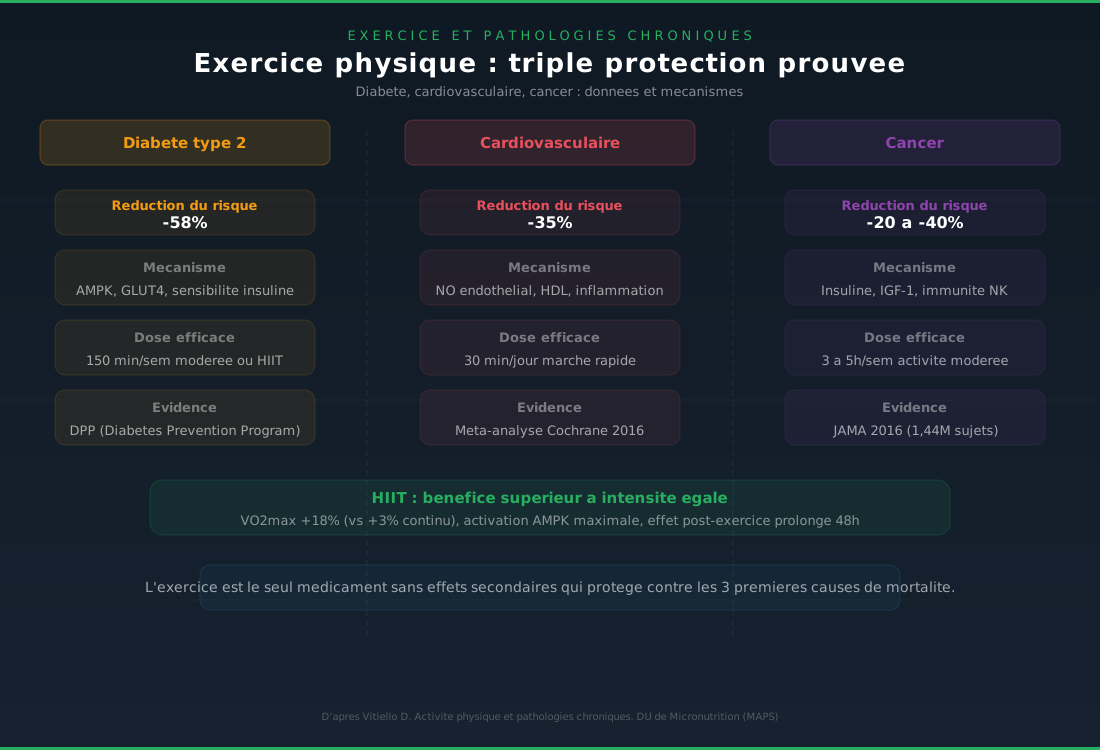
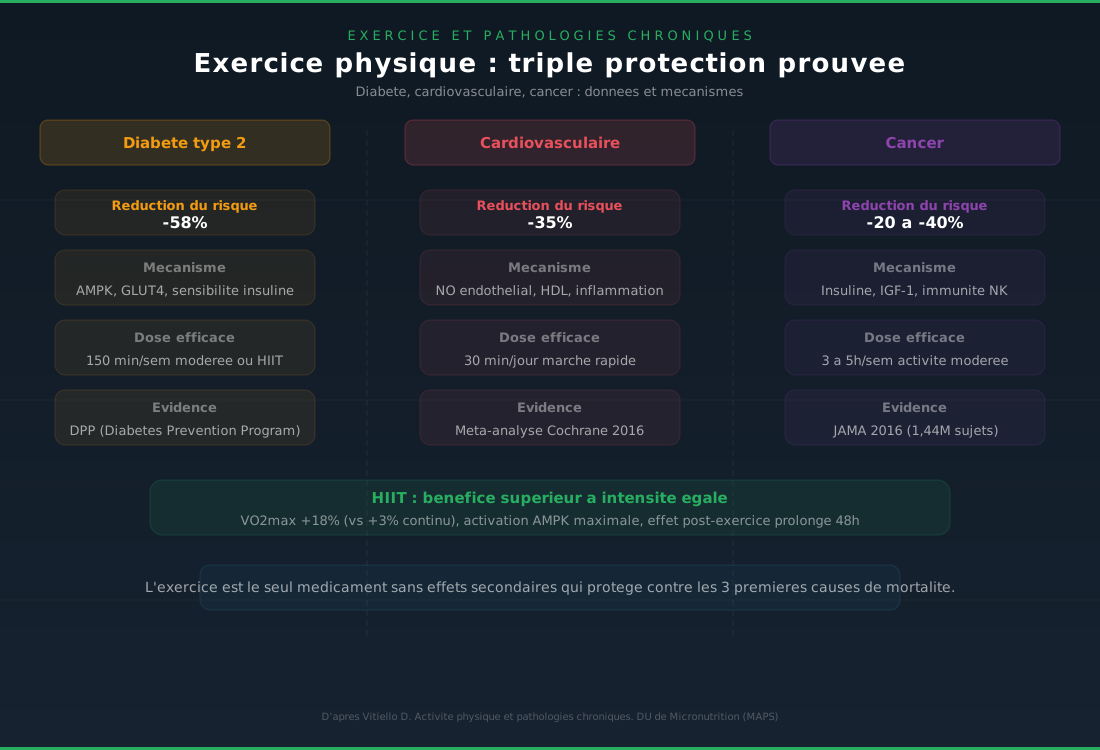
The figures are unambiguous. Vitiello presents the most solid meta-analyses. The ADVANCE study (11,000 patients, 5 years follow-up) and the EPIC study (6,000 patients, 9 years follow-up) show that the more time and intensity of physical activity increase, the more mortality risk decreases7.
In 25 type 2 diabetic patients (57 years old, BMI 30), 16 weeks of resistance or endurance training produce a significant reduction in HbA1c with both forms of physical activity8. The Balducci study on 600 diabetic patients followed for 12 months shows that the supervised group (150 minutes per week of aerobic exercise at 55-70% of VO2max plus 4 resistance exercises at 60-80% of 1RM twice weekly) improves VO2max by 2.8 ml/kg/min and muscle strength by 11 kg in the upper limbs and 31 kg in the lower limbs9.
The most striking finding comes from the Chudyk and Petrella meta-analysis (2016) on 34 studies: a 0.6% reduction in HbA1c from exercise corresponds to 22% reduction in microvascular complications and 8% fewer myocardial infarctions. And the results are comparable to those of standard medical treatments in type 2 diabetes10. In other words: moving produces the same effect as metformin. Without the side effects.
HIIT: interval training that surpasses endurance
Vitiello devotes several slides to HIIT (High Intensity Interval Training). In 60 adults aged 33 with a BMI of 28, two HIIT protocols (10 × 1 minute at 90% of maximum heart rate, or 4 × 4 minutes at 90% of HRmax) practiced three times per week for 12 weeks significantly improve insulin sensitivity and body composition11.
The Boff study (2019) on 27 type 1 diabetic patients shows the superiority of HIIT even more clearly: +18% of VO2max after HIIT versus only +3% after continuous exercise12. HIIT stimulates hepatic glucose production more in type 1 diabetic patients by increasing adrenaline and noradrenaline secretion. The increase in blood lactate inhibits insulin action at the muscle level and provides a substrate for hepatic gluconeogenesis13.
The winning combination according to Vitiello: resistance + aerobic above 150 minutes per week. It is this combination that produces the greatest reduction in type 2 diabetes risk14. The optimal approach is multidisciplinary: quantitative nutritional advice (diet, caloric restriction) and qualitative (balanced nutrition), adapted physical activity with a recreational aspect, and psychological and behavioral approaches. All individualized15.
Cardiovascular diseases: leading cause of mortality worldwide
Cardiovascular diseases kill 17.5 million people per year worldwide: and as I explain in the article on the true culprits of cardiovascular risk, it is inflammation and oxidation that are responsible, not cholesterol, representing 31% of total worldwide mortality. Of these deaths, 7.4 million are due to coronary heart disease. In France, 37,700 coronary deaths in 200816. Risk factors are massively present in the population: 30% smokers, 31% hypertensive, 65% of women and 51% of men with abdominal obesity, 57% sedentary17.
What Vitiello demonstrates is that exercise does not merely prevent cardiovascular diseases. It treats them. Subjects who increase their physical activity over a 12 to 14 year period decrease their relative risk of coronary mortality by 66%18.
Mechanisms of cardioprotection through exercise
Exercise acts on the heart and blood vessels through direct and indirect mechanisms. Indirect effects are the improvement in lipid profile (HDL increases by 5%, LDL decreases by 3.7%, triglycerides by 5% if exercise intensity is 50-80% of VO2max three to five times per week), a decrease in blood pressure, and improvement in glucose tolerance and insulin sensitivity19.
Direct effects are more spectacular. Exercise causes remodeling of coronary vessel structure: increase in internal diameter, decrease in vascular resistances under the influence of local metabolites. It causes regression of atherosclerotic plaque by decreasing inflammation (reduction in CRP). It stimulates the development of collaterals, these backup vessels that bypass obstructed arteries20.
Exercise also decreases the risk of thrombosis by decreasing coagulation (reduction in fibrinogen and platelet activity), increasing fibrinolysis, increasing nitric oxide (NO, a powerful vasodilator) and HDL-cholesterol (platelet anti-aggregant). It decreases the risk of cardiac arrhythmia by improving autonomic control of the heart21. As I explain in the article on cholesterol and cardiovascular diseases, the true culprit is not cholesterol but inflammation and oxidative stress. Exercise acts directly on these two mechanisms.
The Cochrane review: definitive proof
The Cochrane review by Heran (2011), including 47 randomized studies on 10,794 patients, provides the most solid proof. After 12 months and longer follow-up, cardiac rehabilitation through exercise produces a reduction in cardiovascular mortality of 74%. In the short term (less than 12 months), it reduces hospitalizations by 69%22.
The Li and Siegrist meta-analysis (2012), including 21 prospective cohort studies, shows that coronary artery disease risk decreases by 15% and 21% respectively in men who engage in moderate (3-6 MET) and high intensity (above 6 MET) activities, compared to sedentary populations. In women, the reductions are even more marked23.
Exercise protects women more than men from myocardial infarction24. And the earlier physical activity occurs in life, the more beneficial the effects. Recommendations from the French Society of Cardiology: 20-60 minutes of endurance plus resistance training, 3 to 5 times per week, at 50-80% of maximum aerobic power25.
Heart failure: when the heart muscle becomes exhausted
Chronic heart failure (CHF) affects 1.13 million people in France, or 2.3% of the population. Its prevalence reaches 15% in those over 85 years old. Between 2002 and 2008, the number of patients hospitalized for CHF increased by 14.4%26.
The vicious cycle of CHF is terrible. 20% of patients with an ejection fraction below 40% develop sarcopenia compared to healthy subjects of the same age. 10% develop cardiac cachexia, due in part to medications. Myofibrillar proteins in the diaphragm and quadriceps degrade. Muscle catabolic stress results from exercise intolerance, ventilatory difficulties, and insulin resistance27. The patient no longer moves because he is weak, and he is weak because he no longer moves.
Exercise breaks this cycle. The Smart study (2012) on 565 CHF patients shows that training decreases BNP (a marker of cardiac failure) by 28.3%, NT-pro-BNP by 37.4%, and increases VO2max by 17.8%28. Anderson and Taylor (2014), in a review of 97,000 patients, confirm that CHF patients with an exercise program show a reduction in cardiovascular mortality at 12 months and an increase in quality of life29.
Cancer: exercise as an adjuvant to treatment
This is perhaps the most surprising part of Vitiello’s course. Cancer is the second leading cause of mortality worldwide since 1990, with 380,000 new cases in France in 201830. Treatments are aggressive: chemotherapies (anthracyclines, alkylating agents, anti-HER2 antibodies), surgery, radiotherapy. And these treatments have devastating side effects on muscle and the heart.
Anthracyclines like doxorubicin cause direct cardiotoxicity through oxidative stress (via Nox2): necrosis and apoptosis of cardiomyocytes, left ventricular dysfunction, arrhythmias, heart failure. At a cumulative dose of 400-450 mg/m², the incidence of heart failure reaches 5%, and 10% in those over 65 years old. The cardiovascular mortality rate exceeds 60% at two years31.
Age and treatments are determining factors for the development of sarcopenia and dynapenia in cancer patients. The Mijwel study shows that after 16 weeks of chemotherapy, citrate synthase (a mitochondrial marker), muscle fiber area, and SOD2 decrease significantly32.
Exercise counterbalances treatment toxicity
Aerobic physical activity is increasingly used as an adjuvant to anticancer treatment. It alleviates fatigue and decreased performance related to aggressive treatments. These effects are linked to deconditioning from hospitalization, to anemia induced by treatments, to drug toxicity on muscle metabolism, and to the cardiotoxic effects of chemotherapies33.
The Jones study (2017) on breast cancer is remarkable. Women who engage in 9 MET-hours per week or more (meaning 3 to 5 sessions of 20 minutes of moderate to vigorous intensity) show 23% fewer cardiovascular events than those who do less34.
The Mijwel study (2017) compares two HIIT protocols during chemotherapy for breast cancer: resistance-HIIT (2-3 sets, 8-12 repetitions at 70-80% of 1RM plus 3 × 3 minutes at high intensity) and aerobic-HIIT (20 minutes of continuous effort plus 3 × 3 minutes at high intensity), twice weekly for 16 weeks. The results are spectacular. Resistance-HIIT and aerobic-HIIT counterbalance the decrease in citrate synthase and muscle fiber area compared to standard care. Aerobic-HIIT upregulates the function of the electron transport chain. Resistance-HIIT promotes the increase of muscle satellite cells. Both protocols maintain or improve muscle function despite chemotherapy35.
Resistance training is more effective than aerobic exercise alone for reversing sarcopenia and dynapenia in cancer patients. Adams (2016) shows that resistance improves upper and lower limb muscle function more significantly than standard care or aerobic exercise alone36.
The MET: measuring exercise like dosing a medication
Vitiello uses the MET (metabolic equivalent) as a unit for exercise prescription: exactly like dosing a medication in milligrams. One MET corresponds to resting metabolism. Easy walking represents 3 MET, brisk walking or dancing 4-5 MET, jogging or intense swimming 6 MET and above37.
Recommendations converge toward a minimum of 150 minutes per week of moderate to vigorous physical activity, combining endurance and resistance. For diabetes, intensity should reach 55-70% of VO2max in aerobic exercise and 60-80% of 1RM in resistance. For coronary pathologies, 50-80% of maximum aerobic power, 3 to 5 times per week, with heart rate monitoring38.
But Vitiello insists on a fundamental point: individualization. 80% of type 2 diabetics have a BMI above 30, with joint problems and shortness of breath. Monitoring glycemia is essential. Cardiovascular monitoring too. Hypertension is a marker of long-term risk that must be monitored39.
Sport-Health Centers: prescribing movement
France created in 2020 the first Sport-Health Centers (SSC), 138 structures dedicated to supervised practice of physical activity for health and adapted physical activities for the treatment of chronic pathologies, long-term conditions, aging, and disability40.
It is a beginning, but Vitiello repeats three times in his course: “Everything remains to be done.” Studies mainly focus on common cancers (breast, prostate, colon), on young patients without comorbidities. Precise protocols (intensity, duration, frequency, type) remain to be defined for each pathology. Evaluation of long-term benefits on recurrence and the incidence of comorbidities is still insufficient41.
What muscle knows how to do
Martine did not need a fifth medication. She needed to be told that her muscle is an endocrine organ capable of reprogramming her metabolism. That each contraction activates AMPK and opens the doors to glucose. That 150 minutes per week of brisk walking and muscle strengthening produce the same results as metformin on her HbA1c. That HIIT: a few minutes of intense effort interspersed with recovery: improves her VO2max six times more than jogging.
Naturopathy places physical exercise among its fundamental pillars. Vitiello, from clinical research, provides the numerical evidence. 66% reduction in coronary mortality in those who have been physically active for 14 years. 74% reduction in cardiovascular mortality in cardiac rehabilitation. 23% reduction in cardiovascular events in women treated for breast cancer who exercise.
Physical activity is not a complement to treatment. It is a treatment in its own right. The oldest, the most studied, the best documented: and the least prescribed. It costs nothing, has no side effects at recommended doses, and its benefits persist 48 hours after each session. As Vitiello says: the first medication for the diabetic, the cardiac patient, and the cancer patient is a pair of sneakers. Mitochondria only want to work. You just have to call upon them.
To learn more
- Acetylcholine nature: the creative and intuitive profile according to Braverman
- Aldosterone: the forgotten hormone of your blood pressure and salt
- Breastfeeding: the maternal depletion that no one compensates
- Basedow and heart: calming the cardiac storm
Footnotes
-
Vitiello D. Physical activity and chronic pathologies. DU in Micronutrition (MAPS). Slide 4: “Side effects of type 2 diabetes treatments.” ↩
-
Vitiello D. DU in Micronutrition. Slide 2: “Type 2 DB = 32,000 deaths France, prevalence +5.4%/year since 2000.” ↩
-
Vitiello D. DU in Micronutrition. Slide 5: “Type 2 DB and muscular impacts: atrophy, specific strength, neuromuscular junction.” ↩
-
Vitiello D. DU in Micronutrition. Slide 21: “AMPK energy sensor of the cell.” ↩
-
Vitiello D. DU in Micronutrition. Slide 20: “Glucose uptake ×50, 1000 phosphorylation sites, insulin sensitivity 48h post-exercise.” ↩
-
Temple KA et al. (2019). Cited slide 18: “Increase insulin sensitivity, no impact pancreatic β cells.” ↩
-
Vitiello D. DU in Micronutrition. Slides 10-11: ADVANCE and EPIC studies. ↩
-
Bacchi E et al. (2012). Cited slide 13: “25 type 2 DB patients, 16 weeks, HbA1c reduction resistance and endurance.” ↩
-
Balducci S et al. (2012). Cited slide 14: “600 type 2 DB patients, 12 months, +2.8 ml/kg/min VO2max, +11 kg and +31 kg strength.” ↩
-
Chudyk and Petrella (2016). Cited slide 17: “0.6% HbA1c reduction = 22% fewer microvascular complications, 8% fewer infarctions. Results comparable exercise alone and medications.” ↩
-
RezkAllah and Takla (2018). Cited slide 19: “HIIT 10×1min 90% HRmax, 12 weeks, 3×/week.” ↩
-
Boff W et al. (2019). Cited slide 36: “+18% VO2max after HIIT vs +3% after continuous in type 1 DB.” ↩
-
Vitiello D. DU in Micronutrition. Slide 33: “HIIT and hepatic glucose production: adrenaline, lactate, growth hormone.” ↩
-
Grøntved A et al. (2012). Cited slide 12: “Combination resistance + aerobic >150 min/week.” ↩
-
Vitiello D. DU in Micronutrition. Slide 22: “Individualization: nutrition, PA, psychology, multidisciplinary.” ↩
-
Vitiello D. DU in Micronutrition. Slides 42-43: “CVD 17.5M deaths worldwide, 37,700 coronary deaths France 2008.” ↩
-
Vitiello D. DU in Micronutrition. Slide 44: “Risk factors French population.” ↩
-
Wannamethee SG et al. (1998). Cited slide 58: “12-14 years PA = -66% coronary mortality.” ↩
-
Erikssen G et al. (1998); Hambrecht R et al. (2000). Cited slide 59: “HDL +5%, LDL -3.7%, TG -5% at 50-80% VO2max 3-5×/week.” ↩
-
Erikssen G et al.; Hambrecht R et al.; Linke A et al. (2006). Cited slide 60: “Coronary remodeling, atherosclerotic plaque regression, collaterals.” ↩
-
Vitiello D. DU in Micronutrition. Slide 61: “Decreased thrombosis, fibrinogen, platelets, increased NO and HDL.” ↩
-
Heran BS et al. Cochrane Database Syst Rev 2011. Cited slide 62: “47 studies, 10,794 patients, -74% CV mortality at 12 months, -69% hospitalizations.” ↩
-
Li and Siegrist (2012). Cited slide 63: “21 studies, -15% and -21% coronary artery disease men moderate/high intensity.” ↩
-
Fransson E et al. (2004). Cited slide 58: “PA protects women more from infarction.” ↩
-
Vitiello D. DU in Micronutrition. Slide 65: “Endurance 20-60 min + resistance 3-5×/week, 50-80% MAP.” ↩
-
Vitiello D. DU in Micronutrition. Slide 69: “CHF 1.13M France, 15% of >85 years, +14.4% hospitalizations 2002-2008.” ↩
-
Vitiello D. DU in Micronutrition. Slide 78: “20% CHF sarcopenia, 10% cachexia, myofibrillar degradation.” ↩
-
Smart NA et al. (2012). Cited slide 87: “565 CHF patients, -28.3% BNP, -37.4% NT-pro-BNP, +17.8% VO2max.” ↩
-
Anderson and Taylor (2014). Cited slide 83: “97,000 patients, reduction CV mortality at 12 months CHF with exercise.” ↩
-
Vitiello D. DU in Micronutrition. Slides 93-94: “Cancer 2nd leading cause of worldwide mortality, 380,000 cases France 2018.” ↩
-
Vitiello D. DU in Micronutrition. Slides 103-104: “Anthracyclines: 5-10% CHF, CV mortality >60% at 2 years.” ↩
-
Mijwel et al. (2017). Cited slide 102: “16 weeks chemotherapy: decrease citrate synthase, fibers, SOD2.” ↩
-
Vitiello D. DU in Micronutrition. Slides 110-111: “PA adjuvant to treatment: deconditioning, anemia, toxicity, cardiotoxicity.” ↩
-
Jones et al. (2017). Cited slide 117: “≥9 MET-h/week = -23% CV events breast cancer.” ↩
-
Mijwel et al. (2017). Cited slides 119-123: “RT-HIIT and AT-HIIT counterbalance chemotherapy effects, electron transport chain, satellite cells.” ↩
-
Adams et al. (2016). Cited slide 124: “Resistance > aerobic to reverse sarcopenia and dynapenia.” ↩
-
Verschuren O et al. (2014). Cited slide 64: “MET = metabolic equivalent.” ↩
-
Vitiello D. DU in Micronutrition. Slides 65-66: “SFC and INSERM recommendations.” ↩
-
Vitiello D. DU in Micronutrition. Slide 23: “80% type 2 DB BMI >30, glycemia and CV monitoring essential.” ↩
-
Vitiello D. DU in Micronutrition. Slides 132-133: “138 Sport-Health Centers created in 2020.” ↩
-
Vitiello D. DU in Micronutrition. Slides 128-130: “Perspectives: common cancers, young patients, protocols to be defined.” ↩

Laisser un commentaire
Sois le premier à commenter cet article.