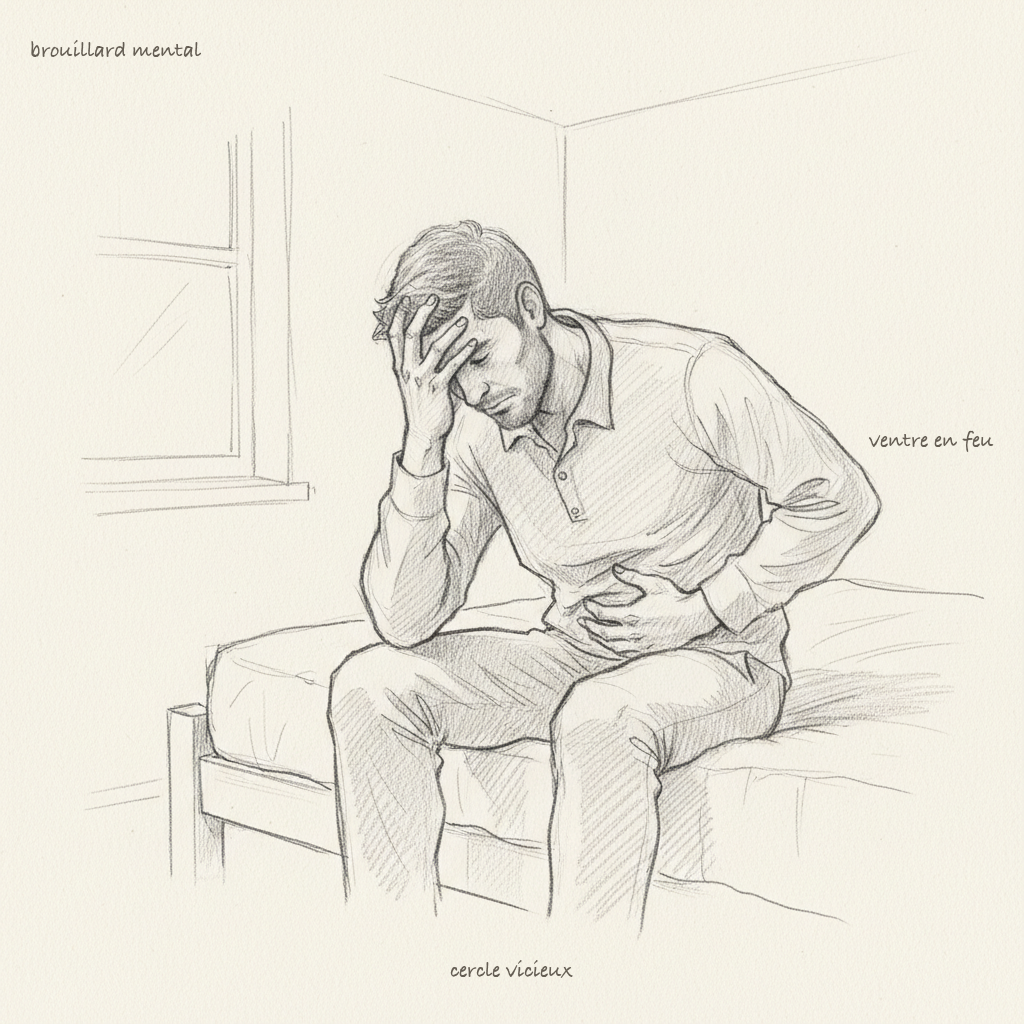
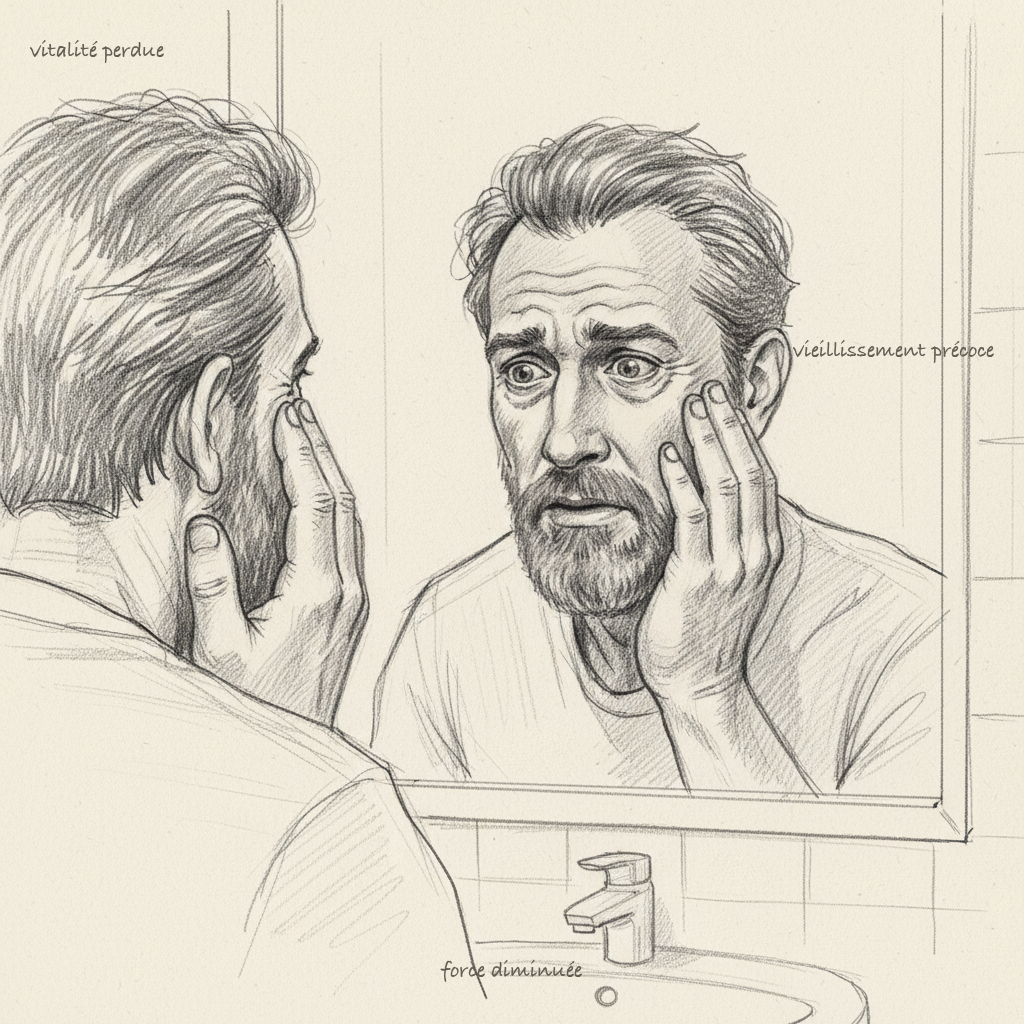
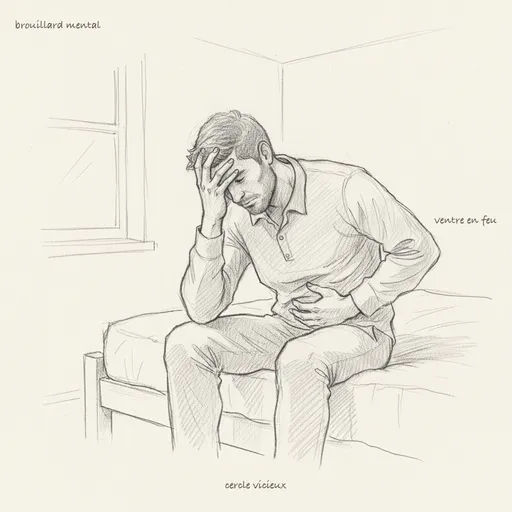
Thomas is thirty-five years old. He came to see me for fatigue that had been dragging on for two years. Not a passing slump. Daily, deep fatigue, accompanied by brain fog that prevented him from concentrating for more than twenty minutes at a stretch. He also had bloating after each meal, recurrent skin fungal infections on his feet and groin, a white tongue in the morning, and cravings for sugar so intense that he sometimes got up at night to eat bread. His doctor had prescribed three courses of Triflucan (fluconazole) in one year. The Candida kept coming back each time. With each relapse, Thomas was a little more fatigued than before.
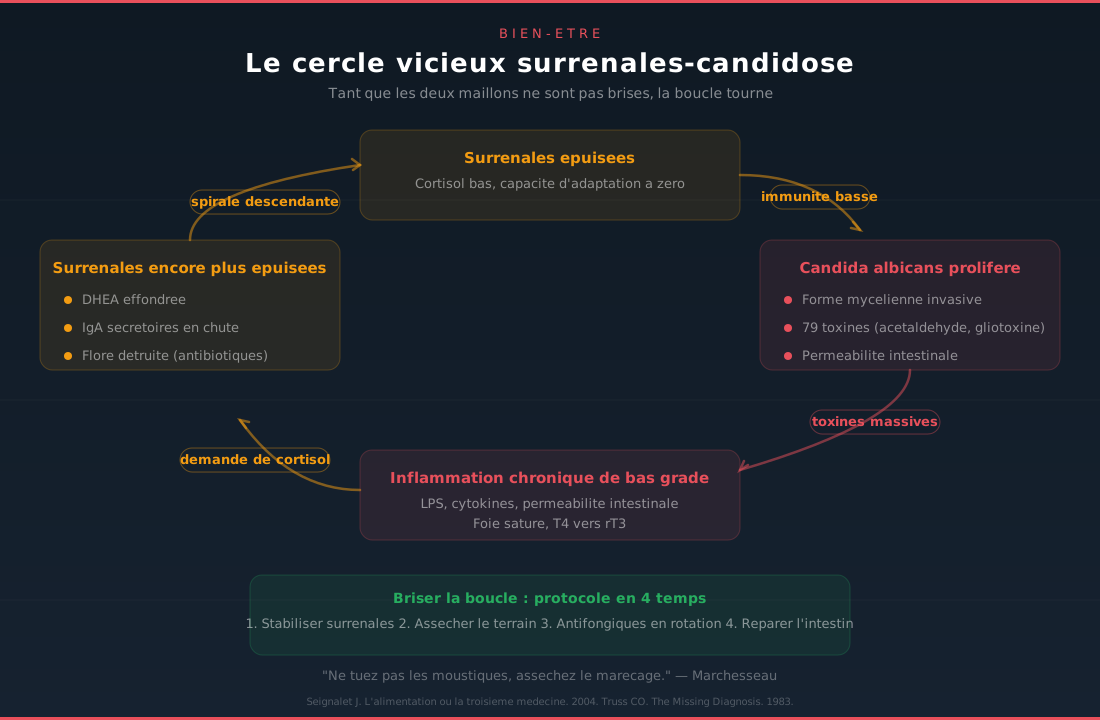
What no one had explained to him was that his candidiasis and fatigue were not two separate problems. It was one and the same vicious circle, an infernal loop where the adrenals fed the candidiasis and the candidiasis exhausted the adrenals. As long as you don’t break both links at the same time, the loop spins indefinitely. This is why three courses of antifungals had resolved nothing. We killed the Candida without restoring the terrain that allowed it to return.
If you want to first understand the stages of adrenal exhaustion, start with this article. Here, we’re going to dissect the vicious circle, link by link, and most importantly, we’re going to see how to break it.
The self-sustaining circle
Candida albicans is a microscopic fungus that naturally lives in your intestines, mouth, and skin. Under normal circumstances, it is kept in reasonable quantities by two guardians: your intestinal flora (commensal bacteria, notably Lactobacilli) and your immune system. When these two guardians weaken, Candida takes advantage. It shifts from its harmless yeast form (round, isolated) to its pathogenic mycelium form (filamentous, invasive). The filaments penetrate the intestinal mucosa, create micro-perforations, and open the door to what is called intestinal permeability, or “leaky gut” in English.
What does this have to do with the adrenals? The connection is twofold, and that’s where the circle forms.
First link: cortisol controls immunity. In physiological quantities, cortisol is a powerful anti-inflammatory and a regulator of the immune system. It keeps lymphocytes and NK cells (natural killers) on alert, ready to contain opportunistic microorganisms like Candida. When the adrenals become exhausted (stage 3) and cortisol collapses, immunity loses its conductor. Antiparasitic and antifungal defenses weaken. Candida, which was waiting for its chance, proliferates.
Second link: Candida exhausts the adrenals. Candida albicans produces approximately seventy-nine identified toxins. Among the most harmful are acetaldehyde (the same metabolite produced by alcohol, which is why some candida patients feel “drunk” without drinking) and gliotoxin, which directly suppresses immune cell activity. These toxins maintain chronic low-grade inflammation throughout the body. And inflammation means extra work for the adrenals. They must produce cortisol to contain this inflammation. Day after day, week after week. Until they can’t anymore.
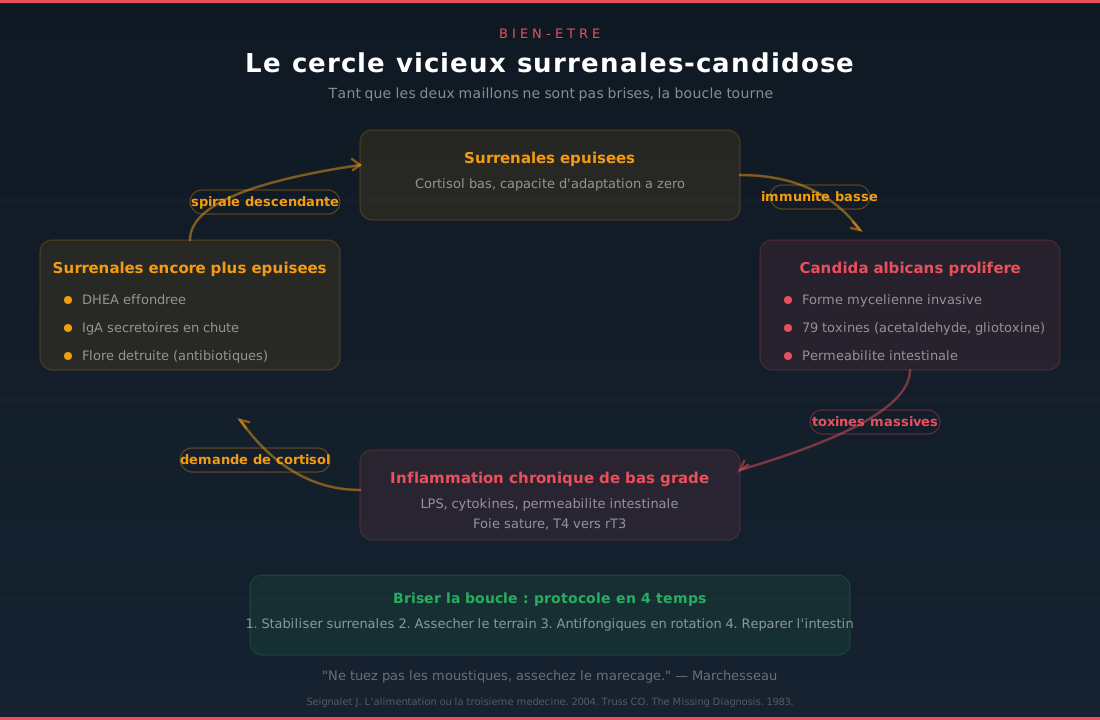
You see the loop? Tired adrenals, so low immunity, so Candida proliferates, so toxins cause inflammation, so adrenals even more tired to manage this inflammation, so immunity even lower, so Candida even more aggressive. It’s a downward spiral. And as long as you only treat one side of the equation (antifungal without adrenal restoration, or adaptogens without antifungal treatment), the spiral continues.
The third player: the intestine
There is a third actor in this drama, and it significantly aggravates the situation: the intestine. Chronically elevated cortisol (stage 2) or collapsed cortisol (stage 3) destroys the digestive mucosa. It reduces the production of protective mucus, slows the renewal of intestinal epithelial cells, and weakens the tight junctions that maintain the integrity of the wall.
In parallel, Candida in mycelial form physically perforates this wall with its filaments. The two mechanisms converge toward the same result: intestinal permeability. Incompletely digested food fragments, bacterial toxins (lipopolysaccharides or LPS) and Candida metabolites pass into the bloodstream. The immune system, confronted with these molecules that should never be in the blood, triggers a systemic inflammatory response.
This inflammation feeds the vicious circle at a higher level. It demands that the adrenals produce anti-inflammatory cortisol. It disrupts thyroid conversion (T4 is less well converted to active T3 in favor of reverse T3, as I detailed in my article on cortisol and thyroid). It promotes insulin resistance. It worsens neurological symptoms (brain fog, irritability, anxiety). And it prevents the intestine from repairing itself, because mucosal repair requires energy and nutrients that a leaky intestine can no longer properly absorb.
Dr. Seignalet described exactly this mechanism in The Diet or the Third Medicine when he spoke of clogging and elimination diseases. Candida creates clogging (toxins in the circulation) and prevents elimination (liver saturation, intestinal permeability). Marchesseau said the same thing in different words: “Don’t kill the mosquitoes, drain the swamp.” Candida is the mosquito. The swamp is the terrain: exhausted adrenals, low immunity, leaky intestine, overloaded liver.
Signs that don’t lie
How do you know if you’re caught in this vicious circle? The combination of adrenal and candida signs is characteristic.
On the adrenal side: fatigue upon waking, energy crash at three o’clock, need coffee to function, orthostatic hypotension, salt cravings, non-restorative sleep, inability to manage stress. If you recognize yourself, read my article on the 3 stages to identify where you are.
On the candida side: irresistible cravings for sugar, bread, pasta (Candida demands glucose). Systematic bloating after meals, especially those rich in carbohydrates. Recurrent fungal infections (vaginal, skin, nails). White or pasty tongue upon waking. Brain fog, difficulty concentrating, sensation of “head full of cotton”. Anal or genital itching. Recurrent sinusitis or ear infections. Multiple food intolerances that seem to appear out of nowhere (consequence of intestinal permeability).
When the two pictures overlap, it’s almost always a sign that the vicious circle is established. And that’s exactly Thomas’s profile. Adrenal fatigue stage 2 advanced, chronic digestive candidiasis, intestinal permeability, low-grade inflammation. A circle that had been spinning for two years.
The antibiotic: the silent detonator
In the history of many of my candida patients, there is an initial trigger: one or more courses of antibiotics. Antibiotics destroy pathogenic bacteria, but they also massacre commensal bacteria, the guardians of intestinal balance. Lactobacilli, which produce lactic acid and hydrogen peroxide to contain Candida, are decimated. Candida, which is not a bacterium but a fungus, survives antibiotics just fine and takes advantage of the void to colonize the territory.
Thomas had taken three courses of antibiotics in eighteen months for recurrent sinusitis. Sinusitis that were probably themselves linked to candidiasis of the upper airways. He was being given antibiotics for a fungal infection. The antibiotics destroyed his flora. Candida proliferated further. The sinusitis came back. And with each course, his adrenals became more exhausted under the weight of chronic inflammation.
Cortisol plays an additional role here. In stage 2 of adrenal fatigue, chronically elevated cortisol suppresses the production of secretory IgA, the antibodies that line the digestive and respiratory mucosae and constitute the first line of defense against microorganisms. Less IgA means less mucosal protection, so more vulnerability to infections, so more antibiotics prescribed, so more destruction of the flora, so more Candida. Another circle within the circle.
Breaking the loop: the four-step protocol
My approach to breaking this vicious circle is structured in four steps. The order matters.
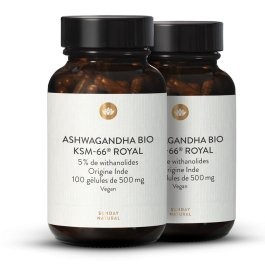
First step: stabilize the adrenals. Before touching Candida, the adrenals need to have a minimum of reserve. Because destroying Candida triggers a Herxheimer reaction (die-off): when the fungi die, they massively release their toxins into the circulation. If the adrenals are in stage 3 and cannot handle this inflammatory wave, the die-off can be violent (extreme fatigue, headaches, skin rashes, worsening of all symptoms for several days). Adrenal stabilization lasts four to six weeks: magnesium bisglycinate four hundred milligrams per day, vitamin C one gram morning and evening, B complex, ashwagandha two hundred milligrams in the evening. Bedtime at ten-thirty. Daily walking. Gradual reduction of coffee.
Second step: drain the Candida terrain. Diet is the first weapon. Elimination of refined sugars (white sugar, honey, maple syrup, fruit juice). Drastic reduction of gluten-containing cereals (wheat, barley, rye, oats) and yeasts (bread, beer, balsamic vinegar, moldy cheeses). Increase cooked vegetables, quality proteins, good fats (olive oil, coconut oil, avocado). Coconut oil deserves special mention: it contains caprylic acid and lauric acid, two natural antifungals. Two tablespoons per day in cooking. This dietary phase lasts throughout the protocol.
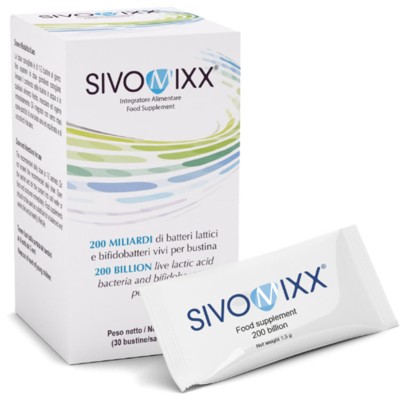
Third step: attack Candida and restore the flora. Natural antifungals are used in rotation every two to three weeks to prevent Candida from developing resistance. Weeks one and two: caprylic acid (one thousand milligrams twice a day). Weeks three and four: grapefruit seed extract (fifteen drops three times a day). Weeks five and six: berberine (five hundred milligrams twice a day). In parallel, a specific probiotic: Saccharomyces boulardii (five billion CFU per day), a non-pathogenic yeast that occupies the terrain and prevents Candida from returning, combined with Lactobacillus rhamnosus to restore commensal flora.
Fourth step: repair the intestine. L-glutamine (five grams per day on an empty stomach) is the preferred fuel for intestinal epithelial cells. It accelerates the repair of tight junctions. Zinc (thirty milligrams per day) is essential for mucosal regeneration. Turmeric (five hundred milligrams of extract standardized in curcuminoids) calms local inflammation. Aloe vera (fifty milliliters of pure juice on an empty stomach) soothes and protects the mucosa. This repair phase lasts three to six months.
What happened with Thomas
His morning salivary cortisol was at 8.7 nanomoles per liter (low). His stool culture with yeast screening revealed significant amounts of Candida albicans. His fecal calprotectin, a marker of intestinal inflammation, was elevated. His profile was classic: adrenal fatigue stage 2 advanced, chronic digestive candidiasis, intestinal permeability.
We followed the four-step protocol. The first six weeks were dedicated to adrenal stabilization and dietary change. The die-off was moderate (three days of headaches and increased fatigue at the start of the antifungal phase, manageable). By the second month, sugar cravings began to decrease. By the third month, the skin fungal infections disappeared. By the fourth month, the brain fog lifted. Thomas told me: “It’s like someone cleaned a dirty window in my head. I see clearly for the first time in two years.”
At the sixth month, we rechecked. The stool culture was negative for Candida. Morning salivary cortisol had risen to 16.2 nanomoles per liter. Calprotectin had normalized. The inflammation was gone. The adrenals, freed from the inflammatory burden of Candida, had been able to rebuild.
Marchesseau was right. Drain the swamp, and the mosquitoes disappear on their own. The three courses of Triflucan had killed the mosquitoes. But the swamp was still there. And each spring, the mosquitoes came back.
If you want to understand the complete adrenal reconstruction protocol, I’ve written a three-phase guide that details exactly what to do and in what order. And if you’re a woman with associated cycle disorders, the approach requires specific adjustments that I’ve detailed in a dedicated article.
Want to assess your status? Take the free Hertoghe cortisol questionnaire in 2 minutes.
If you want personalized support, you can book a consultation.
To go further
- DHEA: the forgotten hormone of your vitality and immunity
- Graves’ disease and stress: the thyroid of emotion
- Burn-out: when your reptilian brain takes control
- Adrenal exhaustion: the 3 stages nobody explains to you
Sources
- Marchesseau, Pierre-Valentin. Fascicules de naturopathie (1950-1980).
- Seignalet, Jean. L’alimentation ou la troisième médecine. 5th ed. François-Xavier de Guibert, 2004.
- Truss, C. Orian. The Missing Diagnosis. 1983.
- Hertoghe, Thierry. The Hormone Handbook. 2nd ed. International Medical Books, 2012.
You can book a consultation for a complete adrenal and digestive assessment. I see patients in Paris and online throughout France.
Laisser un commentaire
Sois le premier à commenter cet article.