Helen is sixty-three years old. Retired, she had been taking omeprazole for acid reflux for seven years. She came to see me for tingling in her feet and hands that had started a year earlier, walking instability that frightened her, and cognitive fatigue “like brain fog” that made it difficult for her to read her novels. Her doctor had tested serum B12: result of 280 pg/mL, “within normal range.” When I had holotranscobalamin (active B12) and methylmalonic acid tested, the diagnosis came: holotranscobalamin collapsed at 22 pmol/L (normal is above 50), urinary MMA very elevated. Helen had severe B12 deficiency that the standard test had missed, and her neurological symptoms were already a year advanced.
Vitamin B12 is the largest and most complex of all vitamins. It is the only one to contain a metal atom (cobalt, hence the name cobalamin). And it is the only one whose deficiency can cause irreversible neurological damage if not diagnosed in time.
Causes of B12 deficiency
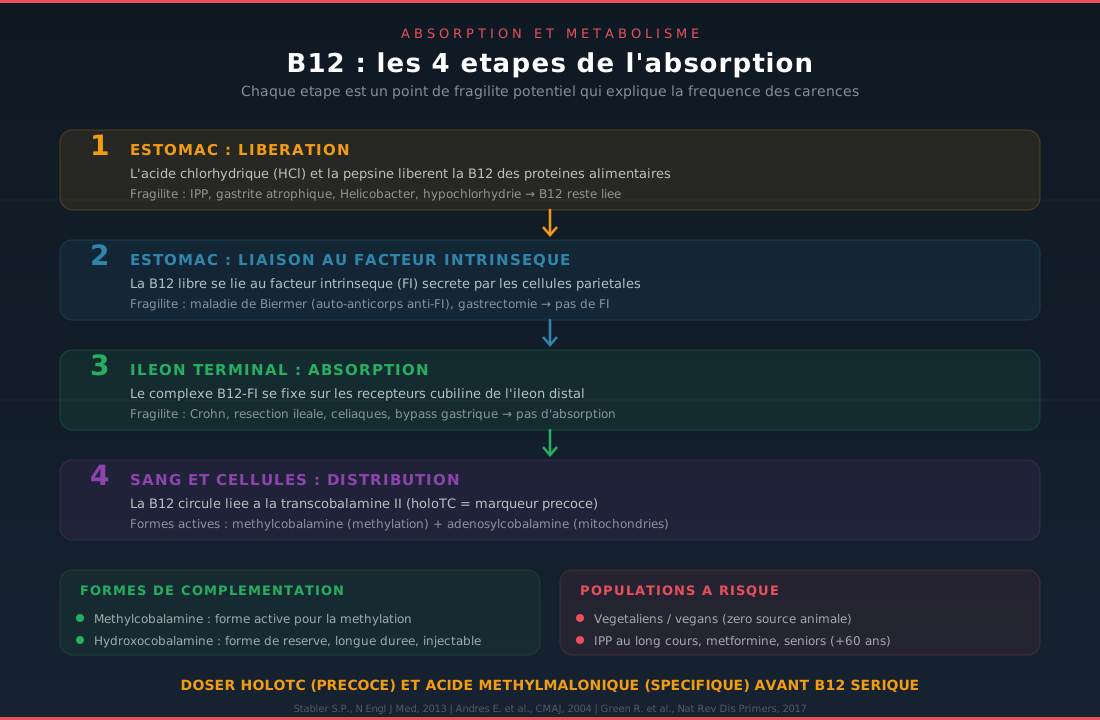
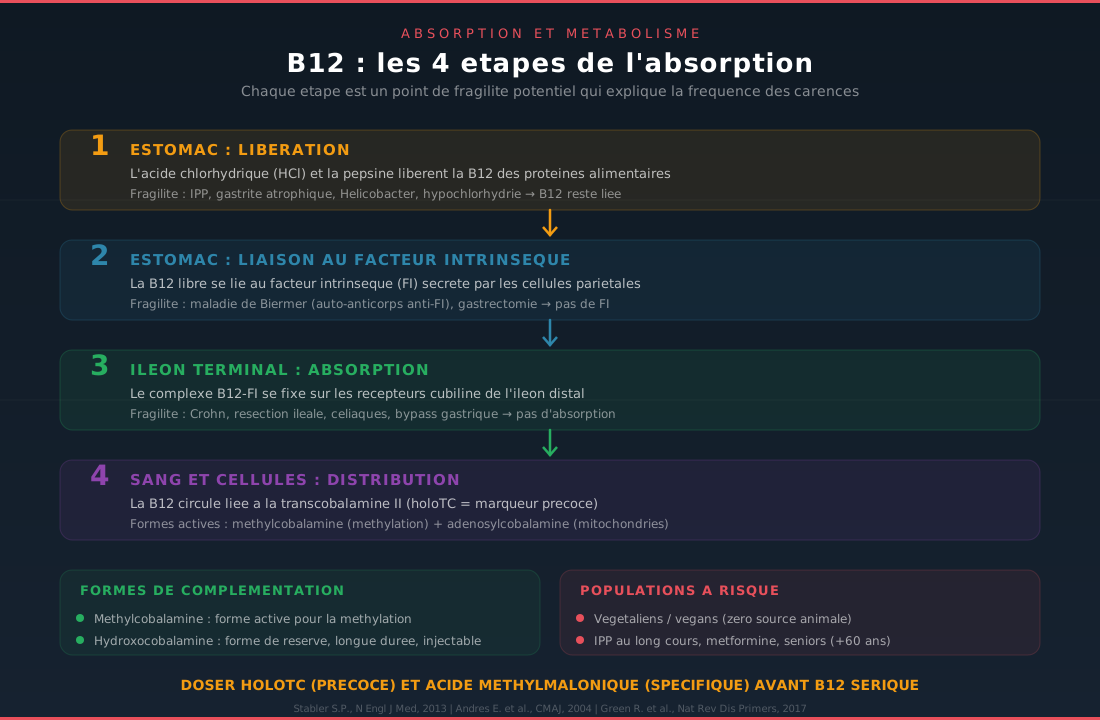
B12 absorption is a four-step process, each of which can fail. First step: stomach hydrochloric acid releases B12 from the food proteins it is bound to. Second step: B12 binds to salivary haptocorrin in the stomach. Third step: in the duodenum, pancreatic proteases degrade haptocorrin and B12 binds to intrinsic factor (IF), a glycoprotein produced by parietal cells of the stomach. Fourth step: the B12-IF complex is absorbed by cubilin receptors in the terminal ileum.
Autoimmune atrophic gastritis (Biermer’s disease) destroys parietal cells and suppresses intrinsic factor production. This is the classic cause of pernicious anemia. But subclinical forms of gastric atrophy are much more common: after age fifty, up to thirty percent of people have a degree of gastric atrophy sufficient to reduce B12 absorption.
Proton pump inhibitors (PPIs) reduce the gastric acidity necessary for the first step. Seven years of omeprazole, as in Helen’s case, meant seven years of progressive B12 malabsorption. Metformin, prescribed to millions of diabetics, interferes with ileal B12 absorption through a calcium-dependent mechanism.
Strict veganism without supplementation is an inevitable cause of deficiency. B12 exists in active form in no plant-based foods. Vegetarians who consume eggs and dairy products have a lower but non-zero risk.
Bariatric surgery (bypass, gastrectomy) eliminates the zones of IF production and B12 absorption. Inflammatory diseases of the ileum (Crohn’s) impair absorption. Small intestinal bacterial overgrowth syndrome (SIBO) consumes B12 before it is absorbed.
Symptoms of deficiency
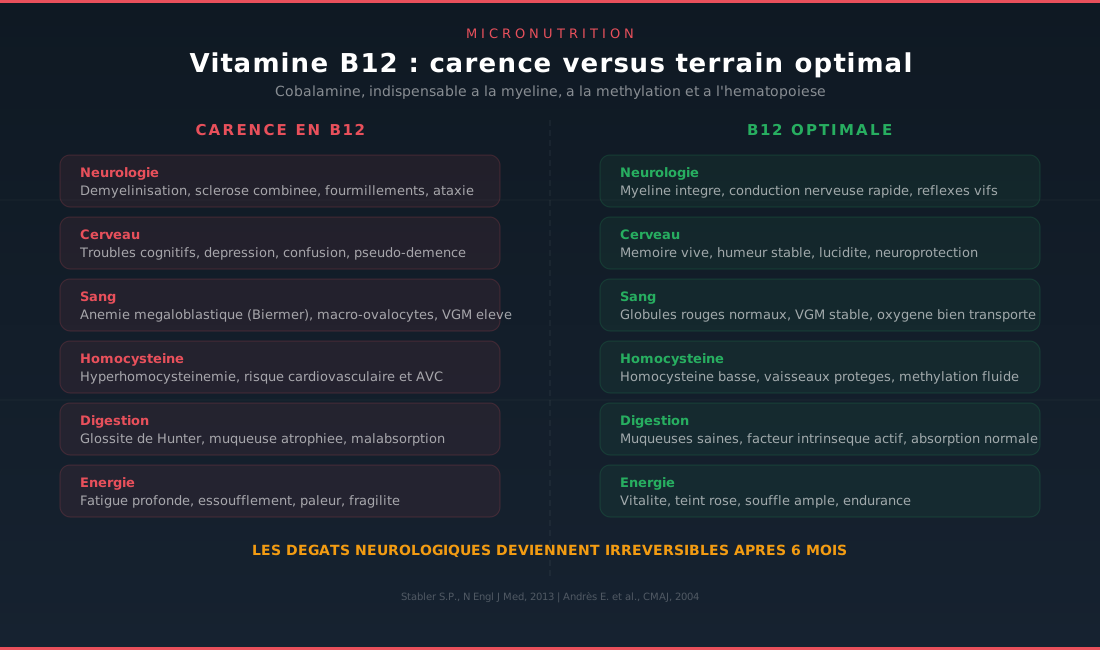
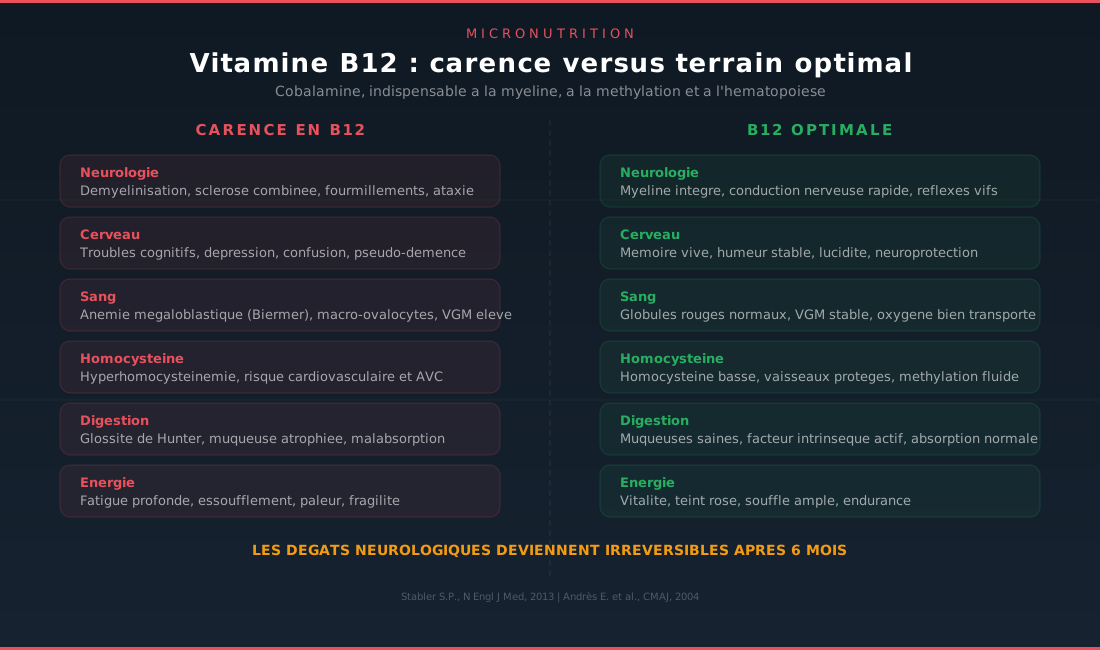
B12 is a cofactor for two enzymes: methionine synthase (remethylation of homocysteine to methionine, SAMe production) and methylmalonyl-CoA mutase (metabolism of odd-chain fatty acids and certain amino acids). Deficiency of the first causes hyperhomocysteinemia and methylation defect. Deficiency of the second causes accumulation of methylmalonic acid and propionyl-CoA toxic to the nervous system.
Megaloblastic anemia is the classic hematologic sign, identical to folate deficiency: macrocytosis (MCV above 100 fL), hypersegmentation of neutrophils, fatigue, pallor, dyspnea. But anemia can be absent: approximately thirty percent of patients with neurological manifestations of B12 deficiency have a normal MCV.
Neurological manifestations are the most serious. Peripheral neuropathy (tingling, numbness of extremities in a glove-and-stocking distribution) is the earliest sign. Combined sclerosis of the spinal cord (degeneration of posterior and lateral columns) causes proprioceptive ataxia (walking instability, positive Romberg sign), spasticity, and Babinski sign. Cognitive disturbances (confusion, memory problems, “brain fog”), depression, and in extreme cases dementia and psychosis, complete the neuropsychiatric picture.
Hunter’s glossitis (smooth, red, depapillated and painful tongue) is a classic clinical sign. Infertility and recurrent miscarriages can be linked to B12 deficiency via hyperhomocysteinemia.
Micronutrients essential for B12
Folates are the inseparable partner of B12 in the methylation cycle. B12 is necessary to release folates from their “trapped” form (5-MTHF) and recycle them. Without B12, folates accumulate in unusable form, creating functional folate deficiency despite adequate intake.
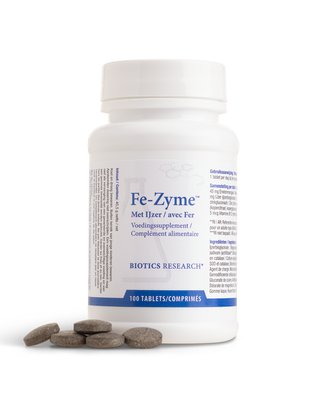
Vitamin B6 is a cofactor of the transsulfuration pathway, a complementary pathway to remethylation for metabolizing homocysteine. Iron is necessary for hemoglobin synthesis, and combined iron-B12 deficiency is common (atrophic gastritis, Crohn’s, bariatric surgery).
Food sources
Beef liver is the richest source with 85 micrograms per 100 grams. Oysters contain 16 micrograms per 100 grams. Mackerel provides 19 micrograms per 100 grams. Salmon contains 3 micrograms per 100 grams. Beef provides 2 to 3 micrograms per 100 grams. Eggs contain 1 microgram per egg. Cheese provides 1 to 3 micrograms per 100 grams. Milk contains 0.4 microgram per 100 milliliters.
The recommended intakes are 2.4 micrograms per day. Absorption by intrinsic factor saturates at about 1.5 micrograms per meal. Beyond that, passive absorption (one percent of the dose) takes over, which justifies high doses in oral supplementation (1000 micrograms to absorb about 10 micrograms via passive absorption in patients with deficient IF).
Antagonists of vitamin B12
PPIs and anti-H2 drugs reduce gastric acidity. Metformin interferes with ileal absorption. Nitrous oxide (laughing gas, used in anesthesia and recreational use) irreversibly inactivates B12-dependent methionine synthase, causing acute functional deficiency. Colchicine and neomycin reduce absorption.
Chronic alcohol impairs gastric and liver function. Tobacco increases B12 needs for detoxification of cyanide contained in smoke. Oral contraception reduces B12 levels by ten to fifteen percent.
Forgotten causes of deficiency
Recreational nitrous oxide use is an emerging cause of acute B12 deficiency, especially in young adults. A single massive exposure can cause acute myeloneuropathy mimicking multiple sclerosis.
Helicobacter pylori gastritis, even without atrophy, can reduce B12 absorption by impairing acid secretion and intrinsic factor. Eradication of H. pylori often improves B12 status.
Hypothyroidism is associated with increased risk of B12 deficiency via autoimmune atrophic gastritis (which shares the same autoimmune terrain as Hashimoto). Biermer’s disease is a frequent comorbidity of Hashimoto.
Dietary supplements
Cyanocobalamin is the most common and least expensive synthetic form. It must be converted to active forms (methylcobalamin and adenosylcobalamin) in the liver, which requires a functional liver and cofactors (glutathione).
Methylcobalamin is the active form in the cytoplasm, cofactor of methionine synthase. It is the recommended form for methylation and neuropsychiatric disorders. The sublingual dose of 1000 micrograms per day is the most practical form to bypass gastric absorption problems.
Adenosylcobalamin is the active form in mitochondria, cofactor of methylmalonyl-CoA mutase. It is indicated when MMA is elevated. Hydroxocobalamin is the reference injectable form in France, used in attack treatment (1000 micrograms in IM injection, once per week for one month, then once per month).
Helen received weekly hydroxocobalamin injections for one month, followed by sublingual methylcobalamin 5000 micrograms per day. Within six weeks, her tingling had decreased by half. In three months, her walking had stabilized. The brain fog gradually lifted over four months. She did not fully recover the sensation in her feet, a consequence of diagnosis that came too late. She stopped omeprazole, replaced by DGL licorice and fresh cabbage juice for her reflux.
To assess your B12 status, take the B12 deficiency questionnaire on my site.
If you want personalized support, you can book a consultation.
To go further
- Anemia: understanding the underlying causes and acting naturally
- Epigenetics and nutrition: what you eat reprograms your genes
- Iron: the silent deficiency that exhausts your body
- Low ferritin and hair loss: the connection your doctor ignores
Sources
- Andrès, Emmanuel, et al. “Vitamin B12 (cobalamin) deficiency in elderly patients.” Canadian Medical Association Journal 171.3 (2004): 251-259.
- Lam, Justina R., et al. “Proton pump inhibitor and histamine 2 receptor antagonist use and vitamin B12 deficiency.” JAMA 310.22 (2013): 2435-2442.
- Curtay, Jean-Paul. Nutrithérapie: bases scientifiques et pratique médicale. Testez Éditions, 2016.
- Mouton, Georges. Écologie digestive. Marco Pietteur, 2004.
If you want personalized support, you can book a consultation. For supplementation, Sunday Natural (code FRANCOIS10). Find all my partnerships.




Laisser un commentaire
Sois le premier à commenter cet article.