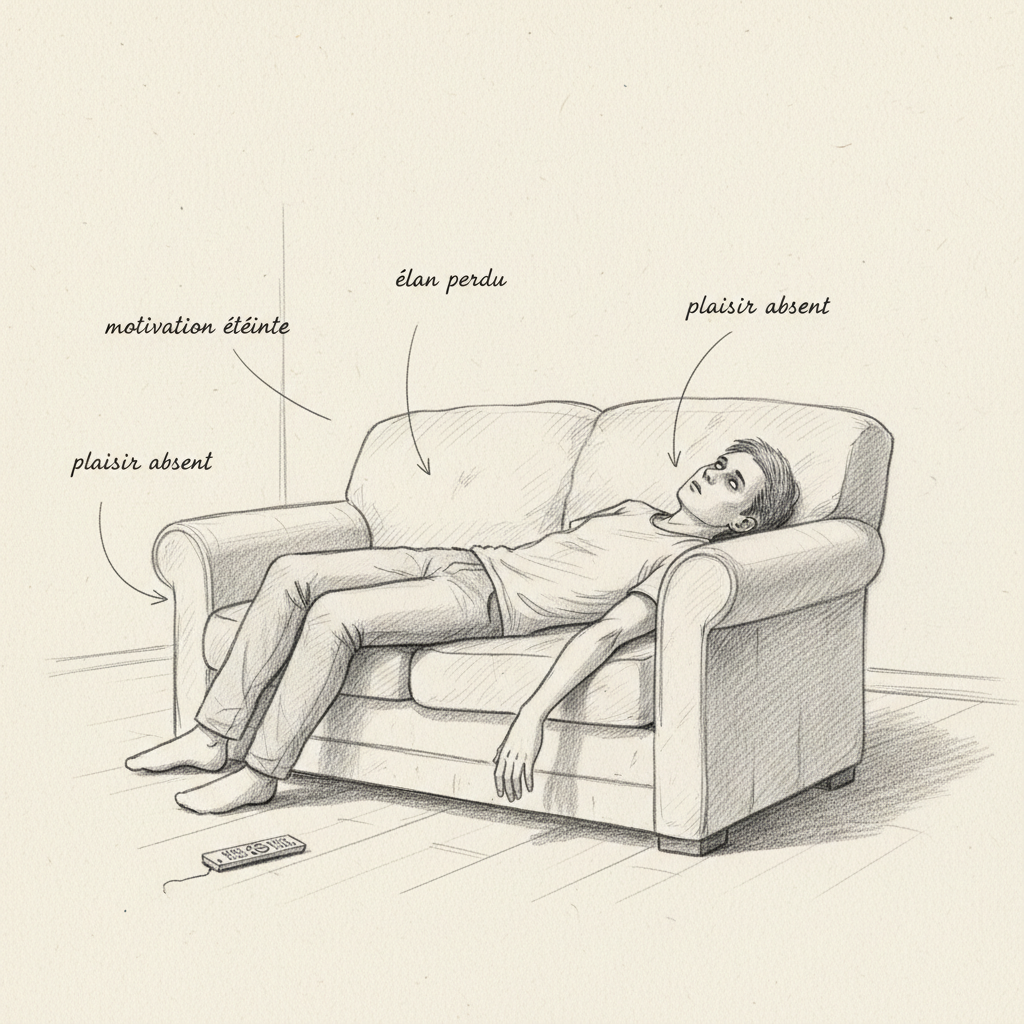
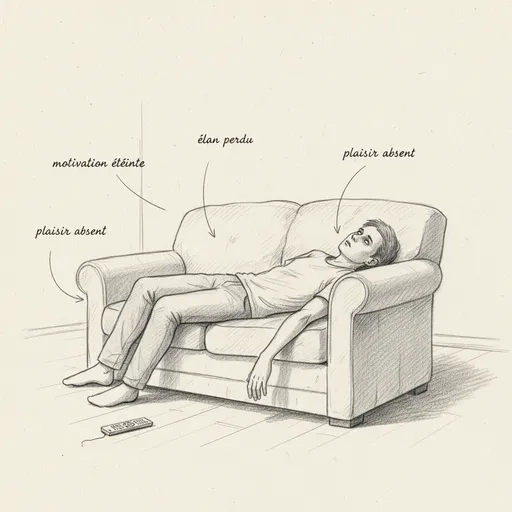
It’s 8 AM, the alarm has gone off three times, and Thomas can’t get out of bed. Not because he’s tired: well, he is, but it’s a strange fatigue, the kind that doesn’t improve by sleeping more. It’s rather that nothing gives him any reason to get up. No excitement about the day. No drive. No project that sparks him. His job bores him (when he loved it two years ago). His sport bores him (when he used to run three times a week). Even the weekend bores him. He scrolls through his social media for hours: not for pleasure, but because he’s looking for some micro-hit of something, anything, a like, a notification, a funny video. Then he feels empty. Thomas doesn’t suffer from depression in the classical sense. Thomas is lacking dopamine.
Dopamine is the neurotransmitter of vital drive. It’s what pushes you to act, to undertake, to pursue an objective. It’s at the heart of the reward circuit: each time you accomplish something satisfying, your brain releases dopamine, which gives you pleasure and motivates you to do it again. When this system works well, you have energy, ambition, concentration. When it collapses, you live on autopilot: you do the minimum, without joy, without energy, without direction.
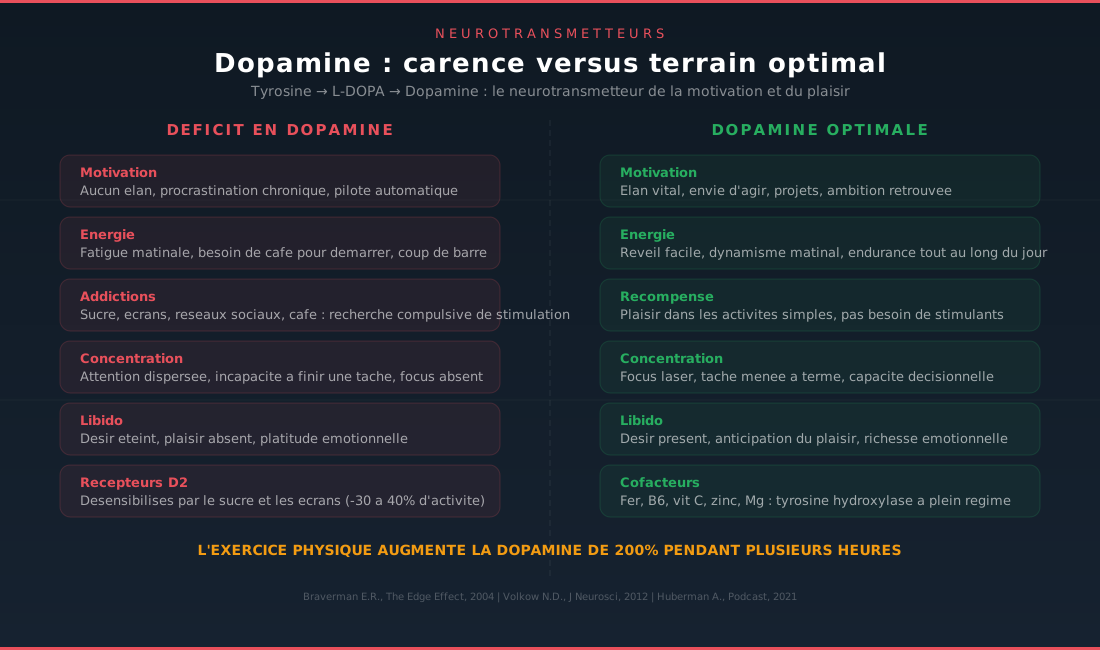
The dopamine production chain
It all starts with an amino acid: L-tyrosine. Tyrosine is a non-essential amino acid (the body can manufacture it from phenylalanine, an essential amino acid), but in practice, it’s better to consider it semi-essential because the conversion is limited.
Tyrosine is converted into L-DOPA by the enzyme tyrosine hydroxylase (TH), the rate-limiting step of the entire chain. This enzyme requires iron, vitamin B6 (in P5P form), vitamin C and tetrahydrofolate (BH4) as cofactors. BH4 itself is synthesized from folates, zinc and magnesium. L-DOPA is then converted into dopamine by DOPA decarboxylase, which requires more B6.
You see the pattern? The same cofactors come back again and again: iron, B6, vitamin C, zinc, magnesium, folates. A deficiency in any of these nutrients compromises dopamine production. And the majority of the population is deficient in at least two or three of them.
Signs of a dopamine-depleted brain
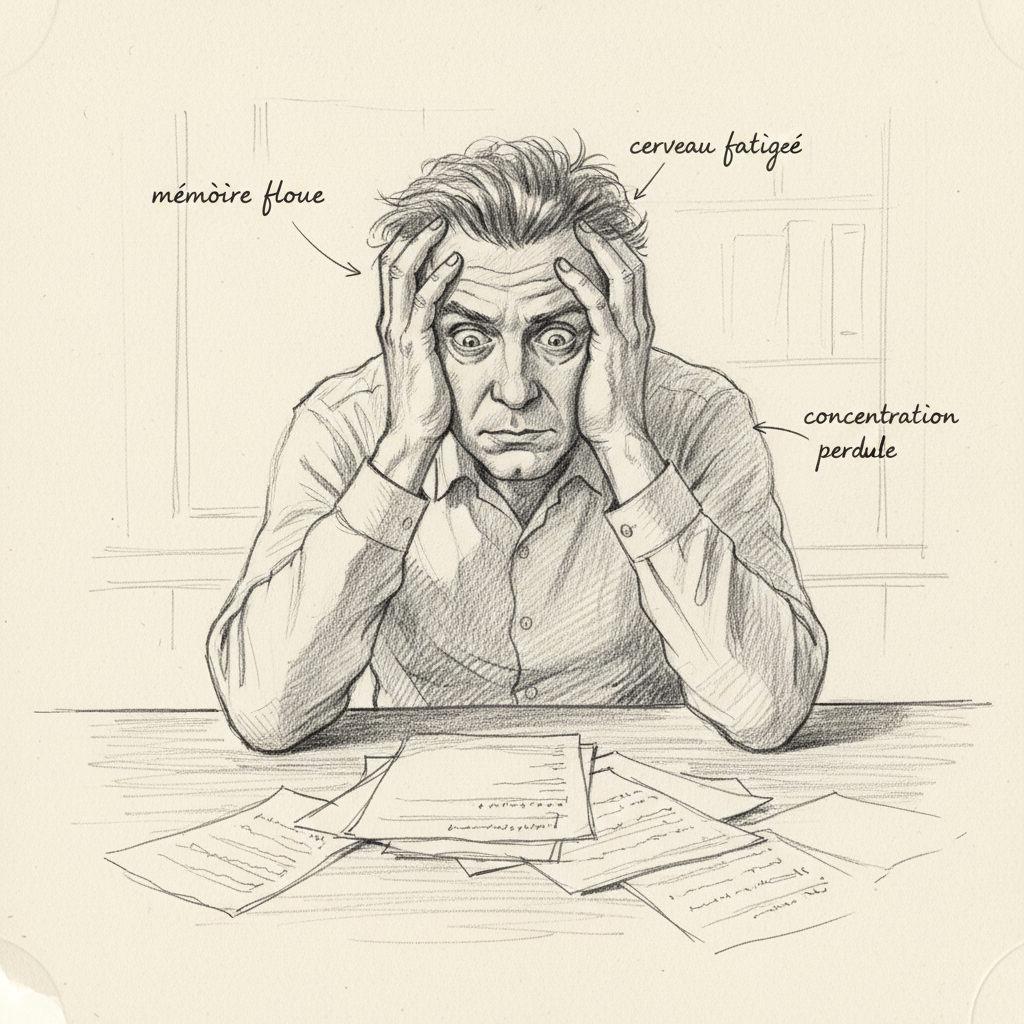
Dr. Braverman describes dopamine deficiency as a “starting failure.” The engine is there, but it won’t turn on. The symptoms are characteristic and form a picture I recognize within a few minutes of consultation.
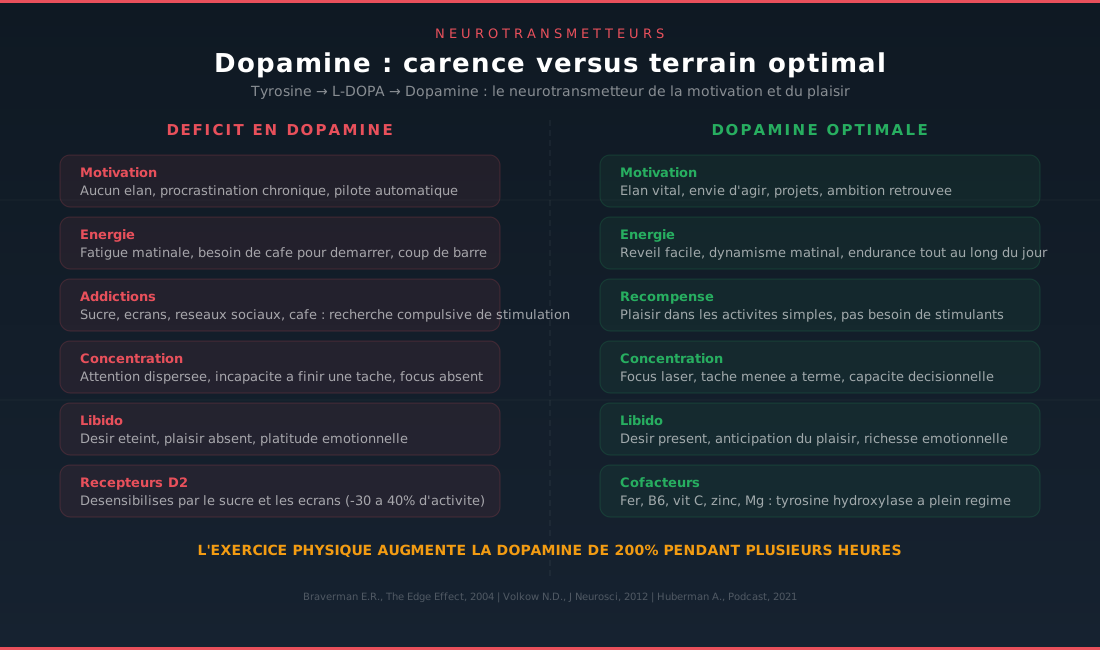
Morning fatigue is the first sign. Dopamine is supposed to propel you out of bed with energy. Without it, mornings are a nightmare. You need coffee to “start up.” Often several coffees. It’s a vicious circle: coffee temporarily releases dopamine, but over the long term it depletes reserves and decreases receptor sensitivity.
Chronic procrastination is not laziness: it’s a neurobiochemical symptom. Dopamine is necessary to initiate action. Without it, the brain doesn’t see the point in starting anything. You put everything off until tomorrow, not because you don’t want to do things, but because you don’t feel the motivational drive that normally precedes action.
The compulsive search for stimulation is the most deceptive sign. The brain starved for dopamine seeks sources of rapid stimulation: sugar (blood glucose spike = mini dopamine release), social media (each notification = micro-dose of dopamine), coffee, alcohol, compulsive shopping, video games, pornography. These “everyday drugs” give a temporary illusion of satisfaction but worsen the deficiency by overactivating and then desensitizing D2 receptors.
The decline in libido is frequent and rarely linked to dopamine. Sexual desire is a dopaminergic behavior par excellence: it requires anticipation, motivation and reward. When dopamine drops, desire fades. It’s not a “relationship” problem: it’s a biochemical problem.
To assess your profile, take the Braverman dopamine deficiency questionnaire.
What destroys your dopamine daily
Refined sugar is the first destroyer. Each blood glucose spike causes a massive release of dopamine followed by an equally brutal crash. The brain adapts by reducing the number of D2 receptors: this is tolerance, the same mechanism as for hard drugs. Neuroimaging studies show that heavy sugar consumers have dopaminergic activity reduced by thirty to forty percent compared to controls.
Screens and social media exploit the dopaminergic circuit with ruthless efficiency. Each scroll, each notification, each like is a micro-injection of dopamine. The problem is that these micro-doses desensitize the reward system. You need increasingly strong stimulations to feel pleasure. This is exactly the mechanism of addiction.
Chronic stress depletes dopamine through two pathways. Elevated cortisol diverts tyrosine toward the production of noradrenaline and adrenaline (stress hormones) at the expense of dopamine. And the inflammation induced by stress (via pro-inflammatory cytokines) directly inhibits tyrosine hydroxylase, the rate-limiting enzyme of the chain.
Lack of sleep reduces the density of D2 receptors in the ventral striatum. A single all-nighter is enough to decrease dopaminergic sensitivity by twenty percent. Chronically insufficient sleep creates a functional dopamine deficit even if production is normal.
Restore your dopamine naturally
A diet rich in tyrosine is the foundation. Turkey, chicken, eggs, beef, tuna, almonds, pumpkin seeds, soy, avocados and bananas are the best sources. A protein-rich meal in the morning (twenty to thirty grams) launches dopamine production for the day. A sugary breakfast does exactly the opposite.
L-tyrosine supplementation is effective during periods of stress or cognitive overload. The dose is 500 to 1000 milligrams in the morning on an empty stomach, thirty minutes before breakfast. N-acetyl-tyrosine (NALT) is a more water-soluble form but with debated bioavailability. Mucuna pruriens (velvet bean) contains L-DOPA directly and powerfully increases dopamine. Dose: 300 to 500 milligrams of extract standardized to fifteen percent L-DOPA. Precaution: do not combine with MAOIs or levodopa.
Cofactors are non-negotiable. Iron (check ferritin, aim for 50 to 80), B6 (P5P 25 to 50 mg), vitamin C (500 mg to 1 g), magnesium (bisglycinate 300 mg), zinc (bisglycinate 15 mg).
Physical exercise is the most powerful natural dopaminergic stimulant. Thirty minutes of moderate to intense exercise increases dopamine by two hundred percent for several hours. Weight training and HIIT are particularly effective. Exposure to morning light (thirty minutes within the first hour after waking) stimulates the dopamine pathway via retinal ganglion cells. A cold shower (cold finish for thirty to sixty seconds) causes a massive dopamine release that lasts several hours: it’s one of the best-documented “hacks.”
The dopamine detox: voluntarily reducing rapid stimulations (screens, sugar, coffee, notifications) for one to two weeks allows you to resensitize D2 receptors. It’s uncomfortable at first, but patients who stick with it report a return of pleasure in simple activities that left them indifferent before.
Thomas agreed to remove social media from his phone for two weeks, to replace his bowl of cereal with scrambled eggs, and to take tyrosine in the morning. After ten days, he sent me a message: “I got up at 6:30 without an alarm and I wanted to go running.” Dopamine was back.
To go further
- Acetylcholine: the forgotten neurotransmitter of your memory
- GABA: the neurotransmitter of calm you’ve lost
- The Braverman method: your brain in 4 neurotransmitters
- Depression and neurotransmitters: micronutrition changes everything
Sources
- Braverman, Eric R. The Edge Effect. Sterling Publishing, 2004.
- Volkow, Nora D., et al. “Evidence that sleep deprivation downregulates dopamine D2R in ventral striatum in the human brain.” Journal of Neuroscience 32.19 (2012): 6711-6717.
- Curtay, Jean-Paul. Nutrithérapie: bases scientifiques et pratique médicale. Testez Éditions, 2016.
- Huberman, Andrew. “Controlling Your Dopamine For Motivation, Focus & Satisfaction.” Huberman Lab Podcast, Episode 39 (2021).
If you want personalized support, you can book a consultation.
Healthy recipe: Buddha bowl lentils-avocado: Lentils provide tyrosine, a precursor to dopamine.

Laisser un commentaire
Sois le premier à commenter cet article.