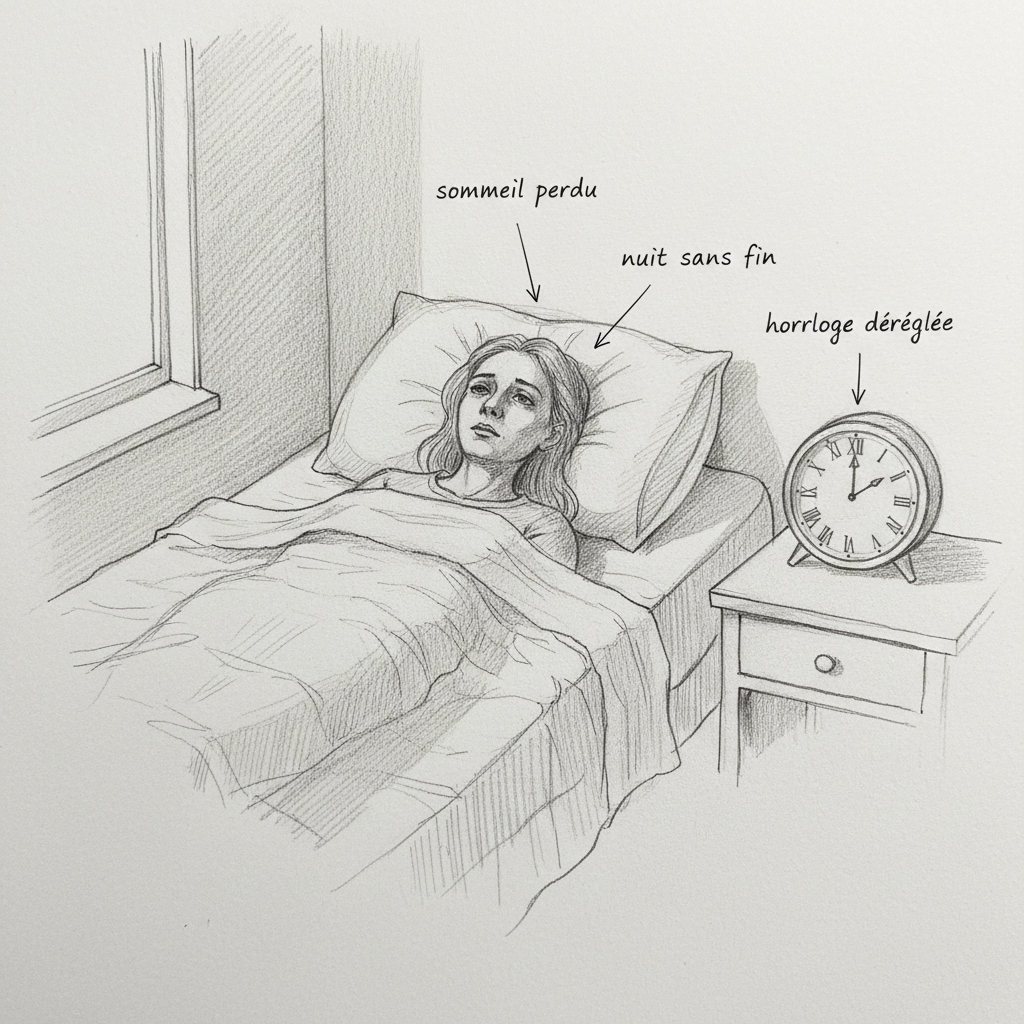
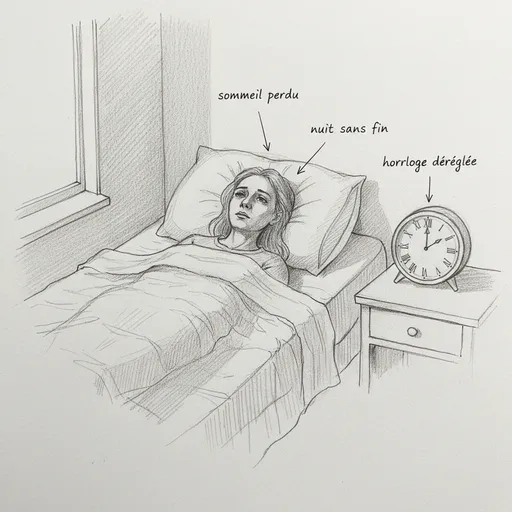
Lucie looks older than her age. At forty-five, her colleagues take her for fifty-five. She doesn’t sleep: or rather she sleeps poorly. It takes her an hour to fall asleep, she wakes up twice a night, and gets up in the morning with the sensation of not having slept. She has tried linden tea, magnesium, meditation. Nothing works. What she doesn’t know is that her problem is not sleep itself: it’s the hormone that regulates it.
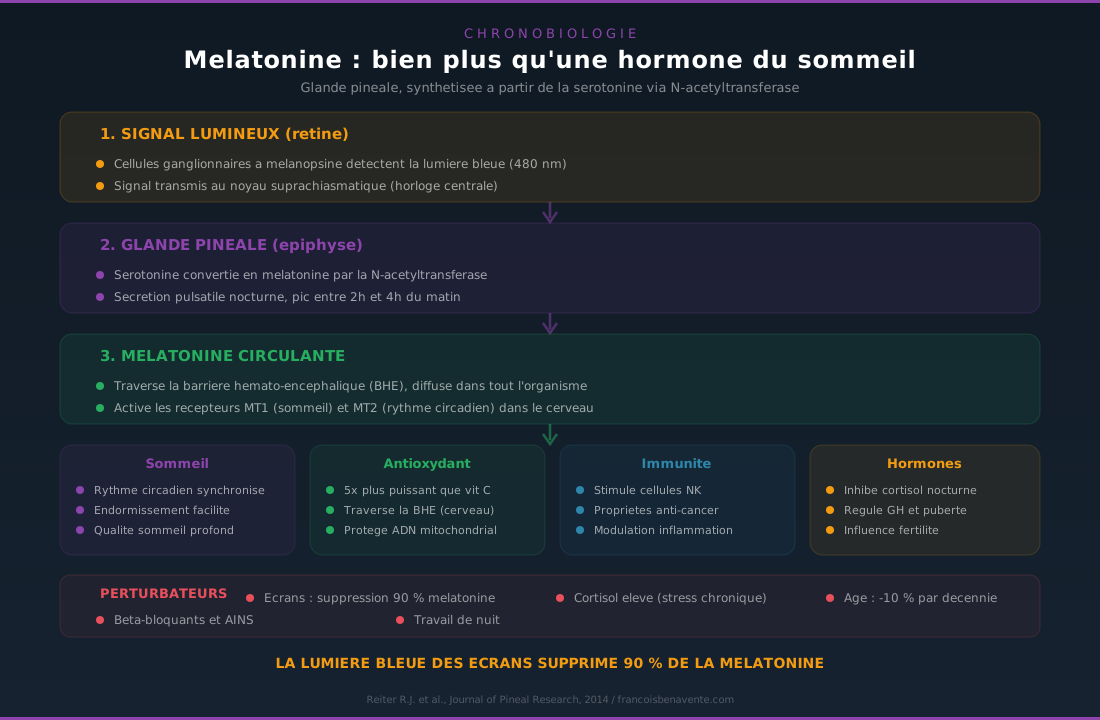
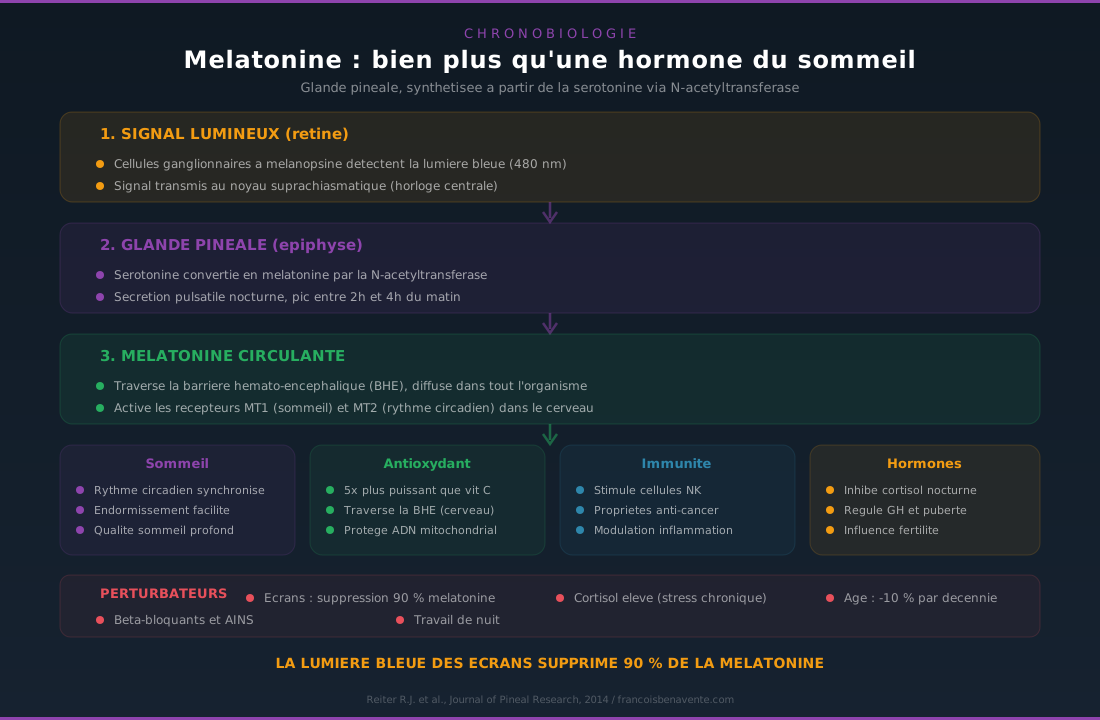
Melatonin is produced by the pineal gland (epiphysis), a tiny structure in the center of the brain that Descartes considered the “seat of the soul.” Its synthesis follows a strict circadian rhythm: it begins to rise at the end of the day when light decreases, reaches its peak between 2am and 4am, then drops at dawn. It is manufactured from serotonin, itself derived from tryptophan.
Much more than a sleep hormone
Sleep is the most well-known function of melatonin, but it’s the tip of the iceberg. Melatonin is one of the most powerful antioxidants in the human body. It directly traps hydroxyl radicals, peroxyl radicals and peroxynitrite: radical species that vitamin C and vitamin E do not neutralize effectively. Moreover, it stimulates endogenous antioxidant enzymes (superoxide dismutase, glutathione peroxidase, catalase). A dual mechanism that only melatonin possesses.
Immunity is directly modulated by melatonin. It stimulates NK cells (Natural Killer), T lymphocytes and interleukin-2 production. Melatonin deficiency is associated with relative immunosuppression: this is one reason why night shift workers have an increased risk of infections and cancers. The WHO has classified night work as “probably carcinogenic” (group 2A), partly because of melatonin suppression.
The cardiovascular system benefits from melatonin which is nocturnal vasodilating, anti-inflammatory and protective against atherosclerosis. Melatonin protects mitochondria from oxidative stress: it is one of the rare antioxidants to penetrate into the mitochondria, where free radicals are produced in large quantities.
Signs of deficiency
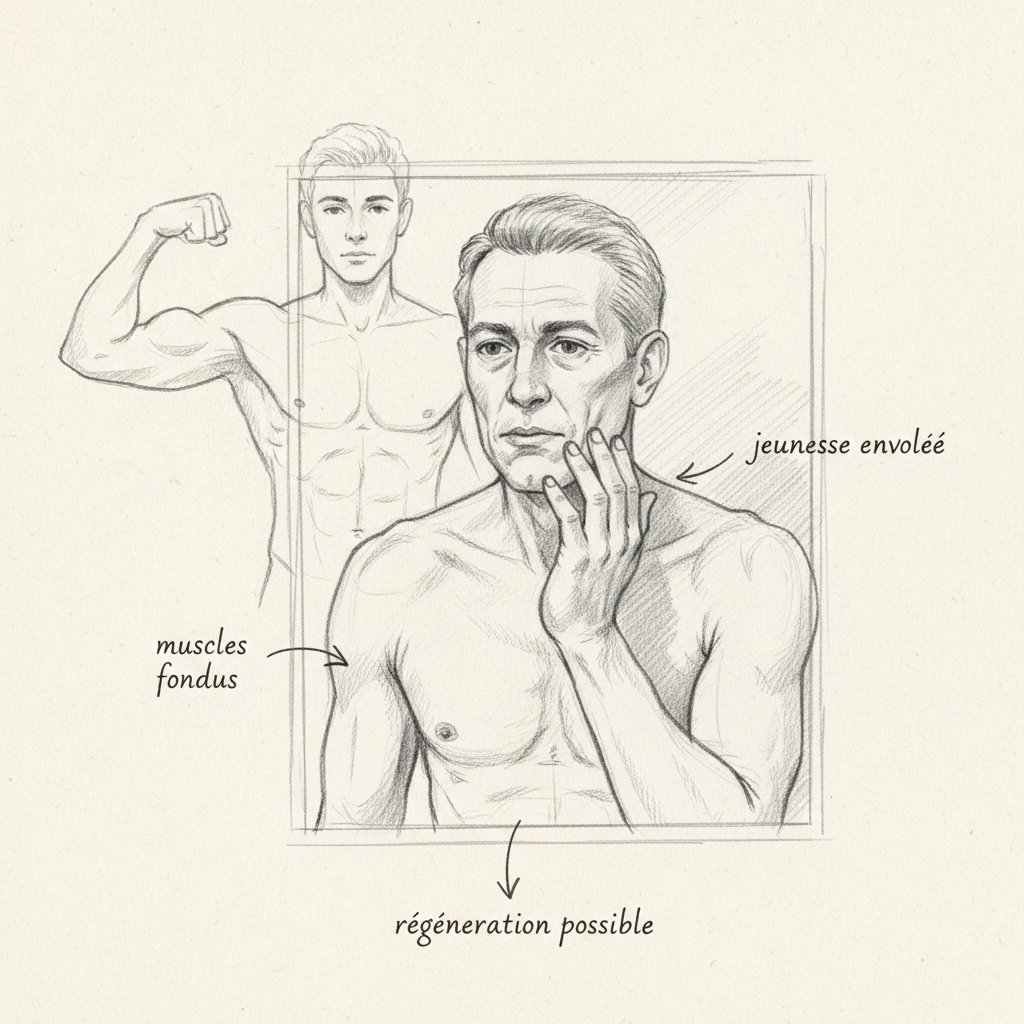
Dr Hertoghe identifies a characteristic clinical picture. The most striking sign: appearing older than your age. Melatonin protects tissues from oxidative stress, and its deficiency accelerates cellular aging. Skin ages faster, hair grays earlier, wrinkles appear prematurely.
Sleep onset insomnia is the main functional sign. You go to bed and you don’t fall asleep. Your brain doesn’t switch to sleep mode. Time passes, anxiety rises, and sleep escapes. Nighttime awakenings, especially in the second half of the night, reflect an insufficient melatonin peak or one that is too short.
Warm feet at night are a subtle sign. Melatonin causes peripheral vasodilation (warm hands and feet) which allows the loss of body heat necessary for falling asleep. If your melatonin is sufficient, your feet are warm at bedtime. If it’s lacking, your feet stay cold and you don’t fall asleep.
Nighttime ruminations (thoughts that loop endlessly) are worsened by melatonin deficiency. Melatonin has a mild anxiolytic effect via its modulation of GABA receptors. Without it, GABA is less effective at night and anxious thoughts take over.
Take Hertoghe’s melatonin deficiency test.
What destroys your melatonin
Artificial light in the evening is the first destroyer. Screens (phone, tablet, computer, television) emit blue light that suppresses melatonin secretion via melanopsin-containing ganglion cells in the retina. Domestic LED lighting aggravates the problem. Our brain, shaped by millions of years of evolution to distinguish day from night, doesn’t understand artificial light. For it, light = day = no melatonin.
Aging reduces melatonin production progressively. The pineal gland calcifies with age (visible on scans as a calcium opacity). At sixty, melatonin production is often reduced by eighty percent compared to the peak at puberty. This calcification is aggravated by exposure to fluorine (tap water, fluoridated toothpastes), which concentrates preferentially in the pineal gland.
Chronic stress diverts tryptophan toward the kynurenine pathway to the detriment of the serotonin-melatonin pathway. Night work desynchronizes the circadian clock. Alcohol disturbs sleep architecture and reduces melatonin secretion. Coffee after 2pm delays the melatonin peak.
Restoring your melatonin
Light hygiene is the foundation. Exposure to intense natural light in the morning (thirty minutes in the first hour after waking) to calibrate the circadian clock. Progressive reduction of light in the evening. No screens one hour before bed (or blue light blocking glasses as a last resort). Blackout curtains in the bedroom. Zero light: even the alarm clock LED disrupts melatonin.
Dietary precursors at dinner: tryptophan (turkey, banana, cashews, pumpkin seeds, dark chocolate) with slow carbohydrates (brown rice, sweet potatoes) to facilitate tryptophan passage to the brain. The cofactors B6 (P5P 25 mg), magnesium (bisglycinate 300 mg at dinner) and iron support the synthesis chain tryptophan → serotonin → melatonin.
Melatonin as a supplement at low dose (0.3 to 1 mg sublingual, thirty minutes before bed) is safe and effective. High doses (5 to 10 mg) are not recommended routinely as they can cause morning drowsiness and decrease endogenous production. Extended-release melatonin is preferable for nighttime awakenings.
A bedroom temperature of 18-19°C, regular sleep times (even on weekends), and physical exercise during the day (but not after 7pm) complete the protocol.
Lucie installed blackout curtains, eliminated screens after 9pm, took magnesium bisglycinate and 0.5 mg melatonin. Within two weeks, she was falling asleep in less than fifteen minutes. In a month, she was no longer waking up at night. And three months later, a colleague told her she had “gotten younger.”
To go further
- Growth hormone: regeneration, muscle tone and anti-aging
- Sleeping well naturally: what naturopathy can offer you
- Aldosterone: the forgotten hormone of your blood pressure and salt
- DHEA: the forgotten hormone of your vitality and immunity
Sources
- Hertoghe, Thierry. Atlas de médecine hormonale et nutritionnelle. International Medical Books, 2006.
- Reiter, Russel J. “Melatonin: clinical relevance.” Best Practice & Research Clinical Endocrinology & Metabolism 17.2 (2003): 273-285.
- Curtay, Jean-Paul. Nutrithérapie: bases scientifiques et pratique médicale. Testez Éditions, 2016.
If you want personalized support, you can book a consultation.
Healthy recipe: Beet-pomegranate juice: Cherry and pomegranate contain melatonin.


Laisser un commentaire
Sois le premier à commenter cet article.