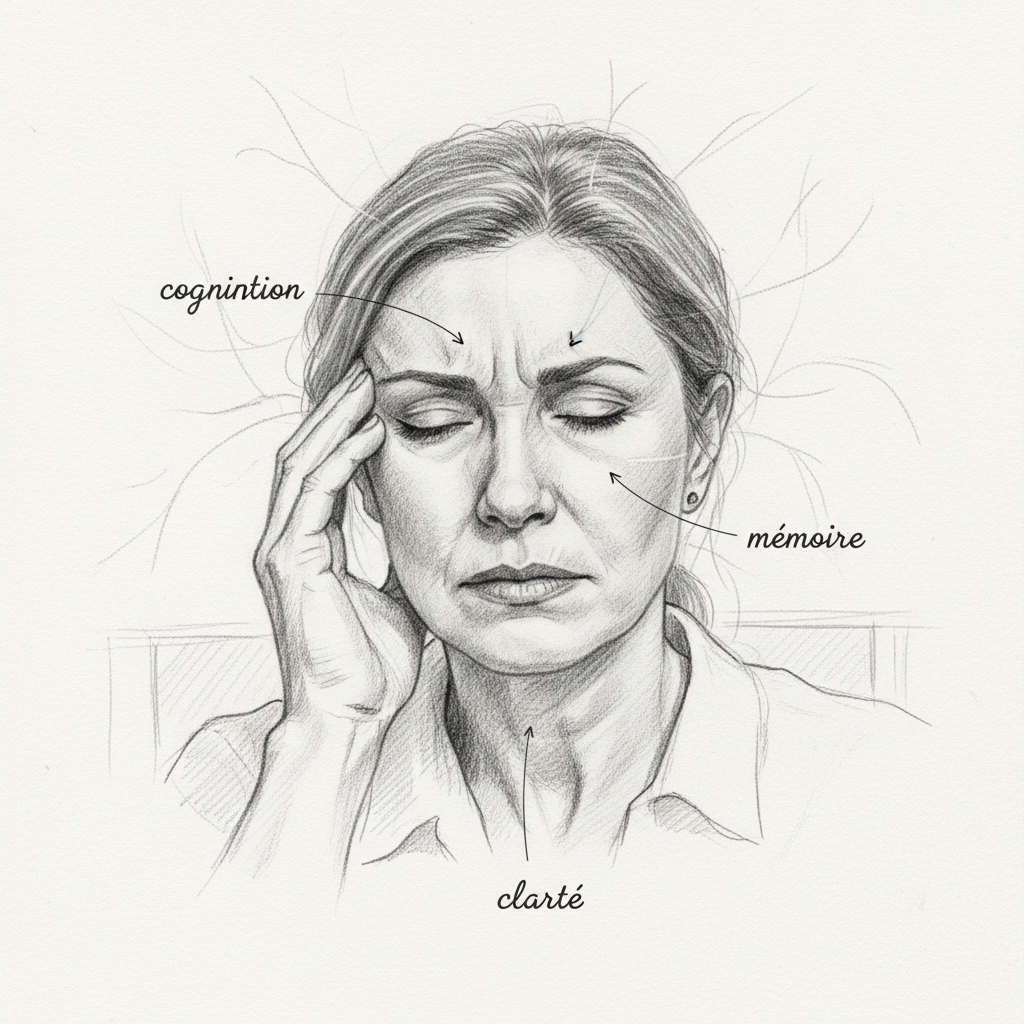
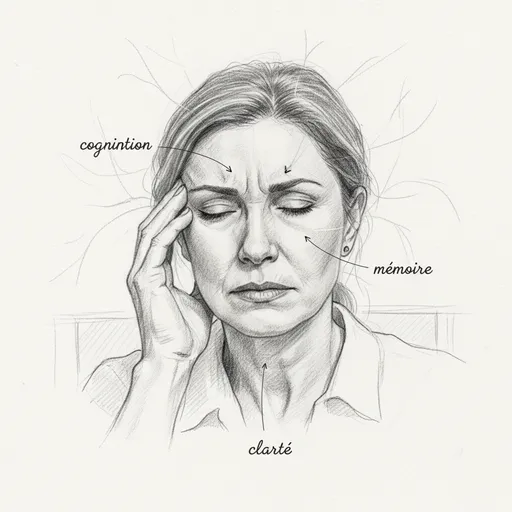
Veronique is fifty-three years old and she is convinced that she is developing Alzheimer’s. Words escape her mid-sentence. She walks into a room and forgets why. She loses her train of thought in the middle of a meeting. Her colleague’s last name on the tip of her tongue, someone she has known for ten years. And this constant sensation of having her head in cotton, like a veil between her and the world. Her primary care doctor told her it was stress. Her gynecologist told her it was menopause and that it would pass. Neither of them explained to her why her brain suddenly seemed to be running in slow motion.
What Veronique is experiencing has a name in functional medicine: brain fog, the mental fog of menopause. And it is neither stress, nor laziness, nor the beginning of dementia. It is a direct biochemical consequence of the estrogen drop on the central nervous system. Estrogens are not merely reproductive hormones. They are powerful neuroprotectors, and when they drop, the brain pays the price.
“Estrogens regulate BDNF, synaptogenesis and myelination. They are not sex hormones for the brain: they are factors of neuronal survival.” Thierry Hertoghe
The brain is an estrogen-dependent organ
We rarely think of the brain as a hormone-dependent organ. Yet the brain contains estrogen receptors (ERalpha and especially ERbeta) in virtually all of its regions: the hippocampus (memory), the prefrontal cortex (reasoning, planning), the amygdala (emotions), the hypothalamus (thermoregulation, circadian rhythms), the locus coeruleus (vigilance, stress). The brain is not simply influenced by estrogens: it depends on them for optimal functioning.
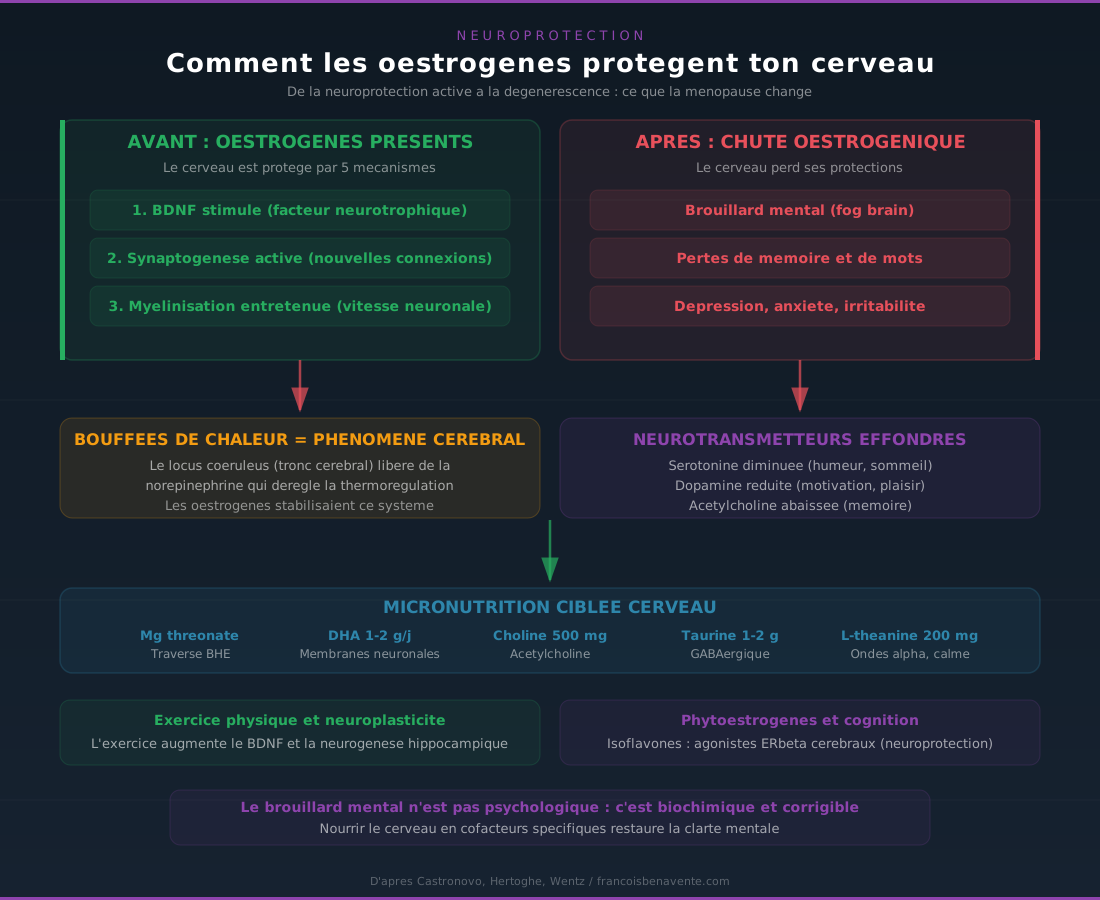
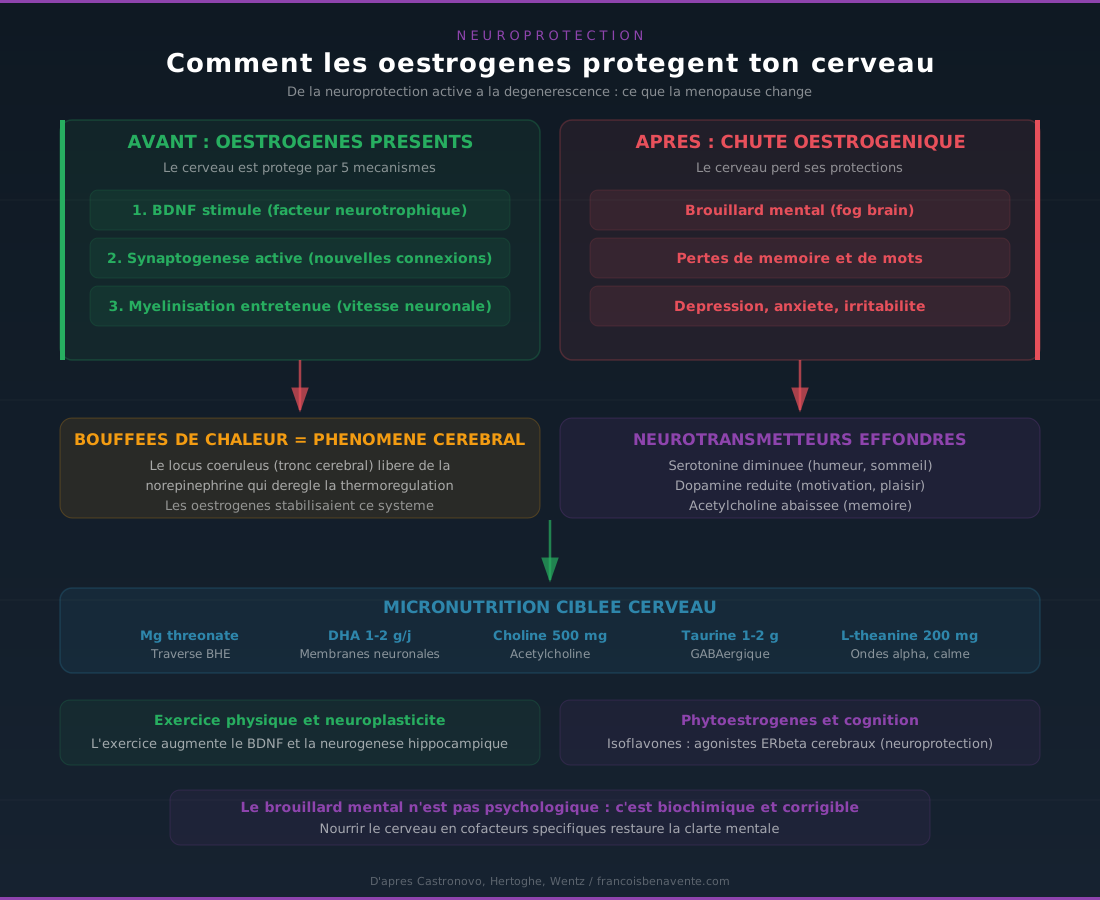
Before menopause, estrogens exert at least five major neuroprotective functions. The first is the stimulation of BDNF (Brain-Derived Neurotrophic Factor), a protein that promotes growth, survival and plasticity of neurons. BDNF is sometimes called “the fertilizer of the brain”: without it, neurons atrophy and synaptic connections weaken. The second is active synaptogenesis: estrogens stimulate the creation of new connections between neurons, which underlies working memory and learning. The third is the maintenance of myelin, the insulating sheath that surrounds nerve fibers and determines the speed of information transmission. The fourth is neurotransmitter modulation: estrogens increase the expression of tryptophan hydroxylase (key enzyme in serotonin synthesis), facilitate the release of dopamine and support acetylcholine synthesis. The fifth is protection against neuronal oxidative stress: estrogens have a direct antioxidant effect on neuronal membranes.
When estrogens drop at menopause, these five protective mechanisms collapse simultaneously. BDNF decreases. Synaptogenesis slows. Myelin becomes fragile. Serotonin drops (hence depression and irritability), dopamine drops (hence loss of motivation and pleasure), acetylcholine drops (hence memory loss). And neuronal oxidative stress increases unopposed. Brain fog is not an impression: it is the subjective translation of these five simultaneous deficits.
Hot flashes: a neurological phenomenon
What surprises the women I accompany most is learning that hot flashes are not a peripheral vascular phenomenon. They do not come from the blood vessels of the skin. They come from the brain.
The locus coeruleus, a small nucleus located in the brainstem, is the main production center for norepinephrine (noradrenaline). Estrogens stabilize the activity of the locus coeruleus. When they drop, the locus coeruleus becomes overactive and releases bursts of norepinephrine that disrupt the hypothalamic thermostat. The hypothalamus, believing it detects overheating, triggers cooling mechanisms: cutaneous vasodilation (redness), sweating (perspiration), tachycardia. This is the hot flash. Not a blood vessel problem, but a problem of brain regulation of temperature.
This neurological understanding has direct practical implications. If hot flashes come from the locus coeruleus and norepinephrine, then approaches that modulate this system will be more effective than those acting peripherally. Cimicifuga (Actaea racemosa) acts precisely on central serotonergic receptors, indirectly modulating hypothalamic thermoregulation. Phytoestrogens (soy isoflavones, hops humulone) act via central ERbeta receptors. And taurine, a GABAergic amino acid, calms the hyperactivity of the locus coeruleus.
Collapsed neurotransmitters
Serotonin is perhaps the neurotransmitter most affected by menopause. Estrogens stimulate the expression of the tryptophan hydroxylase gene (TPH2), the rate-limiting enzyme of serotonin synthesis in the raphe nuclei. When estrogens drop, TPH2 activity decreases, and serotonin production collapses. The consequences are multiple: depressive mood, irritability, anxiety, sweet cravings (serotonin is involved in appetite control), sleep disturbances (serotonin is the precursor to melatonin), and amplification of hot flashes (serotonin modulates thermoregulation).
This is why 5-HTP (Griffonia) and tryptophan are such useful tools at menopause. They provide the brain with the substrate necessary for serotonin synthesis, even when TPH2 is slowed. As I detail in the article on serotonin, the conversion of tryptophan to serotonin requires specific cofactors: vitamin B6 (P5P), magnesium, zinc and iron.
Dopamine is also affected. Estrogens facilitate dopamine release in the prefrontal cortex and nucleus accumbens. The drop in dopamine is reflected in a loss of motivation (“I no longer feel like doing anything”), a reduction in pleasure in usual activities (anhedonia), concentration difficulties and cognitive fatigue. Tyrosine, an amino acid precursor of dopamine, can support dopaminergic synthesis at menopause (500 to 1000 mg in the morning on an empty stomach).
Acetylcholine, the neurotransmitter of memory and learning, also declines. Estrogens support cholinergic neurons in the basal nucleus of Meynert, those same ones destroyed in Alzheimer’s disease. Dietary choline (eggs, liver, soy, cruciferous vegetables) or supplemental (CDP-choline 250 to 500 mg per day) is the substrate for acetylcholine synthesis.
The menopause brain protocol
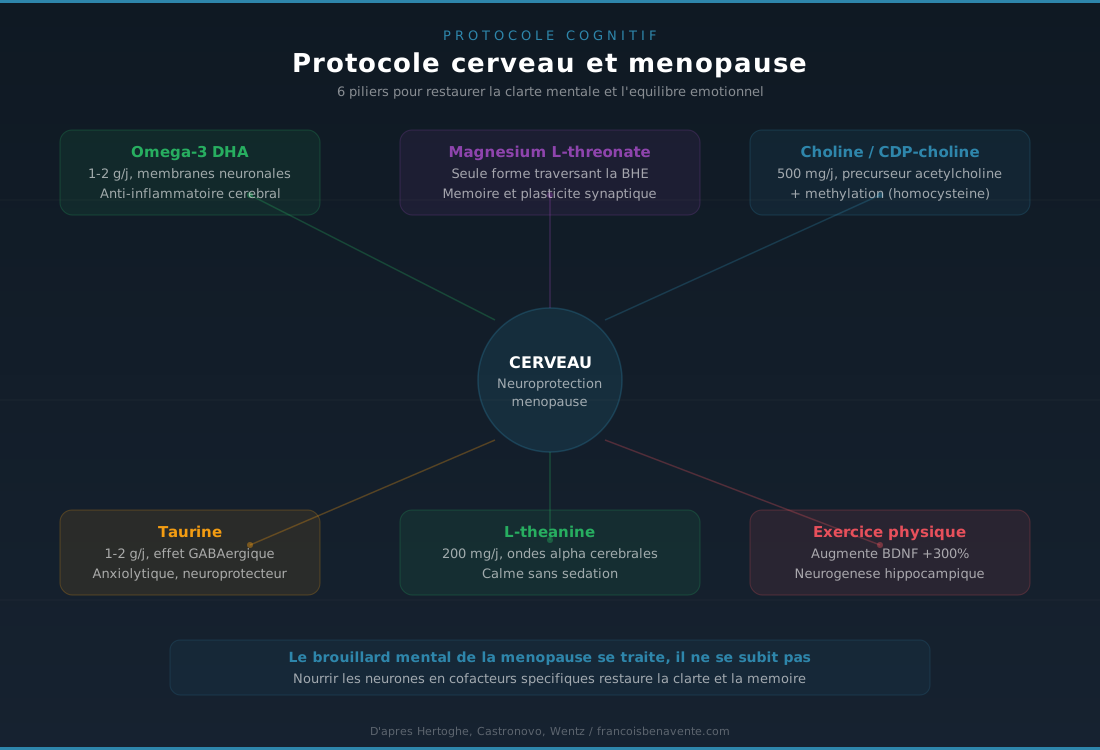
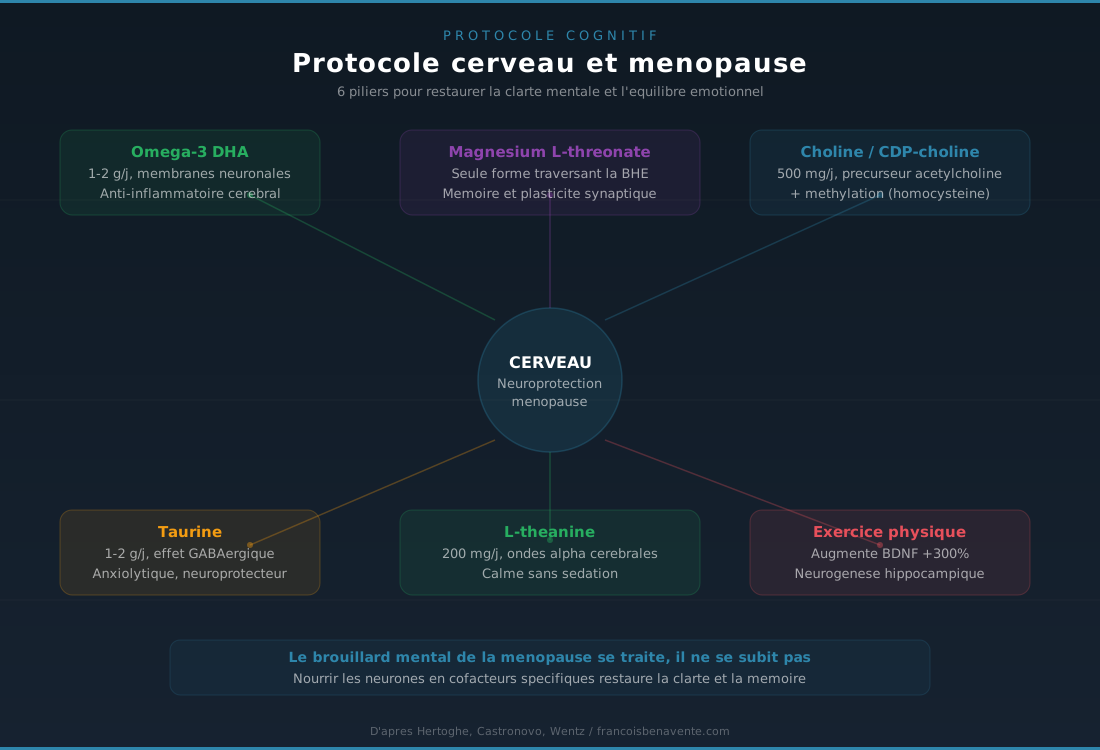
The protocol I put in place for women suffering from brain fog at menopause is based on six pillars, and it produces results within four to eight weeks for most patients.
The first pillar is DHA. Docosahexaenoic acid is the main structural omega-3 of the brain: it comprises more than 20 percent of the fatty acids in neuronal membranes. At menopause, when estrogens no longer protect the membranes, DHA becomes even more critical. The effective dose for the brain is 1 to 2 grams of pure DHA per day (not mixed EPA/DHA where EPA dominates). Oils from cold-water fish (sardine, mackerel, anchovy) or algae oils for vegans are the sources of choice.
The second pillar is magnesium L-threonate. It is the only form of magnesium that crosses the blood-brain barrier (BBB) and increases magnesium concentrations in cerebrospinal fluid. Studies show improvement in synaptic plasticity and memory with this specific form. The recommended dose is 144 mg of elemental magnesium in the form of L-threonate per day (often sold in capsules of 2000 mg of magnesium L-threonate, or about 144 mg of elemental magnesium). This does not replace bisglycinate (300 to 400 mg) for muscle relaxation and sleep, which remains otherwise essential.
The third pillar is choline or CDP-choline (citicoline). Choline is the precursor to acetylcholine, and choline deficiency is common in menopausal women (estrogens stimulated endogenous choline production via hepatic PEMT). CDP-choline has the advantage of providing both choline and cytidine, a nucleotide that supports phospholipid membrane synthesis. Dose: 250 to 500 mg per day.
The fourth pillar is taurine. This sulfur-containing amino acid is an agonist of GABA-A receptors in the brain. It calms neuronal hyperactivity, reduces anxiety, and stabilizes the locus coeruleus (which attenuates hot flashes). Taurine also has a direct neuroprotective effect against oxidative stress. Dose: 1 to 2 grams per day, in one or two doses.
The fifth pillar is L-theanine. This is the amino acid from green tea that increases brain alpha wave production, those waves associated with a state of calm focus. L-theanine does not cause sedation, which distinguishes it from conventional anxiolytics. It improves attention, concentration and subjective quality of mental calm. Dose: 200 mg per day, in the morning or early afternoon.
The sixth pillar, and perhaps the most powerful, is physical exercise. Exercise increases BDNF by 200 to 300 percent during and after exertion. It is the only stimulus capable of triggering hippocampal neurogenesis (the creation of new neurons in the hippocampus) in adults. Forty-five minutes of moderate aerobic exercise (brisk walking, swimming, cycling) three to five times per week is the minimum effective. Strength training adds additional benefit through increased IGF-1, a growth factor that supports neuronal survival. It is the same exercise I recommend to combat osteoporosis in the main article on menopause: one effort, multiple benefits.
Sleep: the critical connection
I cannot talk about the brain without talking about sleep, because the two are intimately linked at menopause. Progesterone, which drops even before estrogens, is a natural sedative that acts on GABA-A receptors. Without it, falling asleep becomes difficult and deep sleep decreases. Night sweats (triggered by the locus coeruleus) fragment sleep around 2 to 3 in the morning. And reduced melatonin (because serotonin, its precursor, is reduced) alters overall sleep architecture.
Yet it is during deep sleep that the brain eliminates metabolic waste (via the glymphatic system), consolidates memories, and repairs neurons. Poor quality sleep therefore amplifies brain fog, depression and memory loss. It is a vicious circle that the protocol must break.
The sleep protocol is integrated into the brain protocol: magnesium bisglycinate in the evening (200 to 300 mg), glycine (3 to 5 grams at dinner, an amino acid that lowers body temperature and facilitates falling asleep), Griffonia or tryptophan to support melatonin synthesis, and the sleep hygiene rules I detail in sleeping naturally well.
What naturopathy does not do
Brain fog during menopause is not dementia. But if cognitive disturbances are severe, rapidly progressive, or accompanied by behavioral changes, a neurological evaluation is necessary to rule out a neurodegenerative disease. The protocol I describe here is a support for terrain, not a neurological treatment. It does not replace medical monitoring in cases of atypical symptoms.
Supplementation with 5-HTP or L-tryptophan is contraindicated in cases of SSRI antidepressant use (risk of serotonin syndrome). L-theanine and taurine are generally well tolerated but should be introduced gradually. And magnesium L-threonate, like any supplement, should be taken away from medications to avoid absorption interactions.
Based in Paris, I consult via video throughout France. You can make an appointment for a personalized nutritional cognitive assessment.
For the brain, Sunday Natural offers magnesium L-threonate, CDP-choline and pharmaceutical-grade DHA (-10% with code FRANCOIS10). Find all my partnerships with exclusive promo codes.
Scientific references
Want to evaluate your status? Take the free Hertoghe estrogen questionnaire in 2 minutes.
If you want personalized support, you can book a consultation appointment.
To go further
- Menopause: what your body is trying to tell you (and what we hide)
- Menopause and estrogens: the liver detoxification that no one explains to you
- Menopause, skin and hair: what the hormonal drop does to your tissues
- Phytoestrogens: soy, hops, lignans, the guide without misconceptions
Sources
- Hertoghe, Thierry. The Textbook of Nutrient Therapy. International Medical Books, 2019.
- Castronovo, V. “Menopause and brain.” DU MAPS, 2020.
- Walker, Matthew. Why We Sleep. Scribner, 2017.
- Wentz, Izabella. “Hormones and cognition.” Newsletter, 2025.
- Mouton, Georges. “Neurotransmitters and terrain.” Functional medicine conference.
“Brain fog is not in your head. It is in your neurons. And your neurons are hungry.” Thierry Hertoghe
Healthy recipe: Carrot-beet-celery juice: This juice supports cognition and memory.



Laisser un commentaire
Sois le premier à commenter cet article.