Carole is forty-three years old and she no longer recognizes herself. For the past year, she has gained six kilos without changing her diet. She wakes up at 3 a.m. drenched in sweat. Her periods, previously regular as clockwork, now arrive every twenty-two to twenty-five days with clots she had never experienced before. Her mood swings between explosive irritability and unexplained melancholy. Her partner is walking on eggshells. And she has developed a new, diffuse anxiety that takes hold when she wakes up and doesn’t let go all day.
Her doctor measured her TSH (2.8 mIU/L) and told her that her thyroid was fine. Her gynecologist offered her the pill to regulate her cycles. Her mother-in-law told her it was stress. No one told her she was in perimenopause. At forty-three years old.
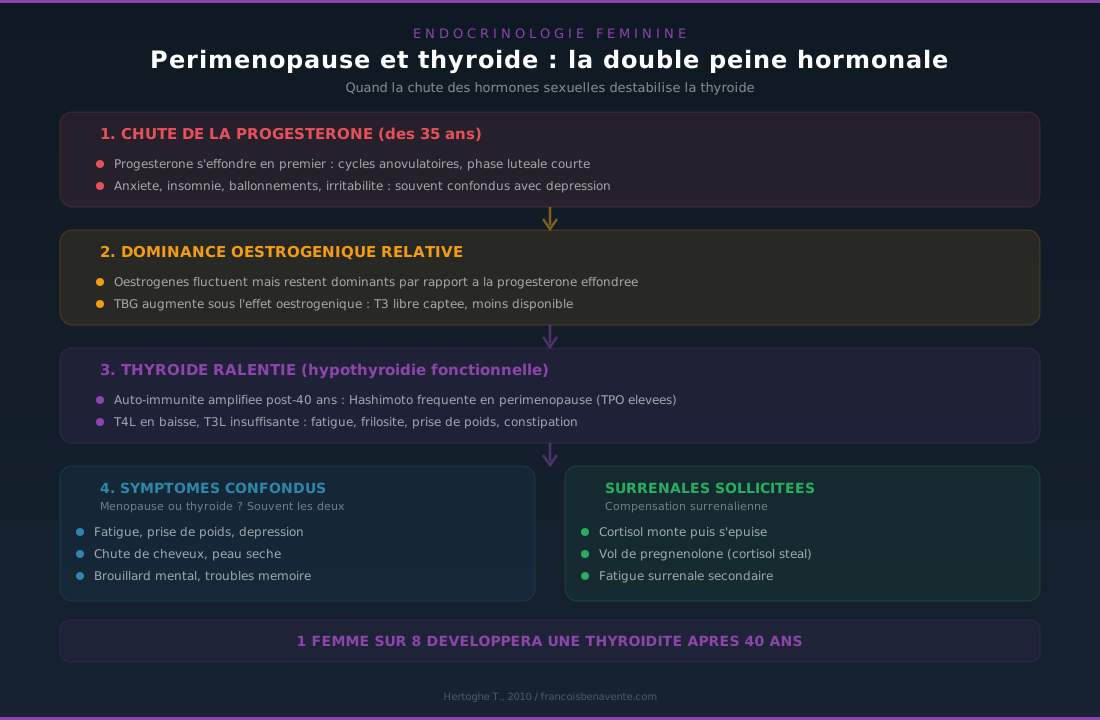
When she came in for a consultation, I ordered a complete hormonal panel in the luteal phase (day 21 of the cycle). Progesterone at 3.8 ng/mL (collapsed). Estradiol at 145 pg/mL (in the high normal range). Estradiol/progesterone ratio showing clear estrogen dominance. Free T3 at 3.0 pmol/L (functionally low). DHEA-S at 1.2 mcmol/L (floor level for her age). Salivary cortisol upon waking flattened. The puzzle came together all at once: her adrenals had been compensating for months for the drop in ovarian progesterone, and they were about to give out.
Perimenopause begins earlier than we think
Menopause is defined by the permanent cessation of periods for twelve consecutive months. In France, the average age is fifty-one years. But perimenopause, this phase of chaotic hormonal transition, begins much earlier. The first hormonal fluctuations can appear as early as thirty-five years old, with acceleration between forty and forty-five years. Perimenopause lasts on average four to eight years, but can extend to ten to twelve years in some women.
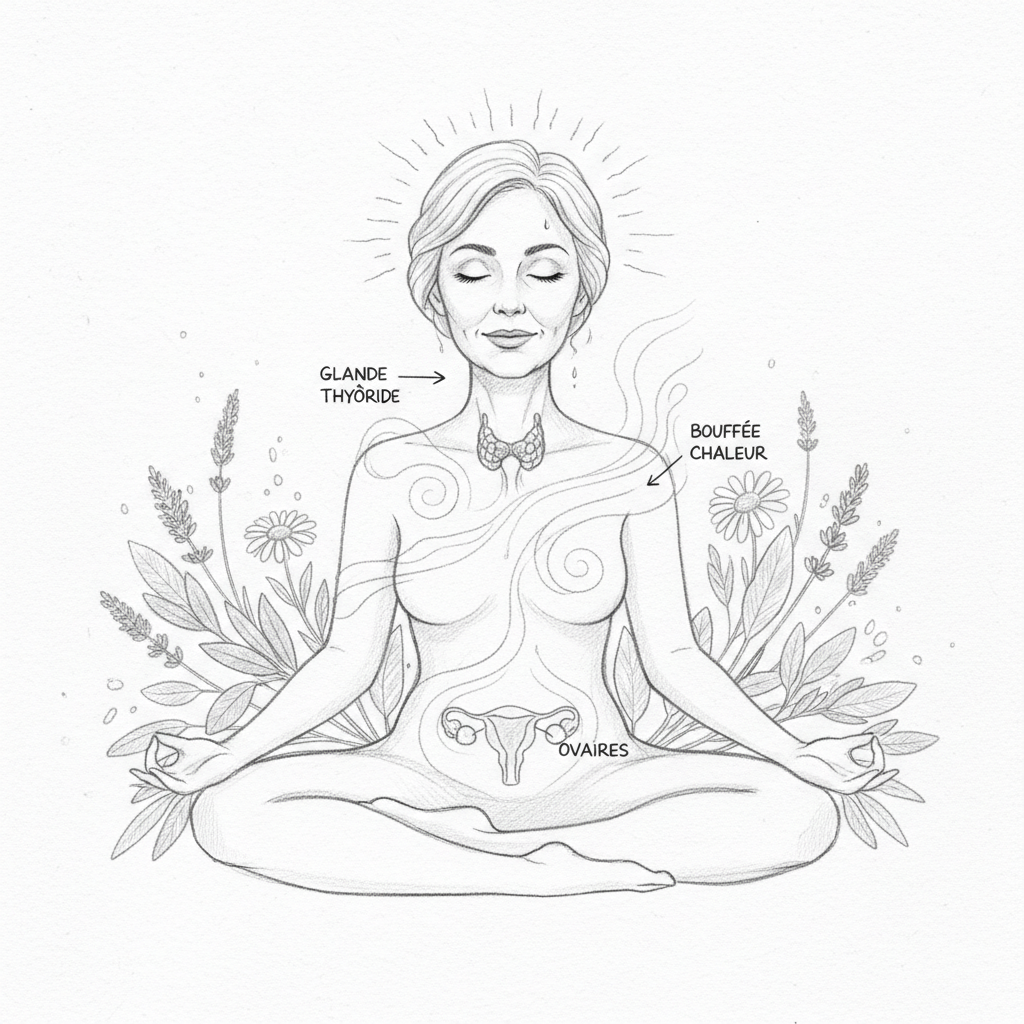
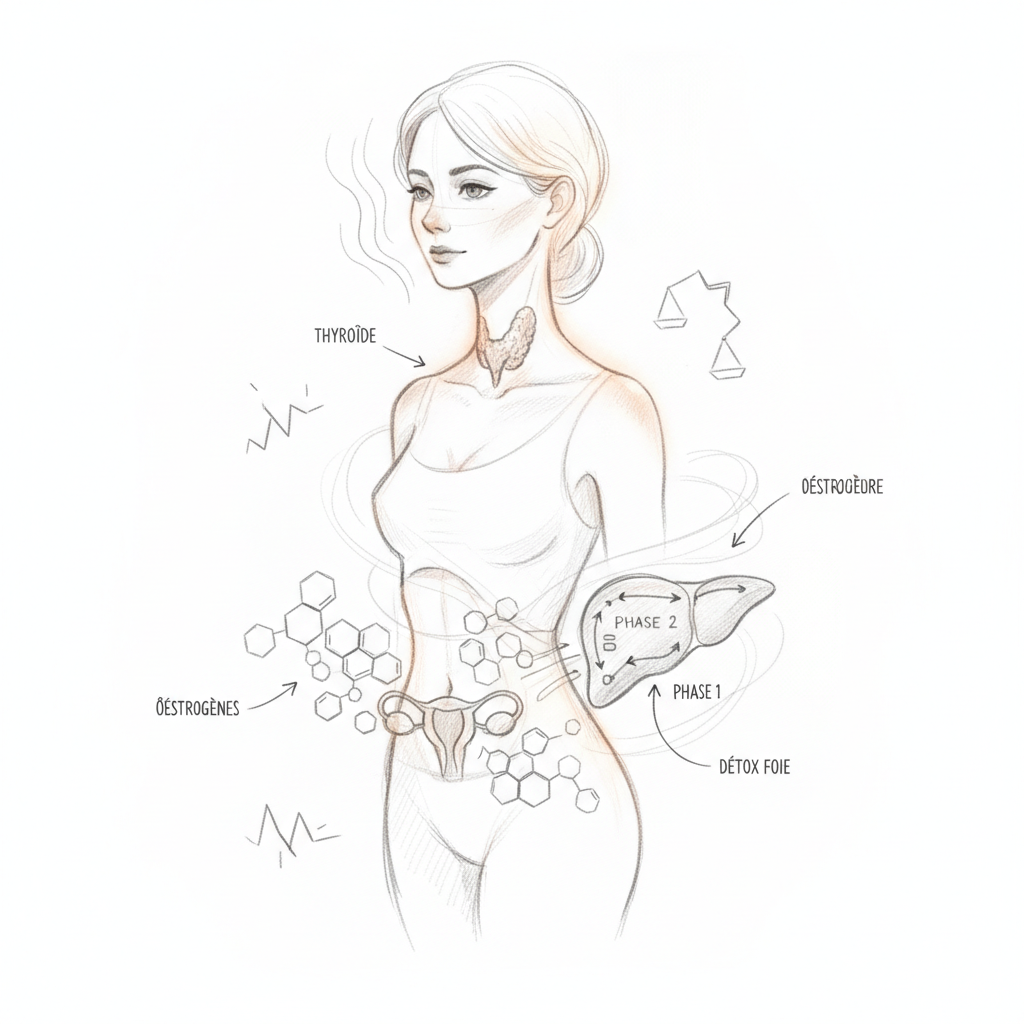
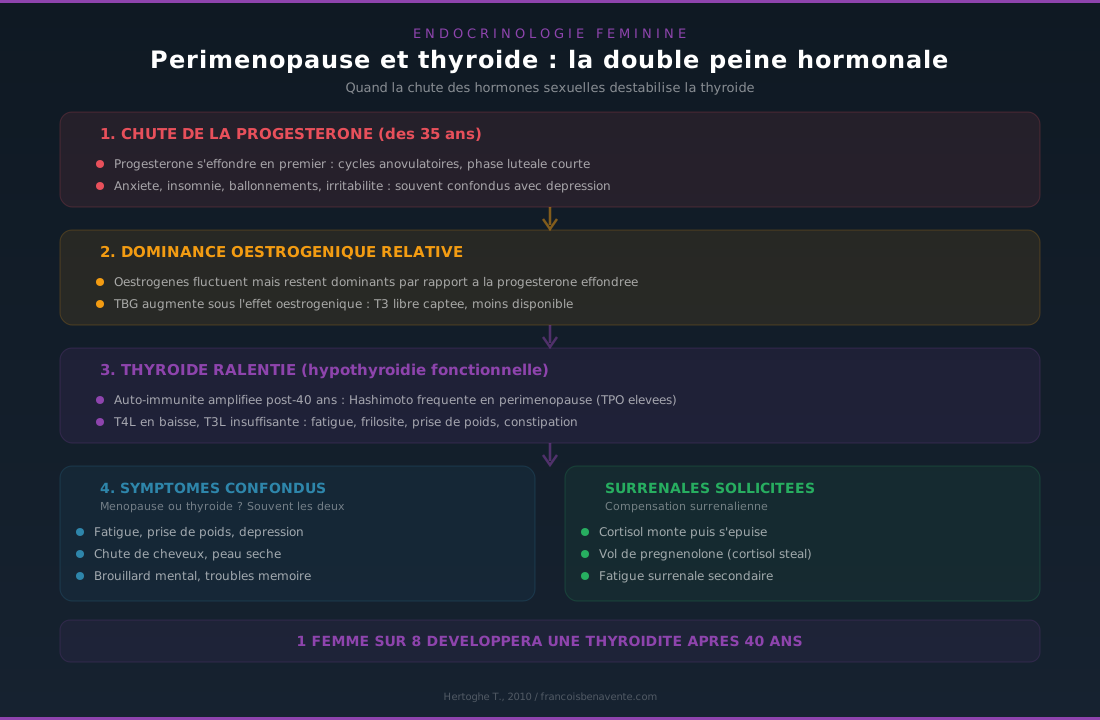
Hertoghe, in his approach to functional endocrinology, explains what really happens during perimenopause: the ovaries begin to “skip” certain ovulations. Without ovulation, no corpus luteum. Without corpus luteum, no progesterone. Progesterone can drop 100% well before estrogens even begin to decline. It is this asymmetry that creates the famous estrogen dominance of perimenopause, with its array of symptoms: heavy periods, breast tenderness, water retention, irritability, insomnia, abdominal weight gain, and decreased libido.
What is less well known is that this hormonal transition is a major trigger for thyroid disease. Estrogenic fluctuations alter the expression of thyroid receptors, impair TBG, and associated immune changes (estrogens are immunostimulating) can reactivate a latent autoimmune predisposition. This is why the peak incidence of Hashimoto’s in women occurs precisely between forty and fifty years.
The symptom overlap
One of the most insidious clinical traps of perimenopause is the near-perfect overlap between its symptoms and those of hypothyroidism. Fatigue: both. Weight gain: both. Hair loss: both. Dry skin: both. Constipation: both. Depression: both. Brain fog: both. Cold intolerance: both. How do you know if it’s the thyroid, the hormones, or both?
The answer is often: both. And treating them separately doesn’t work. Putting a woman in perimenopause on Levothyrox without correcting estrogen dominance means increasing the metabolism of a body whose female hormones are in chaos. Correcting estrogen dominance without checking the thyroid means missing a cause of fatigue and depression that will never respond to Vitex alone. The approach must be integrated.
My standard perimenopause workup includes: the complete thyroid panel (TSH, Free T3, Free T4, anti-TPO, anti-TG), the female hormonal panel in luteal phase (estradiol, progesterone, total and free testosterone, SHBG), the adrenal panel (salivary cortisol at 4 time points, DHEA-S), and key cofactors (iron/ferritin, vitamin D, B12, zinc, magnesium).
The three-phase protocol
My approach to thyroidal perimenopause unfolds in three progressive phases.
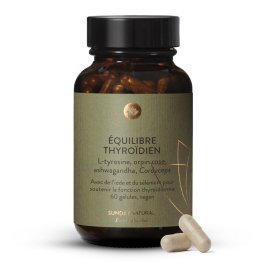
The first phase is nutritional foundation and adrenal support (months 1-2). Anti-inflammatory diet rich in healthy fats (avocado, olive oil, small fatty fish), quality proteins (eggs, fish, legumes) and fiber (green vegetables, flax seeds). Magnesium citrate 400 mg at bedtime (sleep, adrenals, transit). Vitamin D 4000 IU per day if the level is below 40 ng/mL. Ashwagandha 300 mg twice daily (adaptogen that supports the adrenals and improves T4→T3). Heart rate variability coherence three times per day (vagal and cortisol regulation). This first phase prepares the terrain.
The second phase is gentle hormonal modulation (months 3-6). Vitex (chaste tree) 20-40 mg in the morning on an empty stomach to stimulate progesterone (if ovulation is still present). Seed cycling (flax + pumpkin in follicular phase, sunflower + sesame in luteal phase). DIM 100-200 mg per day for hepatic estrogen metabolism. Evening primrose oil 1000 mg per day (gamma-linolenic acid for breast tenderness and inflammation). This second phase works with the hormones still produced by the body.
The third phase is bioidentical hormone therapy if necessary (after six months without sufficient improvement). Topical bioidentical progesterone 25 mg per application from day 14 to day 28 of the cycle, increasable to 50 mg if symptoms persist. To be discussed with a doctor trained in bioidentical hormone therapy (not synthetic progestins which have neither the same structure nor the same benefits). Follow-up is done with urinary DUTCH testing every six months to adjust doses.
Lifestyle as a pillar
Sleep is non-negotiable in perimenopause. Hormones regulate during deep sleep (growth hormone, melatonin, progesterone). Sleeping less than seven hours worsens estrogen dominance, morning cortisol and inflammation. Go to bed before 11 p.m., cool room (18-19°C), complete darkness, no screens one hour before.
Exercise needs to be rethought. Intensive cardio sessions (HIIT, long-distance running) that worked at thirty can worsen adrenal fatigue in perimenopause. Prioritize strength training (which maintains muscle mass and insulin sensitivity), yoga (which calms the sympathetic nervous system), walking in nature (which restores circadian cortisol) and swimming (low impact, excellent for the nervous system).
Warning
Perimenopause is not a disease. It is a physiological transition that all women go through. The goal is not to “treat” perimenopause but to support the body during this transition to prevent hormonal chaos from triggering autoimmune, metabolic or cardiovascular pathologies.
If you have abnormal bleeding (periods lasting more than ten days, bleeding between periods, bleeding after intercourse), see a gynecologist BEFORE starting a naturopathic protocol. These symptoms may signal a fibroid, polyp or more serious condition requiring medical evaluation.
Curtay sums up the functional approach to perimenopause well: “The woman in perimenopause is not sick. She is in transition. And any transition can be either a crisis or an opportunity, depending on whether we support it or ignore it.” Carole chose support. Six months into the protocol, her weight had lost four of the six kilos, her periods had become monthly with normal flow, her nighttime awakenings had disappeared, and her husband sent me a message thanking me. I replied that it was Carole who had done the work. I simply showed the way.
Do you want to evaluate your status? Take the free Claeys thyroid questionnaire in 2 minutes.
If you want personalized support, you can book a consultation.

Laisser un commentaire
Sois le premier à commenter cet article.