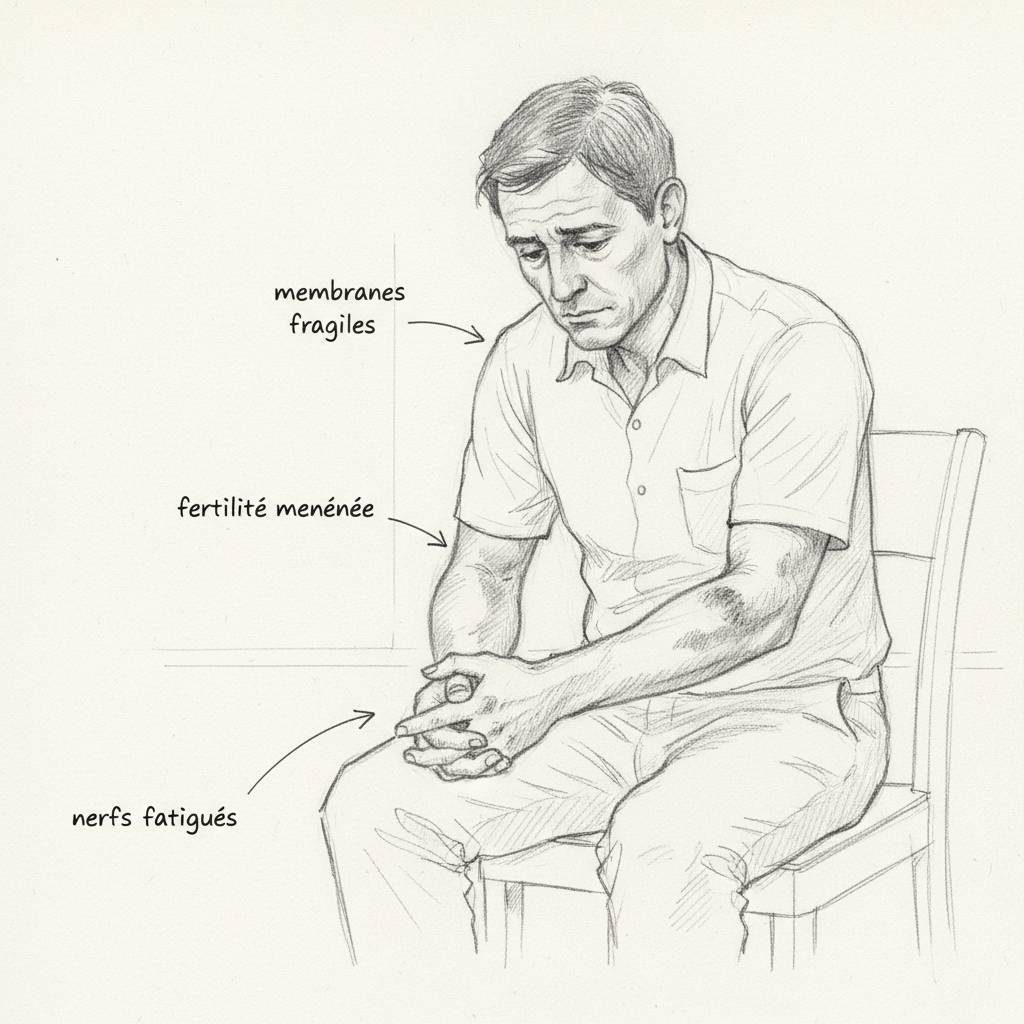
Maxime is forty years old. A computer scientist, he eats prepared meals, never cooks, and consumes almost no fresh fruits or vegetables. He came to consult with me because his gums had been bleeding when brushing for months, he had unexplained bruises on his arms, and even minor cuts took weeks to heal. His dentist had diagnosed gingivitis and prescribed mouthwash. His doctor had checked his platelets, which were normal. No one had thought of scurvy. Because scurvy is a disease of 18th-century sailors, right? No. Subclinical scurvy is a reality of the 21st century.
Vitamin C is the most well-known vitamin to the public and paradoxically one of the most misunderstood by doctors. Linus Pauling, double Nobel Prize winner, spent the last decades of his career defending the idea that high doses of vitamin C could prevent and treat many diseases. Official medicine mocked him. Forty years later, research partially proved him right on certain points.
The causes of vitamin C deficiency
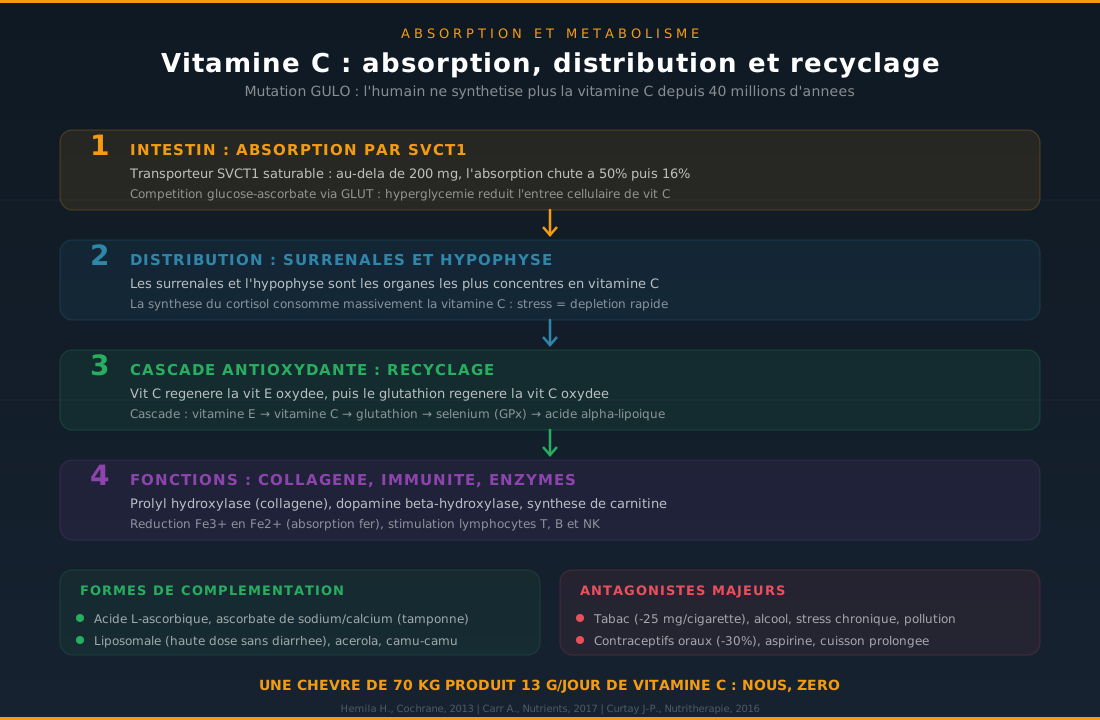
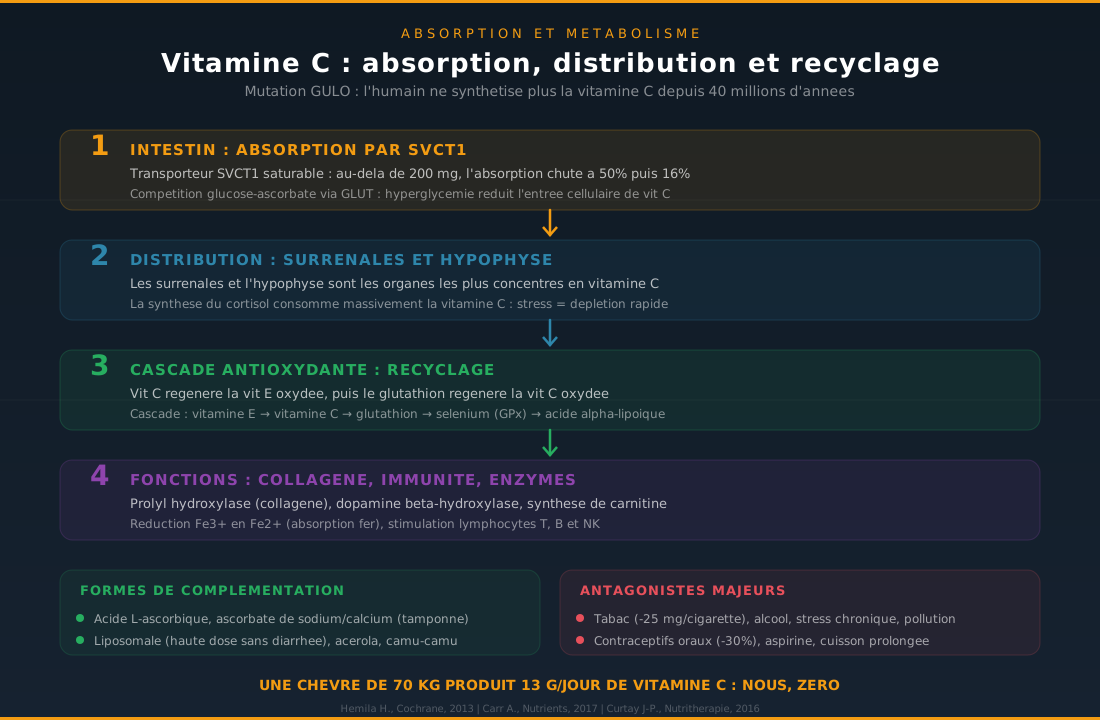
Humans are among the rare mammals incapable of synthesizing vitamin C. A mutation of the GULO gene (L-gulonolactone oxidase), which occurred approximately forty million years ago in our primate ancestors, deactivated the last enzyme in the biosynthesis chain. Most mammals produce grams of vitamin C per day (a 70-kilogram goat produces 13 grams per day, and up to 100 grams under stress). We produce none. Every milligram must come from food.
Poor nutrition in fresh fruits and vegetables is the main cause. Vitamin C is concentrated in fruits (citrus, kiwi, strawberries, blackcurrants) and raw vegetables (peppers, broccoli, parsley, cabbage). Cooking destroys thirty to sixty percent of vitamin C. Prolonged storage further reduces its content. A meal of prepared dishes, reheated in the microwave, contains almost no vitamin C.
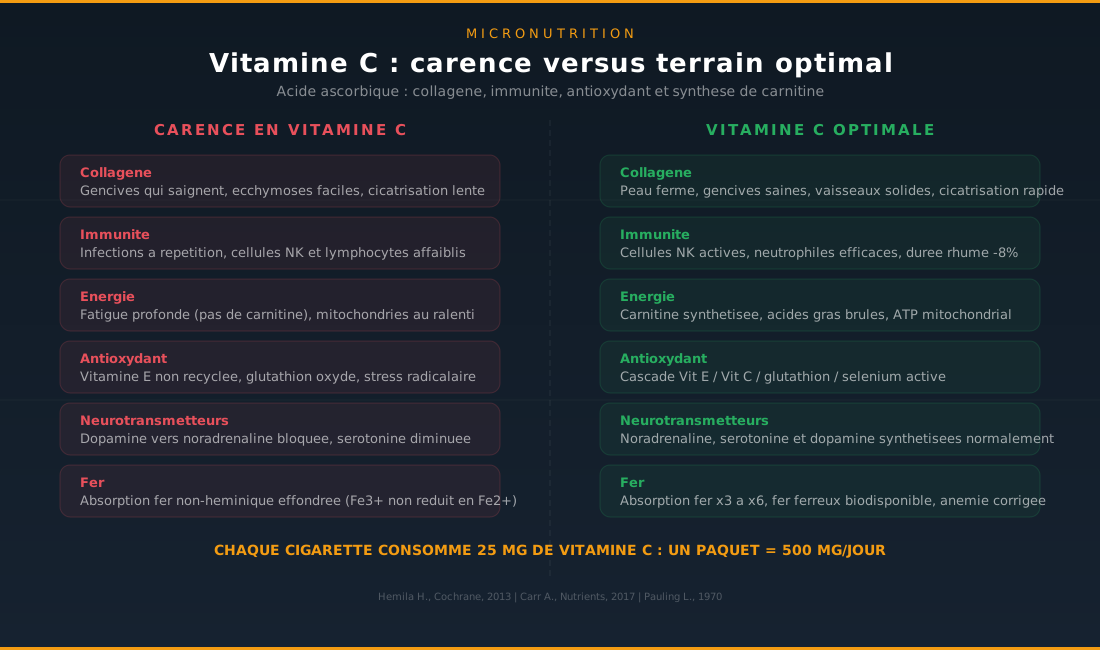
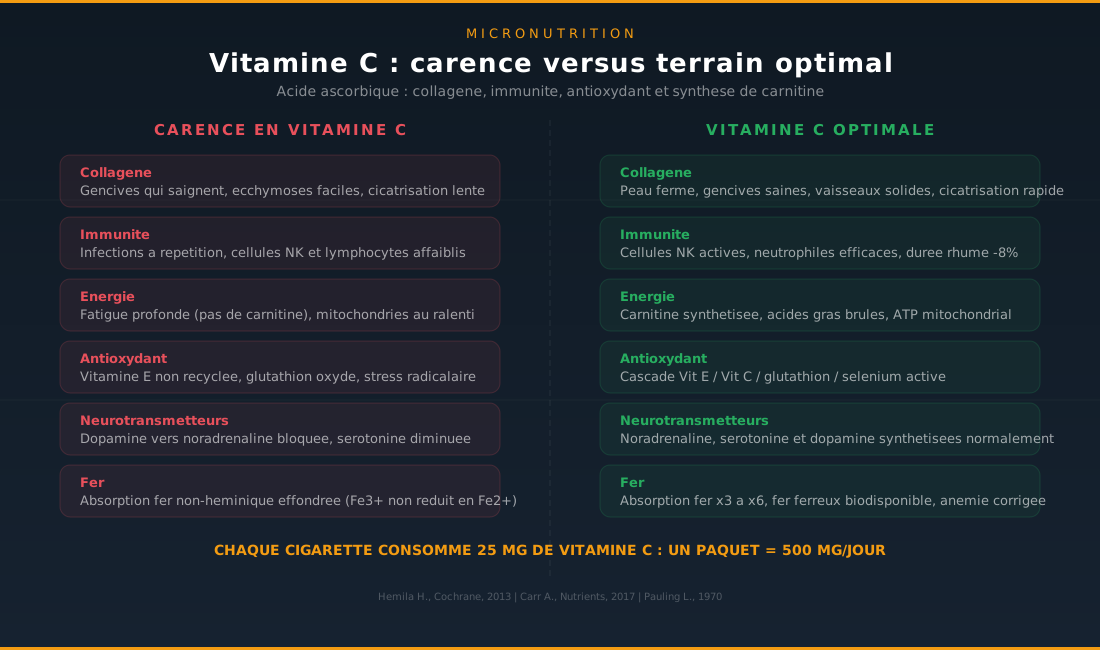
Smoking is a major depletion factor. Each cigarette neutralizes approximately 25 milligrams of vitamin C through the oxidative stress it generates. A smoker of one pack per day has plasma vitamin C levels thirty to forty percent lower than those of a non-smoker, even with identical dietary intake.
Chronic stress increases vitamin C requirements because the adrenal glands are the second organ most concentrated in vitamin C (after the pituitary gland). Cortisol synthesis consumes vitamin C. Alcohol, pollution, chronic inflammation, diabetes, and infections increase oxidative stress and therefore vitamin C consumption. Aspirin reduces plasma levels. Oral contraceptives decrease levels by thirty percent.
The symptoms of deficiency
Vitamin C is a cofactor for prolyl hydroxylase and lysyl hydroxylase, two enzymes essential for collagen synthesis. Without vitamin C, the collagen produced is unstable and cannot maintain the structure of connective tissues. Collagen represents thirty percent of total body proteins: skin, gums, blood vessels, bones, cartilage, tendons, scars.
Bleeding gums (gingivorrhagia) are the earliest sign of subclinical scurvy. Gums are connective tissue with rapid turnover, highly dependent on collagen. Vascular fragility manifests as ecchymoses (bruises) appearing at the slightest impact, petechiae (red dots on the skin), and perifollicular hemorrhages (bleeding around hair follicles). Wound healing is slowed or incomplete.
Fatigue is nearly constant because vitamin C is necessary for carnitine synthesis (via trimethyllysine hydroxylase and gamma-butyrobetaine hydroxylase). Without carnitine, fatty acids cannot enter the mitochondria to be burned, and energy production drops. Vitamin C is also necessary for the conversion of dopamine to noradrenaline and for serotonin synthesis.
Immunity is compromised. Vitamin C stimulates the proliferation and function of T and B lymphocytes, increases the activity of NK (Natural Killer) cells, and protects neutrophils against auto-oxidation during phagocytosis. A vitamin C deficiency results in repeated infections, slow healing, and increased susceptibility to viruses.
The micronutrients essential to vitamin C
Iron and vitamin C have a powerful synergistic relationship. Vitamin C reduces ferric iron (Fe3+) to ferrous iron (Fe2+), the only form absorbable by enterocytes. Taking 200 milligrams of vitamin C with an iron-rich meal increases its absorption three to six times. This is why in any iron-deficiency anemia, vitamin C is an indispensable adjuvant.
Vitamin E and vitamin C form a complementary antioxidant pair. Vitamin E protects lipid membranes against peroxidation and transforms into tocopheryl radical. Vitamin C regenerates vitamin E by reducing this radical. Without vitamin C, vitamin E becomes depleted quickly.
Glutathione is the main intracellular antioxidant, and vitamin C regenerates it by reducing oxidized glutathione (GSSG) to reduced glutathione (GSH). This is an antioxidant cascade: vitamin E → vitamin C → glutathione → selenium (cofactor of glutathione peroxidase).
Food sources
Camu-camu is the most concentrated source with 2800 milligrams per 100 grams. Acerola contains 1700 milligrams per 100 grams. Blackcurrants provide 200 milligrams per 100 grams. Red pepper contains 190 milligrams per 100 grams. Kiwi provides 90 milligrams per 100 grams. Strawberries contain 60 milligrams per 100 grams. Orange provides 50 milligrams per 100 grams. Raw broccoli contains 90 milligrams per 100 grams. Fresh parsley provides 130 milligrams per 100 grams. Raw cabbage contains 50 milligrams per 100 grams.
Official recommended intakes are 110 milligrams per day in France. Curtay and Mouton recommend 500 to 1000 milligrams per day as optimal dose, and 2 to 4 grams per day as therapeutic dose. Linus Pauling took 18 grams per day and lived to 93 years old.
The antagonists of vitamin C
Tobacco is the number one antagonist. Aspirin accelerates renal elimination. Oral contraceptives reduce levels by thirty percent. Corticosteroids increase requirements. Prolonged cooking, exposure to air and light degrade vitamin C in foods. Excess copper oxidizes vitamin C. Alcohol reduces absorption.
Environmental oxidative stress (pollution, heavy metals, endocrine disruptors) massively consumes vitamin C as a first-line antioxidant.
The forgotten causes of deficiency
Diabetes is associated with thirty percent lower vitamin C levels, even at identical intakes, due to glucose-ascorbate competition for the GLUT transporter. Hyperglycemia reduces vitamin C entry into cells.
Surgery and trauma massively increase vitamin C requirements for scar collagen synthesis and oxidative stress management. Hospitalized patients often have collapsed vitamin C levels.
Functional adrenal insufficiency and chronic stress deplete adrenal vitamin C. Institutionalized elderly people have a prevalence of subclinical scurvy of ten to fifteen percent.
Food supplements
Pure L-ascorbic acid is the most economical and most studied form. It can cause stomach burns and diarrhea at high doses. Buffered forms (sodium, calcium, magnesium ascorbate) are better tolerated.
Acerola and camu-camu powder provide natural vitamin C along with associated bioflavonoids (hesperidin, rutin, quercetin) which improve absorption and tissue action.
Liposomal vitamin C is encapsulated in phosphatidylcholine liposomes that protect vitamin C from gastric degradation and allow direct absorption by intestinal cells, without passing through saturable SVCT transporters. Bioavailability is superior to that of standard oral ascorbic acid, and high doses do not cause diarrhea.
Dosage varies according to objective: 500 milligrams to 1 gram per day for prevention, 2 to 4 grams per day during periods of infection or stress, and up to digestive tolerance (Cathcart technique: increase the dose until the first soft stools, then decrease slightly).
Maxime started with 2 grams of liposomal vitamin C per day, divided into two doses. In ten days, his gums no longer bled. In three weeks, the unexplained bruises had disappeared. In one month, a cut healed normally for the first time in a year. He also began eating a kiwi and a red pepper per day. Sometimes, 21st-century scurvy is treated with a kiwi.
To assess your vitamin C status, take the vitamin C deficiency questionnaire on my site.
To go further
- Vitamin A (retinol): vision, immunity and cellular renewal
- Vitamin E (tocopherol): guardian of membranes and fertility
- Acetylcholine: the forgotten neurotransmitter of your memory
- Oxidative balance: Dr. Brack’s test to measure your oxidative stress
Sources
- Hemilä, Harri, et Elizabeth Chalker. “Vitamin C for preventing and treating the common cold.” Cochrane Database of Systematic Reviews 1 (2013) : CD000980.
- Carr, Anitra C., et Silvia Maggini. “Vitamin C and immune function.” Nutrients 9.11 (2017) : 1211.
- Curtay, Jean-Paul. Nutrithérapie : bases scientifiques et pratique médicale. Testez Éditions, 2016.
- Pauling, Linus. Vitamin C and the Common Cold. San Francisco : W. H. Freeman, 1970.
- Kousmine, Catherine. Soyez bien dans votre assiette jusqu’à 80 ans et plus. Paris : Tchou, 1980.
If you want personalized support, you can book a consultation. For supplementation, Sunday Natural (code FRANCOIS10). Find all my partnerships.



Laisser un commentaire
Sois le premier à commenter cet article.