Graves’ Disease and Stress: When Emotion Becomes Disease
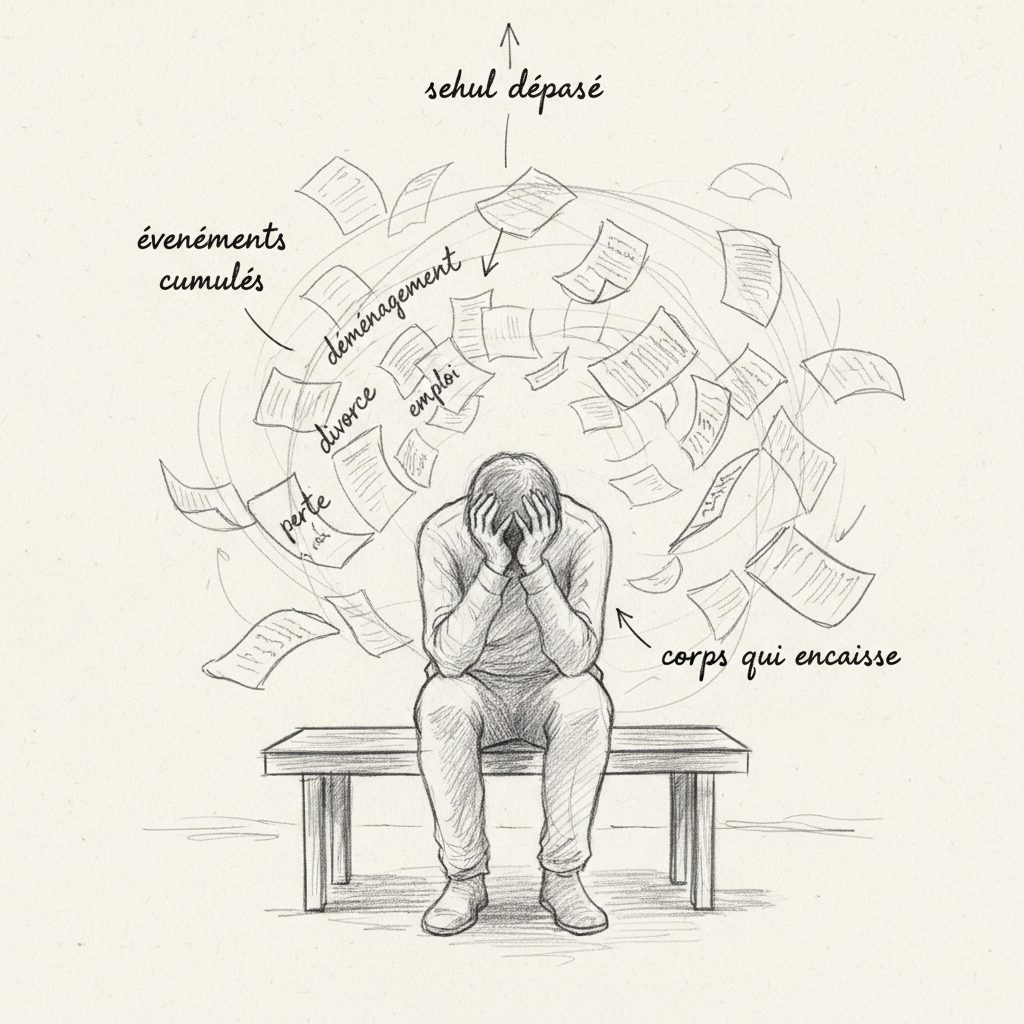
Isabelle is thirty-eight years old. I remember exactly the moment she sat in my office and told me: “I lost my mother nine months ago. And for the past six months, everything has fallen apart.” Her doctor had diagnosed Graves’ disease three months earlier. TSH collapsed, T3 and T4 through the roof, TRAb strongly positive. She was taking Neomercazole and propranolol, her symptoms were controlled, but she felt that something deeper had not been addressed. And when she told me the sequence of events, her mother’s death followed by the discovery of her husband’s infidelity, followed by the Graves’ diagnosis, she broke down in tears. Not sadness. Anger. An anger she had been carrying for nine months with nowhere to put it.
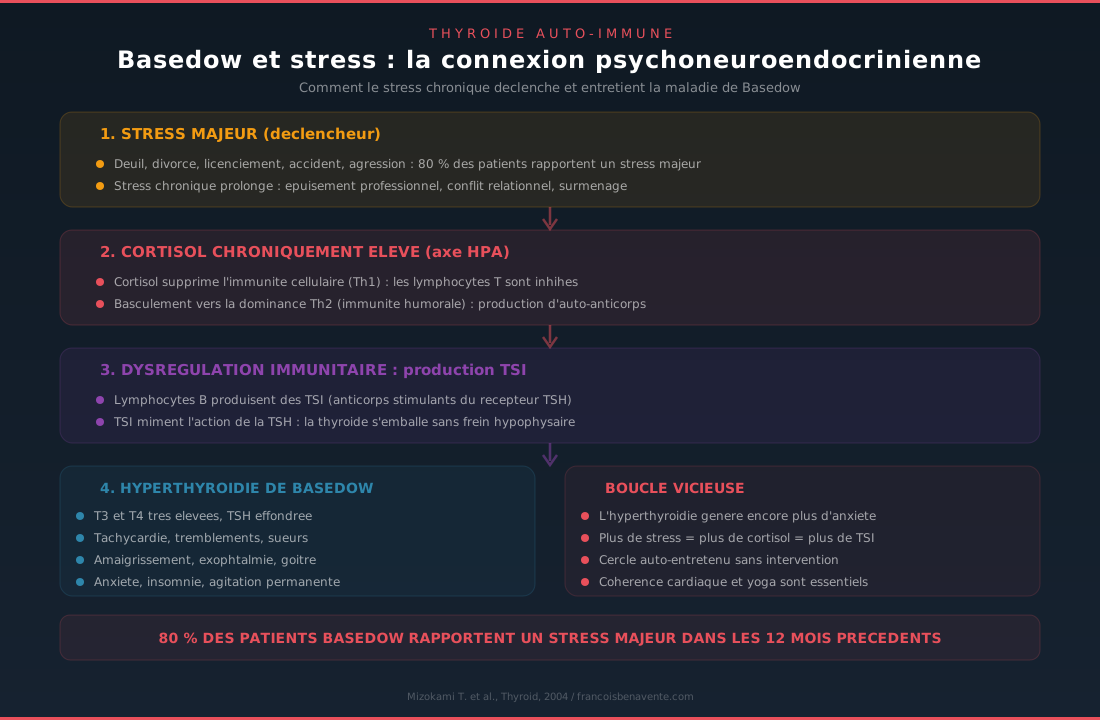
This is not a coincidence. If you’ve read my article on Graves’ disease, you know that Rosch’s studies published in 1993 are conclusive: stress is identified as the triggering factor in over ninety percent of cases. This stunning figure means that almost all Graves’ cases have a history of major stress in the months preceding diagnosis. Yet how many endocrinologists ask the question? How many Neomercazole prescriptions are accompanied by an exploration of the emotional terrain? You can guess the answer.
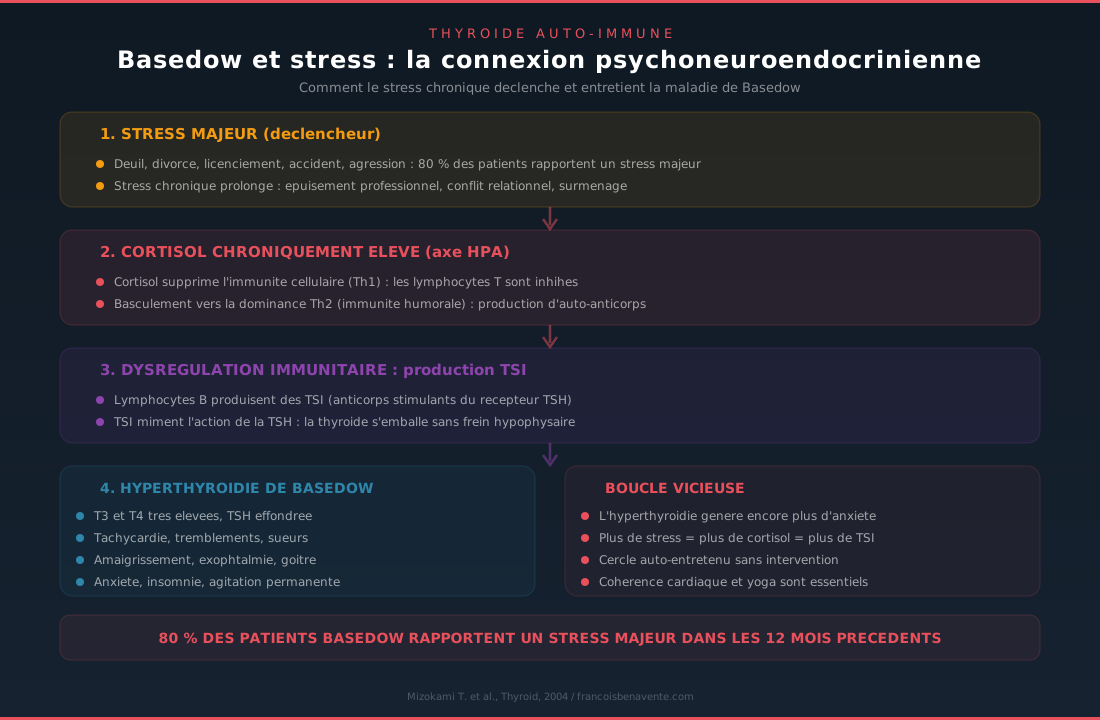
The psychoneuroendocrinology of Graves’ disease
The term is long but the concept is simple: the psyche (emotions, thoughts, traumas), the nervous system, the endocrine system (hormones) and the immune system are not separate systems. They are the four faces of the same tetrahedron. Emotional stress translates into nerve signals, which translate into hormone secretions, which translate into immune responses. Depression modifies cytokines. Grief alters T lymphocytes. Trauma rewrites the epigenetics of the stress axis. These connections are not metaphorical, they are biochemical.
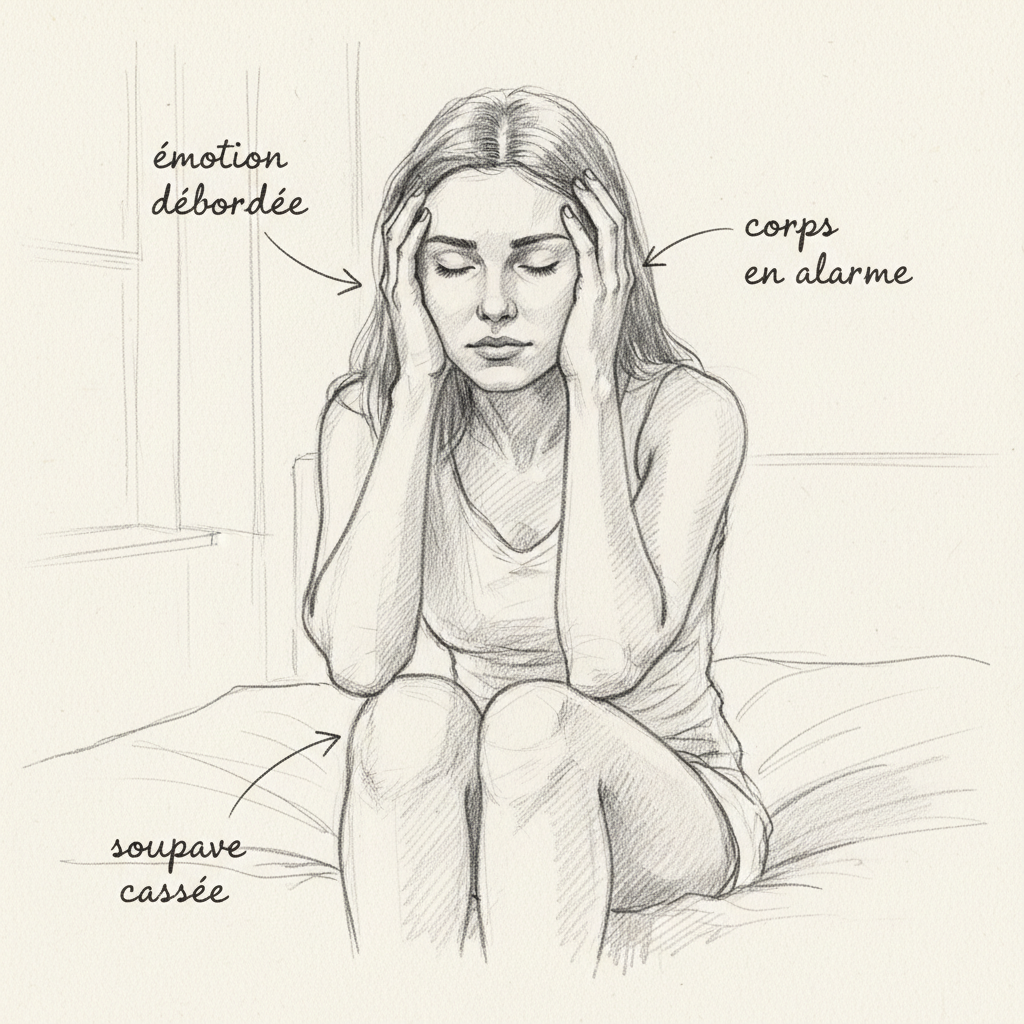
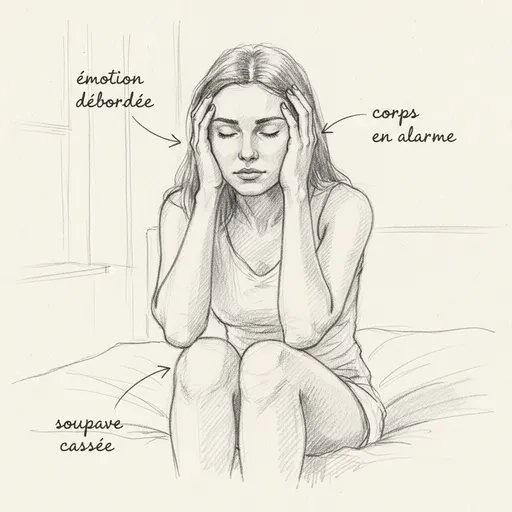
Dr. Jean Du Chazaud, founder of endocrinopsychology in France, spent his career mapping these connections. His clinical observation, after decades of practice, led him to a conclusion that official medicine still struggles to integrate: each endocrine gland has an associated psychological profile, and the thyroid is, par excellence, the gland of emotion. The thyroid patient, and particularly the Graves’ patient, is an emotionally intense being, often hypersensitive, who experiences events with amplified reactivity. When emotion exceeds their capacity for integration, the thyroid absorbs the shock. It’s a biological safety valve, and Graves’ is the signal that the valve has blown.
Kieffer, in his description of the retracted thyroid morphotype, draws the portrait of a slender, nervous, extroverted, imaginative, passionate individual who “burns their energies like a poorly adjusted radiator, like a stove with excessive draft”. This portrait is that of the typical Graves’ patient. A being who lives fast, who feels deeply, who consumes intensely. And when life imposes a stress that this temperament can no longer absorb, the body responds with thyroid runaway.
The HPA axis: the stress cascade
To understand how grief or divorce can trigger autoimmune thyroid disease, we must follow the biochemical cascade of stress, step by step.
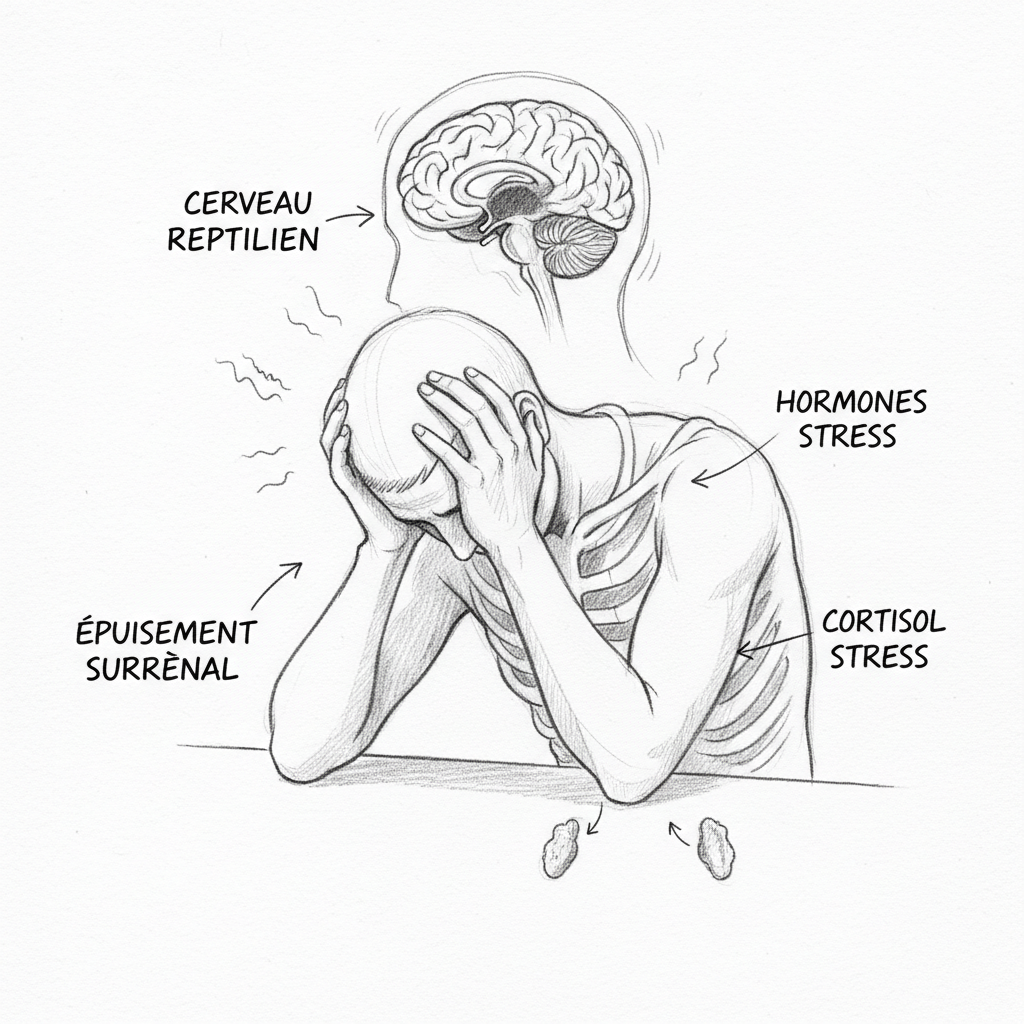
It all begins in the hypothalamus, this small nucleus at the center of the brain that is the conductor of the neuroendocrine system. When the hypothalamus perceives stress (whether physical, emotional, or even imagined), it secretes CRH (corticotropin-releasing hormone). CRH stimulates the anterior pituitary which releases ACTH (adrenocorticotropic hormone). ACTH travels through the blood to the adrenal glands which respond by producing cortisol. This is the hypothalamic-pituitary-adrenal axis, the HPA axis, the central stress response system.
In acute stress situations, this response is adaptive. Cortisol mobilizes energy reserves, increases alertness, suppresses non-essential functions (digestion, reproduction, immunity) to concentrate resources on survival. But when stress becomes chronic, when grief doesn’t end, when marital conflict lasts months, when workplace pressure is permanent, the HPA axis becomes dysregulated.
Initially, cortisol remains chronically elevated. This elevated cortisol has devastating effects on the immune system. It modifies the balance between the two main branches of adaptive immunity: Th1 lymphocytes (cellular immunity, which fights intracellular infections) and Th2 lymphocytes (humoral immunity, which produces antibodies). Chronic cortisol pushes the balance toward Th2. And excessive Th2 responses are precisely those that produce autoantibodies. TRAb are antibodies. Excessive Th2 promotes their production.
The pregnenolone steal: hormonal diversion
Pregnenolone is the mother molecule of all steroid hormones. Synthesized from cholesterol in the mitochondria of adrenal cells (and other tissues), it is the starting point of two major metabolic pathways: on one side, the cortisol pathway (via progesterone and 17-hydroxypregnenolone), on the other, the DHEA pathway, sex hormones (testosterone, estradiol) and progesterone itself.
Under chronic stress, the body prioritizes survival over reproduction. All available pregnenolone is channeled into cortisol production, at the expense of progesterone, DHEA and sex hormones. This is the “pregnenolone steal”. The consequences cascade.
Progesterone drops. Yet progesterone is a natural immunomodulator that restrains autoimmune responses. Its drop promotes estrogen dominance and further unbalances the immune balance. DHEA drops. Yet DHEA is a physiological antagonist of cortisol that protects tissues from its catabolic effects. Testosterone drops. Yet, as Du Chazaud emphasized, testosterone participates in the regulation of T3 and T4 production by thyroid cells.
This hormonal diversion creates a terrain conducive to thyroid autoimmunity. And it explains why Graves’ strikes four times more women than men: women already have a lower baseline testosterone level, a more fragile estrogen/progesterone balance, and a physiologically higher Th2 immune sensitivity. Chronic stress aggravates these asymmetries.
The intestine under stress: the open door to antigens
I have already explained in my article on Graves’ disease the role of intestinal permeability and molecular mimicry with Yersinia enterocolitica. What I want to deepen here is the direct link between stress and this intestinal permeability.
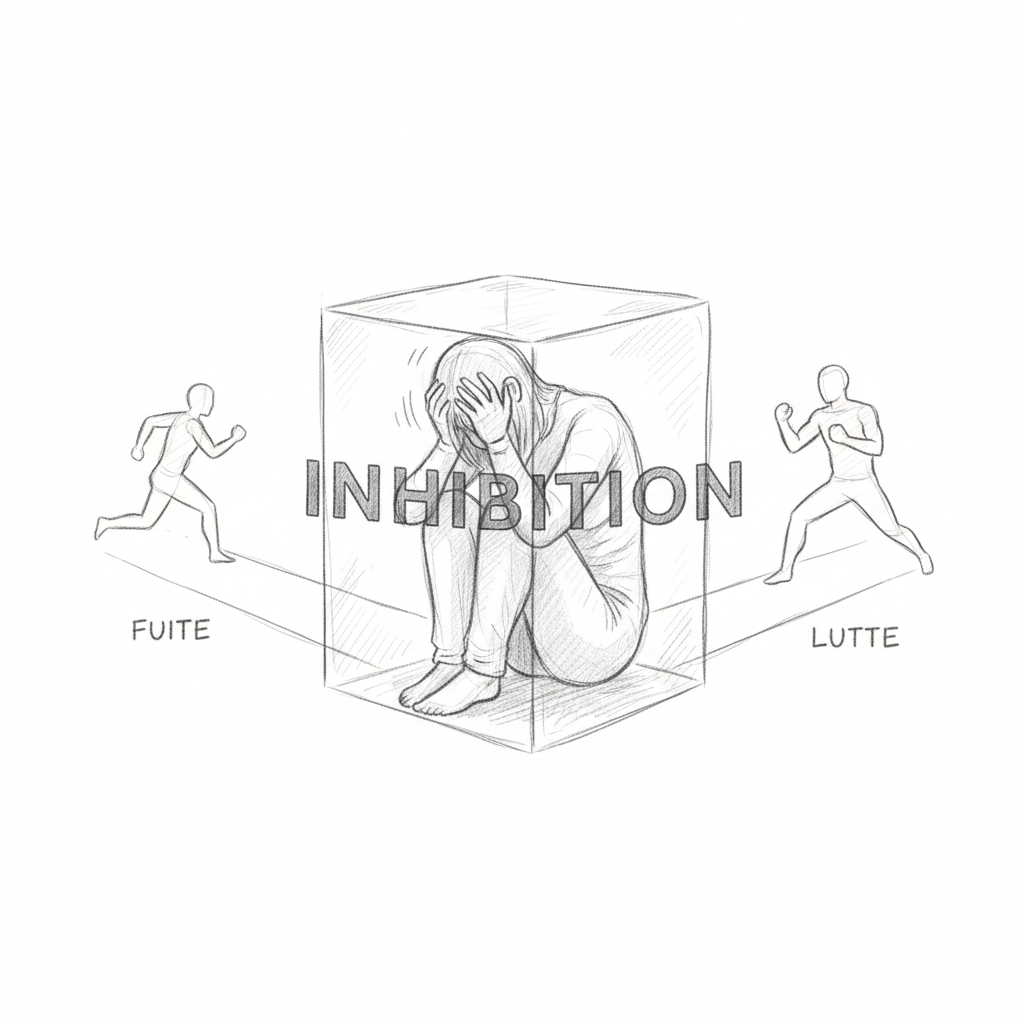
When the sympathetic nervous system is activated by stress, it redirects blood flow from the viscera to skeletal muscles (preparation for fight or flight). The intestine, deprived of its normal perfusion, suffers. Intestinal epithelial cells, which renew their wall every three to five days, no longer receive enough oxygen and nutrients to maintain the tight junctions that ensure barrier integrity. Chronic cortisol aggravates the problem by inhibiting mucus production and reducing secretions of secretory IgA, the first line of intestinal immune defense.
The result is an increase in intestinal permeability, the famous “leaky gut” that Seignalet placed at the heart of all autoimmune diseases. And when the intestinal barrier leaks, peptides that should never have passed through do: gluten peptides, casein peptides, and especially fragments of Yersinia enterocolitica lipoprotein whose epitope is structurally homologous to the TSH receptor. These peptides are captured by antigen-presenting cells, presented to T lymphocytes, and the autoimmune cascade is triggered.
This is why treating stress without treating the intestine is insufficient. And treating the intestine without treating stress is futile. The two are inextricably linked. Seignalet’s hypotoxic diet repairs the barrier, but if stress continues to breach it, it’s like trying to fill a bathtub with the drain open.
PTSD and autoimmunity: when trauma stays in the body
Research in psychoneuroimmunology over the past twenty years has revealed a troubling link between post-traumatic stress disorder (PTSD) and autoimmune diseases. War veterans with PTSD have a significantly increased risk of developing autoimmune diseases, including thyroid disease. Women who are victims of domestic violence or childhood abuse present the same increased risk.
Trauma does not stay in the head. It inscribes itself in the body through epigenetic modifications of the HPA axis, through chronic hyperactivation of the sympathetic nervous system, through persistent low-grade inflammation, and through intestinal dysbiosis that time alone does not correct. Bessel van der Kolk, in his reference work “The Body Keeps the Score,” masterfully described how trauma is stored in tissues and continues to produce its biological effects long after the traumatic event is over.
In Isabelle’s case, my patient, her mother’s death was not merely a sad event. It was complex trauma that reactivated childhood wounds, an unresolved conflictual mother-daughter relationship, guilt at not being present in the final days, and above all, immense anger toward a husband who had chosen this moment to betray her. All this emotional turmoil had converged toward her thyroid like a river toward a dam. And the dam had burst.
The specific anti-stress protocol for Graves’ disease
The anti-stress protocol I propose in consultation for Graves’ differs from what I would recommend for simple burnout or generalized anxiety. Because in Graves’, stress is not merely a symptom to treat: it is the disease trigger. And certain classical anti-stress approaches are contraindicated or need to be adapted.
Heart rate variability coherence is the central pillar. Three times a day, six breaths per minute, five minutes. Morning upon waking, noon, and evening before bed. The goal is to reactivate the vagus nerve, to shift the autonomic nervous system toward the parasympathetic, and to reduce cortisol. Studies show a significant reduction in salivary cortisol after just four weeks of regular practice. It’s simple, free, and measurable. I recommend the RespiRelax+ application or a simple timer with a visual respiratory rate indicator.
Adaptogenic plants must be chosen with discernment. Ashwagandha (Withania somnifera) is the most popular adaptogenic plant, and it is indeed remarkable for stress and adrenals. But in Graves’, it is problematic. The withanolides it contains have a documented thyroid-stimulating effect: they increase T4 production and conversion to active T3. In a patient whose thyroid is already running away, that’s adding fuel to the fire. I never recommend it in the active phase of Graves’.
The two adaptogenic plants I favor are rhodiola (Rhodiola rosea) and eleuthero (Eleutherococcus senticosus). Rhodiola acts on the HPA axis by modulating cortisol secretion: it reduces it when too high and supports it when collapsed. It also has a neuroprotective and mild antidepressant effect through modulation of serotonin and dopamine. Eleuthero strengthens stress resistance without stimulating the thyroid, and it has interesting immunomodulatory properties in the autoimmune context. The dosage I use is 200 to 400 milligrams of standardized rhodiola extract and 300 to 600 milligrams of eleuthero, morning and noon (never in the evening, to avoid sleep disturbance).
Psychosomatic approaches
Beyond plants and heart rate variability coherence, psychosomatic work is essential in Graves’. Not optional, not an added benefit. As a distinct therapeutic component.
EMDR (Eye Movement Desensitization and Reprocessing) is particularly relevant when an identifiable trauma is at the origin of the triggering stress. EMDR allows reprocessing of traumatic memories stored dysfunctionally in the nervous system, reducing their emotional charge and associated physiological responses. In Isabelle’s case, eight EMDR sessions with a specialized psychologist allowed “discharge” of maternal grief and marital betrayal, dramatically reducing her emotional reactivity and salivary cortisol levels.
EFT (Emotional Freedom Technique), or tapping, is a self-treatment tool that the patient can practice daily. By tapping on specific acupuncture points while verbalizing the disturbing emotion or memory, EFT reduces activation of the cerebral amygdala (the fear center) and lowers cortisol levels. Randomized controlled studies have shown a 24 percent reduction in cortisol after a single EFT session, compared to 14 percent for classical cognitive therapy.
Art therapy deserves a special place in the Graves’ protocol. Kieffer and Du Chazaud agree on this point: artistic activity is not a hobby for the thyroid patient, it is a therapeutic act. Painting, music, singing, dancing, writing, pottery offer an outlet for emotions which, unexpressed, fuel chronic stress and perpetuate autoimmunity. Carton himself, in his Treatise of Naturopathic Medicine, insisted on the importance of creative expression as a tool for terrain rebalancing. When I prescribe a singing class or a ceramics workshop to a Graves’ patient, it is not poetry. It is terrain medicine.
Magnesium and serotonin: the biochemical foundations of serenity
Magnesium and serotonin are the two biochemical pillars of stress management, and both are systematically deficient in the Graves’ patient.
Magnesium is consumed at an accelerated rate by stress (cortisol synthesis, catecholamine function) and excessively eliminated by hyperthyroidism (increased renal loss). This double depletion creates a terrain of nervousness, irritability, cramping and insomnia that amplifies perceived stress and perpetuates the vicious cycle. Magnesium bisglycinate at 400 to 600 milligrams per day is non-negotiable in the protocol. Not marine magnesium, not oxide: bisglycinate or glycerophosphate, the only forms that effectively cross the intestinal barrier and the blood-brain barrier to reach the brain.
Serotonin, the neurotransmitter of serenity and sleep, is synthesized from tryptophan by an enzymatic chain requiring iron, vitamin B6, zinc and magnesium. In the Graves’ patient, each of these cofactors is potentially deficient. Supporting serotonin synthesis through dietary tryptophan intake (turkey, banana, brown rice, cashews, pumpkin seeds) and through cofactor supplementation is a powerful and often underestimated anti-stress lever.
Melatonin, a metabolite of serotonin and sleep hormone, is also disrupted in hyperthyroidism. Sleep-onset insomnia is a classic symptom of Graves’: the body is too stimulated to shut down, the mind loops endlessly, the heart beats too fast. A low-dose melatonin supplement (0.5 to 1 milligram at bedtime) can help restore circadian rhythm without the side effects of sleeping pills, and the antioxidant and immunomodulatory properties of melatonin are a bonus in the autoimmune context.
Sleep: repairing at night what the day has damaged
The Graves’ patient’s insomnia is not “in their head”. It is biochemical. Excess T3 increases basal metabolism, elevates body temperature, accelerates heart rate and maintains a state of sympathetic hypervigilance that prevents the shift to parasympathetic sleep. Falling asleep becomes a struggle, and the quality of deep sleep is degraded.
Yet it is during deep sleep that the immune system is regulated, anti-inflammatory cytokines are secreted, cortisol reaches its nadir, and tissue repair processes are most active. A Graves’ patient who sleeps poorly is a patient who cannot heal. The circle is vicious: hyperthyroidism prevents sleep, lack of sleep worsens stress, stress worsens autoimmunity, autoimmunity worsens hyperthyroidism.
Breaking this circle requires strict sleep hygiene: total darkness (endogenous melatonin sensitive to the slightest light), room at maximum eighteen degrees (thermoregulation is already disrupted by hyperthyroidism), no screens after nine PM (blue light suppressive of melatonin), no caffeine after two PM (the accelerated catabolism of hyperthyroidism paradoxically increases caffeine sensitivity), and sedative plants in evening infusion. Valerian (Valeriana officinalis), passionflower (Passiflora incarnata) and California poppy (Eschscholzia californica) are three sedative plants that do not interfere with the thyroid and can be combined without risk.
Isabelle, one year later
Isabelle came back to see me at regular intervals for a year. The protocol was deep work, not a quick fix. Heart rate variability coherence morning and evening, from the first week. Rhodiola and eleuthero, from the second week. Strict Seignalet diet, maintained without interruption. Magnesium bisglycinate five hundred milligrams per day. EMDR sessions every two weeks for three months. And a watercolor painting class Wednesday evenings, which she initially found “ridiculous for a woman her age” and which she now considers “the most therapeutic thing she has ever done”.
After six months, her TRAb had dropped by seventy percent. Her endocrinologist began reducing Neomercazole. After one year, TRAb were undetectable. Neomercazole was discontinued. Her TSH returned to 1.8 mU/L, perfectly normal. Her salivary cortisol, initially flattened in the morning and elevated in the evening (typical chronic stress profile), had recovered a physiological curve.
When I asked her what had counted most in her journey, she didn’t mention selenium or the Seignalet diet. She said: “I learned to set down my anger. On canvas, in colors, with a brush. And the day I painted a portrait of my mother, without tears and without rage, just with gentleness, I knew I was going to heal.”
Du Chazaud was right. The thyroid is the gland of emotion. And when you give emotion a place to go, the thyroid can finally rest.
Want to evaluate your status? Take the free Holmes-Rahe stress scale in 2 minutes.
If you want personalized support, you can book a consultation.
To go further
- Burnout: when your reptilian brain takes over
- Holmes-Rahe scale: when life events make you sick
- Graves’ and the heart: calming the cardiac storm
- Graves’ and pregnancy: conceiving and carrying safely
Want to evaluate your status? Take the free Hertoghe cortisol questionnaire in 2 minutes.
Want to evaluate your status? Take the free Claeys thyroid questionnaire in 2 minutes.
Sources
- Rosch, Paul J. “Stressful Life Events and Graves’ Disease.” Lancet 342 (1993): 566-567.
- Du Chazaud, Jean. Endocrinopsychologie. Maloine, 1977.
- Seignalet, Jean. L’Alimentation ou la Troisième Médecine. 5e ed. Paris: François-Xavier de Guibert, 2004.
- Carton, Paul. Traité de médecine naturiste. Le François, 1920.
- Kieffer, Daniel. Naturopathie, les grands principes. Jouvence, 2019.
If you want personalized support for Graves’ disease and stress management, you can book a consultation. I consult in my office in Paris and via video throughout France. You can also contact me with any questions.
To go further, my complete thyroid training covers everything I’ve written in my thyroid articles with clinical cases, commented assessments and detailed protocols. And if you’re looking for the basics of naturopathy to understand the concept of terrain and emunctories, it’s the best starting point.
For thyroid supplementation, Sunday Natural offers selenium, zinc and vitamin D of pharmaceutical quality (minus ten percent with code FRANCOIS10). The Inalterra grounding mat reduces nighttime autoimmune inflammation (minus ten percent with code FRANCOISB). Find all my partnerships with exclusive promo codes.
Stress is not a weakness. It’s a signal. And Graves’ is not a punishment. It’s your body telling you, in its brutal and spectacular way, that it’s time to address what you’ve ignored for too long.


Laisser un commentaire
Sois le premier à commenter cet article.