Marchesseau classified psychology among the four major techniques of the naturopath. And when he spoke of psychology, he included sleep. Not as a “lifestyle advice” added at the end of a consultation. As a central pillar. Because it is during sleep that the vital force does the essential work of repair.

Why your body needs the night
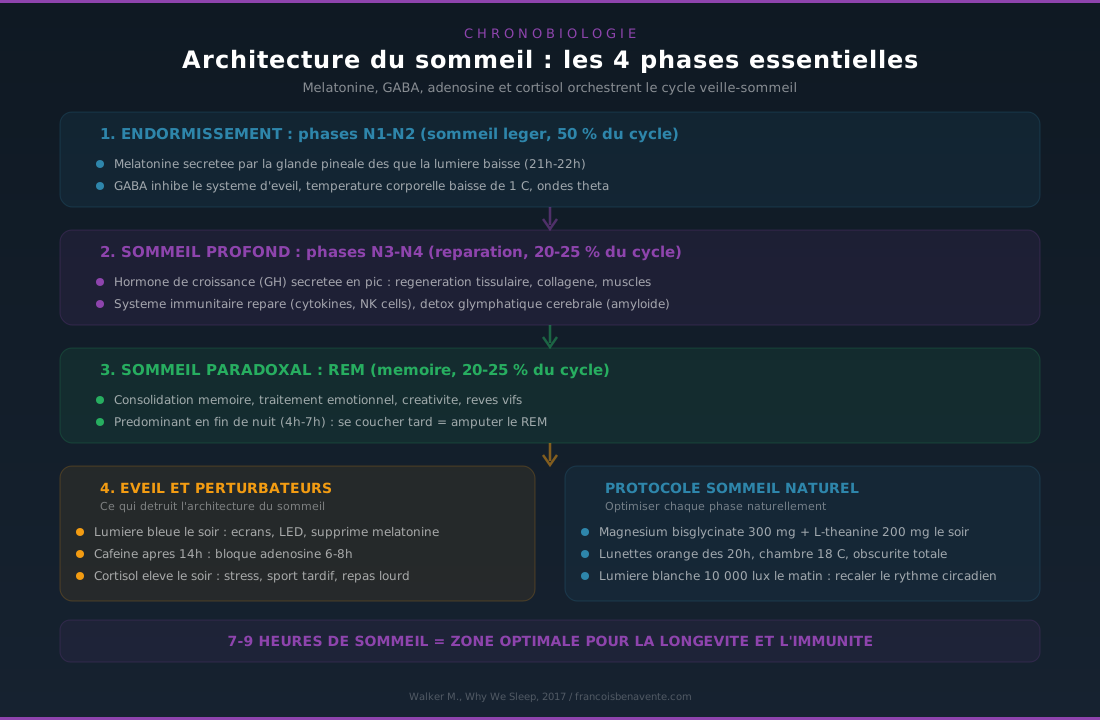
The law of vital distribution tells us that the body’s resources are always allocated in priority to the most urgent functions. During the day, your body distributes its energy between digestion, movement, thinking, thermoregulation, emotional stress. Needless to say, there is not much left for internal housekeeping. Heavy digestion in the evening mobilizes energy that should serve nocturnal repair. It is at night, when these functions slow down, that the body can finally devote itself to cleaning, tissue regeneration, memory consolidation and hormone synthesis.
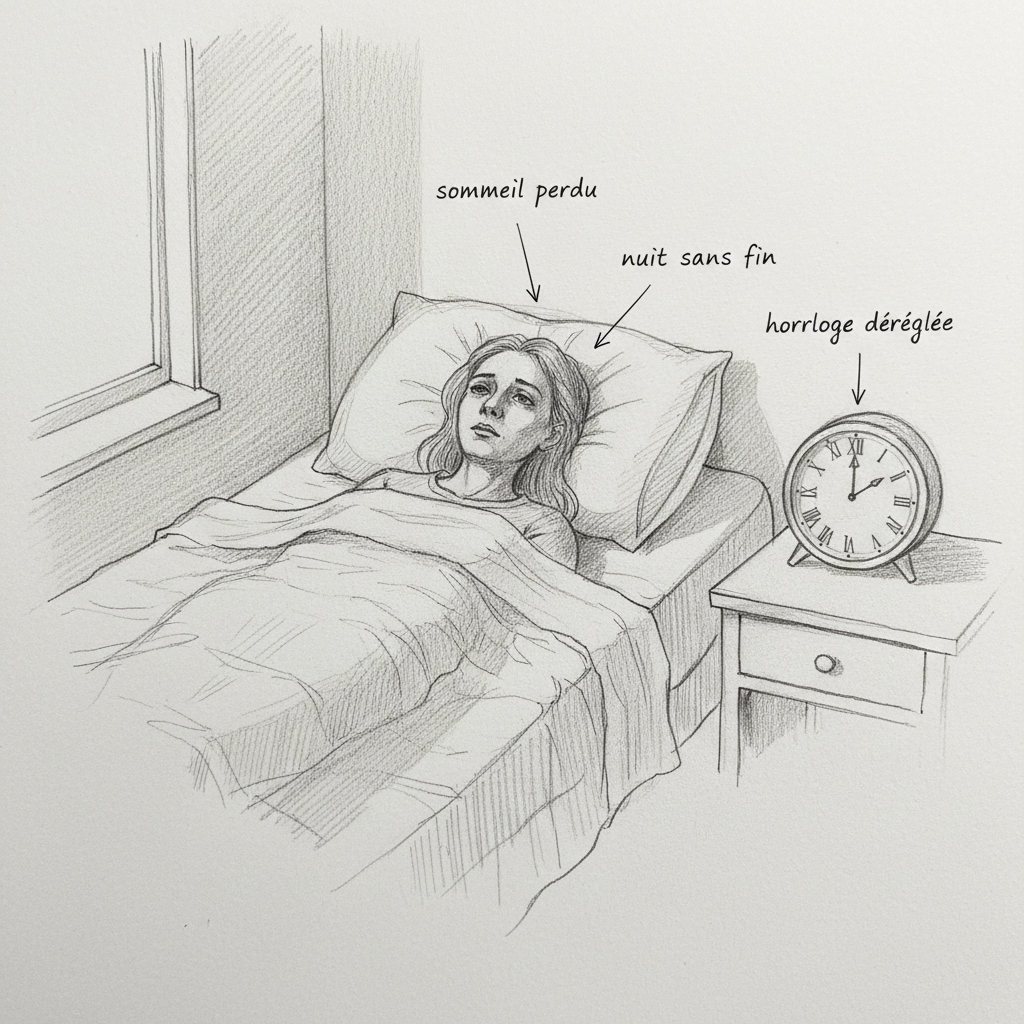
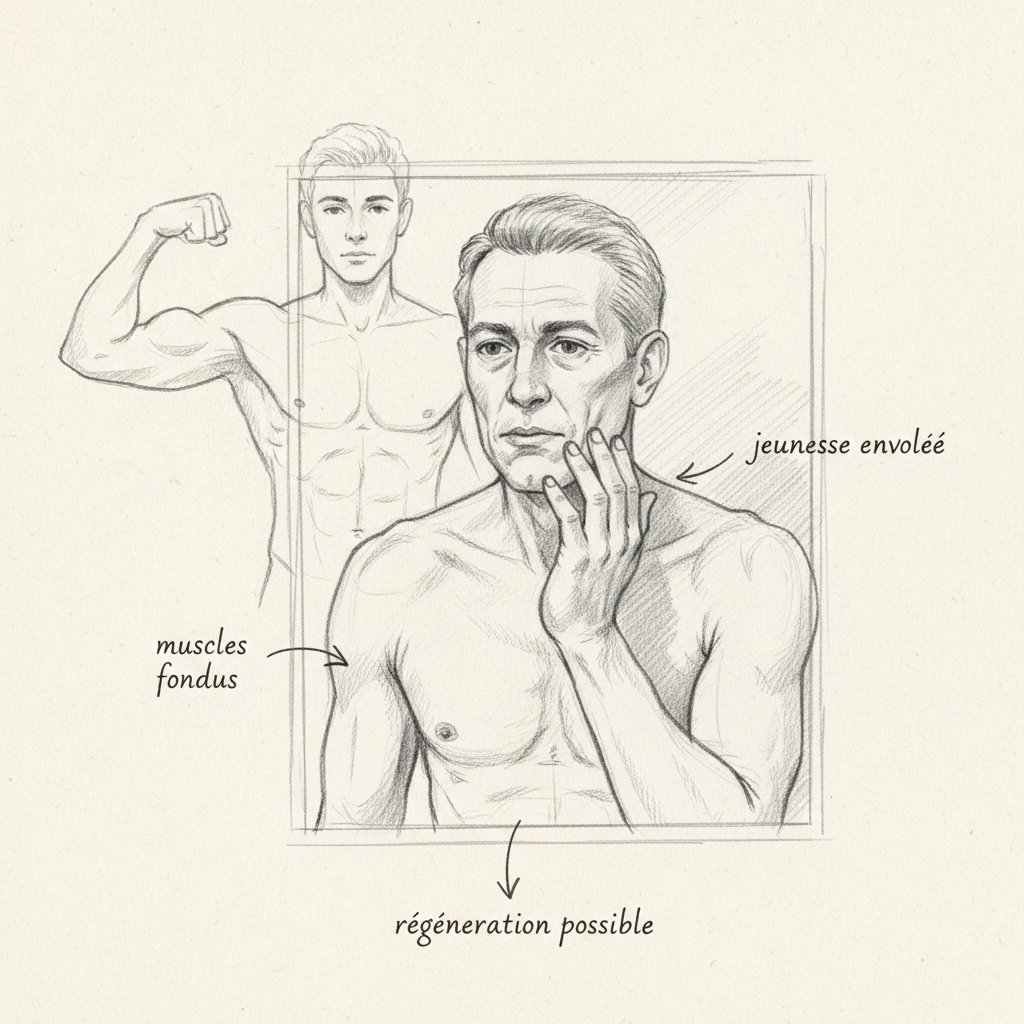
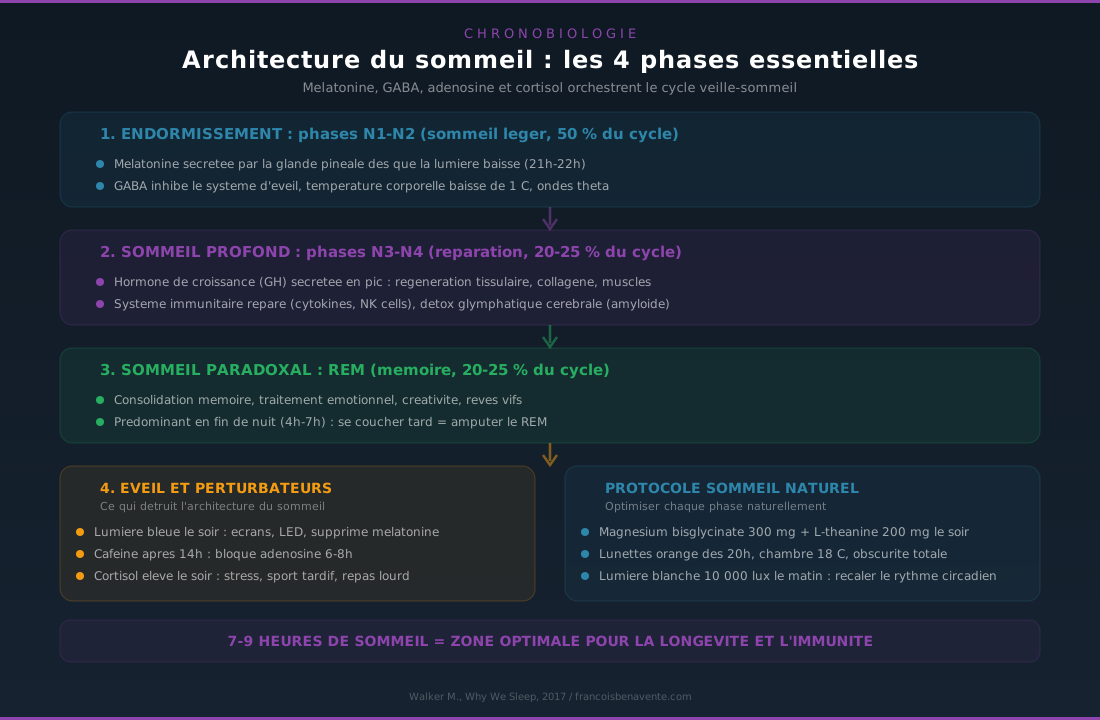
Deep sleep, that of the first two hours of night (between approximately 10 PM and midnight), is the phase where your body secretes the most growth hormone. Not only for children. In adults, this hormone is responsible for tissue repair, cellular renewal and maintenance of muscle mass. As Salmanoff wrote, any disruption to capillary physiology accelerates aging. And poor quality sleep is precisely that: a slowing of nocturnal microcirculation, an accumulation of metabolic waste, terrain that clogs up night after night.
Plants, yes, but not just any way
In naturopathy, we do not prescribe a plant “for sleep” the way we would prescribe a sleeping pill. We seek to understand why you are not sleeping. Is it excess cortisol in the evening, linked to chronic stress? Passionflower and hawthorn will act on the sympathetic nervous system. Is it difficulty “letting go of the mind,” that inner chatter that never stops? Lemon balm and linden, in infusion 30 minutes before bedtime, will help calm this agitation. Valerian, on the other hand, is particularly interesting for people whose sleep onset is long because it acts directly on GABA receptors, the neurotransmitter of relaxation.
But be careful. Robert Masson warned against an approach that was too symptomatic, even in phytotherapy. Taking valerian every evening without asking yourself what prevents the body from naturally producing its own sleep neurotransmitters, that is doing allopathy with plants. The Braverman serotonin questionnaire will help you identify if it is indeed this neurotransmitter that you are lacking. A magnesium deficiency could also be the cause. And that is not naturopathy.
What really changes
Sleep is not “repaired” with a supplement. It is built. It is prepared from morning onwards, through exposure to natural light that synchronizes your circadian clock. It is protected in the evening by cutting off screens at least an hour before bedtime, because blue light inhibits melatonin production by the pineal gland. It is respected through regularity, by going to bed and waking up at fixed times, because the body functions in cycles.
“Dietetics and preventive medicine will only progress when we remember that soil is the foundation of human food.” André Voisin
The quote is from Voisin, but it also applies to sleep. Your sleep is the soil on which your health grows. If this soil is depleted, if you steal from your nighttime hours to scroll, work or binge-watch, everything else collapses: your digestion, your immunity, your ability to concentrate, your emotional management. People suffering from fibromyalgia present an alpha-delta sleep anomaly that prevents deep recovery.
Hypothyroidism is an underrecognized cause of insomnia: the slowed thyroid disrupts melatonin synthesis. Zinc, a cofactor of this synthesis, is often deficient in insomniacs. And autoimmune sleep disorders frequently accompany Hashimoto’s.
Maintaining the bedroom between 18 and 19°C, sleeping in complete darkness, building a bedtime ritual that signals to your nervous system that the day is over. These are not “wellness tips.” These are the minimum conditions that your species has required for millennia to recover properly.
To practically improve your sleep, the Inalterra grounding mat reduces nocturnal cortisol and promotes deep sleep (-10% with code FRANCOISB). Sunday Natural offers bisglycinate magnesium and pharmaceutical-grade melatonin (-10% with code FRANCOIS10). Find all my partnerships with exclusive promo codes.
To go further
- Melatonin: much more than the sleep hormone
- Fibromyalgia: when your body cries what no one listens to
- Growth hormone: regeneration, muscle tone and anti-aging
- Light therapy and red light: naturally regenerate your thyroid
Want to assess your status? Take the free Hertoghe melatonin questionnaire in 2 minutes.
Healthy recipe: Golden milk: Turmeric golden milk promotes sleep onset.






Laisser un commentaire
Sois le premier à commenter cet article.