His name is Thomas, he is 38 years old, and he asks me a question I hear more and more often: “My father is diabetic, my mother had breast cancer, my grandfather died of a heart attack at 60. Is this written in my genes? Can I do anything about it?” The answer is yes. And no. Yes, he has genetic predispositions. No, these predispositions are not a death sentence. Because between the gene and the disease, there is an entire continent that science has been exploring for twenty years: epigenetics. And you cross this continent three times a day, at every meal.
Epigenetics is arguably the most important discovery in 21st century biology. It says this: your genes don’t change, but they can be turned on or turned off by chemical modifications that don’t touch the DNA sequence. These modifications are sensitive to the environment: diet, stress, toxins, physical exercise: and some are heritable, passed on to the next generations. DNA is the score. Epigenetics is the interpretation. And you are the conductor.
“Epigenetics is the study of the processes by which the genotype, the set of genes in interaction with the environment, generates the phenotype.” Conrad Waddington, 1942
DNA is not naked
To understand epigenetics, you need to understand how DNA is organized in the nucleus of your cells. Each human cell contains 2 meters of DNA (6 billion base pairs, each spaced 0.34 nanometers apart), compacted into a nucleus 10 micrometers in diameter. The total length of DNA in a human body (50 trillion cells) exceeds 100 trillion meters: that’s 670 times the Earth-Sun distance1. How do you fit 2 meters into a 10 micrometer space? Through chromatin.
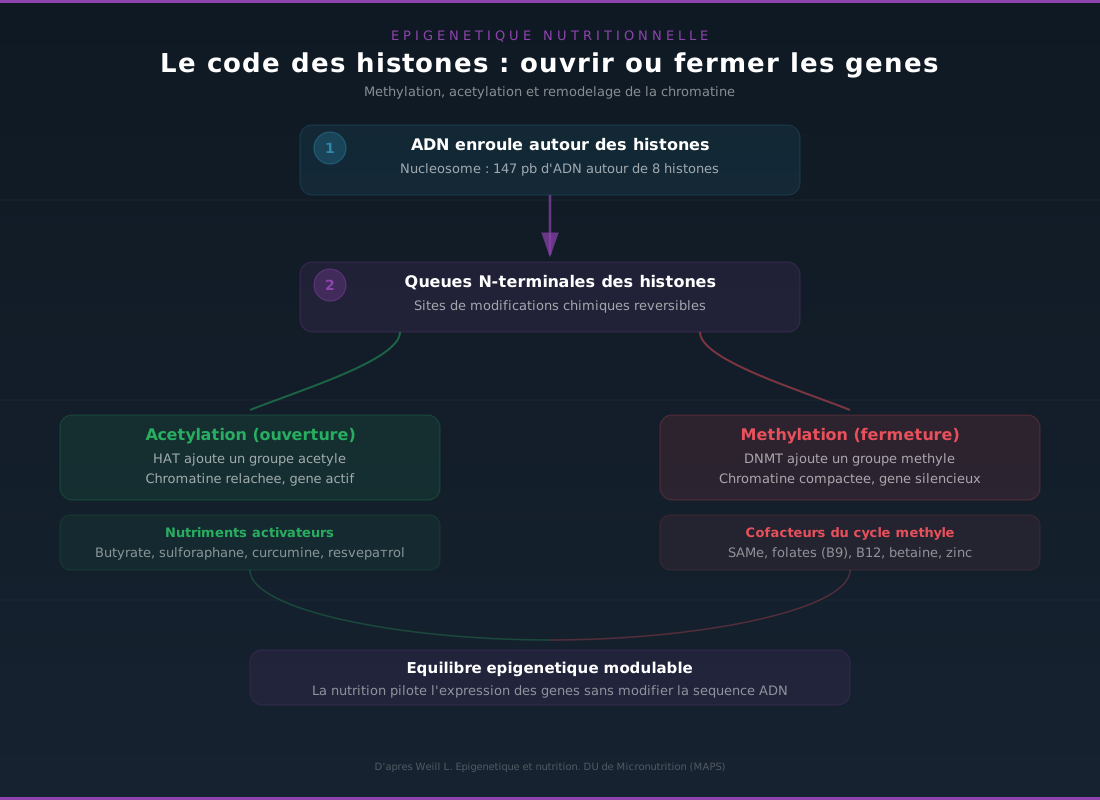
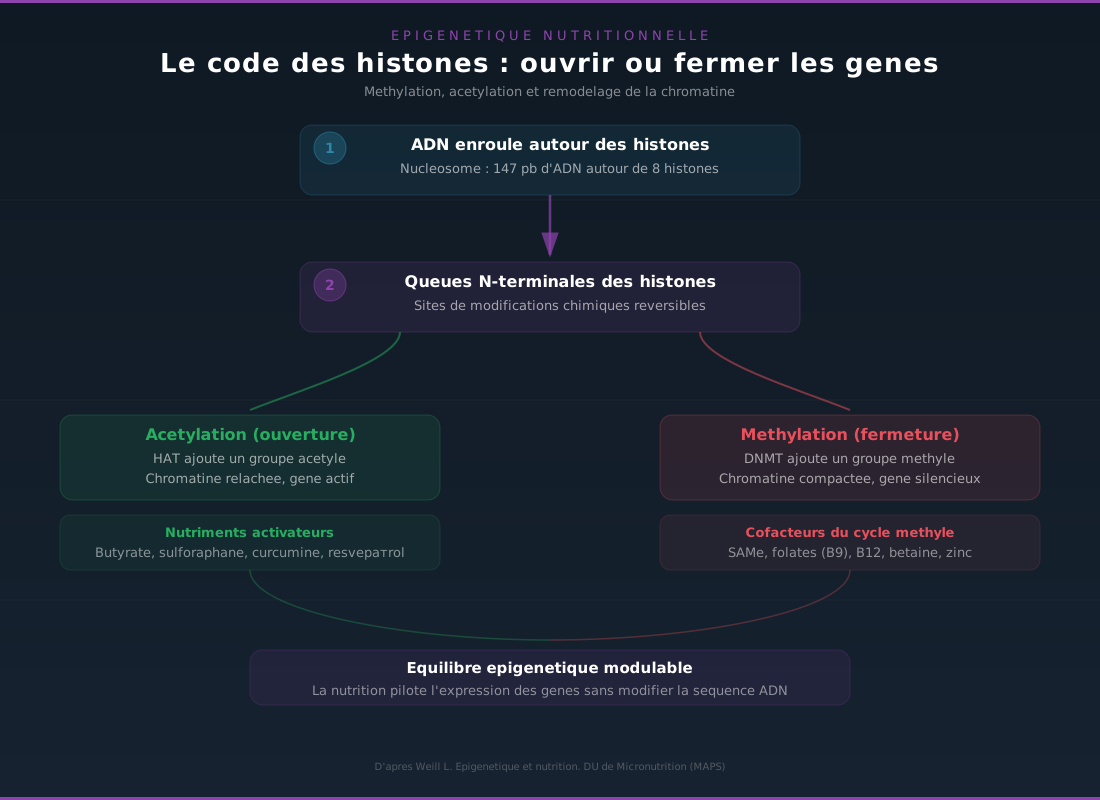
DNA is never naked. It is wound around proteins called histones. Eight histones (two copies each of H2A, H2B, H3 and H4) form an octamer around which a loop of 146 nucleotides of DNA winds. The whole thing: octamer plus DNA: is called a nucleosome2. It’s the elementary pearl of the chromatin necklace. The 11 nanometer fiber thus formed is euchromatin: a loose, accessible structure where genes can be transcribed (read, expressed, translated into proteins). When histone H1 binds and stacks nucleosomes into a solenoid, you get a 30 nanometer fiber, heterochromatin: compact, inaccessible, transcriptionally inactive3. The genes found there are silenced.
Heterochromatin is of two types. Constitutive heterochromatin is stable, irreversible, present in all cells (centromeric and telomeric regions). Facultative heterochromatin is reversible: it contains genes that are active in some cell types and inactive in others4. It’s this facultative heterochromatin that is the playground of epigenetics. And this is where diet enters the scene.
The histone code: a biochemical language
Histones are not simple, inert spools. Their N-terminal ends protrude from the nucleosome and are the target of post-translational modifications that form a genuine biochemical code: the histone code5. These modifications include acetylation (addition of an acetyl group by HATs: histone acetyltransferases), methylation (addition of a methyl group by HMTs: histone methyltransferases), phosphorylation (addition of a phosphate by kinases), ubiquitinylation, sumoylation, glycosylation and even biotinylation (addition of biotin, that is vitamin B8)6.
Each modification is reversible. HATs acetylate lysines. HDACs (histone deacetylases) deacetylate them. HMTs methylate. Demethylases demethylate. Prof. Laure Weill, in her lecture for the Micronutrition DU, uses the metaphor of writers (those who write the marks), erasers (those who erase them) and readers (those who read them and trigger an action)7.
Acetylation of lysines in histones H3 and H4 opens chromatin. Lysines are positively charged at neutral pH and interact strongly with DNA (negatively charged). When HATs acetylate them, the positive charge is neutralized, the binding with DNA relaxes, DNA becomes accessible to transcription factors: genes are expressed8. Trimethylation of H3K9, by contrast, recruits the HP1 protein (Heterochromatin Protein 1) which closes chromatin and spreads heterochromatinization step by step9. Same lysine, different modifications, opposite effects. That’s the code.
DNA methylation: when genes are silenced
The second major epigenetic modification is DNA methylation itself. DNA methyltransferases (DNMT) add a methyl group (-CH3) to cytosines located in CpG dinucleotides (a C followed by a G). These CpG dinucleotides are often clustered in “CpG islands” in the promoter regions of genes10. When the CpG islands of a promoter are methylated, the gene is silenced.
The mechanism is elegant. Methylated CpGs recruit proteins with MBD (Methyl-CpG Binding Domain) like MeCP2. MeCP2 recruits HDACs, which deacetylate nearby histones, and HMTs which methylate H3K9. Methylated H3K9 recruits HP1. HP1 recruits other DNMTs. And the loop closes: DNA methylation leads to chromatin compaction, which leads to more methylation11. Silence spreads and maintains itself in a stable way, even during cell division, because DNMT1 recognizes methylated CpGs on the parental strand and methylates the corresponding CpGs on the newly synthesized strand12.
This is how the cells in your liver remain liver cells and don’t become neurons, even though they contain exactly the same DNA. “Neuronal” genes are methylated and silent in the liver. “Hepatic” genes are methylated and silent in the brain. Epigenetics is the memory of cellular identity.
Agouti mice: proof through diet
In 1998, Craig Cooney and his team in Arkansas performed an experiment that changed biology. They took mice carrying the Avy allele (agouti viable yellow): a transposable element (IAP) inserted in the agouti gene aberrantly controls its expression. When this IAP promoter is active, the mouse is yellow, obese, and presents increased susceptibility to diabetes and cancers. All mice have exactly the same genome13.
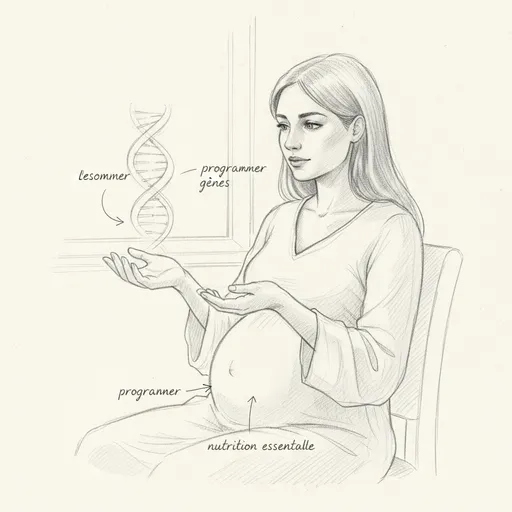
Cooney fed two groups of pregnant mice. Group A received standard feed. Group B was supplemented with methyl donors: methionine, folic acid (vitamin B9) and zinc: the precursors of S-adenosylmethionine (SAMe), the universal donor of methyl groups in the body14.
Result: in group A (unsupplemented), all mice were born yellow and obese. In group B (supplemented with methyl donors), most mice were born brown and of normal weight. Same genome. Same Avy allele. But maternal diet, by providing the substrates for methylation, caused methylation of the CpG islands in the IAP promoter, silencing the aberrant expression of the agouti gene. The mother’s diet reprogrammed her offspring’s epigenome.
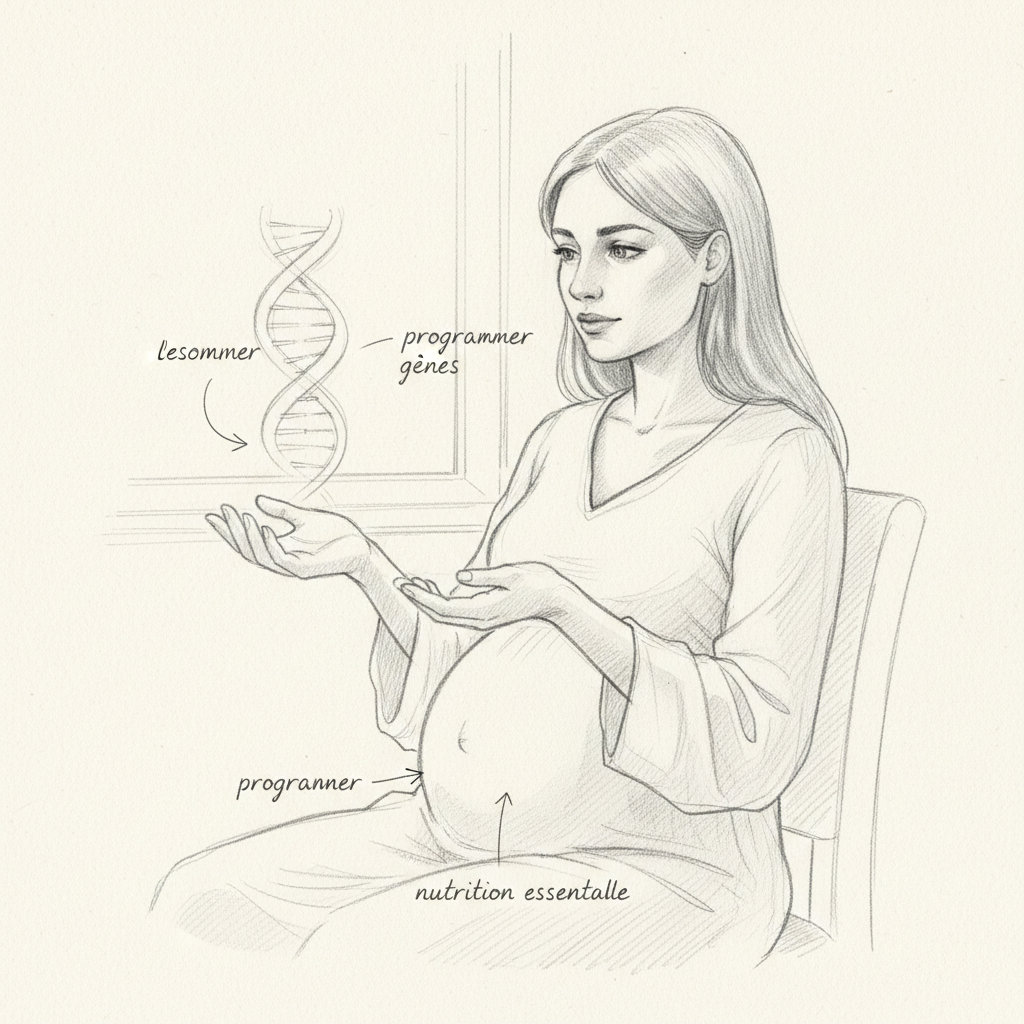
This is not theory. It’s experimental biochemistry. And it’s exactly what naturopathy has been saying for a century when it emphasizes the importance of diet during pregnancy. The Budwig cream of Kousmine, rich in B vitamins and zinc, is not a whim. It’s supplementation with methyl donors.
The Dutch famine: when deficiency is passed on
Human history provided tragic proof of transgenerational epigenetic transmission. During the winter of 1944-1945, the Netherlands suffered a catastrophic famine. Women pregnant during this period gave birth to children who were smaller than normal. But what stunned epidemiologists was that the grandchildren of these women were also smaller than average, even though they had never known famine15.
The explanation is epigenetic. Deficiency in methyl donors (folic acid, B12, methionine, zinc) during pregnancy caused a decrease in DNA methylation at the IGF-2 gene (Insulin-like Growth Factor 2) at the differentially methylated RDM1 region. The hypomethylation of RDM1 altered IGF-2 expression, reducing fetal growth. And this modification was passed to the next generation through parental imprinting16. The grandmother’s famine inscribed a mark in her grandchildren’s DNA.
Stress, bees and twins
Epigenetics is not just about diet. Stress also modifies the epigenome. Cross-foster experiments in rats (Meaney and Szyf, McGill University) showed this spectacularly. Pups of stressed mothers (little licking, weak maternal instinct) adopted by calm mothers (frequent licking) become calm. Pups of calm mothers adopted by stressed mothers become stressed17. The “stressed” phenotype is not genetic. It’s epigenetic. Postnatal environment modifies methylation marks at the glucocorticoid receptor in the hippocampus, durably reprogramming the animal’s HPA axis (hypothalamic-pituitary-adrenal).
In bees, the demonstration is even more striking. The larva fed royal jelly for 21 days becomes a fertile queen that lives 3 to 5 years. The larva with identical genome, fed royal jelly for 3 days then honey and pollen, becomes a sterile worker that lives a few weeks. Royal jelly inhibits DNMT3 (the de novo DNA methyltransferase). Out of 10,000 genes analyzed, 560 are methylated differently between queens and workers18. Same DNA. Different diet. Radically opposite biological destiny.
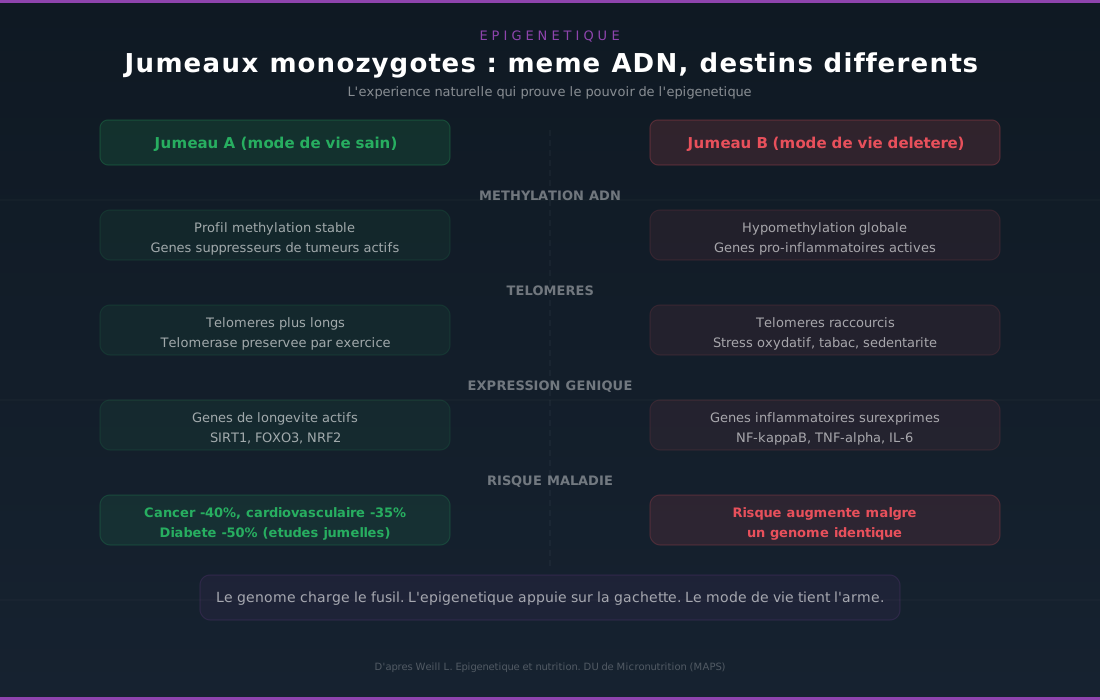
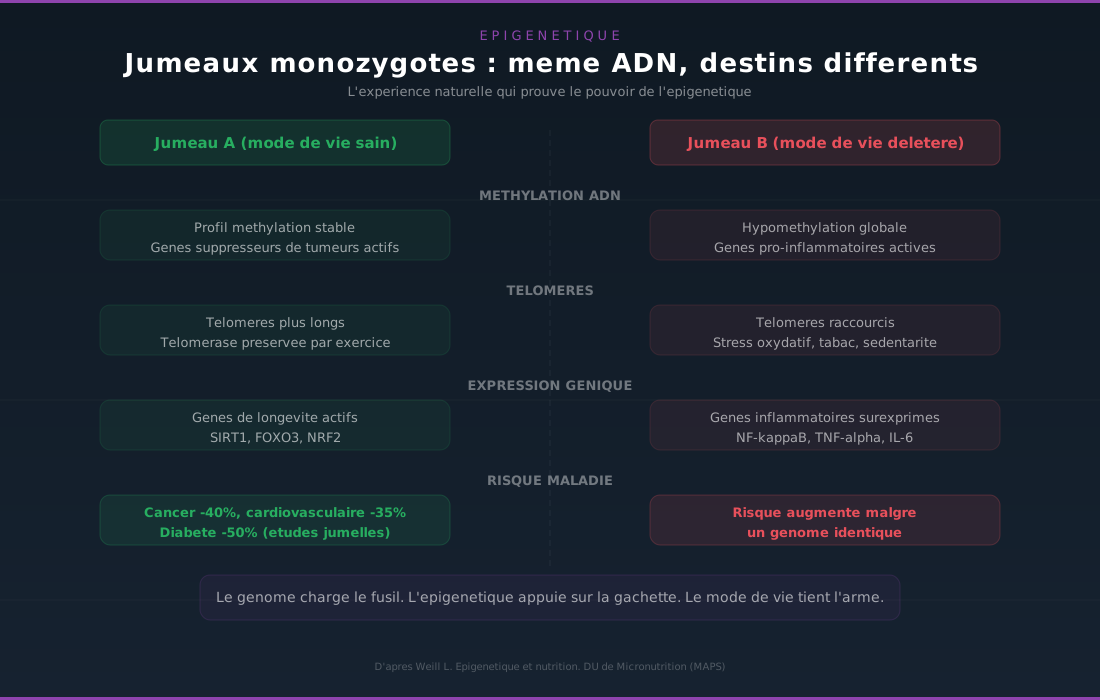
Studies of monozygotic twins provide the final touch. At 3 years old, identical twins have an identical epigenome. At 50 years old, their epigenomes have diverged considerably19. Diet, stress, toxins, physical activity, infections: fifty years of different environment have inscribed different epigenetic marks on the same DNA. That’s why one twin can develop cancer and the other not. It’s not genetics. It’s epigenetics.
Epigenetics and cancer: when the locks break
Cancer is as much an epigenetic as a genetic disease. Prof. Weill identifies two types of epigenetic modifications in cancer cells20. First, global hypomethylation of repetitive regions and transposable elements of DNA: this demethylation causes genomic instability (chromosomal rearrangements, translocations) and activation of oncogenes normally silent. Second, specific hypermethylation of tumor suppressor gene promoters, cell cycle genes, DNA repair genes and apoptosis genes: these protective genes are silenced.
The major interest of this discovery is that epigenetic modifications are reversible. Unlike genetic mutations, which are permanent, methylation can be removed, histones can be reacetylated. This is the basis of epigenetic cancer therapies (DNMT inhibitors, HDAC inhibitors) and it’s also the basis of nutritional prevention: optimal status in methyl donors could protect against global demethylation that destabilizes the genome.
Methyl donors: your reprogramming kit
S-adenosylmethionine (SAMe) is the universal donor of methyl groups in the body. It is made from methionine (essential amino acid) by methionine adenosyltransferase, in the presence of ATP. After donating its methyl group, SAMe becomes S-adenosylhomocysteine, then homocysteine. Homocysteine is recycled back to methionine by two pathways: the methionine synthase pathway (which requires vitamin B12 as a cofactor and methyl-tetrahydrofolate, derived from vitamin B9, as a methyl donor) and the betaine-homocysteine methyltransferase pathway (which uses betaine, derived from choline)21.
This methylation cycle is the same one I describe in the article on hepatic detoxification. It requires: methionine (meat, fish, eggs, Brazil nuts), vitamin B9 (folic acid in methylfolate form: spinach, asparagus, liver, legumes), vitamin B12 (methylcobalamine: meat, fish, eggs: absent from plants), zinc (cofactor of methionine synthase, detailed in the zinc article), and choline/betaine (eggs, liver, beets).
A deficiency in any of these nutrients compromises the methylation cycle, reduces SAMe availability, and potentially modifies the expression of hundreds of genes through hypomethylation. This is the biochemical explanation for the agouti mouse experiment. This is the biochemical explanation for the Dutch famine. And this is the biochemical explanation for the critical importance of preconceptional supplementation with B9 and B12.
What Thomas understood
Thomas is not condemned by the genes of his father, mother and grandfather. His genes are his score. But the way this score will be played depends on his diet, lifestyle, stress management and status in methyl donors. His assessment revealed homocysteine at 13 µmol/L (methylation deficiency), low serum zinc and almost no consumption of green vegetables (folates) and fish (B12, omega-3).
The protocol was simple and powerful: correcting the B9 deficiency (methylfolate 400 µg/day), B12 (methylcobalamine 1000 µg/day), zinc bisglycinate (25 mg/day), and choline (via two eggs per day and sunflower lecithin). Diet rich in green vegetables, legumes, small fatty fish. Stress reduction through heart rate coherence. As I develop in the article on cellular aging, sirtuins activated by NAD are themselves major epigenetic regulators (histone deacetylases). And most importantly, understanding that his daily choices are not trivial: they write, every day, the epigenetic marks that will determine whether genes predisposing to diabetes, cancer and cardiovascular disease are turned on or off.
Epigenetics doesn’t say genes don’t matter. It says genes are not destiny. It says that environment: and first and foremost diet: has the power to reprogram gene expression, in this generation and in those to come. This may be the most powerful message in all of modern biology. And it’s a message of hope.
Want to evaluate your status? Take the free vitamin B12 questionnaire in 2 minutes.
To go further
- Vitamin B12 (cobalamine): methylation, neurology and pernicious anemia
- Vitamin B9 (folates): methylation, pregnancy and homocysteine
- Anemia: understanding root causes and acting naturally
- Cancer and diet: what micronutrition changes in the equation
For healthy cooking, PranaCook offers stainless steel utensils without endocrine disruptors.
Footnotes
-
Weill L. Génétique et épigénétique. DU de Micronutrition (MAPS). Diapositive 15 : « Longueur ADN dans 1 cellule = 2 mètres. Longueur totale = 670 × la distance Soleil-Terre. » ↩
-
Weill L. DU de Micronutrition. Diapositives 18-19 : « Nucléosome : octamère (2×H2A, H2B, H3, H4) + 146 nucléotides d’ADN. 1er niveau de compaction, 11 nm. » ↩
-
Weill L. DU de Micronutrition. Diapositives 21-22 : « 2ème niveau de compaction : H1 → solénoïde 30 nm → hétérochromatine. » ↩
-
Weill L. DU de Micronutrition. Diapositives 26-27 : « Hétérochromatine constitutive (stable, irréversible) vs facultative (réversible, dépendante du type cellulaire). » ↩
-
Weill L. DU de Micronutrition. Diapositives 30-35 : « Le code des histones : combinaisons de modifications contrôlent l’expression génique. » ↩
-
Weill L. DU de Micronutrition. Diapositive 34 : « Biotinylation : ajout de biotine (vitamine B8). » ↩
-
Weill L. DU de Micronutrition. Diapositive 38 : « Writers (HAT, HMT), Erasers (HDAC, déméthylase), Readers (HP1, Polycomb). » ↩
-
Weill L. DU de Micronutrition. Diapositive 42 : « Acétylation des lysines : neutralisation de la charge positive → ADN accessible → activation transcription. » ↩
-
Weill L. DU de Micronutrition. Diapositive 43 : « Triméthylation H3K9 → recrutement HP1 → propagation hétérochromatinisation. » ↩
-
Weill L. DU de Micronutrition. Diapositives 48-49 : « Méthylation des cytosines sur les îlots CpG → répression transcriptionnelle. » ↩
-
Weill L. DU de Micronutrition. Diapositives 52-53 : « MBD → HDAC → HMT → HP1 → DNMT → propagation et maintien des états épigénétiques répressifs. » ↩
-
Weill L. DU de Micronutrition. Diapositive 58 : « DNMT1 reconnaît les îlots méthylés du brin parental et méthyle les îlots CpG du brin néosynthétisé. » ↩
-
Weill L. DU de Micronutrition. Diapositive 73 : « Allèle agouti viable yellow : souris jaune, obèse, susceptible au diabète et cancers. » ↩
-
Weill L. DU de Micronutrition. Diapositive 74 : « Cooney 1998 : supplémentation en méthionine, acide folique et zinc → méthylation des CpG du promoteur IAP → pelage marron, non obèse. » ↩
-
Weill L. DU de Micronutrition. Diapositive 80 : « Famine hollande 1944-1945 : enfants plus petits que la normale, et leurs enfants également. Modifications épigénétiques transmises aux générations suivantes. » ↩
-
Weill L. DU de Micronutrition. Diapositive 81 : « Diminution de la méthylation au niveau du gène IGF-2 sur la région RDM1. » ↩
-
Weill L. DU de Micronutrition. Diapositives 76-77 : « Expériences d’adoption croisée : le phénotype stressé est épigénétique, pas génétique. » ↩
-
Weill L. DU de Micronutrition. Diapositive 79 : « Gelée royale inhibe DNMT3. Sur 10 000 gènes, 560 méthylés différemment entre reines et ouvrières. » ↩
-
Weill L. DU de Micronutrition. Diapositive 83 : « Jumeaux 3 ans : épigénome identique. Jumeaux 50 ans : épigénomes divergents. » ↩
-
Weill L. DU de Micronutrition. Diapositive 85 : « Cancer : hypométhylation globale → instabilité génomique + hyperméthylation spécifique → silencing gènes suppresseurs de tumeurs. » ↩
-
Weill L. DU de Micronutrition. Diapositive 74 + biochimie de la méthylation : « SAMe = donneur universel. Nécessite méthionine, B9, B12, zinc. » ↩
Laisser un commentaire
Sois le premier à commenter cet article.