Her name is Emilie, she’s 29 years old, and when she came to see me, she was dealing with her fourth vaginal yeast infection of the year. Four episodes of unbearable itching, thick white discharge, burning during intercourse. Four local antifungal treatments. Four relapses. Her doctor had prescribed oral fluconazole and told her that “some women get yeast infections, that’s just how it is.” Not a word about her diet. Not a word about her intestinal flora. Not a word about the three courses of antibiotics she’d taken the previous year for sore throats. And especially, not a word about the fact that her body probably harbored a chronic intestinal candidiasis of which vaginal yeast infections were only the tip of the iceberg.
Vaginal yeast infection is the most common gynecological infection. 75% of women will experience at least one episode in their lifetime1. And among them, 5 to 8% will develop recurrent forms (more than four episodes per year)2. The culprit is almost always Candida albicans, an opportunistic fungus naturally present in our intestinal and vaginal flora. The key word is “opportunistic.” Candida only becomes pathogenic when the terrain allows it.
“The intestine is never the problem, but the victim.” Georges Mouton
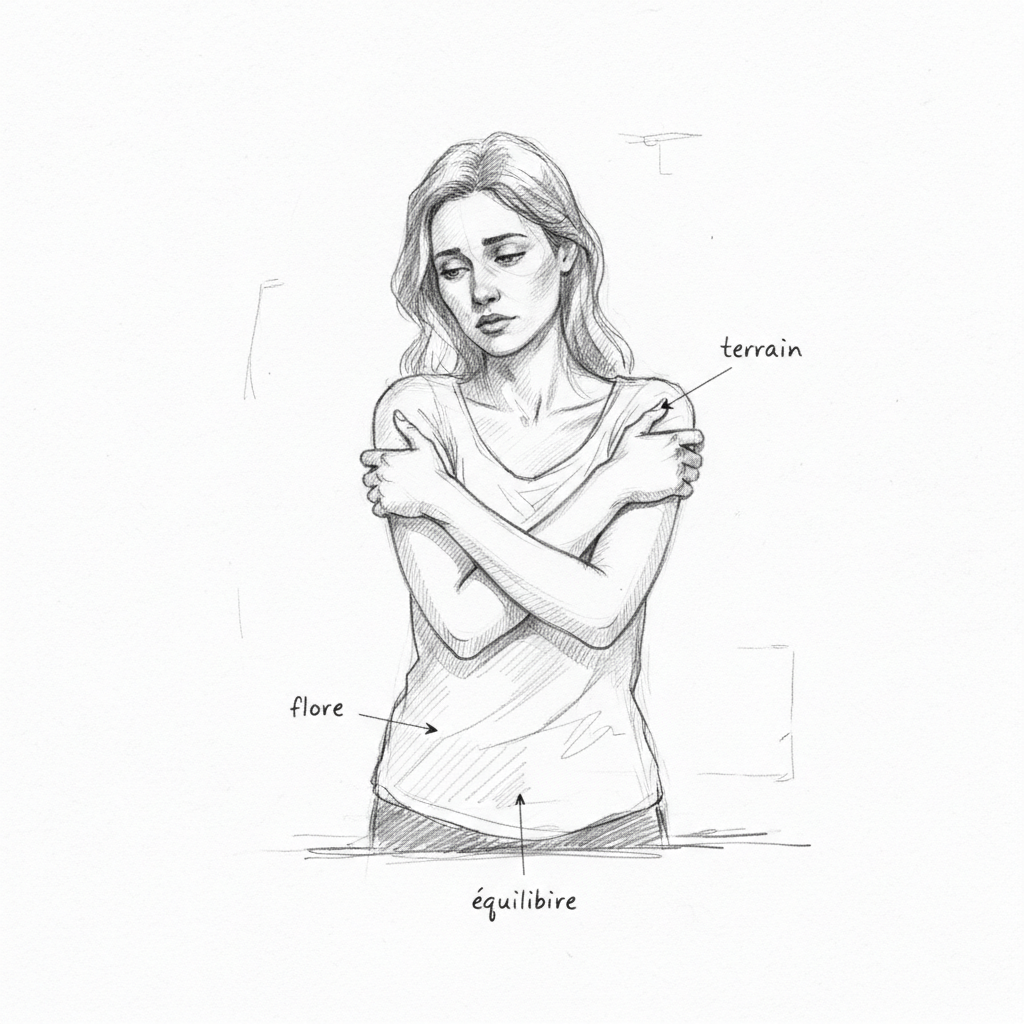
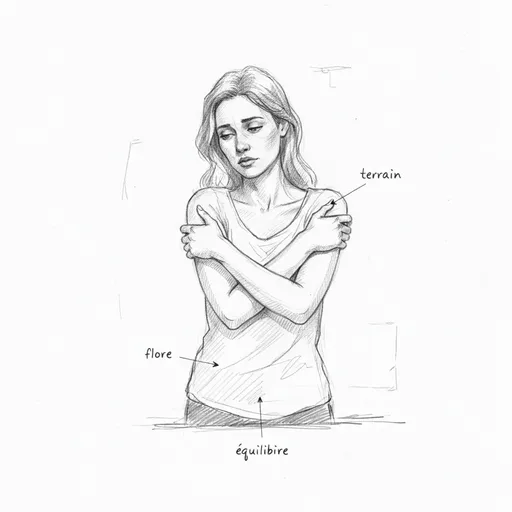
Conventional medicine treats the local yeast infection. Naturopathy looks at the overall terrain. And when you start to understand vaginal ecology, you realize that yeast infection is just a symptom of a much deeper imbalance that involves the intestine, the immune system, the adrenals, diet, and stress.
Vaginal ecology: a fragile and misunderstood balance
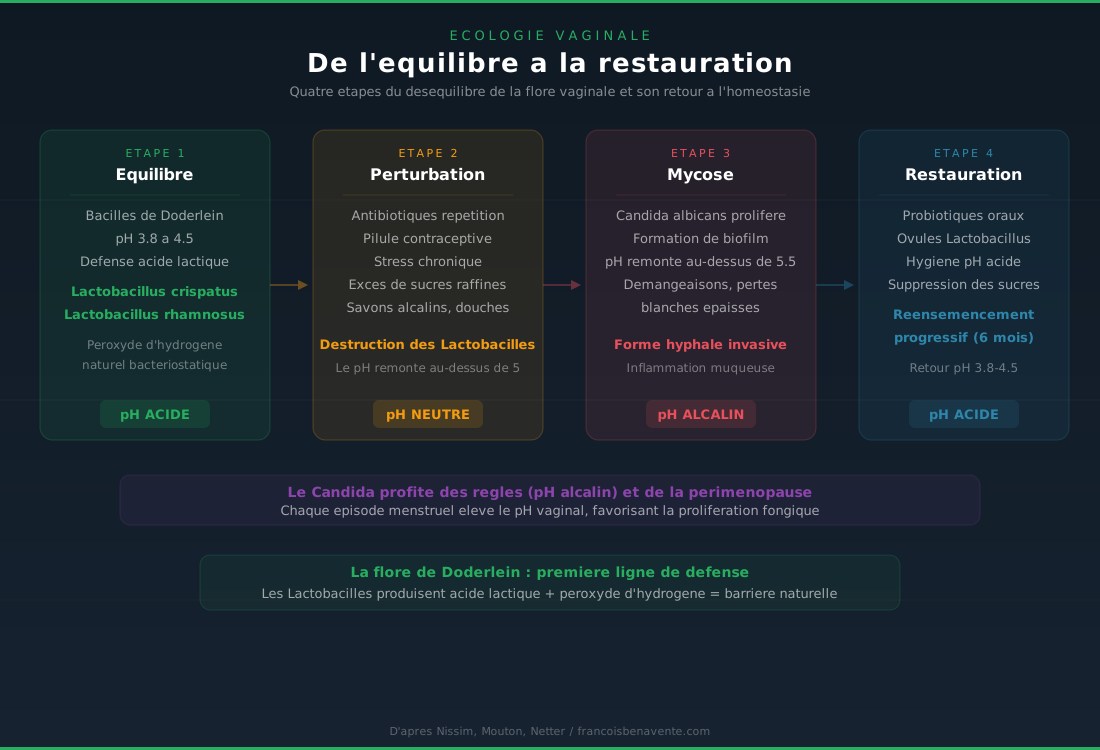
The vagina is not a sterile environment. It’s a living ecosystem, populated by billions of bacteria whose queens are the Döderlein bacilli (Lactobacillus). These lactobacilli produce lactic acid that maintains the vaginal pH between 3.8 and 4.53, an acidic pH hostile to the development of Candida and pathogenic bacteria. This is the first line of defense. As long as Lactobacilli dominate, Candida remains under control, in tiny quantities, harmless.
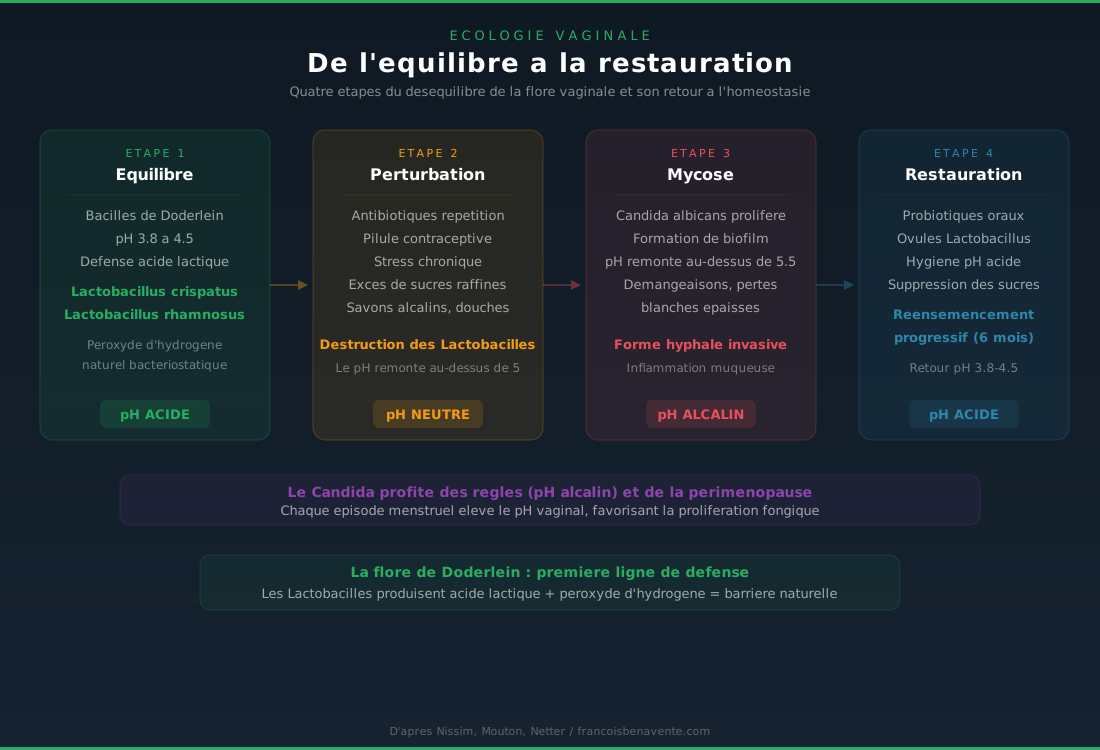
But when Lactobacilli are decimated, the pH rises, and Candida seizes the opportunity. Rina Nissim sums it up: “Lactic acid bacteria maintain a protective acidic pH. Any disruption of this balance opens the door to infections.” The disruptors are identified: antibiotics (which destroy Lactobacilli as much as pathogens), oral contraceptives (which modify the vaginal hormonal environment), alkaline soaps (which destroy the acidic protective film), synthetic underwear (which creates a warm and humid environment conducive to fungi), stress (which depresses local immunity), diet high in sugars (which Candida feeds on), diabetes, pregnancy, and the premenstrual period.
Candida takes advantage of times when vaginal pH is naturally higher. During menstruation, menstrual blood alkalinizes the vaginal environment. This is why many women trigger a yeast infection right after their period. Perimenopause and menopause also weaken vaginal flora through the decline of estrogen that supports colonization by Lactobacilli.
The intestinal reservoir: the key everyone forgets
Here’s the central point that most doctors ignore: vaginal yeast infection is not a vaginal problem. It’s an intestinal problem that manifests at the vaginal level. Candida albicans naturally lives in the intestine. When it proliferates excessively there, we speak of intestinal candidiasis. And this candidiasis constitutes a permanent reservoir of Candida that recolonizes the vagina after each local treatment.
This is why local antifungals (suppositories, creams) only work temporarily. We treat the vaginal symptom without cutting off the intestinal source. Dr. Georges Mouton’s protocol is clear: 5 days of antifungal in the morning then 25 days of probiotic alone, in monthly rotation of antifungals to prevent Candida from developing resistances. Natural antifungals are numerous: propolis, grapefruit seed extract, lactoferrin, undecylenic acid, caprylic acid (coconut oil), oregano (carvacrol and thymol), berberine (goldenseal, barberry), pau d’arco, tea tree.
Intestinal candidiasis is a terrain in itself. Candida forms a biofilm resistant on the intestinal mucosa, a shield that protects it from antifungals and the immune system. It weakens the tight junctions of the intestinal epithelium, creating intestinal permeability that allows pro-inflammatory macromolecules to pass through. It captures magnesium via tricarballylate production. It produces mycotoxins (including acetaldehyde) that disrupt the nervous system, serotonin, and cognition. And it’s directly linked to the adrenals: adrenal fatigue depresses the immunity that controls Candida, and Candida exhausts the adrenals through the toxic burden it imposes on the liver. It’s a vicious cycle that I detail in the article on the adrenals-candidiasis link.
One-third of patients with Hashimoto’s have candidiasis4. This is no coincidence. Autoimmunity and candidiasis share the same terrain: leaky gut, dysbiosis, zinc deficiency, chronic inflammation.
The four-phase protocol
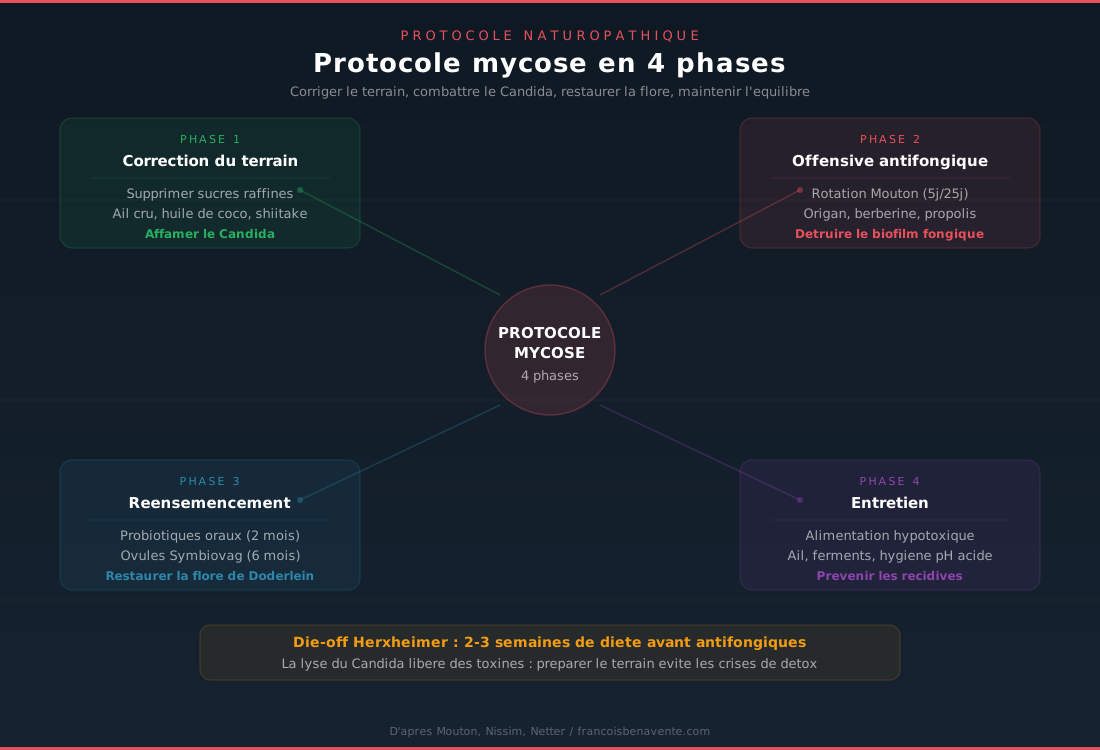
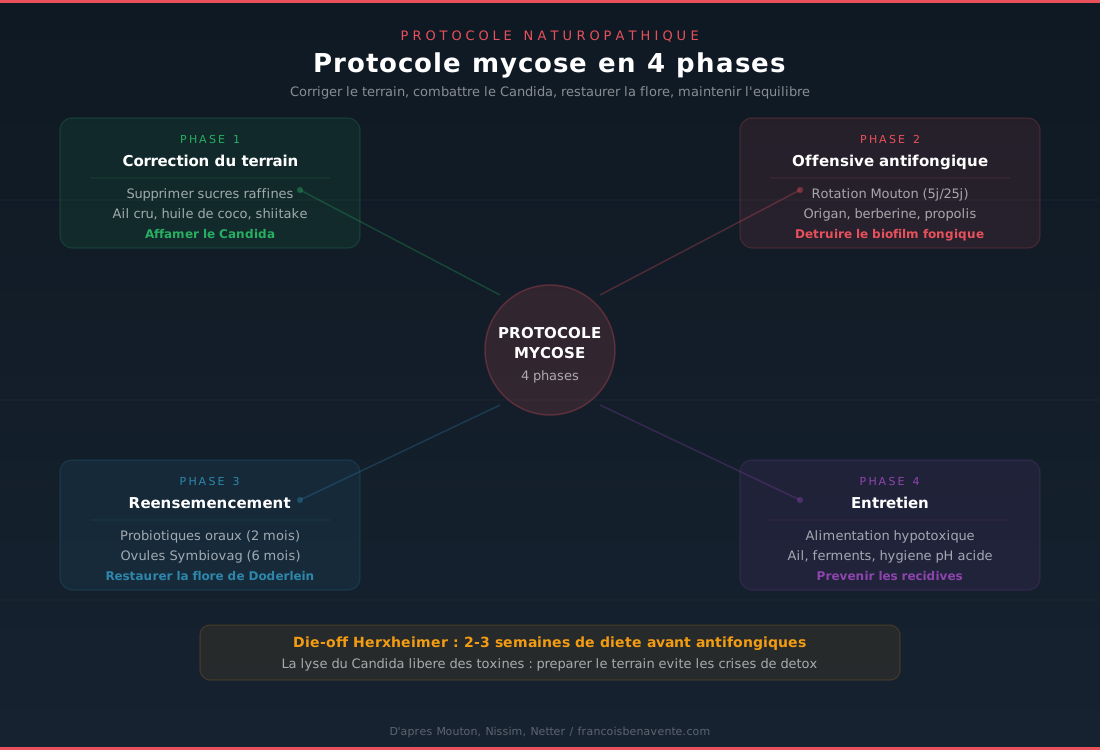
Naturopathy accompanies recurrent vaginal yeast infection with a four-phase protocol that doesn’t just kill the fungus but restores the overall ecosystem.
The first phase is terrain correction. We start with diet. Candida feeds on simple sugars. All refined sugars, pastries, confectionery, sodas, industrial fruit juices are eliminated for at least three months. Refined grains (white bread, white pasta, white rice) are replaced with whole grains with low glycemic index (basmati brown rice, buckwheat, quinoa). Gluten is reduced as much as possible. Industrial dairy products are eliminated. Raw garlic is incorporated into every meal: the allicin it contains directly attacks Candida’s biofilm. Coconut oil (one tablespoon per day) provides lauric acid and caprylic acid, two natural antifungals. Shiitake mushrooms support immunity through their beta-glucans.
The second phase is the antifungal offensive. It doesn’t start until after 2 to 3 weeks of dietary correction, to avoid too violent a Herxheimer reaction (die-off: when Candida dies in mass, it releases its toxins, which can cause fatigue, headaches, nausea). The Mouton protocol in rotation: a different natural antifungal each month, taken in the morning for 5 days, then 25 days of probiotics alone. First month: oregano (ADP, enteric-coated capsules). Second month: berberine (500 mg, 2 to 3 times per day). Third month: grapefruit seed extract. Fourth month: propolis. In gemmotherapy, Sanogem (macerate of alder and poplar buds) supports anti-infective immunity.
In parallel, local treatment is essential. The essential oils of thujanol thyme (Thymus vulgaris CT thujanol) and bay laurel (Laurus nobilis) are the two reference EOs for vaginal yeast infections. Thujanol is a powerful antifungal while being well tolerated by mucous membranes, unlike oregano or thymol thyme which are too caustic. In massage on the lower abdomen (2 drops of each in a spoonful of coconut oil or jojoba), 2 times per day for 10 days. Rina Nissim adds goldenseal vaginal injections (Hydrastis canadensis): root decoction (1 tablespoon per 500 ml of water, boil for 10 minutes, filter, let cool to body temperature), in gentle vaginal irrigation with a pear, once per day for 7 to 10 days. Goldenseal contains berberine, a powerful antifungal and antibacterial. Tea tree (Melaleuca alternifolia) in diluted essential oil completes the arsenal.
The third phase is flora reseeding. This is the longest and most important phase. Without flora restoration, relapses are guaranteed. Orally: a quality probiotic containing Lactobacillus rhamnosus and L. reuteri, the two best-documented strains for vaginal flora5, for minimum two months. Locally: vaginal suppositories of Lactobacillus (type Symbiovag), 2 per week for six months. Rina Nissim insists on the duration: “Restoring a destroyed vaginal flora takes time. It’s not a week of probiotics that will be enough.”
Oligotherapy completes the reseeding. Copper as an oligoelement is the catalytic anti-infective par excellence. Zinc supports mucosal immunity and tissue healing weakened by Candida.
The fourth phase is maintenance. Hypotoxic diet becomes the permanent way of life, with progressive relaxations. Refined sugar remains severely limited. Garlic, coconut oil, fermented vegetables (raw sauerkraut, kimchi, goat’s milk kefir) are incorporated daily. Oral probiotics are continued at maintenance dose (1 month out of 3). Intimate hygiene uses a soap with acidic pH (5 to 5.5) or simply water. Underwear is cotton. And stress is actively managed, because every episode of intense stress can trigger a relapse by depressing local immunity.
Lifestyle hygiene often neglected
Prevention of relapses also involves simple but often ignored measures. Wash hands before touching the intimate area. Don’t use alkaline soap (Marseille soap is too alkaline for mucous membranes). Wipe from front to back to avoid transporting intestinal bacteria to the vagina. Change underwear daily (cotton only). Avoid tight pants. Ensure partner’s hygiene. And get enough sleep: as Michael Irwin reminds us, a 4-hour night destroys 70% of NK cells6.
Sleep is the repair shop of immunity. The melatonin secreted during deep sleep is a powerful immunomodulator. As I explain in the article sleeping well naturally, sleeping 7 to 8 hours per night in complete darkness is a therapeutic act in itself.
What naturopathy doesn’t do
Naturopathy accompanies recurrent yeast infections by working on the terrain. It doesn’t replace medical diagnosis. Abnormal vaginal discharge isn’t always a yeast infection: bacterial vaginosis (Gardnerella vaginalis), trichomoniasis, Chlamydia or gonorrhea infections require a vaginal swab and specific treatment. In case of doubt, mycological examination with culture is essential.
Pregnant women should not use essential oils without medical advice. Berberine is contraindicated during pregnancy and breastfeeding. And oral fluconazole, if the doctor deems it necessary, should not be stopped without their agreement.
Based in Paris, I consult via video throughout France. You can book an appointment for personalized support.
Recurrent vaginal yeast infection is not inevitable. It’s the signal of an ecosystem to restore. When we treat the intestinal terrain, support immunity, reseed the flora, and eliminate triggering factors, relapses space out and then disappear. It’s patient work, but the results are there.
For recurrent yeast infections, Sunday Natural offers oregano in capsules, zinc, and pharmaceutical-quality probiotics (-10% with code FRANCOIS10). And a Hurom extractor allows you to prepare alkalizing green juices that support liver and intestinal detox (-20% with code francoisbenavente20). Find all my partnerships with exclusive promo codes.
Scientific references
If you want personalized support, you can book a consultation.
To go further
- Endometriosis: the hidden terrain no one looks at
- Adrenals and candidiasis: the vicious cycle to break
- Acetylcholine nature: the creative and intuitive profile according to Braverman
- Aldosterone: the forgotten hormone of your blood pressure and salt
Sources
- Nissim, Rina. Mamamelis: manual of naturopathic gynecology. Mamamélis, 1994.
- Mouton, Georges. Intestinal ecosystem and optimal health. Marco Pietteur, 2004.
- Netter, P. “Clinical manifestations of chronic intestinal candidiasis.” Journal de Mycologie Médicale, 2001.
- Salmanoff, Alexandre. Secrets and wisdom of the body. La Table Ronde, 1958.
“Restoring a flora is like replanting a garden after a storm. It takes time, patience, and the right seeds.” Rina Nissim
Footnotes
-
Sobel, J.D., “Vulvovaginal candidosis,” The Lancet 369, no. 9577 (2007): 1961-1971. PMID: 17560449. ↩
-
Sobel, J.D., “Recurrent vulvovaginal candidiasis,” American Journal of Obstetrics and Gynecology 214, no. 1 (2016): 15-21. PMID: 26164695. ↩
-
Ravel, J. et al., “Vaginal microbiome of reproductive-age women,” Proceedings of the National Academy of Sciences 108, suppl. 1 (2011): 4680-4687. PMID: 20534435. ↩
-
Liontiris, M.I. and Mazokopakis, E.E., “A concise review of Hashimoto thyroiditis (HT) and the importance of iodine, selenium, vitamin D and gluten on the autoimmunity and dietary management of HT patients,” Thyroid Research 10 (2017): 6. PMID: 28811849. ↩
-
Reid, G. et al., “Oral use of Lactobacillus rhamnosus GR-1 and L. fermentum RC-14 significantly alters vaginal flora,” FEMS Immunology and Medical Microbiology 35, no. 2 (2003): 131-134. PMID: 12628548. ↩
-
Irwin, M. et al., “Partial night sleep deprivation reduces natural killer and cellular immune responses in humans,” The FASEB Journal 10, no. 5 (1996): 643-653. PMID: 8621064. ↩

Laisser un commentaire
Sois le premier à commenter cet article.