Spring Naturopathy: The Season of Renewal and Detoxification
This March morning, walking down Boulevard de Belleville, I saw the first nettles breaking through the asphalt at the foot of a plane tree. Shoots of an almost insolent green, tender, vibrant, waiting only three days of mild weather to settle in. I stopped. A hurried passerby walked around me without understanding what a man could find so fascinating in a tuft of weeds. But that tuft is spring. It’s the signal. The one that naturopathy has been observing for centuries to support the renewal of the human body.
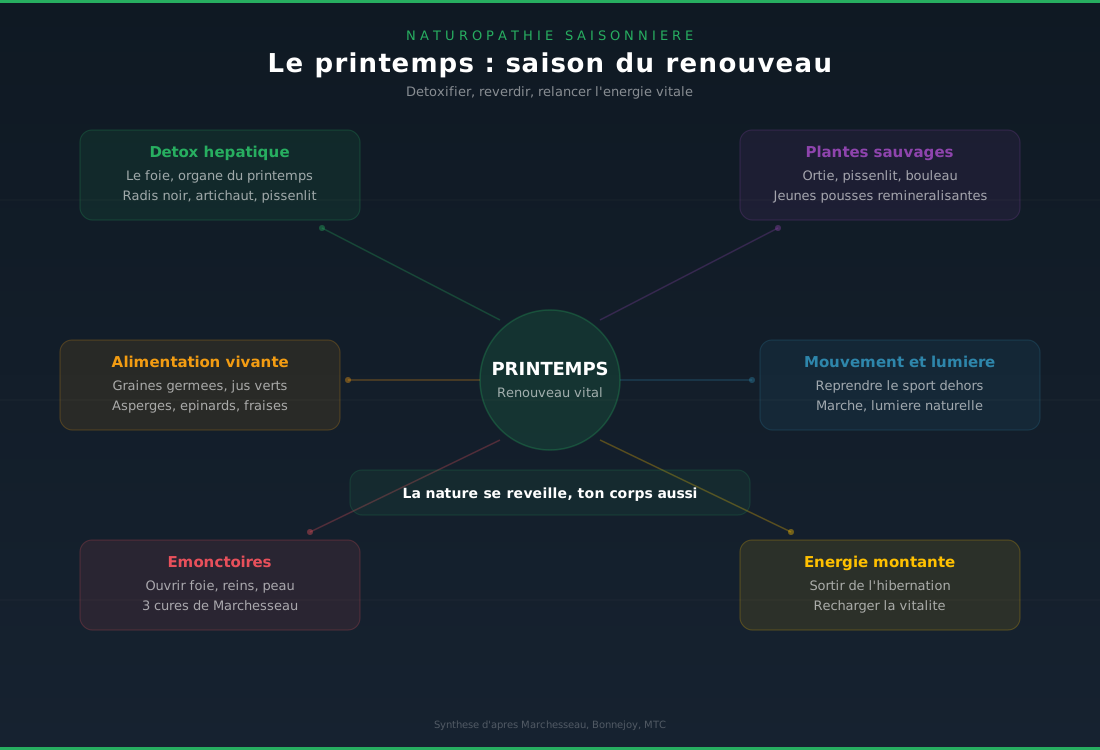
Nature never lies. When buds swell, when sap rises in trunks, when the first shoots break through the earth, energy is also rising in your body. Winter slowed you down. Your metabolism economized. Your emunctories accumulated the buildup of cold months, heavier meals, more sedentary evenings. And now, like the tree restarting its circulation, your body seeks to move again, to eliminate, to regenerate itself. The naturopath does nothing other than read what nature shows him and draw the consequences to support his clients. And spring, in naturopathy, is the richest season, the most generous, the most conducive to change.
Spring according to Dr. Bonnejoy: when life begins again
Dr. Bonnejoy, in his work on seasonal eating and the calendar of natural production, wrote this sentence that summarizes the entire spirit of naturopathic spring:
“Where one cycle ends, another arrives with its share of light, young shoots, fruits, conducive to the renewal of life.”
This sentence is not mere seasonal poetry. It’s a program. The passage from winter to spring is not an insignificant event for the body. It’s a profound biological transition, comparable to what a seed experiences when it emerges from dormancy. Winter is the time of contraction, economy, withdrawal. Spring is the time of expansion, expenditure, renewal. And this transition, if not supported, can be a source of fatigue, digestive troubles, allergies, headaches, that diffuse sensation of not being “in shape” when everyone around you seems to come alive again.
Bonnejoy had codified a calendar of seasonal fruits and vegetables with remarkable precision. From March onward, nature offers its first harvests: young nettle shoots, dandelion leaves, salsify roots still in the ground from autumn. These are not luxury foods. These are terrain foods, those that our ancestors gathered when leaving winter to rebuild their mineral reserves. Nettle alone is a concentrate of iron, silica, magnesium and chlorophyll. Dandelion, whose popular name (literally “piss-in-bed”) says everything about its diuretic power, is a primary hepatic and renal drainer.
In April, the calendar enriches. Brussels sprouts finish their season. Spring spinach, much more tender and sweet than their autumn cousins, appear on the shelves. Hop shoots, a forgotten delicacy, are harvested in country hedgerows. In May, it’s an explosion: asparagus, cauliflower, new potatoes, radishes, first strawberries. Each month brings its treasures, and each of these treasures corresponds to a specific need of the body at that time of year.
Bonnejoy warned against a modern trap that didn’t exist in his time but has become widespread since: greenhouse growing and hydroponics. A hothouse tomato in March is not a spring food. It’s an industrial product that bears the name of a vegetable. It grew under artificial light, in an inert substrate, fed on calibrated mineral solutions. Its content of vitamins, polyphenols, aromatic compounds is a fraction of that of a tomato ripened in August sun. The naturopath reads the seasons. He doesn’t eat marketing calendars. He eats what the earth gives, when it gives it. This is one of the foundations of bromatology according to Marchesseau, this science of nutrition adapted to terrain and natural rhythm.
The liver, the organ of spring
In traditional Chinese medicine, each season is associated with an organ. Winter belongs to the kidneys. Summer to the heart. Autumn to the lungs. And spring: that’s the liver. This correspondence is not a philosophical abstraction. It translates an observable physiological reality: the liver is more active in spring. Its work of filtration, transformation, neutralization of toxins intensifies naturally as the body gets moving again after the cold months.
The liver is the largest organ in the human body. It weighs about a kilogram and a half. It filters one and a half liters of blood per minute. It ensures more than five hundred distinct metabolic functions. Among them, detoxification is probably the most critical in spring. The liver neutralizes toxins in two phases. Phase I, carried by cytochromes P450, transforms lipid-soluble toxic substances into intermediate metabolites, often more reactive than the original toxins. Phase II conjugates these metabolites with transport molecules (glutathione, glycine, sulfate, glucuronic acid) to make them water-soluble and therefore eliminable by the kidneys and bile. If Phase I runs too fast relative to Phase II, intermediate metabolites accumulate and create oxidative stress. This is the classic trap of poorly conducted “detox,” which I describe in detail in my article on Marchesseau’s 3 cures.
Marchesseau had structured naturopathic support around three successive cures: the detoxification cure, the revitalization cure, and the stabilization cure. Spring is the ideal season for the first, provided that vitality is sufficient. A body exhausted by winter, undernourished, stressed, should not be thrown into aggressive detox. It must first be nourished, recharged, ensuring that its emunctories are capable of processing what will be sent to them. This is all the wisdom of orthodox naturopathy: never dissociate detoxination from revitalization.
The hepatic plants of spring are precious allies in supporting the liver in its seasonal work. Black radish stimulates bile production and facilitates gallbladder emptying. Its choleretic and cholagogue action makes it a powerful hepatic drainer, but sometimes too powerful for heavily congested livers. Artichoke, gentler, protects hepatocytes while stimulating bile secretion through cynarin. Dandelion acts on the liver through its roots and on the kidneys through its leaves, making it a dual-outlet drainer: hepatorenal. And birch, whose sap flows precisely in spring when you tap the bark, offers gentle, mineralizing drainage that respects fragile bodies.
But the liver doesn’t work alone. It needs cofactors: zinc, magnesium, B vitamins (particularly B6 and B12), glutathione, glycine, sulfur. Without these materials, detoxification phases run at a slower pace. This is the concept of terrain dear to naturopathy: an organ never functions in isolation. It functions within an ecosystem, and it’s the entire ecosystem that must be nourished.
Wild plants of renewal
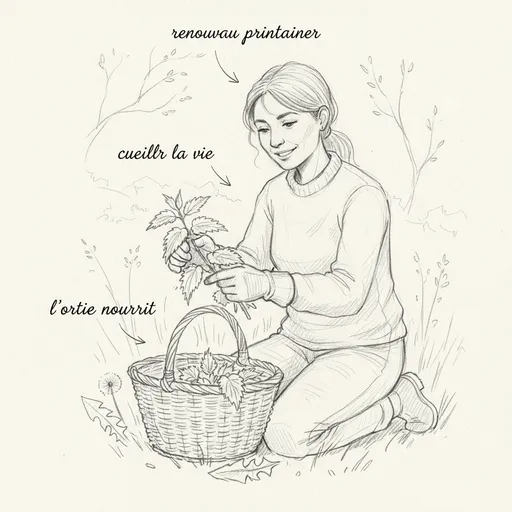
When I was a kid, my grandmother would gather nettles with gardening gloves and make a thick soup, almost black with chlorophyll, which she served with a drizzle of olive oil and a crushed clove of garlic. I thought it was vile. Today, it’s one of the first things I prepare as soon as March arrives. Because nettle is probably the most complete wild plant that spring offers us.
Nettle (Urtica dioica) is a concentrate of minerals. It contains iron in bioavailable form, silica that nourishes hair, nails and connective tissue, magnesium, calcium, potassium, vitamins A, C, K and a complete spectrum of B vitamins. Its richness in chlorophyll makes it a powerful alkalinizer, capable of buffering tissue acidosis accumulated during winter. Its anti-inflammatory action is documented: it inhibits pro-inflammatory cytokines and modulates immune response. As an infusion, in soup, as fresh juice or simply blanched thirty seconds in boiling water to neutralize its stinging hairs, nettle is the undisputed queen of naturopathic spring.
Dandelion (Taraxacum officinale) is the other great classic. Its leaves, harvested young before flowering, can be eaten in salads. Their bitterness stimulates bile production and activates digestion. Its roots, dried and in decoction, are a primary hepatic drainer. Dandelion is also a powerful diuretic, hence its popular name. But unlike synthetic diuretics, it doesn’t cause potassium loss because it contains potassium itself in significant quantities. This is the fundamental difference between a plant and a medicine: the plant brings the remedy and the antidote in the same bottle.
Birch (Betula pendula) offers its sap in spring, during a window of only a few weeks, between mid-February and mid-April depending on the region. This sap is a clear liquid, slightly sweet, containing minerals (potassium, calcium, magnesium, manganese), amino acids, simple sugars (fructose, glucose) and betulinic acid with anti-inflammatory properties. In a three-week cure, at a glass in the morning on an empty stomach, birch sap provides gentle drainage of the liver and kidneys without tiring the body. It’s the ideal cure for people with low vitality who don’t tolerate powerful hepatic drainers.
Watercress (Nasturtium officinale), found abundantly along streams from late February onward, is a bomb of vitamin C and iron. Its peppery taste, due to glucosinolates (the same molecules found in broccoli and cabbage), marks its antioxidant power. Watercress belongs to the Brassicaceae family, these cruciferous vegetables whose sulfurous compounds support Phase II of hepatic detoxification.
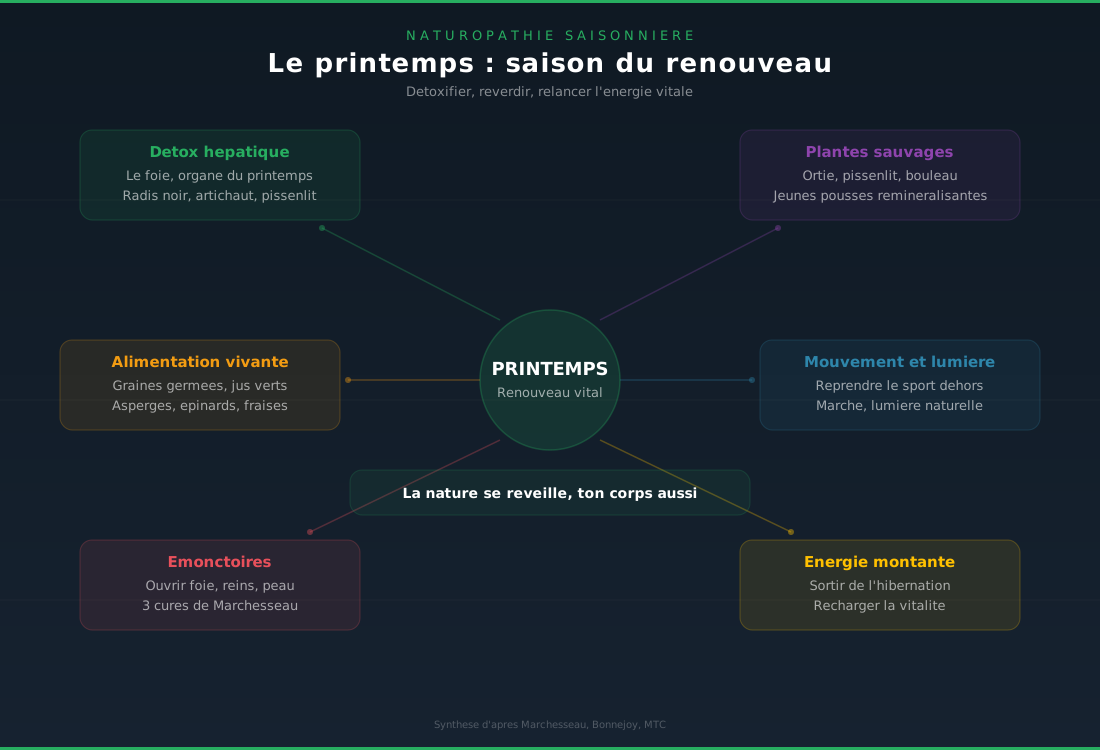
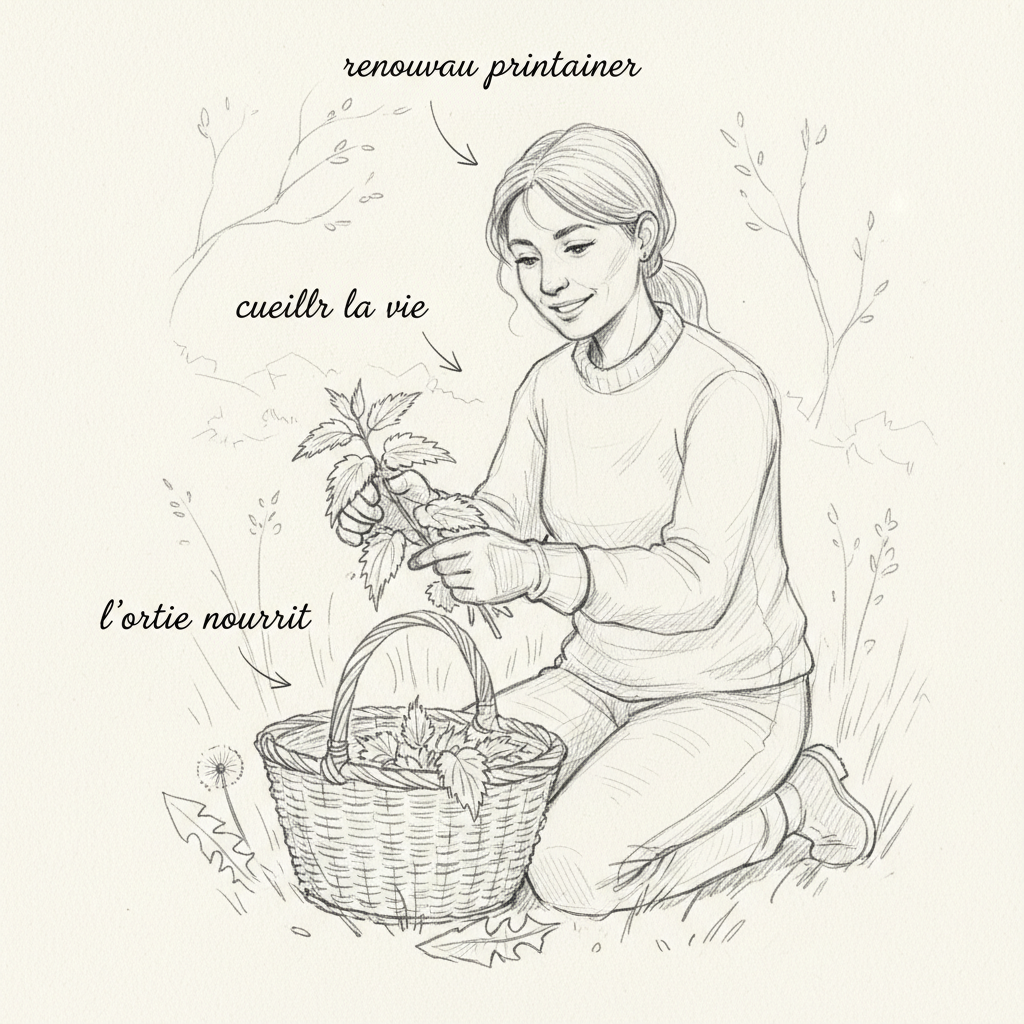
Wild foraging imposes strict rules. Never forage within two hundred meters of a high-traffic road. Avoid the edges of conventionally farmed fields: pesticides settle on leaves and in the soil for several tens of meters. Don’t forage in public parks treated with herbicides. Learn to identify plants with certainty before consuming them: confusion between wild garlic and lily of the valley, for example, can be fatal. When in doubt, abstain. And never forage more than you need. Nature is generous, but it’s not inexhaustible.
Sprouted seeds: concentrated vitality
Ann Wigmore, this American pioneer of living food, made germination the central pillar of her therapeutic approach. In her Hippocrates center in Boston, she welcomed patients in medical wandering and offered them a radical program: sprouted seeds, wheatgrass juice, raw food diet. The results she observed, and which thousands of patients have confirmed since, rest on a biochemical mechanism of remarkable elegance that I detail in my article on Ann Wigmore and living food.
Germination is externalized digestion. When you soak a seed in water for eight to twelve hours, then rinse it twice a day while keeping it moist and warm, you recreate spring conditions. The seed emerges from dormancy. Its enzyme inhibitors are neutralized. Lipases cut fats into fatty acids. Proteases cut proteins into amino acids. Amylases transform starches into simple sugars. In forty-eight to seventy-two hours, the seed dramatically multiplies its nutrient content. Five-day-old sprouted oats contain two hundred times more vitamin B1 than dry oats. Three-day-old sprouted alfalfa contains six times more magnesium than spinach and fifteen times more calcium than milk. These aren’t approximations. These are lab measurements, reproducible, documented.
Spring is the ideal time to start sprouting at home because your home’s ambient temperature, between eighteen and twenty-two degrees, corresponds exactly to optimal germination conditions. In winter, it’s often too cold. In summer, too hot, and fermentation risks increase. Spring offers perfect balance.
To begin, take a one-liter glass jar. Cover the opening with a piece of gauze or fine mesh, held in place by an elastic. Pour two tablespoons of alfalfa seeds into the jar. Cover with warm water. Let soak overnight. In the morning, drain the water, rinse the seeds, tilt the jar in a colander to allow excess water to drain while letting air circulate. Rinse twice daily, morning and evening. In three to five days, you’ll have a tuft of green, crunchy, lively shoots. Add them to your salads, toast, soups at the end of cooking. It’s a simple gesture that transforms the nutritional density of your meals.
Sprouted lentils are the fastest: twenty-four to forty-eight hours suffice. Fenugreek, with its slightly spicy taste, is an excellent hepatic drainer when sprouted. Hulled sunflower gives fatty shoots, rich in complete proteins, with an amino acid profile among the most balanced in the plant kingdom. Wigmore considered sprouted sunflower seeds as a complete food, capable of nourishing a human being by itself. That’s pedagogical exaggeration, but it reflects a measurable nutritional reality: twenty-three percent protein, essential fatty acids, vitamin E and B group vitamins, zinc, iron, magnesium. All this in a seed that costs a few cents and requires only a jar and water.
Rising energy: move, breathe, open up
Spring is an ascending season. Energy rises. Days lengthen. Light gains a few minutes on darkness each day. And your body feels it, even if you don’t put it into words. That urge to go out, to walk, to move, to open the windows: it’s not a whim. It’s a physiological response to increased light and temperature.
Natural light is a medicine that no one prescribes. When the retina captures photons from the blue-green spectrum present in daylight, it sends a signal to the suprachiasmatic nucleus of the hypothalamus, the central biological clock. This signal suppresses the production of melatonin (the sleep hormone) and stimulates the production of serotonin, the neurotransmitter of well-being, motivation, regulated appetite and quality sleep (since melatonin is made from serotonin in the evening). This is why so many people feel depressed in winter (the famous seasonal affective disorder) and come back to life in spring. It’s not psychological. It’s biochemical. It’s serotonin rising.
Vitamin D, this solar hormone that the skin synthesizes under the effect of UVB rays, also begins to be produced again in spring, once the UV index exceeds 3 (in France, this roughly corresponds to the period from April to October). After the winter months when reserves were exhausted, this restart of synthesis is crucial. Vitamin D is involved in more than two hundred genes, in immune regulation, in calcium absorption, in inflammation modulation. Its deficiency, which affects more than eighty percent of the French population leaving winter, is an aggravating factor for almost all chronic pathologies I see in consultation.
Movement amplifies everything. Thirty minutes of walking in the open air in spring gives you light for your serotonin, exercise for your lymphatic circulation, deep breathing for your parasympathetic nervous system, and contact with life for your psychological balance. Lymph, let’s remember, has no pump of its own. It circulates through muscle contractions and thoracic breathing. One liter per twenty-four hours in a sedentary body. Five to ten times more in a moving body. Walking, cycling, gardening, swimming in open water are ideal spring activities. No need for a gym. No need for sophisticated programs. Go out. Walk. Breathe. The body does the rest.
Barefoot contact with the earth, which English speakers call grounding or earthing, is another lever that science is beginning to document. The earth’s surface carries a negative electrical charge. When you place your bare feet on grass, sand or earth, free electrons rise into your body and neutralize some of the circulating free radicals. Preliminary studies show effects on blood viscosity, systemic inflammation, salivary cortisol and heart rate variability. It’s not mysticism. It’s electrophysiology. And spring, with its first warm grass, is the perfect time to renew this contact that winter and shoes have made us lose.
The calendar of spring fruits and vegetables
Bonnejoy drew up a precise calendar of what each spring month offers. This calendar is not a shopping list. It’s a guide for synchronizing your diet with the earth’s rhythm.
In March, the earth slowly awakens. Available vegetables are still those from the end of winter, stored or grown in open ground: cabbages (green, kale, red), beets, storage carrots, leeks, turnips. But first wild shoots appear: young nettles, whose tender ten-centimeter tips are richest in minerals, dandelion leaves before flowering, stream watercress, first wild garlic shoots in damp woodlands. It’s the month of transition. You finish winter reserves while welcoming the first gifts of renewal.
In April, diversity increases. Brussels sprouts finish their run. Spring spinach, sown in February, gives its first tender leaves. Pink radishes, the earliest spring root vegetables, crunch between the teeth with their characteristic peppery bite from glucosinolates. Young white onions, scallions, appear. Wild rocket is harvested in wastelands. Chard returns. It’s the month when green finally dominates the plate, after months of roots and tubers. Your body, which needs chlorophyll for its detoxification and alkalization functions, receives exactly what it needs, exactly when it needs it. It’s not an accident. It’s the wisdom of a system that has had millions of years to adjust.
In May, it’s abundance. Asparagus, these stems gorged with diuretic asparagine, folates and prebiotics (inulin), arrive for a short and intense season. Spring cauliflower, gentler than autumn varieties, provides hepatoprotective sulfurous compounds. New potatoes, with thin skin and melting flesh, are more digestible than storage potatoes because they contain less solanine and resistant starch. And the first strawberries, the real ones, those from open ground that ripened under May sunshine, burst with vitamin C, polyphenols and flavonoids. A May strawberry contains on average three times more vitamin C than a hothouse strawberry from January.
Bonnejoy insisted on one point that large-scale distribution has reason to make us forget: a seasonal vegetable, grown in open ground, under the sun, in living soil, contains incomparably more nutrients than a hothouse vegetable grown hydroponically. The Dutch greenhouse tomato of March has neither the taste, nor the color, nor the nutritional density of a Provençal tomato from July. It’s not snobbery. It’s biochemistry. Polyphenols, carotenoids, glucosinolates, terpenes, all these protective compounds are synthesized by the plant in response to light, thermal and water stress. A plant growing in a controlled environment, watered by drip irrigation, heated by resistance, lit by LEDs, undergoes no stress. It therefore produces only a fraction of its protective compounds. Eating local and seasonal, in spring as in all seasons, is not a trend. It’s an act of fundamental anti-inflammatory nutrition.
And after spring?
Spring is only one chapter of the cycle. It’s only fully understood in the continuity of the seasons. The winter that preceded it prepared the ground: rest, contraction, accumulation. Spring releases, drains, gets things moving again. The summer that follows will amplify this energy, bring it to its peak with the abundance of fruits gorged with sun, heat that opens pores and facilitates skin elimination, light that maintains serotonin at its optimal level.
Autumn, when it comes, will offer the second detoxification window of the year. Because while spring is the great season of the hepatic cure, autumn is that of the pulmonary and intestinal cure, that moment when the body prepares again for winter withdrawal by cleansing its respiratory pathways and digestive tract. The two transition seasons, spring and autumn, are the two lungs of seasonal naturopathy. The two moments when the body is naturally disposed to eliminate, provided you support it rather than force it.
What spring ultimately teaches you is trust in the vital process. Your body knows how to clean itself. It knows how to regenerate. It knows how to recognize foods that nourish it and those that clog it. You just need to give it the conditions: seasonal diet rich in fresh and living plants, a liver supported by hepatic plants of the moment, daily movement in open air, sleep that’s respected, contact with earth and light. The naturopath invents nothing. He observes, supports, reminds of what the body already knew before modern life made it forget everything.
To discover how summer extends this renewal with its fruit abundance and solar vitality, read my article on naturopathy in summer. And if you want to understand the fundamentals underlying this entire seasonal approach, the foundations of naturopathy will give you the complete framework: terrain, vitalism, humoralism, Marchesseau’s three cures and the ten naturopathic techniques.
Want to evaluate your status? Take the free acids toxemia questionnaire in 2 minutes.
For healthy cooking, discover PranaCook stainless steel utensils, without endocrine disruptors.
To go further
- Estrogen dominance: when your hormones trap your thyroid
- Menopause and estrogen: the hepatic detoxication no one explains to you
- Autumn naturopathy: prepare your immunity before winter
- Summer naturopathy: sun, vitality and fruit abundance
Healthy recipe: Carrot-dandelion juice: Dandelion: the spring detox plant.


Laisser un commentaire
Sois le premier à commenter cet article.