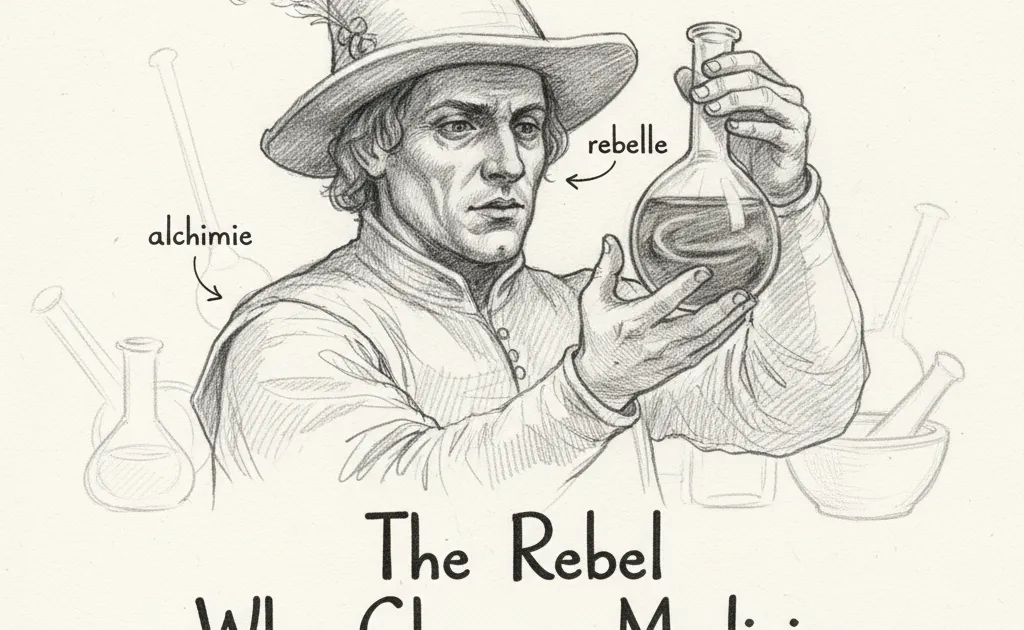
There are men that history does not know how to classify. Not wise enough for philosophers, not docile enough for universities, not dead long enough to be forgotten. Philippus Theophrastus Aureolus Bombast Von Hohenheim, called Paracelsus, is one of them. Physician, surgeon, alchemist, hygienist, theologian, hermetic philosopher. A man who publicly burned the works of Galen and Avicenna in front of the astonished students of the University of Basel. A man who learned medicine in mines, kitchens, monasteries and battlefields before reinventing it in an alembic. A man who was driven out of Lithuania, Prussia, and Poland, and who died at forty-eight years old on the roads of Europe, his skull fractured under circumstances that no one has ever clarified.
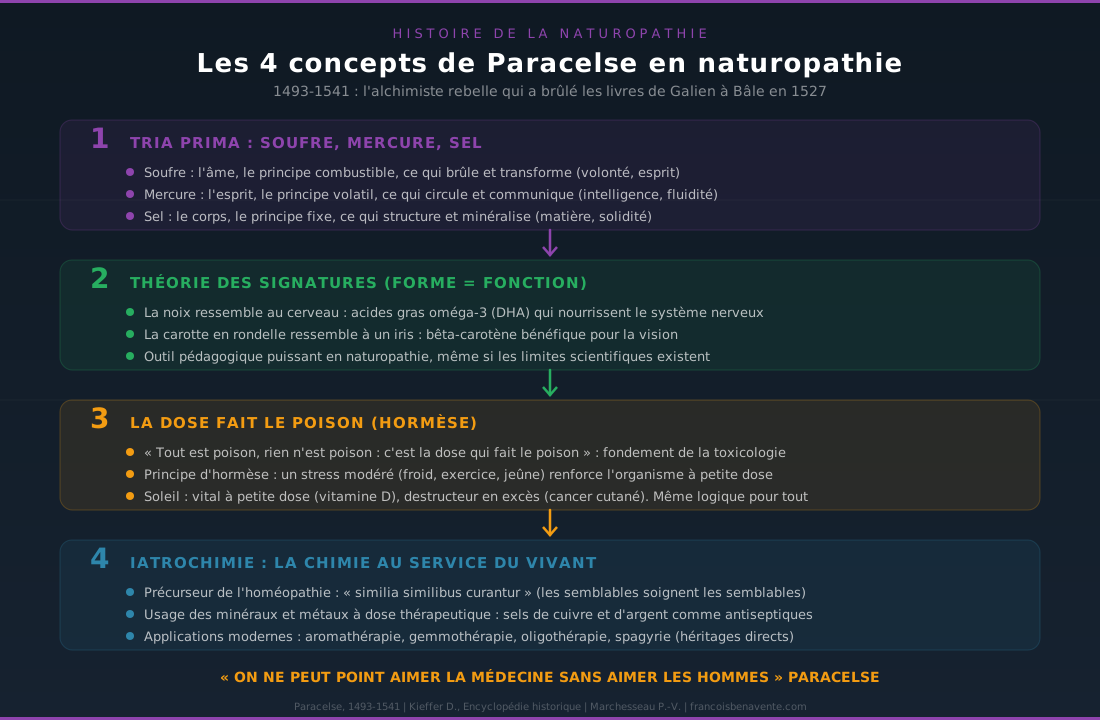
And yet. Five centuries after his death, every naturopath uses his ideas without always knowing it. When I tell a patient that “the dose makes the poison,” it is Paracelsus speaking. When I observe that a walnut looks like a brain and its fatty acids nourish the nervous system, it is his theory of signatures whispering. When I refuse to separate the body from the mind, when I explain that disease is an imbalance of terrain and not a fatality, when I consider the human being as a microcosm reflecting the laws of the macrocosm, I am reformulating what he taught in the lecture halls of Basel in 1527, in popular German instead of university Latin, so that barbers and midwives could understand him.
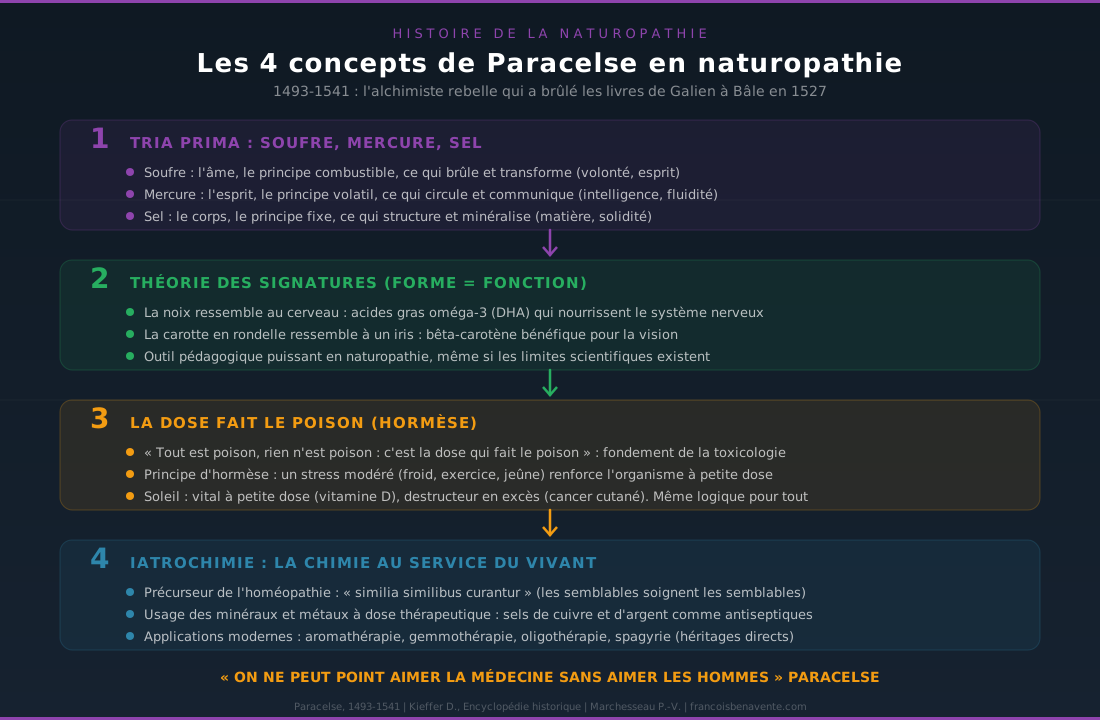
“One cannot love medicine without loving people.” Paracelsus
It took me a long time to measure the extent of his influence. In naturopathy school, he is cited in passing, wedged between Hippocrates and Carton, like a secondary character in a film of which he is actually the screenwriter. I had to reread his treatises, cross his intuitions with what modern biochemistry has confirmed, and especially understand that nearly all the concepts that Marchesseau codified in the twentieth century find their first formulation in the work of this vagabond of genius.
The vagabond of genius
Paracelsus was born in 1493 in Einsiedeln, in the canton of Schwyz in Switzerland. His father, Wilhelm Bombast von Hohenheim, was himself a physician. It was from him that he received his first lessons in anatomy, botany, and mineralogy. But very quickly, young Theophrastus understood that the medicine taught in universities did not correspond to what he observed in practice. Professors recited Galen and Avicenna like prayers. Nobody looked at the patient. Nobody touched the body. Nobody verified whether ancestral theories held up against the reality of an abscess, a fracture, or a putrid fever.
So he left. At twenty, he abandoned the lecture halls for the roads. He became a surgeon-barber in armies, treating the wounded of war in Venice, Naples, the Netherlands, Denmark. He crossed all of Europe, not as a tourist but as a practitioner in the field, learning from contact with bruised bodies what no book could teach him. He frequented mines, where he observed the diseases of miners, those respiratory and cutaneous pathologies that no one bothered to study. He listened to midwives, gypsies, village healers, those women whose empirical knowledge often surpassed that of doctors in robes. He worked in monasteries, where herborist monks had cultivated for centuries considerable phytotherapeutic knowledge.
What strikes me in this journey is his humility before experience. Paracelsus was not a modest man. His adopted name means “beyond Celsus,” that Roman physician of the first century considered one of the greatest of antiquity. The ego was monumental. But before nature, before the patient’s body, before the plant that grows and the mineral that crystallizes, he knew how to remain silent and observe. This is the fundamental posture of the naturopath. This is what my teacher Alain Rousseaux repeated to us in second year : “Close the books. Open your eyes. Look at the terrain.”
This wandering lasted nearly thirty years. From the mines of Schwaz in Tyrol to the battlefields of the Baltic, from the herbalist monasteries of Switzerland to the bazaars of Constantinople, Paracelsus accumulated clinical experience that no university professor of his time could claim. He saw diseases that salon doctors had never seen. He treated populations that official medicine ignored. And he developed revolutionary surgical techniques for the era : meticulous cleaning of wounds instead of their cauterization with red-hot iron, the use of copper and silver salts as antiseptics, the application of essential oils he called “mumia” to promote healing. Gestures that seem obvious today but which, in the sixteenth century, amounted to heresy.
He died in 1541 in Salzburg, at forty-eight years old, from a skull fracture whose circumstances remain unclear. Poisoned ? Murdered ? Victim of a brawl ? We don’t know. What we do know is that he left behind an immense body of work, poorly understood during his lifetime, rediscovered by subsequent centuries, and whose ramifications still irrigate modern naturopathy, homeopathy, aromatherapy, and gemmotherapy.
The Basel bonfire : when medicine burns its dogmas
The year 1527 is a turning point. Paracelsus has just been appointed physician of the city of Basel and professor at its university. It is academic consecration for a man who never tolerated academia. From his first lecture, he sets the tone. He teaches in German, not Latin. Students finally understand what is being said to them. Professors are scandalized. Then he does something that no one had ever dared, something that echoes five centuries later in the memory of all those who believe that medicine must evolve : he throws into the fire, before his students and petrified colleagues, the works of Galen and Avicenna.
This is not an act of vandalism. It is a manifesto. Galen, a Greek physician of the second century, had systematized Hippocratic medicine into a rigid dogma that no one had contested for more than a thousand years. Avicenna, a Persian physician of the eleventh century, had compiled the Canon of Medicine, an encyclopedic monument that European faculties taught as revealed truth. Medieval medicine did not treat patients : it commented on texts. Professors read Galen aloud, added a few glosses, and sent students home without a single body examined, without a single wound touched, without a single plant smelled.
Paracelsus saw in this bookish medicine the cause of the medical impotence of his time. He did not reject Hippocrates. On the contrary. He believed that the dogmatists had betrayed Hippocrates by transforming his medicine of observation into a frozen catechism. The Hippocratic spirit is the observation of terrain, the listening to the body, the adaptation to the patient. What Galen had made of it was a closed system, an intellectual straitjacket that prevented all innovation. The Basel bonfire is a declaration of war against dogmatism. It is the affirmation that medicine must be founded on experience and observation, not on the repetition of ancient texts. It is the birth of empirical medicine.
The consequences were immediate and brutal. The professors of Basel obtained his dismissal. The apothecaries, whose toxic preparations and exorbitant prices he denounced, harassed him. He was forced to flee the city. This is the eternal fate of one who speaks the truth too soon. Semmelweis, three centuries later, will be institutionalized for daring to say that doctors were killing mothers by not washing their hands. Galileo will be placed under house arrest for saying the Earth turned. Paracelsus was driven out for saying that nature was a better teacher than books.
In consultation, when a patient comes to me with years of medical wandering, contradictory diagnoses, piled-up prescriptions and always the same symptoms, I think of this bonfire. Modern medicine does not have Galen’s dogmatism, but it sometimes has its own blinkers. It looks at biological tests without looking at the patient. It measures TSH without questioning lifestyle. It prescribes levothyroxine without questioning the cofactors of T4-T3 conversion that I detail in the article on thyroid and micronutrition. Paracelsus reminds us that the most powerful tool of the therapist is not the laboratory. It is observation.
The dose makes the poison
“Everything is poison, nothing is poison : the dose makes the poison.” This sentence is the foundation of modern toxicology. It was pronounced by Paracelsus in the sixteenth century, and not a toxicologist in the world would contest it today. But its depth far exceeds the framework of toxicology. It contains in embryo the principle of hormesis, one of the most powerful concepts in contemporary naturopathy.
Hormesis is the idea that a low-dose stress can be beneficial, even essential to health, while the same stress at a high dose is destructive. The sun is the clearest example. Fifteen minutes of daily exposure allows the synthesis of vitamin D, regulates circadian rhythm, stimulates the immune system. Three hours without protection burns the skin, damages cellular DNA, and increases melanoma risk. The same star. The same skin. Only the dose changes.
Iodine illustrates this principle with surgical precision. At physiological dose (150 micrograms per day for an adult), iodine is absolutely essential for the synthesis of thyroid hormones T4 and T3. Without iodine, the thyroid becomes enlarged, metabolism collapses, the brain slows down. But at excessive dose (several milligrams per day, as is the case in Japan with massive seaweed consumption), iodine can paradoxically block the thyroid by Wolff-Chaikoff effect and trigger autoimmune thyroiditis in predisposed subjects. The same nutrient saves or destroys the thyroid. The dose makes the poison. Paracelsus was right.
This principle irrigates my entire practice. When I prescribe zinc, I dose it at 15-25 mg per day to correct a deficiency, not at 100 mg where excess would cause copper deficiency through absorption competition. When I recommend intermittent fasting, I propose it for sixteen hours to stimulate autophagy, not for a week in a patient exhausted whose adrenals no longer have the reserves to sustain it. When I talk about detoxification, I insist on progressiveness : opening the emunctories too quickly in congested terrain causes a violent healing crisis that aggravates instead of relieves. Toxemia drains with caution.
Paracelsus had formulated this principle as early as 1533 in his treatise On Miners and Mountain Sickness: “What is food for one is poison for another.” This sentence adds another dimension to the dose principle : biochemical individuality. Two people facing the same food, the same supplement, the same drug will not react the same way. This is the foundation of personalized medicine that naturopathy has always practiced and that conventional medicine is rediscovering under the term “precision medicine.” Marchesseau said exactly the same thing when he adapted his recommendations to the patient’s temperament. The sanguine person does not eat like the nervous person. The bilious person does not fast like the lymphatic person. The dose, yes. But the dose for whom.
The signatures of nature
The theory of signatures is one of the most famous and most debated legacies of Paracelsus. It posits that nature signs plants and foods through their shape, color, texture, thus indicating to the attentive observer the organ or function they are destined to support. It is an old idea, found in Dioscorides and in European popular traditions, but it is Paracelsus who formalized it into doctrine and integrated it into a coherent vision of medicine.
The walnut is the most classic example. Cut it in two and look : the shell looks like the skull, the two kernels look like the two cerebral hemispheres, the folds of the flesh recall cortical convolutions. And walnuts are actually one of the richest foods in plant omega-3 (alpha-linolenic acid), vitamin E, and neuroprotective polyphenols. The carrot cut into rounds resembles an iris with its concentric lines, and the beta-carotene it contains is a precursor of vitamin A essential for night vision. The red bean is shaped like a kidney and actually supports kidney function through its richness in potassium and fiber. Celery stalks resemble a long bone and its organic silicon content nourishes bone tissue.
I know what you’re thinking. It’s nice, it’s poetic, but is it scientific ? The honest answer is : not always. The theory of signatures is not a biological law. It’s an observation tool, a mnemonic means, an intuition that hits the mark often but not systematically. Some correspondences are strikingly precise. Others are forced, stretched thin, and do not withstand biochemical analysis. The rigorous naturopath uses signatures as a first clue, never as proof. It is a starting point for research, not a conclusion.
What interests me in this theory, beyond its practical applications, is the posture it requires. It obliges the practitioner to look at nature with attention, to observe shapes, colors, textures, cycles. It places man back in dialogue with the living. And this posture of observation is exactly what Hippocrates demanded of his students twenty centuries earlier. Medicine begins with sight.
Microcosm and macrocosm : man as mirror of the universe
Paracelsus was a man of the Renaissance, and like all great minds of his time, he thought in terms of correspondences. His cosmogony rests on an idea inherited from Hermes Trismegistus, the legendary sage of ancient Egypt : “What is below is like what is above.” Man is a microcosm, a miniature universe, that reflects the laws and structures of the macrocosm. The same forces that govern planets, seasons, tides, also govern the human body, its rhythms, its secretions, its balances.
This vision may seem esoteric. It is in part. But it contains a deep biological truth that modern science is rediscovering in different terms. Chronobiology confirms that our hormones follow rhythms modeled on those of the sun and moon. Melatonin is secreted when light declines. Cortisol reaches its peak at sunrise. Women have a menstrual cycle of twenty-eight days that mirrors the lunar cycle. Intestinal ecology confirms that our digestive tract houses an ecosystem as complex and interdependent as a tropical rainforest, with its bacterial populations, its fragile balances, its cascade effects when one species disappears. You cannot understand the microbiota without thinking in terms of ecosystem. And an ecosystem is a microcosm that obeys the same laws as the macrocosm.
Paracelsus structured his vision of man around a triad : sulfur, mercury, and salt. These are not chemical elements as we know them. These are alchemical principles. Sulfur represents the soul, the inner fire, what burns and transforms. Mercury represents the spirit, fluidity, communication between the parts of the whole. Salt represents the body, matter, crystallized form. For Paracelsus, health is the harmony between these three principles. Disease arises when one dominates the others, when fire consumes matter, when matter stifles spirit, when spirit cuts itself off from the body.
Translated into naturopathic language, this triad speaks to what Marchesseau would later call the three planes of being : the physical plane (salt, the body), the psycho-emotional plane (sulfur, emotions, vital energy), and the spiritual plane (mercury, consciousness, meaning). The holism of naturopathy, this conviction that man is an indivisible whole and that one cannot treat the body without considering the spirit, comes directly from this Paracelsian triad.
Precursor of psychosomatic medicine
“Where the spirit suffers, the body also suffers.” Paracelsus
This sentence alone would be enough to justify the importance of Paracelsus in the history of medicine. In the sixteenth century, nobody talked about psychosomatics. The word would not exist for four more centuries. And yet, Paracelsus had observed what psycho-neuro-immunology would only demonstrate in the twentieth century : that mental state directly influences bodily state, that emotions modify biochemistry, that psychological suffering can create organic disease.
He described the first clinical cases of what we would call today psychosomatic disorders. He observed chorea, those involuntary movements that doctors of his time attributed to demonic possession, and he explained them as an internal imbalance, not a supernatural intervention. He noted that certain patients healed when their environment changed, when they were removed from distress, when they regained confidence. He understood that the relationship between therapist and patient was itself a healing tool. His formula, “One cannot love medicine without loving people,” is not a humanistic banality. It is a therapeutic prescription. The quality of the caregiver’s presence influences the patient’s prognosis.
In consultation, I measure the importance of this Paracelsian intuition every week. A forty-five-year-old woman comes with refractory hypothyroidism, tests correctly dosed with levothyroxine but symptoms that persist : fatigue, cold sensitivity, brain fog. Her endocrinologist doesn’t understand. TSH is within normal range. But when I question her, she tells me of unmourned grief, a job that overwhelms her, sleep disrupted by anxiety. Her hypothalamic-pituitary-adrenal axis is under constant tension. Chronically elevated cortisol inhibits T4 to T3 conversion. Her body translates into biochemistry what her mind has no words to say. Paracelsus had seen it. Marchesseau codified it in his “psycho-naturopathy.” Science confirms it.
The five techniques and alchemical contribution
Paracelsus was not content to diagnose. He healed. And his therapeutic tools, for the time, were of astonishing modernity. He was the first to use chemical preparations for therapeutic purposes, in complete break from the Galenic tradition which only swore by simples (crude plants). His contribution unfolds along five axes that Daniel Kieffer details in his Historical Encyclopedia of Naturopathy.
The first axis is empirical surgery. Paracelsus revolutionized the treatment of wounds by replacing cauterization with red-hot iron with careful cleaning, the application of antiseptic metallic salts (copper, silver), and the use of balms based on essential oils he called “mumia.” Three centuries before Pasteur and asepsis, he had understood that wound cleanliness conditioned healing. It is surgical hygiene before the letter.
The second axis is the extraction of active principles. Here the alchemist joins the pharmacologist. Paracelsus introduced the use of the alembic in medicine. He distilled plants to extract their quintessences, those volatile oils we call today essential oils. He prepared tinctures, elixirs, concentrated extracts. This is the birth of modern pharmacognosy, that science of extraction and concentration of plant active principles. All of aromatherapy owes this impulse to him. When I recommend thyme essential oil with thymol for its anti-infectious power or true lavender essential oil for its effect on the nervous system, I use a tool that Paracelsus forged in his alchemist’s laboratory.
The third axis is therapeutic mineralogy. Paracelsus was the first European physician to use mineral preparations for healing purposes : antimony, sulfur, mercury (at very low doses), metallic salts. It is slippery ground, and his detractors will accuse him of poisoning his patients. But it is also the birth of mineral pharmacology. And it is actually Paracelsus who invented the word “zinc” in 1526, from the German term Zinke (point), describing the crystalline form of this metal he had observed in Tyrol mines. That same zinc I never stop talking about on this site, cofactor of over 300 enzymes, essential to immunity, skin, thyroid, fertility.
The fourth axis is experimental physiology. Paracelsus performed dissections and experiments on chemical substances at a time when medicine was content to read and comment. He laid the groundwork for what would become biochemistry : the idea that the human body is a chemical laboratory, that digestion is an alchemical transformation of foods, that disease is a chemical imbalance that can be corrected by appropriate substances.
The fifth axis is his humanistic and holistic medicine. Paracelsus did not treat an organ. He accompanied a human being in its totality, body, soul, and spirit. He believed that the therapist’s consciousness, his ethics, his quality of presence, were an integral part of the healing process. This is an aspect that naturopathy has deeply integrated and that conventional medicine is timidly rediscovering under the terms of therapeutic alliance and narrative medicine.
From Paracelsus to Marchesseau : the lineage
The transmission from Paracelsus to modern naturopathy is not a shortcut. It is a lineage, a chain of transmission where each link has received, enriched, and passed on the heritage.
After Paracelsus comes Samuel Hahnemann in the eighteenth century who takes up his principle “like cures like” (similia similibus curantur) to found homeopathy. The parallel is striking : Hahnemann, like Paracelsus, was a doctor revolted against the medical practices of his time (bloodletting, mercury purges). Like Paracelsus, he believed in vital force. Like Paracelsus, he used diluted preparations of mineral and plant substances. Homeopathy is the daughter of Paracelsus, even if Hahnemann developed it in a direction the master had not anticipated.
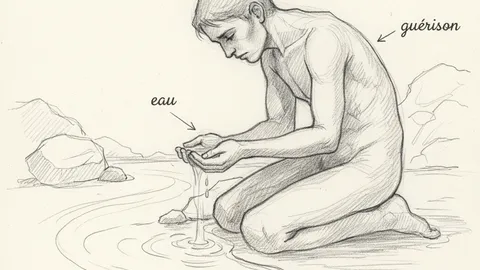
In the nineteenth century, Sebastian Kneipp takes up the Paracelsian intuition of water as a therapeutic agent and develops hydrology into a complete system of care by cold water, alternating baths, affusions. Salmanoff, in the twentieth century, pushes this vision to capillotherapy, that medicine of small vessels which directly joins Paracelsus’s humoral vision : the quality of body liquids determines cell health.
“The physician can only act by removing obstacles to natural healing.” Paracelsus
Paul Carton, French physician of the early twentieth century, was the first to synthesize the Hippocratic and Paracelsian heritage into a coherent vision of natural medicine. His Treatise on Medicine, Nutrition, and Natural Hygiene (1920) is a monument where one finds the vision of terrain, respect for vital force, individualization of treatment, the primacy of nutrition. Carton borrowed from Paracelsus his vision of world laws, this conviction that the same principles govern the infinitely large and infinitely small, the cosmos and the cell.
Pierre-Valentin Marchesseau comes after Carton and codifies naturopathy into ten natural techniques of health. What Marchesseau calls “vitalism” is Paracelsus’s vital force reformulated in biological language. What Marchesseau calls “humoralism” is Paracelsus’s vision of humors inherited from Hippocrates and enriched by alchemy. What Marchesseau calls “holism” is the sulfur-mercury-salt triad translated into body-soul-spirit. Marchesseau’s toxemia, that accumulation of waste in body liquids which is the deep cause of all chronic disease, finds its echo in Paracelsus’s observations on miners’ diseases, those first works of toxicology where he showed how the environment poisons the terrain subtly.
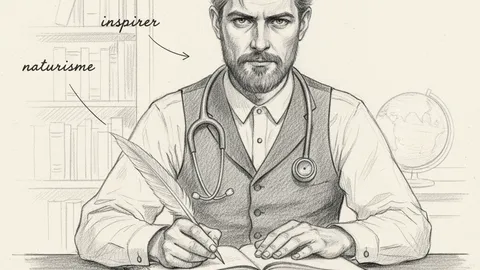
The lineage is clear. Hippocrates lays the foundations. Paracelsus dynamites the dogmas and opens new paths : therapeutic alchemy, toxicology, psychosomatics, the theory of signatures. Carton synthesizes. Marchesseau codifies. And when I see a patient in consultation, when I evaluate his terrain, when I look at his humors, when I dose his supplements according to the principle of the right dose, when I remind him that his body possesses within it the force to heal itself, I practice a medicine whose foundations Paracelsus laid in an alchemist’s laboratory five hundred years ago.
A word of caution
This article is a tribute to a pioneer of natural medicine and an invitation to understand the roots of naturopathy. It is in no way a substitute for medical follow-up. The principles of Paracelsus, however relevant they may be, must be integrated into supervised practice. Self-medication with mineral substances or high-dose essential oils can be dangerous. This is actually exactly what Paracelsus himself teaches us : the dose makes the poison. If you suffer from a chronic condition, whether an autoimmune disease like Hashimoto, a hormonal disorder, or an inflammatory syndrome, consult your doctor and consider complementary naturopathic care. Naturopathy never replaces medicine. It complements it.
The alchemist who doesn’t age
Paracelsus died on the roads, driven out, misunderstood, at forty-eight years old. He did not have time to finish his work. His manuscripts were scattered, pillaged, reinterpreted, sometimes forged. And yet, five centuries later, his intuitions are more alive than ever. Modern toxicology confirms that the dose makes the poison. Psycho-neuro-immunology confirms that spirit and body are inseparable. Aromatherapy confirms that distillation of plants releases active principles of considerable therapeutic power. Chronobiology confirms that man is a microcosm subject to the rhythms of the macrocosm. Even the theory of signatures, with all its limitations, continues to inspire researchers studying correspondences between plant morphology and their biochemical composition.
If you want to understand naturopathy, don’t start with dietary supplements. Start with its founding fathers. Read Hippocrates, who laid the four pillars. Read Paracelsus, who blew them up to rebuild them bigger. Read Marchesseau, who codified all of this into a system you can discover in the foundations of naturopathy on this site. And remember that every time a naturopath tells you “the dose makes the poison,” every time he speaks to you of terrain, of vital force, of signatures of nature, every time he refuses to separate your body from your spirit, it is the voice of a rebellious alchemist of the sixteenth century speaking through him.
“Medicine does not consist in compounding drugs, but in knowing the processes of life and knowing how to correct them when they are disturbed.” Paracelsus
It is the finest definition of naturopathy I know. And it was written three centuries before the word existed.
To go further
- Kneipp, Salmanoff and hydrology : the healing power of water
- Paul Carton : the naturopathic physician who inspired Marchesseau
- Vincent’s bioelectronics : the science of terrain
- Hippocrates : 15 lessons from the father of natural medicine
References
Paracelsus, On Miners and Mountain Sickness (Von der Bergsucht und anderen Bergkrankheiten), 1533-1534.
Paracelsus, Paraganum, 1530, critical edition by Jolande Jacobi, Princeton University Press, 1979.
Kieffer Daniel, Historical Encyclopedia of Naturopathy, Editions Jouvence, 2019.
Carton Paul, Treatise on Medicine, Nutrition, and Naturopathic Hygiene, Librairie Le François, 1920.
Marchesseau Pierre-Valentin, Psycho-Naturopathy in Daily Life, class notes, School of Naturopathy, Paris.
Pagel Walter, Paracelsus : An Introduction to Philosophical Medicine in the Era of the Renaissance, S. Karger, Basel, 1958.
Debus Allen G., The Chemical Philosophy : Paracelsian Science and Medicine in the Sixteenth and Seventeenth Centuries, Science History Publications, 1977.
Laisser un commentaire
Sois le premier à commenter cet article.
Les commentaires ne se chargent pas pour le moment. Réessaie dans quelques minutes.