Dr Thierry Hertoghe: The Naturopath’s Guide to Thyroid Hormones
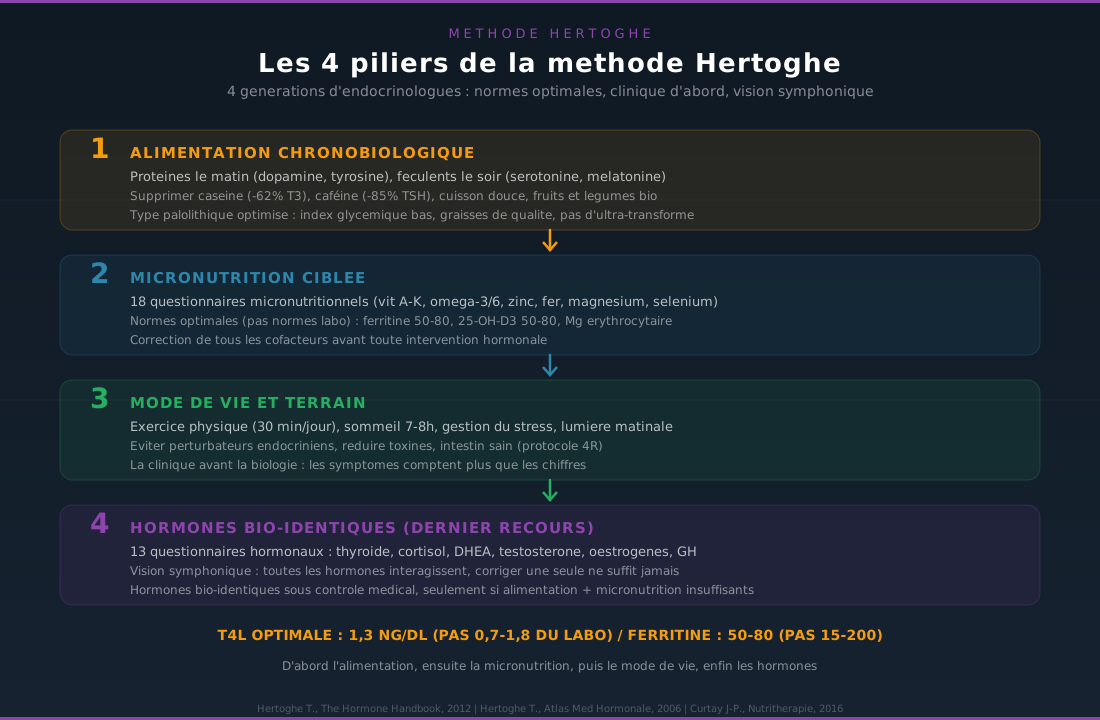
Dr Thierry Hertoghe is a fourth-generation Belgian endocrinologist. His great-grandfather, Eugen Hertoghe, was the first physician in Europe to administer thyroid extracts in 1892. Since then, four generations of Hertoghe have dedicated themselves to the same obsession: understanding why hormones malfunction and how diet can restore them. In his Atlas of Endocrinology for Hormone Therapy and in The Hormone Handbook, Hertoghe develops an approach that I apply daily in my practice: before supplementing, before even testing, you must look at what’s on your plate.
What I’m going to present here is not a trendy diet. It’s a compilation of all thyroid data from Dr Hertoghe’s work, his clinical questionnaires, his conference slides, and his protocols. I’ve gathered every table, every standard, every study he cites. If you have a thyroid problem, this page is your reference.
Why Your Diet is Sabotaging Your Thyroid
Hertoghe repeats this in every conference: the thyroid doesn’t function in isolation. It depends on what you eat, what you drink, and what your liver can convert. And the numbers are unambiguous.
A team of researchers showed as early as 1980 that caffeine, at a dose of 50 mg per kilogram, causes an 85% collapse of serum TSH in rats[^1]. The theobromine in cocoa and the theophylline in tea produce similar effects. In short, your morning coffee and your evening square of dark chocolate are not innocent for your thyroid.
| Beverage | Caffeine (mg) | Hertoghe’s Opinion |
|---|---|---|
| Decaffeinated coffee | 3 | OK |
| Hot chocolate | 19 | Moderation |
| Green tea | 20 | Moderation |
| Espresso | 27 | Moderation |
| Cola can | 40 | Limit |
| Black tea | 45 | Limit |
| Red Bull | 80 | Avoid |
| Instant coffee | 82 | Avoid |
| Filtered coffee | 95 | Avoid |
| Dark chocolate (100g) | 62-114 | Avoid |
Source: Spindel E, et al. J Pharmacol Exp Ther. 1980; 214(1):58-62.
But the real bombshell is milk casein. In 1981, Tyzbir and his team showed in rats that a diet high in casein (48% of diet) lowers serum T3 by 69% compared to a low-casein diet (8%). Even at moderate doses (22%), the drop reaches 62%. Translated into human language: dairy products crush your T3, the active thyroid hormone.
| Dietary Factor | Measured Effect on T3 | Reference |
|---|---|---|
| Caffeine 50 mg/kg | -85% serum TSH | Spindel 1980 |
| Casein 48% vs 8% | -69% serum T3 | Tyzbir 1981 |
| Casein 22% vs 8% | -62% serum T3 | Tyzbir 1981 |
| Low casein diet (8%) vs high (45%) | x3.2 serum T3 | Tyzbir 1981 |
| Low casein diet (8%) vs moderate (22%) | x2.6 serum T3 | Tyzbir 1981 |
| Fruit (high consumption) | Increases T4 to T3 conversion | Hertoghe |
| Protein-rich meals in evening | Decreases T4 to T3 conversion | Hertoghe |
Source: Tyzbir RS, et al. J Nutr. 1981; 111(2):252-9.
Hertoghe emphasizes particularly one point that no one mentions: protein-rich meals in the evening overload the liver at night with amino acids, which slows the conversion of T4 to T3 throughout the night and the next morning. He calls this the “low T3 syndrome.” Concretely, if you eat a big steak in the evening, your thyroid operates at reduced speed for twelve hours.
Iron: The Nutrient That Changes Everything for Your T3
In consultation, when I see a hypothyroid woman with ferritin below 30, I already know where to look. Iron is THE major cofactor for T4 to T3 conversion, and Hertoghe documents this with precise clinical studies.
Beard and his team compared 10 anemic women to 12 control women in 1990. The results are damning: serum T3 drops significantly (p < 0.002), rectal temperature drops by 0.2 degrees, and oxygen consumption decreases by 12%. After iron supplementation, everything normalizes. In anemic adolescents, five doses of 300 mg of iron sulfate were enough to increase T3 by 3.5%, T4 by 12%, and especially decrease reverse T3 by 47%.
| Parameter | Measured Value | Reference |
|---|---|---|
| Iron deficiency: serum T3 drop | p < 0.002 | Beard 1990 |
| Iron deficiency: serum T4 drop | p < 0.002 | Beard 1990 |
| Iron deficiency: rectal temperature drop | -0.2 °C (36.0 vs 36.2 °C) | Beard 1990 |
| Iron deficiency: O2 consumption drop | -12% | Beard 1990 |
| Iron sulfate (5x300 mg): T3 | +3.5% | Anemic adolescents |
| Iron sulfate (5x300 mg): T4 | +12% | Anemic adolescents |
| Iron sulfate (5x300 mg): reverse T3 | -47% | Anemic adolescents |
Source: Beard JL, et al. Am J Clin Nutr. 1990 Nov; 52(5):813-9.
The 7 Cofactors Your Thyroid Requires
Hertoghe identified in his conference slides the nutrients strictly necessary for the production and conversion of thyroid hormones. Each has a precise role, and the absence of even one can block the entire chain.
| Nutrient | Thyroid Role | Food Sources |
|---|---|---|
| Iron | Accelerates T4 to T3 conversion | Red meat, organ meats, black pudding |
| Selenium | Cofactor of deiodinases | 3-5 Brazil nuts per day |
| Zinc | Cofactor of deiodinases + T3 cellular penetration | Oysters, meat, pumpkin seeds |
| Iodine | Substrate for T3 and T4 synthesis | Seafood, seaweed (kelp, dulse) |
| Vitamin A | Cofactor of nuclear thyroid receptor | Liver, egg, raw butter |
| Copper | Thyroid enzymatic cofactor | Liver, dark chocolate, seafood |
| Inositol | Intracellular signaling of TSH | Organ meats, citrus fruits, whole grains |
I regularly see patients in my practice who have been on Levothyrox for years with disastrous free T3, simply because no one thought to check their selenium or zinc status. The thyroid makes T4, but without these cofactors, conversion to active T3 is blocked. It’s like putting gasoline in a car whose engine no longer has spark plugs.
What Your Labs Should Show
Hertoghe hammers this point: laboratory standards are statistical standards, not health standards. The fact that 95% of the population falls within the reference range doesn’t mean that range is optimal. He writes in Thyroid Insufficiency that TSH can remain “normal” even in cases of genuine hypothyroidism.
| Marker | Hertoghe Value | Alert Threshold |
|---|---|---|
| TSH | Insufficient alone for diagnosis | Lab norms = statistics, not optimal |
| Optimal free T4 | 1.3 ng/dL (17 pmol/L) | < 1.33 ng/dL = subclinical hypothyroidism |
| Low free T4 threshold | 0.7 ng/dL (9 pmol/L) | Lab low norm |
| High free T4 threshold | 1.8 ng/dL (25 pmol/L) | Lab high norm |
| Free T3 | Should be measured systematically | 4-5x more active than T4 |
| Anti-TPO, anti-thyroglobulin | Should be measured systematically | Autoimmune component |
| Waist circumference (men) | < 94 cm | Metabolic syndrome if exceeded |
| Waist circumference (women) | < 80 cm | Metabolic syndrome if exceeded |
The key point is the free T4 threshold. Hertoghe shows in his presentations that below 1.33 ng/dL, the risk of metabolic syndrome (elevated triglycerides, low HDL, elevated blood sugar, abdominal fat) increases significantly. And yet, this value is considered “normal” by all laboratories in France.
When the Thyroid Turns Against Itself: Hashimoto
Hashimoto is not simple hypothyroidism. It’s an autoimmune disease where the immune system progressively destroys the thyroid gland. And Hertoghe documented a fascinating finding: the prevalence of Hashimoto is abnormally high in patients suffering from certain skin conditions.
| Skin Condition | Hashimoto Prevalence | General Population |
|---|---|---|
| Total alopecia | 25% | 6% |
| Eczema (atopic dermatitis) | 10% | 6% |
| Chronic urticaria | 18% | 6% |
| Psoriasis | 25-30% | 6% |
| Vitiligo | 34% | 9% |
| Sjögren’s Syndrome | 24% | 6% |
In other words, if you suffer from vitiligo, you have a one in three chance of also having Hashimoto. If you’re losing your hair diffusely and your antibodies have never been tested, there’s a problem. This data should be part of the initial workup for every dermatologist, but it almost never is.
Hertoghe identifies five main causes of Hashimoto’s thyroiditis. First, processed food that is “anti-species,” typical of the industrialized Western diet. Second, environmental pollutants. Third, micronutrient deficiencies. Fourth, hormonal deficiencies themselves. And fifth, an environment unsuited to the individual’s physical, emotional, and spiritual needs. This holistic vision is exactly what I find in Marchesseau’s naturopathy: disease is never monocausal.
The Hertoghe Protocol Against Thyroid Antibodies
This is probably the most valuable table in this article. Hertoghe developed a supplementation protocol specifically designed to reduce anti-TPO and anti-thyroglobulin antibodies in Hashimoto patients. The dosages are high, which justifies medical supervision.
| Supplement | Hertoghe Daily Dosage |
|---|---|
| Vitamin D | 10,000 to 20,000 IU/day |
| Iodine (only if deficiency documented) | 200 mcg/day |
| Selenium | 200-400 mcg/day (in 2 doses) |
| Inositol | 1,200 mg/day (2x 600 mg) |
| Elemental iron | 50-80 mg/day |
| Elemental zinc | 25-75 mg/day |
| Elemental copper | 2-4 mg/day |
| Probiotics | >= 1 billion CFU/day |
Caution: iodine is double-edged in Hashimoto. Excess iodine can worsen the autoimmune mechanism. Hertoghe specifies: iodine should only be supplemented if deficiency is documented. He also mentions substances to absolutely avoid: arsenic, lead, mercury, and cadmium, found notably in cigarette smoke.
The Hertoghe Nutrition Protocol: The Optimal Plate
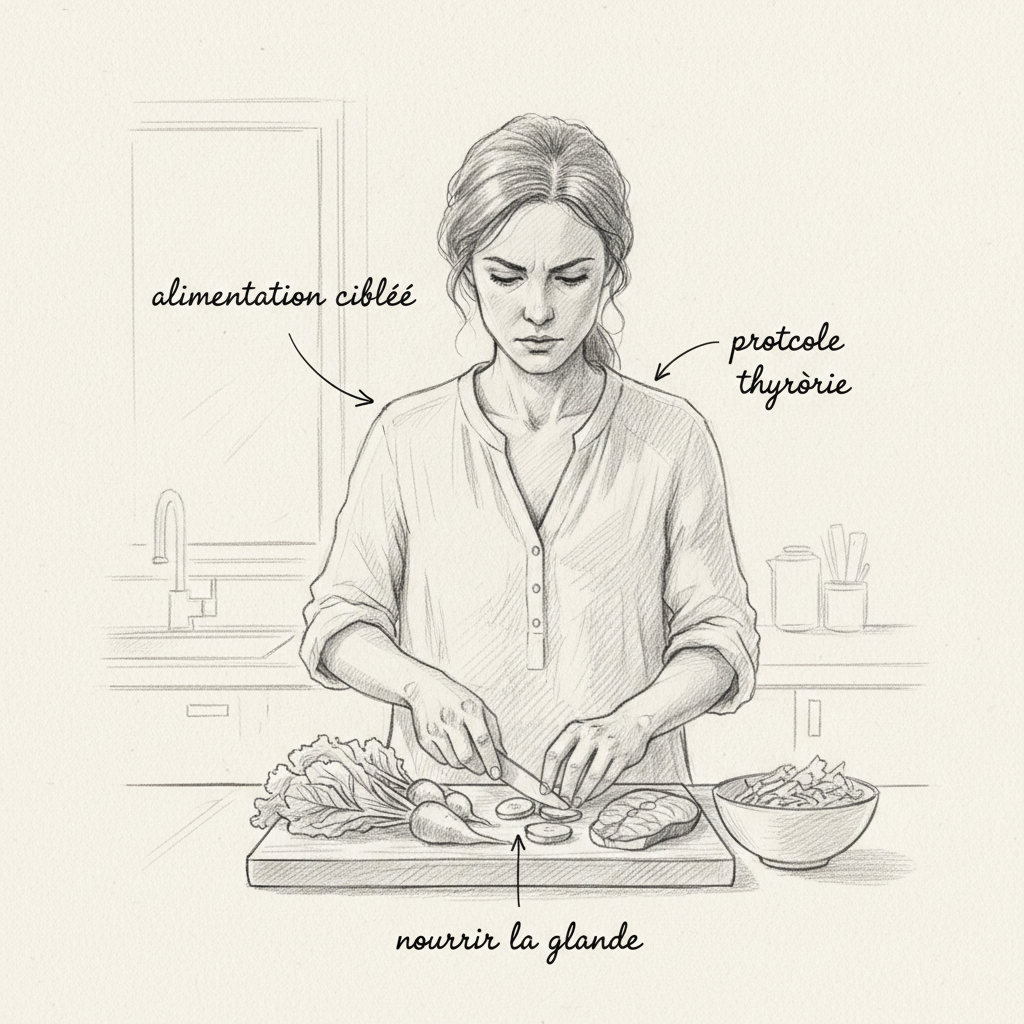
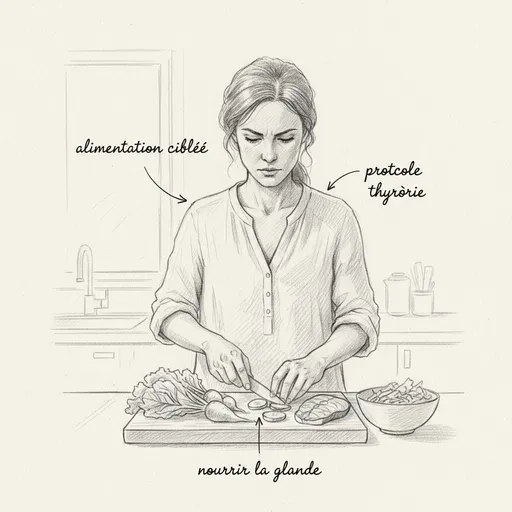
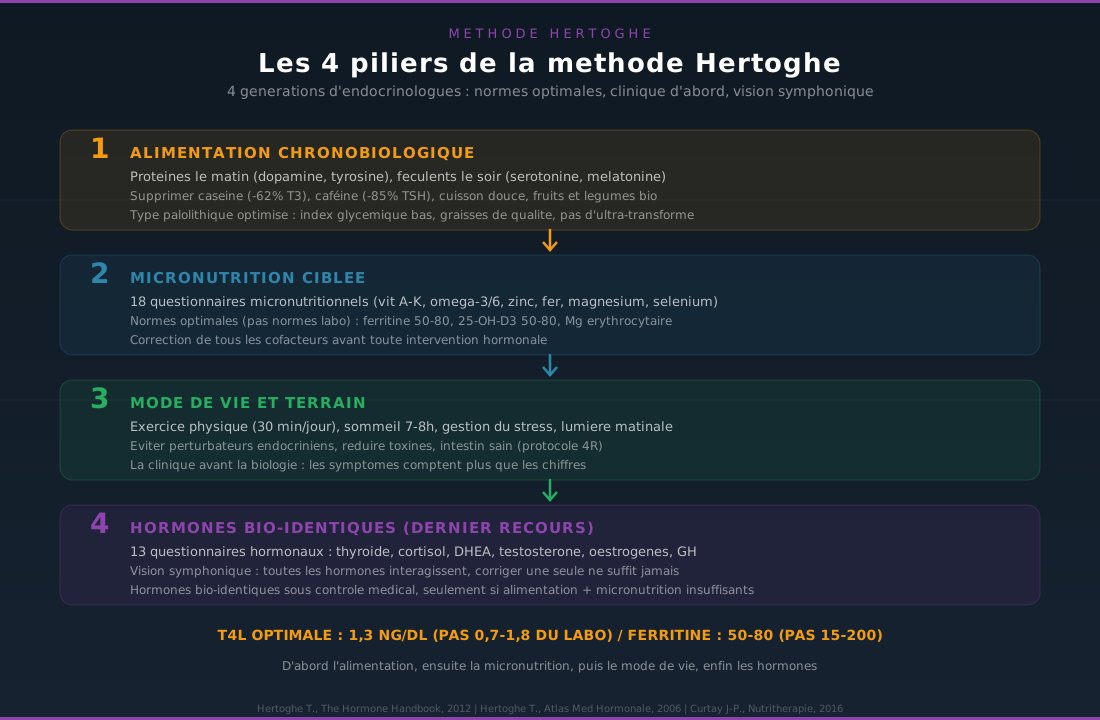
Hertoghe calls his approach “The Optimal Hormone Diet.” It’s not a weight loss diet, it’s a hormonal diet. Each recommendation targets a specific endocrine objective.
| Recommendation | Detail / Dosage | Hormonal Effect |
|---|---|---|
| Sufficient calories | 1,500-3,500 cal/day according to activity | Increases most hormones |
| Fruits and vegetables | Min 400 g/day or 5-9 portions | Increases T3 and melatonin |
| Adequate protein | 200-300 g meat/fish/eggs/day | Increases GH, testosterone, DHEA, cortisol |
| Gentle cooking | Steaming, boiling, max 100 °C | Preserves nutrients and thyroid cofactors |
| Iron and iodine | Red meat + seafood + seaweed | Accelerates T4 to T3 conversion |
| Hydration | Sufficient water (not coffee, tea, alcohol) | Increases aldosterone |
| Unrefined salt | Sufficient quantity | Supports aldosterone and adrenals |
| Small frequent meals | Avoid large meals | Stabilizes cortisol |
| Intermittent fasting | Occasionally | Increases GH up to 2,000% |
| Deep sleep | Early bedtime, full night | Restores all hormone reserves |
| Organic systematically | Avoid pesticides | Protects thyroid receptors |
Three points deserve special attention. First, calories: below 1,500 calories per day, the thyroid slows down. All chronic low-calorie diets cause a drop in T3. It’s a survival mechanism. Next, gentle cooking: above 100 °C, thyroid cofactors degrade. And finally, intermittent fasting increases growth hormone dramatically, but it should not be practiced chronically in unstabilized hypothyroid patients.
What Hertoghe Formally Forbids
Certain foods are explicitly excluded from the Hertoghe protocol for documented reasons.
| Forbidden Food | Hertoghe’s Reason |
|---|---|
| Dairy products | Casein lowers T3 by 62-69% (Tyzbir 1981) |
| Coffee, tea, caffeine | Caffeine lowers TSH by 85% (Spindel 1980) |
| Sugar, sweets, bread, pasta | Cause hyperinsulinism that blocks GH |
| High temperature cooking | Grilling, barbecue, frying: produce carcinogens |
| Processed foods | Contain endocrine disruptors |
| Fiber-rich grains | Decrease absorption of thyroid medication in intestine |
| Excess protein in evening | Nocturnal hepatic overload, decreases T4/T3 conversion |
The prohibition against fiber-rich grains is often misunderstood. It’s not that fibers are inherently bad. Hertoghe specifies that whole grains can significantly decrease the absorption of Levothyrox in the intestinal tract. If you take thyroid medication, your whole wheat bread in the morning could negate part of its effect.
Food Chronobiology According to Hertoghe
The time you eat matters as much as what you eat. This is a fundamental principle of hormonal medicine.
| Time | Meal Content | Hormonal Logic |
|---|---|---|
| Morning | Protein + quality fats | Dopamine and noradrenaline synthesis (alertness) |
| Noon | 1/3 vegetables + 1/3 starches + 1/3 protein | Glycemic and hormonal balance |
| Snack | Starchy fruit (banana, persimmon) or dried fruits | Glycemic support without insulin spike |
| Evening | 1/3 vegetables + 1/3 starches, light protein | Promotes serotonin and melatonin |
The principle is logical: morning proteins fuel the dopaminergic pathway (tyrosine, then dopamine, then noradrenaline), providing daytime drive. In the evening, non-clogging starches favor tryptophan passage into the brain, where it converts to serotonin then melatonin. If you reverse this pattern, you disrupt both your wakefulness and your sleep.
For starches, Hertoghe agrees with Seignalet: the least clogging are chestnut, potato, sweet potato, yam, cassava, amaranth, quinoa, buckwheat, and rice. Modern wheats are most problematic.
Hertoghe Questionnaire: Is Your Thyroid Doing Well?
Hertoghe developed a self-assessment questionnaire based on ten key hypothyroidism symptoms. Each question is scored from 0 (never) to 4 (always). The total score allows evaluation of the probability of thyroid insufficiency.
| # | Symptom to Evaluate (0 = never, 4 = always) |
|---|---|
| 1 | I’ve become more sensitive to cold |
| 2 | My hands and feet are cold |
| 3 | In the morning, my face and eyes are swollen |
| 4 | I tend to gain weight |
| 5 | My skin is dry |
| 6 | In the morning, I have difficulty getting up |
| 7 | I feel more tired at rest than with activity |
| 8 | I suffer from constipation |
| 9 | In the morning, my joints are rather stiff |
| 10 | I feel like I’m living in slow motion if I don’t move |
| Total Score | Interpretation |
|---|---|
| 0-10 | Thyroid hormones within normal range |
| 11-20 | Possible thyroid hormone deficiency |
| 21-40 | Probable thyroid hormone deficiency |
This questionnaire is obviously not a diagnosis. But if your score exceeds 15, it’s time to have your free T3, free T4, anti-TPO and anti-thyroglobulin antibodies, and cofactors (ferritin, selenium, zinc, vitamin D) measured. And not just TSH.
The Physical Signs Hertoghe Observes in Consultation
In his January 2012 letter, Hertoghe describes the most frequent complaints of hypothyroidism and emphasizes the circadian rhythm of symptoms. Signs are maximal in the morning and at rest, and improve in the evening when the body begins moving.
| Complaint | Description |
|---|---|
| Morning fatigue | Already tired in bed, even upon waking |
| Sensitivity to cold | Cold extremities, permanent feeling of being cold |
| Tendency toward depression | Gloomy mood, sadness without reason |
| Excessive need for sleep | Sleeps a lot without feeling rested |
| Constipation | Slow transit, sometimes severe |
| Weight gain tendency | Easy weight gain, difficulty losing weight |
| Repeated infections | Weakened immune system |
| Dry hair and skin | Brittle hair, rough skin |
| Muscle pain | Joint and muscle pain |
| Memory problems | Difficulty concentrating, brain fog |
| Facial edema | Puffiness of face and hands in morning |
The classic sign according to Hertoghe: loss of the outer third of the eyebrows. If you look in the mirror and the outer edge of your eyebrows has thinned, it’s a historical marker of hypothyroidism described since the 19th century by Eugen Hertoghe himself.
Important Warning
The Hertoghe protocol is a medical protocol. The dosages of vitamin D (10,000 to 20,000 IU/day), selenium (up to 400 mcg/day), and zinc (up to 75 mg/day) require biological monitoring. High-dose vitamin D without prior testing can cause hypercalcemia. High-dose selenium is toxic. Excess iodine worsens Hashimoto.
The information presented in this article does not replace medical advice. If you suspect a thyroid problem, consult a doctor willing to test more than just TSH. And if you’re already on Levothyrox, never modify your treatment without your doctor’s consent.
Key Takeaways
Dr Hertoghe teaches us something fundamental: your thyroid reflects your diet. Every cup of coffee, every yogurt, every evening steak, every uncorrected iron deficiency directly modifies the conversion of T4 to T3. The studies he cites are not opinions: they are measured, published, reproducible data.
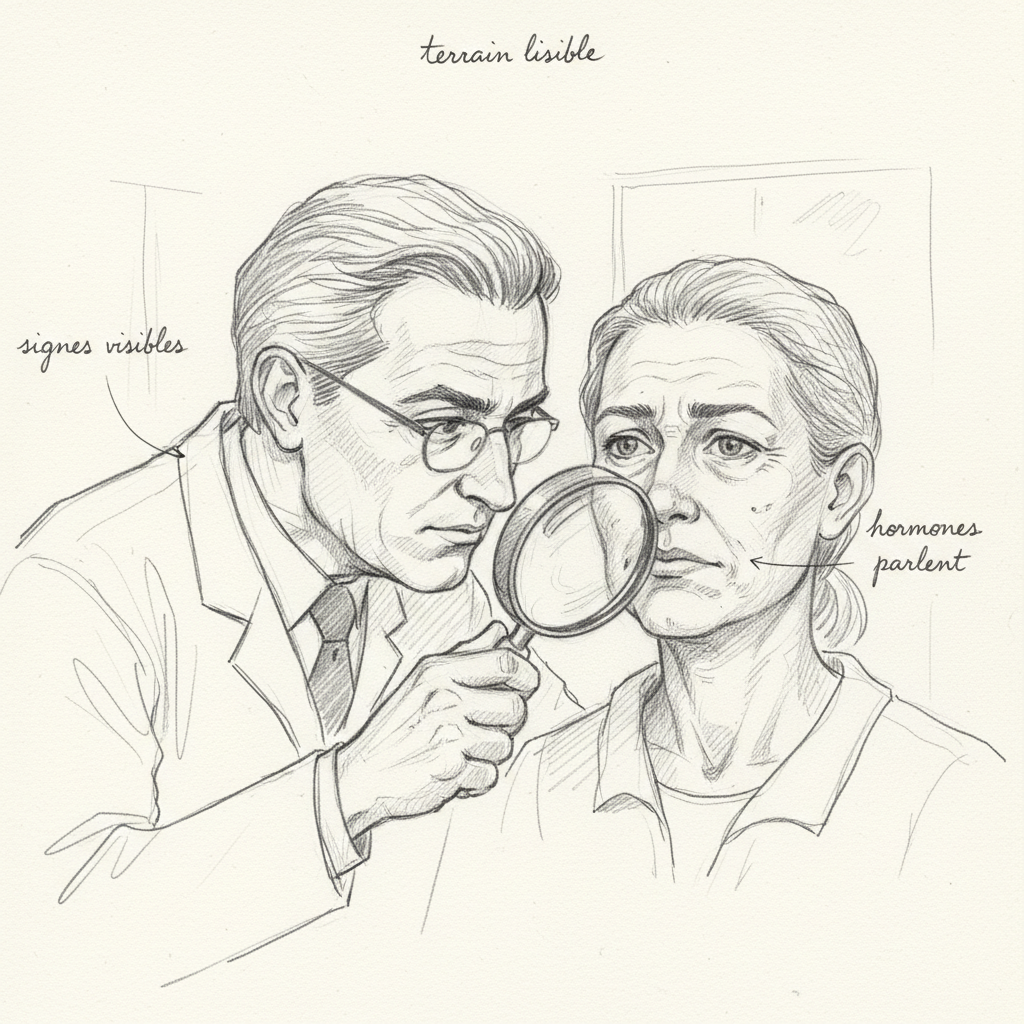
As Eugen Hertoghe said in 1892, “an assessment based solely on blood work would almost always miss a hormonal deficiency that would be evident to a trained physician’s eye.” Four generations later, this truth remains intact. And it’s exactly what I observe every week in practice: the thyroid doesn’t lie, but lab work sometimes does.
Want to evaluate your status? Take the free Claeys thyroid questionnaire in 2 minutes.
If you want personalized support, you can book a consultation.
For More Information
- Thyroid: the 7 nutrients your endocrinologist never tests
- The Hertoghe Method: hormones, micronutrition, and terrain medicine
- Thyroid and digestion: the vicious circle no one explains to you
- Hypothyroidism is a symptom, not a diagnosis
References
- Hertoghe T. The Atlas of Endocrinology for Hormone Therapy. International Medical Books, 2019.
- Hertoghe T. The Hormone Handbook. International Medical Books, 2nd edition.
- Hertoghe T. Thyroid insufficiency or moderate hypothyroidism. Letter from Dr Thierry Hertoghe, N°07, January 2012.
- Spindel E, et al. Neuroendocrine effects of caffeine. J Pharmacol Exp Ther. 1980; 214(1):58-62. PMID: 7391967
- Tyzbir RS, et al. Influence of diet composition on serum T3. J Nutr. 1981; 111(2):252-9. PMID: 7463149
- Beard JL, et al. Impaired thermoregulation and thyroid function in iron-deficiency anemia. Am J Clin Nutr. 1990 Nov; 52(5):813-9. PMID: 2239756
- Seignalet J. Nutrition or the Third Medicine. Éditions du Rocher, 5th edition, 2004.
Healthy Recipe: Gently Steamed Cod: White fish is at the heart of the Hertoghe diet.
Laisser un commentaire
Sois le premier à commenter cet article.