Julien is thirty-two years old. He works in finance, chains twelve-hour days, drinks five espressos a day, and nibbles a sandwich in front of his screen at lunch. When he came to see me, he complained of a “strange” intellectual fatigue: he forgot words in meetings, lost the thread of his reasoning, and in the evening he had tingling in his feet that he attributed to prolonged sitting. His doctor had checked his thyroid and blood sugar, everything was normal. No one had thought to measure his vitamin B1.
Thiamine is the Cinderella of vitamins. No one thinks about it. Everyone knows about vitamin D, magnesium, iron. But B1, this small sulfur-containing molecule discovered by Casimir Funk in 1911, is the essential cofactor for brain energy production. Without it, your brain runs like an engine without ignition. And that was exactly what was happening to Julien.
The causes of B1 deficiency
Vitamin B1 deficiency is much more common than people think in industrialized countries. The SUVIMAX survey showed that twenty to thirty percent of French people had B1 intakes below recommendations. And dietary intakes only tell part of the story, because many factors reduce absorption and accelerate elimination.
Refined diet is the first cause. Thiamine concentrates in the grain husk, bran, and germ. Wheat refinement eliminates eighty percent of the B1 naturally present in the whole grain. White rice has lost more than seventy-five percent of its thiamine compared to brown rice. White flour, white bread, white pasta, white rice: these foods that form the basis of modern diet are foods depleted in B1. It’s a metabolic paradox: these foods provide glucose (which requires B1 to be metabolized) but not the B1 necessary for its metabolism.
Alcohol is the second major factor. Ethanol reduces the intestinal absorption of thiamine by thirty to fifty percent, increases its renal excretion, and blocks its phosphorylation into thiamine pyrophosphate (TPP), the active form. Chronic alcoholism is the classic cause of Wernicke-Korsakoff syndrome, but regular consumption even moderate (two to three drinks per day) can be enough to create a subclinical deficiency.
The third factor is excessive consumption of tea and coffee. Tea contains thiaminases, enzymes that degrade vitamin B1 in the digestive tract, and tannins that inhibit its absorption. Coffee contains chlorogenic acid which has the same inhibitory effect. Five cups of coffee a day, like Julien, constitute a significant risk factor.
Hypocaloric diets and eating disorders (anorexia, bulimia) expose to severe B1 deficiencies because intakes are globally insufficient. Bariatric surgery (gastric bypass, sleeve) drastically reduces B1 absorption and requires lifelong supplementation. Repeated vomiting (pregnancy, chemotherapy) increases losses. And prolonged cooking destroys part of the thiamine, which is heat-sensitive and water-soluble: it escapes into the cooking water.
The symptoms of deficiency
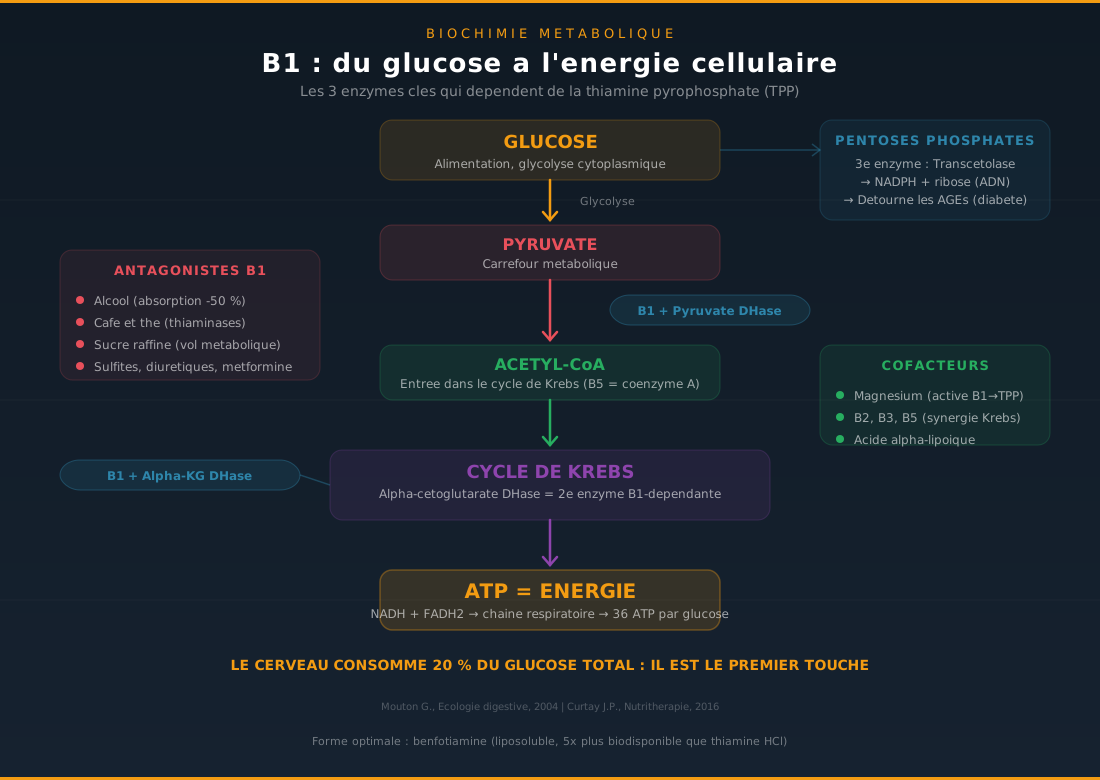
Vitamin B1 is the cofactor of three crucial enzymes in energy metabolism: pyruvate dehydrogenase (which transforms pyruvate into acetyl-CoA to enter the Krebs cycle), alpha-ketoglutarate dehydrogenase (at the heart of the Krebs cycle), and transketolase (pentose phosphate pathway). Without B1, glucose cannot be transformed into energy. And the two organs that consume the most glucose are the brain (twenty percent of total consumption for two percent of body weight) and the heart.
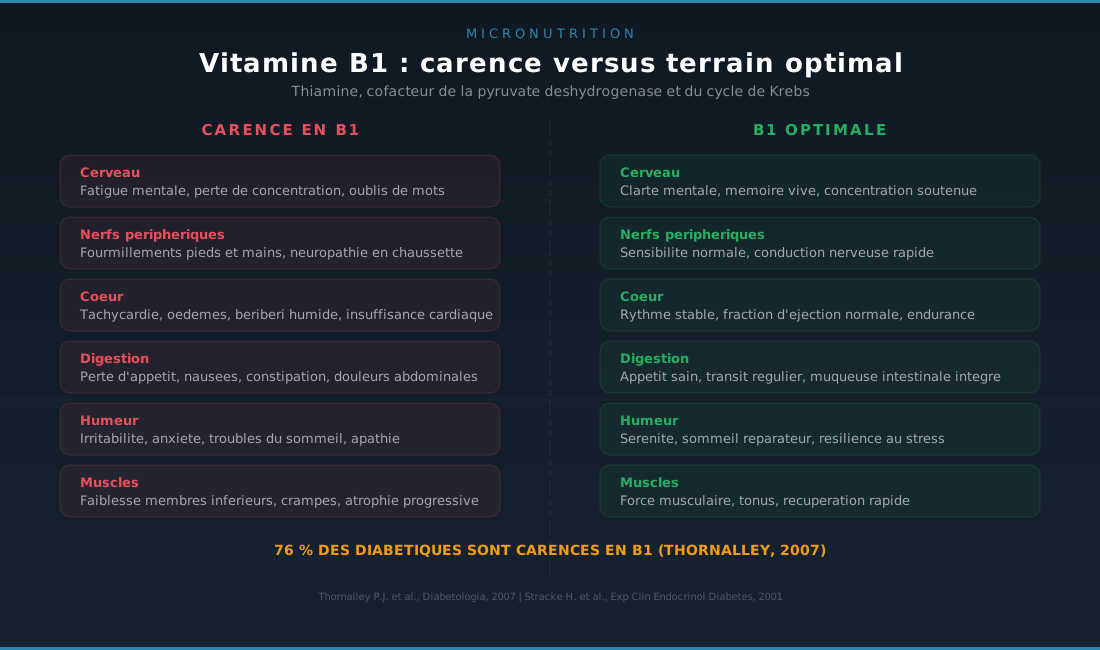
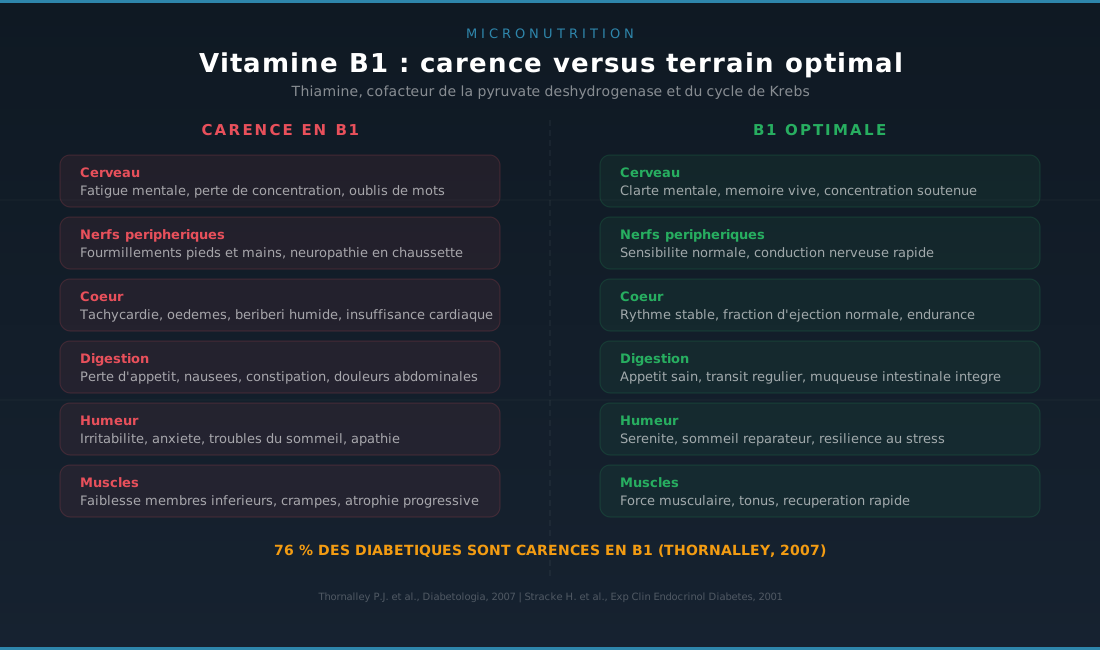
Neurological symptoms are the earliest. Mental fatigue, difficulties with concentration and memorization, irritability, anxiety, sleep disorders. Then peripheral neuropathies appear: tingling, numbness, burning sensations in the feet and hands (glove and stocking polyneuropathy). Muscle weakness, especially in the lower limbs, can become disabling. In severe cases, Wernicke syndrome combines mental confusion, cerebellar ataxia (balance and walking disorders), and oculomotor paralysis. Korsakoff syndrome, an irreversible consequence of untreated Wernicke, is characterized by anterograde amnesia with confabulation.
Cardiovascular symptoms constitute wet beriberi: tachycardia, edema of the lower limbs, dyspnea on exertion, and in severe forms, high-output cardiac insufficiency. The heart, deprived of energy by B1 deficiency, dilates and loses its contractile force. Dry beriberi, on the other hand, is the pure neurological form without cardiac involvement.
Digestive symptoms are often the first to appear but the last to be linked to B1: loss of appetite (anorexia), nausea, constipation, abdominal pain. The intestine is a rapidly renewing organ that requires a lot of energy, and B1 deficiency slows the metabolism of enterocytes.
The micronutrients essential to B1
Vitamin B1 does not work alone. It is part of a metabolic network where several cofactors are essential. Magnesium is necessary for the conversion of thiamine to its active form, thiamine pyrophosphate (TPP). Without sufficient magnesium, even adequate B1 intake will not be fully utilized. Magnesium bisglycinate at 300 to 400 milligrams per day is a systematic addition to any B1 protocol.
Other B vitamins are obligatory partners. B2 (riboflavin) is necessary for the functioning of pyruvate dehydrogenase, the same enzyme that requires B1. B3 (niacin, in the form of NAD+) is the main coenzyme of the Krebs cycle. B5 (pantothenic acid) is the precursor of coenzyme A, partner of B1 in the pyruvate-acetyl-CoA conversion. This is why isolated B1 deficiency is rare: it is often accompanied by multiple B vitamin deficiencies, and supplementation with a B complex is often more relevant than isolated supplementation.
Alpha-lipoic acid, a cofactor of pyruvate dehydrogenase in the same way as B1, strengthens the effectiveness of thiamine when the two are taken together. It also has antioxidant and neuroprotective properties that complement B1’s action on the nervous system.
Dietary sources
Brewer’s yeast is the most concentrated source of vitamin B1 with approximately 10 milligrams per 100 grams, or more than eight times the recommended daily intakes. Wheat germ contains 2 milligrams per 100 grams. Sunflower seeds provide 1.5 milligrams per 100 grams. Lean pork is the best animal source with 0.8 to 1 milligram per 100 grams. Legumes (lentils, dried beans, chickpeas) provide 0.3 to 0.5 milligrams per 100 grams. Whole grains (brown rice, oats, quinoa, buckwheat) provide 0.3 to 0.4 milligrams per 100 grams. Nuts (Brazil nuts, pistachios, hazelnuts) contain 0.3 to 0.6 milligrams per 100 grams. Eggs provide 0.1 milligram per unit. Green vegetables (spinach, peas, asparagus) contain 0.1 to 0.3 milligrams per 100 grams.
Recommended nutritional intakes are 1.1 milligrams per day for women and 1.2 milligrams for men. But these figures are minimums to prevent clinical beriberi, not optimums. Mouton and Curtay recommend intakes of 3 to 10 milligrams per day for optimal neurological functioning, which is almost impossible to achieve through diet alone without daily brewer’s yeast.
Gentle cooking is essential to preserve B1. Thiamine is destroyed by more than fifty percent by boiling in water (it passes into the cooking water and degrades from the heat). Gentle steam cooking below 100 degrees preserves approximately eighty percent of the B1.
B1 antagonists
Alcohol is the most powerful antagonist, as detailed above. But other overlooked factors degrade or block B1.
Thiaminases are enzymes present in certain foods that destroy vitamin B1. Raw fish (sushi, sashimi), raw shellfish, and tea contain them. Cooking inactivates the thiaminases in fish and shellfish, but not those in tea which are heat-resistant. Tannins from tea, coffee, and red wine precipitate thiamine in the digestive tract and prevent its absorption.
Sulfites, preservatives used in wine, dried industrial fruits, processed meats, and many processed foods, degrade vitamin B1. Sulfur dioxide (E220 to E228) is a direct destroyer of thiamine.
Certain medications are major antagonists. Loop diuretics (furosemide) massively increase renal loss of B1, creating iatrogenic deficiencies in heart failure patients who are precisely those who need it most. Metformin, prescribed to type 2 diabetics, reduces B1 absorption. 5-Fluorouracil (chemotherapy) blocks thiamine phosphorylation.
Refined sugar and high glycemic index carbohydrates are indirect antagonists: they consume B1 for their metabolism without providing any, creating a metabolic “theft.” The more white sugar you eat, the more B1 you need, and the less you have.
Forgotten causes of deficiency
Type 2 diabetes is a major and little-known cause of B1 deficiency. The Thornalley study published in 2007 in Diabetologia showed that seventy-six percent of type 2 diabetics had reduced plasma thiamine levels. Chronic hyperglycemia increases the renal clearance of thiamine up to sixteen times normal. It’s a vicious cycle: B1 deficiency worsens diabetes complications (neuropathy, nephropathy, retinopathy) through accumulation of advanced glycation products (AGEs), and diabetes worsens B1 deficiency.
Heart failure is another forgotten cause. Patients on diuretics lose massive amounts of B1 through the kidneys, and this loss worsens their already compromised cardiac function. Several studies have shown that thiamine supplementation improved ventricular ejection fraction in heart failure patients on diuretics.
Bariatric surgery (gastric bypass) eliminates or bypasses the intestinal zones of B1 absorption (duodenum and proximal jejunum). Deficiencies post-bariatric surgery are common and can be severe (Wernicke).
Pregnancy and breastfeeding increase B1 needs by thirty to fifty percent. Hyperemesis gravidarum (severe first trimester vomiting) can precipitate acute deficiency. Chronic stress increases B1 needs through activation of adrenal glucose metabolism. And intense physical activity increases needs proportionally to energy expenditure.
Dietary supplements
Thiamine hydrochloride (HCl) is the classic form, water-soluble, economical, and effective for correcting moderate deficiencies. The usual dose is 50 to 100 milligrams per day. Its intestinal absorption is saturable (approximately 5 milligrams per dose via active transport), but at high doses, passive absorption adds to this.
Benfotiamine is a fat-soluble derivative of thiamine developed in Japan. It crosses cell membranes five times better than thiamine HCl and reaches significantly higher intracellular concentrations. The Stracke study published in 2001 showed that 300 milligrams per day of benfotiamine significantly reduced diabetic neuropathy compared to placebo. Benfotiamine is the recommended form for neuropathies, diabetes, and neurological conditions. Sunday Natural offers pharmaceutical-quality benfotiamine (ten percent off with code FRANCOIS10).
Sulbutiamine (Arcalion) is a synthetic derivative of thiamine that crosses the blood-brain barrier and improves cognitive performance. Used in France as an anti-fatigue medication, it is particularly indicated for mental fatigue with concentration deficits.
Therapeutic dosage varies depending on indication: 50 to 100 milligrams per day for prevention and maintenance, 150 to 300 milligrams per day of benfotiamine for neuropathy and diabetes, up to 500 milligrams per day in emergency treatment of Wernicke (intravenous in a hospital setting).
Julien started with 150 milligrams of benfotiamine per day, combined with a B complex and magnesium bisglycinate. In two weeks, his tingling had disappeared. In one month, his mental clarity in meetings had returned. He also reduced his coffee to two cups per day, away from meals. Sometimes, the simplest solution is the one no one thought to look for.
To assess your B1 vitamin status, take the B1 deficiency questionnaire on my site.
To go further
- Carnitine and thyroid: the molecule no one measures
- Vitamin B2 (riboflavin): your mitochondria don’t run without it
- Vitamin B3 (niacin): the NAD+ fuel of each of your cells
- Vitamin B5 (pantothenic acid): the vitamin of your adrenals and coenzyme A
Sources
- Thornalley, Paul J., et al. “High prevalence of low plasma thiamine concentration in diabetes linked to a marker of vascular disease.” Diabetologia 50.10 (2007): 2164-2170.
- Stracke, Hilmar, et al. “Benfotiamine in diabetic polyneuropathy (BENDIP): results of a randomised, double blind, placebo-controlled clinical study.” Experimental and Clinical Endocrinology & Diabetes 109.6 (2001): 330-336.
- Mouton, Georges. Écologie digestive. Marco Pietteur, 2004.
- Curtay, Jean-Paul. Nutrithérapie: bases scientifiques et pratique médicale. Testez Éditions, 2016.
- Seignalet, Jean. L’Alimentation ou la Troisième Médecine. 5e éd. Paris: François-Xavier de Guibert, 2004.
If you want personalized support in micronutrition, you can book an appointment for consultation. I consult in-office in Paris and by video throughout France.
For supplementation, Sunday Natural offers pharmaceutical-quality B vitamins (ten percent off with code FRANCOIS10). Find all my partnerships with exclusive promo codes.
Healthy recipe: Buckwheat-hazelnut granola: Buckwheat is rich in B1: try this granola.






Laisser un commentaire
Sois le premier à commenter cet article.