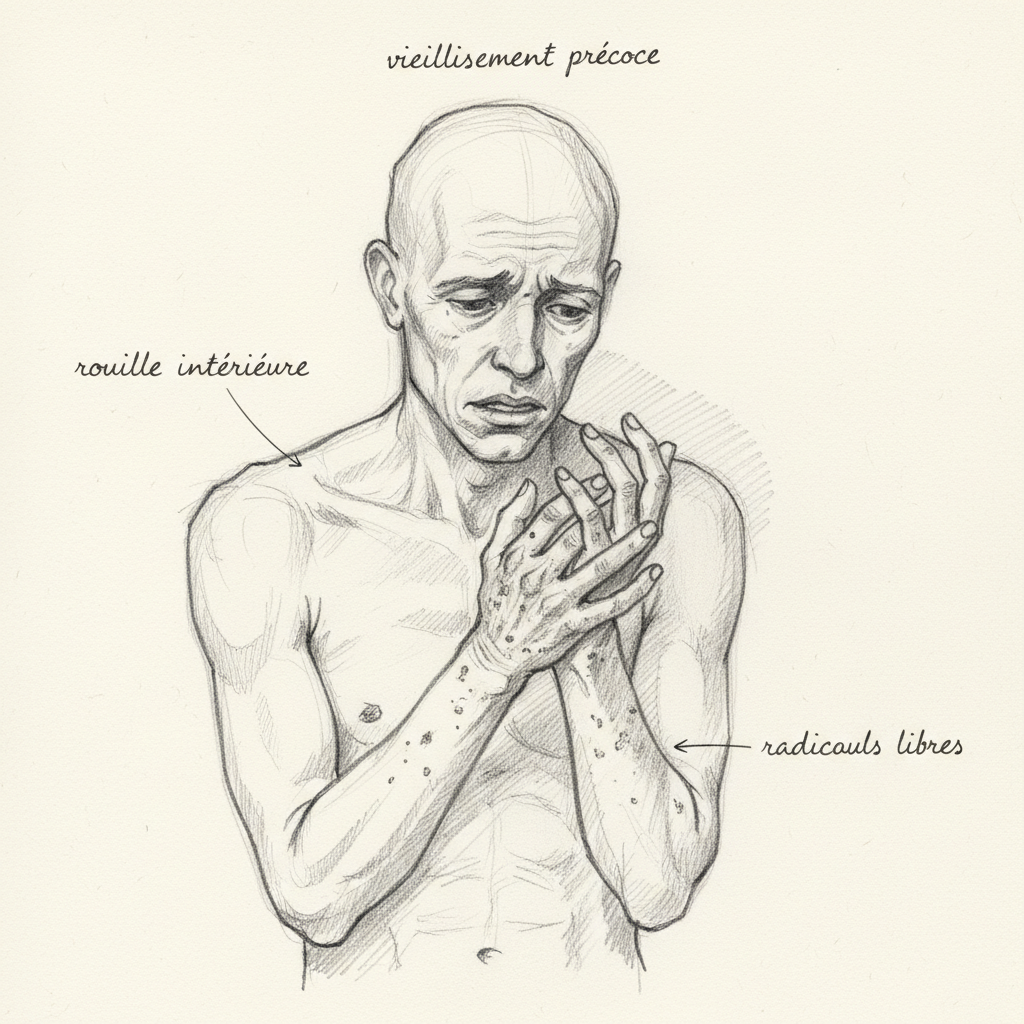
Patrick is fifty-two years old and has brown spots on his hands. His hair turned gray at forty. His skin is “tired”: dull, sagging, marked. He heals slowly. He catches every cold that comes around. His doctor tells him it’s genetic. Dr Michel Brack, specialist in oxidative stress, would say it’s a measurable imbalance between free radical aggressors and antioxidant defenses: and that it’s correctable.
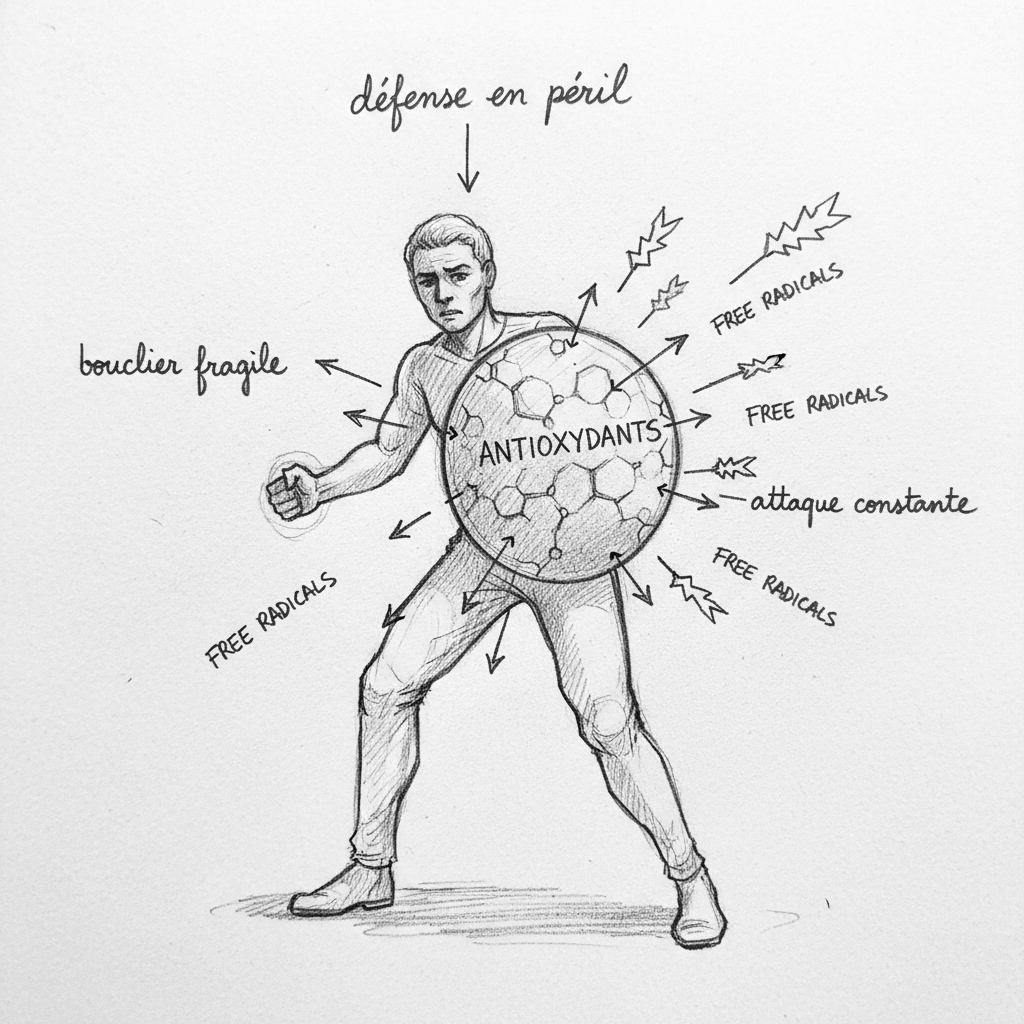
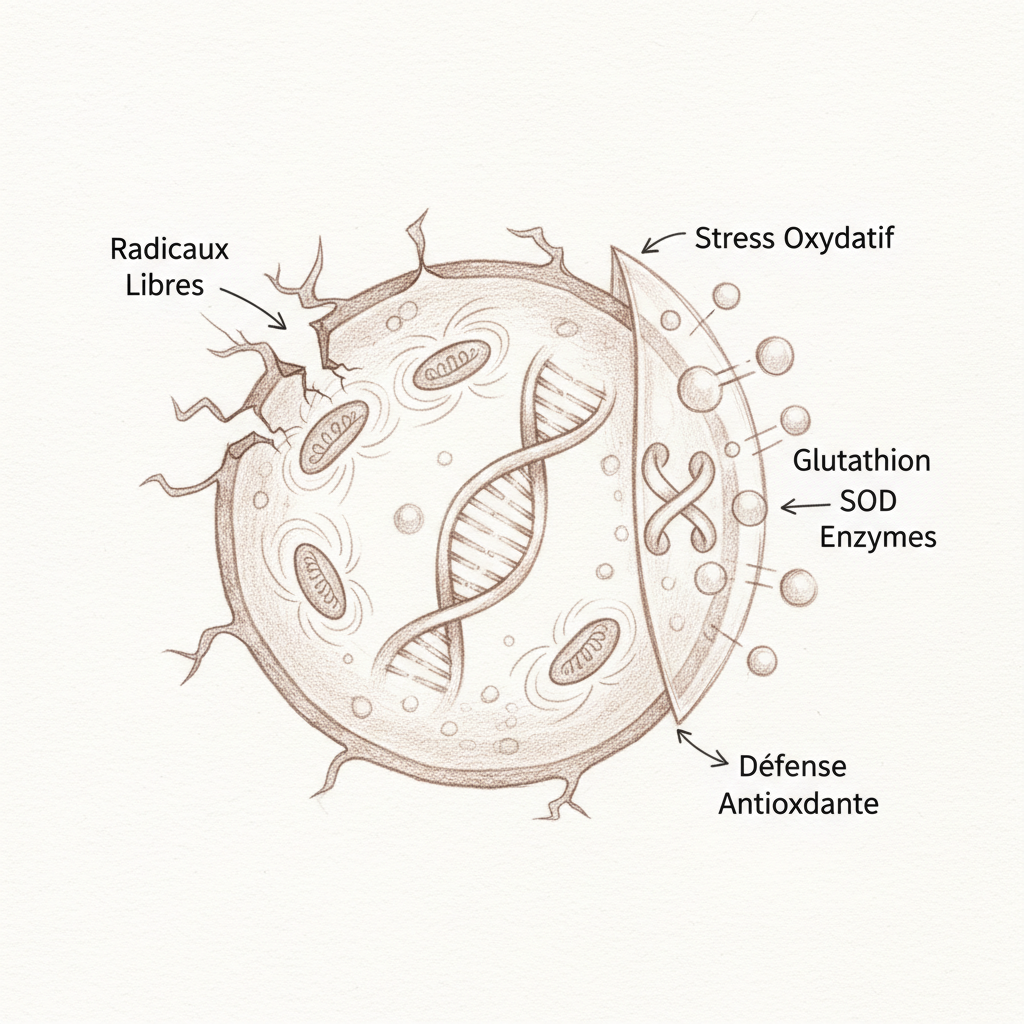
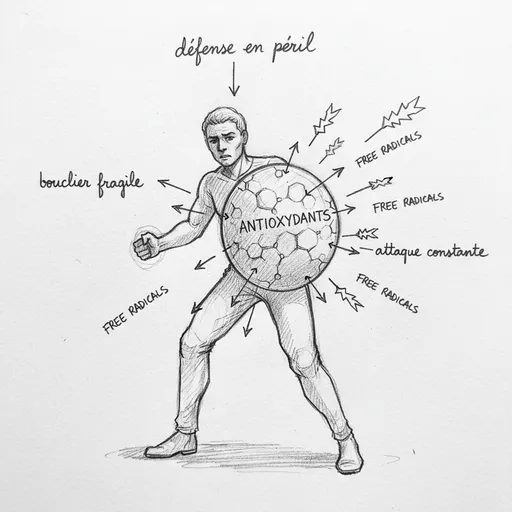
The oxidative balance is a central concept in functional medicine and naturopathy. Every cell in your body is bombarded daily by free radicals: unstable molecules that strip electrons from proteins, membrane lipids, and DNA. This bombardment is normal, unavoidable, and the body has defense systems to manage it. The problem arises when the aggressors exceed the defenses. This is oxidative stress: and it accelerates cellular aging, promotes chronic inflammation, and participates in the genesis of virtually all chronic diseases.
The free radical aggressors
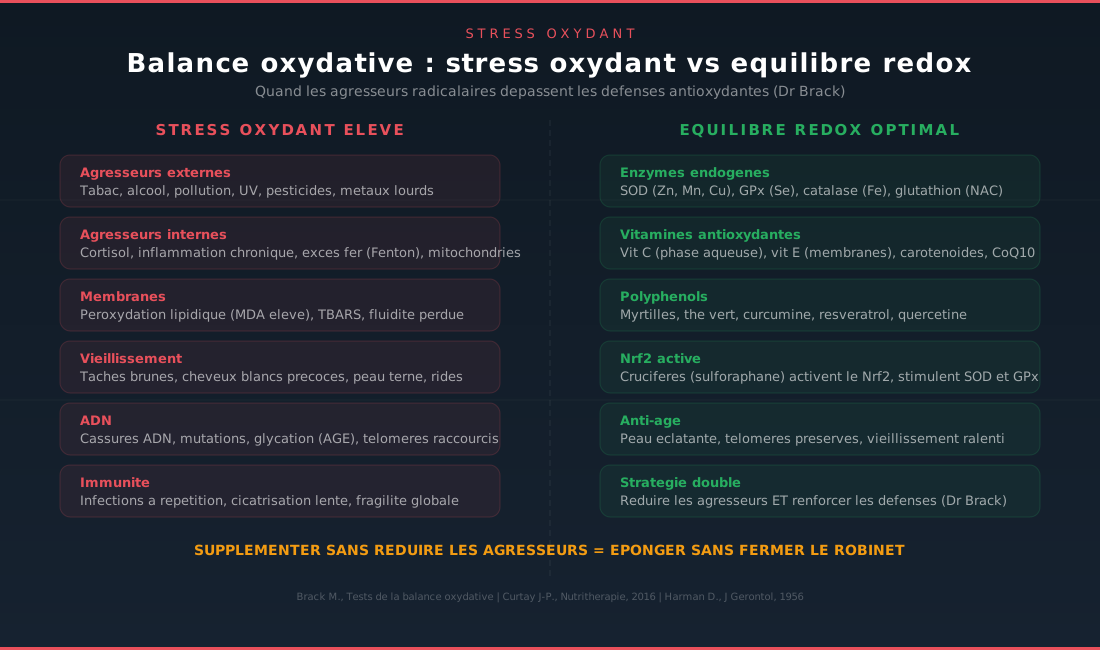
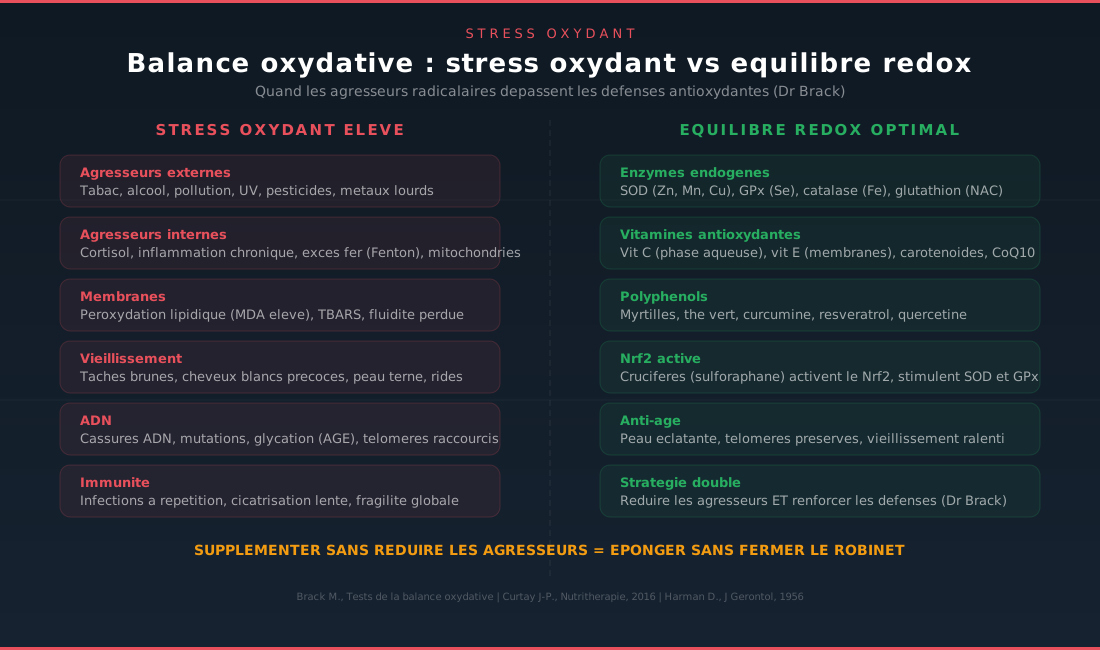
Dr Brack categorized sources of free radicals into external and internal aggressors. The external ones are easiest to identify and reduce: tobacco (each puff releases billions of free radicals), air pollution (fine particles, ozone, nitrogen dioxide), UV radiation, alcohol (acetaldehyde is a powerful radical generator), endocrine disruptors, pesticides and heavy metals (mercury, lead, cadmium, aluminum).
Internal aggressors are more insidious. Normal mitochondrial metabolism produces two to five percent free radicals as byproducts of cellular respiration. Psychological stress increases metabolism and therefore radical production. Chronic inflammation (dental infection, candidiasis, autoimmunity) massively generates reactive oxygen species via neutrophil granulocytes. Excess iron (hemochromatosis, iron overload) catalyzes the Fenton reaction which produces the hydroxyl radical, the most destructive.
Ultra-processed food is a major oxidative aggressor. Refined sugar causes protein glycation (formation of AGEs, advanced glycation end products). Heated refined oils (frying) contain toxic aldehydes. Additives, colorants, and preservatives generate free radicals during their hepatic metabolism.
Antioxidant defenses
The body has two lines of defense. The first is enzymatic and endogenous: superoxide dismutase (SOD, requires zinc, manganese, and copper), glutathione peroxidase (GPx, requires selenium), catalase (requires iron), and reduced glutathione (GSH, the most powerful intracellular antioxidant, synthesized from NAC, glycine, and glutamate). These enzymes are the first line of defense and depend directly on micronutrients.
The second line is dietary and exogenous: vitamin C (traps radicals in aqueous phase), vitamin E (protects lipid membranes), beta-carotene and carotenoids, selenium, zinc, polyphenols (flavonoids, anthocyanins, resveratrol, curcumin, quercetin), and coenzyme Q10 (protects mitochondria).
Dr Brack’s questionnaire
The oxidative balance questionnaire separately assesses your aggressors and your defenses, then calculates a net score. A negative score (aggressors exceeding defenses) indicates oxidative stress. A positive score indicates good defenses. A score close to zero indicates fragile balance.
The interest of this dual approach is that it identifies the priority strategy. If your aggressors are high but your defenses are also high, the priority is to reduce aggressors. If your aggressors are moderate but your defenses are collapsed, the priority is to rebuild defenses. Both are often necessary.
Take the Dr Brack oxidative balance test.
The antioxidant protocol
Reducing aggressors is the first step: non-negotiable. Stop smoking. Limit alcohol to one glass per day maximum. Reduce pollution exposure (indoor air purifier, avoid highways). Eat organic to limit pesticides. Eliminate ultra-processed foods. Cook at low temperature in stainless steel utensils. Manage stress.
Rebuilding endogenous defenses is the second step. NAC (N-acetylcysteine, 600 mg to 1,200 mg per day) is the most effective precursor of glutathione. Selenium (100 to 200 micrograms of selenomethionine per day) is a cofactor of glutathione peroxidase. Zinc (15 mg per day) is a cofactor of SOD. Coenzyme Q10 (100 to 200 mg of ubiquinol per day) protects mitochondria.
Dietary antioxidants in synergy: vitamin C (500 mg to 1 g per day), vitamin E (in mixed tocopherol form, 200 IU per day), curcumin (500 mg with piperine), resveratrol (150 mg), quercetin (500 mg). Alpha-lipoic acid (300 mg) is a universal antioxidant (soluble in water and fats) that regenerates oxidized vitamins C and E.
Antioxidant nutrition is fundamental. Red fruits (blueberries, raspberries, blackberries) are the polyphenol champions. Green tea (catechins, EGCG). Spices (turmeric, ginger, cinnamon, rosemary). Cruciferous vegetables (broccoli, kale) activate Nrf2, the transcription factor that stimulates synthesis of endogenous antioxidant enzymes. 85% dark chocolate (flavanols). Extra-virgin olive oil (hydroxytyrosol).
Patrick quit smoking, adopted daily blueberries and green tea, took NAC and coenzyme Q10. In six months, his brown spots had faded, his skin had regained radiance, and he hadn’t caught a single cold all winter.
To go further
- Marchesseau’s oxidative balance: free radicals, aging, and antioxidant defenses
- Oxidative stress: your cells are rusting (and supermarket antioxidants won’t change that)
- Acetylcholine: the forgotten neurotransmitter of your memory
- Cancer and nutrition: what micronutrition changes in the equation
Sources
- Brack, Michel. Le Stress oxydatif. De Boeck Supérieur, 2011.
- Curtay, Jean-Paul. Nutrithérapie : bases scientifiques et pratique médicale. Testez Éditions, 2016.
- Hertoghe, Thierry. Atlas de médecine hormonale et nutritionnelle. International Medical Books, 2006.
If you want personalized support, you can book a consultation.
Laisser un commentaire
Sois le premier à commenter cet article.