Graves’ Disease Relapse: Predictive Factors and Consolidation Protocol
Thomas is forty-four years old. He came to see me with a sheet of biological test results in one hand and a letter from his endocrinologist in the other. The letter proposed two options: radioactive iodine or thyroidectomy. Because Thomas was experiencing his third Graves’ relapse in seven years. Three times Neomercazole, three times apparent remission, three times the return of hyperthyroidism within six to twelve months after stopping. His endocrinologist, exasperated, had concluded that synthetic antithyroid drugs “weren’t working” for him and that he needed to “settle it once and for all.”
Thomas didn’t want to “settle it.” He didn’t want to destroy his thyroid. Not because he was naive or anti-medicine. Because he felt that no one had sought to understand why he kept relapsing. The fire had been put out three times. No one had ever looked for the arsonist. And when I asked him the questions that no one else had asked, an abyss opened: unresolved chronic professional stress, industrial diet, active smoking, no emotional management, and TRAb that had never truly disappeared between treatments.
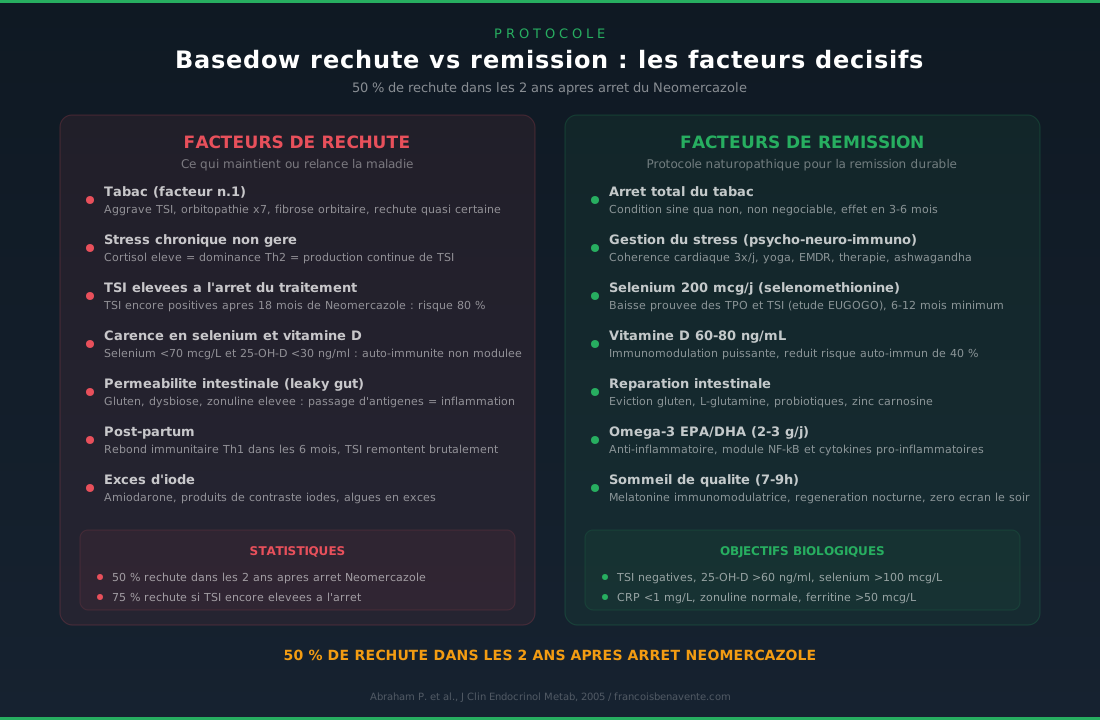
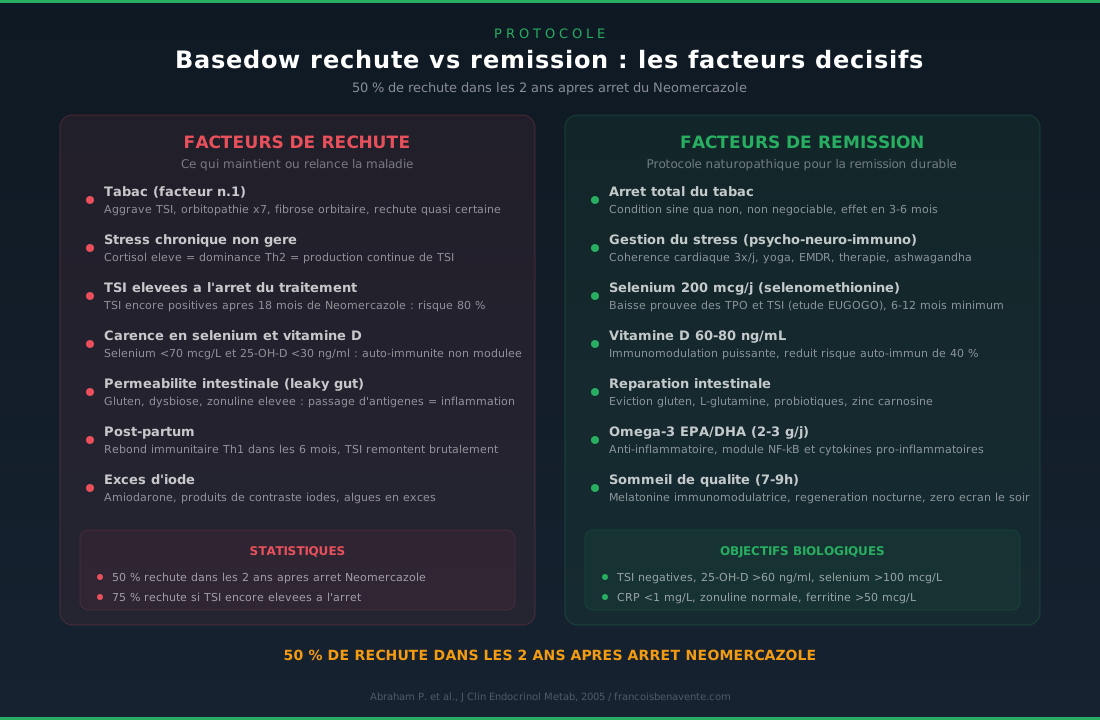
If you’ve read my article on Graves’ disease, you know that more than fifty percent of patients relapse within three years after stopping synthetic antithyroid drugs. This figure alone reveals the insufficiency of the conventional approach when it limits itself to hormonal control without addressing the underlying terrain.
Why antithyroid drugs don’t cure Graves’ disease
Neomercazole (methimazole) and carbimazole are remarkably effective molecules for controlling hyperthyroidism. They block thyroid peroxidase, the enzyme that organifies iodine and synthesizes T3 and T4 hormones in thyroid cells. Within a few weeks, hormone production decreases, TSH rises, symptoms improve. The patient feels better. The doctor is satisfied.
But antithyroid drugs don’t touch the autoimmune mechanism. TRAb continue to be produced. The intestine remains leaky. Molecular mimicry with Yersinia persists. The stress that triggered the disease isn’t treated. The diet hasn’t changed. Micronutritional cofactor deficiencies remain. In summary, the fire is extinguished but the conditions for the fire are intact.
Seignalet wrote it clearly: conventional Graves’ treatments “manage very well to control thyrotoxicosis” but are “little satisfactory on severe ocular manifestations” and do not prevent “Graves’ recurrence: more than half of cases within three years.” Destruction of the thyroid by radioactive iodine or surgery definitively resolves hyperthyroidism but creates permanent hypothyroidism requiring lifelong Levothyroxine, with all the balancing problems known to Hashimoto patients and thyroidectomized patients.
Predictive factors for relapse
Research has identified several factors that significantly increase the risk of relapse after stopping antithyroid drugs. Knowing them allows you to anticipate and adapt the consolidation protocol.
The first factor, and the most reliable, is the TRAb level at the time treatment is stopped. If TRAb is still positive when stopping Neomercazole, the relapse risk exceeds seventy percent. Conversely, if TRAb has become negative during treatment, the prognosis is much more favorable. This is why TRAb testing before stopping is non-negotiable. An endocrinologist who stops Neomercazole without testing TRAb is taking an avoidable risk.
Thyroid volume is the second factor. Persistent goiter under treatment indicates that thyroid stimulation by TRAb hasn’t completely stopped. Elevated thyroid volume on ultrasound is associated with increased relapse risk.
Tobacco is the third modifiable factor. Smokers relapse significantly more than non-smokers. Tobacco worsens autoimmunity, impairs the intestinal microbiota, increases oxidative stress, and modifies immune balance. It’s also the main risk factor for severe orbitopathy.
Male sex is paradoxically a relapse risk factor. Although Graves’ is four times more frequent in women, men who develop the disease have a higher relapse rate. Severe initial disease (very high T3 at diagnosis) and young age at diagnosis are also unfavorable factors.
And then there’s the factor that epidemiological studies measure poorly but clinical practice confirms every day: unresolved stress. Thomas, my patient, had checked almost every box: TRAb never completely negative, smoker, chronic professional stress, unstructured diet.
Progressive weaning from Neomercazole
Neomercazole must never be stopped abruptly. The conventional strategy recommends treatment for twelve to eighteen months, followed by discontinuation with monitoring. But in my practice, I recommend progressive weaning over several months, with dose reduction steps accompanied by regular biological testing and progressive implementation of the naturopathic relay.
The typical scheme is as follows. After twelve to eighteen months of treatment at effective dose, when TRAb is negative and the thyroid is euthyroid for at least six months, the Neomercazole dose is reduced by steps of 2.5 to 5 milligrams every four to six weeks, with TSH and free T4 testing at each step. In parallel, infusions of thyroid-inhibiting plants (bugleweed, lemon balm, gromwell) are gradually introduced to relay the pharmacological inhibition with a softer phytotherapy inhibition. The goal is to never leave the thyroid without any inhibition during the transition.
This progressive weaning has an advantage that abrupt stopping doesn’t have: it allows the hypothalamic-pituitary-thyroid feedback system to recalibrate gently. After months of pharmacological blockade, the thyroid axis needs time to recover its sensitivity. Abrupt stopping can create a rebound of hyperthyroidism before TRAb even reactivate, simply because the thyroid thermostat is out of adjustment.
The three conventional options: understanding to choose
If antithyroid drugs fail (relapse after one or two well-conducted treatments), the doctor proposes two radical alternatives: radioactive iodine and surgery. These two options have advantages and disadvantages that must be understood to make an informed choice.
Radioactive iodine (iodine-131) destroys thyroid cells through internal irradiation. The patient swallows a capsule of radioactive iodine that is preferentially captured by the thyroid (the thyroid is the only organ that concentrates iodine). The beta rays emitted by iodine-131 destroy thyrocytes over a radius of a few millimeters. Within weeks to months, thyroid function decreases and hyperthyroidism resolves. The major disadvantage is that destruction is often total, resulting in permanent hypothyroidism in the majority of cases. Radioactive iodine is also contraindicated in pregnant or nursing women, and it can worsen orbitopathy in smokers.
Total thyroidectomy is surgical removal of the thyroid. It immediately and permanently resolves hyperthyroidism but creates permanent hypothyroidism requiring lifelong replacement treatment. Surgical risks include injury to recurrent nerves (hoarse or raspy voice) and hypoparathyroidism (damage to parathyroid glands attached to the thyroid), resulting in hypocalcemia requiring lifelong calcium and vitamin D supplementation.
Subtotal thyroidectomy (partial removal) is sometimes proposed as a compromise, leaving a thyroid remnant sufficient to maintain autonomous hormonal function. But this approach is associated with relapse risk on the remaining remnant, which may require further treatment.
My role as a naturopath is not to decide for the patient or to replace surgical opinion. It’s to inform them, to give them time to treat their terrain before considering the irreversible, and to support them whatever their decision. Some patients manage to avoid radical treatments thanks to the integrated naturopathic protocol. Others don’t. And in cases of compressive goiter, intolerance to antithyroid drugs, progressive orbitopathy, or multiple relapses with persistent TRAb, surgery or radioactive iodine become the best option.
The naturopathic consolidation protocol to prevent relapse
This is where naturopathy shows its greatest added value in Graves’ disease. Not during the acute crisis (where antithyroid drugs are essential), but during the consolidation and relapse prevention phase. This is where conventional medicine leaves a gaping void, and where terrain work makes all the difference.
Seignalet’s hypotoxic diet is the permanent foundation. Not a six-month diet you stop when antibodies drop. A lifelong dietary approach. No gluten, no bovine dairy products, with gentle cooking below 110 degrees, organic foods, and raw virgin oils. The goal is to maintain an impermeable intestinal barrier permanently, to prevent the passage of antigenic peptides that reactivate TRAb production. Wentz showed that individualization through IgG food analysis (removal of IgG-positive foods in addition to gluten and dairy) increased success rate by twenty-five to forty percent.
Intestinal repair is a continuous axis. L-glutamine at five grams per day nourishes enterocytes and strengthens tight junctions. Multi-strain probiotics (Lactobacillus rhamnosus, Bifidobacterium longum, Saccharomyces boulardii) restore microbiota diversity and strengthen mucosal immunity. Zinc bisglycinate at fifteen milligrams per day is a cofactor of claudin, a structural protein of intestinal tight junctions.
Thyroid-inhibiting plants to relay antithyroid drugs. Bugleweed (Lycopus europaeus) as an infusion, one tablespoon per cup of boiling water, two to three cups per day, maintains gentle inhibition of thyroid activity. Lemon balm (Melissa officinalis), in addition to its inhibitory action, provides valuable anxiolytic effect. Gromwell (Lithospermum officinale), whose lithospermic acid inhibits thyroid hormone synthesis, completes the trio. These plants are not synthetic antithyroid drugs: their action is gentler, more progressive, and compatible with normal thyroid function. They serve as a safety net during the transition phase.
Stress management is non-negotiable. Heart rate variability coherence three times daily, adaptogens without thyroid stimulation (rhodiola, eleuthero, not ashwagandha), regular artistic activity. Stress is the trigger for Graves’ in more than ninety percent of cases, and it remains the most powerful relapse factor. A patient in biological remission but chronically stressed is a patient who will relapse.
Supplementation with immunomodulating cofactors. Selenium selenomethionine one hundred to two hundred micrograms per day, vitamin D four thousand IU per day (target above 40 ng/mL), omega-3 EPA/DHA two grams per day, magnesium bisglycinate four hundred milligrams per day. These four pillars maintain favorable immune modulation and compensate for deficits that catabolic hyperthyroidism has created.
TRAb monitoring: the remission marker
Regular TRAb testing is the best tool for assessing remission solidity. TRAb are the specific antibodies of Graves’ disease, those that stimulate the TSH receptor and rev up the thyroid. As long as they’re positive, relapse risk persists. When they become sustainably negative, risk decreases significantly.
The monitoring protocol I recommend is as follows. During antithyroid treatment: TRAb testing every three to four months. Before stopping treatment: TRAb testing mandatory, stop only if negative for at least two consecutive tests three months apart. After stopping: TRAb testing at one month, three months, six months, twelve months, then annually for five years. Any reappearance of TRAb, even without symptoms, must alert and justify reinforcement of the terrain protocol.
This monitoring is simple, inexpensive (one blood test), and it offers a direct window into autoimmune activity. It’s infinitely more informative than TSH alone, which only reacts once hyperthyroidism is already established.
Living after thyroidectomy or radioactive iodine
Some patients, despite all efforts, eventually need radical treatment. Thomas, if he hadn’t responded to the naturopathic protocol, would have had to seriously consider radioactive iodine or surgery. This isn’t failure. It’s a medical reality that the naturopath must accept with honesty.
After thyroidectomy or radioactive iodine, the patient becomes hypothyroid and dependent on Levothyroxine for life. This is a difficult transition, because the body moves from thyroid hyperactivity to thyroid silence, and balancing the replacement treatment can take months. The seven thyroid nutrients I detail in my dedicated article then become essential to optimize conversion of exogenous T4 to active T3, especially if the patient carries the DIO2 Thr92Ala polymorphism that reduces this conversion.
Seignalet’s diet remains relevant even after thyroid destruction. Because the autoimmune terrain persists. Because a patient who has had Graves’ disease has increased risk of developing other autoimmune diseases (vitiligo, type 1 diabetes, autoimmune adrenal insufficiency). And because maintaining an impermeable intestine and balanced microbiota benefits overall health.
Thomas, eighteen months later
Thomas agreed to play along. He quit smoking the day of our first consultation. He started the Seignalet diet the following week. Magnesium, selenium, zinc, vitamin D, omega-3. Heart rate variability coherence morning and evening. A therapist for professional stress. And bugleweed-lemon balm-gromwell infusions, three cups per day.
After three months of combined protocol (Neomercazole plus naturopathy), his TRAb had dropped by forty percent. It was the first time in seven years they had dropped that much. After six months, they were almost undetectable. After nine months, negative. His endocrinologist, initially skeptical, agreed to postpone the radioactive iodine decision and to begin progressive weaning from Neomercazole. After twelve months of progressive weaning, with TRAb remaining negative at each check, Neomercazole was completely stopped.
Eighteen months later, Thomas is still in remission. His TRAb is negative. His TSH is at 1.6 mU/L. He no longer smokes, he runs twice a week, he changed employers, and he practices heart rate variability coherence with the rigor of an athlete in training.
His endocrinologist told him: “You’re an atypical case.” I prefer to think he’s a typical case of what happens when you treat the terrain and not just the hormone. More than fifty percent relapse is the statistic of patients who treat only the hormone. When you treat the intestine, stress, diet, deficiencies, and lifestyle, that statistic changes.
Do you want to assess your status? Take the free Claeys thyroid questionnaire in 2 minutes.
If you want personalized support, you can schedule a consultation.
To go further
- Graves’ Disease: Understanding Autoimmune Hyperthyroidism
- Graves’ and eyes: Protecting your vision naturally
- Hashimoto: The forgotten causes your doctor isn’t looking for
- Graves’ and pregnancy: Conceiving and carrying safely
Sources
- Seignalet, Jean. L’Alimentation ou la Troisième Médecine. 5th ed. Paris: François-Xavier de Guibert, 2004.
- Rosch, Paul J. “Stressful Life Events and Graves’ Disease.” Lancet 342 (1993): 566-567.
- Wentz, Izabella. Hashimoto’s Protocol. New York: HarperOne, 2017.
- Mouton, Georges. Écologie digestive. Marco Pietteur, 2004.
- Hertoghe, Thierry. Atlas de médecine hormonale et nutritionnelle. Luxembourg: International Medical Books, 2006.
If you want personalized support for Graves’ disease or any other thyroid pathology, you can schedule a consultation. I consult in office in Paris and via video throughout France. You can also contact me for any questions.
For more information, my complete thyroid training covers everything I’ve written in my thyroid articles with clinical cases, commented test results, and detailed protocols. And if you’re looking for the basics of naturopathy to understand the concept of terrain and emunctories, it’s the best starting point.
For thyroid supplementation, Sunday Natural offers pharmaceutical-quality selenium, zinc, and vitamin D (minus ten percent with code FRANCOIS10). The Inalterra grounding mat reduces nighttime autoimmune inflammation (minus ten percent with code FRANCOISB). Find all my partnerships with exclusive promo codes.
Graves’ disease is not a relapse fatality. It’s a terrain disease that relapses when the terrain isn’t treated. Treat the terrain, and the numbers change. Thomas is living proof.


Laisser un commentaire
Sois le premier à commenter cet article.