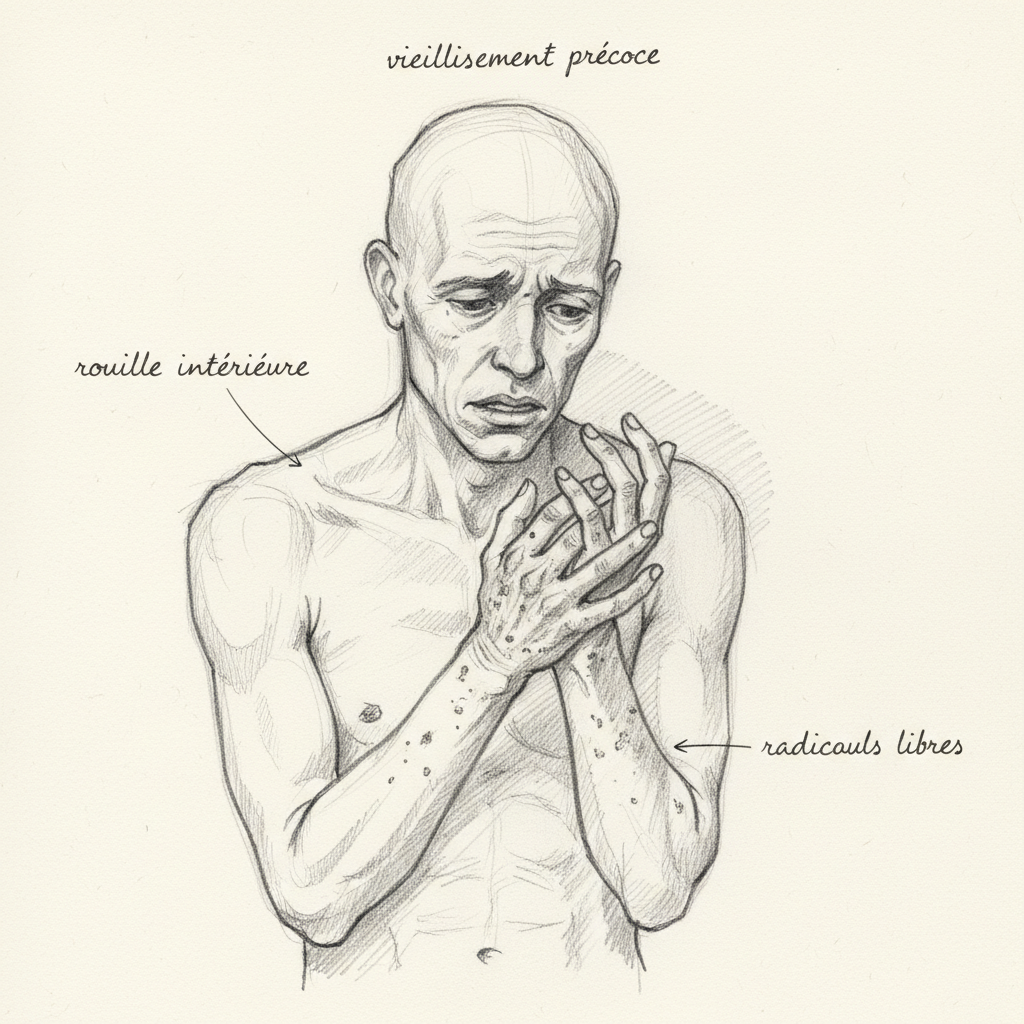
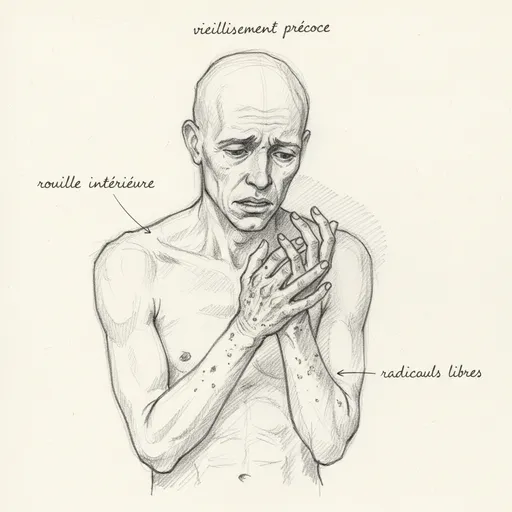
Brigitte is fifty-five years old and people think she’s sixty-five. It’s not a matter of vanity: it’s a biological marker. She has brown spots on her hands and forehead. Her hair turned white at forty-five. Her skin is dull, slack, marked. She rarely goes to bed before midnight, she’s stressed by her work, she eats few vegetables and fruits, she lives in central Paris without seeing a tree all week. When I have her take the redox questionnaire by Marchesseau, she scores 9 out of 10. Certain antioxidant deficit. Her body is aging at an accelerated rate because free radicals are destroying it faster than it can repair itself.
Oxidative stress according to naturopathy
Pierre-Valentin Marchesseau had identified cellular oxidation as one of the three pillars of toxemia, alongside colloidal overloads and tissue acidosis. Long before conventional medicine became interested in free radicals, orthodox naturopathy was already integrating the oxidative balance into its assessment of terrain.
Dr Michel Brack formalized this evaluation with a questionnaire that separates aggressors and defenses. Marchesseau, for his part, adopted a more global approach that evaluates the visible consequences of oxidative stress and the lifestyle factors that generate it. Both approaches are complementary.
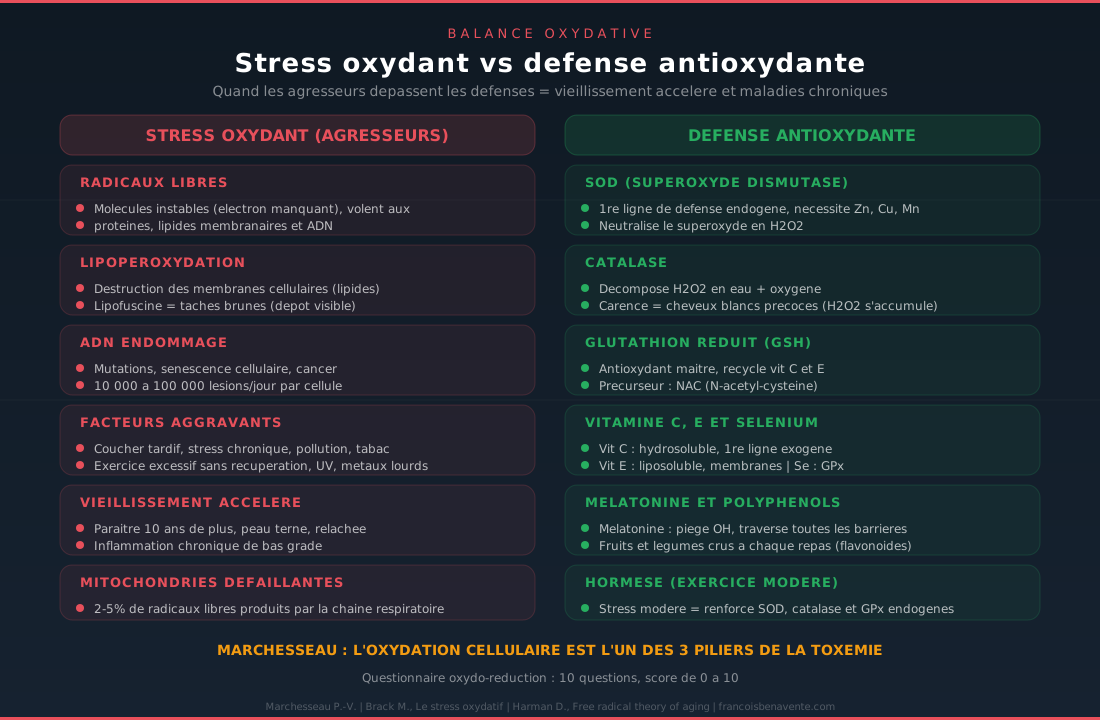
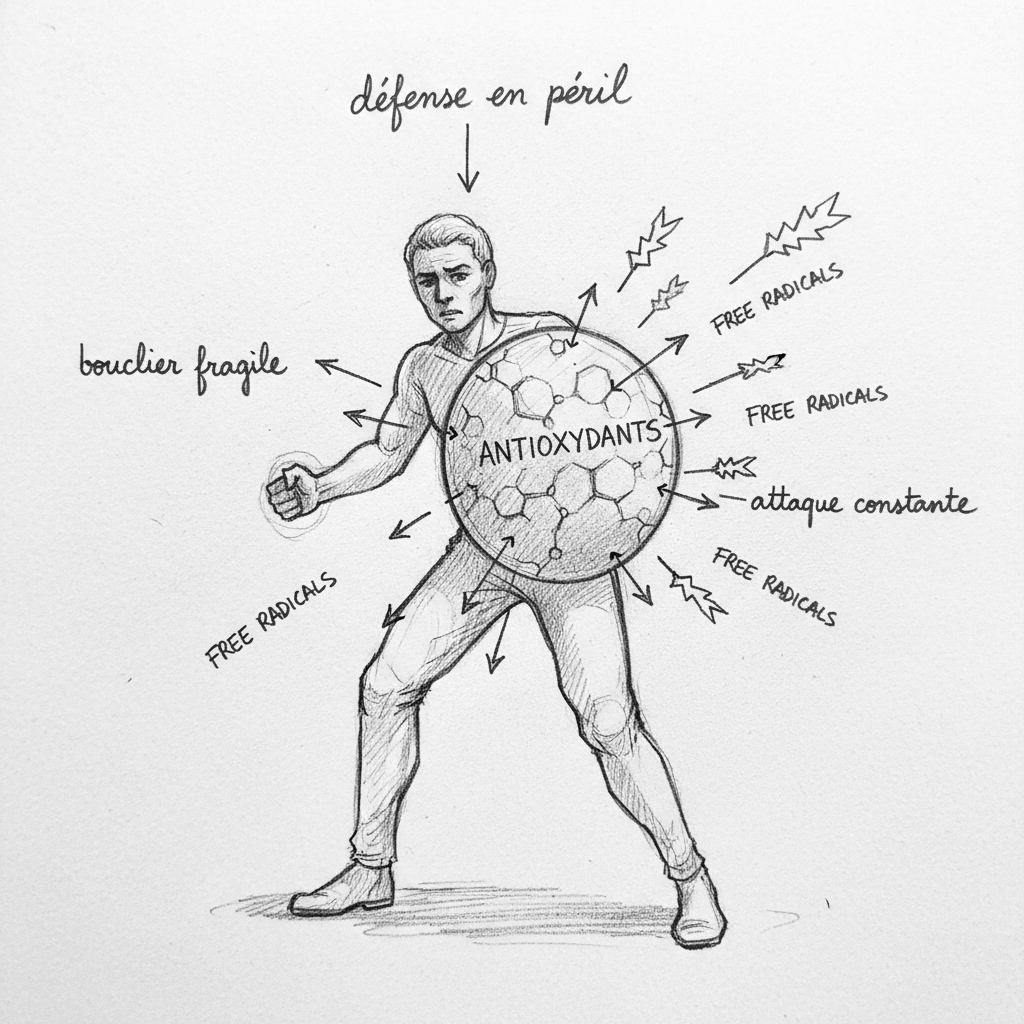
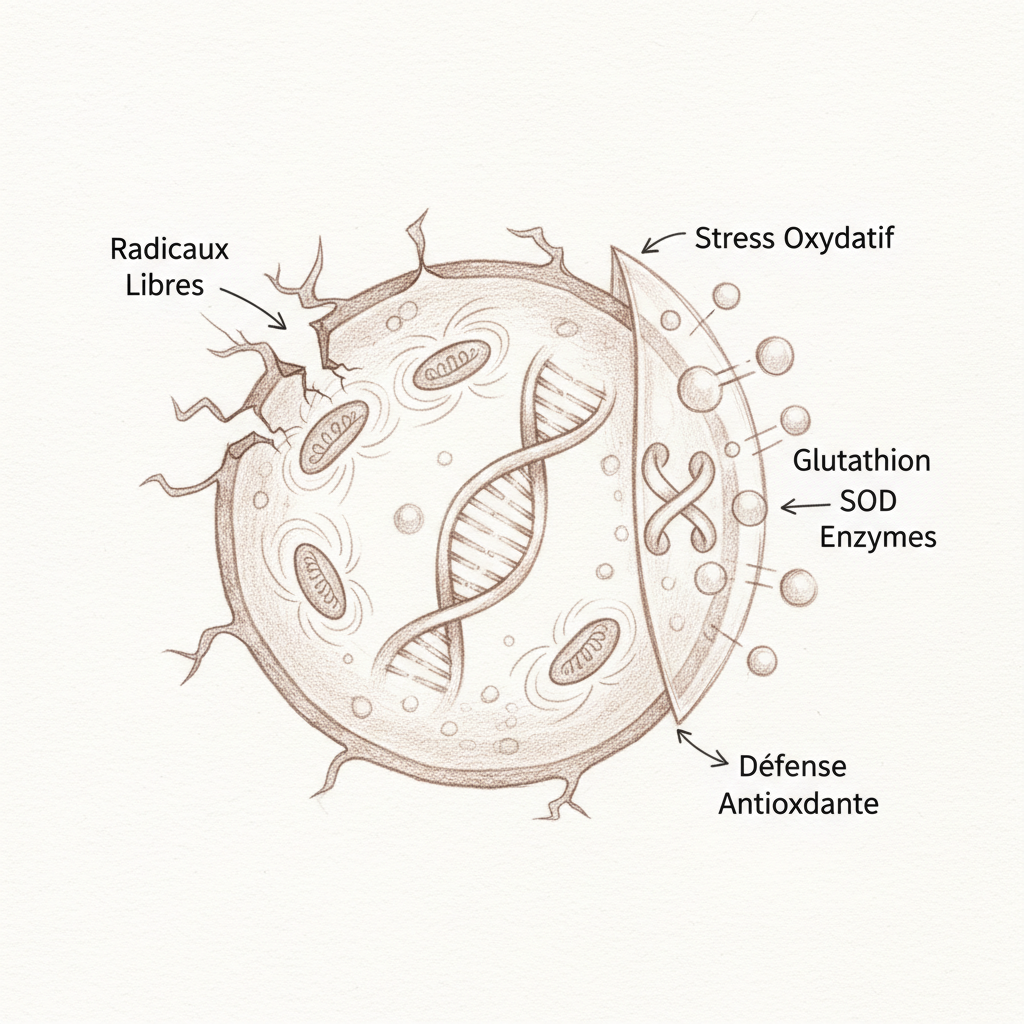
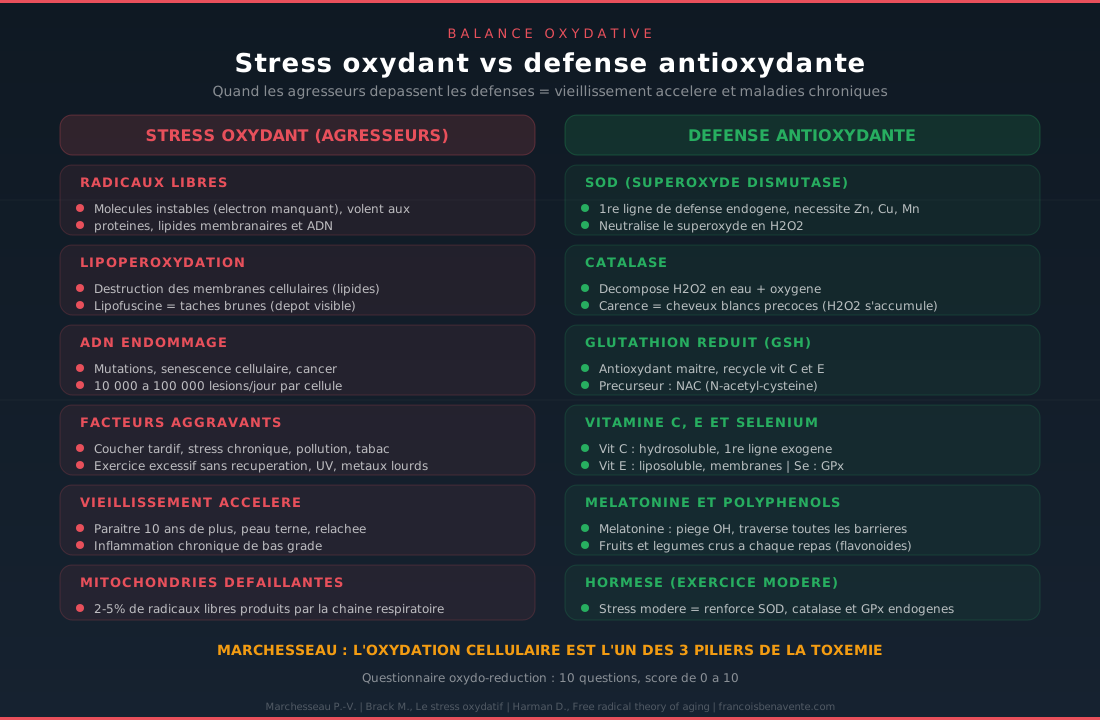
The principle is simple. Every cell in your body is bombarded daily by free radicals: unstable molecules missing an electron that they steal from your proteins, your cell membrane lipids, and your DNA. This bombardment is normal: mitochondrial metabolism naturally produces two to five percent of free radicals as byproducts of cellular respiration. The body has defense systems to manage it: superoxide dismutase (SOD), catalase, glutathione peroxidase, and reduced glutathione.
The problem occurs when the aggressors exceed the defenses. This is oxidative stress: and it accelerates cellular aging, destroys membranes, mutates DNA, inactivates enzymes, and promotes low-grade chronic inflammation.
The ten questions of the test
Marchesseau’s questionnaire asks ten questions that evaluate both visible markers of oxidative stress and the lifestyle factors that cause it.
Visible markers: looking older than your age, having many white hairs, having age spots (lipofuscin). Brown spots on the hands and face are not a sign of sun exposure: they are the visible deposit of lipofuscin, a brown pigment from the peroxidation of cell membrane lipids by free radicals. Premature white hair results from the oxidation of melanin by hydrogen peroxide (H2O2) that accumulates in the hair follicle when the catalase enzyme decreases.
Lifestyle factors: going to bed late (after 11 PM) deprives you of melatonin, a powerful antioxidant secreted during deep sleep. Insufficient sleep prevents nocturnal cellular regeneration and glutathione recycling. Chronic stress activates the corticotropic axis and generates an excess of free radicals while depleting adrenal vitamin C. Lack of raw fruits and vegetables at each meal deprives you of polyphenols, carotenoids, and flavonoids from the first line of exogenous defense. Life in a concrete, polluted environment without contact with nature exposes you to fine particles and heavy metals while depriving you of negative air ions from natural air that neutralize free radicals.
Take the Marchesseau oxidation-reduction test.
The three levels of results
A score of 0 to 4: within normal range. Your antioxidant defenses effectively counterbalance free radical production. A diet rich in raw vegetables, sufficient sleep, regular contact with nature, and physical exercise create a virtuous circle. Hormesis works: moderate stress strengthens your defenses.
A score of 5 to 7: probable antioxidant deficit. Imbalance is setting in. Lack of sleep reduces melatonin. Stress consumes vitamin C. A diet poor in raw plants deprives you of polyphenols. Polluted air loads the mitochondria. First manifestations appear: white hair, fatigue, dull skin, slow recovery.
A score of 8 to 10: certain antioxidant deficit. Chronic oxidative stress is established and cellular aging is accelerated. Lipofuscin spots, advanced canities, and an aged appearance are the visible markers of a process that also affects internal organs: rigidified cell membranes, mutated DNA, inactivated enzymes, damaged mitochondria. The mitochondrial vicious cycle sets in: damaged mitochondria produce more free radicals which further damage the mitochondria.
The antioxidant protocol
The strategy is twofold: reduce the aggressors AND increase the defenses. One without the other is not enough: this is the teaching of both Dr Brack and Marchesseau.
Reducing aggressors: go to bed before 11 PM without fail. Manage stress through heart rate coherence, meditation, yoga. Eliminate tobacco (each cigarette produces billions of free radicals). Limit alcohol. Reduce exposure to pollution (indoor air purifier, avoid busy roads). Eliminate ultra-processed foods that contain aldehydes and advanced glycation end products (AGE).
Increasing endogenous defenses: NAC (N-acetylcysteine, 600 to 1200 mg per day) is the most effective precursor of glutathione, the master intracellular antioxidant. Selenium (200 micrograms of selenomethionine or one to two Brazil nuts per day) is the cofactor of glutathione peroxidase. Zinc (15 mg per day) is the cofactor of SOD. Coenzyme Q10 (200 mg of ubiquinol per day) protects the inner mitochondrial membrane.
Increasing exogenous defenses: vitamin C (500 mg to 1 g per day), vitamin E in the form of mixed tocopherols (200 IU per day), curcumin (500 mg with piperine: activates the Nrf2 pathway which stimulates endogenous production of SOD, catalase, and glutathione peroxidase), resveratrol (200 mg), OPC from grape seed extract (200 mg: fifty times more powerful than vitamin E). Alpha-lipoic acid (300 mg) is a universal antioxidant that regenerates oxidized vitamins C and E.
Antioxidant diet
Red fruits are the champions of polyphenols. Blueberries (anthocyanins), raspberries, blackberries, blackcurrants, and pomegranates concentrate the most powerful antioxidants in the plant kingdom. Green tea (catechins, EGCG) is a cardiovascular and neurological protector. Spices (turmeric, ginger, cinnamon, rosemary) are concentrates of antioxidants to incorporate into every meal.
Cruciferous vegetables (broccoli, kale, cauliflower, Brussels sprouts) activate the Nrf2 transcription factor which stimulates the synthesis of endogenous antioxidant enzymes. This is the smartest approach: instead of bringing antioxidants from the outside, you activate the internal defense machinery.
Dark chocolate at 85 percent (flavanols) and extra-virgin olive oil (hydroxytyrosol) complete the picture. The idea is not to take supplements while eating poorly: it’s to eat in a massively antioxidant way and to supplement targeted deficiencies.
Nature as an antioxidant
Marchesseau emphasized the role of nature as an agent of vitality. Modern science proves him right. Forest air is charged with negative ions that neutralize free radicals. Phytoncides emitted by trees (terpenes) stimulate NK cells of the immune system. Natural morning light regulates circadian rhythm and optimizes melatonin secretion the following night. Barefoot contact with soil (grounding) reduces systemic inflammation by providing free electrons that neutralize reactive oxygen species.
A thirty-minute forest walk per day: Japanese shinrin-yoku: is probably the most underestimated antioxidant intervention. It combines moderate exercise (hormesis), pure air (negative ions), phytoncides (immune stimulation), natural light (melatonin), and stress reduction (cortisol). Free, no side effects, available year-round.
Brigitte started with sleep: bedtime at 10:30 PM, magnesium at dinner, 1 mg melatonin if needed. Then blueberries and green tea at breakfast. Then NAC and Coenzyme Q10. Then a walk in the Buttes-Chaumont park each morning before work. In six months, her colleagues told her she had “gotten younger.” Her brown spots had faded, her skin had regained its glow, and she slept straight through the night. Oxidative stress is not inevitable: it’s a correctable imbalance when you act on the right levers.
To go further
- Oxidative balance: Dr Brack’s test to measure your oxidative stress
- Oxidative stress: your cells are rusting (and supermarket antioxidants won’t change that)
- Acetylcholine: the forgotten neurotransmitter of your memory
- Cancer and diet: what micronutrition changes in the equation
Sources
- Marchesseau, Pierre-Valentin. La Toxémie. Éditions de la Vie Claire, 1985.
- Brack, Michel. Le Stress oxydatif. De Boeck Supérieur, 2011.
- Curtay, Jean-Paul. Nutrithérapie: bases scientifiques et pratique médicale. Testez Éditions, 2016.
If you want personalized support, you can schedule a consultation.
Laisser un commentaire
Sois le premier à commenter cet article.