The Three Cures of Naturopathy: Marchesseau’s Fundamental Architecture
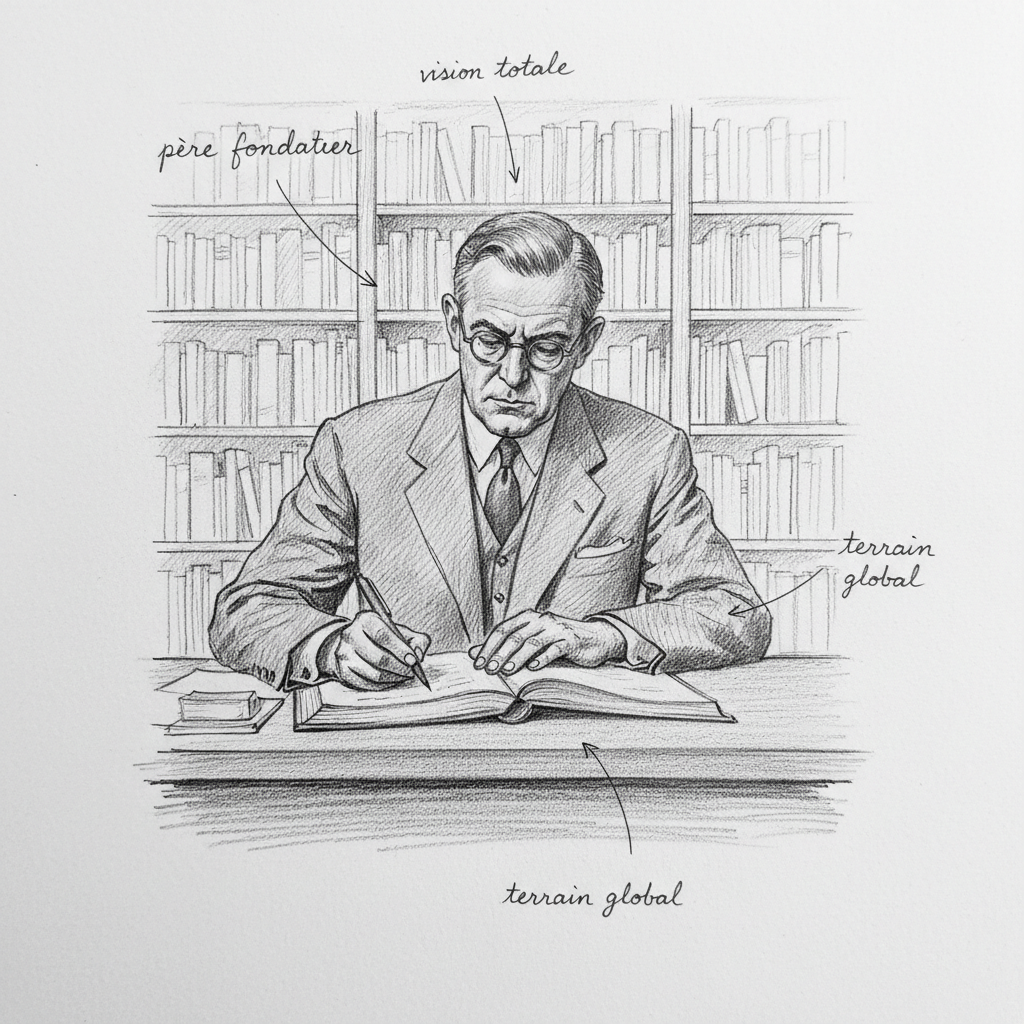
Nine out of ten consultants who walk through my clinic door want the same thing: a list of supplements. Magnesium for sleep, zinc for skin, vitamin D for winter. As if health were an inventory problem, and the naturopath were an Amazon delivery person in a white coat. I understand. It’s tempting. It’s simple. It’s reassuring. The problem is that Marchesseau never started there. Pierre-Valentin Marchesseau, the father of French naturopathy, the man who codified this discipline in the 1940s, always asked one question before anything else: what is draining your vitality?
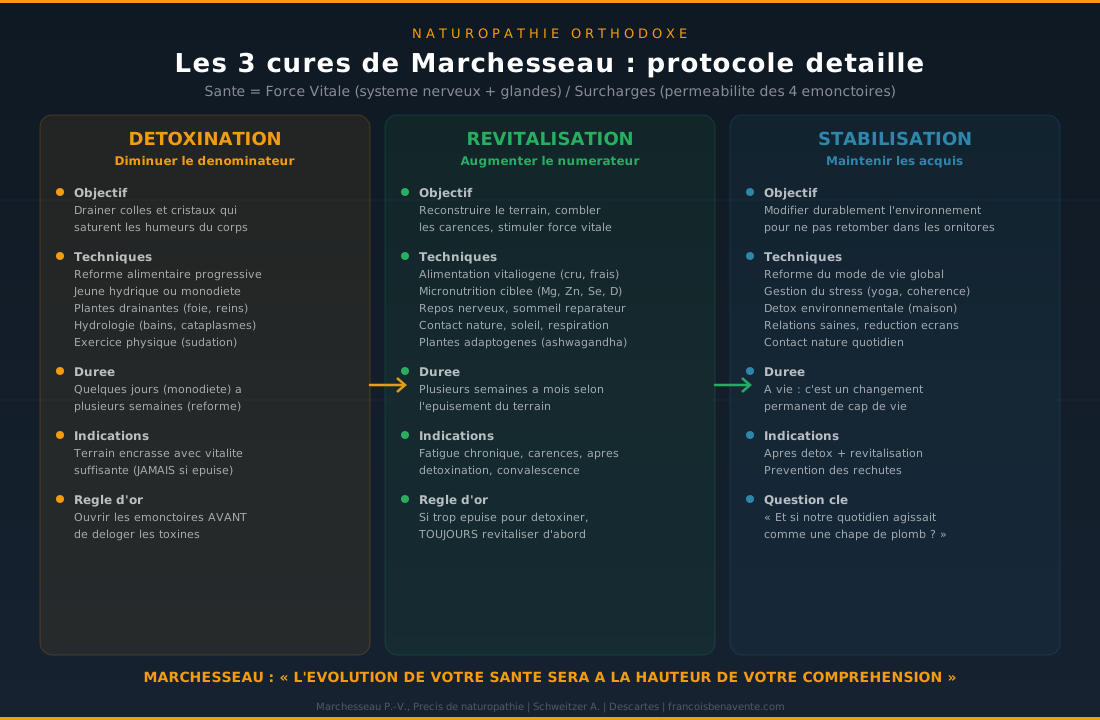
This question changes everything. Because it shifts the perspective. You’re no longer looking for what to add. You’re looking for what to remove. You’re no longer patching the leaks in a punctured pipe; you’re asking why it’s punctured. And the answer comes down to three words: detoxification, revitalization, stabilization. Three cures, in that precise order, which form the backbone of any serious naturopathic approach. These are not marketing protocols. These are not Instagram trends. This is therapeutic architecture that’s over eighty years old, tested on thousands of patients, and works because it respects the logic of living systems.
“The evolution of your state of health will be proportional to your understanding.” Descartes
I return constantly to this phrase because it summarizes the philosophy of the three cures in itself. If you don’t understand why you’re ill, you won’t heal. You’ll manage. You’ll compensate. You’ll take chemical or natural crutches, but nothing will change fundamentally. The three cures of Marchesseau are not a treatment. They’re a framework for understanding. And that’s what I’m going to convey to you here, the same way I’ve been transmitting it in consultation for five years.
The Formula That Summarizes Eighty Years of Naturopathy
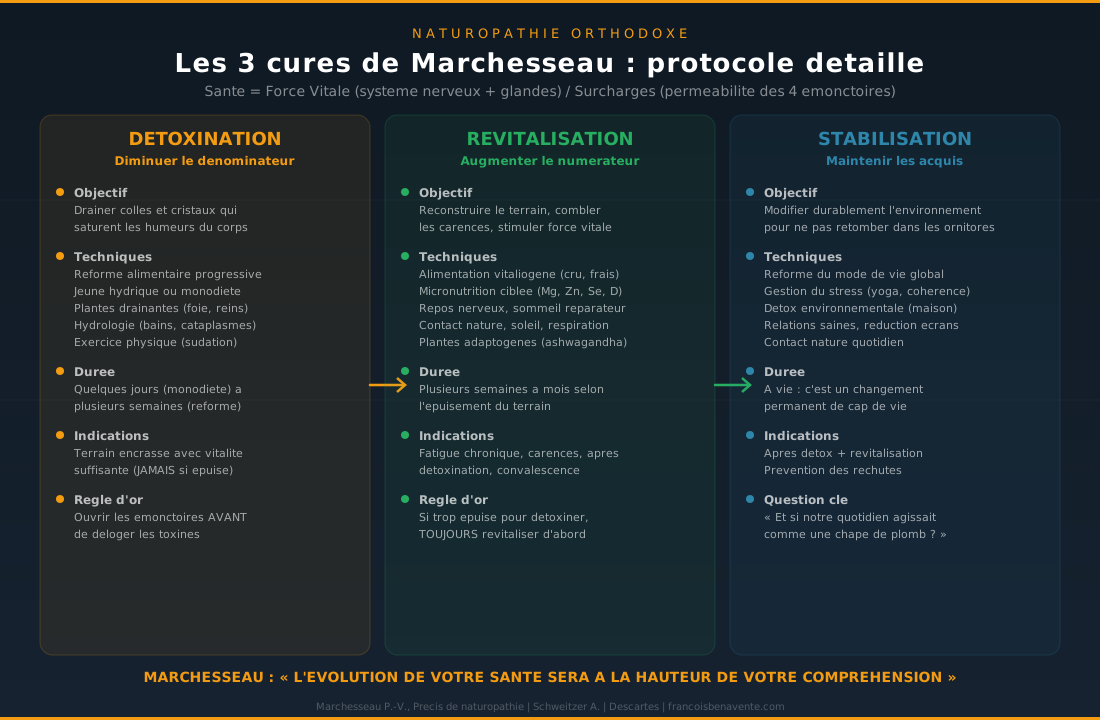
Marchesseau loved formulas. Not empty formulas, but mathematical formulas. Those that sum up in one line what others need three volumes to explain. And he found one, magnificent in its simplicity: Health = Vital Force / Organic Surcharges. In the numerator, vital force is the energy that animates every cell in your body. It depends on two systems: the nervous system (mainly the diencephalon, that deep area of the brain that pilots all vegetative functions) and the endocrine glands (thyroid, adrenals, gonads, pancreas). In the denominator, organic surcharges are the sum total of waste, toxins, and metabolic residues that clog your humors, tissues, and organs. The permeability of your four emunctories (liver, kidneys, lungs, skin) determines how quickly these surcharges are eliminated.
The fraction is elegant. The higher the numerator (strong vital force), the better you feel. The lower the denominator (low surcharges), the better you feel. And vice versa. When vital force collapses and surcharges accumulate, the result approaches zero. That’s chronic illness. That’s sludging. That’s the rotten terrain that Salmanoff compared to a river with stagnant waters, whose sediment gradually clogs the capillaries.
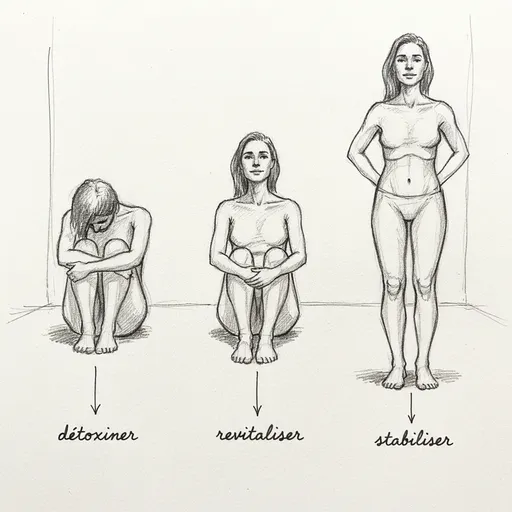
This formula guides all of the naturopath’s work. Increasing the numerator is the revitalization cure. Decreasing the denominator is the detoxification cure. And preventing the denominator from rising again after the work is done is the stabilization cure. Three steps, in that logical order, answering three successive questions. How do you eliminate what’s clogging you? How do you rebuild what’s been depleted? How do you avoid falling back into the same patterns?
Dr. Albert Schweitzer, Nobel Peace Prize winner, examined well before Marchesseau the place of humans in their original biological milieu. His finding was crystal clear: humans removed from their natural biotope had to adapt to an increasingly artificial environment. Industrial food, sedentary lifestyle, light pollution, permanent professional stress—all of this constitutes an environment radically different from the one in which our physiology developed. And this gap is precisely what the three cures seek to correct. The naturopath, according to Marchesseau, is first an analyst of stressful factors in the artificial environment. Their role is to identify them, prioritize them, then neutralize them through individualized use of ten natural techniques.
The Detoxification Cure: Draining the Marsh
This is the first cure, the one with which any naturopathic treatment begins for a patient with sufficient vitality. I insist on this point because it’s the most frequent error I see, even among trained therapists: detoxifying an exhausted organism. Hippocrates said it already: primum non nocere, first do no harm. A body depleted of its reserves doesn’t have the energy needed to mobilize its toxins, transform them, and eliminate them. Forcing it to do so triggers what’s called a healing crisis but is really a disguised collapse.
Marchesseau structured the detoxification cure around three axes. The first consists of drying up the source of surcharges. Surcharges don’t fall from the sky. They come from what you eat, what you breathe, what you inflict on yourself daily. Food is the primary source of toxemia. Anti-specific foods (coffee, alcohol, refined sugars, white flour, processed meats, ultra-processed products) generate metabolic residues that the body can’t process efficiently. High-temperature cooking produces Maillard molecules, glycotoxins that clog tissues. The first step of any serious detoxification is therefore dietary reform. Not a spectacular fast. Not a three-day monodiet. Gradual, adapted, individualized reform. Remove what pollutes before trying to drain what’s already polluted.
The second axis is more subtle: freeing the diencephalon and its nerve annexes. The diencephalon, seat of the hypothalamus and thalamus, pilots all vegetative functions: digestion, thermoregulation, hormonal cycles, immune response. When the cerebral cortex, that thinking layer that never stops ruminating, takes over the diencephalon, vital functions slow down. Chronic stress is poison for detoxification because it monopolizes nerve energy at the expense of elimination processes. Marchesseau’s strategy therefore begins with relaxation. Disconnecting the cortex from the diencephalon. This isn’t new-age wellness; it’s applied neurophysiology. Relaxation, abdominal breathing, contact with nature, silence, sufficient sleep. Everything that allows the parasympathetic nervous system to regain control.
The third axis is the most well-known: opening the emunctories. Emunctories are the body’s exit doors. The liver filters blood and eliminates toxins through bile. The kidneys filter plasma and eliminate through urine. The lungs expel volatile acids (CO2, volatile organic acids). The skin sweats out acidic wastes and sticky substances through sweat glands and sebaceous glands. The intestine, an often-forgotten emunctory, eliminates food residues and toxins conjugated by the liver. If these doors are closed, toxins mobilized by detoxification have nowhere to go. They recirculate, re-deposit, and the person feels worse than before. This is the famous “detox crisis” that some poorly trained practitioners celebrate as a positive sign. No. It’s a sign of clogged emunctories.
Marchesseau distinguished two major categories of surcharges: sticky substances and crystals. Sticky substances are viscous, soft, voluminous wastes, stemming mainly from fermentation of poorly metabolized carbohydrates and fats. They clog the liver, intestines, sinuses, bronchi, skin (acne, weeping eczema). You eliminate them through sticky-substance emunctories: liver-intestines, lungs, sebaceous glands. Crystals, conversely, are hard, small, angular wastes from catabolism of animal proteins and purines. Uric acid, oxalic acid, phosphates. They deposit in joints, tendons, kidneys (stones). You eliminate them through crystal emunctories: kidneys, sweat glands, lungs. Confusing the two means using the wrong drainage tools. Stimulating the kidney in a patient whose problem is hepatic is like draining the wrong sink.
The detailed strategy of the detoxification cure unfolds in six stages. Relax first, as I’ve just explained. Then deconditioning: undoing toxic habits installed over years, those automatic eating and behavioral patterns that maintain toxemia. Then reconditioning: installing new reflexes, gradually, without harshness. Dry fasting isn’t the first option. Occasional monodiet, intermittent fasting window, elimination of stimulants, reduction of adulterated foods are the first levers. Drainage through plants (dandelion, artichoke, black radish for the liver; birch, meadowsweet for the kidneys; thyme, eucalyptus for the lungs) comes as a complement, never as first line. As I detail in the article on spring detox, hepatic plants without prior dietary reform is like mopping without closing the faucet.
The Revitalization Cure: Rebuilding What’s Been Depleted
Detoxification removes. Revitalization adds. This is the second phase of the approach, and paradoxically, it should begin first in most of the patients I see. Because most people who come to see me aren’t just clogged. They’re exhausted. Depleted. Their mineral reserves are at rock bottom, their endocrine glands are running on low, their nervous system is saturated. Detoxifying terrain this impoverished is asking a dehydrated marathon runner to run a sprint. First you have to give them water back.
Revitalization aims to fill gaps and stimulate vital force. Nutrition is the first lever. Not in the sense of “eat five fruits and vegetables a day,” that empty injunction that says nothing about the quality, preparation, or bioavailability of nutrients. Nutrition in Marchesseau’s sense is bromatology: the science of living food, specific to the human species, prepared to preserve its enzymes, vitamins, and trace elements. Fresh vegetable juices from an extractor, sprouts, seasonal raw vegetables, virgin first cold-pressed oils, animal proteins cooked at low temperature. Each food is either a vector of vitality or a thief of vitality. Bromatology teaches you to distinguish between the two.
Micronutrition comes as reinforcement when food alone isn’t enough, which is the case in the vast majority of patients with chronic fatigue. Zinc is probably the most universally deficient cofactor I encounter in consultation. It intervenes in more than three hundred enzymatic reactions, from immunity to hormone synthesis, from wound healing to hepatic detoxification. Serotonin, that neurotransmitter of well-being whose synthesis depends on tryptophan, magnesium, vitamin B6, and iron, is collapsed in most stressed and poorly nourished patients. The thyroid, that gland piloting basal metabolism, cannot function without iodine, selenium, zinc, iron, vitamin D, vitamin A, and tyrosine. When these cofactors are missing, the gland runs empty. And with it, the entire metabolism. Revitalization consists of precisely identifying these deficiencies through appropriate biological testing, then filling them in a targeted way.
“The human body possesses extraordinary self-healing power. Our work is not to heal it, but to restore its means to heal itself.” Robert Masson
But revitalization doesn’t stop at the plate and supplements. Sleep is the first revitalizing technique. It’s during the night, and more precisely during deep slow-wave sleep phases, that the body secretes growth hormone, repairs tissues, consolidates memory, and performs its cellular housekeeping (autophagy). A patient who sleeps poorly won’t revitalize, regardless of what supplements they swallow. Adapted physical exercise, neither too much nor too little, is the second lever. Daily walking relaunches lymphatic circulation, that slow plumbing without its own pump that depends entirely on muscle contraction to circulate. Salmanoff understood this a century ago: lymph only circulates at a rate of one liter per twenty-four hours if you remain immobile. Physical activity multiplies this flow by ten.
Contact with nature, forest bathing (what the Japanese call shinrin-yoku), morning sun exposure, barefoot walking on grass: these practices that modern medicine views with condescension are powerful revitalization tools. Marchesseau saw them as techniques of nerve recharging, capable of restoring cellular electrical potential and revitalizing the diencephalon. Contemporary research proves him right: forest bathing increases the activity of NK cells (natural killers), reduces salivary cortisol by 12 to 16%, and improves heart rate variability (Li, 2010, Environmental Health and Preventive Medicine).
The Stabilization Cure: The Cure Everyone Forgets
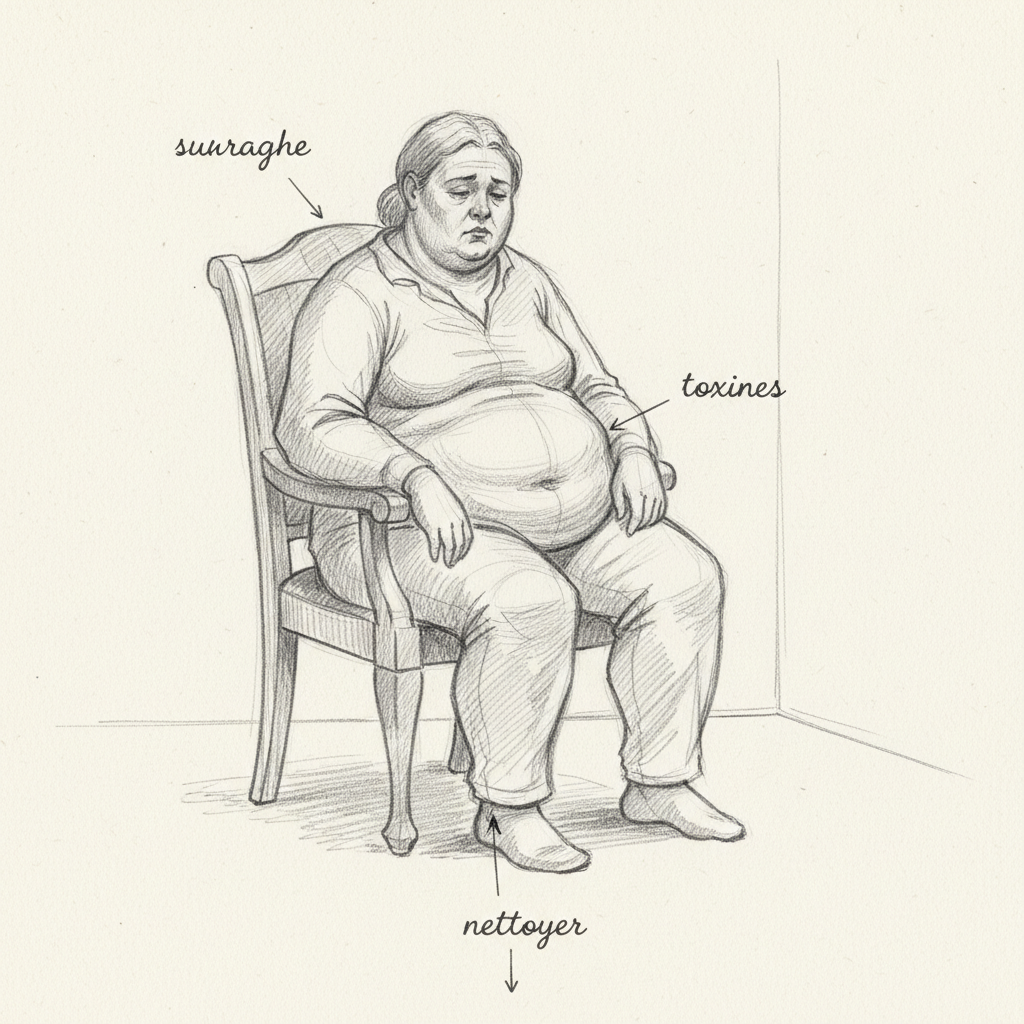
The third cure is the most neglected, the most misunderstood, yet the most decisive. Marchesseau posed a question that should haunt every patient who has completed a detoxification and revitalization cure: “What if our daily life acts as an enormous weight pressing down completely on our energy capacity?”
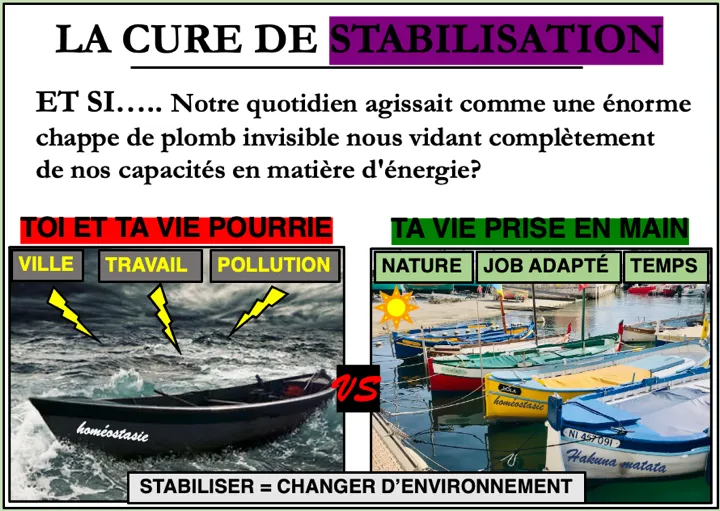
The image from his courses is striking. Two boats. The first sails in full storm, tossed by waves, its sails torn. This is the body struggling to maintain homeostasis in a hostile environment. The second is anchored in a calm port, repaired, sheltered. Marchesseau wrote underneath: Hakuna matata. No worries. That’s stabilization. It’s not a third layer of protocol. It’s a change of port.
Stabilization consists of identifying and modifying environmental factors that maintain illness. Nutrition was reformed during detoxification. Deficiencies were filled during revitalization. But if you return to the same toxic environment, if you resume the same work rhythm, if you expose yourself to the same pollutants, if you live with the same draining relationships, all the work accomplished will be reduced to nothing in a few months. Marchesseau summarized the situation in two columns. On one side, “you and your rotten life”: the city, draining work, pollution, noise, permanent screens, lack of nature, toxic relationships. On the other, “your life taken in hand”: nature, work that suits you, time for yourself, nourishing relationships, a life rhythm that respects your physiology.
I know this can seem naive. Not everyone can quit their job, move to the countryside, and live at the pace of the sun. But stabilization doesn’t require radical upheaval overnight. It demands awareness, followed by progressive adjustments. Reduce screen time after 9 PM. Negotiate one day of remote work to avoid two hours of commuting. Spend weekends in the forest instead of shopping centers. Turn off notifications. Get dirt under your fingernails once a week. Learn to say no. Each gesture, taken in isolation, seems trivial. Accumulated over six months, a year, two years, they transform the terrain. Because terrain isn’t just your humors and emunctories. It’s also your environment. It’s the air you breathe, the water you drink, the light you receive, the people you live with.
The endocrine disruptors in your kitchen are part of this cure. Professional stress too. Insomnia caused by a partner who snores, street noise under your window, the open-plan office without natural light where you spend eight hours a day—all of this falls under stabilization. And without this foundational work, without this restructuring of your daily environment, the detoxification and revitalization cures will have to be repeated indefinitely.
The Ten Techniques in Service of the Three Cures
Marchesseau didn’t stop at defining three cures. He codified ten natural techniques that the naturopath uses, alone or combined, to implement them. These ten techniques aren’t ten distinct specialties. They’re ten tools in the same box, which the practitioner chooses based on the patient, their vitality, their surcharges, and which stage of the cure they’re in.
The first, the most important, the one Marchesseau placed at the summit of the hierarchy, is bromatology: food and dietetics. It represents by itself a considerable portion of naturopathic work. What you eat, how you prepare it, what time you consume it, what emotional state you’re in when you sit at the table—all of this conditions the quality of your humors. The second major technique is psychology and neuro-psychological hygiene: relaxation, stress management, sophrology, meditation, mental reprogramming techniques. Marchesseau insisted: the diencephalon must be freed from the cortex for vital functions to express themselves fully. The third is physical exercises: emunctory gymnastics, walking, yoga, stretching, breathing exercises. Movement is inseparable from health because lymph, I repeat, only circulates if muscles contract. The fourth is hydrology: hot baths, cold baths, thermal alternations, compresses, wrappings, vapors. Salmanoff had made it his technique of choice with his hyperthermic baths in turpentine essences, capable of restarting capillary microcirculation.
These four techniques—bromatology, psychology, physical exercises, and hydrology—constitute what orthodox naturopathy calls the four major techniques. They represent roughly ninety percent of therapeutic work. The remaining six techniques are called “minor,” not because they’re ineffective, but because they complement the four major ones. Manual techniques (massage, osteopathy, lymphatic drainage) mobilize liquids and relax tissues. Breathing techniques (Bol d’Air Jacquier, heart rate coherence exercises, pranayama) oxygenate cells and calm the nervous system. Phytology in the broad sense (phytotherapy, gemmotherapy, aromatherapy) uses plant active principles to support emunctory and endocrine functions. Reflexology (plantar, auricular, nasal) stimulates organs at a distance through reflex nerve pathways. Energetic techniques (magnetism, acupuncture) work on the vibratory plane and Qi circulation. Finally, vibratory techniques (chromotherapy, music therapy) use light and sound frequencies to harmonize the nervous system.
Marchesseau’s genius was understanding that these ten techniques are worthless if not prescribed within the framework of the three cures. A hepatic plant without dietary reform is a band-aid. A massage without stress work is a pleasant moment that doesn’t change the terrain. A zinc supplement without correction of the intestinal permeability causing malabsorption is a wasted investment. Everything is connected. Everything articulates. And the order of the three cures gives the direction.
Why the Order of the Cures Changes Everything
In consultation, I constantly see patients who’ve done things backwards. They started by stuffing themselves with dietary supplements (revitalization) without ever cleaning their terrain (detoxification). It’s like repainting the walls of a house whose foundations are damp. The paint won’t hold. Or they did aggressive “detox” (five-day fast, juice cures, laxatives) when their vital force was at rock bottom. Result: demineralization, blood pressure drop, dizziness, worsened fatigue.
Assessing vitality is therefore the absolute prerequisite. A patient with decent vitality starts with detoxification: lighten, drain, open the emunctories. Then revitalize: fill gaps revealed by drainage. Finally, stabilize: restructure the environment so the work holds long-term. But an exhausted patient starts with mini-revitalization. You restore minimum reserves (magnesium, B vitamins, sleep, rest) before considering any drainage. This is what I call the “reservoir principle”: you don’t drain a motor without oil.
The duration of each cure varies considerably from patient to patient. A detoxification cure can range from a few days (applesauce monodiet, sixteen-hour fast) to several weeks (complete dietary reform, phytotherapy drainage through the three main emunctories). Revitalization can take three months in a moderately deficient patient, or over a year in one with deep adrenal exhaustion. As for stabilization, theoretically it has no end. It’s a change of existential course, not a time-limited prescription.
“Don’t kill the mosquitoes, drain the marsh.” Marchesseau
This phrase from Marchesseau sums up the basics of naturopathy better than any manual. Conventional medicine kills mosquitoes: antibiotics against infection, anti-inflammatories against inflammation, antidepressants against depression. Naturopathy drains the marsh: it treats the terrain that allowed illness to establish itself. And the three cures are the three stages of this drainage.
What the Three Cures Are Not
I want to be honest. The three cures of Marchesseau are not a magic wand. They don’t replace medical advice when it’s necessary. A Hashimoto’s thyroid diagnosis requires endocrinological monitoring. Severe iron deficiency anemia may require medical iron supplementation by injection. Cancer isn’t treated with monodiet. Naturopathy is a science of prevention and terrain support, not substitute medicine. Marchesseau said it himself: the naturopath is a health educator, not a treatment prescriber. The error would be to confuse the two. If you want to assess your vitality level before undertaking anything, the vitality-toxemia questionnaire is a good starting point.
Interactions with medications exist. Hepatic plants can modify medication metabolism via cytochrome P450. Fasting is contraindicated with certain medications. Kidney drainage is inadvisable with kidney insufficiency. A competent naturopath works in complementarity with the doctor, never in opposition. And if your practitioner tells you to stop your medication to follow their cure, find a new practitioner.
The Terrain, Always the Terrain
The three cures of Marchesseau are not a fixed protocol. They’re a grid for reading living systems. Each patient is unique, with their own vitality, specific surcharges, history, environment. The same clogged terrain can manifest as fibromyalgia in one person, endometriosis in another, PCOS in a third. The symptom differs. The underlying mechanism is identical: an organism whose vital force can no longer compensate for the level of surcharges. The solution too is identical in structure: detoxify, revitalize, stabilize. Only the modalities change.
What convinced me to become a naturopath five years ago is exactly this. The coherence of this system. The relentless logic of that fraction: Health = VF / OS. You can debate details, refine protocols, modernize tools. But the framework holds. It holds because it doesn’t try to name diseases, but to understand why a terrain degrades. And when you understand the why, the how follows naturally.
You can schedule an appointment for a complete vitality assessment. If you prefer to start alone, articles on anti-inflammatory nutrition and gentle cooking will give you the dietary basics of the detoxification cure.
References
Marchesseau, P.-V. The Three Cures of Orthodox Naturopathy. Naturopathy Courses, ISUPNAT.
Salmanoff, A. Secrets and Wisdom of the Body. La Table Ronde, 1963.
Masson, R. Naturopathic Renovation. Éditions Albin Michel, 1984.
Li, Q. et al. “Effect of phytoncide from trees on human natural killer cell function.” International Journal of Immunopathology and Pharmacology, 2009, vol. 22(4), p. 951-959. PMID: 20074458.
Kousmine, C. Be Well in Your Plate Until 80 and Beyond. Éditions Primeur, 1980.
Seignalet, J. Food or the Third Medicine. 5th edition, Éditions de l’Oeillet, 2004.


Laisser un commentaire
Sois le premier à commenter cet article.