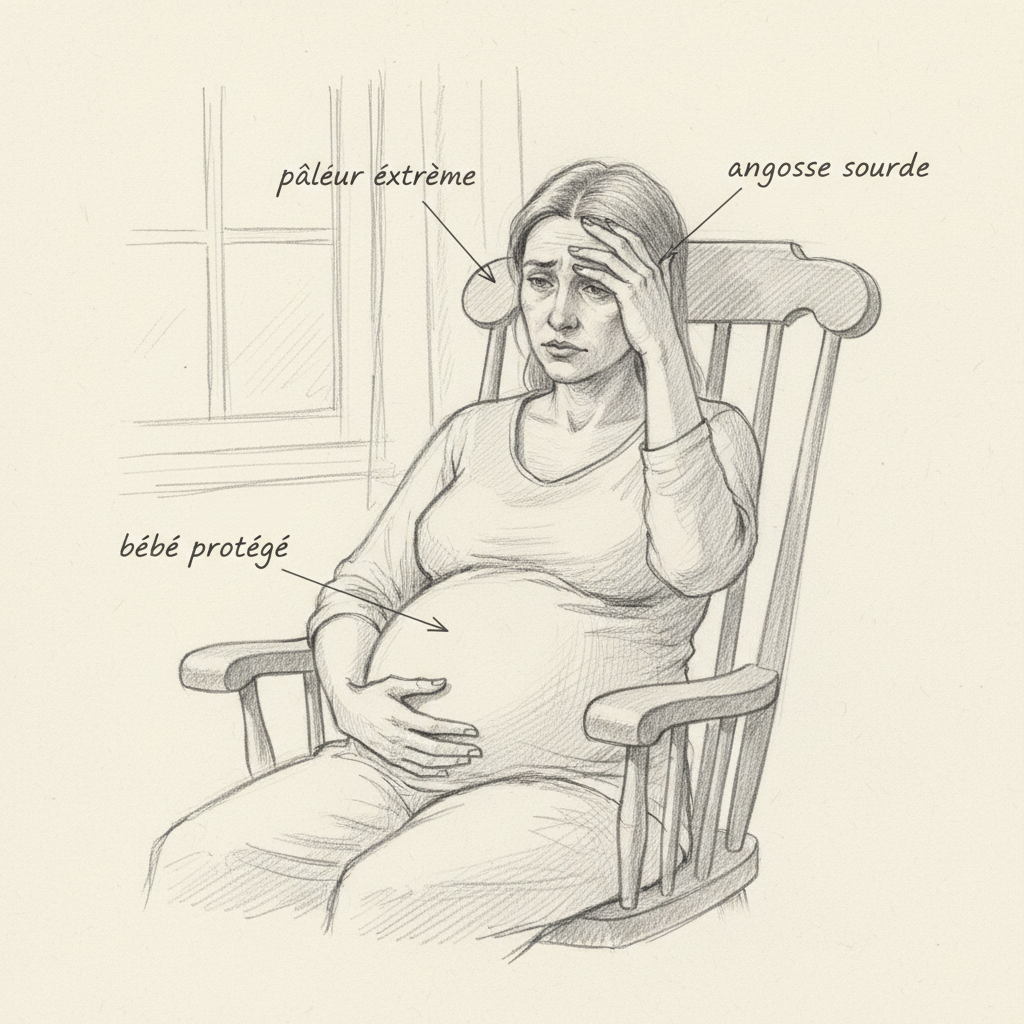
Laura is twenty-nine years old. She just had a miscarriage at eight weeks of pregnancy, the second in a year. Her gynecologist prescribed her folic acid at 400 micrograms per day and told her to “try again in three months”. When I asked her if her homocysteine had been tested, she looked at me without understanding. When I had the test done, her homocysteine was at 18 micromoles per liter (the optimal normal range is below 8). Her MTHFR genetic test revealed she was homozygous TT: her folate conversion enzyme was only functioning at thirty percent of its capacity. The folic acid her gynecologist was prescribing her, she could barely convert it into active form. It’s like giving a key that doesn’t fit the lock.
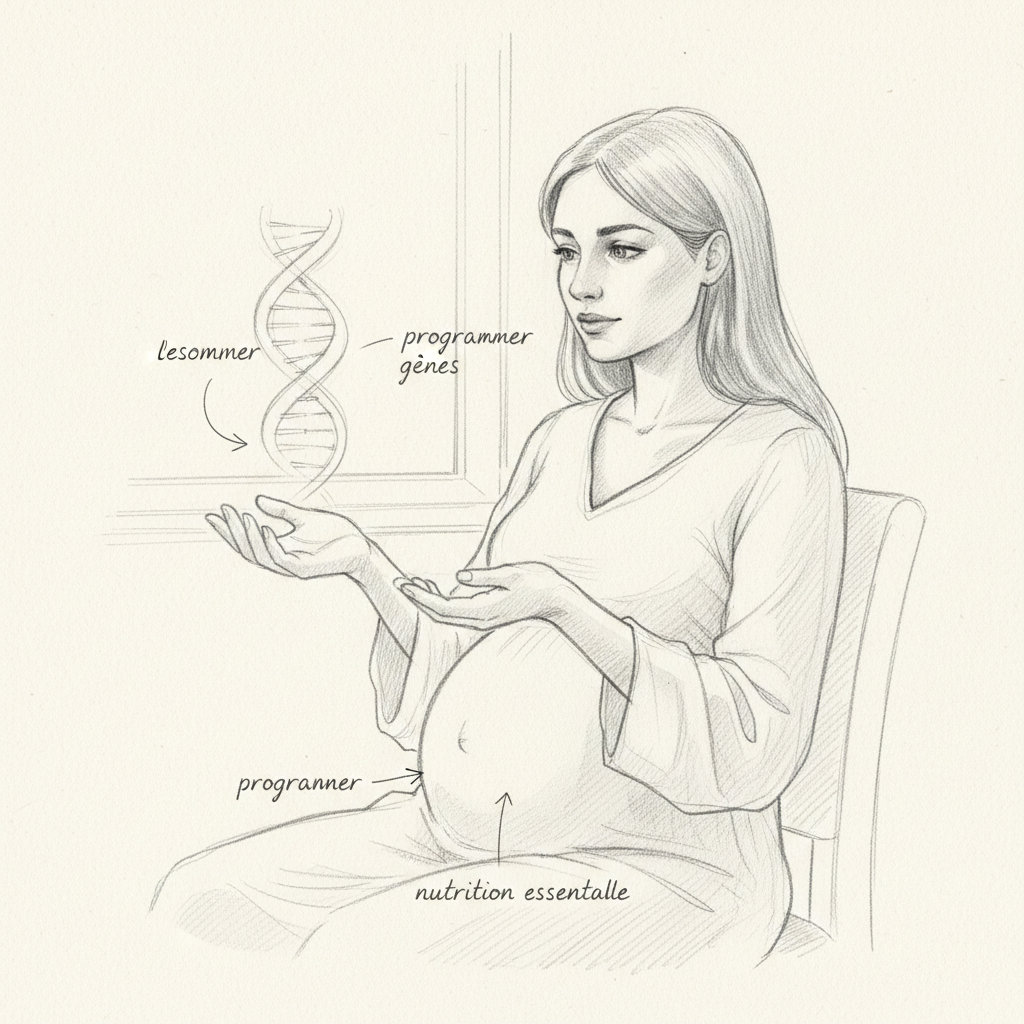
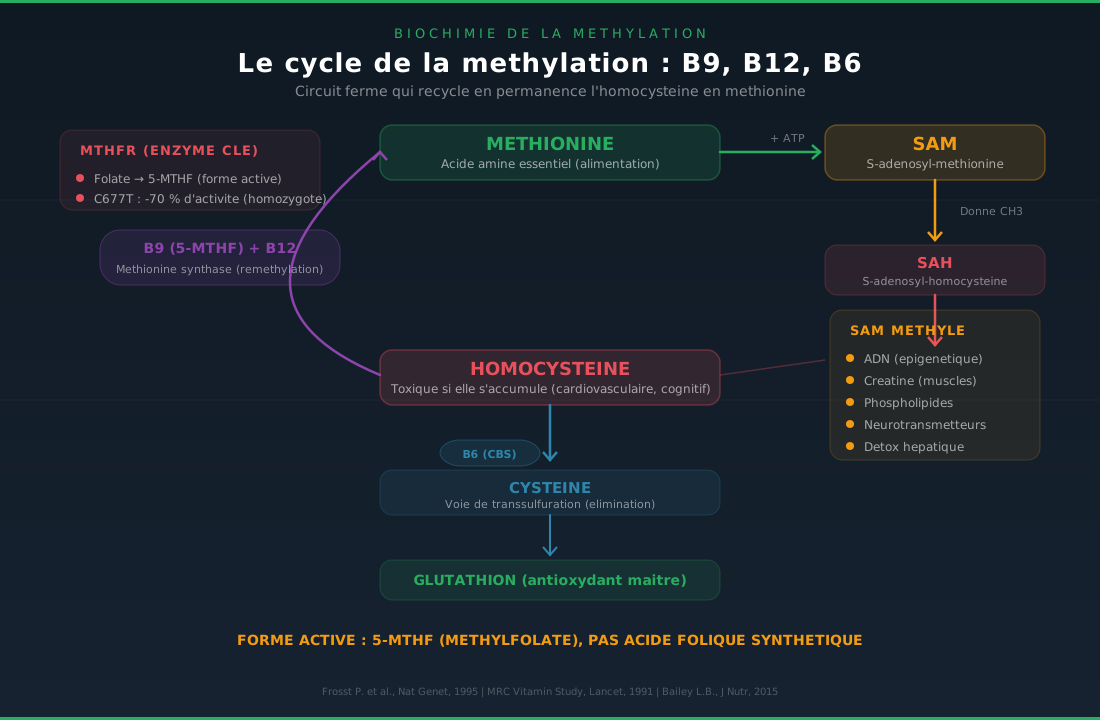
Folates are the nerve center of methylation, this fundamental biochemical network that regulates gene expression, DNA synthesis, neurotransmitter production, and homocysteine metabolism. If you retain only one thing from this article, retain this: not everyone can use folic acid in the same way, and this genetic difference can have major health consequences.
Causes of folate deficiency
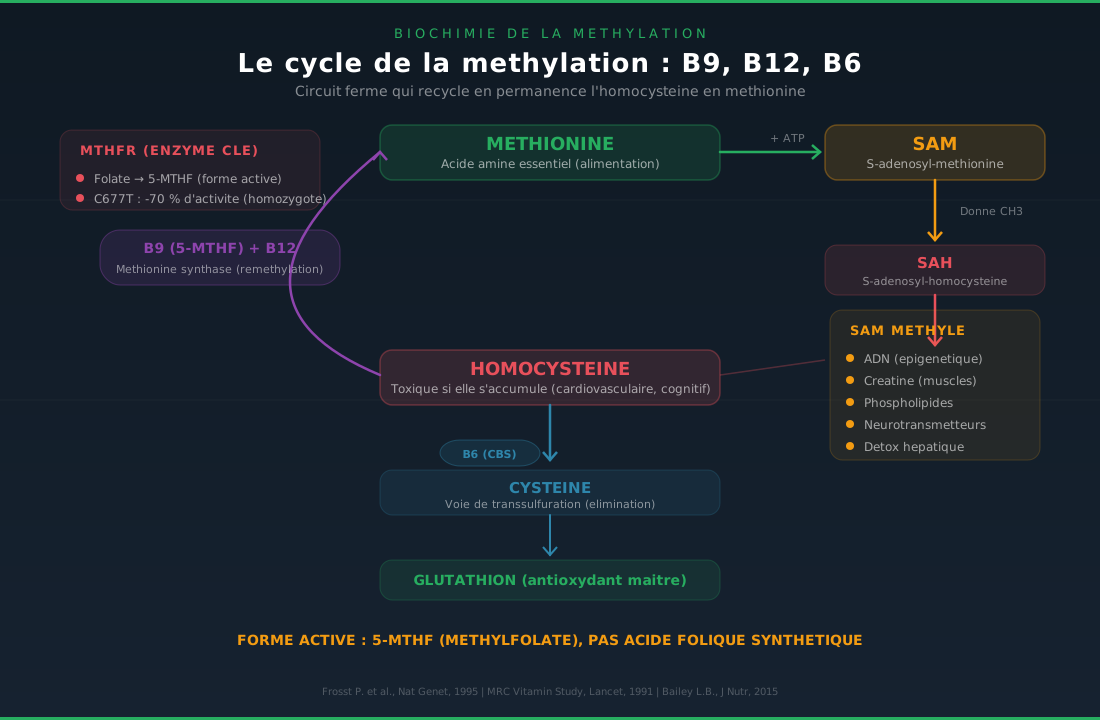
Folate deficiency is the most common vitamin deficiency in the world. In France, despite the absence of a food fortification program (unlike the United States and Canada which have enriched flours with folic acid since 1998), studies show that twenty to thirty percent of women of childbearing age have insufficient intake.
Poor diet lacking leafy green vegetables is the primary cause. The word “folate” comes from the Latin folium, meaning “leaf”. Spinach, mâche, broccoli, asparagus, green beans, and lettuce are the main sources. A diet poor in fresh leafy greens is a diet poor in folates. And cooking destroys fifty to eighty percent of folates, which are both heat-sensitive and water-soluble.
Antifolate medications are a major iatrogenic cause. Methotrexate (rheumatoid arthritis, psoriasis, cancers), trimethoprim (antibiotic), sulfasalazine (inflammatory bowel diseases), anticonvulsants (phenytoin, carbamazepine, valproate), and oral contraceptives all reduce folate levels through various mechanisms.
Alcohol is a powerful antagonist: it reduces intestinal absorption of folates, blocks their hepatic metabolism, and increases their renal excretion. Celiac disease and inflammatory bowel diseases reduce absorption. Smoking increases folate needs for xenobiotic detoxification.
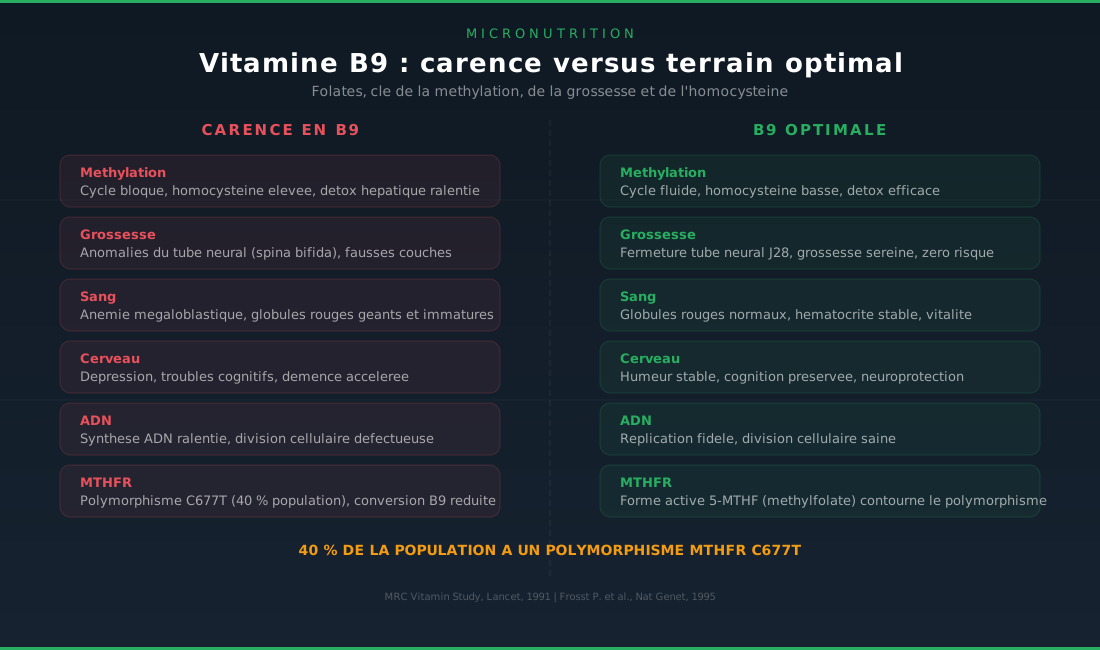
The MTHFR C677T polymorphism does not create an intake deficiency but a functional deficiency: dietary folates are not efficiently converted into their active form (5-MTHF), and accumulate in an unusable form. Forty percent of the European population carries at least one T allele, and ten to fifteen percent are homozygous TT.
Symptoms of deficiency
Folates are essential for DNA synthesis (production of purine and pyrimidine bases) and methylation (remethylation of homocysteine to methionine, SAMe production). Tissues with rapid turnover are affected first.
Megaloblastic anemia (macrocytic) is the classic hematologic sign: red blood cells are too large because DNA synthesis is slowed and cells do not divide properly. Mean corpuscular volume (MCV) exceeds 100 fL. Fatigue, pallor, and shortness of breath are the consequences.
Neural tube abnormalities (spina bifida, anencephaly) are the most serious consequence of folate deficiency during the first weeks of pregnancy. The risk is multiplied by two to eight in case of deficiency. In France, the prevalence of neural tube abnormalities has not decreased in thirty years, contrary to countries that established mandatory fortification.
Neuropsychiatric disorders include depression (folate deficiency reduces serotonin, dopamine, and noradrenaline synthesis via SAMe), cognitive disorders, irritability, and in the long term an increased risk of dementia. The hyperhomocysteinemia resulting from folate deficiency is an independent cardiovascular and neurological risk factor.
Obstetric complications go beyond neural tube defects: pre-eclampsia, placental abruption, intrauterine growth restriction, recurrent miscarriage. Elevated homocysteine damages the placental vascular endothelium and impairs uterine vascularization.
Micronutrients essential to folates
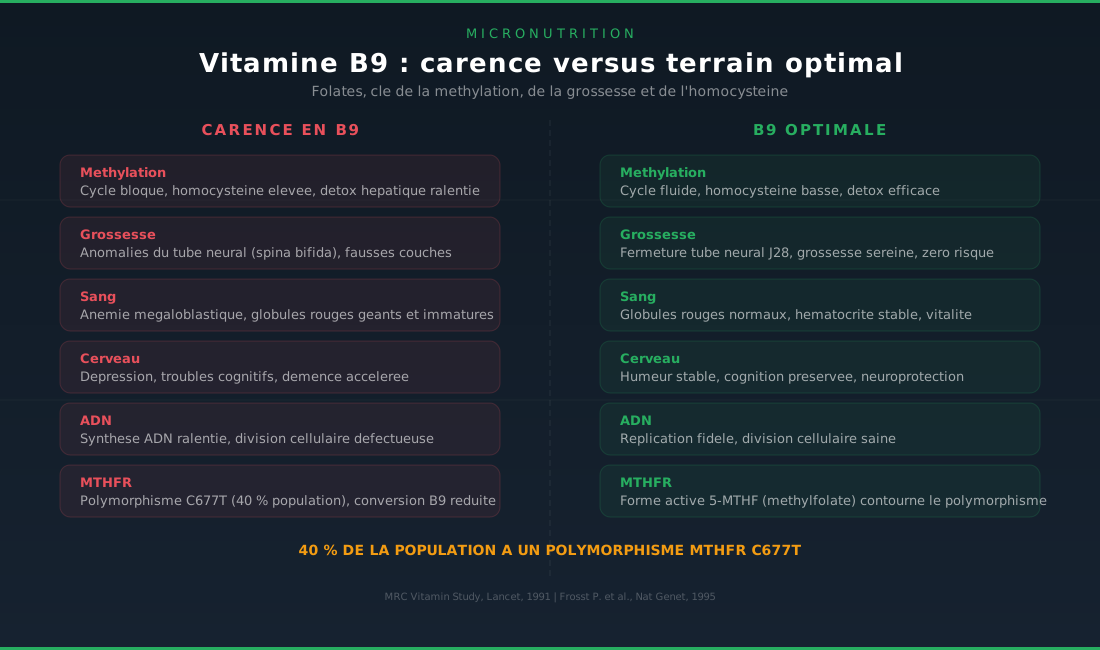
Vitamin B12 is the inseparable partner of folates in the methylation cycle. Without B12, methylfolate (5-MTHF) cannot donate its methyl group to homocysteine to transform it into methionine. This is the “methylfolate trap”: without B12, folates accumulate as 5-MTHF and cannot be recycled. This is why folate supplementation without B12 can mask a B12 deficiency by correcting anemia without correcting neurological damage.
Vitamin B2 is the FAD cofactor of MTHFR. In carriers of the MTHFR C677T polymorphism, B2 supplementation improves the residual activity of the mutated enzyme. B6 is a cofactor in the transsulfuration pathway that converts homocysteine to cysteine (alternative pathway when remethylation is saturated).
Zinc is a cofactor for methionine synthase and betaine-homocysteine methyltransferase, two enzymes in the methylation cycle.
Food sources
Poultry liver is the richest source with 580 micrograms per 100 grams. Raw spinach provides 194 micrograms per 100 grams (but only 130 after cooking). Asparagus contains 150 micrograms per 100 grams. Cooked lentils provide 180 micrograms per 100 grams. Chickpeas supply 170 micrograms per 100 grams. Brewer’s yeast contains 2500 micrograms per 100 grams. Broccoli provides 108 micrograms per 100 grams. Avocado contains 81 micrograms per 100 grams. Beets provide 110 micrograms per 100 grams. Walnuts contain 77 micrograms per 100 grams.
Recommended intakes are 300 micrograms of dietary folate equivalents (DFE) per day for adults, and 400 to 800 micrograms for pregnant women or those preparing for pregnancy. MTHFR TT homozygotes need higher doses in methylfolate form.
Folate antagonists
Methotrexate is the classic antifolate. Alcohol, tobacco, oral contraceptives, anticonvulsants, and trimethoprim are the most frequent antagonists in clinical practice.
UV light destroys circulating folates in the blood: fair-skinned populations exposed to the sun have increased needs. This is one of the evolutionary hypotheses explaining why populations at high latitudes developed fair skin (better vitamin D synthesis but less folate protection against UV).
Excess green tea contains catechins that inhibit dihydrofolate reductase, the folate conversion enzyme. High-dose aspirin reduces serum folate levels.
Forgotten causes of deficiency
The MTHFR polymorphism is THE overlooked cause par excellence. Forty percent of the population carries this variation, and the majority is unaware of it. A simple salivary or blood genetic test allows for its detection. In homozygous TT individuals with elevated homocysteine, switching from folic acid to methylfolate can be transformative.
Chronic kidney insufficiency increases folate elimination. Autoimmune diseases (celiac, Crohn’s) reduce absorption. Oxidative stress consumes folates for DNA repair. And aging reduces absorption and increases needs to maintain efficient methylation.
Recurrent miscarriages are an underrecognized consequence of folate deficiency and hyperhomocysteinemia. In any woman who has had two or more miscarriages, homocysteine testing and MTHFR testing should be systematic.
Dietary supplements
Folic acid (pteroglutamic acid) is the synthetic form, the cheapest and most prescribed. Its major drawback is that it requires enzymatic conversion (DHFR then MTHFR) to become active, and this conversion is limited in forty percent of the population.
Methylfolate (5-MTHF, in the form of Quatrefolic or Metafolin) is the active form, directly usable, which circumvents the MTHFR polymorphism. This is the form recommended by Curtay, Mouton, and nutritherapy practitioners. The preconceptional dose is 400 to 800 micrograms per day. The therapeutic dose for hyperhomocysteinemia is 1 to 5 milligrams per day, always combined with B12 and B6.
Folinic acid (5-formyl-THF, leucovorin) is the form used as “rescue” after methotrexate. It does not require MTHFR to be active.
Laura replaced her folic acid with 1 milligram of methylfolate (Quatrefolic), combined with 1000 micrograms of methylcobalamin (active B12), 25 milligrams of P5P (active B6), and 25 milligrams of riboflavin-5’-phosphate (active B2). Within two months, her homocysteine dropped from 18 to 7 micromoles per liter. She became pregnant four months later and carried her pregnancy to term without complications. The key, this time, fit in the lock.
To assess your folate status, take the B9 deficiency questionnaire on my site.
To go further
- Periconception assessment: the tests your doctor forgets
- Epigenetics and nutrition: what you eat reprograms your genes
- Vitamin B12 (cobalamin): methylation, neurology and pernicious anemia
- Acetylcholine: the forgotten neurotransmitter of your memory
Sources
- Wilcken, Bridget, et al. “Geographical and ethnic variation of the 677C>T allele of 5,10 methylenetetrahydrofolate reductase (MTHFR).” Journal of Medical Genetics 40.8 (2003): 619-625.
- Czeizel, Andrew E., and Istvan Dudas. “Prevention of the first occurrence of neural-tube defects by periconceptional vitamin supplementation.” New England Journal of Medicine 327.26 (1992): 1832-1835.
- Curtay, Jean-Paul. Nutrithérapie: bases scientifiques et pratique médicale. Testez Éditions, 2016.
- Mouton, Georges. Écologie digestive. Marco Pietteur, 2004.
- Hertoghe, Thierry. Atlas de médecine hormonale et nutritionnelle. Luxembourg: International Medical Books, 2006.
If you want personalized support, you can book an appointment for a consultation. For supplementation, Sunday Natural (code FRANCOIS10). Find all my partnerships.



Laisser un commentaire
Sois le premier à commenter cet article.