Basedow and Pregnancy: Conception, TRAb, and Prenatal Monitoring
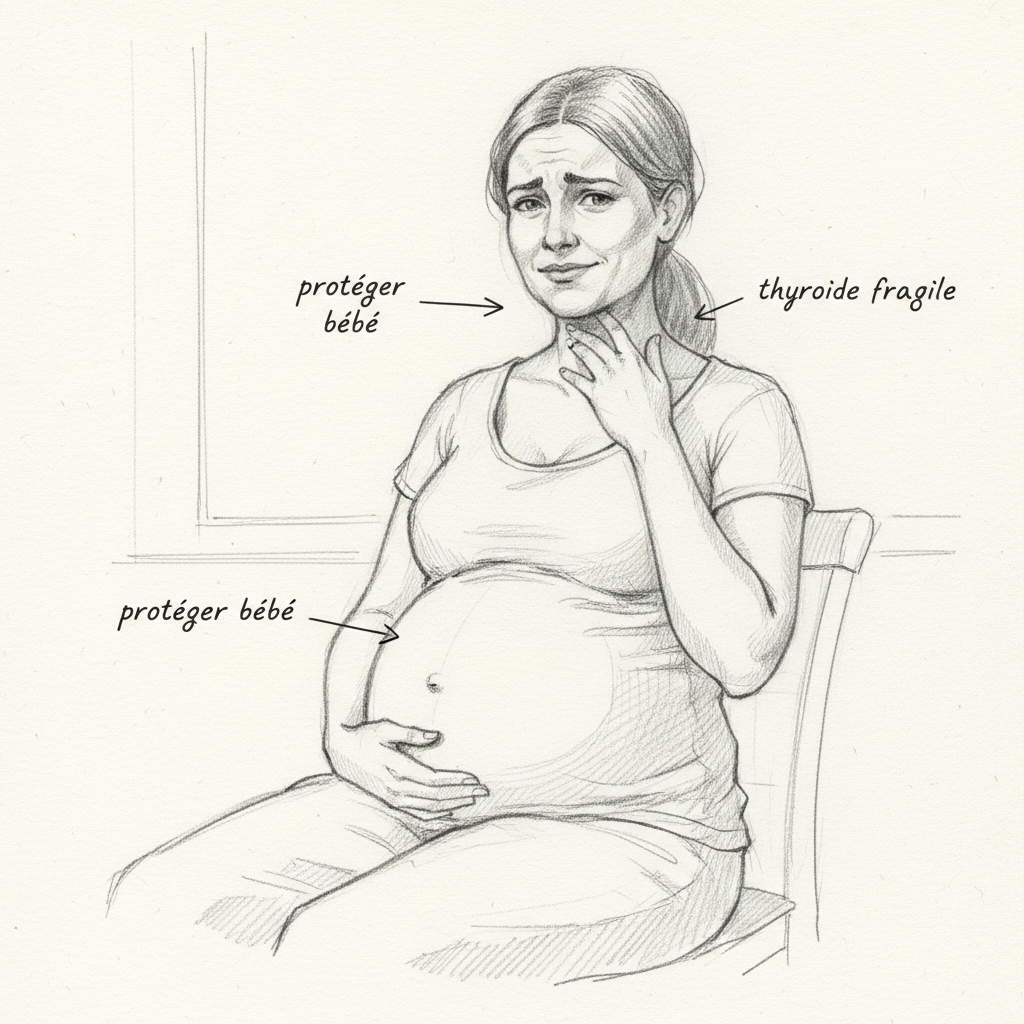
Claire is thirty-one years old. She sits across from me, red-eyed, a negative pregnancy test placed on the table between us. It’s not the first one. It’s the fifth in eight months. She was diagnosed with Graves’ disease at twenty-six, treated with Neomercazole for eighteen months, in remission for two years. Her endocrinologist told her she could try to conceive. Her TSH is normal, her T3 and T4 are within range. But no one has recently measured her TRAb levels. No one told her that past hyperthyroidism could have disrupted her ovarian reserve. And no one explained how to prepare her body for pregnancy when she has a thyroid autoimmune terrain.
The subject is delicate because it touches on what is most intimate: the desire for a child. And in this area, women with Graves’ disease often find themselves alone between an endocrinologist managing the thyroid and a gynecologist managing fertility, with no one linking the two. If you’ve read my article on Graves’ disease, you know that this disease strikes predominantly young women between twenty and forty years old, that is, during their peak fertility period. The question of pregnancy is not marginal, it is central.
Why hyperthyroidism complicates conception
Active hyperthyroidism disrupts female fertility through several interlocking mechanisms that most doctors don’t detail. The first is disruption of the hypothalamic-pituitary-gonadal axis. Excess T3 and T4 alters the pulsatility of hypothalamic GnRH, which disorganizes the peaks of LH and FSH that orchestrate ovulation. Result: irregular cycles, chaotic or absent ovulations, an unpredictable fertility window.
The second mechanism is increased SHBG, the binding protein for sex hormones. Excess thyroid hormones stimulate hepatic synthesis of SHBG, which binds circulating estradiol and testosterone. Bound sex hormones are no longer bioavailable: estradiol can no longer properly stimulate endometrial proliferation, and free testosterone drops, which can affect libido and ovarian energy.
The third mechanism is luteal insufficiency. The luteal phase, this second part of the cycle after ovulation, is often shortened in hyperthyroid women. Progesterone, produced by the corpus luteum after ovulation, is insufficient to maintain a receptive endometrium. The embryo, even if conceived, cannot implant properly. This is one of the most underdiagnosed causes of early miscarriage in the thyroid context.
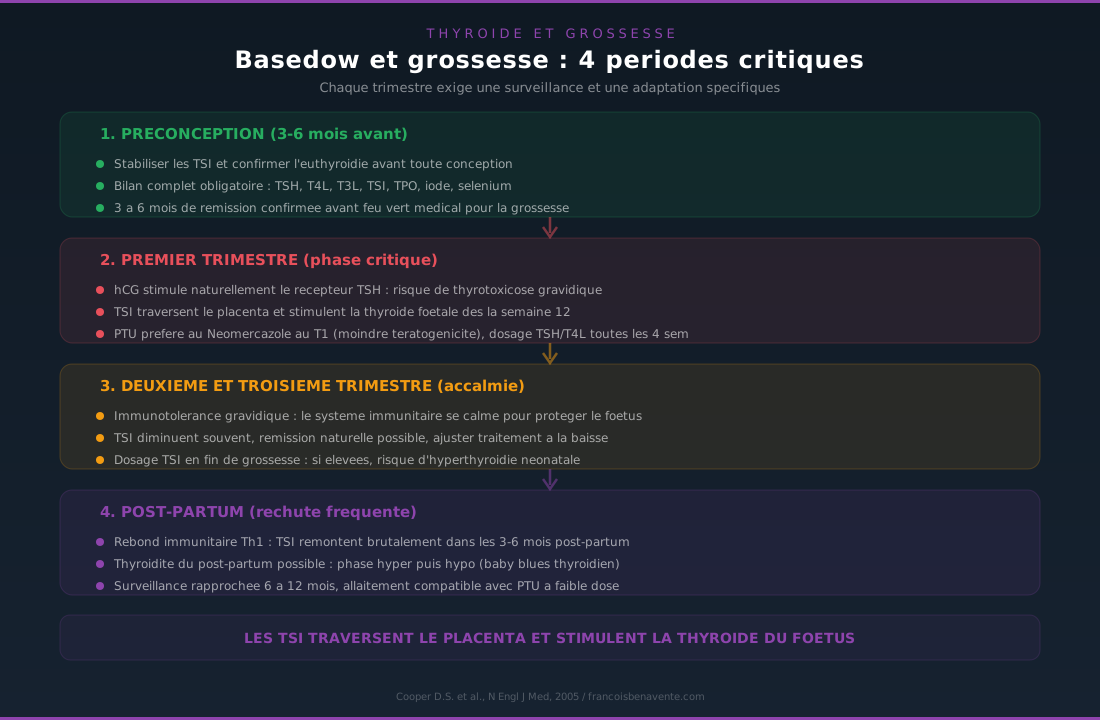
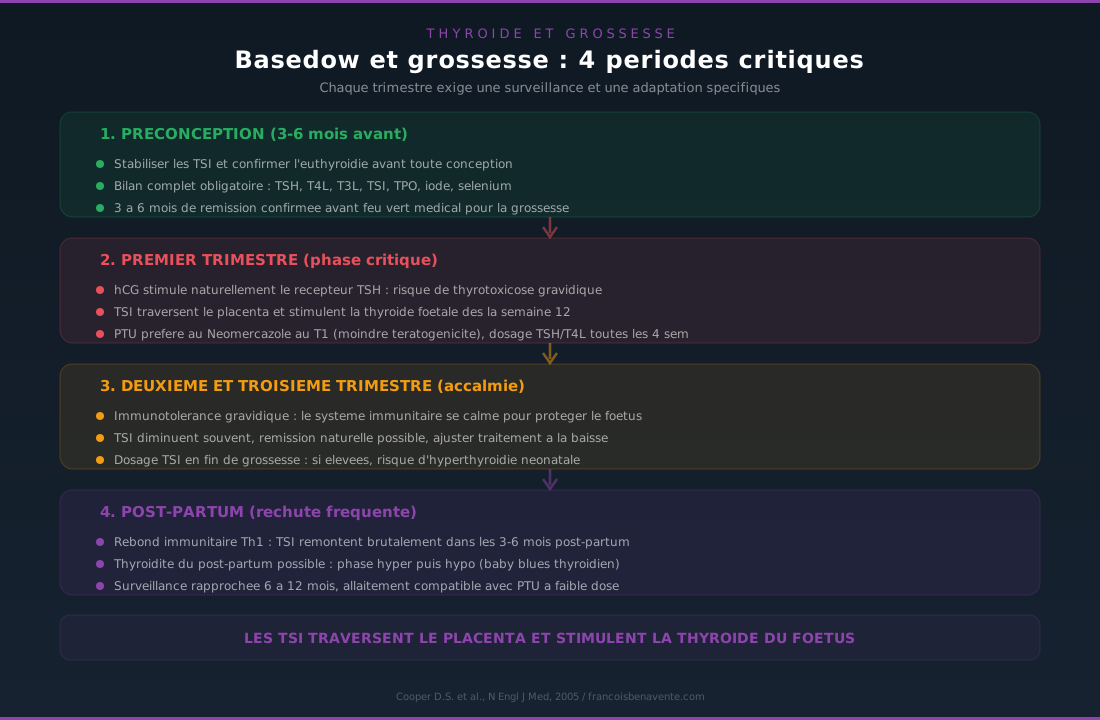
This is why I always tell my Graves’ disease patients who want to conceive: first remission, then pregnancy. And remission is not simply a normal TSH under treatment. It is the absence of TRAb, ideally for at least six months, with a thyroid functioning on its own without antithyroid drugs. It is the signal that the immune system has released its grip, at least temporarily.
Preparing the terrain before conception
Preconception preparation is a concept that conventional medicine neglects but that naturopathy places at the heart of care. As I explain in my article on pregnancy and micronutrition, the three to six months preceding conception are a golden window to optimize maternal terrain.
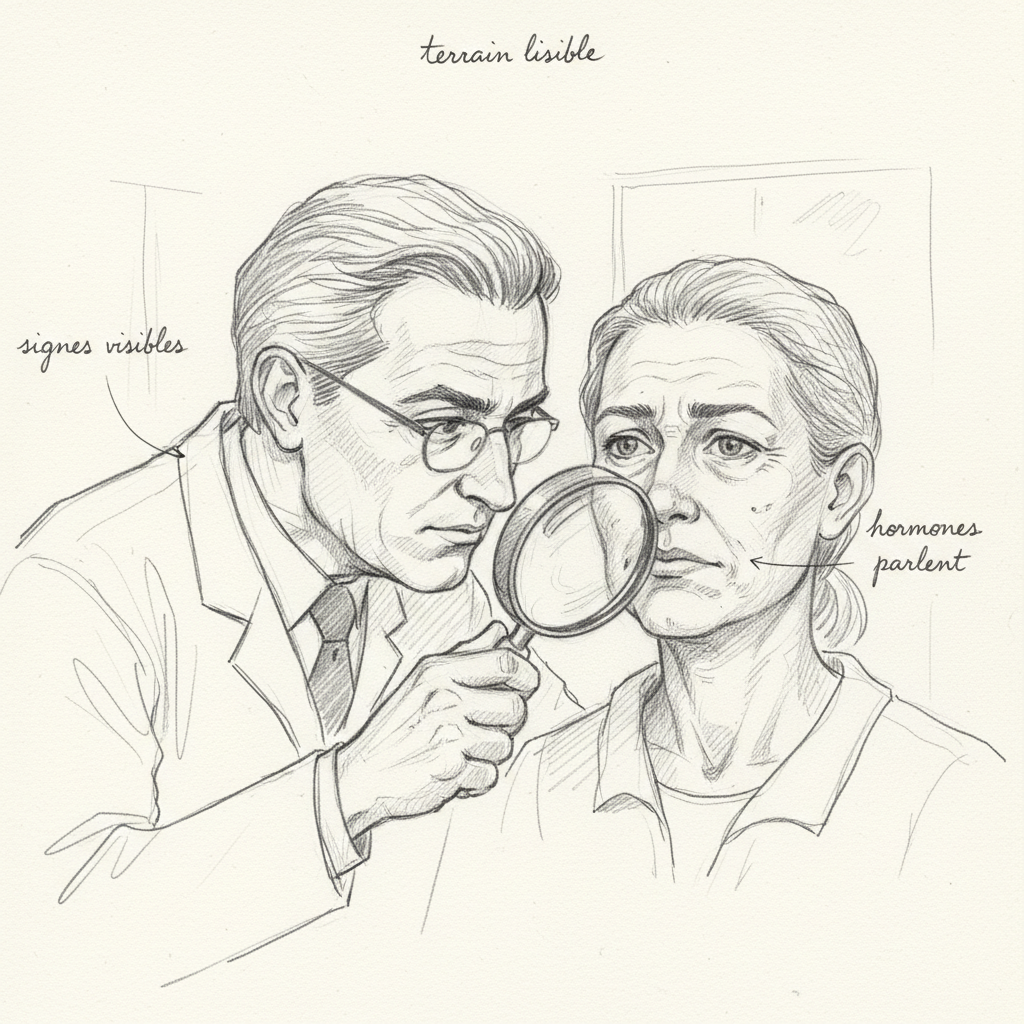
For a woman with a history of Graves’ disease, this preparation has an additional dimension: not only must we ensure that the thyroid is stable, but also that the autoimmune terrain is calm, the intestine is repaired, micronutrient reserves are restored after months or years of catabolic hyperthyroidism.
The preconception workup I recommend in consultation includes complete thyroid measurements (TSH, free T3, free T4, TRAb, anti-TPO, anti-thyroglobulin), vitamin D which should be above 40 ng/mL for optimal immunomodulation, serum selenium, serum zinc which should be above 80 micrograms per deciliter, ferritin which should be above 50 micrograms per liter to support pregnancy needs, active B12, erythrocyte folates (not serum folates, which are less reliable), erythrocyte magnesium, homocysteine which should be below 8 micromoles per liter, and a four-point salivary cortisol measurement to assess adrenal status. Because exhausted adrenals won’t support the physiological stress of pregnancy.
The hypotoxic diet of Seignalet, which the patient should have followed since her Graves’ diagnosis, is maintained during preparation and pregnancy. Gluten and bovine dairy products remain excluded, cooking remains gentle. The goal is not to deprive oneself, but to maintain intestinal impermeability to peptides that could reactivate TRAb production. Gentle cooking is all the more important during pregnancy because Maillard products (formed by high-temperature cooking) are additional antigens that the immune system must process.
The dilemma of antithyroid drugs during pregnancy
It’s a subject your endocrinologist knows about but doesn’t always explain clearly. Neomercazole (methimazole) and carbimazole are teratogenic in the first trimester of pregnancy. This means they can cause fetal malformations. Congenital aplasia cutis, an absence of scalp skin in the newborn, is the best-known malformation. But methimazole embryopathy syndrome can also include choanal atresia (nasal closure), omphalocele (umbilical hernia), and other anomalies.
This is why the American Thyroid Association recommendations are clear: if a woman with Graves’ disease needs antithyroid drugs during the first trimester, it should be propylthiouracil (PTU). PTU crosses the placenta less easily and is not associated with the same malformations as methimazole in the first trimester. But PTU has its own problem: a risk of maternal hepatotoxicity (fulminant liver failure), rare but potentially fatal.
The recommended strategy is therefore a switch to PTU in the first trimester, then return to Neomercazole from the second trimester onward (when organogenesis is complete and the risk of malformations has passed). This therapeutic choreography requires close endocrinological monitoring with TSH and free T4 measurements every two to four weeks during the first trimester.
The good news is that pregnancy itself is immunosuppressive. The maternal body physiologically reduces its immune response to tolerate the fetus, which is a half-stranger from an immunological perspective. This natural immunosuppression often leads to spontaneous improvement of Graves’ disease during pregnancy, with a decrease in TRAb and sometimes the possibility of stopping antithyroid drugs in the third trimester. It’s one of the rare times when Graves’ disease takes a break.
TRAb and the baby: the risk of neonatal Graves’ disease
It’s a subject that many expectant mothers are unaware of and that I always take time to explain in consultation. TRAb antibodies, like all IgG-type immunoglobulins, cross the placenta. This crossing is maximal in the third trimester, when maternal antibody transfer is most active to protect the newborn against infections.
The problem is that TRAb don’t distinguish between a maternal thyrocyte and a fetal thyrocyte. If present in significant quantities, they will stimulate the fetus’s thyroid exactly as they stimulate (or stimulated) the mother’s. The fetus then develops hyperthyroidism in utero manifested by fetal tachycardia (heart rate above 160 beats per minute), intrauterine growth restriction, excessive agitation, and sometimes fetal goiter visible on ultrasound.
At birth, the baby may present with neonatal Graves’ disease: tachycardia, irritability, nervousness, weight loss, diarrhea, exophthalmos. This situation is transient, lasting as long as maternal antibodies are eliminated from the newborn’s blood, generally two to four weeks. But during this period, the baby may need treatment with antithyroid drugs and beta-blockers in neonatology.
This is why TRAb measurement in the third trimester is absolutely essential. American recommendations set the alert threshold at three times the upper limit of normal. Above this threshold, the neonatologist must be informed and the newborn monitored from birth. This measurement is often overlooked by endocrinologists who consider that “everything is fine” because the mother is euthyroid on treatment. Being euthyroid doesn’t mean TRAb has disappeared.
A subtle point: a woman who had Graves’ disease in the past, even if in remission for years, even if she had thyroidectomy or radioactive iodine treatment, may still have circulating TRAb. And these TRAb can affect the fetus. This is why TRAb measurement is recommended in any pregnant woman with a history of Graves’ disease, regardless of her current thyroid status.
Thyroid monitoring trimester by trimester
Thyroid function monitoring during pregnancy in a woman with Graves’ disease is closer than in a typical pregnancy. Reference standards change with pregnancy: TSH physiologically drops in the first trimester due to the thyroid-stimulating effect of hCG, and reference values are specific to each trimester.
In the first trimester, TSH should be measured every two to four weeks, with free T4. The goal is to maintain strict euthyroidism: TSH between 0.1 and 2.5 mU/L according to current recommendations. Uncontrolled hyperthyroidism in the first trimester increases the risk of miscarriage, preeclampsia, and growth restriction. But iatrogenic hypothyroidism from antithyroid overdose is equally dangerous: it impairs fetal neurological development which depends on maternal thyroid hormones before the baby’s own thyroid becomes functional (around the twelfth week).
In the second trimester, physiological immune improvement often allows reduction of antithyroid doses. TSH and free T4 measurement every four weeks guides adjustment. This is also the time to measure TRAb if not already done.
In the third trimester, TRAb is measured between the twenty-fourth and twenty-eighth week. This measurement is critical as it predicts the risk of neonatal Graves’ disease. If TRAb is positive, close fetal ultrasound monitoring is implemented to detect potential goiter or fetal tachycardia. And the neonatologist is alerted for postnatal monitoring.
The postpartum period: immune rebound
Pregnancy was an immune truce. Delivery lifts that truce. Abruptly. The maternal immune system, restrained for nine months to tolerate the fetus, reactivates with sometimes excessive vigor. This is what immunologists call postpartum immune rebound, and it’s why so many autoimmune diseases begin or relapse after delivery.
Postpartum thyroiditis affects approximately five percent of women in the general population, but this prevalence is much higher in women with preexisting thyroid antibodies. In a woman with a history of Graves’ disease, the risk of relapse within six to twelve months after delivery is significantly increased. The relapse can manifest as a return of hyperthyroidism (reactivation of TRAb), but also as a shift to hypothyroidism (development of Hashimoto’s) or a mixed phase with alternating hyper/hypo.
This is why I recommend close thyroid monitoring during the first year postpartum: TSH, free T4, and TRAb measurement at six weeks, three months, six months, and twelve months after delivery. This monitoring is often neglected because medical attention focuses on the baby, and the mother is assumed to be “doing well.” However, postpartum fatigue, irritability, sleep disturbances, and weight loss are easily attributed to baby blues when they may mask a Graves’ disease relapse.
Breastfeeding on antithyroid drugs
The question comes up repeatedly in consultation: “Can I breastfeed if I’m taking Neomercazole?” The answer is yes, and this reassuring information is not always conveyed to mothers. The American Thyroid Association and the European Thyroid Association confirm that breastfeeding is compatible with PTU and Neomercazole at moderate doses.
PTU passes little into breast milk due to its strong plasma protein binding and pKa that doesn’t favor transfer into a slightly acidic medium like milk. Neomercazole passes more, but studies show that thyroid function in breastfed infants remains normal at maternal doses below twenty milligrams per day of Neomercazole or three hundred milligrams per day of PTU.
The precaution remains to measure the infant’s TSH at one and three months of breastfeeding to verify that thyroid function is normal. And to take the medication immediately after nursing, so that the concentration in milk is lowest at the time of the next feeding.
Adapted preconception and gestational micronutrition
Micronutritional supplementation for a woman with Graves’ disease who is pregnant or preparing for pregnancy must be carefully adapted. Some nutrients usually recommended in the Graves’ disease protocol must be adjusted.
Iodine is the most delicate point. In my article on Graves’ disease, I explain that iodine is contraindicated in active hyperthyroidism because it fuels hormone overproduction. But during pregnancy, iodine needs increase by fifty percent to support the fetal thyroid which begins functioning around the twelfth week. In a woman with Graves’ disease in remission and euthyroid, a moderate iodine intake of 150 to 200 micrograms per day is generally tolerated and necessary. If the woman is still on antithyroid drugs, iodine intake should be discussed with the endocrinologist as it can modify treatment efficacy.
Selenium at 100 micrograms per day remains indicated. It protects the thyroid from oxidative stress, supports placental selenoprotein function, and modulates autoimmunity. The EUGOGO study demonstrated its safety at 200 micrograms, and 100 micrograms during pregnancy is a conservative and safe dose.
Zinc bisglycinate at 15 milligrams per day supports immunity, fetal growth, and prevention of complications (preeclampsia, premature rupture of membranes). Magnesium bisglycinate at 300 milligrams per day is essential for cramp prevention, sleep, and stress management. Vitamin D at 4000 IU per day is recommended by Holick and Curtay to maintain levels above 40 ng/mL, immunomodulatory and protective of maternal bones that the fetus actively depletes.
Folates in the form of methylfolate (5-MTHF) rather than synthetic folic acid are preferable, especially if the patient carries the MTHFR C677T polymorphism which reduces by thirty to seventy percent the capacity to convert folic acid into active form. A dose of 400 to 800 micrograms of methylfolate is recommended from preconception preparation and throughout the first trimester.
The stress of the conception journey
I want to end on a point that medical textbooks never address. The stress of the conception journey in a woman with Graves’ disease is a self-aggravating factor. The stress of not getting pregnant, the stress of disease, the fear of relapse, the anxiety of transmitting disease to the baby, guilt about “not being able to give a child.” This chronic stress activates the hypothalamic-pituitary-adrenal axis, increases cortisol, shifts the Th1/Th2 balance, reactivates autoimmunity, and reduces fertility. It’s a vicious cycle.
Breaking this cycle requires comprehensive management that goes far beyond prescribing folates and selenium. Cardiac coherence three times a day, prenatal yoga (or gentle yoga in preparation), daily outdoor walking, contact with nature, and sometimes psychological or sophrology support are therapeutic tools in their own right. Du Chazaud reminded us that “the thyroid is the gland of emotion.” When the dominant emotion is fear and frustration, the thyroid cannot find its balance.
Claire came back to see me after four months of preconception preparation. Her workup showed undetectable TRAb, vitamin D at 48 ng/mL, zinc at 95 micrograms per deciliter, ferritin at 62. She had integrated cardiac coherence into her routine, returned to yoga, and most importantly, she had let go of the conception timeline. She got pregnant the following month. Her pregnancy proceeded without relapse, with rigorous thyroid monitoring and a baby in perfect health.
Want to assess your status? Take the free vitamin B9 deficiency questionnaire in 2 minutes.
If you want personalized support, you can schedule a consultation.
To go further
- Breastfeeding: maternal depletion that no one compensates for
- Graves’ disease and the heart: calming the cardiac storm
- Graves’ disease and stress: the thyroid of emotion
- Pregnancy: the micronutrition no one prescribes for you
Want to assess your status? Take the free Claeys thyroid questionnaire in 2 minutes.
Sources
- Alexander, Erik K., et al. “2017 Guidelines of the American Thyroid Association for the Diagnosis and Management of Thyroid Disease During Pregnancy and the Postpartum.” Thyroid 27.3 (2017): 315-389.
- Seignalet, Jean. L’Alimentation ou la Troisième Médecine. 5th ed. Paris: François-Xavier de Guibert, 2004.
- Hertoghe, Thierry. Atlas de médecine hormonale et nutritionnelle. Luxembourg: International Medical Books, 2006.
- Kousmine, Catherine. Soyez bien dans votre assiette jusqu’à 80 ans et plus. Paris: Tchou, 1980.
If you want personalized support for your pregnancy with a Graves’ disease history, you can schedule a consultation. I consult in-office in Paris and via video throughout France. You can also contact me with any questions.
To go further, my complete thyroid training covers everything I’ve written in my thyroid articles with clinical cases, annotated workups, and detailed protocols. And if you’re looking for the basics of naturopathy to understand the concept of terrain and drainage, it’s the best starting point.
For thyroid supplementation, Sunday Natural offers selenium, zinc, and vitamin D of pharmaceutical quality (ten percent off with code FRANCOIS10). The Inalterra grounding mat reduces nocturnal autoimmune inflammation (ten percent off with code FRANCOISB). Find all my partnerships with exclusive promo codes.
Graves’ disease and pregnancy are not incompatible. But it requires preparation, patience, and rigorous monitoring. Your body knows how to carry life. It just needs the right conditions.


Laisser un commentaire
Sois le premier à commenter cet article.