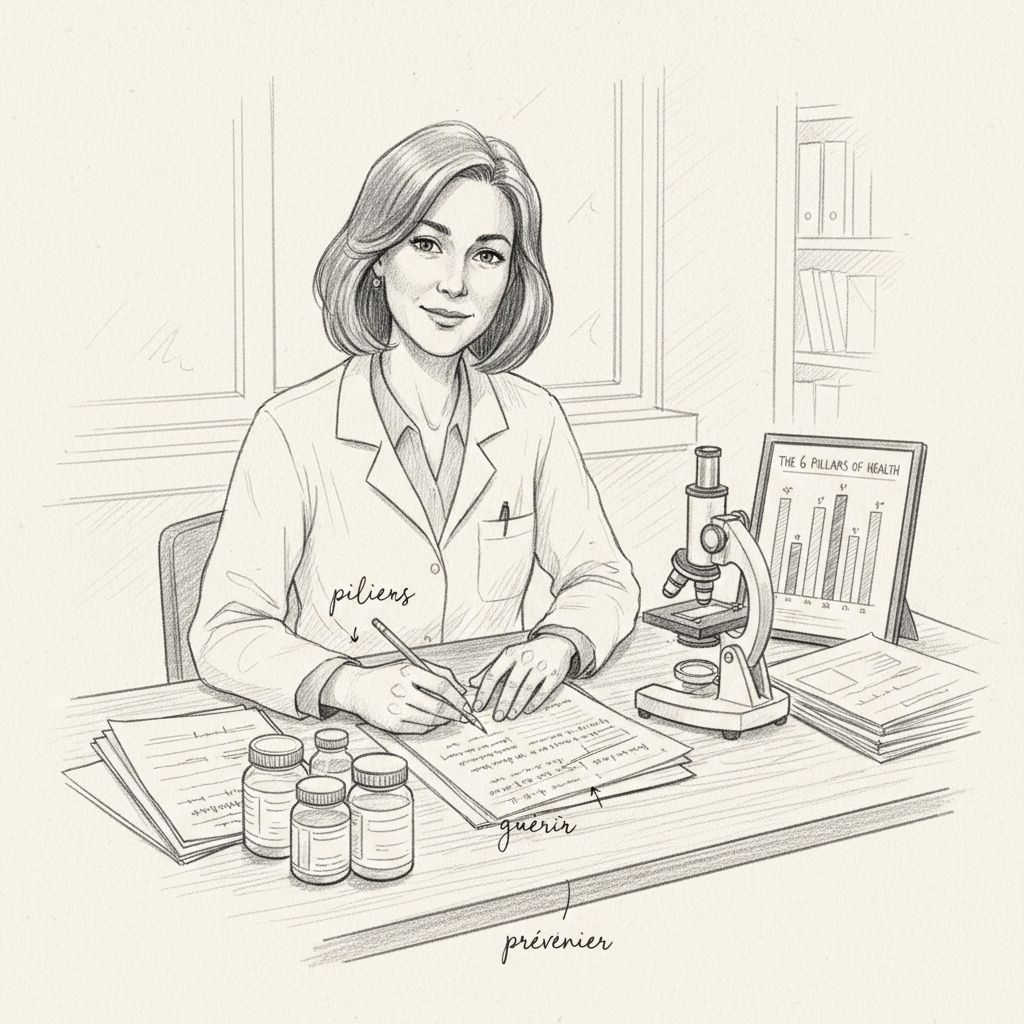
In 1949, in her small laboratory in Lausanne, Dr Catherine Kousmine fed two groups of mice with different diets. The first group received natural, complete, unprocessed food. The second group received the standard diet of a Swiss housewife of that era: white flour, refined sugar, cooked fats, canned goods. After a few months, the results were unequivocal. The mice in the first group were lively, fertile, resistant to infections. The mice in the second group developed tumors. Kousmine repeated the experiment. The results confirmed themselves, relentlessly. She had put her finger on something immense: modern food, progressively degraded since the industrial revolution, is the primary cause of the explosion of chronic diseases. This intuition, born in a laboratory with mice, would structure fifty years of clinical research and give rise to one of the most comprehensive methods in natural medicine.
“Disease is not an accident. It is the logical consequence of unsuitable nutrition sustained over years.” Dr Catherine Kousmine
A physician in breach with the Medical Establishment
Catherine Kousmine was born in 1904 in Russia, into a cultured family. After the Bolshevik revolution, her family fled to Switzerland, where she studied medicine. She obtained her degree and began to practice. Very quickly, a observation struck her: the number of cancers was increasing spectacularly. In the 1940s, she observed around her an increasing number of degenerative diseases that her professors could only explain through genetic fatality or cellular aging. This explanation did not satisfy her. If cancer were purely genetic, why was its frequency increasing from one generation to the next? Something had changed in the environment, and that something was food.
Kousmine then made a radical choice that put her at odds with the medical community. She decided to systematically test all foods, one by one, on laboratory animals. For years, she observed, took notes, compared. She studied refined oils and virgin oils, white flours and whole grain flours, canned goods and fresh foods, white sugar and honey. Her conclusions were clear and reproducible: refined foods, cooked at high temperatures, altered by industrial processes, caused profound modifications to biological terrain. They acidified the body, disrupted intestinal flora, weakened the immune system, and created conditions for cellular degeneration.
What Carton had intuited through clinical observation and Hippocratic philosophy, Kousmine confirmed through experimentation. What Marchesseau had formulated in his vitality equation by speaking of humoral overloads, Kousmine measured in the laboratory. The convergence is striking. Naturopathy and orthomolecular medicine meet on the same finding: terrain is everything, the microbe is nothing. Nutrition builds or destroys the terrain.
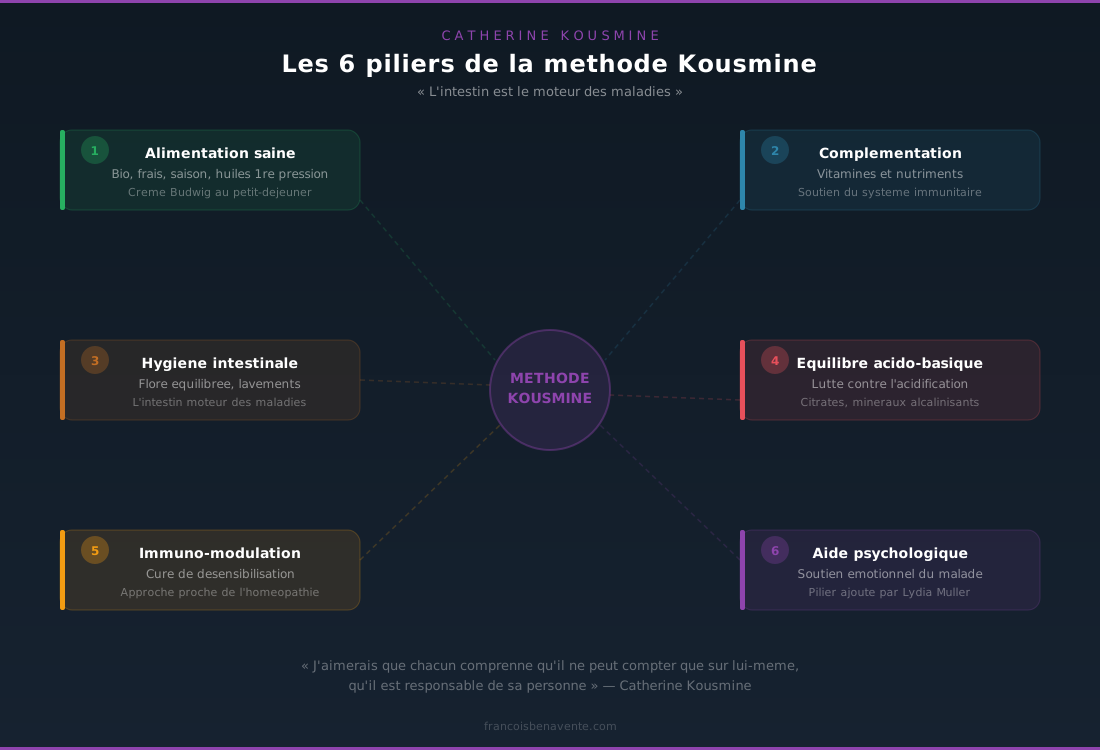
Pillar 1: Healthy Nutrition
The first pillar of the Kousmine method is a radical but pragmatic dietary reform. Kousmine does not advocate a restrictive diet or a passing fad. She proposes a return to the fundamentals of human nutrition, as it existed before the industrialization of the food chain.
The basic principle is simple: eat living, fresh, organic, seasonal foods, prepared at the last moment. Kousmine insists on several specific points that distinguish her from simple dietary advice.
Oils are at the heart of her method. She demands virgin oils, cold-pressed, stored in the refrigerator, and consumed raw. Never cooked. Why this obsession? Because refined, heated, hydrogenated oils have undergone molecular transformations that make them toxic to cell membranes. Trans fatty acids, lipid peroxides, and aldehydes from cooking oils alter membrane fluidity, disrupt cellular exchanges, and promote chronic inflammation. Kousmine recommends two tablespoons of virgin cold-pressed oil daily, ideally a mix of sunflower, flax, and walnut to cover the needs for omega-3 and omega-6 fatty acids in a balanced ratio.
Cereals must be whole and, ideally, freshly ground. Kousmine owned a small grain mill in her kitchen and ground her grain each morning. Why? Because whole grain, once ground, oxidizes quickly. The fats in the germ become rancid within hours. Commercial whole grain flour, even organic, has already lost some of its nutrients and enzymes by the time you buy it. White flour, on the other hand, has lost the germ and bran, meaning it lacks the essentials: B vitamins, zinc, magnesium, iron, and fiber. Only starch remains, an empty calorie.
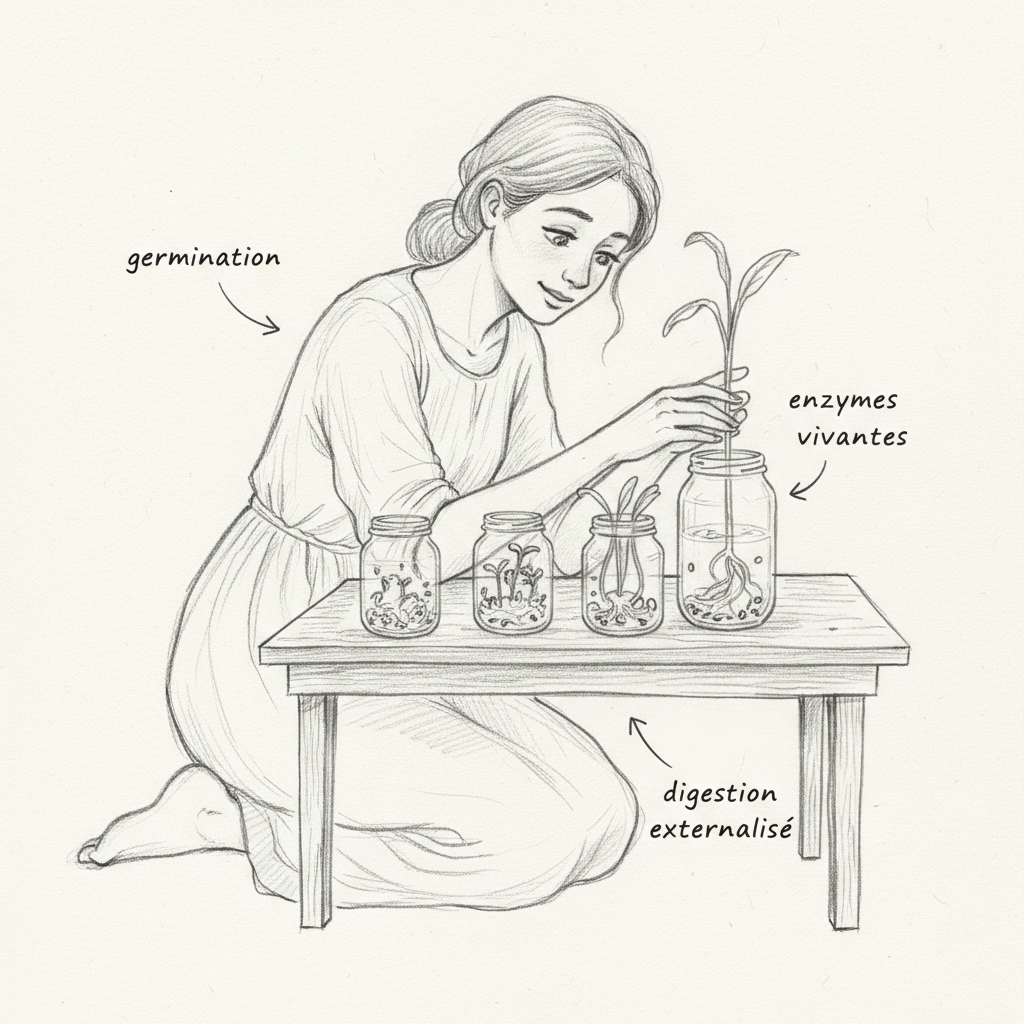
Kousmine advocates at minimum ten percent raw foods at each meal. Not optional. Mandatory. Raw foods provide living enzymes that cooking destroys beyond forty-five degrees. These enzymes facilitate digestion and spare the body’s enzymatic reserves. A meal without any raw food is an incomplete meal, regardless of its nutritional quality otherwise.
Fruits and vegetables must be seasonal and preferably organic. Animal proteins are permitted but moderate: fish two to three times a week, quality meat once or twice, organic eggs. Legumes combined with whole grains provide complete plant proteins through the complementarity of amino acids. Dairy products are tolerated in small amounts, primarily in fermented form (yogurt, lean curd cheese).
The symbol of this healthy nutrition is the Budwig Cream, the emblematic breakfast of the Kousmine method. Its recipe combines lean curd cheese beaten with virgin flax oil (to create an emulsion that makes fat-soluble fatty acids more assimilable), raw whole grain cereals freshly ground, half a pressed lemon, a ripe mashed banana, fresh seasonal fruits, and oleaginous seeds (walnuts, almonds, hazelnuts). This breakfast provides essential fatty acids, high biological value proteins, complex carbohydrates, fiber, vitamins, minerals, and enzymes. It sustains through the morning without a glycemic spike and constitutes in itself a therapeutic meal.
Pillar 2: Supplementation with Vitamins and Nutrients
Kousmine observes that even ideal nutrition is no longer sufficient to meet all needs. Soils are depleted. Modern varieties of fruits and vegetables contain fewer minerals than their ancestors. Chronic stress, pollution, medications increase the need for cofactors. This is why she integrates supplementation as the second pillar.
But attention: supplementation according to Kousmine has nothing to do with modern supplement marketing. She does not prescribe megadoses of isolated vitamins. She seeks to fill specific deficiencies, identified through clinical observation and testing, with quality nutrients, at physiological doses, for defined periods.
Her priorities include vitamin C (which she prescribes in sustained doses to stimulate immunity and fight oxidation), B vitamins (essential for energy metabolism and the nervous system, which directly connects to the question of serotonin and its B6 cofactor), vitamin E (membrane antioxidant), vitamin A (mucous membranes and immunity), vitamin D (bones, immunity, inflammatory modulation), as well as magnesium, zinc, selenium, and iron when testing justifies it.
Kousmine insists on a point that conventional medicine often forgets: nutrients do not function in isolation. They work synergistically. Giving iron without vitamin C is wasteful. Giving vitamin D without magnesium is ineffective. Giving zinc without copper creates an imbalance. This systemic vision of supplementation is a major contribution from Kousmine to clinical practice.
Pillar 3: Intestinal Hygiene
“The intestine is the engine of chronic diseases.” Dr Catherine Kousmine
This third pillar is probably the most revolutionary and controversial of the Kousmine method. Long before science discovered the microbiota and intestinal permeability, Kousmine understood that the intestine is the key organ of systemic health.
Her reasoning is relentless. The intestine is the largest exchange surface in the human body: about three hundred square meters if you unfold all the villi. It is also the largest interface with the outside world: everything you eat, everything you swallow passes through there. If this interface malfunctions, if the mucous membrane becomes porous, if bacterial flora becomes unbalanced, then toxins, poorly digested food fragments, pathogenic bacteria, and their endotoxins cross the intestinal barrier and enter the bloodstream. The liver, the first filter, is overwhelmed. The immune system, seventy percent of which is concentrated around the intestine (Peyer’s patches, GALT), is continuously over-solicited. Low-grade chronic inflammation sets in. And from this inflammation flow all chronic diseases: autoimmunity, allergies, fatigue, joint pain, skin disorders, mood disturbances.
Kousmine recommends two intestinal hygiene practices. The first is intestinal irrigation, which she recommends at the beginning of a cure to quickly unload the colon of stagnant matter, putrid gases, and fermentation residues. She does not propose it as a permanent daily habit, but as a tool for occasional cleansing, comparable to spring cleaning in a cluttered house. Irrigation allows immediate relief of the liver by reducing the toxic load reaching it through the portal vein.
The second practice is the rectal instillation of virgin sunflower oil, a gentler technique intended to nourish and repair the colonic mucosa. The oil, introduced in small quantities, lines the intestinal wall and provides essential fatty acids directly to mucous membrane cells. This technique is particularly indicated in cases of colitis, irritable colon, or mucosa fragile from years of poor nutrition.
Kousmine insists on the regularity of transit. Daily, complete bowel evacuation with normal consistency is a fundamental health indicator. Two days without a bowel movement already marks the beginning of intestinal putrefaction. Toxins are reabsorbed, the liver works under strain, complexion becomes dull, breath becomes charged, fatigue sets in. This vision of the intestine as the engine of disease is today confirmed by thousands of studies on the microbiota, intestinal permeability, the gut-brain axis, and bacterial translocation.
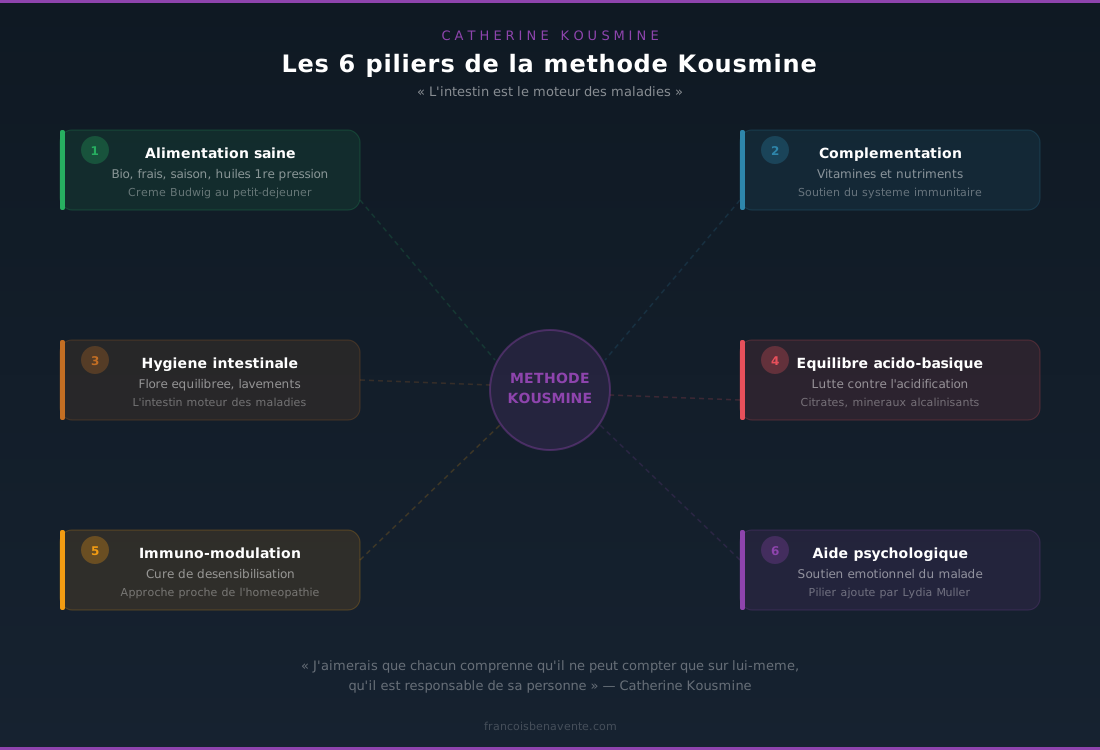
Pillar 4: Acid-Base Balance
The fourth pillar addresses a subject that Marchesseau had extensively discussed from the angle of crystalloid overloads: terrain acidification. Kousmine brings a complementary, more biochemical perspective.
Blood pH must remain within a very narrow range, between 7.38 and 7.42. The body has powerful buffering systems (bicarbonates, phosphates, proteins) to maintain this balance. But these systems have a cost. When nutrition is predominantly acidifying (excess animal proteins, refined sugars, coffee, sodas, white flours), the body draws on its alkaline reserves to neutralize the excess acids. It seeks calcium from bones, magnesium from muscles, potassium from cells. In the short term, blood pH remains stable. In the long term, reserves become depleted and consequences appear: chronic fatigue, joint pain, bone demineralization, muscle cramps, irritability, sleep disorders.
Kousmine recommends measuring urinary pH as an indicator of the organism’s acid load. Chronically low urinary pH below 6.5 indicates acidic terrain. Correction begins first with nutrition: increase vegetables (strongly alkalinizing), ripe fruits (which become alkaline after metabolism), potatoes, almonds, and reduce animal proteins, sugars, refined cereals, coffee, and alcohol.
Stress is an often-neglected acidifying factor. Excess adrenaline and cortisol produce acidic metabolites. A stressed person eating correctly can still have acidic terrain. This is why Kousmine integrates the psychological dimension into her method, which brings us to the sixth pillar.
Pillar 5: Immune Modulation
The fifth pillar concerns immune system modulation. Kousmine worked extensively with patients with autoimmune diseases, particularly multiple sclerosis. She observed that these diseases were not simply “an immune system running wild,” but the consequence of deeply disrupted terrain: leaky intestine, denatured nutrition, toxic overloads, multiple deficiencies.
Her immunomodulation cure, which she sometimes calls a desensitization cure, aims to rebalance immune response rather than suppress it. Where conventional medicine prescribes immunosuppressants that shut down the entire immune system (with all the side effects that entails), Kousmine seeks to correct the causes of the runaway: restore the intestinal barrier, eliminate food allergens, fill deficiencies in zinc, vitamin D, selenium, omega-3 that modulate inflammation.
This approach is remarkably modern. Psychoneuroimmunology today confirms that the immune system is not an isolated system but a network interconnected with the nervous system, endocrine system, intestinal microbiota, and even psychological state. Kousmine understood this interdependence decades before research documented it.
Pillar 6: Psychological Support
The sixth pillar has a moving history. It was not formulated by Kousmine herself, but by her friend and collaborator Lydia Müller. When Kousmine published her clinical results, the medical establishment rejected her violently. She was called a charlatan, her work ridiculed, attempts were made to have her struck off the register. This institutional persecution affected her deeply. Lydia Müller, who accompanied her through this ordeal, understood that the psychological dimension was inseparable from healing. One cannot ask a patient to radically change their nutrition, practice irrigation, question lifelong habits, without accompanying them psychologically and emotionally.
This sixth pillar recognizes that chronic disease always has an emotional component. Chronic stress, unresolved conflicts, unprocessed grief, life situations endured without possibility of action, all this acidifies terrain, depresses immunity, disrupts sleep and digestion, and sabotages the best nutritional intentions. A patient eating perfectly but living under permanent stress will not heal. The Kousmine method therefore integrates listening, support, and psychological accompaniment as an integral part of the therapeutic protocol.
In naturopathic consultation, this sixth pillar is the one I practice most naturally. Each interview begins with listening. Each program is co-created with the patient. And every result depends as much on the quality of the therapeutic relationship as on the quality of the prescriptions.
Detailed Kousmine Nutritional Rules
Beyond grand principles, Kousmine left very concrete recommendations that I encounter regularly in my practice.
Two tablespoons of virgin cold-pressed oil daily, added raw to foods after cooking. Never heated. This is the minimum dose to cover essential fatty acid needs and maintain cellular membrane fluidity.
Seasonal fruits and vegetables, preferably organic, with a large portion of raw foods. Dark leafy vegetables (spinach, kale, lamb’s lettuce, watercress) are particularly rich in magnesium, folates, and chlorophyll. Root vegetables (carrots, beets, parsnips) provide alkalinizing minerals. Ripe seasonal fruits are consumed between meals or at the beginning of meals to avoid intestinal fermentation.
Whole grain cereals, ideally ground at the moment, replace white flours and refined pastas. Sourdough bread is preferred to chemically leavened bread, because long sourdough fermentation pre-digests gluten and phytates, making minerals more assimilable.
Legumes (lentils, chickpeas, dried beans) combined with whole grains (rice, buckwheat, quinoa) form complete protein combinations through amino acid complementarity. The lysine from legumes completes the methionine from cereals. Kousmine saw in them a solid alternative to animal proteins.
Fatty fish (sardine, mackerel, herring, wild salmon) two to three times weekly provide ready-to-use EPA and DHA omega-3, high biological value proteins, and vitamin D. Meat, if consumed, should be quality (extensive farming, natural feeding) and limited to once or twice weekly.
A Lifetime of Struggle and Legacy
Kousmine spent the last decades of her life documenting her clinical results, training physicians, and attempting to gain recognition of her method by the medical institution. She never succeeded during her lifetime. The Faculty never forgave her for questioning the dogma that nutrition has no role in chronic diseases. It is a cruel irony knowing that functional medicine, nutrient therapy, and integrative medicine, which are experiencing considerable growth today, point by point reclaim Kousmine’s intuitions.
Her legacy is immense. The Kousmine Foundation, created during her lifetime, continues training physicians and therapists. Her works, particularly Be Well in Your Plate Until 80 and Beyond and Save Your Body, remain essential references. Her Budwig Cream became a classic healthy breakfast staple in the French-speaking world. And her vision of the intestine as the engine of chronic disease is now validated by thousands of scientific publications on the microbiota, intestinal permeability, and the gut-brain axis.
What I admire in Kousmine is that she proved through experience what the ancients knew through intuition. Paul Carton said that nutrition is the first medicine. Hippocrates had said it twenty-five centuries before him. Marchesseau had formalized it in his bromatology. Kousmine measured it, tested it, documented it, and she paid a high price for daring to say it. It is this intellectual courage that makes her one of the most important figures in the history of natural medicine.
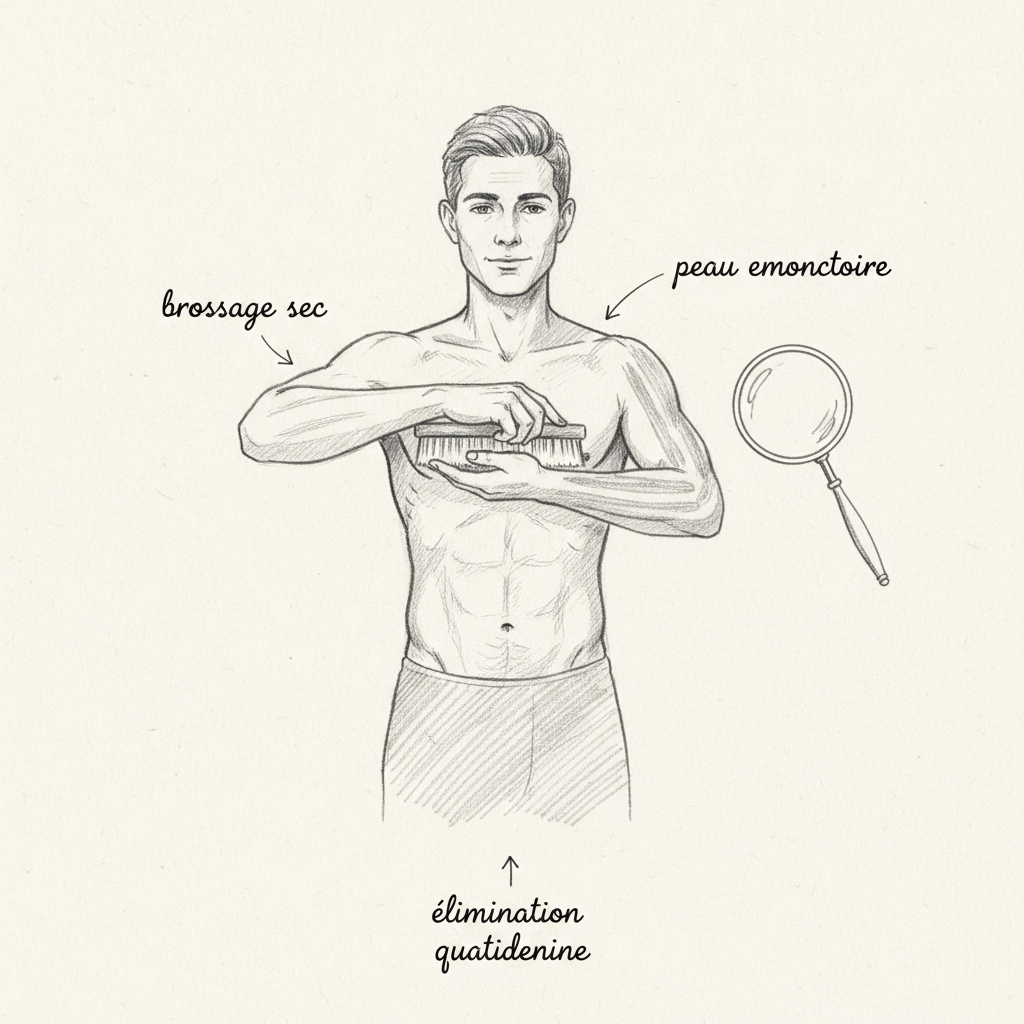
When I recommend to a patient that they modify their nutrition, when I explain why virgin oils matter more than food supplements, when I discuss the importance of intestinal hygiene, it is Kousmine’s voice that I carry. Her struggle has become ours. And thanks to the work of pioneers like Bernard Jensen, who extended this vision of elimination through the skin and emunctories, the method continues to enrich and transmit itself.
“Health begins with the plate. Everything else follows from it.” Dr Catherine Kousmine
Six pillars, one method, a lifetime of research. And an unshakeable conviction that chronic disease is not a fatality, but the consequence of dietary choices and lifestyles that it is always possible to correct, provided one understands the mechanisms and has the courage to change.
To Go Further
- Ann Wigmore: Sprouting and Living Foods in Naturopathy
- Bernard Jensen: Iridology and Dry Brushing, the Skin as an Emunctory
- Kneipp: the Abbot of the Cold and the Roots of Naturopathic Hydrotherapy
- Lindlahr: Catharsis and Nature Cure, Pillars of American Naturopathy
Healthy Recipe: Lacto-fermented Sauerkraut : Kousmine placed the intestine at the center: nourish it.

Laisser un commentaire
Sois le premier à commenter cet article.