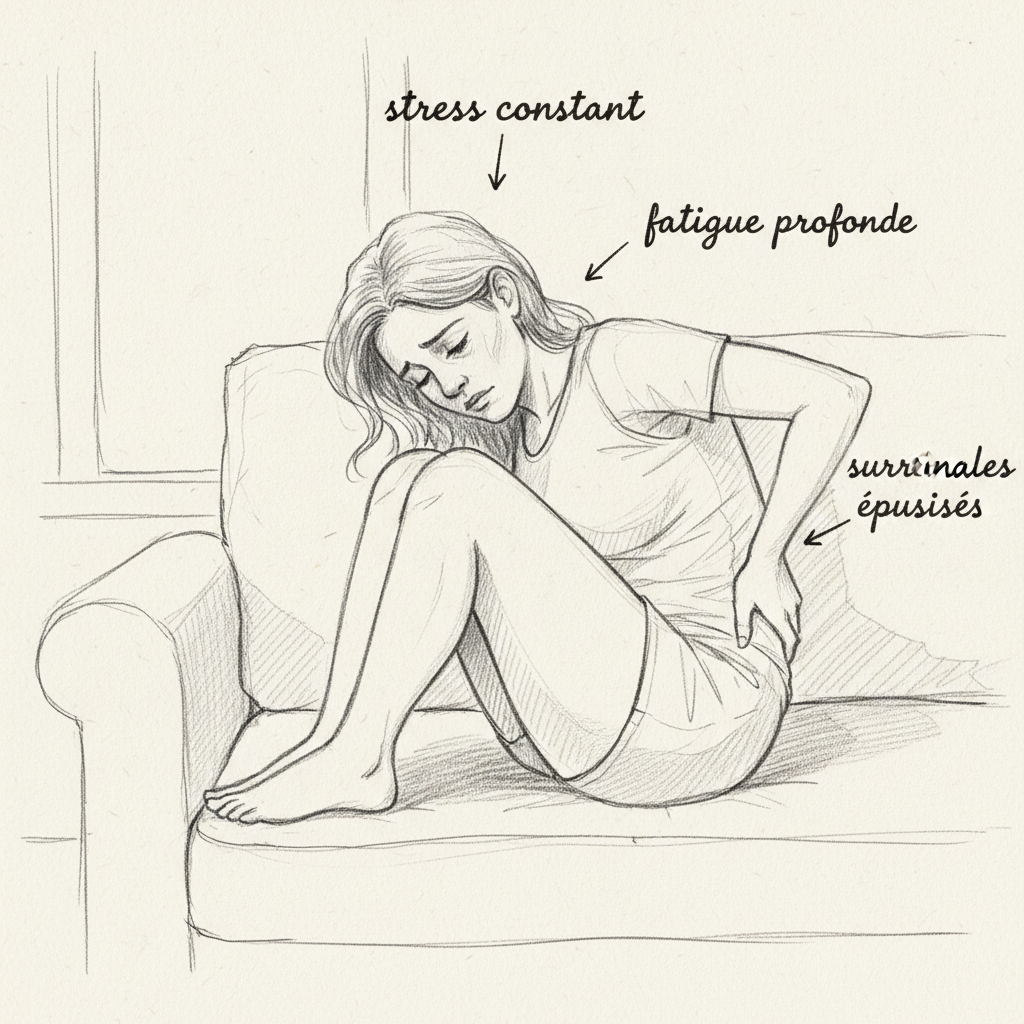
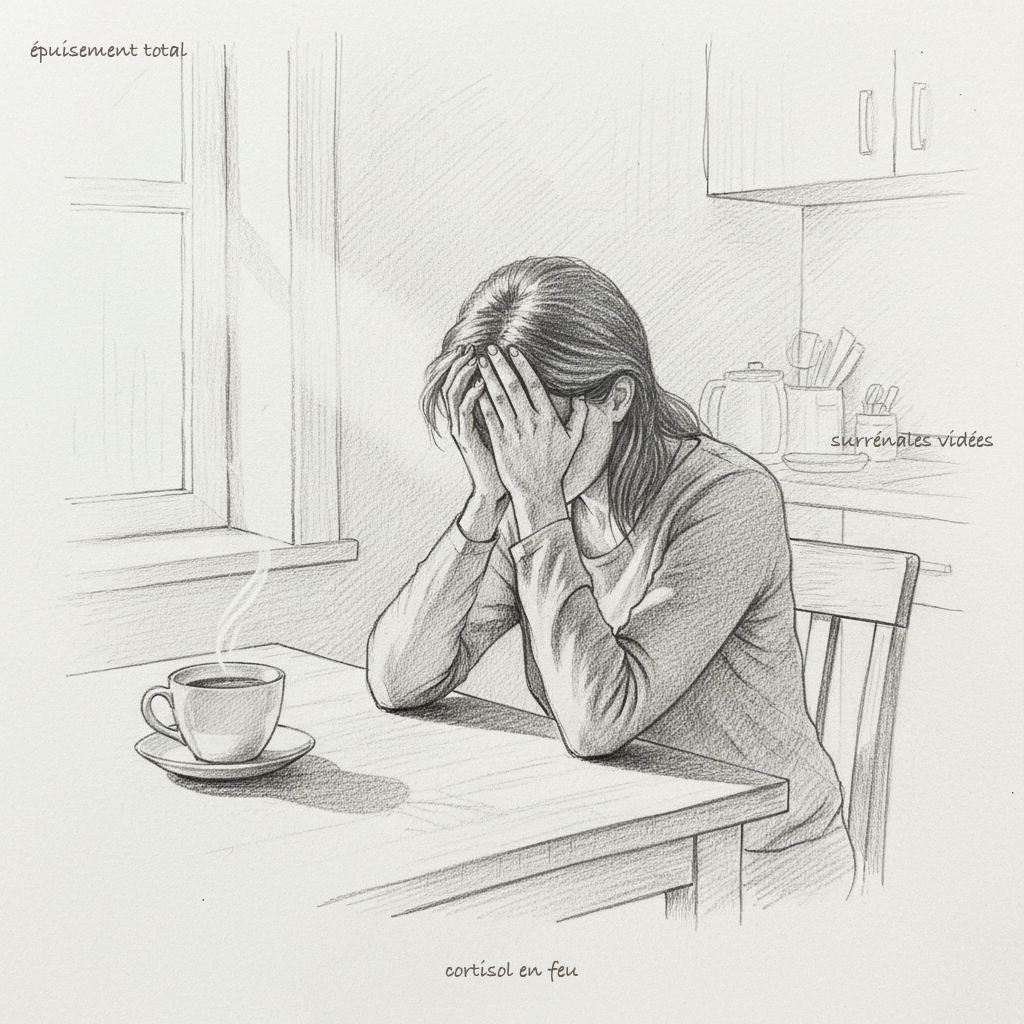
Arnaud is forty-five years old. A senior executive at a telecommunications company, he has lived under constant pressure for five years. When he came to consult with me, he complained of a profound fatigue that yielded neither to rest nor to vacations, a strange sensation of burning in his feet especially at night, and an inability to manage the slightest additional stress: the smallest annoyance would make him “explode.” His morning salivary cortisol tested very low. His adrenal glands were depleted. And among the many cofactors they lacked, vitamin B5 held a central place.
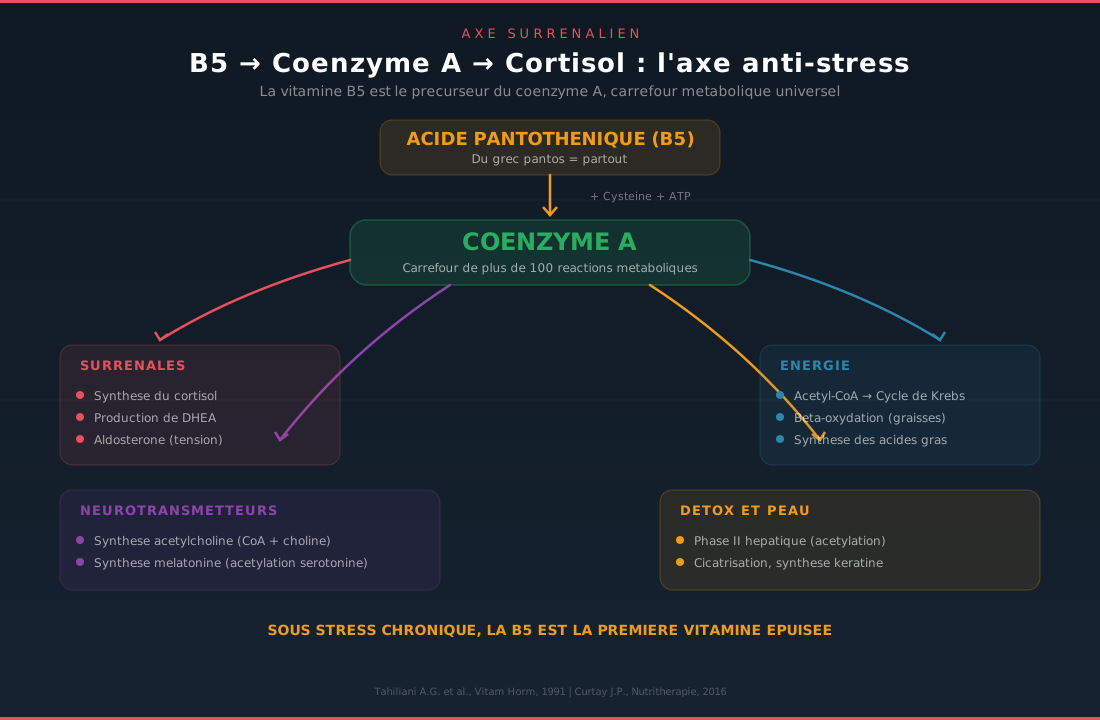
Pantothenic acid takes its name from the Greek pantos, “everywhere.” It is the vitamin of ubiquity: it is present in almost all foods, which explains why frank clinical deficiency is rare. But subclinical deficiency, the kind that exhausts your adrenal glands without giving you spectacular symptoms, is much more frequent than we think in our stressed and malnourished societies.
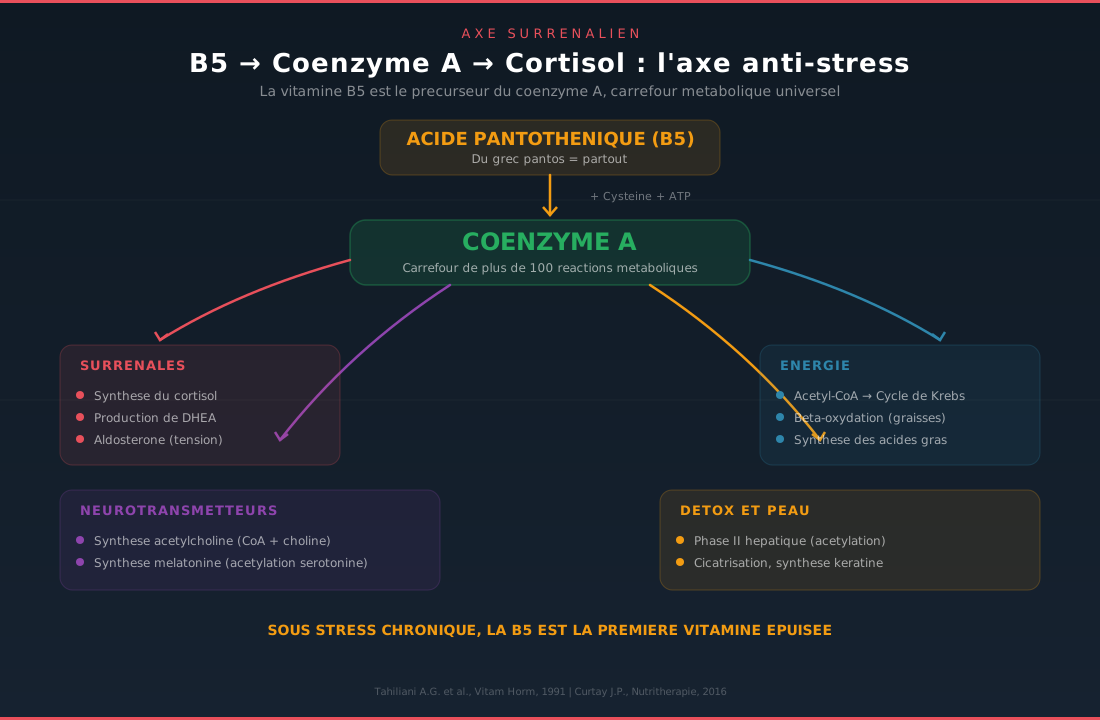
Causes of B5 deficiency
B5 is indeed present in almost all natural foods, but modern diet is no longer natural. Refining cereals eliminates forty-five percent of the B5 in wheat. Freezing destroys thirty to forty percent. Canning eliminates fifty to seventy-five percent. Cooking at high temperature degrades twenty to forty percent. A typical industrial meal (refined cereals, canned vegetables, reheated frozen dish) can have lost the majority of its B5 compared to the same fresh, whole foods cooked gently.
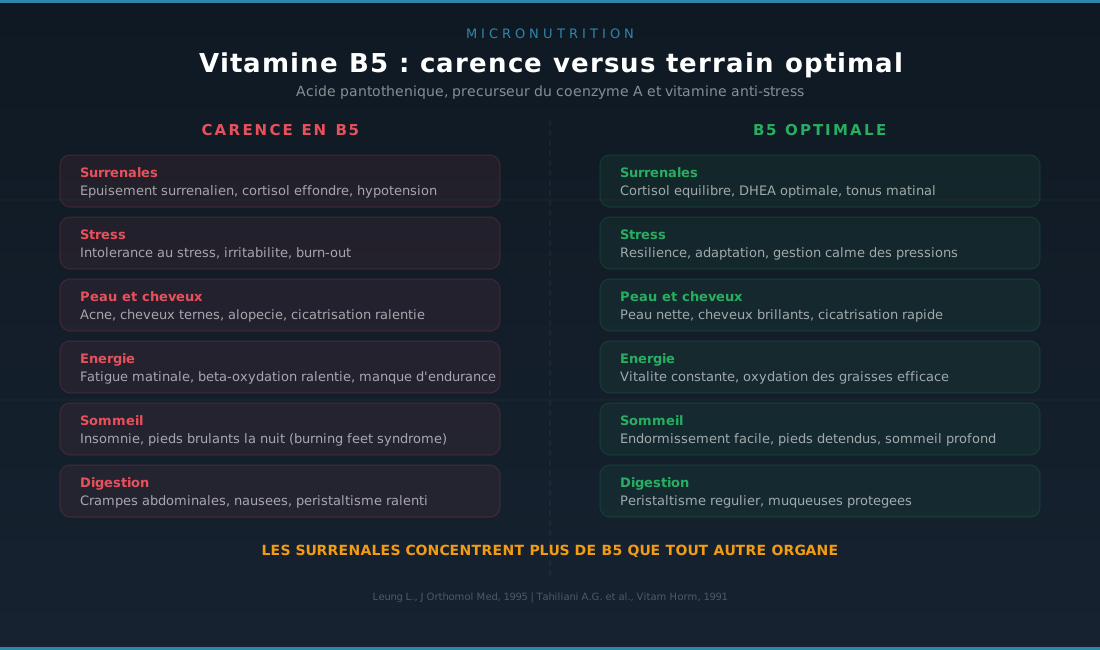
Chronic stress is the second factor. The adrenal glands are the organ with the highest concentration of B5 in the entire body, and for good reason: coenzyme A derived from B5 is essential at every stage of cortisol synthesis (and all steroid hormones). Under chronic stress, the adrenal glands massively consume B5 to produce the cortisol the body needs to adapt. This is a mechanism of exhaustion: the longer stress lasts, the more the adrenal glands pump B5, the more reserves become depleted, the less the adrenal glands can respond to the next stressor.
Alcohol reduces B5 absorption and increases its elimination. Very low-calorie diets and eating disorders expose the body to global B vitamin deficiencies including B5. Inflammatory bowel diseases impair its absorption.
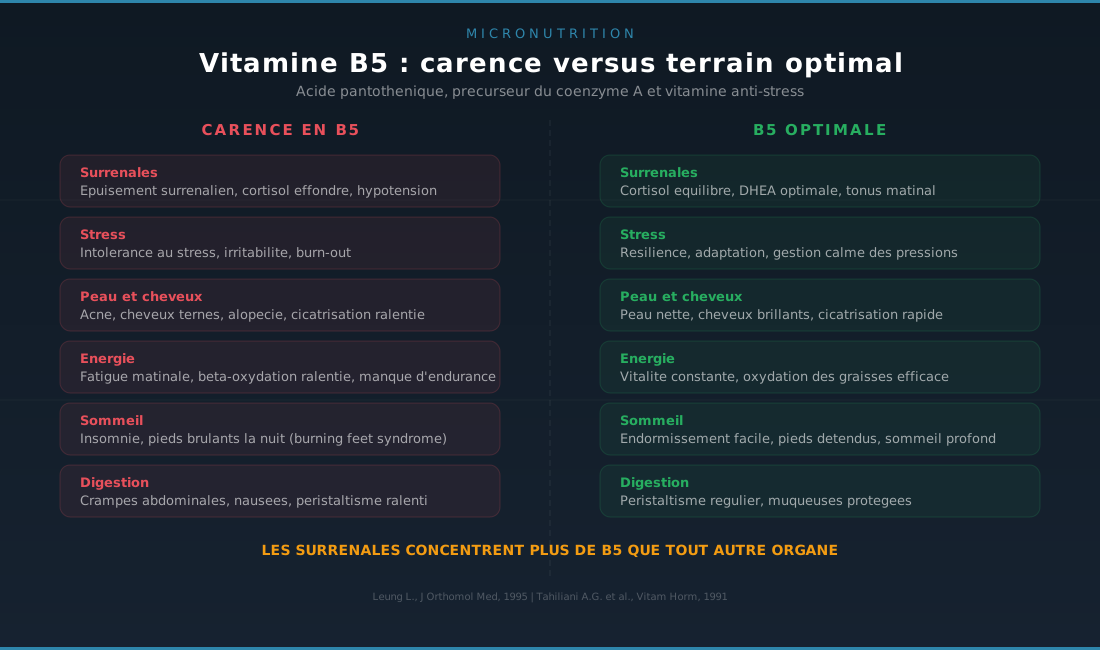
Symptoms of deficiency
B5 is the precursor of coenzyme A (CoA), one of the most versatile cofactors in metabolism. CoA is involved in over one hundred metabolic reactions: Krebs cycle (via acetyl-CoA), beta-oxidation of fatty acids, synthesis of steroid hormones, synthesis of acetylcholine (neurotransmitter), synthesis of melatonin, synthesis of heme and porphyrins.
Fatigue is the most frequent and least specific symptom. It is adrenal fatigue, the “I can’t take it anymore, I’m drained” kind, different from thyroid fatigue (“I’m in slow motion”) or iron deficiency fatigue (“I’m out of breath”). It is accompanied by disproportionate irritability, stress intolerance, and difficulty recovering after exertion.
Burning feet syndrome is the most characteristic sign of B5 deficiency. Initially described in Japanese prisoners of war and deportees from camps, it manifests as burning paresthesias in the soles of the feet, especially at night. This syndrome is caused by demyelination of peripheral nerve fibers secondary to CoA deficiency necessary for synthesis of fatty acids in myelin sheaths.
Sleep disturbances, increased susceptibility to infections (CoA is necessary for antibody synthesis), muscle cramps and weakness, digestive disorders (nausea, abdominal pain), and delayed wound healing complete the picture. Hair loss can be a late sign through impaired keratin synthesis.
Essential micronutrients for B5
Cysteine is necessary for coenzyme A synthesis (the structure of CoA contains a cysteine residue). Insufficient cysteine intake (or its precursor methionine) can limit CoA production even with adequate B5 intake.
ATP is necessary for phosphorylation of pantothenic acid into 4’-phosphopantothenate, the first step of CoA synthesis. A global energy deficit (iron deficiency, B1 deficiency, B3 deficiency) can therefore indirectly reduce CoA production.
Magnesium, a cofactor of pantothenate kinase, is necessary for the first step of B5 activation. Magnesium bisglycinate at 300 to 400 milligrams per day is a systematic supplement in any adrenal support protocol.
Food sources
Chicken liver contains 8 milligrams per 100 grams, the most concentrated source. Brewer’s yeast contains 11 milligrams per 100 grams. Egg yolk provides 4 milligrams per 100 grams. Shiitake mushrooms contain 3.6 milligrams per 100 grams. Avocado provides 1.4 milligrams per 100 grams. Salmon contains 1.6 milligrams per 100 grams. Lentils supply 1.3 milligrams per 100 grams. Sunflower seeds provide 7 milligrams per 100 grams. Broccoli contains 0.6 milligrams per 100 grams. Yogurt provides 0.4 milligrams per 100 grams.
The recommended daily intake is 5 milligrams for adults. Curtay recommends 10 to 20 milligrams daily as an optimal dose, and 100 to 500 milligrams daily as a therapeutic dose for adrenal support.
Antagonists of vitamin B5
Chronic stress is the major functional antagonist through depletion of adrenal reserves. Alcohol, excessive coffee (chronic adrenal stimulation), and tobacco increase requirements. Broad-spectrum antibiotics destroy the intestinal flora that produces a small amount of endogenous B5.
Omega-hydroxy-pantothenic acid (hopantenate) is a direct antagonist used experimentally. Sulfonamides and certain diuretics increase renal elimination.
Sleep deprivation exhausts the adrenal glands and increases B5 requirements, creating a vicious cycle with adrenal fatigue which itself disrupts sleep.
Forgotten causes of deficiency
Adrenal exhaustion (stage 3 of Selye) is the most common forgotten cause. When the adrenal glands have functioned at maximum capacity for months or years, their B5 reserves are depleted. B5 supplementation is then a pillar of adrenal reconstruction, alongside vitamin C (the adrenal glands also contain the highest concentration of vitamin C in the body) and adaptogens.
Pregnancy and breastfeeding increase B5 requirements by forty percent to support hormonal synthesis and fetal growth. Severe acne in adolescence can be a sign of relative B5 insufficiency relative to the hormonal needs of puberty. Endurance athletes have increased requirements due to increased metabolic and adrenal demand.
Surgery and trauma massively increase CoA requirements for stress cortisol synthesis and tissue repair. A patient who has been operated on and is “not recovering” may benefit from B5 supplementation.
Dietary supplements
Calcium pantothenate (D-calcium pantothenate) is the standard form, well absorbed and economical. The maintenance dose is 100 to 500 milligrams daily. The therapeutic dose for adrenal support is 500 to 1500 milligrams daily.
Pantethine is the active form, already converted to the direct precursor of CoA. It is particularly indicated for lipid profile: a meta-analysis by McRae (2005) showed that 900 milligrams daily of pantethine reduced total cholesterol, LDL and triglycerides while increasing HDL. Pantethine is the premium form, more expensive but more effective.
Dexpanthenol (provitamin B5) is the form used topically (healing creams like Bepanthen) to accelerate skin wound healing.
Arnaud started with 500 milligrams of calcium pantothenate daily, combined with vitamin C (1000 milligrams in acerola), magnesium bisglycinate (400 milligrams), and rhodiola (300 milligrams). Within four weeks, his feet no longer burned at night. Within eight weeks, his morning cortisol had increased by forty percent. He had regained the capacity to adapt to stress that he had lost for years.
To assess your vitamin B5 status, take the B5 deficiency questionnaire on my site.
If you want personalized support, you can book a consultation.
To go further
- Stress, cortisol and thyroid: why order really matters
- Magnesium: why your thyroid, your sleep and your stress depend on it
- Basedow and stress: the thyroid of emotion
- Burn-out: when your reptilian brain takes control
Do you want to assess your status? Take the free Hertoghe cortisol questionnaire in 2 minutes.
Do you want to assess your status? Take the free Holmes-Rahe stress questionnaire in 2 minutes.
Sources
- Leung, Lit-Hung. “Pantothenic acid deficiency as the pathogenesis of acne vulgaris.” Medical Hypotheses 44.6 (1995): 490-492.
- McRae, Marc P. “Treatment of hyperlipoproteinemia with pantethine: a review and analysis of efficacy and tolerability.” Nutrition Research 25.4 (2005): 319-333.
- Curtay, Jean-Paul. Nutritherapy: scientific foundations and medical practice. Testez Éditions, 2016.
- Hertoghe, Thierry. Atlas of hormonal and nutritional medicine. Luxembourg: International Medical Books, 2006.
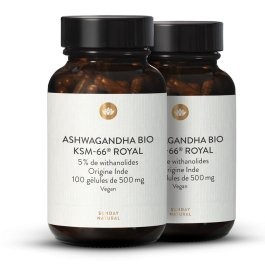
If you want personalized support, you can book a consultation. For supplementation, Sunday Natural (ten percent off with code FRANCOIS10). Find all my partnerships.
Healthy recipe: Endive-carrot-celery juice: Endive supports the adrenal glands.


Laisser un commentaire
Sois le premier à commenter cet article.