Pauline is thirty-four years old, she is pregnant with her first child and she is doing everything right. Organic food, no alcohol, no tobacco, prenatal yoga twice a week. Her gynecologist is reassuring: the ultrasounds are normal, the blood tests too. But when she read the results of the ELFE study on French pregnant women, something broke inside her. Up to 43 pesticides out of 99 tested exceeding the limits of quantification were found in the umbilical cord blood of newborn French babies1. Forty-three chemical molecules in the first bloodbath of a baby who has not yet taken her first breath. Pauline is doing everything right, and yet, her baby is already bathing in a chemical cocktail before even being born.
This paradox illustrates a concept that Prof. Xavier Coumoul, toxicologist at Paris Descartes University and INSERM, teaches in the DU of Micronutrition: the exposome. This word, invented by Prof. Chris Wild of the International Agency for Research on Cancer (IARC), designates “the totality of environmental exposures experienced by an individual, from conception until death”2. The exposome is the environmental counterpart of the genome. If our genes are the blueprint of our body, the exposome is the totality of aggressions that this body undergoes throughout a lifetime. And Prof. Coumoul begins his lecture with a striking image: a nematode (C. elegans) has 20,000 genes. The human being has 21,000. A thousand more genes than the worm. Genes don’t explain everything.
“The environment, in the broad sense, explains the majority of chronic diseases. Depending on the definition adopted, its role in pathology changes considerably.” Prof. Xavier Coumoul, DU MAPS 2020, lecture #04 “Exposome and detoxification”3
If you’re trying to understand why you’re tired, why your hormones are going haywire, why your thyroid is slowing down or why your immune system is overreacting despite a proper diet, the answer may lie in what you breathe, what you apply to your skin and what you’ve been accumulating in your adipose tissue for thirty or forty years without knowing it.
Your genes load the gun, the environment pulls the trigger
Prof. Coumoul opens his lecture with a fundamental reminder that puts genetics into perspective as it is usually understood. The human being shares 99.9% of its genome with other humans. The differences between individuals lie in 0.1% of genetic variations. And yet, the incidence of cancers, diabetes, autoimmune diseases and thyroid disorders vary considerably from country to country, from region to region, from generation to generation. When Japanese women, who have a low rate of breast cancer in Japan, migrate to California, their risk matches that of American women within one to two generations4. Same genome, different environment, different result.
The Rappaport et al. (2014) study, cited in the lecture, quantifies the contribution of environmental agents to chronic diseases. The results are unequivocal: the environmental component is “far from negligible”. Prof. Coumoul classifies pathogenic agents into three categories. Physical agents (UV, temperature, ionizing radiation). Biological agents (viruses, bacteria). And chemical agents, which form the heart of his teaching: polycyclic aromatic hydrocarbons (PAH), endocrine disruptors (ED), persistent organic pollutants (POP), heavy metals, pesticides, solvents, plasticizers, food additives.
What makes the subject so complex is that we are never exposed to a single agent. We are continuously exposed to mixtures of hundreds of molecules simultaneously. Prof. Coumoul summarizes this reality with disarming frankness: “A grain of dust, an air particle, cigarette smoke contain thousands of molecules. More than 100,000 chemical molecules are in our environment. We only have knowledge of a few thousand.”5
In naturopathy, Marchesseau spoke of exogenous toxemia: the accumulation of foreign substances in the body that overloads the eliminatory organs and degrades the terrain. The concept of exposome is the modern scientific translation of this intuition from a hundred years ago. Except that now, we have the epidemiological evidence, the experimental studies and the molecular mechanisms to support it.
Endocrine disruptors: when the hormone is an impostor
Endocrine disruptors are the most publicized pollutants, and for good reason. Their definition by the WHO in 2012 is unambiguous: “An exogenous substance that alters the functions of the endocrine system and consequently causes harmful effects in an intact organism, its offspring or subpopulations.”6
Prof. Coumoul traces the history of their discovery. In 1962, Rachel Carson publishes Silent Spring, which alerts for the first time to the effects of organochlorine pesticides (DDT) on wildlife. In 1991, the Wingspread Conference brings together the first scientists who formalize the concept of endocrine disruption. The first observations are ecotoxicological: malformations of the reproductive system in alligators in contaminated lakes in Florida, hermaphroditism in amphibians exposed to atrazine. The transposition to humans follows naturally, based on the comparison of mechanisms of action.
The molecular targets of EDs are multiple. Steroid hormones (estrogens and androgens) are the most studied, but Prof. Coumoul insists that EDs also affect thyroid hormones (which explains the current epidemic of thyroid dysfunctions), neurotransmitters, insulin and signals involved in embryonic development. One hundred one pesticides out of two hundred eighty-seven evaluated by EFSA affect the thyroid7. That’s more than one third.
The mechanisms of endocrine disruption are varied. An ED can bind to a hormone receptor and activate it (agonist effect), block a receptor and prevent the natural hormone from acting (antagonist effect), modify the enzymes that synthesize hormones (such as aromatase, which converts androgens to estrogens), or disrupt the blood transporters of hormones. The molecular targets identified in the lecture are receptors (ER, AR, TR), enzymes (CYP, aromatase) and transporters. As I explain in the article on endocrine disruptors in the kitchen, these molecules are omnipresent in our daily lives: food plastics, non-stick coatings, cosmetics, packaging, tap water.
POPs: pollutants that never leave
Prof. Coumoul devotes an entire section of his lecture to persistent organic pollutants (POPs). Their name says it all: they persist. Unlike bisphenols or phthalates which are metabolized and excreted in a few hours or days, POPs resist the metabolism of xenobiotics and accumulate in the body for years, even decades.
Two properties distinguish them from other pollutants. Their lipophilicity (affinity for fats) causes them to concentrate in adipose tissue, liver and brain. Their resistance to hepatic metabolism means that once they enter the body, they are only very slowly eliminated. The most well-known POPs are dioxins (TCDD), PCBs (polychlorobiphenyls), organochlorine pesticides (DDT, HCH, chlordane) and brominated flame retardants (PBDE).
The most striking example in the lecture is that of Agent Orange, the defoliant massively sprayed by the American military in Vietnam, highly contaminated with TCDD (dioxin). Epidemiological studies of exposed veterans and Vietnamese populations show a massive increase in type 2 diabetes, cancers and birth defects8. But Prof. Coumoul does not limit himself to accidental or military exposures. He cites recent studies conducted on the general population: the NHANES study (American population, 1999-2002) shows a significant association between blood concentrations of two dioxins and the risk of type 2 diabetes9. And this association is observed at doses of chronic low-level exposure, those that we all experience daily.
The study by Ruzzin et al. (2010) confirms these observations in rats: animals fed salmon oil contaminated with POPs develop major steatohepatosis (fatty liver), insulin resistance and metabolic syndrome, even without a hypercaloric diet. Pierre et al. (2014) show that weekly exposure of mice to TCDD induces metabolic disorders. The link between POPs and insulin resistance is no longer a hypothesis: it is an experimental fact.
Adipose tissue: friend or foe?
A fascinating concept emerges from the lecture: the paradoxical role of adipose tissue in relation to POPs. Prof. Coumoul cites the work of Jandacek, Geyer and Lassiter which show a correlation between the body fat of animals and their survival following acute dioxin exposure. The fatter the animal, the more it survives. Prof. Coumoul summarizes this observation with a provocative formula: “Survival of the Fattest: Survival of the Fattest”10.
The mechanism is logical. POPs, being lipophilic, concentrate in adipose tissue rather than in vital organs (brain, liver, kidneys). Fat tissue acts as a protective trap: it sequesters pollutants and protects noble tissues. But this protection has a downside. When adipose tissue melts, during a weight loss diet for example, the stored POPs are suddenly released back into the bloodstream. This is the study by Hue (2006) published in Obesity Surgery that demonstrates this phenomenon in patients who underwent bariatric surgery11.
This phenomenon has major practical implications in naturopathy. When a patient consults me for weight loss and I suspect significant toxic burden (occupational exposure, living in an industrial or agricultural area, consumption of predatory fish), I never launch a brutal restrictive diet. I always start with a preliminary hepatic drainage of four to six weeks to prepare the liver to metabolize the POPs that will be released. This is the principle of spring detox adapted to a real toxicological context.
The cocktail effect: when nothing plus nothing equals something
This is probably the most disturbing concept in the lecture. Prof. Coumoul cites Raymond Devos’ formula: “Nothing is nothing. 2 times nothing is almost nothing. But 3 times nothing is already something.”12 Applied to toxicology, this quip summarizes the cocktail effect: substances individually non-toxic at low doses can become toxic when mixed.
The Kortenkamp (2007) study is the experimental pillar of this concept. It shows that the sum of sub-threshold doses of several endocrine disruptors can exceed the regulatory toxic threshold, the one that is supposed to protect us. Our regulation evaluates toxicity substance by substance, in isolation. But in real life, we are never exposed to a single substance. We are simultaneously exposed to dozens, even hundreds of molecules that interact with each other according to mechanisms of additivity, synergy or antagonism still “poorly characterized” according to Prof. Coumoul’s own words.
This explains why you can have symptoms even though each individual measurement is “within normal ranges”. The bisphenol in your food can is below the threshold. The phthalate in your shampoo is below the threshold. The pesticide on your apple is below the threshold. But the combination of the three in your body may exceed a threshold that no one has ever measured, because no one measures cocktails.
The 7 challenges of modern toxicology
Prof. Coumoul identifies seven challenges that toxicology must overcome to understand the real impact of the exposome on health13.
The first is the quality of exposure exploration. How do you measure what an individual has been exposed to over forty years? Biomarkers (urinary metabolites, DNA adducts, blood tests) only capture a moment in time of exposure. The intestinal metagenome, the metabolome and omics approaches open new avenues but remain experimental.
The second is the question of mixtures. Additivity (1+1=2), synergy (1+1=5) and antagonism (1+1=0.5) are the three possible scenarios when two substances meet in the body. Current regulation ignores these interactions.
The third is time. Repeated exposure (daily smoking for thirty years), internal persistence (dioxin in adipose tissue) and delayed effects (in utero exposure, disease forty years later) make risk assessment extremely complex.
The fourth is dose. Paracelsus stated in the sixteenth century that “the dose makes the poison”. But endocrine disruptors have shown that the dose-response relationship is not always linear. Some substances are more toxic at very low doses than at medium doses (inverted U curve). Paracelsus’s dogma is shaken.
The fifth is the relevance of experimental models. Laboratory rats are not humans. Interspecies extrapolations remain a major source of uncertainty.
The sixth is the vulnerability of certain developmental stages. The fetus, infant, prepubertal child and pregnant woman are infinitely more vulnerable than the adult. The central nervous system develops from the third week in utero to twenty years. The immune system matures from the eighth prenatal week to ten years. Exposure during these critical windows can have irreversible consequences that we will only detect decades later. This is the concept of developmental programming or developmental toxicity, potentially mediated by epigenetic mechanisms.
The seventh is a return to what we thought we knew. The paradigms of classical toxicology are being questioned by EDs, cocktail effects and developmental toxicity. As Coumoul sums it up: we must “return to what we thought we knew”.
Xenobiotic metabolism: your detoxification machine
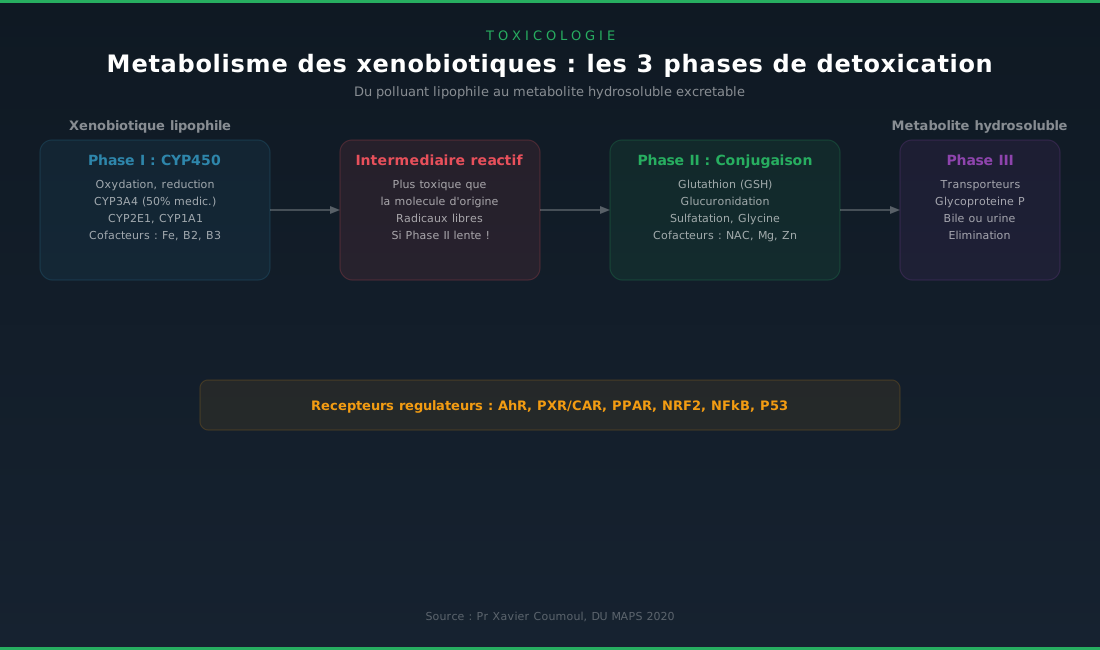
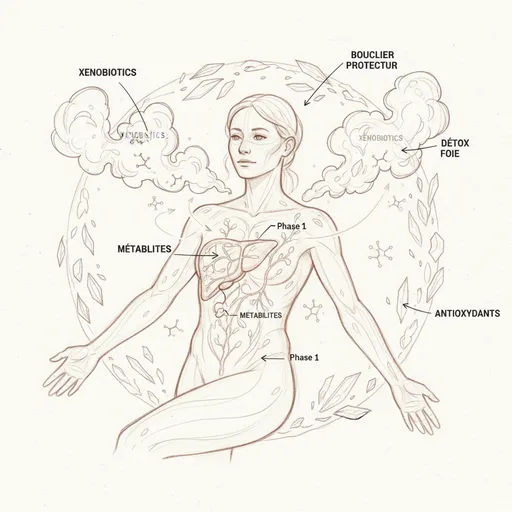
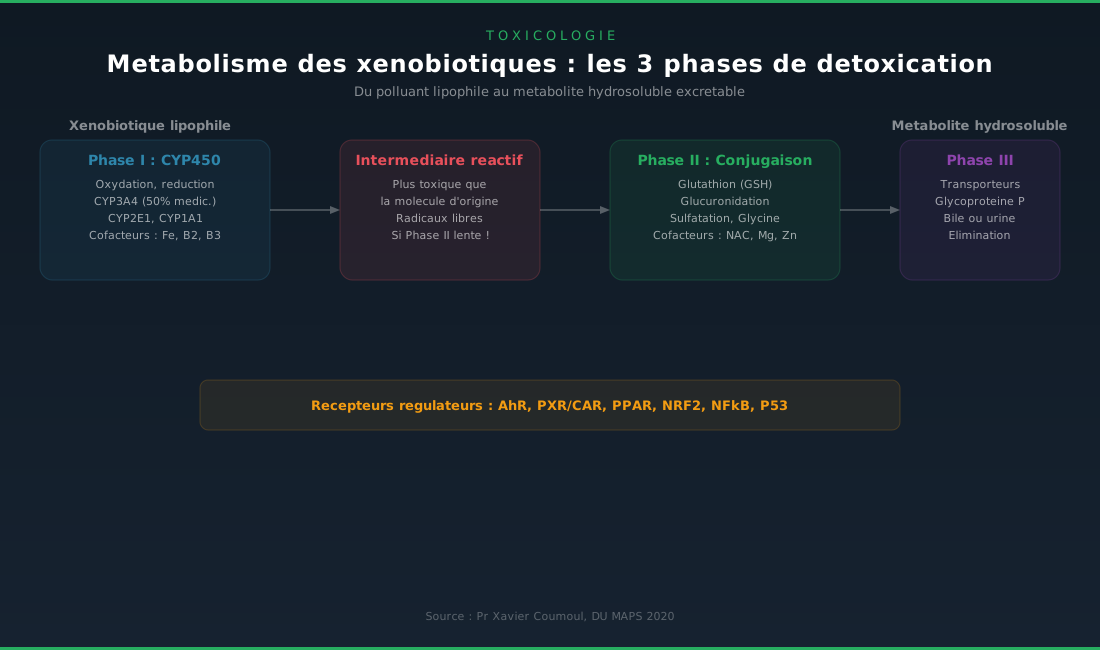
Prof. Coumoul details the hepatic detoxification system in three phases, a system that the naturopath must know intimately to effectively support their patients14.
Phase I is provided by cytochromes P450 (CYP), a family of enzymes that make the xenobiotic more reactive through oxidation, reduction or hydrolysis. CYP3A4 is the most abundant and metabolizes approximately 50% of drugs. CYP1A1, CYP2E1 and CYP2D6 are other important enzymes. These enzymes are regulated by nuclear receptors (AhR, PXR/CAR, PPAR) that detect the presence of xenobiotics and adapt enzymatic expression. This is a mechanism of stress adaptation.
Phase II conjugates the phase I metabolite with a hydrophilic molecule (glutathione, glucuronic acid, sulfate, glycine, acetyl) to make it soluble in water and therefore excretable. Glutathione is the most important conjugant. This is why NAC (N-acetylcysteine), a precursor of glutathione, is a fundamental tool in toxicological naturopathy.
Phase III expels the conjugate out of the hepatic cell into the bile (fecal elimination) or into the blood (renal elimination) via membrane transporters (P-glycoprotein, MRP, OATP).
This system works beautifully when properly nourished. But it can become overwhelmed when exposure is too high, when cofactors are insufficient (zinc, magnesium, B vitamins, glutathione deficiencies), or when the liver is already overloaded by alcohol, medications or hepatic steatosis. Phase I in particular generates reactive intermediates that can be more toxic than the original molecule. If phase II doesn’t keep pace, these intermediates accumulate and create oxidative stress.
Naturopathic protocol for reducing the exposome
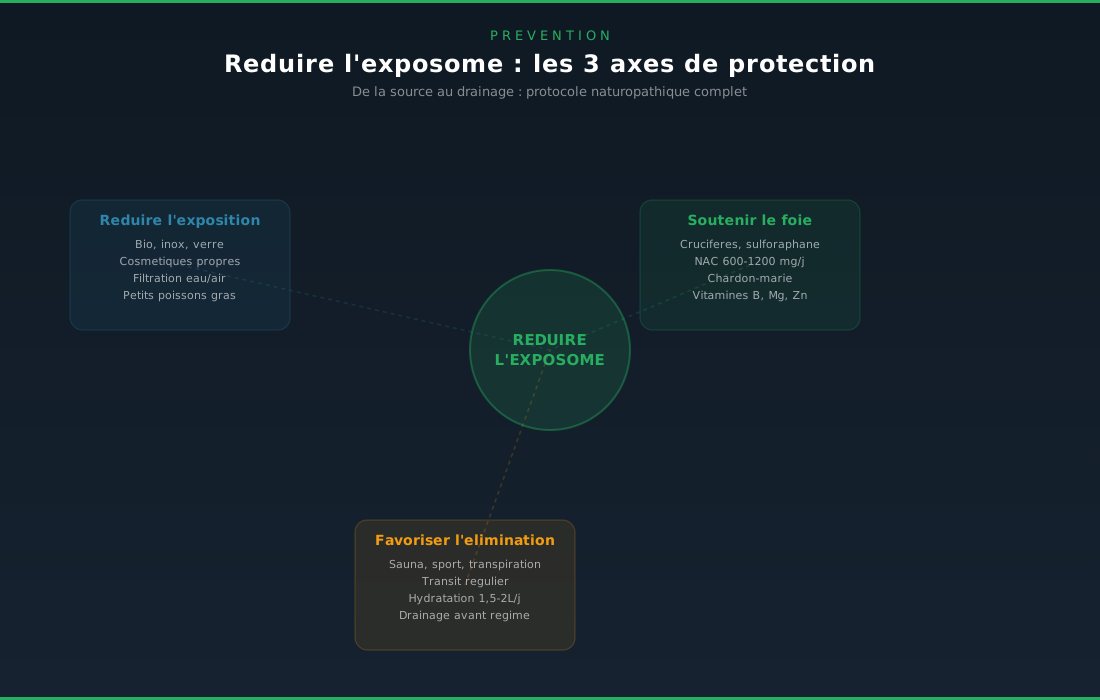
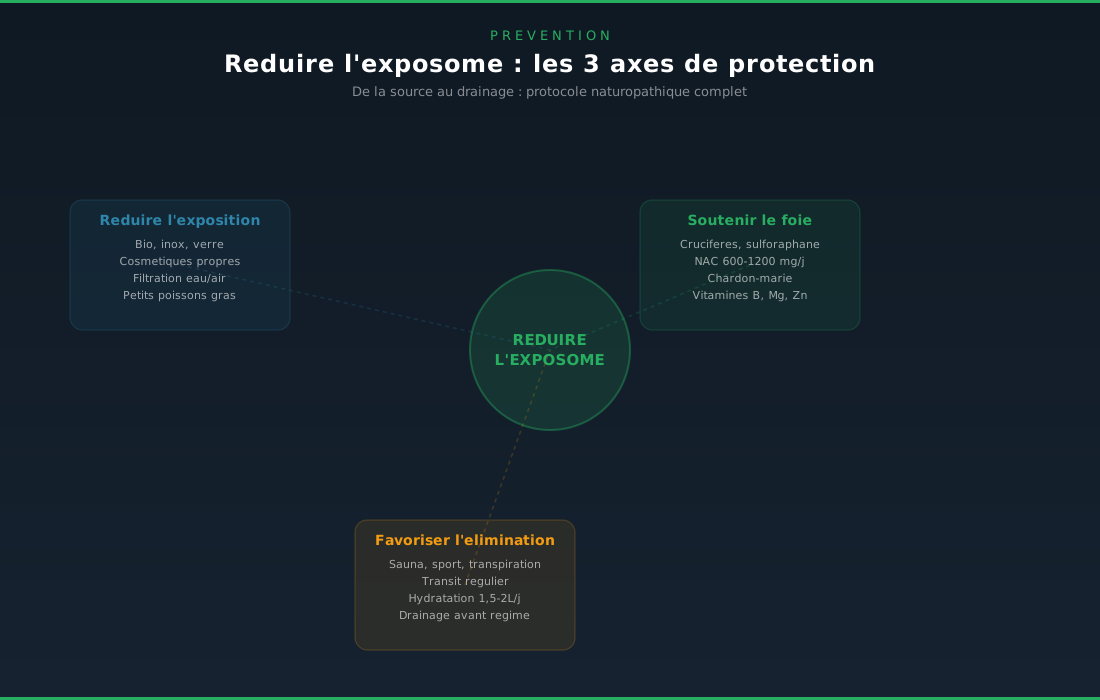
Here is the three-axis protocol I use in consultation for patients whose assessment suggests toxic overload.
First axis: reduce exposure. Switch to organic food as much as possible. Replace plastic containers with glass and stainless steel. Choose cosmetics certified organic without phthalates or parabens. Filter drinking water (activated charcoal minimum, reverse osmosis if budget allows). Air your home daily (indoor air pollutants are often more concentrated than outdoors). Avoid predatory fish at the top of the food chain (bluefin tuna, swordfish) that bioconcentrate methylmercury, and favor small fatty fish (sardines, mackerel, anchovies) for omega-3.
Second axis: support hepatic detoxification. Cruciferous vegetables (broccoli, cabbage, cauliflower, Brussels sprouts) contain sulforaphane, a powerful inducer of phase II enzymes via the NRF2 pathway (cited by Coumoul as one of the key receptors of the oxidative stress response). NAC (600 to 1200 mg per day) supports glutathione synthesis. Milk thistle (silymarin) protects the hepatocyte. Desmodium (Desmodium adscendens) is the reference hepato-protector in tropical phytotherapy. B vitamins, magnesium and zinc are essential cofactors of cytochromes P450 and conjugation enzymes.
Third axis: promote elimination. Sweating (infrared sauna, exercise) allows certain pollutants to be excreted through the skin. Regular bowel movements prevent reabsorption of conjugated toxins excreted in bile (enterohepatic circulation). Adequate hydration (1.5 to 2 liters of filtered water per day) supports renal elimination. And in the case of programmed weight loss in a potentially exposed patient, four to six weeks of preliminary hepatic drainage before any caloric restriction.
Epigenetics: the transgenerational toxic legacy
Prof. Coumoul ends his lecture with a concept that makes your head spin: the transgenerational effects of the exposome. The work of Jirtle and Skinner (2007) shows that exposure of an organism to certain pollutants can modify the expression of its genes through epigenetic mechanisms (DNA methylation, histone modification, non-coding RNA) and that these modifications can be transmitted to subsequent generations15.
Concretely, the exposure of a pregnant woman to an endocrine disruptor can affect not only her child, but also her grandchildren, through epigenetic modifications that are transmitted through the germline. This is what is called developmental programming: an exposure during the critical window of embryonic development can program diseases that will only appear decades later, at an age when no one will make the connection to prenatal exposure.
This is why Pauline was right to be concerned. Not because you have to live in anxiety, but because prevention begins before conception. The preconception consultation, which I detail in the article on pregnancy and micronutrition, should systematically include a toxicological component: reduction of exposure to EDs, gentle hepatic drainage, optimization of reserves in glutathione and protective micronutrients.
When to consult and limits of the approach
Environmental toxicology is a complex field in constant evolution. It’s not about falling into fear or denial. Pollutants exist, their effects are documented, and we have tools to reduce our exposure and support our detoxification. But it’s also not about transforming every consultation into a chemical disaster.
The first-line assessment I recommend in case of suspected toxic overload includes a complete hepatic profile (transaminases, gamma-GT, alkaline phosphatase), a reduced glutathione assay, an oxidative stress profile (TBARS, SOD, GPx) and, depending on the context, urinary heavy metals testing (provoked with DMSA if necessary). Blood POP assays (PCBs, dioxins, organochlorine pesticides) exist but remain expensive and poorly accessible in routine practice.
The good news is that our body has a remarkably powerful detoxification system. You just have to feed it properly, not overload it, and give it time to do its work. As Prof. Coumoul concludes pragmatically: “What solutions? It’s a societal question, of production, manufacturing and consumption.” The individual answer, the one we can control, passes through knowledge, prevention and naturopathic support of the terrain.
Want to assess your status? Take the free toxemia colloidals questionnaire in 2 minutes.
To cook healthily, discover PranaCook stainless steel utensils, without endocrine disruptors.
To go further
- Thyroid and liver: the duo you ignore and that explains everything
- Acetylcholine: the forgotten neurotransmitter of your memory
- Alzheimer: the metabolic disease you can prevent 20 years before
- Anemia: understanding root causes and acting naturally
Sources
Footnotes
-
Coumoul X. DU MAPS 2020, lecture #04. Slide: pesticide data in children. ↩
-
Wild C. The exposome: from concept to utility. Int J Epidemiol. 2012;41(1):24-32. Cited in Coumoul slide. ↩
-
Coumoul X. DU MAPS 2020, lecture #04 “Exposome et détoxification”. Introductory slide. ↩
-
Rappaport SM et al. Environment and Disease Risks. EHP 2014. Cited in Coumoul slide. ↩
-
Coumoul X. DU MAPS 2020, lecture #04. Slide: “The chemical universe: more than 100,000 molecules.” ↩
-
IPCS 2002, WHO 2012. Official definition of endocrine disruptors. Cited in Coumoul slide. ↩
-
EFSA. Assessment of 287 pesticides on the thyroid: 101 affect thyroid function. Cited in Castronovo DU MAPS lecture. ↩
-
Lee DH et al. Endocrine Reviews, August 2014, 35(4):557-601. Agent Orange and TCDD. Cited in Coumoul slide. ↩
-
Coumoul X. DU MAPS 2020, lecture #04. Slide NHANES 1999-2002: dioxins and type 2 diabetes. ↩
-
Jandacek RJ et al. 2005; Geyer HJ et al. 1997; Lassiter RR, Hallam TG. 1990. “Survival of the Fattest.” Cited in Coumoul slide. ↩
-
Hue O. Obes Surgery. 2006. Release of POPs during weight loss. Cited in Coumoul slide. ↩
-
Kortenkamp A. EHP 2007. Combined effects of endocrine disruptors. Cited in Coumoul slide. ↩
-
Coumoul X. DU MAPS 2020, lecture #04. Slides: “The 7 new challenges of toxicology.” ↩
-
Coumoul X. DU MAPS 2020, lecture #04. Slides: “Xenobiotic metabolism: 3 phases.” ↩
-
Jirtle RL, Skinner MK. Environmental epigenomics and disease susceptibility. Nature Reviews Genetics. 2007;8:253-262. Cited in Coumoul slide. ↩



Laisser un commentaire
Sois le premier à commenter cet article.